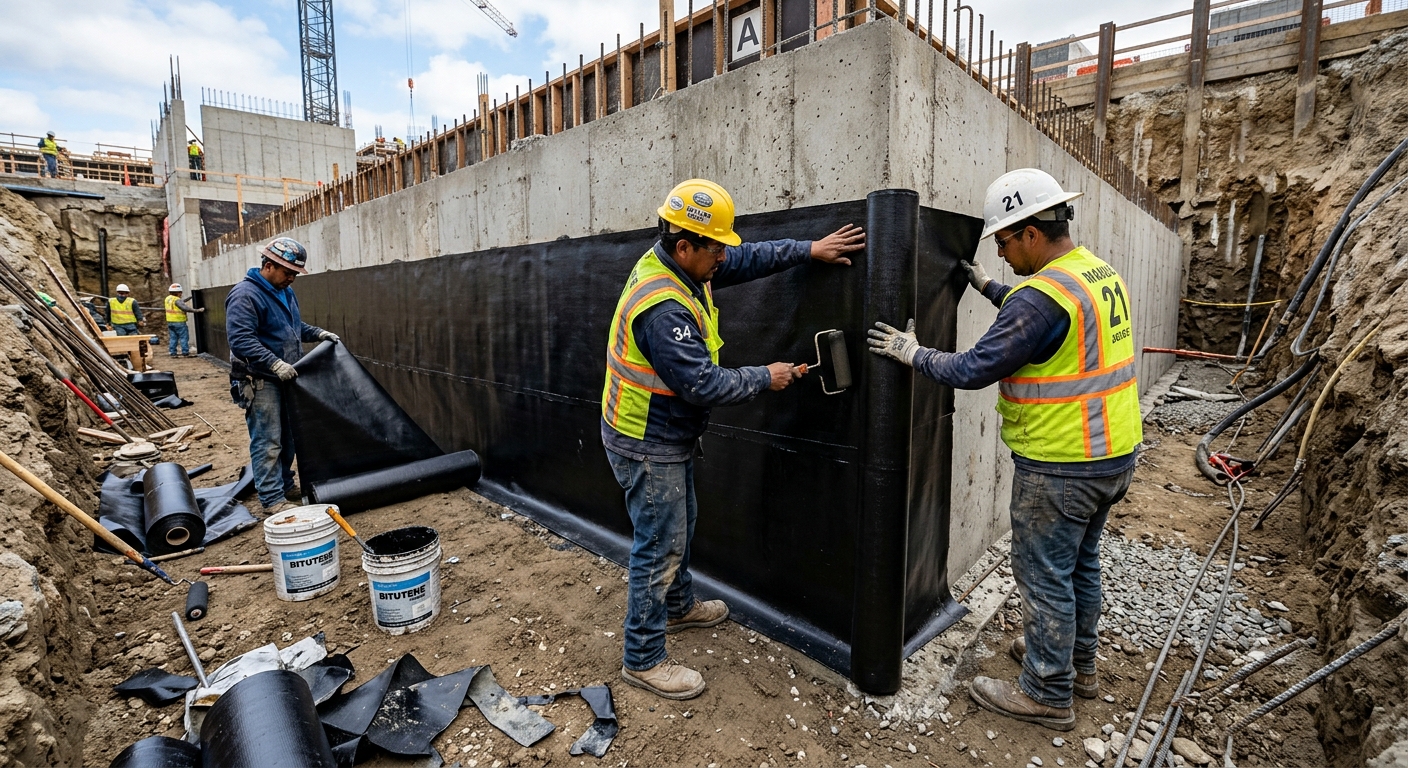
Basement waterproofing options and costs in Camrose
In Camrose, basement waterproofing decisions usually start with a simple question: is the water getting in through hydrostatic pressure and exterior wet soils, or is it showing up later through failing drains, cracks, or old seepage paths. Camrose’s housing stock is a big part of that conversation—nearly half of homes were built before 1981, and those older foundations often rely on original tar-and-paper style systems and weeping tile that can be undersized or fully failed. Statistics Canada reports Camrose has 18,772 residents, with 5,365 homeowner households (65.9% own), so there’s a steady local need for upgrades that protect long-term property value.
In the Camrose–Drumheller economic region, pricing is shaped by clay to clay-loam subsoils that hold water and can become saturated. During freeze–thaw cycles, saturated clay expands and can increase lateral pressure on foundation walls, widening small cracks into active leaks. That means exterior work (excavation, membrane, new drainage tile) is often priced at the higher end when we need to address the water source, while interior systems (perimeter drain channel and sump pit) are favored when access is tight or the homeowner wants a less disruptive approach. Trades demand is especially high in older, established areas such as the core neighbourhoods around Main Street and close to the Canadian Prairies where mature landscaping can make excavation harder.
Below is a practical comparison of the most common methods you’ll see in Camrose, along with typical disruption and cost bands, to help you translate quotes into apples-to-apples scope.
| Method |
What It Addresses |
Disruption Level |
Durability |
Price Range |
| Exterior excavation + new membrane + drainage tile |
Stops water at the foundation exterior; replaces/modernizes drainage to reduce hydrostatic pressure |
High (yard/front landscaping removal, excavation, backfill, restoration) |
Long-term (typically 20+ years with proper drainage design) |
$9,000–$22,000 |
| Interior perimeter drain channel + sump pit |
Collects seepage that enters through cracks/weak spots; manages inflow with sump pumping |
Medium (interior wall/ceiling access, localized slab drilling) |
Very good (often 15+ years depending on sump specs and discharge route) |
$6,500–$16,000 |
| Foundation crack injection (epoxy or polyurethane) |
Seals cracks; polyurethane is used for active seepage, epoxy for repaired/crack-stabilized conditions |
Low to medium (small access holes, minimal restoration) |
Good (service life depends on crack type and whether the root water path is controlled) |
$600–$2,500 |
| Sump pump installation (primary + battery backup) |
Maintains safe water levels during spring melt/heavy storms; backup reduces failure risk |
Low to medium (pit excavation, discharge piping, electrical connection) |
Good (best performance when paired with drainage and discharge safeguards) |
$1,300–$3,500 |
| Window well drain installation |
Reduces water pooling around egress windows that can seep into the basement |
Low to medium (yard/gravel work near windows) |
Good (improves localized water control) |
$1,000–$2,800 |
| Lot re-grading / downspout extension |
Moves surface water away from the foundation to reduce overflow into soils near walls |
Low (light landscaping adjustments) |
Moderate (depends on ongoing grading maintenance) |
$900–$3,200 |
Prices are estimates only and vary by project scope, site access and material selection.
What affects the price of waterproofing in Camrose
In Camrose–Drumheller, it’s common to see quote differences of 30–50% for what sounds like the “same” waterproofing job. That gap usually comes down to site conditions and how far the contractor goes to remove the cause of water entry—not just manage what you can see in the basement. For homeowners, that can mean choosing between a lighter interior solution (often starting closer to the interior band of $6,500–$16,000) and a full exterior approach that can push into the higher excavation/membrane band of $9,000–$22,000 depending on how much foundation perimeter must be opened and replaced.
The three biggest regional drivers that separate Camrose pricing from the national average are soil type, water table conditions, and freeze–thaw cycling. Clay-rich subsoils—common across east-central Alberta—expand when saturated and can exert lateral pressure on foundation walls, making crack repairs more likely to fail if the drainage source isn’t addressed. When groundwater sits higher or seepage feeds from coulees and depressions nearby, sump pump run times increase and discharge piping and backflow protection become more critical. By comparison, heavy coastal rainfall climates can saturate backfill quickly when drainage fails, but Camrose’s freeze–thaw tends to worsen existing cracks over successive winters.
Concrete examples from typical Camrose projects: (1) two homes with similar crack patterns can price very differently if one has exterior weeping tile that’s still functional versus a house built on older, failed drainage—replacing or supplementing the drain system often adds excavation time and material. (2) homes with mature shrubs, a deck, or driveways over the excavation line require careful staged access, increasing labour and disposal costs. (3) if the basement has visible mould or active efflorescence, remediation must be done before any sealing, adding days rather than just hours. With nearly half of local homes built before 1981, you’ll see that “age of system” effect repeatedly: corroded weeping tile, weak cold joints, and heavier seepage paths tend to increase both scope and monitoring needs.
| Price Factor |
Why It Matters |
Cost Impact |
| Interior vs. exterior approach — interior is less disruptive but addresses symptoms |
Interior systems manage inflow after it enters; exterior systems reduce hydrostatic pressure at the source |
Interior often lower upfront; exterior can cost more but is typically more complete |
| Foundation type — poured concrete vs. block vs. stone vs. ICF |
Different foundations respond differently to crack sealing and drainage strategy |
Poured walls often take injection well; block and mixed masonry may require more comprehensive interior drainage |
| Soil type — clay expands more than sand, adding pressure |
Clay saturation increases lateral loads during freeze–thaw |
Often pushes toward upgraded drainage design and more robust detailing |
| Crack type and length — hairline vs. structural horizontal cracks |
Horizontal/step cracking can indicate movement and needs engineered assessment before sealing |
Structural investigations and additional repair steps add cost |
| Sump pump backup system — battery or water-powered backup needed |
Reduces downtime risk during spring power disruptions |
Backup typically adds a noticeable line item, especially when included with electrical work |
| Access — landscaping, decks, or driveways must be removed for exterior |
Exterior excavation is labour-intensive when landscaping restoration is extensive |
Can move pricing toward the upper end of excavation/membrane scopes |
| Weeping tile age — original tile (60+ years) may be completely failed |
Failed tile forces soil to stay wetter longer, increasing seepage |
Replacement or tie-ins increase material and excavation time |
| Mould or efflorescence remediation required before sealing |
Sealing over contamination can cause odours, continued moisture migration, and ineffective bonding |
Remediation adds labour time and may delay sealing |
Permits & regulations in Alberta
In Alberta, some waterproofing-related work requires a permit—especially when it involves foundation excavation that changes site conditions, structural crack repair that could affect load-bearing elements, or changes to lot drainage that redirect water away from the foundation. In Camrose, sump pump installations can also require municipal approval when the discharge connects to storm or sanitary systems, since the routing needs to comply with local requirements and capacity.
For structural crack repair, the key trigger is severity and location: horizontal cracks in block walls, major step cracks, or any sign of movement generally require a structural engineer’s assessment first. That assessment determines whether simple sealing/injection is enough or whether underpinning/structural stabilization is necessary. A reputable contractor should be able to provide documentation of engineering support for structural repairs when needed, along with liability insurance and WSIB/WCB coverage for workers.
Homeowners can verify coverage step-by-step:
1) Ask the contractor for their Alberta licence information and confirm it through the appropriate online registry (many trades are listed by business category). 2) Request a certificate of insurance (liability) and check the coverage dates and named insured. 3) Request proof of WSIB/WCB clearance or account coverage documentation. 4) If engineering is involved, request the engineer letter/report reference and confirm who holds liability for the design recommendation. 5) Finally, ask whether the contractor will pull the permit(s) and schedule inspections—or if the homeowner must.
What typically requires a permit: foundation excavation, structural crack repair that could be considered structural work, and drainage modifications that change how water is directed on-site. What often does not: small interior drain maintenance, localized sealing/injection when confirmed non-structural, and straightforward re-grading/downspout extensions (though the exact scenario can vary with how much you change the drainage plan).
Interior vs exterior waterproofing — what does Camrose need?
In Camrose, the fundamental difference is whether you’re dealing with the source or the symptom. Exterior waterproofing—full excavation, new membrane, new drainage tile, and controlled backfill—targets the water entering the soil and foundation envelope. It’s the most permanent option because it reduces hydrostatic pressure against the wall. The trade-off is cost and disruption: excavation affects yards, gardens, patios, or driveways, and restoration takes time.
Interior waterproofing—perimeter drain channel, sump pit, and sump pump—manages water after it enters and collects it before it damages finished spaces. It’s less invasive, typically faster to start, and avoids major landscaping removal. However, it does not eliminate the pressure on the foundation wall itself. In clay-rich soils like we often see around Camrose, that matters: if the root cause is saturated soil against the foundation, interior-only solutions may still work, but they depend on reliable pumps, check valves, and sometimes backup power.
Local foundation type influences outcomes. Poured concrete walls often seal well with crack injection when cracks are properly prepared and the water path is controlled. Block foundations, by contrast, frequently benefit from interior drainage as a practical complement because moisture can migrate through masonry joints and uneven cold-joint areas. For Camrose spring melt and freeze–thaw, sump pump performance becomes the difference between “dry” and “wet”—that’s why many homeowners opt for backup systems.
Where the price difference is justified: if an exterior assessment shows weeping tile failure over a long perimeter and high seepage points, investing in exterior work (often in the $9,000–$22,000 range) can prevent recurring interior pump dependency. If a homeowner has tight access and localized seepage, interior systems closer to $6,500–$16,000 may solve the problem without major landscape demolition.
| Method |
Best For |
Addresses Source? |
Disruption |
Lifespan |
Price Band |
| Full exterior excavation + membrane |
Ongoing seepage, failing drainage tile, saturated perimeter soils, and homes where access allows full perimeter work |
Yes |
High |
20+ years when drainage design is correct |
$9,000–$22,000 |
| Interior French drain + sump system |
Homes needing less disruption, active seepage control, and clay-rich soils where exterior work is limited |
Partially (controls water entry after it enters) |
Medium |
15+ years with proper pump sizing and discharge route |
$6,500–$16,000 |
| Crack injection — epoxy (structural) |
Non-active or stabilized cracks in poured concrete where water isn’t actively weeping |
No (stabilizes cracks; relies on drainage to reduce ongoing pressure) |
Low to medium |
Good when the crack is properly evaluated |
$600–$2,500 |
| Crack injection — polyurethane (active leak) |
Active seepage through cracks where water pressure is pushing through joints |
No (seals the leak; must manage ongoing pressure) |
Low to medium |
Good for active leaks when combined with drainage strategy |
$700–$2,900 |
| Interior drain channel only (no sump) |
Minor dampness/occasional seepage with low inflow where gravity drainage is adequate |
Partially |
Medium |
Variable; often less suitable for higher groundwater periods |
$4,000–$10,000 |
| Re-grading + downspout extensions |
Surface-water runoff issues, poor grading, and cases where leaks correlate with storms |
No (addresses surface water, not hydrostatic pressure) |
Low |
Moderate (depends on maintenance and landscape changes) |
$900–$3,200 |
How to choose a waterproofing contractor in Camrose
Choosing the right contractor matters because waterproofing failures are often about scope clarity and accountability, not the “brand name” of products. Start by verifying Alberta licence details for the contractor/business category that fits the work being done, then confirm liability insurance and WSIB/WCB coverage. To check: (1) request their current certificate of insurance and confirm the coverage dates and that you are not being asked to rely on expired documents, (2) request WSIB/WCB account or clearance documentation, and (3) ask who will do structural crack assessments if engineering is needed and whether the contractor carries the right coverage for that scope.
Next, get 2–3 itemised written quotes, not lump sums. You want a breakdown that shows labour and materials by line item: excavation and haul/disposal if exterior, membrane and drainage tile quantities, sump pit excavation depth, pipe sizes, pump model and backup option, and any crack repair materials. Carefully review inclusions and exclusions—does the quote include permit pulling, disposal, cement/labour restoration, and electrical work for pumps? Make sure the warranty is stated clearly: the workmanship warranty length, the product/manufacturer warranty details, and whether the warranty transfers if you sell the home.
For payment schedule, never pay more than 10–15% upfront. Hold back a portion until completion and documented testing/cleanup. Ask for a start date and completion estimate in writing, plus weather contingency notes for exterior work (frost and ground saturation can change sequencing in Camrose).
- Ask what method they recommend after inspecting exterior drainage and cracking pattern, not just interior moisture readings.
- Confirm they will map the perimeter and document the water path (including where weeping tile is connected or replaced).
- Require itemised quoting: membrane, tile, fabric, backfill type, pump model, check valves, and discharge line.
- Verify permits: ask who pulls them and whether inspections are included in the schedule.
- Confirm the scope includes disposal and restoration details (topsoil, grass seed/sod limits, deck/landscape reinstatement).
- Request their warranty in writing (workmanship + product) and ask if it’s transferable.
- Check they include sump backup options where power interruptions during spring melt are a risk.
- Ask who provides engineering support for structural repairs (and when they trigger an engineer assessment).
- Confirm drainage discharge location and freeze protection details for Alberta winters.
- Use milestone-based payments; keep a holdback until final inspection and cleanup are done.
- Ask what testing/verification they perform (water test, pump run test, discharge flow check).
- Get start date, duration, and weather contingencies in writing to avoid delays.
Red flags in Camrose include: quoting only the interior drain while ignoring signs of saturated exterior soils; “lump sum” pricing without specifying pump model, discharge piping, or membrane/drainage materials; refusing to show proof of liability insurance or WSIB/WCB; promising to “seal everything” without identifying whether cracks are active or structural; and offering short/unclear warranties that don’t separate workmanship from product coverage.
Frequently asked questions — waterproofing in Camrose
Interior vs exterior waterproofing — which is better?
In Camrose, exterior waterproofing is usually the “best long-term” choice when the problem is hydrostatic pressure from wet clay-rich soils against the foundation. Exterior excavation plus membrane and new drainage tile addresses the source and reduces the pressure that drives seepage during spring melt and freeze–thaw. Interior solutions are often the best choice for tight access, finished landscaping, or when you need faster symptom control. Many homeowners choose interior perimeter drains and a sump system in the $6,500–$16,000 range when they want less disruption. If your weeping tile is older or failed and seepage is heavy around multiple wall sections, exterior work in the $9,000–$22,000 band may be worth the higher cost because it reduces ongoing reliance on pumping.
Why is my basement leaking in Camrose?
Basement leaks in Camrose typically come from water pressure and drainage failure, not just “a crack.” In this part of Alberta, clay to clay-loam subsoils can hold water; once they saturate, expansion during freeze–thaw can widen existing cracks and joints, turning small seepage into active leaks. If your home is older (many in Camrose were built before 1981), original drainage systems and membranes can be undersized or corroded, and that keeps soils wetter for longer. Leaks that worsen with spring melt or heavy storms often point to perimeter drainage issues, while localized dampness near window wells can also come from surface water routing. A correct fix requires inspecting the crack locations, checking whether the perimeter drainage is functioning, and confirming where discharge water goes.
How do I know if a foundation crack is serious?
A crack’s “seriousness” depends on type, location, and whether it’s actively moving or leaking. In Camrose, horizontal cracks in block walls, step cracking, and cracks that show signs of widening over time should be treated as potential structural concerns, not just cosmetic sealing. Hairline vertical cracks can sometimes be managed with injection if there’s no evidence of movement and water control is in place. Look for indicators like dampness, efflorescence (white salts), mouldy odours, or water stains that reappear after storms—these suggest active moisture migration. Also check the crack’s width, alignment, and whether doors/windows are sticking. For structural-looking cracks, Alberta practice often calls for a structural engineer assessment before injection or any major repair.
How much does foundation crack repair cost in Camrose?
Foundation crack repair in Camrose typically lands in the $600–$2,500 range for standard crack injection scopes, depending on how many cracks, the crack length, depth, and whether the leak is active. Epoxy injection is commonly used where cracks are stabilized or not actively weeping, while polyurethane may be selected when water is actively pushing through the crack. The price can increase when access requires additional interior demolition, when there’s extensive preparation, or when pre-treatment like cleaning/remediation is needed due to mould or efflorescence. If a crack is suspected to be structural (for example, major step or horizontal movement), costs can rise because engineering assessment and possible stabilization may be required before sealing.
Do I need a sump pump in Camrose?
Not every basement needs a sump pump, but many Camrose homes do when seepage is persistent or when groundwater conditions keep soils wet through spring melt. If you have recurring water after heavy rains, damp floors near one perimeter, or evidence of seepage where gravity drainage isn’t sufficient, a sump system can protect your basement finishing and reduce freeze-related damage. The most value usually comes when the sump is part of an interior drainage plan (perimeter drain channel) and when discharge routing is correct for freeze protection. Many homeowners add backup to manage risk during outages; sump pump installation with backup commonly falls in the $1,300–$3,500 band. Your best next step is an inspection to determine inflow rate and whether exterior drainage failures are the root cause.
How does Camrose's soil affect my foundation?
Camrose’s clay-rich subsoils can hold moisture and increase the forces acting on your foundation walls. When saturated soils freeze and then thaw, clay can expand and exert lateral pressure against walls, which can widen cracks and compromise joints over successive winters. This is one reason why freeze–thaw in Alberta often turns “small” problems into active leaks. Additionally, seepage along coulees and depressions can keep the effective water table higher near developed sites, meaning your basement may stay wetter longer even after rainfall stops. If your drainage is older or undersized, the soil stays saturated and pumps (if present) run more often. That’s why successful waterproofing plans in Camrose often combine drainage upgrades, crack evaluation, and—when needed—a sump pump with dependable discharge and backup.