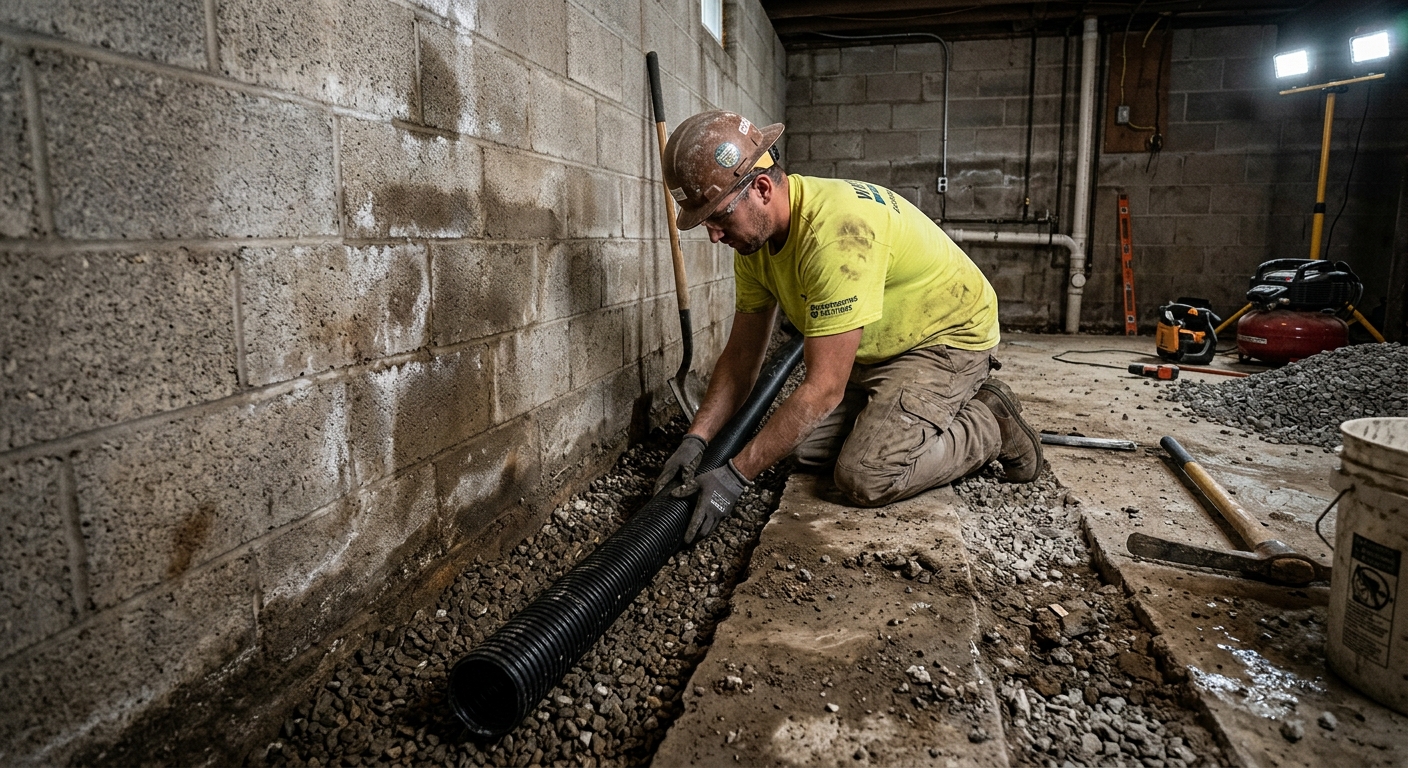
Basement waterproofing options and costs in Dunluce
Dunluce, Alberta is a market where basement moisture issues tend to show up as the ground repeatedly saturates, then freezes, then thaw-cycles again. With a 2021 Census population of 6,341 (Statistics Canada, 2021 Census), Dunluce isn’t large, so established local contractors can often be booked quickly when spring runoff hits and older homes start showing signs of seepage. Many Dunluce properties also reflect Calgary-area housing patterns—older neighbourhood stock is far more likely to have failing original waterproofing details (such as aged membrane systems and corroded weeping tile) and that drives the most common call-outs: wall dampness, localized seepage, and efflorescence along foundation corners.
Pricing is shaped by Calgary’s clay-heavy soils and freeze–thaw cycling. Clay and clay-till tend to hold water and expand when saturated, which increases lateral pressure on foundation walls and widens cracks over time. At the same time, labour availability and excavation complexity in the Calgary region can move costs quickly: deep digs, tight side yard access, and disposal of heavy clay spoils all add up. In older parts of the Calgary area, these failures often show up first as weeping tile blockages or undersized interior drainage—meaning interior options sometimes control symptoms, but exterior work is what addresses the water source for long-term performance.
We also see higher demand in established pockets near main transportation corridors where lots are narrower and landscaping and concrete patios limit access. If you want a clear starting point, compare the core options below, then match the method to what your foundation and drainage system are telling you.
| Method |
What It Addresses |
Disruption Level |
Durability |
Price Range |
| Exterior excavation + new membrane + drainage tile |
Primary water entry at foundation perimeter; reduces hydrostatic pressure |
High (excavate perimeter, remove landscaping/patio, backfill) |
Long-term (often 15–25+ years with correct drainage design) |
$9,000–$25,000 |
| Interior perimeter drain channel + sump pit |
Water after it enters; relieves basement floor/wall seepage |
Medium (minor interior demo) |
High (typically 12–20+ years, depends on sump maintenance) |
$5,000–$15,000 |
| Foundation crack injection (epoxy or polyurethane) |
Cracks as a pathway (sealing through-wall leakage) |
Low to Medium (small openings, surface prep) |
Medium to High (best when crack cause is addressed) |
$500–$1,800 |
| Sump pump installation (primary + battery backup) |
Controls hydrostatic water and reduces flooding risk |
Medium (pit, discharge routing, electrical tie-in) |
Medium to High (backup adds reliability through outages) |
$900–$3,000 |
| Window well drain installation |
Surface water and seepage around egress windows |
Low to Medium (excavate around wells) |
Medium (improves as long as weeps are kept clear) |
$1,200–$4,000 |
| Lot re-grading / downspout extension |
Redirects roof runoff away from foundation |
Low (light site work) |
Low to Medium (works well if drainage paths stay maintained) |
$900–$3,500 |
Prices are estimates only and vary by project scope, site access and material selection.
What affects the price of waterproofing in Dunluce
In Dunluce and across the Calgary economic region, quotes for what sounds like the “same” waterproofing job can swing by 30–50%. The reason is that waterproofing scope is rarely identical once we locate the actual water pathway: some homes have a blocked weeping tile system, others have interior drainage that’s undersized, and others are dealing with active cracks that open under freeze–thaw. Add in excavation access, how much interior wall/floor demo is required, and whether a sump backup is included, and costs diverge quickly.
The three biggest drivers that separate regional pricing from a simple national average are soil type, water table conditions, and freeze–thaw performance. Clay-heavy soils common in parts of Alberta expand when saturated, which increases lateral pressure on foundation walls and can turn hairline cracks into persistent leaks. When seasonal groundwater is higher along low-lying pockets and storm-heavy periods, sump run times rise and the drainage plan often needs more capacity. Freeze–thaw then widens joints and cracks, allowing meltwater and spring runoff to penetrate more easily; that’s why exterior systems (membrane + drainage tile + functioning perimeter drains) often cost more but perform better over time.
Two practical examples from typical Dunluce installs: (1) If a downspout discharges near the foundation and the backfill is clay, re-grading and extensions can reduce basement dampness and sometimes delay the need for full exterior excavation, keeping the work closer to the $9,000–$25,000 band only when the source is confirmed. (2) If the weeping tile is original and failed, interior drainage alone may slow the problem, but you’ll often end up pairing interior work with sump installation near the $5,000–$15,000 range plus pump costs. The housing-stock effect matters too: in older areas, corroded weeping tile and seeping poured-concrete or block walls are frequent failure points, and that increases both troubleshooting time and sealing scope.
| Price Factor |
Why It Matters |
Cost Impact |
| Interior vs. exterior approach — interior is less disruptive but addresses symptoms |
Exterior removes the water source; interior mainly manages what enters |
Exterior typically costs more; interior can be 40–70% lower depending on access |
| Foundation type — poured concrete vs. block vs. stone vs. ICF |
Crack behaviour and sealing methods differ by wall system |
Poured concrete crack injection often stays lower than complex block sealing + drainage |
| Soil type — clay expands more than sand, adding pressure |
More pressure can require stronger drainage and more robust sealing details |
Clay sites often push excavation and drainage design higher |
| Crack type and length — hairline vs. structural horizontal cracks |
Structural cracks may need engineering and additional stabilization |
Structural work can add several thousand dollars vs. standard injection |
| Sump pump backup system — battery or water-powered backup needed |
Outages during spring wet periods increase flood risk |
Backup often adds material and labour, typically $900–$3,000 range depending on system |
| Access — landscaping, decks, or driveways must be removed for exterior |
More removal/disposal increases time and restoration |
Urban lot access can swing total cost significantly |
| Weeping tile age — original tile (60+ years) may be completely failed |
Failing tile means exterior membrane alone may not work without drainage correction |
If tile is beyond repair, replacement pushes costs toward full exterior bands |
| Mould or efflorescence remediation required before sealing |
Moisture-contaminated surfaces require proper cleaning/drying |
Prep time and remediation can add days and increase labour |
Permits & regulations in Alberta
In Alberta, waterproofing-related work sometimes requires a building permit, especially when you’re changing structural or site-drainage conditions. Foundation excavation along the perimeter, structural crack repair, and changes to lot drainage (for example, altering discharge routes or substantially reworking drainage patterns near the foundation) typically require a permit. Sump pump installations that connect to municipal storm or sanitary infrastructure need municipal approval, and the contractor should coordinate the correct discharge approach and documentation.
For structural crack repair—particularly horizontal cracks in block walls or major step cracking—an engineer’s assessment is often required to determine whether underpinning, wall stabilization, or other structural remediation is needed. Before work begins, confirm your contractor has engineering support for structural repairs (not just “we’ll inject it”), and that they carry liability insurance and are properly covered through WSIB/WCB as applicable for their crews.
To verify a contractor in Dunluce, do it step-by-step: (1) Check their Alberta business/licensing details using the appropriate online sources for the trade you’re hiring; (2) request a current certificate of insurance and confirm it’s valid for the work and your property; (3) ask for WSIB/WCB clearance documentation where applicable and verify the coverage is active; (4) for engineered repairs, request the engineer’s letter/assessment plan and confirm the contractor is coordinating it; (5) ensure permits are pulled in the homeowner’s name or as required by the process for the specific scope.
Interior vs exterior waterproofing — what does Dunluce need?
The fundamental difference is that exterior waterproofing (full excavation, new membrane, new drainage tile, then backfill and surface restoration) addresses the water source before it reaches your basement walls. Interior waterproofing (a perimeter drain channel, sump pit and sump pump) manages water after it enters. In southern Alberta’s freeze–thaw climate, managing only after-entry water can still keep your basement dry, but it doesn’t fully relieve hydrostatic pressure acting on the wall itself—so cracks can continue to open and close over seasons.
For Dunluce, exterior work tends to be the right choice when you’re dealing with persistent seepage, evidence of failed perimeter drainage, or high-risk areas where groundwater and spring runoff create measurable hydrostatic pressure. Interior drainage is often the best fit when access is constrained (patios, decks, narrow side yards) or when you’re solving a known symptom pattern—like corner dampness and floor seepage—while planning later source correction. Poured concrete walls generally respond well to targeted crack injection for sealing pathways, while block foundations frequently benefit from interior drainage as a practical complement, because block mortar voids and micro-pathways can be harder to fully seal from the inside.
Power reliability also matters. Alberta spring flooding periods can coincide with outages; a sump pump without a reliable backup can mean unpleasant surprises. In a typical comparison, full exterior systems are commonly in the $9,000–$25,000 band, while interior perimeter drainage plus sump work often falls into the $5,000–$15,000 band. If your main issue is a confirmed failed weeping tile and active wall seepage, the extra cost of exterior waterproofing is often justified. If the leak is localized and entry is through a small number of cracks, crack injection paired with interior drainage may be a more cost-effective path.
| Method |
Best For |
Addresses Source? |
Disruption |
Lifespan |
Price Band |
| Full exterior excavation + membrane |
Persistent seepage, likely failed perimeter drainage, hydrostatic pressure concerns |
Yes (primary water entry) |
High (excavation + backfill + landscaping restoration) |
15–25+ years |
$9,000–$25,000 |
| Interior French drain + sump system |
Basement dampness, floor seepage, blocked/uncertain exterior drainage |
No (manages water after entry) |
Medium (interior demo, pit placement, discharge routing) |
12–20+ years |
$5,000–$15,000 |
| Crack injection — epoxy (structural) |
Stable cracks where moisture is limited or after hydrostatic cause is controlled |
Partly (seals pathways in the crack) |
Low to Medium |
Medium to High (depends on crack stability) |
$500–$1,800 |
| Crack injection — polyurethane (active leak) |
Active seepage where crack may move slightly with freeze–thaw |
Partly (seals active leak routes) |
Low to Medium |
Medium to High (best with proper drainage plan) |
$500–$1,800 |
| Interior drain channel only (no sump) |
Minor seepage that drains effectively without standing pressure |
No (symptom management) |
Medium (cut and channel placement) |
5–12+ years |
$3,500–$9,000 |
| Re-grading + downspout extensions |
Surface runoff issues, light dampness triggered by storms |
No (prevents added water) |
Low |
1–7 years (longer if maintained) |
$900–$3,500 |
How to choose a waterproofing contractor in Dunluce
Choosing the right waterproofing contractor in Dunluce starts with proof, not promises. First, verify Alberta coverage and credentials: ask for their certificate of insurance (liability policy covering the work at your address), then request WSIB/WCB clearance documentation where applicable. Next, confirm their business details and the specific trade qualifications relevant to excavation, concrete work, and drainage systems—don’t assume “waterproofing contractor” means they can legally do every component.
Then get 2–3 itemised written quotes. You want a labour + materials breakdown (membrane type, drainage components, sump model, discharge method, and disposal/backfill handling), not a single lump sum that hides scope gaps. Read exclusions line-by-line: will they pull permits if required, is disposal included for clay spoils, are landscape restorations included (and to what standard), and what happens if hidden conditions are found during excavation?
Warranty matters. Ask for the workmanship warranty length, the product/manufacturer warranty details, and whether any warranties are transferable if you sell the home. Payment scheduling should be conservative: never pay more than 10–15% upfront, and use a holdback until the job is fully complete and verified. Finally, get a written start date and completion estimate—waterproofing work is weather-dependent in Alberta, so your schedule should reflect freeze–thaw constraints and curing times.
- Ask what permit(s) apply to your scope and whether the contractor pulls them.
- Request COI (certificate of insurance) and confirm effective dates.
- Confirm WSIB/WCB clearance (where applicable) with current documentation.
- Require a detailed drainage plan: discharge route, pipe slope, and sump location.
- Confirm excavation scope: which walls/sections are included and how far backfill is removed.
- Get membrane details (system type) and how terminations are finished at grade.
- Check whether disposal fees for heavy clay spoils are included.
- Verify restoration scope: grading, topsoil, sod/seed, and concrete/patio reinstatement if removed.
- Request proof of sump backup design if you’re in a higher-risk area.
- Confirm crack injection material and whether it matches the crack type (epoxy vs polyurethane).
- Review warranty: workmanship length, exclusions, and transferability.
- Use holdback: retain a final payment until inspection/photo verification and cleanup are complete.
Concrete red flags we see in Dunluce: (1) a quote that offers only interior drainage when the inspection suggests failed perimeter drainage and exterior pathways; (2) promises of “permanent waterproofing” without confirming crack movement and drainage capacity; (3) vague warranties with no workmanship term or missing manufacturer details; (4) no listed disposal/restoration scope in an excavation project; and (5) insisting on a large upfront payment (beyond 10–15%) or avoiding a written start/completion timeline.
Frequently asked questions — waterproofing in Dunluce
How do I compare waterproofing quotes?
Start by comparing scope, not just totals. In Dunluce and the Calgary region, the biggest quote differences come from whether the contractor targets the source (exterior membrane + drainage tile) or only manages water after entry (interior drain + sump). Ask each contractor to provide an itemised breakdown: excavation length, membrane system, drainage pipe/sock, discharge method, and whether re-grading/downspouts are included. Also compare how they handle failed weeping tile and what happens if they uncover additional damage. If one quote lands near the $9,000–$25,000 band and another is in the $5,000–$15,000 band, the question is whether the source is addressed.
How long does basement waterproofing take in Dunluce?
Timeline depends on whether you’re doing interior or exterior work and how much access is required. Interior perimeter drain channels and sump installations in the Calgary region are often scheduled for a shorter window once demo is complete, typically measured in days rather than weeks. Exterior excavation projects usually take longer because of perimeter digging, membrane installation, drainage tile placement, backfill/compaction, and final restoration (plus weather delays during Alberta freeze–thaw). In Dunluce, plan around curing times for sealants and membranes, and expect additional days if disposal, landscaping removal, or concrete patio cuts are required. A realistic approach is to request a written start date, daily work plan, and completion estimate that accounts for snow cover and temperature requirements.
What is a weeping tile and does my Dunluce home have one?
A weeping tile is an underground drainage pipe system around the foundation designed to collect water and relieve pressure by redirecting it away from the basement perimeter. Many older Calgary-area homes (and often older Dunluce properties) originally had a weeping tile connected to a discharge point, but over decades it can clog, crack, or corrode—especially when clay soils hold water and freeze–thaw pushes debris and fines into the system. You can look for clues like exterior inspection openings, historical discharge routing, or signs inside such as historic damp lines along walls. The best verification is a contractor inspection that may include locating access points and using a scope camera if you have suitable access. If the tile is failed, interior drainage and sump systems may still protect your basement.
Can I waterproof my basement in winter in Dunluce?
Sometimes, but with limitations. In Alberta, basement waterproofing work is affected by freezing conditions that can limit excavation and compromise membrane or backfill quality. Interior waterproofing (like installing a sump pit, interior perimeter drain channel, or crack injection) is often more feasible in winter because you’re working inside where temperatures can be controlled and concrete cutting/sealing can proceed with proper equipment and conditions. Exterior excavation is harder when soil is frozen and trenching is unsafe or inefficient, and backfill compaction can be unreliable. If you suspect active leaks during spring thaw, interior work done in winter can be a practical interim step—especially when delays would otherwise leave you exposed to seepage and efflorescence. Ask contractors about temperature requirements for products and whether the job can be sequenced.
What is the difference between waterproofing and damp-proofing?
Damp-proofing is typically meant to reduce moisture from reaching interior surfaces under normal conditions, but it isn’t designed to stop hydrostatic pressure or sustained water movement. True waterproofing is a system-level approach: correct exterior membrane design, functioning perimeter drainage, proper sealing at terminations, and (where needed) a reliable sump system to manage water pressure after entry. In Dunluce, freeze–thaw and clay soil saturation can turn “damp” into active seepage during spring runoff, so the wrong product or partial method can fail faster. For example, applying a coating without correcting drainage may only slow leaks, while an exterior excavation + membrane + new drainage tile system is built to address water at the source.
Will basement waterproofing affect my property value in Dunluce?
Usually, yes—especially when the work reduces recurring moisture symptoms and gives you documented repairs and warranties. In a community like Dunluce with a smaller local market (population 6,341 in 2021, Statistics Canada, 2021 Census), buyers pay attention to basement condition, smell, visible efflorescence, and any signs of active seepage. Even partial improvements matter: sealing foundation cracks and installing interior drainage can change how a home performs during spring runoff. If the work is substantial and properly documented (permits where required, warranty details, and photo records), it can support buyer confidence and inspection outcomes. Costs vary widely; for instance, interior work may align with $5,000–$15,000, while source-correcting exterior waterproofing often falls into the $9,000–$25,000 band. The key is matching the method to the actual water entry pathway.