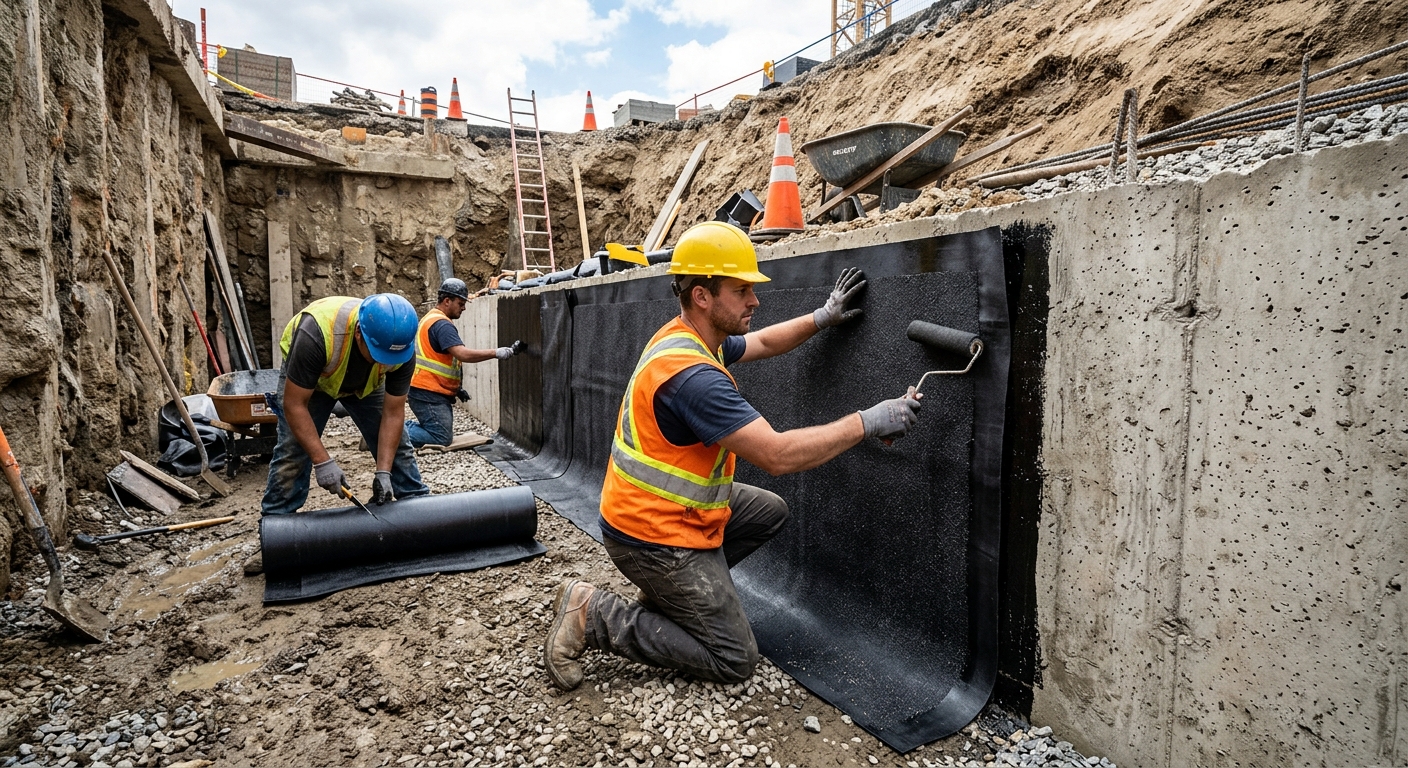
Basement waterproofing options and costs in Hatzic
Basement waterproofing in Hatzic usually starts with a careful diagnosis: where water enters, how quickly it moves, and what pressures it’s under. With Hatzic’s population at 2,952 (Statistics Canada, 2021 Census), you’ll see fewer contractors than in the Vancouver core, but demand is still steady—especially around older pockets of town where original membrane and drainage details have aged. In many Lower Mainland–Southwest homes, failing original weeping tile (often decades old) is the common trigger for damp basements and recurring seepage. The region’s wet, mild winters and persistent saturation keep hydrostatic pressure active against basement walls and slabs, which is why the same “leak” can return until drainage and waterproofing are addressed together.
Cost is shaped by the Lower Mainland–Southwest reality: soil is more often prone to prolonged wetting than dramatic seasonal heave, but intense, prolonged rainfall and higher groundwater levels still push water toward foundations. Freeze-thaw cycles then widen existing cracks and joints, accelerating deterioration. Excavation can also be more expensive here due to labour rates, tight access on many lots, and rocky sections that require mechanical breaking. Areas near Haney Bypass and the wider Hatzic corridor often see more basement moisture work because of older homes, mature landscaping, and limited yard space.
Below is a practical side-by-side comparison to help you match solutions to symptoms—then use the numbers to sanity-check quotes.
| Method |
What It Addresses |
Disruption Level |
Durability |
Price Range |
| Exterior excavation + new membrane + drainage tile |
Hydrostatic pressure at the source; bulk water management around the perimeter |
High (yard removal/rebuild, excavation) |
Long-term when drain, membrane, and regrading are done correctly |
$15,500–$28,500 |
| Interior perimeter drain channel + sump pit |
Water that enters through walls/floor cracks; keeps basement dry via active drainage |
Medium (interior floor saw-cuts/patching) |
Strong for recurring seepage if sump and discharge are sized correctly |
$9,000–$17,500 |
| Foundation crack injection (epoxy or polyurethane) |
Crack sealing to stop seepage (polyurethane) or restore non-moving cracks (epoxy) |
Low to medium (drilling/patching only) |
High for the right crack type and prep; best paired with drainage |
$900–$2,200 |
| Sump pump installation (primary + battery backup) |
Prevents flood risk during power outages; manages peak inflow periods |
Medium (pit + discharge routing) |
Reliable when discharge lines are clear and backup is tested |
$1,600–$4,900 |
| Window well drain installation |
Directs rain/groundwater away from below-grade window openings |
Low to medium (excavation at window wells) |
Good for localized ingress when grading and liners are correct |
$1,200–$3,400 |
| Lot re-grading / downspout extension |
Reduces surface runoff and keeps water from migrating toward the foundation |
Low to medium (landscaping work) |
Moderate (needs maintenance and good splash-out control) |
$2,000–$6,500 |
Prices are estimates only and vary by project scope, site access and material selection.
What affects the price of waterproofing in Hatzic
Even when the problem sounds the same, waterproofing quotes in the Lower Mainland–Southwest can differ by 30–50% across British Columbia. The biggest reasons are whether contractors are solving the source (exterior drainage and membrane) or only managing symptoms (interior drainage), plus how difficult your specific site is. Soil type, water table levels, and freeze-thaw are the three drivers that separate regional costs from a national baseline. In Ontario and many Prairie areas, clay-heavy expansive soils can worsen foundation movement during freeze-thaw; in Hatzic, the cost driver is more often persistent saturation and drainage challenges. When groundwater stays high through winter, sump sizing, drain capacity, and discharge routing become more complex and ongoing leakage risk rises.
Concrete Hatzic examples: a perimeter where original weeping tile is still present but collapsed behind a mature cedar hedge may require additional mechanical breaking—pushing exterior waterproofing toward the upper end of the $15,000–$30,000 band. A home with a poured-concrete foundation wall and a narrow, crack-only issue might fit crack injection work closer to the $500–$2,000 range, especially if there’s no active seepage at the weep pathways. Conversely, an interior-only retrofit where water constantly enters during heavy BC rainfall can push interior perimeter drain systems from the $8,000–$18,000 band up toward the high side, particularly if a sump pump with battery backup is added for spring flooding reliability.
Housing age also matters in Hatzic: older walls and drainage systems can have hidden voids, old tar-and-paper failures, or weak weeping tile performance that turn “one-time” repairs into ongoing water management—often changing the job from a small patch to a comprehensive drainage upgrade.
| Price Factor |
Why It Matters |
Cost Impact |
| Interior vs. exterior approach — interior is less disruptive but addresses symptoms |
Exterior targets hydrostatic pressure at the perimeter; interior manages water after entry |
Exterior typically costs more due to excavation and restoration |
| Foundation type — poured concrete vs. block vs. stone vs. ICF |
Material affects crack behaviour and the best sealing/drainage strategy |
Block and mixed foundations often need more interior drainage work |
| Soil type — clay expands more than sand, adding pressure |
Expansion can worsen cracks and pressure during freeze-thaw |
More pressure usually increases prep, repairs, and reinforcement |
| Crack type and length — hairline vs. structural horizontal cracks |
Active or structural cracks require different materials and potentially engineering |
Structural repairs can add labour, materials, and time |
| Sump pump backup system — battery or water-powered backup needed |
Power reliability matters during wet spring periods |
Backup increases cost but reduces flood risk materially |
| Access — landscaping, decks, or driveways must be removed for exterior |
Small yards and hardscapes increase labour and restoration scope |
Access constraints can move the job toward the high end of bands |
| Weeping tile age — original tile (60+ years) may be completely failed |
Collapsed/blocked drainage changes what must be installed and how it’s routed |
Failed systems often require full replacement or comprehensive interior retrofits |
| Mould or efflorescence remediation required before sealing |
Sealers won’t bond reliably to contaminated surfaces |
Remediation adds time and materials before waterproofing |
Permits & regulations in British Columbia
In British Columbia, foundation excavation, structural crack repair, and changes to lot drainage typically require a building permit. If your foundation work involves structural concerns—like horizontal cracks in block walls, major step cracks, or anything suggesting movement—many homeowners need an engineer’s assessment before the contractor can determine whether underpinning or other structural measures are necessary. Also note that sump pump systems that discharge into the storm or sanitary sewer generally require municipal approval. For anything involving connections to municipal services, ask your contractor how approvals are handled and whether they coordinate with the municipality.
Step-by-step, here’s how to verify a contractor in Hatzic:
- Confirm whether the proposed scope needs a permit (ask for the exact permit category and who pulls it).
- Verify engineering support for structural crack repairs—ask for an engineer’s involvement letter or a stamped plan when required.
- Request proof of liability insurance and check the certificate details match the legal business name.
- Verify worker coverage (WSIB/WCB). Ask for current clearance documentation or coverage confirmation.
- Ensure the contractor uses a written scope that states what happens if water finds a new path after excavation.
When quotes are clear about permits, engineering (when needed), and insurance, you’ll typically see fewer surprises during excavation and sealing—especially in wet Lower Mainland–Southwest conditions where drainage discharge and grading are closely scrutinized.
Interior vs exterior waterproofing — what does Hatzic need?
The core difference is what you’re trying to stop. Exterior waterproofing (full excavation, new membrane, and drainage tile) addresses water entry at the source by reducing hydrostatic pressure and directing it away from the foundation. Interior waterproofing (a perimeter drain channel, sump pit, and sump pump) manages water after it enters through walls or slab cracks—often with less yard disruption, but it doesn’t permanently prevent pressure from pushing against the wall itself. In Hatzic’s Lower Mainland–Southwest climate, persistent saturation and rainfall keep the “wet season pressure” active, so many homes benefit from drainage improvements outside, especially when the original weeping tile has failed.
For decision-making: poured-concrete walls often respond well to targeted crack injection when the crack is non-moving and prep is done thoroughly. Block foundations frequently need interior drainage as a practical complement because moisture can travel through joints and uneven surfaces even after localized sealing. Sumps are also a real consideration in British Columbia because outages can happen during storm and spring flooding events; adding battery backup is often the difference between a “wet basement” and a full cleanup.
Budget examples help. If you’re seeing recurring dampness along one side, interior drainage plus sump backup might land in the middle of the $8,000–$18,000 interior band, while a full exterior system often sits in the higher $15,000–$30,000 exterior excavation range. That extra exterior cost is usually justified when exterior access is workable and the original perimeter drainage has failed—because you’re preventing future saturation-driven seepage rather than chasing it indoors.
| Method |
Best For |
Addresses Source? |
Disruption |
Lifespan |
Price Band |
| Full exterior excavation + membrane |
Recurring seepage, high groundwater influence, failed exterior drainage |
Yes |
High (excavation and landscaping restoration) |
Long-term with proper drainage and backfill |
$15,500–$28,500 |
| Interior French drain + sump system |
Water entry through walls/slab, limited exterior access |
No (manages after entry) |
Medium (floor openings/patching) |
Very good with correct sizing and discharge |
$9,000–$17,500 |
| Crack injection — epoxy (structural) |
Hairline/non-moving cracks with clean, dry readiness |
Partial (stops flow through that crack) |
Low (drill and seal) |
High when the crack isn’t actively leaking |
$900–$1,800 |
| Crack injection — polyurethane (active leak) |
Cracks with active seepage where water is still present |
Partial (targets seepage path) |
Low (localized drilling and injection) |
High when combined with drainage and surface prep |
$1,100–$2,200 |
| Interior drain channel only (no sump) |
Light dampness, stable inflow, good gravity discharge option |
No |
Medium (interior work) |
Moderate; depends on inflow conditions |
$6,500–$12,500 |
| Re-grading + downspout extensions |
Surface runoff contribution, gutters discharging near foundation |
No (reduces water migration) |
Low to medium (landscaping) |
Moderate; requires ongoing maintenance |
$2,000–$6,500 |
How to choose a waterproofing contractor in Hatzic
Start by verifying the contractor’s provincial standing and coverage—because waterproofing is one of those trades where documentation helps protect you if something doesn’t perform. In British Columbia, ask for their business details and confirm licensing/registration where applicable for the work they’re doing (especially for any structural elements). Then request a current certificate of liability insurance that names the correct legal business, plus proof of WSIB/WCB coverage. If the scope includes demolition or electrical work for sump controls, you want those covered as well.
Next, get 2–3 itemised written quotes rather than one lump sum. You want labour and materials broken out, including excavation scope (if exterior), membrane and drain components, discharge routing, and concrete cutting/patching. Check what’s excluded: disposal fees, permits, engineer assessment, haul-away, landscaping restoration, and whether testing after installation (flow checks) is included. Warranty matters too: confirm the workmanship warranty length, the product/manufacturer warranty, and whether the warranty is transferable to a new owner.
For payment schedule, never approve more than 10–15% upfront. Use a holdback until completion and close-out paperwork (warranty documents, as-built notes, and any permit/approval references). Finally, require a timeline with a start date and estimated completion date in writing—Hatzic projects can stretch if excavation timing misses rainy windows or if municipal approvals are pending.
- Ask how they diagnose the source (internal moisture mapping, drain inspection, crack ID).
- Confirm whether they’ll scope includes removing finishes and restoring them to a defined standard.
- Request a materials list (membrane type, drain tile specs, sump pump model/HP, backup type).
- Check discharge method (to storm line with approvals, or alternative compliant routing).
- Look for written confirmation of permits if drainage changes are proposed.
- Verify engineer involvement for structural crack patterns (horizontal/step) when applicable.
- Demand a workmanship warranty in writing, not only a verbal assurance.
- Clarify who handles disposal/haul-away for excavated soils and debris.
- Ensure they address surface preparation and efflorescence/mould remediation before sealing.
- Ask about freeze-thaw protections (proper backfill, compaction, drainage grade).
- Require a close-out package: warranty docs, pump specs, and maintenance notes.
- Use a payment plan that protects you (10–15% upfront; holdback at completion).
Red flags in Hatzic: (1) contractors who promise to “seal the crack” without checking whether drainage is failing, (2) no written scope or exclusions for excavation/disposal/landscape restoration, (3) refusal to provide insurance and WSIB/WCB proof, (4) warranties described vaguely (“lifetime”) without workmanship terms, and (5) quoting exterior work while ignoring site access limits (tight lots, decking, or rocky sections that require mechanical breaking).
Frequently asked questions — waterproofing in Hatzic
How do I know if a foundation crack is serious?
In Hatzic, not every crack signals structural movement, but you should treat certain patterns as a priority—especially given Lower Mainland–Southwest freeze-thaw and persistent wet seasons. Hairline shrinkage cracks that stay dry and don’t change are often manageable with targeted crack repair. However, look closely for active seepage (wetness, mineral staining), horizontal movement, or step cracks at block joints. If a crack opens during heavy rain and then re-closes, it’s often tied to water pressure and may need polyurethane injection plus improved drainage. If you see widening over time, water-driven flow that keeps returning, or cracks paired with bowing, consult an engineer before sealing. A proper diagnosis also determines whether a smaller repair (often around $500–$2,000 depending on length and materials) is enough or whether you need drainage upgrades.
How much does foundation crack repair cost in Hatzic?
Foundation crack repair in Hatzic typically depends on crack type (hairline vs. active seepage), foundation material, and how many linear feet are treated. For many homeowner situations—where the work is limited to injection and patching without major drainage reconstruction—cost often falls near the $500–$2,000 band. Epoxy injection is commonly used when cracks are non-moving and can be prepped for bonding, while polyurethane is used where there is active water seepage. If the crack is part of a larger water-entry route (for example, the perimeter weeping tile has failed), contractors may recommend combining injection with interior perimeter drainage and a sump pump, which shifts the project into the higher interior waterproofing range (often $8,000–$18,000). Always ask for an itemised quote showing linear footage, injection type, surface prep, and whether there’s any moisture remediation before sealing.
Do I need a sump pump in Hatzic?
A sump pump is usually recommended when water keeps entering below grade and gravity drainage isn’t sufficient—common in Hatzic due to prolonged BC rainfall and higher groundwater influence during wet periods. If you have recurring dampness, wet corners, or signs of hydrostatic pressure during winter and spring, a sump helps manage inflow continuously. Many Lower Mainland homes benefit from a sump system even when the issue begins as “just seepage,” because freeze-thaw can widen cracks and increase flow. In practice, whether you need one depends on whether an interior perimeter drain will capture water effectively, and how the discharge is routed. When you’re already paying for interior waterproofing, adding battery backup can be a smart risk reduction during outages. For a sump installation with backup, homeowners often budget around $1,000–$5,000, with the exact total depending on pump selection and discharge conditions.
How does Hatzic's soil affect my foundation?
In Hatzic and the Lower Mainland–Southwest, soil issues usually show up through saturation and drainage behaviour rather than extreme seasonal swelling like you’d see in parts of Ontario or the Prairies. Persistent wet conditions keep hydrostatic pressure against basement walls and slabs, so even well-built homes can experience seepage when drainage details age or fail. Freeze-thaw then worsens openings at joints and cracks, letting more water penetrate during wet-to-cold transitions. Practically, if your perimeter drainage (weeping tile) is undersized, collapsed, or disconnected, the foundation may see more sustained water pressure. That increases the likelihood you’ll need interior perimeter drainage and a sump, or full exterior excavation if exterior drainage has truly failed. Your contractor should evaluate soil saturation, backfill compaction, drainage grade, and whether re-grading or downspout extension changes will meaningfully reduce inflow.
Do I need a permit for foundation work in British Columbia?
In British Columbia, foundation excavation, structural crack repair, and changes to lot drainage typically require a building permit. If you’re dealing with structural crack patterns (for example, horizontal cracks in block walls or step cracking), an engineer’s assessment is often required to determine if underpinning or structural work is necessary. Also, if a sump pump system will connect to storm or sanitary sewer services, municipal approval is generally required. For the homeowner, the key is to ask your contractor what permits apply to your exact scope before work begins. Verify that the contractor is clear on whether they will pull the permit and whether engineering support is included when needed. If someone offers to do “no-permit” exterior excavation or drainage changes, that’s a serious concern—especially when approvals affect how discharge routes are handled.
How long does waterproofing last?
The lifespan depends on whether you solved the water entry source and whether the drainage system stays functional through the wet season. Exterior systems—when they include correct membrane installation, new drainage tile, properly graded backfill, and discharge planning—can provide long-term protection. Interior systems manage water after it enters and can perform very well for years, but they rely on sump pump operation, backup readiness, and maintaining clear discharge routes. Crack injection can last a long time when the crack is non-moving and appropriately matched (epoxy for non-moving, polyurethane for active seepage), but if the surrounding drainage is failing, new seepage can appear elsewhere. In Hatzic’s Lower Mainland–Southwest climate, freeze-thaw and sustained rainfall mean maintenance matters: keeping downspouts directing water away from the foundation and ensuring surface grading doesn’t direct runoff back toward the basement. As a rough planning guide, expect meaningful performance for many years; if you’re seeing recurring issues, it’s often a sign the drainage path needs attention rather than repeated small repairs.