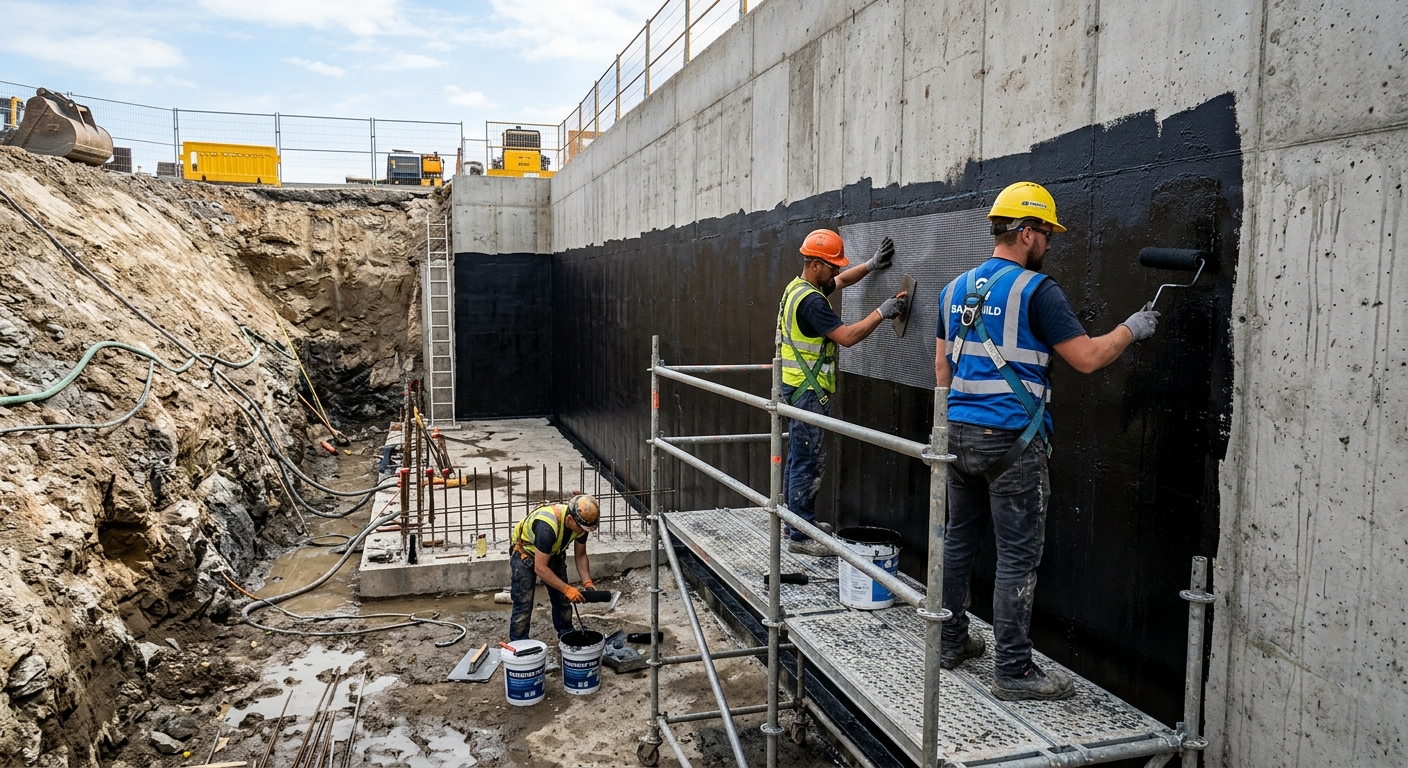
Basement waterproofing options and costs in Bearspaw
Basement waterproofing in Bearspaw, Alberta usually starts with understanding what’s driving water at your foundation: clay-rich soils that hold moisture, spring runoff that surges during warm-ups, and freeze–thaw cycles that widen weak joints. With a total population of 5,567 in Bearspaw (Statistics Canada, 2021 Census), the local market is smaller than Calgary—so specialty crews may book out sooner during peak spring excavation season. Bearspaw-area neighbourhoods with older housing stock are especially in demand because early waterproofing systems (tar-and-paper style coatings) were often paired with less reliable weeping tile and drain lines. Where we see original perimeter drainage that’s decades old, failure is common rather than occasional.
In Calgary and surrounding communities, contractor pricing also reflects the reality of access and backfill disposal. Clay spoils can be heavier and harder to rework, and tight lot lines can mean more time for excavation, shoring, and careful disposal. Freeze–thaw can also increase repair complexity because contractors need to address active pathways (cracks and joints) before membranes and sealants can perform. For these reasons, quotes for similar homes can differ noticeably—particularly when you’re deciding between full exterior work and interior drainage-only solutions.
The table below compares the most common options homeowners use in Bearspaw and the typical cost ranges you can expect before we ever step on-site to confirm foundation type, soil conditions, and access.
| Method |
What It Addresses |
Disruption Level |
Durability |
Price Range |
| Exterior excavation + new membrane + drainage tile |
Water at the foundation source; replaces failed perimeter drainage |
High (landscape removal, excavation, regrading) |
Long-term, typically 15–25+ years with proper backfill and drainage |
$9,000–$25,000 |
| Interior perimeter drain channel + sump pit |
Collects seepage after it enters; reduces hydrostatic pressure on walls |
Medium (interior work in basement perimeter) |
Typically 10–20+ years depending on sump/pump selection |
$5,500–$14,500 |
| Foundation crack injection (epoxy or polyurethane) |
Stops localized leaks and seals cracks/joints |
Low to medium (small access holes, patching) |
Epoxy often lasts longer for non-moving cracks; polyurethane suits active leaks |
$800–$1,800 |
| Sump pump installation (primary + battery backup) |
Manages water during spring storms and outage events |
Low to medium (basement pit + discharge routing) |
Depends on maintenance; backup increases reliability in Alberta seasons |
$1,200–$3,000 |
| Window well drain installation |
Reduces water pooling and seepage at egress wells |
Low to medium (window well access) |
Often 10–15 years when tied into proper drainage |
$1,000–$2,500 |
| Lot re-grading / downspout extension |
Redirects roof runoff away from foundation |
Low (exterior landscaping adjustments) |
Can last 5–15 years depending on settling and maintenance |
$900–$3,000 |
Prices are estimates only and vary by project scope, site access and material selection.
What affects the price of waterproofing in Bearspaw
In Bearspaw, even when you’re comparing the same “type” of waterproofing on paper, Calgary-area quotes can swing by 30–50%. The main reason is that waterproofing pricing is labour- and site-condition driven: access, excavation depth, foundation geometry, and whether the contractor needs to rebuild drainage pathways—not just apply sealant. In other words, two basements that both “leak” may need totally different interventions because the water route is different.
For Bearspaw, the three biggest drivers that separate local costs from the national average are soil type, water table, and freeze–thaw. Clay-heavy soils (common across the Prairies and seen in many Calgary-side lots) expand when saturated and exert more lateral pressure on foundation walls and footings, worsening cracks over time. In low-lying pockets and areas with seasonal groundwater, sump systems run longer and often need a more reliable discharge plan. Freeze–thaw then widens existing pathways and can make “cosmetic sealing” fail quickly.
As concrete examples, exterior excavation can land near the top of the $9,000–$25,000 range when crews must excavate deeply along a long wall, remove patios or mature landscaping, and dispose of heavy clay spoils. By contrast, a perimeter drain channel plus sump might stay nearer $5,000–$15,000 when interior access is clear and the leak is primarily seepage rather than an exterior source.
Finally, older housing stock influences cost directly. If we find original weeping tile that’s been in place for decades, it can be clogged or broken, which means the job often shifts from “small repair” to “full drainage replacement.” That’s why two homes on the same street can price differently even though both sit in the Calgary economic region.
| Price Factor |
Why It Matters |
Cost Impact |
| Interior vs. exterior approach — interior is less disruptive but addresses symptoms |
Exterior aims at the water source; interior manages water after entry |
Exterior typically costs more due to excavation ($9,000–$25,000); interior often targets $5,000–$15,000 |
| Foundation type — poured concrete vs. block vs. stone vs. ICF |
Crack/settlement behaviour and sealing method differ by wall system |
Block often needs interior drainage as a practical complement; costs can trend higher for more complex wall details |
| Soil type — clay expands more than sand, adding pressure |
Saturated clay increases hydrostatic and lateral wall stress |
May require sump capacity upgrades or wider drainage scope |
| Crack type and length — hairline vs. structural horizontal cracks |
Moving/structural cracks may need engineered assessment and different repairs |
Can add labour for additional probes, mapping, and possibly underpinning coordination |
| Sump pump backup system — battery or water-powered backup needed |
Alberta spring storms can coincide with power interruptions |
Typically adds to sump budget (often moving within the $900–$3,000 band for full systems) |
| Access — landscaping, decks, or driveways must be removed for exterior |
Extra demolition and reassembly increases labour and schedule risk |
Can push projects toward the upper exterior range depending on restoration needs |
| Weeping tile age — original tile (60+ years) may be completely failed |
Old systems commonly clog, collapse, or disconnect |
May require total replacement rather than patch repair |
| Mould or efflorescence remediation required before sealing |
Sealers and membranes don’t bond well to contaminated, wet surfaces |
Adds time for removal and drying; delays sealing until acceptable moisture conditions are reached |
Permits & regulations in Alberta
In Alberta, foundation excavation, structural crack repair, and changes to lot drainage typically require a building permit. If you’re installing or changing subsurface drainage that affects the foundation’s performance, it’s common for municipalities to expect the contractor to confirm permit requirements and inspection sequencing. If your sump system connects to the storm or sanitary sewer, you generally need municipal approval for that discharge routing.
Where it gets most important is structural repairs. For major horizontal cracks in block walls, step cracking, or any signs suggesting movement beyond ordinary seepage, an engineer’s assessment is often needed to determine whether underpinning or other structural work is required. Good Bearspaw waterproofing contractors confirm up front whether the crack appears “water pathway” versus “movement,” and they provide engineering support when structural involvement is likely.
How a homeowner can verify contractor readiness step-by-step in Bearspaw:
- Check the contractor’s Alberta business details and trade registration/eligibility (verify they operate legally and are properly set up for the work they’re proposing).
- Request a current certificate of insurance showing general liability and appropriate endorsements for construction activities.
- Confirm they carry WSIB/WCB coverage (ask for proof and ensure the clearance letter is current).
- If structural repair is proposed, ask who is providing the engineer assessment and whether that support is included in the quote.
- Ask whether a permit is included (and who pulls it), then get that stated in writing.
Interior vs exterior waterproofing — what does Bearspaw need?
The fundamental difference is that exterior waterproofing (full excavation, new membrane, new drainage tile, and controlled backfill) addresses the source of water entry. Interior waterproofing (perimeter drain channel, sump pit, and sump pump) manages water after it enters. In Bearspaw’s clay-heavy soils and freeze–thaw conditions, interior-only solutions often work best when the primary issue is seepage through joints and minor cracks—not when the exterior drainage pathway is severely failed.
Foundation type also matters. Poured concrete walls typically respond well to crack mapping and crack injection (when there’s no active movement), and an interior drain/sump then provides backup against hydrostatic pressure. Block foundations frequently have more complex leakage pathways; that’s why many homeowners see better outcomes with interior drainage as a practical complement, even when we also repair exterior runoff issues like downspouts and grading.
For spring storms in Alberta, sump performance is critical. A primary pump alone may be sufficient for minor seepage, but when you’ve had outages during wet periods, adding battery backup can be the difference between a “dry basement” and a flooded one. If your site is accessible and you have a long run of failed perimeter drainage, exterior work can be justified because it reduces recurring maintenance and reduces reliance on pumps.
Example: if exterior excavation brings you into the $9,000–$25,000 range but your current problem is repeated seepage along multiple walls and the weeping tile is likely clogged, exterior can be the better long-term spend. If the leak is limited and the foundation is stable, interior approaches may stay closer to $5,000–$15,000 and be the more rational choice—especially when disruption and landscaping restoration are major constraints.
| Method |
Best For |
Addresses Source? |
Disruption |
Lifespan |
Price Band |
| Full exterior excavation + membrane |
Long-term water source failure and multiple leaking walls |
Yes (source) |
High |
15–25+ years |
$9,000–$25,000 |
| Interior French drain + sump system |
Seepage/pressure management when exterior access is limited |
No (manages water after entry) |
Medium |
10–20+ years with correct pump selection |
$5,000–$15,000 |
| Crack injection — epoxy (structural) |
Non-moving cracks in poured concrete where bonding integrity is stable |
Indirect (seals pathways) |
Low to medium |
Often long-lasting for properly mapped, stable cracks |
$500–$1,800 |
| Crack injection — polyurethane (active leak) |
Cracks with active seepage where flexibility helps |
Indirect (seals active pathway) |
Low to medium |
Good for ongoing leakage; performance depends on conditions |
$800–$1,800 |
| Interior drain channel only (no sump) |
Very minor seepage where gravity drainage is reliable |
No (manages water after entry) |
Low to medium |
Variable; typically shorter where water pressure is higher |
$3,500–$8,500 |
| Re-grading + downspout extensions |
Roof runoff issues and surface water pooling |
No (prevents added water load) |
Low |
5–15 years with maintenance |
$900–$3,000 |
How to choose a waterproofing contractor in Bearspaw
Choosing a waterproofing contractor in Bearspaw starts with verification, not promises. First, confirm Alberta compliance: ask for their current certificate of insurance (general liability) and proof they carry WSIB/WCB. You can also request the actual clearance letter/coverage confirmation rather than accepting screenshots. For insurance, confirm dates are current and that their scope matches the work (excavation and subsurface drainage are not the same as surface sealing). Next, ask whether they include permit support where required (and who pulls the permit).
Then get 2–3 itemised written quotes—not a single lump-sum number. A good quote breaks down labour versus materials, specifies excavation limits, membrane type, drainage tile type and slope, sump pump model, discharge routing, and any interior finishing allowances. Scope clarity matters because exclusions are where costs surprise homeowners.
Read warranty terms carefully: workmanship warranty length, product/manufacturer warranty coverage, and whether the warranty transfers if you sell your home. Payment scheduling should be conservative—never more than about 10–15% upfront, with a holdback until the complete scope is finished and verified. Finally, insist on a written timeline with a start date and estimated completion, especially because Alberta spring conditions can affect excavation access and backfilling.
- Request a site survey plan: how they’ll map cracks, leaks, and drainage pathways.
- Confirm foundation type and crack classification (hairline vs active leak vs movement).
- Ask what they use to test moisture or confirm drainage capacity.
- Confirm whether exterior work includes shoring/permits where required.
- Ask if disposal fees for clay spoils are included or extra.
- Clarify restoration: landscaping, sod, patio/driveway patching (and limits).
- Make them list all exclusions (e.g., mould remediation, interior drywall replacement).
- Confirm sump discharge location and whether backup is included.
- Verify pump and backup power specs (and whether backup is battery or water-powered).
- Check that warranty is in writing and ties to the actual scope, not “best effort.”
- Ask for proof of insurance and WSIB/WCB before scheduling demolition.
- Get the payment schedule in the contract and keep a holdback for completion/inspection.
In Bearspaw, red flags include contractors who (1) refuse to provide an itemised scope, (2) promise “guaranteed dry basement” without addressing hydrostatic pressure or drainage pathways, (3) skip permit/engineering discussion for suspected structural cracks, (4) ask for large upfront payments beyond 10–15%, and (5) won’t show proof of insurance/WSIB/WCB coverage.
Frequently asked questions — waterproofing in Bearspaw
Do I need a permit for foundation work in Alberta?
In Alberta, many foundation-related activities typically require a building permit, especially when you’re changing structural elements, doing foundation excavation, or altering lot drainage in a way that affects how water is managed around the home. If your project includes structural crack repair (for example, major horizontal or step-like cracking that may involve movement), a permit and often an engineer’s assessment are common requirements to confirm whether underpinning or other structural measures are needed. Sump pump work that connects to the storm or sanitary sewer also generally needs municipal approval for discharge routing. The safest approach is to ask your Bearspaw contractor whether permits are included and to name exactly what’s being applied for in writing before work starts.
How long does waterproofing last?
Longevity depends on whether you address the water source or only manage water after entry. Exterior waterproofing—when it includes excavation, membrane, and properly functioning drainage tile—typically performs well for 15–25+ years when backfill, grading, and discharge are done correctly. Interior drainage systems (perimeter drains plus a sump) commonly perform for 10–20+ years, with performance tied to pump reliability and basin maintenance. Crack injection durability varies: stable, non-moving cracks repaired with epoxy can last longer than repairs that target actively moving cracks. In Bearspaw’s freeze–thaw climate, we also recommend correcting roof runoff and maintaining downspouts so you don’t overwhelm the drainage system. If you’re budgeting, exterior projects often land within $9,000–$25,000 while interior solutions are frequently within $5,000–$15,000.
Can I waterproof my basement from the inside only?
Yes, interior waterproofing can be a good choice in Bearspaw when the leak is primarily seepage and you can’t or don’t want to excavate. Interior systems—like a perimeter drain channel and sump pit—manage water after it enters and reduce hydrostatic pressure on basement walls. However, interior-only work doesn’t eliminate the exterior water source, which means it’s most effective when exterior runoff is controlled (proper grading, downspout extensions) and the weeping tile isn’t totally failed. If you suspect significant exterior drainage failure—clogged weeping tile, water pooling at the foundation, or multiple leaking walls—an exterior membrane system is usually the more permanent fix. For many homeowners, interior solutions fall around $5,000–$15,000, while exterior excavation tends to be higher because it tackles the source directly.
What causes foundation cracks in Bearspaw?
In Bearspaw and the broader Calgary area, foundation cracks are often caused by soil moisture changes and expansion pressures from clay-heavy ground, plus freeze–thaw cycles that widen existing joints. When clay saturates, it can exert lateral pressure on foundation walls and footings, especially along longer unsupported wall segments. Differential settlement or aging can also contribute, and sometimes original drainage systems fail—meaning water sits against the foundation longer than it should. Another factor is water movement through hairline cracks: once water gets in, refreezing and thawing can gradually worsen the crack path. If you’re seeing horizontal or step-like cracking, don’t assume it’s “just waterproofing”—it can require structural assessment. Even then, crack repair scope typically includes sealing pathways (often within the $500–$1,800 band) and/or adding drainage capacity based on what’s driving the water.
How do I compare waterproofing quotes?
To compare Bearspaw waterproofing quotes fairly, insist on itemised pricing and identical scope details. Ask each contractor to break down labour and materials (membrane and drainage components, sump pump specs and backup option, excavation extent, interior drain channel details, and crack injection type). Confirm what’s included for permits, disposal fees for clay spoils, and basement finishing/patching allowances. Watch for vague exclusions like “repairs as needed” without defining what triggers change orders. Also compare warranty terms: workmanship length, manufacturer/product coverage, and whether warranties transfer if you sell. Finally, compare disruption and risk: an interior perimeter drain may sound cheaper but can be the wrong choice if exterior drainage pathways are completely failed. If one quote is far below the usual range, that’s often a sign scope is missing rather than a “deal.”
How long does basement waterproofing take in Bearspaw?
Typical timelines in Bearspaw depend on whether you’re doing exterior excavation or interior drainage. Interior French drains and sump systems can often be completed within a few days to about a week, depending on how much interior concrete demo and routing is needed. Crack injection projects are usually quicker (often a day or two plus cure/patch time). Exterior waterproofing takes longer because excavation, membrane installation, drainage tile tying-in, and careful backfilling and protection are step-by-step processes—weather in southern Alberta can also affect excavation and backfill sequencing. A full exterior project can commonly take a couple of weeks from start to finish, including restoration. When you request quotes, ask for a written schedule with start date and completion estimate, and confirm how the contractor handles schedule changes during spring freeze–thaw conditions.