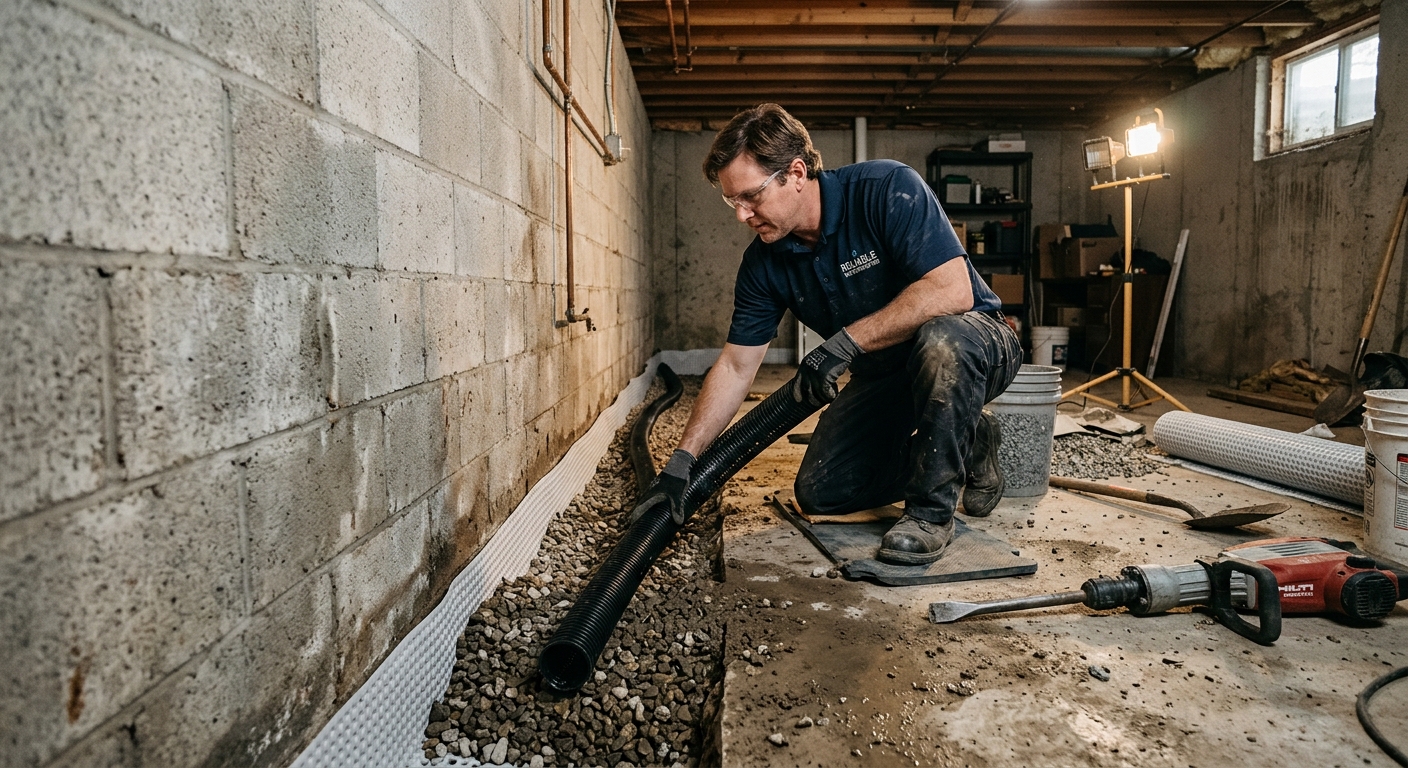
Basement waterproofing options and costs in Chinook Park
In Chinook Park, basement waterproofing is one of those home improvements you don’t think about until you see damp corners, musty odours, or mineral build-up on foundation walls. The city’s small housing stock—about 1,535 residents in 2021 (Statistics Canada, 2021 Census)—means local crews can be booked quickly when multiple neighbours need the same seasonal service. It also helps to know that older homes are more likely to have original tar-and-paper-style approaches and aging weeping tile systems that no longer function as intended, especially after decades of freeze–thaw movement.
Calgary-area waterproofing pricing is strongly shaped by clay-and-clay-till soils, which hold water and expand when saturated, increasing lateral pressure on foundations and widening existing cracks. In spring, meltwater and storm runoff can drive hydrostatic pressure, so the “cheap fix” route often fails sooner—especially when weeping tile is clogged or undersized. On top of that, access matters in Chinook Park: concrete patios, narrow lot lines, and mature landscaping around older foundations can increase excavation and backfill labour, and disposal fees can rise when clay spoils have to be hauled off-site.
Because these conditions vary from block to block, the same symptom (damp wall versus active seepage) can call for different systems. The table below compares common options—then you can match the right method to what you’re actually seeing.
| Method |
What It Addresses |
Disruption Level |
Durability |
Price Range |
| Exterior excavation + new membrane + drainage tile |
Primary water entry at the foundation exterior; relieves hydrostatic pressure with functioning perimeter drainage |
High (excavation, removal of patio/landscaping) |
Long-term (often the most complete source-control option) |
$9,500–$25,000 |
| Interior perimeter drain channel + sump pit |
Water after it enters; intercepts seepage and lowers water level inside |
Medium (floor/trim work, limited excavation) |
Good when paired with good crack repair |
$6,000–$14,000 |
| Foundation crack injection (epoxy or polyurethane) |
Stabilizes and/or seals cracks; best for non-moving versus active leak scenarios |
Low (minimal demolition) |
Moderate to long-term (depends on crack type and cause) |
$500–$1,800 |
| Sump pump installation (primary + battery backup) |
Active dewatering during spring melt and heavy rain events |
Low to medium (coring, pit, piping) |
High reliability with backup power |
$1,300–$3,200 |
| Window well drain installation |
Bulk water and seepage around egress window wells |
Low to medium (excavation around well) |
Good for spot control |
$1,000–$2,800 |
| Lot re-grading / downspout extension |
Diverts roof runoff away from foundation; reduces recharge |
Low to medium (yard rework) |
Medium (depends on ongoing maintenance) |
$900–$3,500 |
Prices are estimates only and vary by project scope, site access and material selection.
What affects the price of waterproofing in Chinook Park
In Chinook Park and across the Calgary economic region, it’s common to see waterproofing quotes for similar-looking problems vary by 30–50%. The spread usually isn’t about “who’s cheaper”—it’s about how far contractors go to address the source versus the symptoms, plus the real site conditions they uncover once they start measuring cracks, probing drain lines, and confirming where water is actually coming from.
The three biggest drivers separating local pricing from the national average are soil type, water table behaviour, and freeze–thaw. Clay-heavy soils (common across southern Alberta) expand as they wet and freeze, which increases lateral pressure on foundation walls and can turn a once-stable crack into a recurring leak. High seasonal groundwater in certain low-lying pockets of the Calgary area also increases sump run times and makes “basic drainage” insufficient—your system may need more capacity and better discharge planning. In older neighbourhoods with aging weeping tile, clogged lines and undersized interior drainage are frequent failure points rather than rare edge cases.
Here are a few practical examples of how costs rise or fall in Chinook Park. If your foundation has a known clogged perimeter drain, exterior waterproofing that includes new drainage tile can cost near the higher end of interior drainage plus sump, but it often prevents repeated interior interventions. If your basement is finished with minimal access, interior work may land closer to the $5,000–$15,000 band for interior systems, while a full excavation could push into the $9,000–$25,000 band due to removal, deeper dig, and disposal of heavy clay. If you have a poured concrete wall with mostly hairline cracking, epoxy injection may keep costs down versus replacing a broader system—but if you have active leaks or structural movement, that changes the scope quickly.
| Price Factor |
Why It Matters |
Cost Impact |
| Interior vs. exterior approach — interior is less disruptive but addresses symptoms |
Interior systems manage water inside; exterior source control removes the cause |
Interior often 40–60% less than exterior on comparable homes |
| Foundation type — poured concrete vs. block vs. stone vs. ICF |
Material dictates crack behaviour and drainage performance |
Block and older masonry frequently need more drainage detailing |
| Soil type — clay expands more than sand, adding pressure |
Wetting/freezing cycles increase wall and footing movement |
Higher likelihood of recurring seepage; more robust systems required |
| Crack type and length — hairline vs. structural horizontal cracks |
Not all cracks respond to the same injection products or methods |
Structural movement may trigger engineering and higher labour costs |
| Sump pump backup system — battery or water-powered backup needed |
Prevents flooding during power interruptions in spring |
Often adds noticeable cost, typically $400–$1,200 depending on system |
| Access — landscaping, decks, or driveways must be removed for exterior |
Excavation depth and reach determine how much gets dismantled/rebuilt |
Can shift you from mid- to high-range pricing quickly |
| Weeping tile age — original tile (60+ years) may be completely failed |
Failed exterior drainage increases hydrostatic pressure |
May require full perimeter replacement or a larger interior system |
| Mould or efflorescence remediation required before sealing |
Sealers and membranes need clean, dry substrates |
Extra prep and drying time can add labour and material costs |
Permits & regulations in Alberta
In Alberta, many foundation-related activities require permits, particularly when they change drainage paths or involve structural elements. In most typical Chinook Park projects, foundation excavation and changes to lot drainage commonly require a building permit. Structural crack repair—especially when you have major step cracks, horizontal movement in masonry/blocks, or signs that the wall is shifting—often triggers additional requirements and may require a structural engineer’s assessment to determine whether underpinning or other structural work is needed.
Sump pump installations can also require municipal approval when the discharge is connected to a municipal storm or sanitary system, because the outlet and backflow protection matter. By contrast, smaller “cosmetic” or purely interior sealing tasks may not trigger the same level of permitting—but any work involving foundation modification, drainage system changes, or structural crack correction should be confirmed before you sign.
Step-by-step, here’s how a Chinook Park homeowner can verify a contractor in Alberta: (1) Ask for their Alberta licence details and confirm they’re appropriately qualified for the scope being proposed; (2) Request a certificate of insurance showing liability coverage and the ability to complete the job safely; (3) Confirm WSIB/WCB coverage documentation if required for their workers; (4) For structural crack work, ensure they can provide engineering support or coordinate with an engineer if the conditions warrant it; (5) Get written confirmation that permits are pulled (or that you’re told clearly if not needed) before work starts. If the contractor can’t produce documentation promptly, treat it as a red flag.
Interior vs exterior waterproofing — what does Chinook Park need?
The fundamental difference is source control versus water management. Exterior waterproofing involves full excavation, installing a continuous exterior membrane, and adding or restoring perimeter drainage tile—then backfilling and re-establishing proper site drainage. It addresses the water entry point at the foundation itself, which is why it’s the most dependable long-term solution when the exterior drainage system has failed. The trade-off is higher cost, more disruption, and more coordination for excavation, disposal of heavy clay spoils, and restoring landscaping.
Interior waterproofing (perimeter drain channel, sump pit, and sump pump) manages water after it enters the basement and is usually less invasive. It doesn’t stop hydrostatic pressure on the wall—so it works best when paired with targeted foundation crack injection and when water is being actively relieved inside. For Chinook Park conditions, poured concrete walls typically respond well to epoxy injection for stable, non-moving cracks, while older block walls often need interior drainage as a practical complement because voids and mortar joints can keep reloading during spring melt.
Battery backup is also a key consideration in southern Alberta. Even when power outages are brief, spring storms can coincide with periods of peak infiltration; a backup system can keep the sump operating long enough to prevent a basement flood while the grid stabilizes. In Calgary’s clay soils, that gap matters.
Example: If you have recurring dampness plus a clogged perimeter drain, an exterior system may land in the $9,000–$25,000 range, while an interior drain plus sump often falls into the $5,000–$15,000 band. The higher cost is justified when you want to stop repeated exterior recharge and avoid recurring interior-only interventions.
| Method |
Best For |
Addresses Source? |
Disruption |
Lifespan |
Price Band |
| Full exterior excavation + membrane |
Failed weeping tile, persistent seepage, and higher hydrostatic pressure areas |
Yes |
High |
Long-term |
$9,500–$25,000 |
| Interior French drain + sump system |
Basements with active seepage where exterior access is limited |
No (manages water after entry) |
Medium |
Long (with reliable pump maintenance) |
$6,000–$14,000 |
| Crack injection — epoxy (structural) |
Stable, non-moving cracks in poured concrete or properly assessed substrates |
Partially (seals entry path) |
Low |
Moderate to long-term |
$700–$1,800 |
| Crack injection — polyurethane (active leak) |
Active seepage or cracks that need more flexible sealing |
Partially (controls active entry) |
Low |
Moderate (often paired with drainage) |
$600–$1,600 |
| Interior drain channel only (no sump) |
Light seepage where water can be intercepted without active dewatering |
No (still water management only) |
Low to medium |
Moderate (depends on infiltration rate) |
$5,000–$9,000 |
| Re-grading + downspout extensions |
Roof runoff-related dampness and surface water pooling |
Yes (reduces recharge) |
Low to medium |
Short to moderate (maintenance dependent) |
$900–$3,500 |
How to choose a waterproofing contractor in Chinook Park
Choosing the right waterproofing contractor in Chinook Park starts with verifying credentials and then matching their proposed scope to your actual water source. In Alberta, confirm the contractor’s compliance documentation: (1) licensing information for the scope they’re quoting; (2) liability insurance—ask for a current certificate; (3) WSIB/WCB coverage (or the appropriate exemption, if applicable). You can verify insurance details by requesting the certificate number and expiry dates, and you can confirm coverage status via the applicable provincial resources or documentation provided.
Next, get 2–3 itemised written quotes rather than a lump-sum only. You want labour and materials separated (membrane type, drainage tile system, pump model, piping, excavation/reinstatement, and disposal). Read exclusions closely: disposal included or not, backfill materials specified or “as required,” permit pull included or not, and whether patching and finishing are part of the scope. Warranty terms matter too—look for a workmanship warranty length, product/manufacturer warranty details, and whether the warranty is transferable if you sell the home.
For payment, avoid paying most of the money upfront. A practical rule is never more than 10–15% at the start; use progress payments and keep a holdback until the job is complete and documentation is delivered. Finally, require a timeline in writing: a start date, key milestones, and an estimated completion date—because delays during excavation and drying windows can increase costs.
- Request the contractor’s current insurance certificate and confirm it matches the project location.
- Ask for proof of WSIB/WCB coverage for workers before work begins.
- Require an itemised scope: excavation depth, drainage tile plan, membrane details, and discharge method.
- Confirm whether permits are required and who will pull them (and include it in the quote).
- Ask what happens if weeping tile lines are found collapsed—what’s the change-order process?
- Get a written warranty for workmanship and product terms; confirm transferability.
- Make sure they test or verify existing drainage rather than assuming it works.
- Clarify prep requirements (efflorescence/mould cleanup, crack cleaning, surface drying time).
- Verify pump specs if a sump is included (capacity, discharge, check valve, and backup option).
- Confirm disposal fees and backfill material types are included or clearly excluded.
- Set payment schedule: no large upfront payment; keep holdback until final inspection and walkthrough.
- Get a start date and completion estimate in writing, including weather-related contingency for Calgary freeze–thaw.
Concrete red flags to watch for in Chinook Park: (1) they “guarantee” results without first inspecting cracks and drainage conditions; (2) they quote interior or re-grading only when you have clear hydrostatic signs (efflorescence, floor water, or active seepage); (3) no written permit responsibility or vague statements like “permits handled if needed”; (4) warranties that cover materials but not workmanship, or no documentation of product/manufacturer coverage; (5) demanding payment well beyond 10–15% upfront without a clear schedule and milestones.
Frequently asked questions — waterproofing in Chinook Park
What is the difference between waterproofing and damp-proofing?
In Alberta homes, “damp-proofing” is usually a partial barrier intended to slow moisture movement, often used in lighter moisture situations or where hydrostatic pressure is not expected. True waterproofing is designed to resist water entry under wet conditions, typically with a continuous system: crack sealing where needed, exterior membrane (when appropriate), functional drainage tile, and a properly planned interior drainage/pump system if water still gets in. In Chinook Park’s clay-and-freeze–thaw environment, damp-proofing can fall short when lateral pressure worsens cracks over spring melt. That’s why we base the decision on what’s happening: occasional surface dampness may need grading and downspouts, while active seepage often needs a full drainage strategy.
Will basement waterproofing affect my property value in Chinook Park?
Often, yes—especially when you have documentation. Basement waterproofing can reduce recurring moisture issues, protect finishes, and lower the risk of future flooding claims, which is a strong selling point for buyers in Chinook Park and across Calgary. The value increase isn’t automatic, but buyers consistently discount homes with visible seepage, efflorescence, or a history of water intrusion. The biggest positive effect comes when the work is done as a system (for example, crack sealing plus interior drainage and sump, or a full exterior membrane plus drainage tile) and when you can show receipts, photos, and warranty paperwork. If the problem is active and you’re choosing between approaches, interior solutions typically sit around the $5,000–$15,000 band, while exterior excavation generally lands in the $9,000–$25,000 band—buyers tend to appreciate the “source control” narrative when exterior systems are warranted.
What drainage issues are most common in Chinook Park homes?
The most common drainage issues we see in Chinook Park are related to clay soils holding water, aging or clogged weeping tile, and poor surface water management that allows roof runoff to recharge the foundation. Freeze–thaw can widen existing joints and cracks, so even small defects can turn into repeated leaks during spring melt. We frequently find mineral staining (efflorescence) on poured concrete or block, damp corners near slab edges, and window well areas that collect water. In older homes, undersized or disconnected interior drainage is also a regular problem—water has nowhere to go, so it migrates into basements. If you’re seeing recurring wetness after rain or snowmelt, treat it as a drainage recharge symptom, not just a “humidity” issue.
How do I choose a waterproofing contractor in Chinook Park?
Choose a contractor by verifying proof of Alberta compliance and insisting on an itemised scope. Start with documentation: confirm licensing details for the work being proposed, ask for a current certificate of insurance, and verify WSIB/WCB coverage (or appropriate documentation if coverage isn’t required). Next, request 2–3 written quotes that separate labour from materials and clearly list what’s included: whether permits are pulled, what disposal costs are, what type of membrane or pump is being installed, and how existing weeping tile is handled. A serious contractor will describe how they diagnose the source—crack type, likely water path, and discharge plan. Finally, ensure warranty terms are in writing, include workmanship, and are transferable. If you can’t get straight answers or documentation quickly, don’t proceed—especially when projects can reach the $9,000–$25,000 exterior band.
What is a battery backup sump pump and do I need one in Chinook Park?
A battery backup sump pump is an additional power system that keeps the sump operating during power outages. In Chinook Park and the broader Calgary area, spring storms and grid disruptions can coincide with high infiltration periods, so you can prevent a basement from flooding even if the main power goes out. Whether you “need” it depends on your basement risk: frequent seepage, active hydrostatic pressure signs, finished areas vulnerable to water, and whether your discharge relies on the sump running continuously. If you have a history of water during outages or you’re seeing persistent dampness with clear water pathways, backup is a smart layer of protection. Pricing varies by system, but sump installations with primary plus battery backup commonly fall in the $1,300–$3,200 range, which is often cheaper than replacing drywall, insulation, and flooring after an incident.
How much does basement waterproofing cost in Chinook Park?
Basement waterproofing in Chinook Park typically ranges based on whether you’re managing symptoms inside or stopping the source outside. Interior waterproofing and weeping tile-related drainage systems often land around the $5,000–$15,000 band, especially when excavation is limited and the work focuses on perimeter drains, sump pit installation, and crack sealing. Foundation crack injection on its own is usually a smaller scope, often about $500–$1,800 depending on crack length and product choice. If you need exterior excavation for new membrane and functioning drainage tile, pricing commonly lands in the $9,000–$25,000 range due to deeper dig work, heavy clay disposal, and landscaping restoration. If you share what you’re seeing—damp corners, efflorescence, floor water, or active seepage—I can help you narrow which band is most likely.