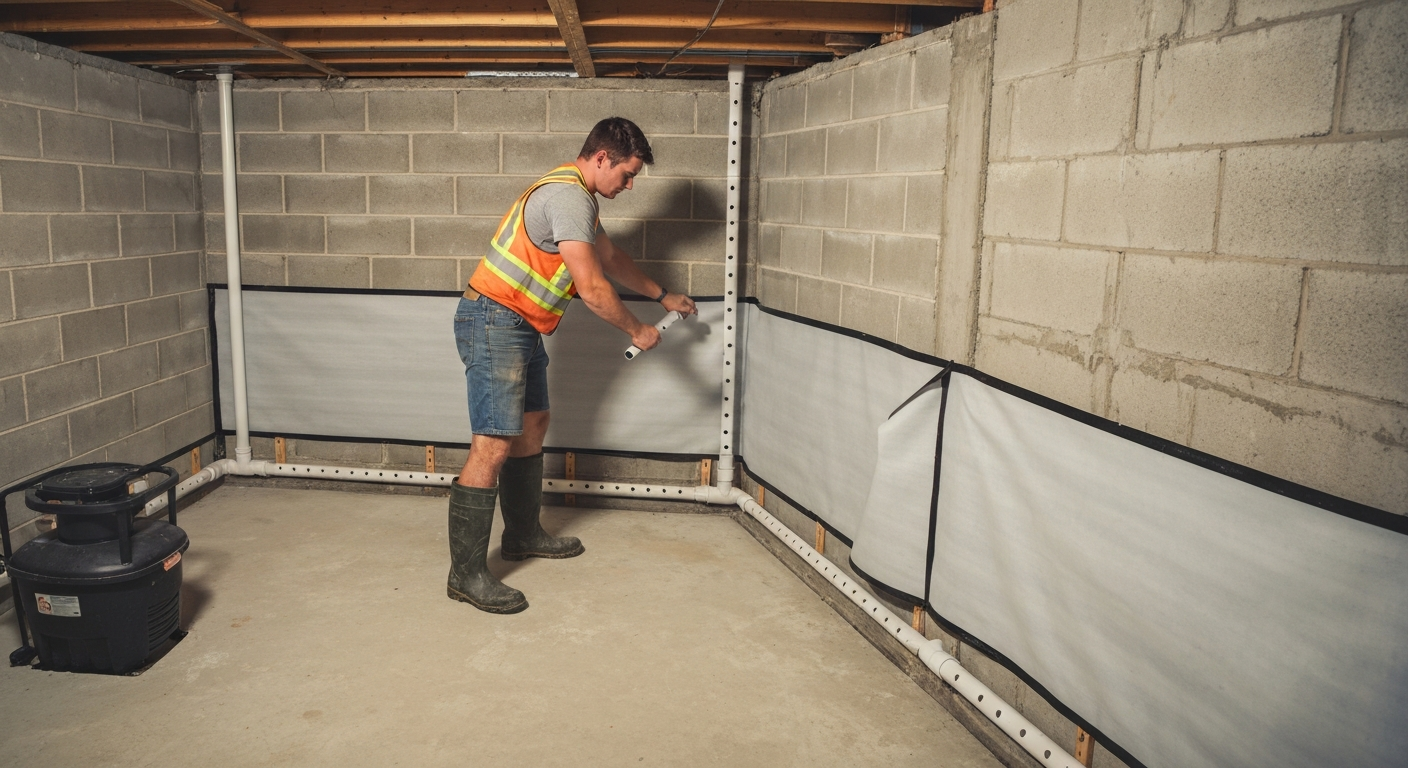
Basement waterproofing options and costs in Coventry Hills
In Coventry Hills, basement waterproofing is typically less about “one crack” and more about controlling how water moves through clay, joints, and drainage systems. With Coventry Hills’ population at 17,350 residents (Statistics Canada, 2021 Census), you’ll also find plenty of older housing stock across Calgary’s southside growth corridor where original tar-and-paper membranes and earlier weeping tile installs can be nearing the end of their service life. Calgary-area homes built decades ago are especially prone to failing foundation waterproofing and corroded or undersized drainage, and that shows up as seepage, damp corners, and efflorescence rather than sudden collapse.
Pricing in Calgary doesn’t rise uniformly, but you can see meaningful differences—sometimes 30–50%—between “interior fix” approaches and full exterior systems. The main drivers are Southern Alberta’s freeze–thaw cycle (which widens joints), the clay-and-clay-till soils that hold and pressurize water, and access constraints common to Coventry Hills lots (tight excavation clearances, mature landscaping, and concrete patios). Contractor availability can also shift costs: crews willing to take on deep, full-perimeter excavations tend to be scheduled further out, which affects labour allocation and site mobilization.
In practice, demand is especially strong around established pockets such as Coventry Hills’ older streets and backyard lots where downspouts discharge close to foundations and where grading can’t be easily corrected without excavation. From there, the best next step is to compare the common methods, then match the scope to your symptoms, foundation type, and drainage condition—see the table below.
| Method |
What It Addresses |
Disruption Level |
Durability |
Price Range |
| Exterior excavation + new membrane + drainage tile |
Primary water entry prevention by rebuilding the exterior waterproofing system and perimeter drainage |
High (excavation around foundation, regrading, landscaping restoration) |
High (typically the most complete long-term solution) |
$12,500–$24,500 |
| Interior perimeter drain channel + sump pit |
Manages water after it enters by relieving hydrostatic pressure and directing it to a sump |
Medium (minor interior floor cutting, sump installation) |
Medium to High (depends on drainage adequacy and sump maintenance) |
$6,000–$14,500 |
| Foundation crack injection (epoxy or polyurethane) |
Seals cracks to stop seepage; structural crack injection addresses stability-related leakage patterns |
Low (localized drilling/patching) |
Medium (sealed cracks can last years, but water pressure needs addressing) |
$900–$1,800 |
| Sump pump installation (primary + battery backup) |
Reduces basement flooding risk by pumping collected groundwater; backup protects during outages |
Low to Medium (core drilling, sump pit work) |
High with proper backup and discharge routing |
$1,600–$3,000 |
| Window well drain installation |
Stops localized inflow at window wells by improving drainage and controlling sediment |
Medium (window well excavation/lining adjustments) |
Medium to High (improves reliability when tied into discharge safely) |
$1,200–$2,800 |
| Lot re-grading / downspout extension |
Redirects roof runoff away from foundation and improves surface drainage |
Low to Medium (soil movement, minor landscaping disturbance) |
Low to Medium (best as a complement, not the only fix) |
$900–$3,000 |
Prices are estimates only and vary by project scope, site access and material selection.
What affects the price of waterproofing in Coventry Hills
In Coventry Hills, homeowners can receive quotes for the “same basement issue” that differ by roughly 30–50% across Calgary and wider Alberta. That spread usually comes down to whether the contractor is treating the source of water entry (exterior system) or mainly managing water after it shows up inside (interior drainage and pumps), plus how much extra work is needed once the team sees your actual foundation and drainage condition.
The three local drivers that most separate Coventry Hills pricing from a national average are soil type, water table behaviour, and freeze–thaw. Calgary-area clay and clay-till soils hold water; when they saturate, they expand during freeze–thaw and can increase lateral pressure on foundation walls and footings, worsening cracks over time. In low-lying or poorly drained lot pockets, higher seasonal groundwater and storm events can create more hydrostatic pressure, so interior drain channels, sump systems, and proper discharge become non-negotiable. Freeze–thaw also widens existing joints; a simple patch can fail sooner, meaning injection and drainage scopes need to be correctly sized and sequenced.
Concrete examples that raise or lower cost right here in Coventry Hills: (1) if backfill was compacted poorly and you have clogged weeping tile, full exterior excavation can require more time and disposal fees for heavy clay spoils, pushing exterior waterproofing toward the upper end of the $9,000–$25,000 backbone band; (2) if your basement shows damp corners but your exterior downspouts discharge correctly and grading is reasonable, interior perimeter drain plus sump work may resolve symptoms for less; (3) if you have localized window-well inflow, a targeted drain installation avoids the need for broader excavation. As a rough guide, homeowners sometimes find that upgrading from a basic interior approach to a more complete system is justified when early symptoms align with ongoing freeze-driven crack leakage and the cost of repeat mobilizations would exceed the difference (often several thousand dollars within the $5,000–$15,000 interior band).
| Price Factor |
Why It Matters |
Cost Impact |
| Interior vs. exterior approach — interior is less disruptive but addresses symptoms |
Exterior rebuild controls water at the source; interior systems manage hydrostatic pressure after entry |
Exterior often costs more, typically a major spread within the overall project total |
| Foundation type — poured concrete vs. block vs. stone vs. ICF |
Different materials crack and leak differently; block and joints often need drainage support |
Poured concrete can respond well to injection; block may require more extensive interior drainage |
| Soil type — clay expands more than sand, adding pressure |
Clay swelling during freeze–thaw increases lateral pressure and joint movement |
May increase injection quantity, sump capacity needs, and exterior membrane requirements |
| Crack type and length — hairline vs. structural horizontal cracks |
Horizontal/step crack patterns can indicate movement and may require engineering review |
Structural repair adds assessment time and potential stabilization work costs |
| Sump pump backup system — battery or water-powered backup needed |
Outages can coincide with spring storms; backup reduces the flooding risk |
Backup adds equipment and installation labour, but prevents major damage |
| Access — landscaping, decks, or driveways must be removed for exterior |
Tight access increases excavation time and restoration scope |
Can move labour and equipment costs significantly, especially on full-perimeter jobs |
| Weeping tile age — original tile (60+ years) may be completely failed |
Failed tile no longer relieves water; pressure shifts toward walls and slabs |
Often triggers more extensive drainage rebuild, increasing exterior or interior scope |
| Mould or efflorescence remediation required before sealing |
Moisture contamination must be addressed before encapsulation or membrane application |
Remediation adds materials, drying time, and additional labour steps |
Permits & regulations in Alberta
In Alberta, some basement waterproofing work can remain in the “typical home maintenance” category, but foundation excavation, structural crack repair, and changes to lot drainage often require a building permit—especially when work impacts structural integrity or the way stormwater is handled. In many Calgary-area cases, sump pump installations that connect to municipal drainage systems need approval, because discharge routing and backflow prevention must meet local requirements. Structural repair for major crack patterns (for example, horizontal cracks in block walls or step cracks suggesting movement) generally requires a structural engineer’s assessment to determine whether underpinning or other structural mitigation is needed.
For Coventry Hills homeowners, the practical way to verify requirements is to ask the contractor to specify: (1) whether a permit is required for your exact scope; (2) whether they will pull the permit (if applicable); and (3) who provides engineering sign-off when structural repairs are indicated. Also confirm your contractor carries appropriate liability insurance and workers’ compensation coverage (WSIB/WCB), and that they can provide documentation before work starts.
How to verify in steps: (1) check the online provincial contractor licensing/registry listing for the business name; (2) request a certificate of insurance showing current general liability coverage and the jobsite address; (3) confirm WSIB/WCB clearance (or provide the clearance letter number and status); (4) for structural repairs, ask for proof of engineering support and who signs drawings; and (5) keep a copy of the written scope showing what’s included in the permit process.
Interior vs exterior waterproofing — what does Coventry Hills need?
The difference is straightforward: exterior waterproofing (full excavation, new membrane, new perimeter drainage tile, then backfill) addresses water before it reaches your foundation. Interior waterproofing (perimeter drain channel, sump pit, and sump pump) manages water after it enters and relieves hydrostatic pressure, but it doesn’t remove the source driving wall seepage. In Coventry Hills, that distinction matters because clay-heavy soils can hold water and expand during freeze–thaw, increasing pressure against basement walls and pushing seepage through cracks and mortar joints.
As a starting point, poured-concrete foundations often seal better with targeted crack injection, especially when combined with proper surface drainage and corrected downspouts. Block foundations, by contrast, frequently need interior drainage as a practical complement because water can travel through block joints and mortar lines even when visible cracks are treated. When your symptoms include damp corners, recurring wet floor edges near the wall, and efflorescence, interior perimeter drainage plus a sump system is often the faster way to stop active infiltration. If you also have recurring exterior foundation leakage or failed weeping tile, exterior waterproofing typically provides the most dependable, “solve-the-source” outcome—particularly where hydrostatic pressure is clearly present.
Backup planning is important in Alberta: during spring storm events, power outages can happen, and backup sump solutions reduce the chance of a wet-basement cascade. For example, if a basic interior setup comes in around $6,000–$14,500, adding a properly installed backup system can cost more, but it can be far cheaper than replacing damaged drywall, insulation, and flooring after an outage. Whether that upgrade is justified depends on your floor plan, discharge route, and how frequently your basement sees water under heavy melt and rain.
| Method |
Best For |
Addresses Source? |
Disruption |
Lifespan |
Price Band |
| Full exterior excavation + membrane |
Ongoing seepage with signs exterior drainage has failed or is unreachable |
Yes |
High |
High (long-term system rebuild) |
$12,500–$24,500 |
| Interior French drain + sump system |
Hydrostatic pressure symptoms, damp walls after storms, recurring seepage |
No (relieves pressure after entry) |
Medium |
Medium to High (depends on sump performance and maintenance) |
$6,000–$14,500 |
| Crack injection — epoxy (structural) |
Non-moving structural cracks with low to moderate active leakage |
Partially (seals crack pathway) |
Low |
Medium (often stable when water pressure is controlled) |
$900–$1,600 |
| Crack injection — polyurethane (active leak) |
Active seepage, dripping, or pressure-driven leaks where sealing needs flexibility |
Partially (stops active pathways) |
Low |
Medium to High (when paired with drainage corrections) |
$1,000–$1,800 |
| Interior drain channel only (no sump) |
Light dampness where gravity drainage and daylight discharge are viable |
No |
Medium |
Medium (can underperform in higher groundwater pockets) |
$5,000–$10,000 |
| Re-grading + downspout extensions |
Moisture driven by surface water and poor roof runoff management |
Yes for surface-water entry |
Low to Medium |
Low to Medium (best as an add-on) |
$900–$3,000 |
How to choose a waterproofing contractor in Coventry Hills
Start with verification. In Alberta, confirm the contractor is properly licensed for the type of work being quoted, then request proof of liability insurance (so you’re protected if there’s damage to the home or utilities) and WSIB/WCB clearance (to reduce the risk of labour-related claims being passed to you). The easiest check is to: (1) search the provincial online registry using the company name; (2) ask for a current certificate of insurance with the expiry date; and (3) request a WSIB/WCB clearance letter number or proof of coverage status. Don’t accept “we’re insured” without documents.
Next, get 2–3 itemised written quotes. You want labour and materials broken out (membrane type, drainage tile components, sump basin, discharge line, concrete cutting, disposal), plus clear inclusions and exclusions. Review whether the quote includes permit pull (if applicable), disposal fees for heavy clay spoils, and landscaping restoration—because those items swing totals quickly in Coventry Hills. A good warranty should clearly state workmanship warranty length and product/manufacturer warranty details, including whether the warranty is transferable to future owners.
For payment, never pay more than 10–15% upfront. Use a holdback until key milestones are completed (for example, after waterproofing system placement and before backfill, or after the sump is tested). Also require a written timeline with a start date and completion estimate, including any contingency time for curing, drying, or municipal approvals.
- Ask for a site visit and moisture/water source assessment before quoting
- Confirm the scope includes disposal of clay spoil (not just “excavate”)
- Check whether re-grading and downspout adjustments are included for surface control
- Request drawings or a clear plan for where drainage tile discharges
- Verify the sump discharge route and backflow prevention details
- Require a detailed breakdown of concrete cutting and patching scope
- Confirm whether an engineering assessment is included if structural cracks are found
- Read exclusions: mould remediation, basement drywall removal, and drying time should be explicit
- Check warranty terms for workmanship (years) and product coverage (what failures are excluded)
- Ensure warranty procedures for service calls are written, not just promised verbally
- Use a milestone-based payment plan with a holdback until testing is complete
- Get start date, working days, and completion estimate in writing
Red flags in Coventry Hills: contractors who won’t discuss soil and drainage evidence (they guess based on a photo), quotes that include no mention of disposal/backfill/compaction, vague warranties that don’t separate labour vs product coverage, no proof of liability insurance/WSIB/WCB clearance, and promises of “one-time fix” without explaining why exterior drainage or sump backup is (or isn’t) required.
Frequently asked questions — waterproofing in Coventry Hills
How do I compare waterproofing quotes?
When comparing quotes in Coventry Hills, don’t compare totals first—compare scope. Ask each contractor to itemise labour and materials (membrane, drainage tile, sump basin and float switch, discharge piping, interior concrete cutting, and patching). Confirm whether disposal fees for heavy clay spoils and re-grading/backfill compaction are included. Also check what’s excluded (mould remediation, drying time, window well work, or repairs to landscaping and patios). A quote that looks cheaper may be missing critical items like a sump discharge test, a proper perimeter drain tie-in, or a permit process where required. As a reference point, you’ll usually see exterior work land around the $9,000–$25,000 range, while interior perimeter drainage and weeping-tile-style solutions often fall near $5,000–$15,000, depending on access and extent.
How long does basement waterproofing take in Coventry Hills?
Timelines vary in Alberta based on excavation depth, access, and how much demolition and restoration is required. For interior work (perimeter drain channel, sump pit, and pump), many projects are completed within several days to a week, assuming weather allows materials to be delivered and interior curing time is met. For exterior waterproofing, plan for a longer window—often one to three weeks—because excavation, membrane installation, drainage tie-ins, and backfill compaction are sequential tasks. Freeze–thaw also matters: contractors may stage work to avoid leaving exposed excavations during cold snaps. Ask the contractor for a written schedule that includes curing/drying time for sealants and concrete patches, plus contingency days for disposal delays or permit hold times when needed.
What is a weeping tile and does my Coventry Hills home have one?
Weeping tile is an underground perimeter drainage system installed around or near the foundation to intercept groundwater and direct it away from the basement. Many older Coventry Hills homes (and Calgary-area neighbourhoods generally) were built with an original tile configuration that can clog or fail after decades—especially when clay soils retain water and freeze–thaw keeps pushing against joints. You may have one even if you never see it; it’s typically below the footing level and connects to a sump or discharge location. How to check: look for past renovation records, examine basement corners for any visible drain piping connection to a sump, and ask a contractor to evaluate the age/function of your perimeter drainage during a site visit. If the tile is failed, interior drainage or exterior rebuild may be required.
Can I waterproof my basement in winter in Coventry Hills?
Yes, you can often waterproof a basement in winter in Coventry Hills, but the approach may change. Interior work is frequently feasible when temperatures are manageable and the basement is accessible, because tasks like crack injection, interior perimeter drains, and sump installations are less affected by surface freezing than full exterior excavation. Exterior excavation during cold weather can be more challenging due to frozen soil and scheduling constraints, and leaving an open excavation can be risky if temperatures drop quickly. Also, curing performance for some sealants and patching materials depends on temperature and moisture conditions. The best strategy is to ask contractors to confirm what parts of your scope can proceed safely in winter and what would be deferred until spring melt. Either way, don’t let the job stop mid-sequence if drainage isn’t completed or discharge routing isn’t protected.
What is the difference between waterproofing and damp-proofing?
In everyday terms, damp-proofing typically aims to reduce minor moisture seepage and surface dampness, while waterproofing is designed to control water entry and hydrostatic pressure more definitively. In Coventry Hills, because clay-heavy soils can hold water and expand during Alberta freeze–thaw, damp-proofing alone may not be enough when you have active seepage, efflorescence, or water intrusion after storms. Damp-proofing measures sometimes overlook drainage capacity, discharge routing, or the need for a sump system when groundwater conditions rise. Waterproofing scopes—like exterior membrane plus perimeter drainage tile, or an interior drain channel paired with a sump pump—are built to move water away reliably. The more your symptoms point to recurring pressure events, the more you should treat your project as true waterproofing rather than cosmetic moisture control.
Will basement waterproofing affect my property value in Coventry Hills?
Usually, yes—especially when the work is documented and solves ongoing moisture problems rather than temporarily masking symptoms. In Coventry Hills, prospective buyers are often concerned about efflorescence, musty odours, recurring leaks, and whether drainage systems still function. A properly scoped waterproofing system can improve market confidence by reducing the risk of interior damage and helping keep basements usable. Value impact depends on disclosure: buyers respond better when there’s clear documentation (what was installed, when it was installed, and warranty details). If your quote suggests a relatively complete system—often interior work in the $5,000–$15,000 band or exterior systems in the $9,000–$25,000 band—make sure the contractor provides a service record and warranty transfer terms. Also, addressing downspouts and grading can improve curb appeal and day-to-day comfort even before larger systems are upgraded.