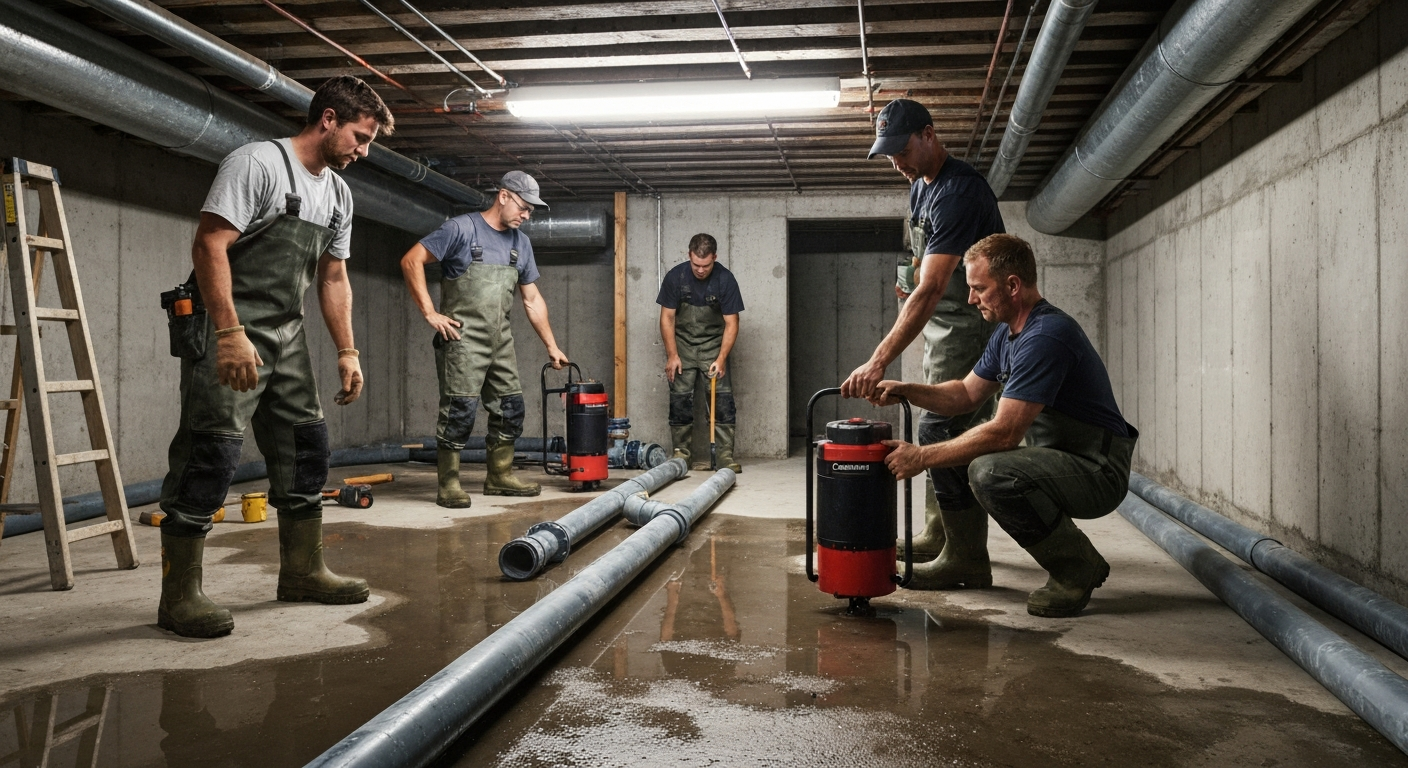
Basement waterproofing options and costs in West Meadowlark Park
West Meadowlark Park, Alberta homeowners usually reach for waterproofing after spring runoff, heavy rainfall, or freeze–thaw widening hairline cracks lets water find its way into basements. This matters because the area’s housing stock is small-town in feel—population is 3,336 (Statistics Canada, 2021 Census)—and many basements were built long enough ago that original tar-and-paper systems and early weeping tile runs may be overdue. In Calgary’s broader market, older neighbourhood basements are especially in demand because clogged or failed weeping tile can turn “occasional seepage” into recurring damp corners, efflorescence, and interior wall leaks.
In southern Alberta, costs are shaped by Calgary’s clay-and-clay-till soils, which hold water and expand when saturated, increasing lateral pressure on foundation walls and footings. Freeze–thaw then widens existing joints, so repairs that only patch visible water paths can fail sooner than expected. Labour availability and excavation conditions also drive pricing: in established pockets, backyards can be tight, patios or retaining walls may limit dig access, and disposal of clay spoils adds real cost. We see this most often around the residential nodes near local parks and older back-alley style lots where equipment access is limited—making exterior work either more expensive or sometimes avoided in favour of a targeted interior system.
Below are common waterproofing options and realistic Alberta price ranges to help you compare scopes before you book inspections.
| Method |
What It Addresses |
Disruption Level |
Durability |
Price Range |
| Exterior excavation + new membrane + drainage tile |
Stops bulk water at the source; replaces failed perimeter drainage and ties into a working outlet |
High (excavation, landscaping reinstatement) |
Highest (when installed with proper backfill and drainage outlet) |
$14,000–$25,000 |
| Interior perimeter drain channel + sump pit |
Collects water after it enters; reduces seepage, damp corners, and hydrostatic build-up |
Medium (floor/cove saw-cut and limited demolition) |
High (as long as discharge and pit sizing are correct) |
$7,000–$14,000 |
| Foundation crack injection (epoxy or polyurethane) |
Seals cracks; epoxy for non-moving cracks, polyurethane for active leaks |
Low (drilling ports and surface patch) |
Medium to high (depends on crack type and continued wall movement) |
$900–$2,500 |
| Sump pump installation (primary + battery backup) |
Controls water levels during spring melt; backup reduces risk during outages |
Low to medium (pit excavation and plumbing/electrical) |
Medium to high (backup reliability matters) |
$1,600–$4,000 |
| Window well drain installation |
Prevents pooling around basement windows; manages localized water entry points |
Low to medium (window well access required) |
Medium (good performance if outlet is maintained) |
$2,000–$5,500 |
| Lot re-grading / downspout extension |
Reduces runoff against foundation; directs water away from walls |
Low (minor excavation and landscaping changes) |
Medium (depends on grading staying intact) |
$3,000–$9,000 |
Prices are estimates only and vary by project scope, site access and material selection.
What affects the price of waterproofing in West Meadowlark Park
In West Meadowlark Park and across Calgary, you can see the same waterproofing “label” land 30–50% apart because the real work is determined during inspection: how water enters, what foundation type you have, how the existing drainage performs, and what demolition is unavoidable. Two homeowners might both call it “basement waterproofing,” but one only needs crack work and re-directed downspouts, while the other has active seepage driven by saturated clay and failed perimeter drainage that must be intercepted with drains and reliable discharge.
The three biggest drivers separating regional costs from the national average are soil type, water table conditions, and freeze–thaw. Calgary’s clay-heavy soils expand when saturated, increasing lateral pressure on walls and worsening cracks over time; that means more injection ports, wider repair areas, or a full interior drain plan. In pockets with higher seasonal groundwater—particularly where lots sit closer to low-lying drainage paths—sumps may need longer run times and properly sized pits and discharge lines. And freeze–thaw in southern Alberta widens joints, so the scope has to account for continued movement instead of simply “patching and painting.”
Concrete examples from West Meadowlark Park: (1) a poured-concrete wall with a narrow vertical crack may only need targeted injection, often within the $900–$2,500 crack-repair band, whereas a block wall with horizontal cracks usually requires a deeper interior drainage approach before sealing. (2) If your downspouts discharge near the foundation, re-grading and extensions can sometimes stay nearer the $3,000–$9,000 range; if the same lot has saturated backfill and a non-functioning perimeter drain, excavation and drainage tile escalate you toward exterior waterproofing pricing. (3) Tight urban lot lines and concrete patios can push excavation labour and disposal costs upward because access and spoil handling become the main expense.
| Price Factor |
Why It Matters |
Cost Impact |
| Interior vs. exterior approach — interior is less disruptive but addresses symptoms |
Exterior targets the source; interior manages water after entry |
Interior typically 40–70% less than full exterior excavation |
| Foundation type — poured concrete vs. block vs. stone vs. ICF |
Wall permeability and crack behaviour differ by system |
Block and older masonry often require more drainage and labour |
| Soil type — clay expands more than sand, adding pressure |
Saturated clay increases hydrostatic and lateral pressures |
May require sump sizing and more extensive sealing strategy |
| Crack type and length — hairline vs. structural horizontal cracks |
Moving/structural cracks often need engineered assessment |
Horizontal/long cracks can multiply repair scope and cost |
| Sump pump backup system — battery or water-powered backup needed |
Outages during spring storms can turn a small seepage into flooding |
Backup can add meaningful cost but reduces high-risk failure |
| Access — landscaping, decks, or driveways must be removed for exterior |
Excavation depends on usable side yard width and obstruction removal |
More removals and reinstatement increases total project price |
| Weeping tile age — original tile (60+ years) may be completely failed |
Old tile can be crushed, clogged, or routed incorrectly |
May shift a “simple” fix to a drainage replacement scope |
| Mould or efflorescence remediation required before sealing |
Sealing over contaminants reduces adhesion and can trap moisture |
Additional cleaning, drying time, and materials required |
Permits & regulations in Alberta
In Alberta, waterproofing-related work sometimes triggers permits depending on what you’re changing and how close you are working to structural elements and lot drainage. Generally, foundation excavation, structural crack repair, and changes to lot drainage (for example, re-routing discharge patterns that affect how water leaves the property) typically require a building permit. If a sump pump system connects to the storm or sanitary sewer, you’ll usually need municipal approval before tying in—rules can vary based on where the discharge goes and local servicing requirements.
For structural crack repair—especially horizontal cracks in block walls or any cracking pattern that suggests movement—a structural engineer’s assessment is commonly required to confirm whether underpinning, shimming, or other structural remediation is necessary. A good contractor will have engineering support available for that type of work and will clearly separate “waterproofing-only” repairs from “structural investigation” steps.
How to verify before you sign in West Meadowlark Park: (1) Ask for your contractor’s Alberta licence details and confirm them using the provincial online registry where applicable. (2) Request a certificate of insurance (liability) showing the jobsite address or at least the coverage type and effective dates. (3) Confirm WSIB/WCB clearance letter/registration status—then keep a copy for your records. (4) For engineering-involved scopes, request the engineer of record information and whether they’ll provide a report that matches the permit application. This protects you if a crack repair is structural rather than cosmetic.
Interior vs exterior waterproofing — what does West Meadowlark Park need?
The key difference between exterior and interior waterproofing is whether you stop water at the wall or manage it after it enters. Exterior waterproofing requires full excavation along the foundation: you install a continuous membrane and perimeter drainage tile, then backfill correctly to keep water moving away. It costs more and is more disruptive because it involves landscaping and potentially patio/grade reinstatement, but it directly addresses the source by reducing the amount of water reaching the foundation wall and footing.
Interior waterproofing works differently. A perimeter drain channel, sump pit, and properly sized sump pump collect water that passes through cracks or through wall pores, reducing dampness and hydrostatic pressure inside the basement. It’s usually less invasive, often faster, and can be the better fit for tighter lots, mature landscaping, and homeowners who want to preserve exterior finishes. In Calgary-area freeze–thaw, however, interior systems must be designed to handle recurring spring melt loads—so sump pump backup (battery or alternative backup) becomes important during outages and storm spikes.
In West Meadowlark Park, approach choice often comes down to foundation type and observed crack patterns. Poured-concrete walls frequently respond well to crack injection combined with targeted drainage, because the wall is more consistent and crack sealing is more predictable. Block foundations, by contrast, often benefit from interior perimeter drainage as a practical complement since water pathways can be more varied through joints and mortar. If you’re trying to solve an active leak plus saturated clay conditions, interior drainage plus sump pump can be justified; if the goal is “source control,” exterior membrane and drainage is the stronger long-term choice.
Where price gaps make sense: an interior perimeter drain plus sump project commonly lands in the $7,000–$14,000 range, while full exterior waterproofing is typically $14,000–$25,000. You’re paying the difference for excavation, membrane continuity, and replacement of failing perimeter drainage—costs that are not just cosmetic when your clay backfill is holding water and freeze–thaw is repeatedly pushing it into the foundation.
| Method |
Best For |
Addresses Source? |
Disruption |
Lifespan |
Price Band |
| Full exterior excavation + membrane |
Active seepage driven by saturated soils and failed exterior drainage; long-term source control |
Yes |
High |
Long (many years with correct outlet and backfill) |
$14,000–$25,000 |
| Interior French drain + sump system |
Water already entering through cracks/joints; tight access or when exterior work is impractical |
No (intercepts after entry) |
Medium |
Long (depends on pump sizing and discharge reliability) |
$7,000–$14,000 |
| Crack injection — epoxy (structural) |
Non-moving cracks in poured concrete; when water path is stable |
Partial (seals the pathway) |
Low |
Medium to long (only if crack isn’t active) |
$900–$2,500 |
| Crack injection — polyurethane (active leak) |
Active weeps through cracks; limited leakage that continues during wet seasons |
Partial (seals and accommodates minor movement) |
Low |
Medium to long (site-specific) |
$1,100–$3,000 |
| Interior drain channel only (no sump) |
Minor seepage where water volumes are low and discharge path is clear |
No |
Medium |
Medium (may struggle with heavy spring loads) |
$5,000–$9,500 |
| Re-grading + downspout extensions |
Runoff-driven dampness; when water is clearly pooling or discharging at the foundation |
Yes (for surface/near-surface water) |
Low |
Medium (can degrade if grading settles) |
$3,000–$9,000 |
How to choose a waterproofing contractor in West Meadowlark Park
Choosing the right contractor matters because waterproofing failures are often design or workmanship issues, not “bad luck.” Start by verifying Alberta licensing where applicable, then confirm liability insurance and WSIB/WCB coverage. Practical check steps: (1) Ask for a certificate of liability insurance and confirm it’s valid for the job dates and includes coverage for subcontractors. (2) Request your contractor’s WSIB/WCB clearance letter (or equivalent documentation) and confirm the clearance matches the contractor’s legal entity name. (3) Verify their business details and past projects that resemble your foundation type—poured concrete versus block can change the solution dramatically.
Next, get 2–3 itemised written quotes, not lump sums. A good quote breaks down labour vs materials (membrane/drain tile/adhesives), what will be removed, what will be reinstated, and how the discharge will function. Read the exclusions: what happens if the weeping tile is fully failed, if clay spoils require extra disposal, or if interior walls need additional prep after efflorescence is discovered. Also confirm whether permits are included (when required) and whether disposal fees are part of the price.
Warranty should be specific: workmanship warranty length, the product/manufacturer warranty coverage, and whether the warranty transfers if you sell the home. Payment schedule: never pay more than 10–15% upfront; hold back a portion until the job is complete and you’ve confirmed clean discharge and proper sealing details. Finally, insist on a written start date and completion estimate.
- Ask whether they will do an on-site assessment (not just pricing by photos)
- Confirm the foundation type and crack type are identified before selecting epoxy vs polyurethane
- Require a materials list (membrane system, drain tile, geotextile, adhesives/sealants)
- Ensure excavation spoil handling and disposal are included in the scope
- Confirm how the perimeter drain outlet connects and where discharge goes
- Ask for sump pump make/model and basin sizing details (especially for spring melt loads)
- Check if battery backup is included in your scope when outages are a concern
- Verify warranty terms are in writing and include transferability
- Confirm permit pull responsibility when the work changes lot drainage or involves structural crack work
- Make sure remediation for mould/efflorescence is addressed before sealing
- Review timelines for drying/curing windows (epoxy/polyurethane timing affects performance)
- Get clear line items for restoration: grading, topsoil, sod/landscape repairs, and downspout extensions
Red flags in West Meadowlark Park: contractors who refuse to discuss your weeping tile condition, who promise “one-size-fits-all” crack injection without confirming crack movement, who quote waterproofing without confirming discharge/outlet design, who ask for large upfront payments beyond 10–15%, and who provide only a lump sum with no disposal, permit, or reinstatement details.
Frequently asked questions — waterproofing in West Meadowlark Park
How long does basement waterproofing take in West Meadowlark Park?
Typical timelines in Alberta depend on whether you’re doing interior or exterior work and how much surface prep is required. Interior perimeter drain + sump work often takes about 3–7 working days, assuming no hidden obstructions in the floor and no unexpected drainage problems. Crack injection can be quicker—often 1–3 days—because it’s mostly drilling, injection, and patching, but active-leak repairs may require additional drying time. Full exterior excavation plus membrane and drainage tile commonly runs 1–3 weeks including excavation, membrane continuity work, drainage installation, and backfill/basin testing. Weather can slow exterior projects due to freezing conditions and clay saturation. For West Meadowlark Park homes on clay-heavy soils, schedule flexibility matters during late winter and spring melt cycles (Statistics Canada, 2021 Census).
What is a weeping tile and does my West Meadowlark Park home have one?
Weeping tile is the perimeter drainage system installed around or near your foundation footing. It collects seepage and groundwater that enter around the foundation, then directs that water to a sump (in some designs) or an outlet. Many older Calgary-area homes built before modern waterproofing standards often have original weeping tile, but it may be clogged, crushed, or poorly routed—so it doesn’t function as intended. Since West Meadowlark Park is a compact community with older housing stock in parts of the Calgary region, it’s common to find some form of original tile, though condition varies. The best way to confirm is a camera inspection (from a cleanout if present) or opening a section to visually verify routing. If it’s failed, that may shift your plan from simple sealing to a drainage replacement scope.
Can I waterproof my basement in winter in West Meadowlark Park?
Yes, you can often do interior waterproofing in winter in Alberta, but full exterior work is more challenging. Interior systems (perimeter drain channels, sump pit installation, and crack injection) generally proceed if the basement is accessible and the concrete can be prepared safely. Crack injection can be done when materials are kept within required temperature ranges, but you may need additional attention to curing times. Full exterior excavation is often limited because clay can freeze and excavation depth is harder, and membrane/bonding performance depends on surface conditions. In West Meadowlark Park, exterior plans are frequently scheduled for late spring to early fall unless there’s an urgent active leak. If you need winter mitigation, contractors may offer a targeted interior approach plus downspout re-direction while you plan the longer-term exterior membrane and drainage upgrade.
What is the difference between waterproofing and damp-proofing?
In homeowner terms, damp-proofing is typically meant to slow minor moisture seepage through concrete and help with light condensation, while waterproofing is designed to prevent or control water entry under more demanding conditions, including hydrostatic pressure from saturated soils and spring melt. In Calgary and the West Meadowlark Park area, clay-heavy backfill and freeze–thaw can raise the pressure on walls and expand cracks over time, so a damp-proof approach may not hold up if the perimeter drainage is failing. Exterior membrane + drainage tile is the most “true waterproofing” style because it targets the source. Interior perimeter drains and sump systems are waterproofing strategies too, but they manage the water after it enters rather than stopping it entirely. If you’re being quoted at a low number for “waterproofing” but only get paint or sealant over the wall, ask what pressure conditions the system was designed for.
Will basement waterproofing affect my property value in West Meadowlark Park?
It typically can, especially because buyers and appraisers look for evidence of a reliable moisture history. In West Meadowlark Park and the Calgary market, a dry basement and documented drainage/pump maintenance often reduce buyer uncertainty—particularly for homes with recurring seepage, efflorescence, or spring odours. The value impact depends on solution quality and documentation: a well-installed interior sump system with reliable discharge and a written warranty can be a strong selling point. Full exterior waterproofing often provides the best “source control” story for high-moisture homes. Even smaller scopes—like re-grading and downspout extensions—can help when water is clearly pooling at the foundation. In terms of cost signals, projects commonly fall in bands like $7,000–$14,000 for interior drainage with sump systems, and $14,000–$25,000 for exterior excavation approaches. Buyers tend to value complete, itemised scopes that address drainage and discharge, not just surface sealing.
What drainage issues are most common in West Meadowlark Park homes?
Most common issues we see around West Meadowlark Park homes are clogged or failed weeping tile, downspouts that discharge too close to foundation walls, and poor lot grading where runoff concentrates along one side of the house. In clay-heavy soils, saturated ground expands during freeze–thaw, increasing lateral pressure on foundation walls and widening joints, which then allows meltwater to penetrate. If a weeping tile system is old (often decades), it may be completely failed, leading to damp corners and active seepage during spring events. Another frequent problem is undersized or improperly routed interior drainage, where water enters faster than the sump can manage—especially during heavy storms. If you’re seeing efflorescence on cove areas, a local contractor can confirm the entry point and check discharge capacity. Addressing both water management and sealing strategy is usually what stops repeat failures.