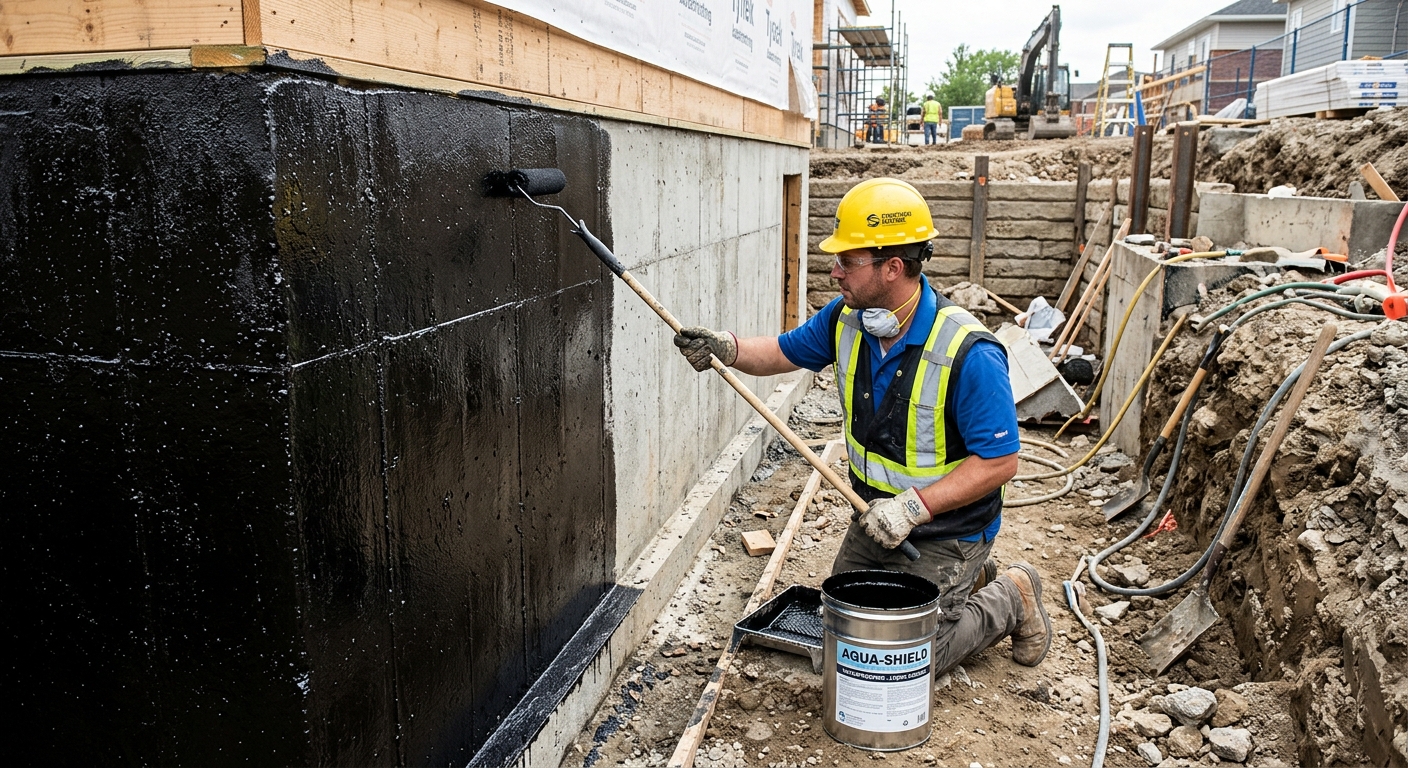
Basement waterproofing options and costs in Athabasca
Athabasca homeowners typically start planning waterproofing the moment they notice damp carpet edges, cold rooms with musty odours, or recurring seepage after spring melt. With 2,759 people and about 670 homeowner households, most local basements are in resale homes—often in the 1960s to 1970s era—so the original waterproofing systems are frequently past their intended service life. In particular, 39.4% of homes were built before 1981, which means many foundations were protected with older tar-and-paper approaches and older weeping tile layouts that can fail after decades of silt buildup, freeze-thaw movement, and clay-soil expansion.
In the Edmonton economic region, pricing is also shaped by the soil and water behaviour. Clay-rich, silty soils around Athabasca tend to hold water and drain slowly, increasing hydrostatic pressure against foundation walls. Freeze–thaw cycles then widen existing cracks each winter, turning “minor dampness” into active leaks that need both sealing and reliable drainage. Labour availability is steadier than in remote areas, but excavation work still costs more where decks, driveways, or landscaping must be removed and then restored.
Practically, we often see the strongest demand in the older-infill neighbourhood pockets closer to central Athabasca services, where lot grades are tight and downspouts/discharge paths are limited. From there, the right choice is usually one of three strategies: control water at the foundation (exterior), manage water after it enters (interior), or address the pathway (crack repair and discharge). Use the comparison below to match the method to your symptoms and your budget before you request an itemised quote.
| Method |
What It Addresses |
Disruption Level |
Durability |
Price Range |
| Exterior excavation + new membrane + drainage tile |
Source control: redirects groundwater away from foundation walls and relieves hydrostatic pressure |
High (excavation, backfill, landscaping restoration) |
Long-term (typically the most complete fix when drainage is corrected) |
$12,000–$25,000 |
| Interior perimeter drain channel + sump pit |
Captures seepage that reaches the basement floor/wall and discharges it safely |
Medium (interior demo, drain channel, sump pit, floor edge work) |
Good (depends on discharge reliability and weeping tile condition) |
$8,000–$18,000 |
| Foundation crack injection (epoxy or polyurethane) |
Sealing the crack pathway; polyurethane is used when there is active seepage |
Low to Medium (surface prep; sometimes minor patching) |
Moderate to High (best as part of an overall drainage plan) |
$600–$2,500 |
| Sump pump installation (primary + battery backup) |
Reliable pumping during spring melt and power interruptions; reduces freeze risk at the discharge |
Low to Medium (pit cutting, electrical, discharge line) |
High when backup is included and discharge is routed correctly |
$1,800–$$3,800 |
| Window well drain installation |
Stops side-wall water entry around egress areas and reduces trapped moisture |
Low to Medium (excavation at window wells and grading work) |
Good (if downspouts/discharge and rock/pipe routing are correct) |
$1,200–$3,500 |
| Lot re-grading / downspout extension |
Reduces surface water infiltration by improving slope and moving roof runoff away from the wall |
Low to Medium (soil movement, surface finishing) |
Moderate (best combined with drainage for clay-heavy sites) |
$900–$2,800 |
Prices are estimates only and vary by project scope, site access and material selection.
What affects the price of waterproofing in Athabasca
In Athabasca and across the Edmonton economic region, two contractors can quote the “same” basement waterproofing and still differ by 30% to 50%. The gap usually comes down to whether the quote addresses the real water source (groundwater and lateral pressure) or only manages symptoms (surface dampness after water enters). When the drainage path is partially blocked, when weeping tile is collapsed or badly silted, or when the sump discharge isn’t routed correctly, costs increase because the contractor must excavate, restore, and engineer a reliable discharge system—often aligning with exterior waterproofing budgets around $12,000–$25,000 rather than interior-only ranges closer to $8,000–$18,000.
Three drivers separate Athabasca-area costs from the national average: soil type, water table behaviour, and freeze–thaw. Clay-heavy, silty soils common in parts of the Prairies hold water and expand when saturated, pushing laterally on foundation walls and enlarging cracks each winter. Higher local groundwater persistence increases sump pump run times, which means more discharge infrastructure (piping size, check valves, backup systems, and discharge location). In regions with heavy rainfall, like coastal climates, backfill can saturate quickly; in Athabasca, the saturation pattern often ties more to spring melt and freeze-thaw cycling—still enough to overload failing drainage and turn mild seepage into floor-edge leaks.
Concrete examples we see locally: (1) a home built before 1981 in Athabasca with aging weeping tile may require deeper excavation or a hybrid approach, which adds labour and disposal; (2) if foundation cracks are horizontal or step-related in block walls, we may include injection plus a drainage upgrade, rather than “spot sealing,” which changes the scope more than homeowners expect; (3) if access requires moving a deck or relocating a walkway, exterior work can jump because excavation and restoration are time-intensive.
| Price Factor |
Why It Matters |
Cost Impact |
| Interior vs. exterior approach — interior is less disruptive but addresses symptoms |
Exterior relieves hydrostatic pressure; interior manages captured water after it enters |
Interior can be ~30%–50% lower than full exterior on the same foundation run |
| Foundation type — poured concrete vs. block vs. stone vs. ICF |
Wall permeability, joint behaviour, and crack patterns differ by foundation material |
Block/stone often needs more drainage detail; poured concrete may respond better to crack injection when paired with discharge |
| Soil type — clay expands more than sand, adding pressure |
Clay holds water and increases lateral pressure against walls |
Higher risk of active leaks increases prep and drainage scope |
| Crack type and length — hairline vs. structural horizontal cracks |
Structural movement requires assessment and may need more than simple sealing |
Structural cracks can add engineer review, extra injection steps, and patching |
| Sump pump backup system — battery or water-powered backup needed |
Backup prevents freeze damage and basement water buildup during outages |
Typically adds a measurable line item (often several hundred to a few thousand dollars) |
| Access — landscaping, decks, or driveways must be removed for exterior |
Excavation and restoration drive labour and schedule complexity |
Can increase exterior scope by thousands depending on restoration extent |
| Weeping tile age — original tile (60+ years) may be completely failed |
Failed tile means interior-only “capture” may get overwhelmed |
Often shifts the job toward exterior repairs or hybrid exterior/interior solutions |
| Mould or efflorescence remediation required before sealing |
Sealers won’t bond reliably over active salts or contaminated surfaces |
Remediation adds time/materials and can delay the waterproofing steps |
Permits & regulations in Alberta
In Alberta, you should expect permits for foundation excavation, certain structural crack repairs, and changes to how the lot drains. The safest assumption for Athabasca homeowners is: if the work involves exposing foundation elements, altering drainage pathways, cutting into structural components, or repairing damage that could affect stability, a building permit is commonly required. Sump pump installations that discharge to storm or sanitary services typically require municipal approval before you connect. In addition, for structural crack repair—especially horizontal cracks in block walls, major step cracks, or any indication the wall has moved—an assessment by a structural engineer is often needed to determine whether underpinning or other structural work is required.
Step-by-step, here’s how to verify a contractor before you sign: (1) ask for their Alberta licence/registration details and confirm they’re active on the correct professional registry for their scope; (2) request a Certificate of Insurance showing general liability (and any applicable contractor endorsements) with coverage amounts that match the project; (3) ask for WSIB/WCB clearance for their workers—look for a clearance letter number and effective dates; (4) for structural work, confirm they have engineering support or a process for engaging an engineer and that they will follow recommendations; and (5) ensure the permit responsibility is clearly stated in the contract—who pulls it, what’s included, and when it will be submitted.
Interior vs exterior waterproofing — what does Athabasca need?
The difference is straightforward: exterior waterproofing (full excavation, new membrane, new drainage tile, and backfill) targets the source by separating the foundation from groundwater and relieving hydrostatic pressure. It’s the most permanent option, but it’s also the most invasive and expensive—because it requires excavation and landscaping restoration. Interior waterproofing (perimeter drain channel, sump pit, sump pump, and controls) manages water after it enters the basement. It can be less disruptive and often fits homeowner budgets better, but it doesn’t stop pressure from building against the wall itself.
For Athabasca’s clay-heavy, silty soils and frequent freeze–thaw cycling, exterior work is usually the choice when you have repeating floor-edge seepage, saturated backfill, or evidence that the original weeping tile is clogged or failing. However, many resale homes need a practical hybrid approach: poured concrete walls often respond well to crack injection (especially when paired with a reliable interior drain/sump plan), while block foundations commonly benefit from interior perimeter drainage as a complement because block joints and mortar gaps can admit moisture even when surface cracks look “small.”
Sump pump backup is especially important in Alberta spring flooding patterns and during power interruptions. If power fails and the sump isn’t running, water can rise fast along the floor perimeter; in a freeze–thaw season, that also raises the odds of freeze damage when water drains partially and then refreezes.
As a dollar example: if an interior system is quoted around $8,000–$18,000, and the exterior excavation is quoted around $12,000–$25,000, the “extra” is justified when groundwater is clearly overwhelming the interior solution or when you’re already planning substantial exterior landscaping work. If the issue is limited to a single crack pathway and you’ve got functional discharge away from the house, crack injection plus targeted drainage can be a more cost-effective first step.
| Method |
Best For |
Addresses Source? |
Disruption |
Lifespan |
Price Band |
| Full exterior excavation + membrane |
Widespread seepage, saturated soils, failing weeping tile, repeated spring issues |
Yes (most complete source control) |
High (excavation + landscaping restoration) |
Long-term (when drainage discharge is properly engineered) |
$12,000–$25,000 |
| Interior French drain + sump system |
Active seepage into the basement, limited yard access, or homeowner preference to avoid excavation |
Partially (does not stop pressure, captures water after entry) |
Medium (interior demo and floor edge work) |
Good to long-term with correct discharge and maintenance |
$8,000–$18,000 |
| Crack injection — epoxy (structural) |
Stable cracks in poured concrete or non-active leaks where you can stop water entry |
No (seals crack pathway; assumes source is managed) |
Low (surface prep and patching) |
Moderate to high when crack is stable and drainage exists |
$600–$2,500 |
| Crack injection — polyurethane (active leak) |
Active seepage through cracks during wet seasons or through joint movement |
No (seals active pathway; still may need drainage to relieve pressure) |
Low (often faster than excavation) |
Moderate (often best paired with interior drainage) |
$600–$2,500 |
| Interior drain channel only (no sump) |
Light dampness, manageable seepage volumes, and where gravity discharge is feasible |
Partially (captures water but relies on discharge without pump backup) |
Medium (interior work) |
Limited by discharge conditions and freeze risk |
$5,000–$10,000 |
| Re-grading + downspout extensions |
Surface water issues: roof runoff routes toward foundation or poor slope |
Yes for surface water control |
Low to Medium (soil work and finishing) |
Moderate (depends on long-term maintenance and soil saturation behaviour) |
$900–$2,800 |
How to choose a waterproofing contractor in Athabasca
Choosing the right contractor in Athabasca comes down to proof, not promises. Start by verifying Alberta licensing/registration for their scope of work, then confirm their insurance and worker coverage: ask for a Certificate of Insurance (general liability) and the WSIB/WCB clearance letter with current effective dates. If they can’t provide these documents or they hesitate when you ask for them, move on—waterproofing jobs commonly involve excavation, electrical work for pumps, and dusty remediation, so coverage matters.
Next, request 2–3 itemised written quotes. You want a breakdown that separates labour from materials (membrane/drain tile, drain rock and pipe, sump basin and pump, backup system, disposal, interior demo, and restoration). Avoid any quote that’s only a lump sum with vague wording like “waterproofing as needed,” because that can hide scope changes and exclusions. Ask specifically whether permits are included, whether engineering is included if structural cracks require it, and whether excavation spoil disposal and landscaping reinstatement are part of the price.
Warranty should be clear: workmanship warranty length (often tied to the installed system), the product/manufacturer warranty details, and whether the warranty is transferable to a new homeowner. Payment scheduling matters too—never agree to more than about 10–15% upfront, and use a holdback until completion and final cleanup. Finally, demand a timeline in writing: start date, major milestones (demo, installation, backfill, cure/inspection), and the expected completion date.
- Confirm the contractor’s Alberta licence/registration for the exact work they’re proposing.
- Obtain a current Certificate of Insurance and verify liability coverage limits.
- Request WSIB/WCB clearance (clearance letter number and dates).
- Ensure quotes are itemised (materials + labour + disposal + restoration).
- Ask what’s excluded (e.g., decorative paving, full basement finishing, engineering fees).
- Confirm whether permits and inspections are included or billed separately.
- Verify discharge routing: where the sump discharge goes and how it’s protected from freezing.
- Check that the scope addresses your real cause (weeping tile condition, soil saturation, crack type).
- Require a sump plan that fits power-risk (backup system included if requested/needed).
- Ask for warranty documents in writing (workmanship + manufacturer terms; transferability).
- Set payment schedule: ≤10–15% upfront and a holdback until final completion.
- Get a written timeline and a clear contact person for inspections or changes.
Red flags to watch for in Athabasca: (1) they refuse to put the permit responsibility in writing; (2) they quote interior waterproofing without assessing the weeping tile/outdoor discharge pathways; (3) they dismiss horizontal/step cracks as “just cosmetic” without an engineer process; (4) they offer a low price but exclude disposal and restoration, then change the scope mid-job; and (5) they won’t provide proof of WSIB/WCB coverage and liability insurance before you sign.
Frequently asked questions — waterproofing in Athabasca
Do I need a permit for foundation work in Alberta?
In Alberta, many foundation-related activities can require a building permit—especially work that involves foundation excavation, structural crack repairs, or modifications to lot drainage. As a homeowner in Athabasca, the practical rule is to assume a permit will be required when the contractor is exposing foundation walls or altering how water drains near the foundation. Also, if your sump pump discharge is being connected to storm or sanitary services, municipal approval is typically required before that connection is made. For structural cracks (notably horizontal cracks in block walls or step cracks that suggest movement), an engineer assessment is commonly needed to determine whether underpinning or other structural work is required. The contractor should tell you whether they pull the permit and what’s included in their quote.
How long does waterproofing last?
Basement waterproofing longevity depends on whether the job addresses the source and whether discharge stays reliable through freeze–thaw cycles. Exterior systems—when membrane and drainage tile are installed correctly and discharge is routed properly—tend to provide the longest service life, often aligning with budgets around $12,000–$25,000. Interior systems can last a long time too, especially when paired with a dependable sump pump strategy; many Athabasca homeowners choose interior waterproofing in the $8,000–$18,000 range, and it performs best when the water capture capacity matches the site’s soil saturation and spring melt impacts. Crack injection is a great tool, but it’s most durable when the crack type is correctly identified and drainage is managed so water pressure doesn’t keep challenging the seal.
Can I waterproof my basement from the inside only?
Yes, interior waterproofing is often feasible in Athabasca, especially where excavation access is difficult or you need a less disruptive option. Interior systems—like a perimeter drain channel and sump pit—capture seepage that reaches the basement and then discharge it, which can be very effective on recurring dampness and floor-edge leaks. However, interior work doesn’t stop hydrostatic pressure from acting on the foundation wall itself, so it’s not always the best match when groundwater is clearly overwhelming the wall. In clay-heavy sites, repeated spring saturation can exceed a minimal capture setup, and the failure point may simply move. If you choose interior-only, I recommend a full assessment of the crack pathway and discharge plan, and consider sump pump backup for power outage risk during spring melt.
What causes foundation cracks in Athabasca?
Foundation cracks in Athabasca are usually driven by a combination of soil moisture changes and Alberta’s freeze–thaw cycles. In clay-rich or silty soils, seasonal saturation and subsequent freezing can expand the ground and exert lateral pressure on foundation walls. That pressure widens joints and cracks each winter, turning a hairline opening into a more active pathway over time. Homes built before 1981 are also more likely to have older drainage systems that are partially clogged or undersized, which can keep the wall wetter than intended. You may also see cracks worsen where exterior grading or downspouts route surface water toward the foundation. The crack pattern matters too: hairline cracks can be managed differently than structural horizontal cracks or step cracks, which may require engineering support.
How do I compare waterproofing quotes?
Compare quotes like-for-like. Ask each contractor to provide an itemised scope: what they’ll install, which walls/floors are included, whether they’re addressing crack pathways, whether they’re correcting drainage discharge, and what’s excluded (disposal, restoration, permit fees, engineering). In Athabasca, it’s also important to compare how each quote handles moisture sources: interior-only solutions should be supported by a plan for sump capacity and discharge routing, while exterior quotes should specify membrane type, drainage tile design, and backfill/grade restoration. Don’t rely only on price—quotes can differ by 30% to 50% due to different drainage engineering detail. If one quote is near $8,000–$18,000 and another near $12,000–$25,000, the difference should be explained in scope, not just “our brand is better.”
How long does basement waterproofing take in Athabasca?
Timing depends on scope and access. Smaller interior jobs (like installing a sump system and perimeter drain channel) are often completed faster than exterior excavation projects, because there’s less landscape restoration and less yard demolition involved. Exterior waterproofing typically takes longer due to excavation, membrane installation, drainage tile work, backfill and compaction, and then restoring landscaping and grading. A practical way to plan in Athabasca is to ask for a written schedule that includes each milestone (demo, installation, cure time where required, backfill, and final inspection). If you’re adding backup power and doing any electrical work for the sump, factor in inspections/approval steps where applicable. A contractor should provide a start date, completion estimate, and who controls the schedule if weather affects excavation and curing.