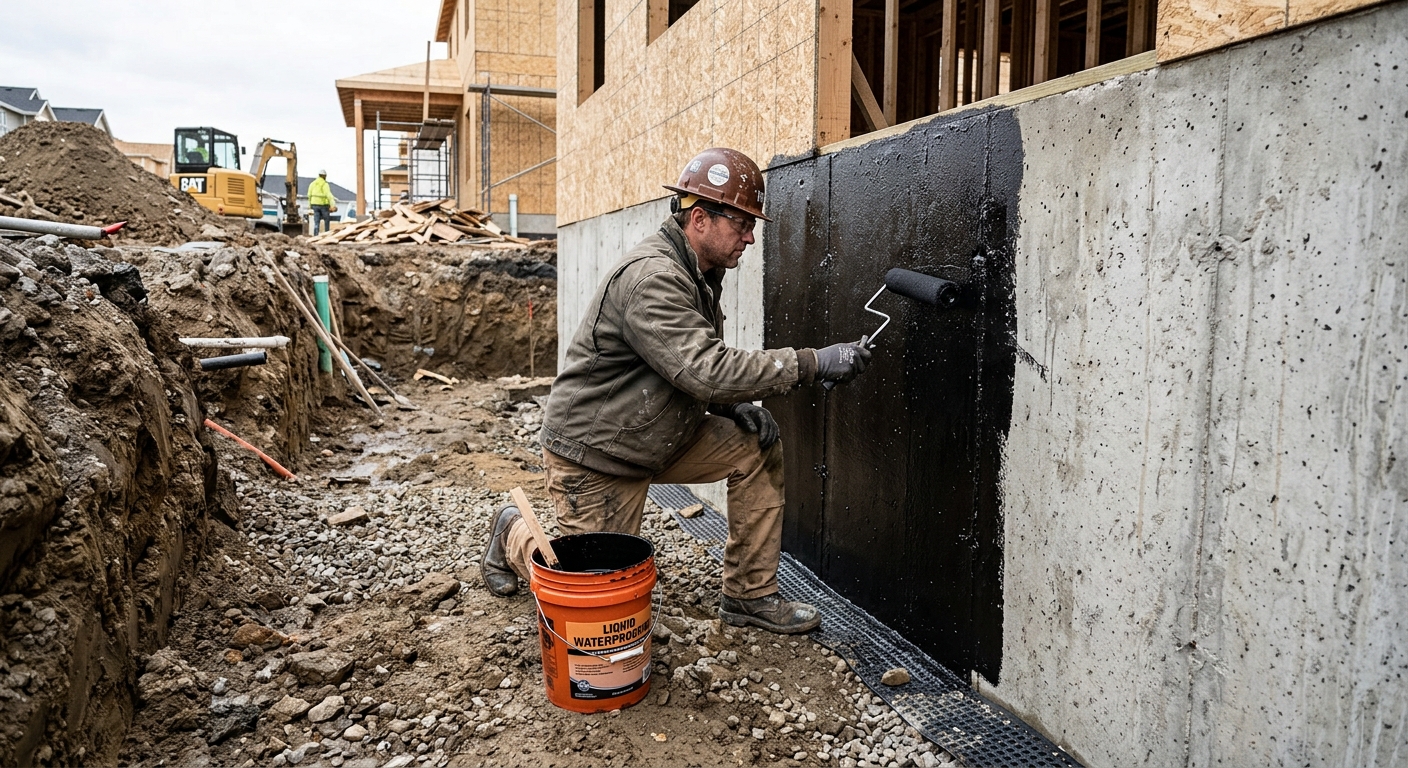
Basement waterproofing options and costs in Morinville
Morinville homeowners typically start by comparing basement waterproofing options that match how water is reaching their foundation. With 10,385 people in town (Statistics Canada, 2021 Census) and 3,145 homeowner households, demand is steady—especially for older properties where original systems have aged. In fact, 35.0% of homes were built before 1981 (Statistics Canada, 2021 Census), which means many basements were initially protected with earlier tar-and-paper or less reliable perimeter drainage. When weeping tile fails or becomes partially clogged, Edmonton-area clay-rich and silty soils can hold water and slowly release it against foundation walls, making seepage and dampness a recurring issue.
Costs in Morinville also reflect Alberta’s pronounced freeze–thaw cycles. Each winter widens existing joints and cracks, turning minor damp patches into active leaks and floor-edge seepage over time. That freeze-thaw pressure is one reason interior repairs alone sometimes bring only temporary relief unless the water pathway is addressed and managed with reliable sump pumping and discharge. Contractor availability is another factor: exterior excavation requires labour-intensive digging, hauling/disposal, and careful backfill in sites with landscaping and tight infill lots—so exterior projects usually price higher than interior solutions.
In Morinville, trade activity is especially common around newer growth pockets and resale areas where lots are tighter and grading is more often altered over the years, such as near downtown/central neighbourhoods. From there, the decision usually comes down to whether you need a source-control exterior approach or an interior system to manage water after it enters. Use the table below as a quick comparison before you request itemised quotes.
| Method |
What It Addresses |
Disruption Level |
Durability |
Price Range |
| Exterior excavation + new membrane + drainage tile |
Primary water entry source; hydrostatic pressure relief via drainage and membrane |
High (excavation, landscaping reinstatement) |
High (best source control) |
$12,000–$25,000 |
| Interior perimeter drain channel + sump pit |
Captures seepage at the footing/wall interface; reduces wall dampness and floor-edge water |
Medium (floor/trim removal near perimeter) |
Medium to high (depends on discharge reliability and drainage design) |
$8,000–$18,000 |
| Foundation crack injection (epoxy or polyurethane) |
Seals cracks to stop leakage pathways; epoxy suits stable/non-moving cracks, polyurethane suits active leaks |
Low to medium (minor interior access, drilling ports) |
Medium (best when paired with drainage to manage pressure) |
$600–$2,500 |
| Sump pump installation (primary + battery backup) |
Reliable water discharge during spring wet periods and power interruptions |
Low to medium (pit + discharge line; minor finish work) |
Medium to high (higher with backup and proper discharge) |
$1,800–$3,800 |
| Window well drain installation |
Controls water pooling at egress window areas; reduces seepage and freeze damage |
Low (targeted excavation around window) |
Medium (depends on tie-in to drainage discharge) |
$1,000–$2,600 |
| Lot re-grading / downspout extension |
Stops surface water from redirecting toward the foundation |
Low to medium (site work and downspout changes) |
Low to medium (helps, but may not solve high hydrostatic pressure) |
$900–$2,400 |
Prices are estimates only and vary by project scope, site access and material selection.
What affects the price of waterproofing in Morinville
Even when homeowners describe the same symptom—damp basement walls, musty odours, or floor-edge seepage—Morinville quotes can differ by 30–50% across the Edmonton area because waterproofing is site-specific. Two contractors can both recommend “interior drainage,” but one quote may include a full perimeter drain channel, a properly sized sump with backup power, and discharge routing safeguards, while the other may stop short on materials or prep work. The result is that the “cheaper” option sometimes treats symptoms without fully managing the water volume that your clay-rich soil can deliver during wet periods.
In Edmonton-area conditions, three drivers separate regional pricing from the national average: soil type, water table behaviour, and freeze–thaw. Clay-heavy and silty soils expand when saturated, which increases lateral pressure on foundation walls and can worsen crack seepage over time. When high ground moisture is present near the foundation, sump systems must run longer—so pump sizing, check valves, and discharge design matter. Alberta’s freeze–thaw cycles also keep pushing water into micro-cracks: what looks like “only a damp spot” in early fall can become an active leak after winter expansion.
Two practical examples in Morinville: (1) a home built before 1981 with likely aging weeping tile often needs interior perimeter drainage plus sump pumping, which pushes many projects into the $8,000–$18,000 band. (2) if your foundation is accessible for exterior excavation (no mature trees, minimal hardscape), you may be able to justify an exterior system in the $12,000–$25,000 range because it can provide true source control. If, however, you only have minor hairline cracking with no evidence of active seepage, crack injection may be sufficient and keep costs closer to the $600–$2,500 range.
Bottom line: the more your site relies on managing water pressure and discharge, the more the scope—and price—moves upward. The next table breaks down the key factors contractors use when pricing a job.
| Price Factor |
Why It Matters |
Cost Impact |
| Interior vs. exterior approach — interior is less disruptive but addresses symptoms |
Exterior manages the water at the source; interior mainly captures and discharges once it reaches the foundation |
Interior often lands lower by roughly $4,000–$12,000 depending on site access |
| Foundation type — poured concrete vs. block vs. stone vs. ICF |
Crack behaviour and repair method differ; some walls respond better to injection, others need drainage complement |
Poured concrete may reduce complexity; block walls can increase prep and drainage scope |
| Soil type — clay expands more than sand, adding pressure |
Higher lateral pressure increases leak potential and sump run times |
Clay-driven sites can move interior projects toward the upper half of the band |
| Crack type and length — hairline vs. structural horizontal cracks |
Active or structural movement requires different materials and potentially engineering |
Structural cracks raise scope; injection alone may not be enough |
| Sump pump backup system — battery or water-powered backup needed |
Prevents basement flooding during power interruptions common in heavy spring weather periods |
Typically adds material/labour budget; can add about $800–$2,000 to the pump scope |
| Access — landscaping, decks, or driveways must be removed for exterior |
Hard access increases labour, disposal, and reinstatement costs |
Exterior jobs can jump several thousand dollars with major landscaping removal |
| Weeping tile age — original tile (60+ years) may be completely failed |
Old tile is often partially blocked, allowing water to bypass toward the wall |
May require full replacement and tie-in to new discharge routing |
| Mould or efflorescence remediation required before sealing |
Moisture-damaged materials and salts must be treated to ensure coatings and sealants bond properly |
Adds time for cleaning, disposal, and sometimes temporary drying |
Permits & regulations in Alberta
In Alberta, certain foundation and drainage-related work typically requires a building permit, particularly when you’re changing structural elements or lot drainage patterns. Foundation excavation and exterior waterproofing work that involves disturbing the soil around the foundation often falls into permit territory because it can affect drainage and, in some cases, structural stability during and after excavation. Structural crack repairs—especially horizontal cracks in block walls or major step cracks—should not be treated as “purely cosmetic,” and an engineer’s assessment is commonly required to determine whether additional structural work such as underpinning is needed. Also, sump pump installations that connect to municipal storm or sanitary systems generally require municipal approval.
What typically does NOT require a permit: minor interior cosmetic sealing when no structural crack repair is performed, small targeted crack patching where there’s no evidence of structural movement, and basic downspout extensions that do not involve altering drainage systems connected to municipal infrastructure. However, if you’re routing discharge, modifying grades near a foundation, or replacing major drainage components, verify with the City of Morinville or your contractor’s permit process before work begins.
To verify a contractor in Morinville, start with Alberta licence/registration status (ask the contractor for the licence number and search it through the appropriate provincial registry). Next, request a certificate of liability insurance showing current coverage and list of additional insured (if applicable). For WSIB/WCB, ask for current clearance/coverage documents. For structural repair scopes, confirm they have engineering support documented in writing (or they coordinate the engineer) and that their liability insurance covers the specific waterproofing and foundation repair work being proposed.
Interior vs exterior waterproofing — what does Morinville need?
In Morinville, the fundamental difference is whether you stop water at the foundation (exterior) or manage it once it enters (interior). Exterior waterproofing involves excavation around the foundation, installing membrane and a new drainage system (often including drainage tile), then backfilling and restoring grading. That approach addresses the source of water entry and relieves hydrostatic pressure directly, so it’s the most permanent solution when your site conditions—such as clay retention and long wet seasons—push water toward the wall. The trade-off is higher cost and greater disruption from excavation, disposal, and landscaping reinstatement.
Interior waterproofing typically uses a perimeter drain channel and sump pit with a sump pump to capture seepage at the footing/wall interface. It is less invasive, often places less strain on landscaping, and can be the right choice when exterior excavation is impractical due to hardscapes, finished landscaping, or limited access. However, interior systems do not remove the hydrostatic pressure acting on the wall; they rely on dependable drainage and discharge to keep the basement dry. In Morinville’s freeze–thaw conditions, interior solutions must be designed for water volume and reliable pumping, not just “occasional” seepage.
Foundation type also guides the decision. Poured concrete walls often respond well to crack injection paired with improved drainage, because sealed cracks can reduce seepage pathways. Block foundations can be more challenging: they often need interior drainage as a practical complement, particularly when weeping tile is aged or discharge routes are undersized. If power outages occur during spring wet periods, backup systems for sump pumps become less optional.
For example, a typical interior drain + sump project might fall in the $8,000–$18,000 range, while an exterior excavation approach can be $12,000–$25,000. The extra investment is justified when you can confidently address the source—especially where clay-rich soils hold water for long periods, where exterior discharge is feasible, and where the foundation shows recurring seepage along multiple wall segments.
| Method |
Best For |
Addresses Source? |
Disruption |
Lifespan |
Price Band |
| Full exterior excavation + membrane |
Recurring wet basements, high water pressure, multiple seepage points, accessible exterior walls |
Yes |
High (excavation + backfill + landscaping restoration) |
Long (often the most durable option) |
$12,000–$25,000 |
| Interior French drain + sump system |
Sites where excavation isn’t practical; dampness, floor-edge seepage, and active seepage near footings |
No (manages after entry) |
Medium (perimeter floor/trim disruption) |
Medium to high with correct pump sizing and discharge |
$8,000–$18,000 |
| Crack injection — epoxy (structural) |
Stable, non-moving cracks in poured concrete where there’s no active pressure pushing water |
Partial (seals a pathway) |
Low to medium (drilling ports and surface restoration) |
Medium (improves performance when paired with drainage) |
$600–$2,500 |
| Crack injection — polyurethane (active leak) |
Active leaks where sealants must flex slightly and respond to water movement |
Partial (seals an active pathway) |
Low to medium (access and curing requirements) |
Medium (often needs drainage support to prevent recurrence) |
$700–$2,800 |
| Interior drain channel only (no sump) |
Light dampness where water volume is low; short-term collection with an alternate discharge route |
No |
Medium (floor perimeter access) |
Lower if water accumulates during wet seasons |
$6,000–$13,000 |
| Re-grading + downspout extensions |
Surface water issues: roof runoff, water tracking toward foundation, minor early-stage dampness |
Yes for surface water pathways |
Low to medium (grading and eaves changes) |
Low to medium (insufficient when hydrostatic pressure is the driver) |
$900–$2,400 |
How to choose a waterproofing contractor in Morinville
Start by verifying licensing and coverage the way a cautious homeowner should. In Alberta, ask for proof of their provincial licence/registration (get the licence number and confirm it online through the appropriate provincial registry). Next, request a current certificate of liability insurance and confirm limits are adequate for foundation work and interior demolition. For workers, ask for WSIB/WCB coverage and request documentation (often a clearance letter or equivalent proof of coverage). If a contractor won’t provide these documents promptly, that’s a strong warning sign.
Then, get 2–3 itemised written quotes. “Itemised” matters: you want labour and materials broken out (excavation, membrane, drainage tile, disposal, pump, backup components, drain lines, restoration, and any engineering-related allowances). Carefully read exclusions: is permit pulling included or separate? Is debris/disposal included? Who handles survey/locates? What about unforeseen conditions like partially failed footings, soil collapse during excavation, or abandoned discharge lines?
Warranty is also specific. Ask for the workmanship warranty length and whether it’s backed by the company (not just “product warranty”). Clarify product/manufacturer warranties for membrane/coatings and whether the warranty is transferable if you sell the home. Use a sensible payment schedule: never pay more than 10–15% upfront, and hold back funds until completion and walkthrough. Finally, request a timeline with a start date and an estimated completion window in writing.
- Confirm licence/registration number and verify it through Alberta’s online registry before signing.
- Require a certificate of liability insurance showing current coverage and company name.
- Check WSIB/WCB clearance or equivalent proof of coverage for the contractor and any subcontractors.
- Request 2–3 itemised quotes with labour + materials line items, not a lump-sum only.
- Verify what permits are included (and who pulls them) for excavation and drainage changes.
- Ensure disposal/haul-away of excavated material is explicitly included if exterior work is proposed.
- Confirm sump pump spec details: pump capacity, discharge pipe diameter/slope, check valves, and backup type.
- Ask how they test discharge and routing (including winter discharge freeze safeguards).
- Require a written scope for crack injection: crack type, material choice (epoxy vs polyurethane), and depth plan.
- Check whether they address mould/efflorescence remediation before sealing and coatings.
- Get warranty terms in writing: length, exclusions, who covers labour vs materials.
- Set payment milestones with a holdback until completion and photo-verified walkthrough.
Red flags in Morinville include contractors who: (1) recommend a “one-size-fits-all” interior drain without assessing soil/water behaviour, (2) won’t provide licence/insurance/WSIB/WCB documentation in writing, (3) offer only vague scopes like “seal and re-finish,” (4) skip discussion of sump pump discharge and backup power, and (5) avoid discussing permits and engineering when cracks suggest structural concern.
Frequently asked questions — waterproofing in Morinville
Can I waterproof my basement from the inside only?
Yes, many Morinville basements can be improved from the inside only, especially when exterior excavation is difficult due to landscaping, decks, or tight access. Interior perimeter drains and sump systems capture seepage at the footing line and keep floor edges drier during spring wet periods and freeze–thaw cycles. However, interior work generally manages water after it enters—it doesn’t remove the hydrostatic pressure pushing against the wall. That’s why homes built before 1981 (35.0% locally) may still see recurring problems if weeping tile failure and drainage pathways aren’t understood and corrected. For typical interior systems, homeowners often budget $8,000–$18,000, depending on sump specs, backup, and perimeter coverage.
What causes foundation cracks in Morinville?
In Morinville and the Edmonton area, foundation cracking is commonly driven by seasonal soil movement, water saturation, and freeze–thaw expansion. Clay-rich soils can hold water and expand when saturated, increasing lateral pressure on foundation walls. Each winter’s freeze–thaw cycles then widen existing joints and micro-cracks, turning them into pathways for seepage. Another common contributor is aging drainage: partially clogged weeping tile or discharge routing can cause chronic dampness that accelerates wear. Homes with poured concrete may show hairline cracks that can often be sealed, while block foundations more frequently need drainage complements because mortar joints and seams can respond differently. If you have horizontal or step cracking, get an assessment—structural repair may require engineering input.
How do I compare waterproofing quotes?
Compare quotes like a “spec sheet,” not like a single price number. Ask each contractor for an itemised breakdown: labour and materials for excavation (if exterior), membrane/drainage tile components, interior drain channel design, sump pit and pump model, discharge piping route, and restoration. Confirm whether permits are included and what exactly is excluded (disposal, landscaping reinstatement, engineering allowances). Make sure they state how they’ll handle your local conditions—soil type, observed water entry points, and how they plan for freeze–thaw. A quote that lands in the $8,000–$18,000 band but omits backup power may not be comparable to one that includes it, especially during Alberta’s spring wet periods. Good quotes also include a workmanship warranty length and a clear start/finish timeline.
How long does basement waterproofing take in Morinville?
Timelines vary by scope and site access, but in Morinville you’ll typically see interior waterproofing completed faster than exterior. Interior perimeter drains and sump installations often take several days to a couple of weeks, depending on how much floor/perimeter finish must be opened, curing times for crack injection, and how complex discharge routing is. Exterior excavation projects can take longer due to weather constraints, excavation and backfill sequencing, membrane and drainage installation, and then landscaping restoration. Edmonton-area freeze–thaw means contractors try to schedule around conditions that allow proper backfill compaction and curing. Ask for a written start date and completion estimate. Also confirm whether the schedule assumes drywall/re-tiling by the homeowner or if restoration is included in the quote.
What is a weeping tile and does my Morinville home have one?
Weeping tile is a buried perimeter drainage system installed around the foundation (or part of the footing zone) to intercept groundwater and direct it to a sump or discharge point. In many Morinville homes—particularly those built when exterior drainage became more common—it may exist, but it can fail over time due to clogging, damage, or blocked discharge routes. Because 35.0% of local homes were built before 1981, some older basements may have original drainage that’s partially compromised or missing, and others may have had repairs that didn’t fully restore performance. To determine if you have it, contractors often inspect through access points, check cleanout locations, camera-scan where feasible, and review basement water patterns. Even if you have weeping tile, it doesn’t guarantee dryness if drainage discharge is undersized or outdated.
Can I waterproof my basement in winter in Morinville?
Sometimes, yes—but it depends on the type of work and site conditions. In Morinville, winter basement waterproofing is commonly limited because exterior excavation is harder when soil is frozen, and backfill/membrane workflows require conditions that support proper installation and curing. Interior work is often more feasible in winter: installing a perimeter drain channel and sump pit, setting discharge lines that won’t freeze, and performing crack injection can be done when the basement is accessible and materials can cure appropriately. If there’s active leakage, interior solutions are often prioritized to prevent ongoing water intrusion during freeze–thaw. Exterior source-control projects usually require better thaw/working conditions. If you’re budgeting, remember interior systems often fall within $8,000–$18,000, while exterior excavation is typically higher at $12,000–$25,000.