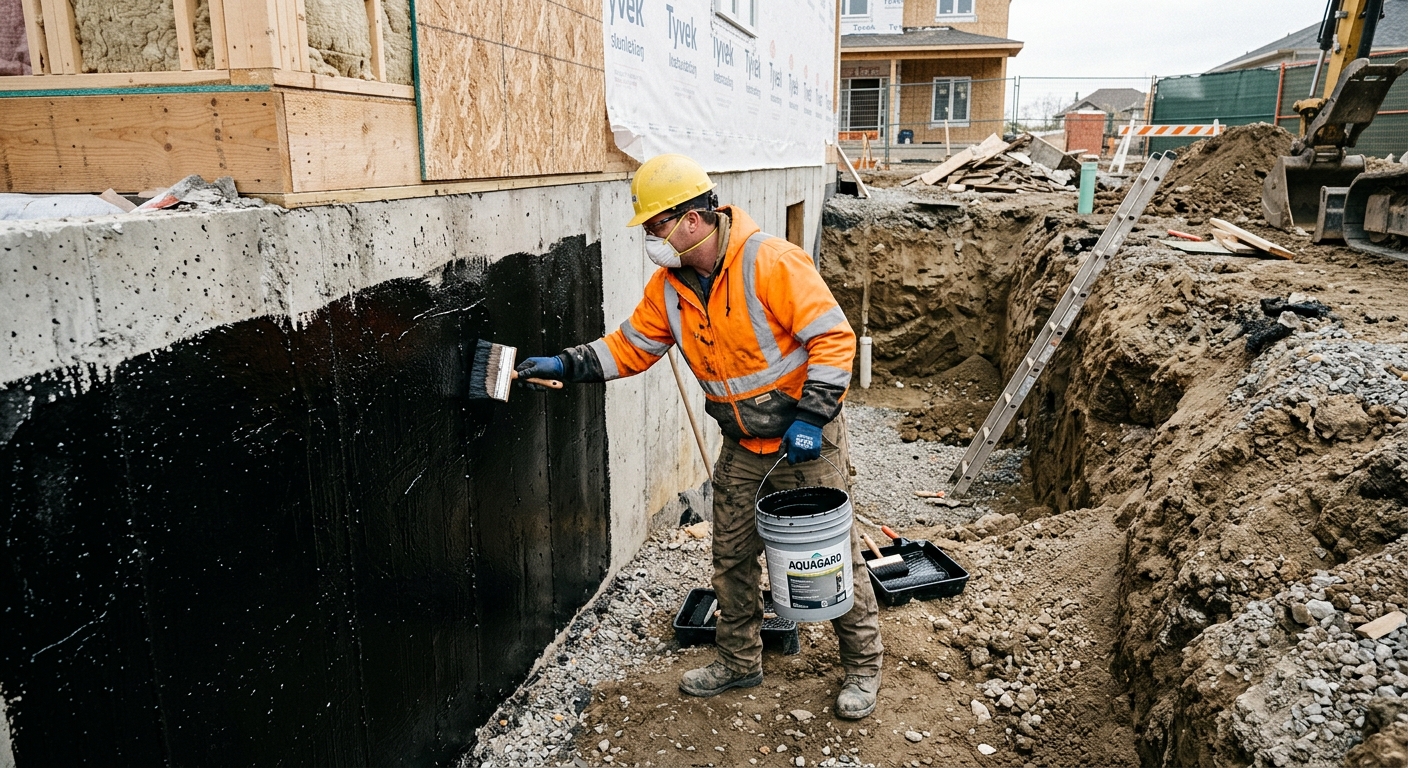
Basement waterproofing options and costs in Fox Creek
In Fox Creek, basement waterproofing is usually about managing water driven by local clay-and-clay-loam soils, poor surface drainage, and winter freeze-thaw that widens joints and cracks each spring. This matters even more for older housing: in Fox Creek, 54.5% of homes were built before 1981, and those foundations are more likely to have aging or undersized original weeping tile, along with dampproofing systems that have long since lost their effectiveness. With 1,639 residents and a 77.3% homeowner rate (Statistics Canada, 2021 Census), there’s a steady demand for practical retrofits—especially when spring melt coincides with high groundwater pressure.
In the Athabasca–Grande Prairie–Peace River region, contractors price waterproofing based on lot exposure: higher water pressure and more seepage risk in low-lying areas, combined with long freeze seasons, typically increase labour time for excavation, drainage installation, and crack repairs. That’s why neighbourhood-scale differences show up in quotes. In Fox Creek’s older residential pockets and farm-adjacent properties where downspouts and grading have shifted over time, waterproofing work is particularly in demand.
Below is a homeowner-friendly comparison of common options we see in Fox Creek, along with typical ranges for the Athabasca–Grande Prairie–Peace River tier. Use it to sanity-check quotes before you get deeper into a site-specific inspection and scope.
| Method |
What It Addresses |
Disruption Level |
Durability |
Price Range |
| Exterior excavation + new membrane + drainage tile |
Primary hydrostatic pressure control; replaces failed perimeter drainage and creates a full water-shedding layer |
High (excavation, landscape disruption) |
High (often 20+ years with correct backfill/drainage) |
$12,000–$25,000 |
| Interior perimeter drain channel + sump pit |
Collects seepage after water enters; reduces wall saturation and floor seepage |
Medium (floor/edge demolition; minimal yard work) |
Medium-high (commonly 15–20 years with maintained sump pumping) |
$8,000–$18,000 |
| Foundation crack injection (epoxy or polyurethane) |
Hairline/structural cracking (epoxy) or active leaks (polyurethane) to stop water pathways |
Low (minor patching after injection) |
Medium (depends on crack type, movement, and drainage control) |
$600–$2,500 |
| Sump pump installation (primary + battery backup) |
Moves collected groundwater away from the foundation during wet cycles and power interruptions |
Low-medium (pit cutting and piping; limited restoration) |
Medium-high (depends on discharge routing and backup readiness) |
$1,500–$3,500 |
| Window well drain installation |
Stops water pooling around egress/window areas; reduces localized seepage and mould risk |
Low-medium (small excavation and restoration) |
Medium (typically 10–15 years; relies on clear weep pathways) |
$1,200–$3,000 |
| Lot re-grading / downspout extension |
Redirects roof runoff away from foundation; improves surface drainage and reduces seepage volume |
Low (site work only) |
Low-medium (needs maintenance as grades settle) |
$2,000–$6,000 |
Prices are estimates only and vary by project scope, site access and material selection.
What affects the price of waterproofing in Fox Creek
In Fox Creek, you can see very different prices for “the same” basement waterproofing—often 30–50%—because quotes are driven by how much water pressure you’re fighting and how accessible the foundation is. Two contractors might both propose interior drainage, but one may need more floor removal due to slab conditions, or may recommend crack injection plus sump upgrades to handle freeze-thaw movement. In the Athabasca–Grande Prairie–Peace River region, the main reason regional pricing diverges from a national average is that soil type, water table conditions, and repeated freeze-thaw are more determinative here than in milder climates.
Clay-heavy soils (common locally) expand when saturated and exert lateral pressure on basement walls, which can worsen cracks over time—meaning you may need both drainage and crack repair, not drainage alone. When groundwater is high, sump systems run more often, and contractors must size piping, select check valves, and plan reliable discharge routes. In the region, older housing stock also shows up in the frequency of failing or undersized weeping tile and older sump pits, so repair work shifts toward interior drainage retrofits, crack injection, and backup pump planning rather than “light touch” membrane updates.
Concrete Fox Creek examples that change the numbers quickly: (1) if your weeping tile is old and blocked, interior drainage-only work can cost closer to $8,000–$18,000, but adding sump upgrades and battery backup can push toward the upper end because the discharge and power reliability matter; (2) if an exterior excavation is required due to active seepage at multiple wall runs, exterior excavation work commonly sits in the $12,000–$25,000 band due to excavation time, disposal, backfill, and membrane/draintile labour.
| Price Factor |
Why It Matters |
Cost Impact |
| Interior vs. exterior approach — interior is less disruptive but addresses symptoms |
Exterior targets the source; interior manages the result after water enters |
Interior can be materially lower, but may require added crack sealing and pumping |
| Foundation type — poured concrete vs. block vs. stone vs. ICF |
Crack behaviour and how water travels differ by foundation material |
Poured concrete often responds well to injection; block and joints often demand interior drainage as a practical complement |
| Soil type — clay expands more than sand, adding pressure |
Clay saturation increases hydrostatic/lateral pressure and seepage duration |
Higher chance of wall saturation control requirements and more robust sump capacity |
| Crack type and length — hairline vs. structural horizontal cracks |
Hairline cracks may be straightforward; horizontal cracks can require structural assessment |
More labour/engineering steps can raise the job cost substantially |
| Sump pump backup system — battery or water-powered backup needed |
Freeze-season and spring flooding increases the risk of power interruptions and overflow |
Backup adds line-item cost but can prevent major cleanup and damage |
| Access — landscaping, decks, or driveways must be removed for exterior |
Restoration and excavation complexity vary by lot layout |
Exterior jobs can jump quickly when decks/driveways or tight sides must be removed |
| Weeping tile age — original tile (60+ years) may be completely failed |
Blocked tile fails to relieve pressure and can force water elsewhere |
May require excavation, new drainage, and additional interior measures |
| Mould or efflorescence remediation required before sealing |
Sealing over active contamination risks odours and ineffective bonding |
Remediation adds time and materials prior to sealing |
Permits & regulations in Alberta
In Alberta, certain waterproofing-related work triggers permit requirements, especially when you’re affecting structure, drainage, or plumbing discharge. In most Fox Creek residential situations, foundation excavation and structural crack repair typically require a building permit, particularly when the work is tied to load-bearing concerns or any potential structural modification. If you’re changing how water leaves the lot—such as altering drainage patterns that discharge to municipal infrastructure—municipal approval is often required.
Sump pump installation can also require municipal approval depending on where the discharge is directed (for example, whether it connects to storm or sanitary sewer systems, or requires a specified discharge method). Structural crack repair (especially horizontal cracks in block walls or major step cracks) often calls for an engineer’s assessment to determine whether underpinning or other structural work is needed before waterproofing. A reputable contractor should be comfortable coordinating engineering support if your condition looks structural.
To verify a contractor in Fox Creek, start with three checks:
- Confirm the contractor’s Alberta licence/registration (where applicable for their scope) through the appropriate provincial registry.
- Request a certificate of insurance for liability, and verify it matches the project address and dates.
- Ask for proof of clearance/coverage for WSIB/WCB.
For structural repairs, ensure they state in writing that engineering support is available or already included as needed for the scope.
Interior vs exterior waterproofing — what does Fox Creek need?
The fundamental difference is source control versus water management. Exterior waterproofing (excavation, membrane, new drainage tile, and backfill) aims to stop water at the foundation before it creates hydrostatic pressure. It’s the most permanent approach, but it costs more and requires significant disruption—excavation along the foundation walls, restoration of landscaping, and proper re-grading. Interior waterproofing (perimeter drain channel, sump pit, sump pump) typically starts after water enters the basement; it collects seepage and keeps the foundation and slab edges drier, but it doesn’t necessarily prevent water pressure against the wall itself.
In Fox Creek and the Athabasca–Grande Prairie–Peace River region, clay-rich, poorly drained soils and long freeze-thaw seasons mean water can remain in contact with foundations longer each spring. That often makes exterior work the best long-term choice when the lot allows access and surface drainage is hard to fix from inside. However, poured concrete walls frequently respond well to combined crack injection and interior drainage control—because sealing pathways and managing seepage can reduce repetitive freeze-thaw enlargement of cracks. Block foundations, especially where mortar/joints or corners leak, often need interior drainage as a practical complement, even when some crack repair is done.
One price example: if you can’t access the exterior (deck/driveway right at the foundation), interior drainage and a sump system may land in the $8,000–$18,000 band, and then crack repair can add a smaller line item (often within $600–$2,500) depending on crack length/type. If you do have safe exterior access and active seepage is persistent, full exterior waterproofing commonly ranges $12,000–$25,000—and the extra cost is justified when it’s truly source control, not just symptom management.
Also consider sump pump backup. In northern Alberta, spring flood cycles and outage risk can lead to pump downtime exactly when groundwater peaks. A battery backup (and a properly routed discharge) can prevent the “all-in-one” damage cascade: saturated walls, floor seepage, and cleanup at the worst possible moment.
| Method |
Best For |
Addresses Source? |
Disruption |
Lifespan |
Price Band |
| Full exterior excavation + membrane |
Lots with exterior access and persistent seepage from hydrostatic pressure |
Yes |
High |
20+ years (when drainage/backfill are done correctly) |
$12,000–$25,000 |
| Interior French drain + sump system |
When exterior access is limited or when you need an effective backup after water enters |
No (manages water after entry) |
Medium |
15–20 years with maintenance |
$8,000–$18,000 |
| Crack injection — epoxy (structural) |
Hairline or non-moving cracks where stability is confirmed |
Partially (seals pathways) |
Low |
Medium (performance depends on movement control) |
$600–$2,500 |
| Crack injection — polyurethane (active leak) |
Cracks with active seepage and water flow pathways |
Partially (seals active leaks) |
Low |
Medium (best paired with drainage/sump) |
$800–$2,800 |
| Interior drain channel only (no sump) |
Minor seepage and dry seasons where you can rely on gravity drainage capacity |
No |
Medium |
10–15 years (depends on discharge/backup plan) |
$6,000–$12,000 |
| Re-grading + downspout extensions |
Surface runoff problems and early-stage damp areas without strong seepage |
Helps reduce entry volume (indirect) |
Low |
5–10 years (may need periodic maintenance) |
$2,000–$6,000 |
How to choose a waterproofing contractor in Fox Creek
Choosing the right contractor is less about marketing and more about documentation and a scope that matches your foundation’s water pathway. In Alberta, verify coverage before work starts: ask for (1) a certificate of liability insurance showing the address and project dates, (2) proof of WSIB/WCB coverage or clearance, and (3) evidence of the appropriate Alberta registration/licensing for their scope. If a contractor can’t provide paperwork quickly, that’s a signal you should slow down.
Next, request 2–3 itemised written quotes. A good quote breaks out labour and materials (excavation/disposal, membrane and drainage components, pipe and fittings, sump pit components, crack injection materials, and restoration). Avoid “lump sum only” proposals—waterproofing problems are diagnostic, and the cost is tied to what they find during inspection.
Read exclusions carefully: is permit pull included where required? Is debris disposal included? Will they handle verification of discharge routing for sump pumps? Warranty terms matter too. Look for a clear workmanship warranty length, the product/manufacturer warranty details, and whether any warranty is transferable if you sell the home.
Payment schedule should be controlled. Never pay more than 10–15% upfront; use a holdback that’s released only when key steps are completed (for example, after membrane/drain tile inspection points and final restoration). Get a start date and completion estimate in writing, and ask how they’ll protect interior finishes during work.
- Confirm liability insurance and request the certificate before signing.
- Verify WSIB/WCB clearance/coverage paperwork.
- Check Alberta registration/licensing relevant to the proposed scope.
- Insist on an itemised quote (labour + materials, not only a total price).
- Ask what’s included for disposal, restoration, and patching.
- Confirm whether permits and engineering coordination are included when needed.
- Review how they determine crack type (hairline vs structural movement) before injecting.
- Ask about sump discharge routing and check-valves (and backup plan).
- Get warranty details in writing: workmanship term, product warranty, and transferability.
- Use a payment schedule with a holdback until completion and walkthrough.
- Ask for a site-access plan (deck/driveway protection, excavation boundaries).
- Request an after-job document: photos, materials list, and warranty certificates.
Red flags we see in Fox Creek include: contractors who promise a one-size-fits-all “membrane patch” without drainage tile planning; quotes that don’t mention sump discharge routing or backup power options; injection proposals that ignore crack type and movement; vague scopes that exclude disposal/restoration; and willingness to start without proof of insurance/WSIB/WCB or without discussing permits when structural work is involved.
Frequently asked questions — waterproofing in Fox Creek
What is the difference between waterproofing and damp-proofing?
In Fox Creek and across Alberta, “damp-proofing” typically means applying a barrier to reduce moisture contact, but it’s not designed to reliably handle hydrostatic pressure when groundwater rises and sits against foundation walls. Waterproofing, by contrast, is a system: it’s meant to manage water entry and pressure—often combining drainage tile, correct grading, sealed wall penetrations, and (when needed) a sump pump to actively move collected water away.
The Athabasca–Grande Prairie–Peace River region’s freeze-thaw cycle can worsen minor cracks over time, and clay soils can hold water longer, so basements that only have damp-proofing often see recurring seepage at cracks and corners. For homeowners, a realistic approach is to treat symptoms and sources together—especially in homes built before 1981, when original systems are more likely to be failing (Statistics Canada, 2021 Census).
Will basement waterproofing affect my property value in Fox Creek?
It can, because waterproofing reduces risk and ongoing costs—odours, mould concerns, and expensive cleanup after spring melt. In Fox Creek, where many homes are owner-occupied (77.3% homeowner households per Statistics Canada, 2021 Census), buyers and appraisers often look favourably on documented, system-based remediation: crack repairs tied to drainage control, and sump/pumping upgrades where groundwater is a recurring issue.
That said, value impact depends on how correct the solution is. If a contractor only treats symptoms (for example, a surface patch) while leaving failed perimeter drainage untouched, you may still see recurring seepage and that can hurt perceived value. Conversely, a properly installed perimeter drainage system with a clear maintenance/warranty record—sometimes supported by exterior work—helps demonstrate that the foundation’s water pathway has been addressed. For context, full exterior waterproofing commonly falls in the $12,000–$25,000 band, while interior systems often come in around $8,000–$18,000 depending on scope.
What drainage issues are most common in Fox Creek homes?
In Fox Creek, the most common issues are seepage along foundation walls and pooled water near corners or window areas during spring melt and heavy wet cycles. Clay-and-clay-loam soils tend to stay saturated longer, so basements can remain damp for weeks, not just days. Freeze-thaw then enlarges existing cracks and weak points, especially around joints and older penetrations.
Older homes—54.5% of Fox Creek dwellings were built before 1981 (Statistics Canada, 2021 Census)—are frequently more likely to have underperforming original weeping tile, corroded sump components, or marginal grading that no longer sheds runoff effectively. You’ll also see localized trouble spots around window wells, plus downspouts that discharge too close to the foundation after years of settlement. When groundwater pressure is high, interior perimeter drains and sump systems become a practical “backup” to manage water after entry, and contractors may add crack injection where seepage pathways persist.
How do I choose a waterproofing contractor in Fox Creek?
Start by verifying documentation: ask for liability insurance, WSIB/WCB coverage or clearance, and evidence of the correct Alberta registration/licensing for their scope. A reputable contractor should provide these upfront and be comfortable answering detailed questions about drainage routing and foundation conditions. If they avoid paperwork or can’t provide certificates, that’s a major concern.
Then get 2–3 itemised written quotes. You should see labour and materials broken out, plus what’s included for disposal and restoration. Ensure the scope addresses how water moves on your lot: the contractor should explain whether they’re managing water entry with interior drainage (often $8,000–$18,000) or controlling pressure with exterior work (often $12,000–$25,000), and whether crack injection is needed for your crack type.
Finally, confirm warranty terms in writing and ask about backup power if you’re installing a sump in an area prone to spring peak water levels.
What is a battery backup sump pump and do I need one in Fox Creek?
A battery backup sump system keeps your sump pump running during power outages. In Fox Creek and northern Alberta, spring flooding and wet cycles can increase the chance that electrical systems are stressed at the same time groundwater peaks—so the backup can prevent overflow and reduce cleanup if the main power fails. Battery backups don’t eliminate the need for proper drainage design; they protect you from timing failures between rising groundwater and pump operation.
Do you “need” one? If you’ve already seen seepage during power interruptions, if your discharge route is critical, or if your sump cycles frequently during spring melt, it’s usually a smart upgrade. It’s also commonly recommended when contractors install a sump system as part of an interior waterproofing retrofit. In price terms, sump installations with primary + battery backup can fall around $1,500–$3,500 depending on complexity and required parts. A good contractor will also explain maintenance, testing intervals, and what discharge method they’re using.
How much does basement waterproofing cost in Fox Creek?
Costs in Fox Creek depend on how much excavation is needed, whether water pressure is significant, and what’s found during inspection. Typical ranges we see in the Athabasca–Grande Prairie–Peace River tier are: exterior waterproofing (excavation, membrane, drainage tile) often comes in around $12,000–$25,000. Interior waterproofing with a perimeter drain and sump pit typically sits near $8,000–$18,000, and foundation crack repair by injection is often a smaller line item, commonly $600–$2,500 depending on crack type and length.
Additional items can include sump pump installation (including backup) around $1,500–$3,500, and localized work such as window well drainage. Remember that Fox Creek has a large share of older housing (54.5% built before 1981) which often increases the likelihood of failed original drainage, so many projects include interior drainage plus crack sealing. A proper site assessment is the best way to tighten your estimate.