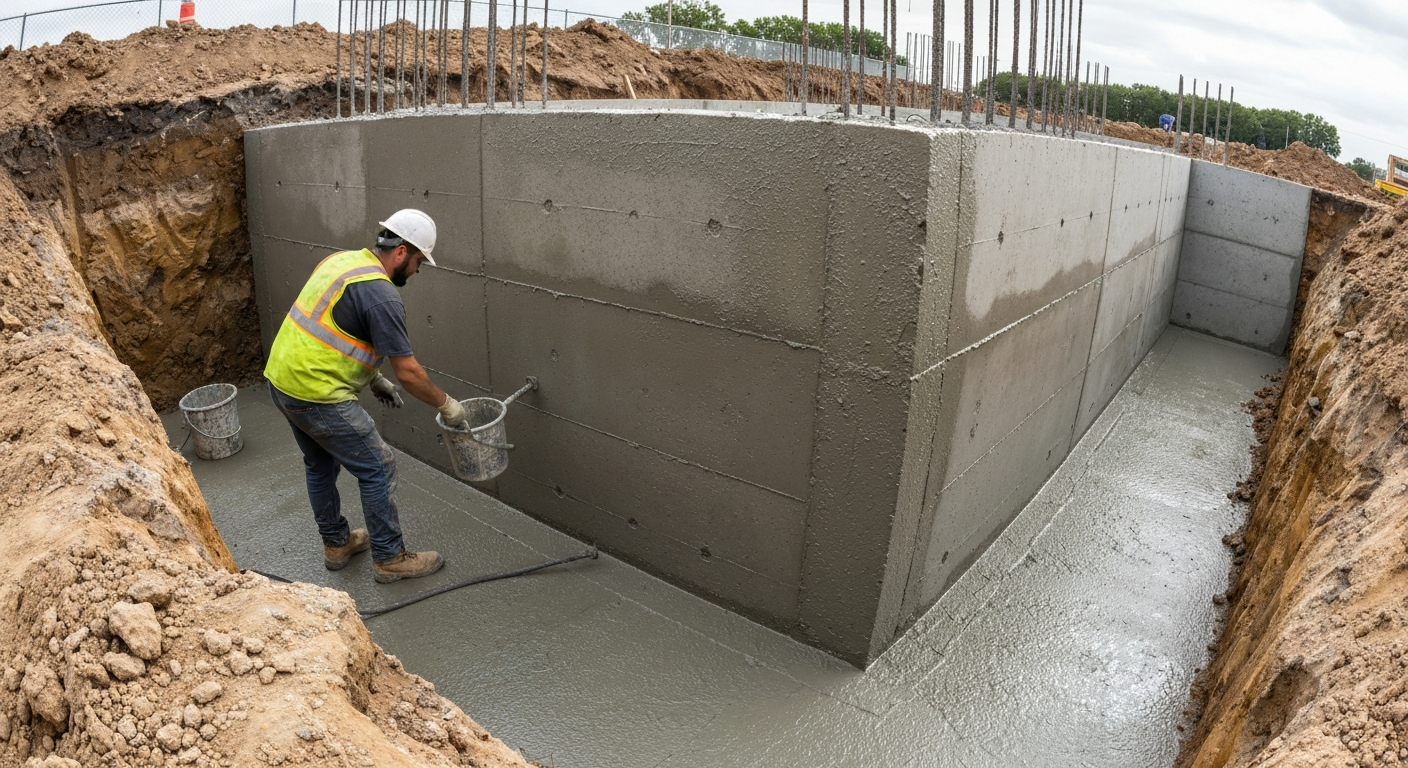
Basement waterproofing options and costs in Blue Quill
Blue Quill, Alberta sits in the Calgary area where clay-heavy soils and freeze–thaw cycles can turn small basement seepage issues into recurring wet patches. With a population of 4,552 (Statistics Canada, 2021 Census), our local market is smaller than central Calgary, so a well-scoped waterproofing plan matters—waiting on the wrong crew or the wrong sequence usually costs more than doing it right the first time. In many older Blue Quill homes, the original waterproofing and weeping tile were installed decades ago, and those systems can quietly fail long before you notice standing water. The result is often efflorescence, damp foundation corners, or a musty smell that returns every spring melt.
Calgary-area pricing also reflects excavation realities: lots are tighter, disposal of heavy clay spoils can add friction, and access constraints (fences, driveways, patios, and landscaping) often force additional labour for exterior work. At the same time, the demand for waterproofing is strong in surrounding communities with similar clay and older basements, which increases scheduling competition and can slightly raise mobilization rates. If your property is near the more built-up pockets around the Blue Quill/Calgary boundary where homes share compact lot lines, expect exterior work to be more disruptive and often more expensive than a comparable interior-only solution.
Below is a practical comparison of the main waterproofing options we commonly recommend in Blue Quill, along with typical cost bands. Use it as a “sanity check” before you request your itemised quotes.
| Method |
What It Addresses |
Disruption Level |
Durability |
Price Range |
| Exterior excavation + new membrane + drainage tile |
Primary water entry from around the foundation, reducing hydrostatic pressure |
High (excavation, regrading/landscape restoration) |
High (source control when installed correctly) |
$9,000–$25,000 |
| Interior perimeter drain channel + sump pit |
Water that already enters (intercepting seepage and managing it safely) |
Medium (partial floor/footing drilling; less yard disruption) |
High (works well with functioning perimeter drainage) |
$5,000–$15,000 |
| Foundation crack injection (epoxy or polyurethane) |
Stops cracks that allow seepage and prevents expanding leaks at joints |
Low to Medium (interior access; patching required) |
Medium to High (depends on crack type and cause) |
$500–$1,800 |
| Sump pump installation (primary + battery backup) |
Prevents basement flooding during heavy spring melt/runoff |
Low to Medium (cutting, piping, discharge work) |
High (backup improves resilience during outages) |
$900–$3,000 |
| Window well drain installation |
Controls localized water around egress wells and window leakage points |
Low to Medium (excavation in small areas) |
Medium to High (good maintenance matters) |
$1,200–$3,800 |
| Lot re-grading / downspout extension |
Redirects surface water away from the foundation |
Low (often minimal demolition) |
Low to Medium (must be maintained) |
$900–$3,200 |
Prices are estimates only and vary by project scope, site access and material selection.
What affects the price of waterproofing in Blue Quill
In Blue Quill, you can see the same “type” of waterproofing job price differently—often by 30–50%—because the real work is rarely just one step. A quote that looks similar on paper may include different excavation depth, disposal handling, drainage outlet design, or the amount of exploratory work needed to find the leak pathway. Two contractors may both say “interior drainage,” but one may propose a perimeter drain channel with a properly sized sump and discharge routing, while the other may under-specify the sump basin volume or ignore a required crack/efflorescence prep step, leading to callbacks.
The three biggest drivers that separate Calgary-area costs from the national average are soil type, water table conditions, and freeze–thaw. Calgary-area clay-heavy soils can expand when saturated, increasing lateral pressure against foundation walls and worsening existing cracks over time. In pockets of higher groundwater along the Bow/Elbow valley areas, sump systems can run longer during spring melt, requiring more robust pumps and backup design. Freeze–thaw in southern Alberta also widens joints and fractures that looked “stable” during inspection—so sealing work sometimes has to be paired with drainage management.
Concrete examples we see in Blue Quill: (1) If we uncover saturated clay backfill and failing weeping tile during excavation, exterior scope can quickly rise toward the $9,000–$25,000 band because membrane coverage and outlet drainage must be rebuilt correctly. (2) If interior investigation shows dampness mainly at corners and we can address it with a perimeter drain channel plus sump, projects can often stay closer to the $5,000–$15,000 range. (3) Heavy landscaping and a concrete patio covering a wall run can add days of demolition and rework for exterior options.
| Price Factor |
Why It Matters |
Cost Impact |
| Interior vs. exterior approach — interior is less disruptive but addresses symptoms |
Exterior targets the source; interior intercepts water after it enters |
Interior often saves on excavation; exterior can add major mobilization and landscape restoration |
| Foundation type — poured concrete vs. block vs. stone vs. ICF |
Different materials leak differently and accept different repair methods |
Poured walls often suit crack injection; block frequently needs drainage/complementary interior systems |
| Soil type — clay expands more than sand, adding pressure |
Clay saturation increases hydrostatic and lateral pressure |
More drainage work and stronger detailing can raise costs |
| Crack type and length — hairline vs. structural horizontal cracks |
Structural movement needs assessment; “cosmetic” injection won’t hold |
Structural repairs can require engineering and higher labour/material spend |
| Sump pump backup system — battery or water-powered backup needed |
Power interruptions can turn seepage into flooding |
Backup adds equipment and controls; often a worthwhile premium in spring |
| Access — landscaping, decks, or driveways must be removed for exterior |
Excavation depth and staging affect labour days |
Removing/repairing surfaces increases totals quickly on tight lots |
| Weeping tile age — original tile (60+ years) may be completely failed |
Old tile commonly clogs, collapses, or outlets improperly |
Replacement can shift an “interior-only” estimate toward exterior-range scope |
| Mould or efflorescence remediation required before sealing |
Sealers and membranes don’t bond well to contaminated/active salts |
Prepping adds labour and sometimes additional containment/cleanup steps |
Permits & regulations in Alberta
In Alberta, several waterproofing-adjacent activities typically require permits, particularly when you’re altering the foundation system, drainage, or performing structural repairs. As a homeowner in Blue Quill, you should expect that foundation excavation, structural crack repair, and changes to how water drains from your lot often fall under permit requirements. If the sump pump discharges into a municipal system (storm or sanitary), municipal approval may be needed because the discharge point and flow routing must comply with local rules.
For structural crack repairs—especially horizontal cracks in block walls, major step cracks, or any indication of movement—an assessment from a structural engineer is frequently required so you don’t just “seal a symptom.” That assessment can determine whether underpinning, localized stabilization, or other structural work is needed before waterproofing begins.
To verify contractor compliance step-by-step, use this order:
- Confirm the contractor’s Alberta business licensing/registration details and standing using the appropriate online registry listings.
- Ask for a current certificate of insurance and verify it matches the job address and includes liability coverage.
- Request proof of WSIB/WCB clearance/coverage (where applicable for the scope and workers).
- For structural crack work, ask whether they engage engineering support and whether the engineer will provide written recommendations.
- Before work starts, confirm who pulls permits (and whether that is included in the quoted price).
- Get the permit number (if issued) and confirm inspection milestones, where applicable.
Interior vs exterior waterproofing — what does Blue Quill need?
The fundamental difference is simple: exterior waterproofing (full excavation, membrane, new drainage tile, and proper backfill) addresses water at the source and reduces hydrostatic pressure before it reaches your foundation. It costs more because it requires removing landscaping and often working in tight, clay-heavy soil with heavier disposal and restoration. Interior waterproofing (perimeter drain channel, sump pit, sump pump) manages water after it enters. It’s typically less disruptive, but it doesn’t eliminate the pressure pushing against the wall—so the wall still experiences moisture stress if exterior drainage is failing.
In Blue Quill, clay soils that hold water and freeze–thaw cycles that open micro-joints mean exterior source control is the most permanent option when you have broad seepage, repeating efflorescence, or evidence of failing weeping tile. If your foundation is poured concrete, crack injection (when the crack cause is stable) often complements interior drainage well because poured walls can respond strongly to properly prepared injection. For block foundations, interior perimeter drainage is commonly necessary as a practical complement because block joints and mortar pathways can transmit water even after spot sealing.
Sump pumps matter more in spring conditions and during short power events. A battery backup isn’t about stopping water forever—it’s about preventing a run-time surge from turning seepage into a flood while power is out.
As a dollar example, if your situation points to source control, exterior work may land in the $9,000–$25,000 band. If you can confirm the primary pathway is localized and the system is contained with an interior perimeter drain plus a sump, many Blue Quill homes can be addressed within the $5,000–$15,000 range—provided the discharge, pump sizing, and crack remediation steps are properly designed.
| Method |
Best For |
Addresses Source? |
Disruption |
Lifespan |
Price Band |
| Full exterior excavation + membrane |
Recurring wetness, failing weeping tile, strong evidence of hydrostatic pressure |
Yes |
High (excavation + landscape restoration) |
Long (when installed with proper drainage and backfill) |
$9,000–$25,000 |
| Interior French drain + sump system |
Moisture at corners/walls, localized seepage, or when yard access limits exterior work |
No (intercepts after entry) |
Medium (floor/wall openings) |
Long (if sump, discharge, and cleaning access are maintained) |
$5,000–$15,000 |
| Crack injection — epoxy (structural) |
Stable cracks in poured concrete where water is not actively flowing through |
Partial (seals crack pathway) |
Low to Medium |
Medium to High |
$500–$1,800 |
| Crack injection — polyurethane (active leak) |
Active seepage where crack is still taking on water |
Partial (seals while active) |
Low to Medium |
Medium to High (works best with proper drainage control) |
$800–$2,300 |
| Interior drain channel only (no sump) |
Very minor dampness where water load is low or temporary |
No |
Lower (still requires openings) |
Short to Medium (depends on gravity drainage and conditions) |
$2,500–$6,500 |
| Re-grading + downspout extensions |
Surface water runoff issues with minimal seepage into the foundation |
Indirectly (reduces water reaching the foundation) |
Low |
Short to Medium (maintenance required) |
$900–$3,200 |
How to choose a waterproofing contractor in Blue Quill
Start by verifying the basics and then move to how they’ll scope your specific leak. In Alberta, ask for proof of contractor standing and liability insurance. Request a certificate of insurance showing the correct address, and confirm workers are covered under WSIB/WCB where required. If the job includes structural crack repairs, insist the contractor has engineering support or a clear path to an engineer’s assessment before recommending stabilization.
Next, get 2–3 itemised written quotes with a labour-and-materials breakdown—not a single lump sum—so you can compare scope honestly. Watch for exclusions like permitting, disposal fees for clay spoils, concrete patching, sump discharge routing details, or how they’ll handle landscaping restoration after exterior excavation. A credible waterproofing quote spells out exactly what’s included and what isn’t.
Warranty matters twice: workmanship warranty (how long they stand behind installation) and manufacturer product warranty (what the membrane, sealants, and pumps cover). Confirm whether warranties are transferable to future owners if you sell your home. For payment, don’t pay more than 10–15% upfront; use a holdback until the job is complete and tested. Finally, demand a written timeline with a start date and completion estimate, plus a plan for inspections or interim steps if required.
- Ask how they’ll identify the water entry pathway (inspection, moisture mapping, crack evaluation).
- Require details on drainage outlet location and discharge routing.
- Confirm pipe sizes, sump basin size, and pump model/specs (including backup if offered).
- Get membrane product details (type, thickness, installation standard) if doing exterior work.
- Ask how they’ll prep cracks or walls (surface cleaning, drilling pattern, staging).
- Check whether disposal and backfill material are included for excavation projects.
- Ensure patching/restoration scope includes concrete and any interior finishing impacts.
- Verify who pulls permits and whether permit costs are included.
- Look for a clear warranty term for labour and product, in writing.
- Confirm test steps: sump activation checks, discharge flow verification, and leak monitoring period.
- Review payment schedule and keep a holdback until you’re satisfied with final clean-up.
- Ask who maintains the system recommendations (e.g., filter inspection for window wells).
Red flags in Blue Quill: contractors who won’t list the exact products and specifications, promises to “guarantee no water” without addressing drainage and crack cause, quotes that exclude permit pull while claiming “full service,” vague warranties that don’t separate workmanship from materials, or refusal to provide insurance/coverage documentation before you sign.
Frequently asked questions — waterproofing in Blue Quill
Will basement waterproofing affect my property value in Blue Quill?
It can, especially when the work is done with proper source control and clear documentation. In Blue Quill and the wider Calgary region, buyers are often concerned about spring seepage, efflorescence, and recurring damp odours, which typically indicate a drainage or foundation moisture problem rather than a “one-time” issue. A waterproofing project with an itemised scope, proof of sump operation testing (where installed), and a written workmanship/product warranty makes the basement feel more “insurable” and manageable. If your home is in clay-prone conditions with freeze–thaw damage and older weeping tile, a well-designed system (often within the $5,000–$15,000 interior range, or $9,000–$25,000 for exterior source control) can reduce buyer anxiety because it addresses repeatable failure points. Always keep receipts, photos before/during work, and warranty transfer language.
What drainage issues are most common in Blue Quill homes?
Common issues in Blue Quill usually come down to water finding the same weak pathways year after year: saturated clay near the foundation, freeze–thaw widening joints, and aging or clogged drainage components. We often see dampness at corners and along wall runs where original weeping tile is undersized or failed, leading to localized seepage and efflorescence. Another frequent problem is poor surface water management—downspouts that discharge too close to the foundation or grading that directs meltwater toward the basement. If you have window wells, they can become “collection points” during spring runoff unless there’s adequate drainage under and around the well. In low-lying pockets where groundwater influence is higher during storms, hydrostatic pressure can also drive more frequent sump cycling, which is why pump sizing and discharge routing are critical.
How do I choose a waterproofing contractor in Blue Quill?
Choose a contractor who scopes your leak properly and proves they’re compliant. In Alberta, verify they can provide liability insurance and WSIB/WCB coverage documentation for their workers. If structural cracks are involved, ask how they obtain engineering support or assessments—especially for horizontal or step cracks that may signal movement. Then request 2–3 itemised written quotes with labour + materials breakdown (not lump sums). Make sure the scope clarifies exclusions like disposal, permit pull responsibility, and whether landscaping restoration is included after excavation. Confirm warranty details in writing, including workmanship duration and product/manufacturer terms. Finally, confirm the payment schedule: don’t pay more than 10–15% upfront and keep a holdback until final checks are completed. If the quote is vague on discharge routing, pump specs, or membrane details, that’s usually a sign you should move on.
What is a battery backup sump pump and do I need one in Blue Quill?
A battery backup sump pump is an additional power system that helps keep the sump running during outages. In Alberta, power interruptions can happen during heavy weather, and spring melt can create high water loads faster than you might expect. In practical terms, a primary sump pump handles routine conditions, and the battery backup helps prevent water from rising in the basement when the electricity is temporarily unavailable. Do you “need” one? If you’ve had spring flooding episodes, sump activation without backup, or you’re in a higher-water seasonal pocket, backup is usually the difference between minor seepage and cleanup. It also pairs well with interior perimeter drainage systems in the $5,000–$15,000 band because the sump becomes the heart of the system. Many homeowners view the added cost (often reflected in the $900–$3,000 band for pump installs with backup) as cheap insurance against a stressful event.
How much does basement waterproofing cost in Blue Quill?
Cost depends on whether you can address water entry at the source or whether you’re managing water after it enters. For Blue Quill, exterior waterproofing (excavation, membrane, and drainage tile) commonly lands in the $9,000–$25,000 range because it involves excavation, dealing with heavy clay spoils, and restoring landscaping. Interior waterproofing systems (perimeter drain channels and sump setups) often fall in the $5,000–$15,000 range, especially when access limitations or minimal yard disturbance steer the plan inward. Foundation crack repair by injection typically runs $500–$1,800 when cracks are the primary pathway and the walls are otherwise stable. If a sump pump installation is required, expect $900–$3,000, and backup can push totals toward the upper end. For an accurate number, insist on an itemised quote that includes disposal, discharge routing, and prep work—those variables cause most price swings.
Interior vs exterior waterproofing — which is better?
“Better” depends on what’s causing the water entry. Exterior waterproofing is generally best for source control: full excavation, new membrane, and properly functioning perimeter drainage reduce hydrostatic pressure before it reaches your foundation. It’s more expensive and more disruptive because it requires yard access and restoration. Interior waterproofing is often the better choice when exterior access is limited, when you need a less invasive fix, or when the problem is manageable through interception—perimeter drain channel, sump pit, and sump pump. In Blue Quill’s clay-heavy soils and freeze–thaw conditions, interior-only solutions can still work extremely well, but you must ensure the sump system is properly sized and that crack pathways are addressed. Poured concrete walls often respond strongly to crack injection plus interior interception, while block foundations frequently need a combination plan. A typical justification for the price gap is repeating dampness: if you’re repeatedly seeing spring seepage and efflorescence, investing closer to the $9,000–$25,000 exterior range may prevent recurring interior-only costs.