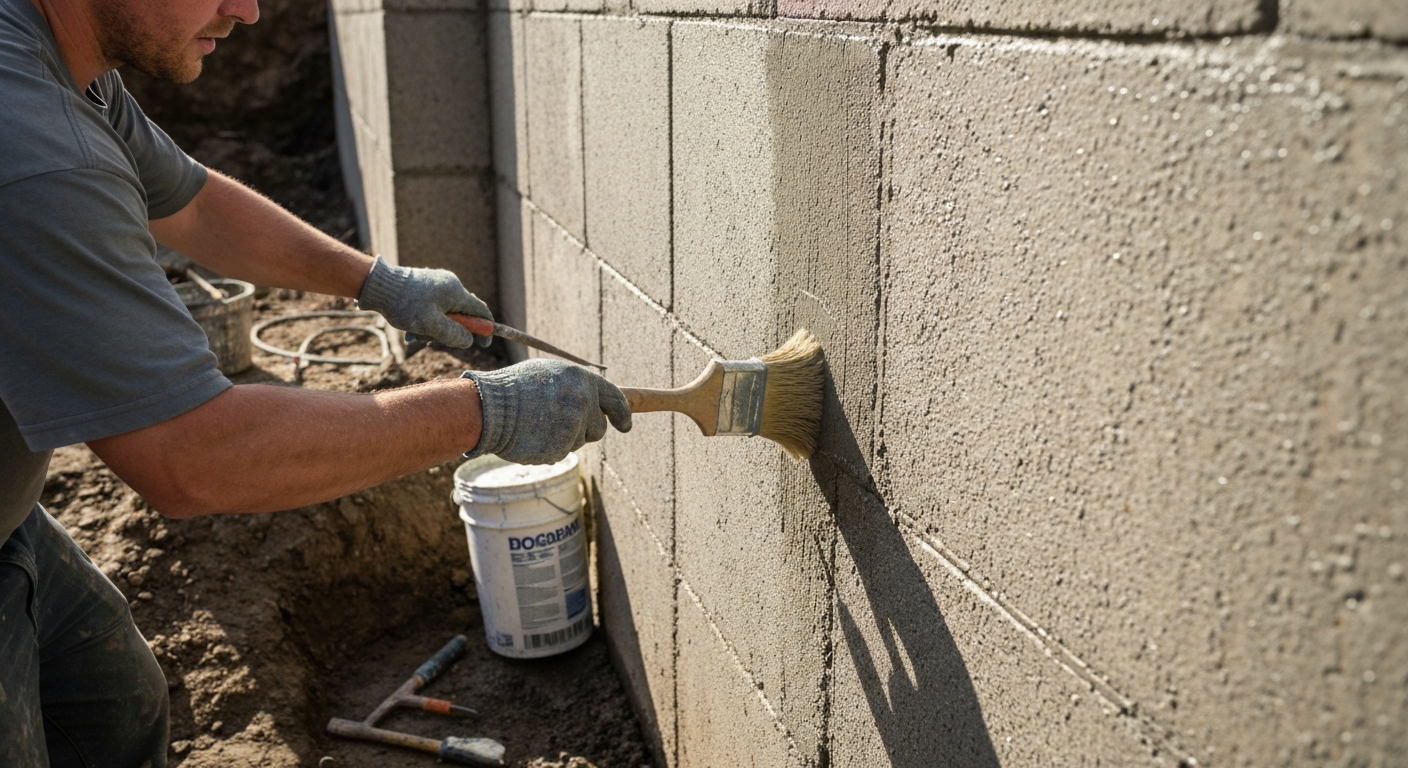
Basement waterproofing options and costs in Braeside
Braeside homeowners typically face basement moisture issues long before they notice any structural movement—especially in older housing where the original waterproofing and drainage details are no longer doing the job. In Braeside’s wider Calgary area, many homes were built in periods when tar-and-paper style approaches and simpler weeping-tile layouts were common, and those systems can fail silently: a clogged or broken drain can turn a small leak into persistent seepage. With a local population of 5,700 (Statistics Canada, 2021 Census), the market is smaller than Calgary proper, so you’ll often see fewer specialist crews available and more pricing variation when projects require excavation, heavy spoil disposal, or evening coordination around occupied homes.
Southern Alberta’s freeze–thaw cycles also matter. Water that gets into cracks and joints expands in winter, widening openings over time and increasing the chance you’ll see efflorescence, damp corners, or window leaks in spring melt. On top of that, Calgary and surrounding communities sit largely on clay and clay-till soils that hold water and expand when saturated, raising lateral pressure on foundation walls and footings. That soil-water behaviour is one reason exterior waterproofing (excavation and new membrane with functioning perimeter drainage) generally carries a broader scope—and a broader price range—than interior solutions.
In Braeside’s busier residential pockets where access is tight—often near established streets with mature landscaping and concrete patios—exterior projects can spike because decking, fences, and walkways must be removed and rebuilt. If you’re deciding between exterior and interior approaches, the comparison table below will help you map your likely scope to budget expectations.
| Method |
What It Addresses |
Disruption Level |
Durability |
Price Range |
| Exterior excavation + new membrane + drainage tile |
Water entry at foundation exterior; re-establishes perimeter drainage and reduces hydrostatic pressure |
High (excavation, landscaping restoration, disposal) |
High (source control when fully detailed) |
$14,000–$25,000 |
| Interior perimeter drain channel + sump pit |
Captures seepage after it enters; lowers water level away from walls |
Medium (floor/wall cut-out, minor interior restoration) |
Medium to high (depends on failure source) |
$7,500–$13,500 |
| Foundation crack injection (epoxy or polyurethane) |
Stops localized leakage through cracks and improves watertightness |
Low to medium (minimal demo; surface prep) |
Medium to high (best when cracks are stable and properly selected) |
$1,000–$2,600 |
| Sump pump installation (primary + battery backup) |
Manages accumulated water during spring melt and storm surges |
Low to medium (pit excavation, electrical work) |
Medium to high (reliant on maintenance and power backup) |
$2,000–$4,000 |
| Window well drain installation |
Reduces water pooling and seepage around egress windows |
Low to medium (partial excavation near window well) |
Medium (works best with good grading and covers) |
$1,200–$3,200 |
| Lot re-grading / downspout extension |
Moves roof/grade water away from the foundation perimeter |
Low (landscape work) |
Low to medium (support measure; may not stop active hydrostatic pressure) |
$3,000–$7,500 |
Prices are estimates only and vary by project scope, site access and material selection.
What affects the price of waterproofing in Braeside
In Braeside and the broader Calgary economic region, two quotes for the same “waterproof the basement” goal can vary by 30–50% because contractors may be solving different causes, not just different symptoms. A fast interior approach can handle seepage, but it may not reduce the source of water pressure against the wall; conversely, exterior work is more invasive and expensive, yet it’s the most direct way to address clay-soil water saturation and spring melt intrusion. As a result, apples-to-apples quotes depend on whether the scope includes perimeter drainage replacement, proper membrane detailing, sump redundancy, and the restoration/disposal that follows excavation.
Three drivers separate regional costs from national averages: soil type, water table conditions, and freeze–thaw behaviour. Clay-heavy soils common across southern Alberta hold water and can expand when saturated, increasing lateral pressure on foundation walls and worsening crack pathways over time. In pockets of Calgary tied to river valleys and low coulees, seasonal groundwater and storm events can increase hydrostatic pressure, which means longer sump run times and larger drainage capacity requirements. Freeze–thaw also widens existing cracks and joints—so a “seal it once” repair can become a “manage it every spring” problem if the drainage path isn’t restored. By contrast, dry soils with fewer freeze–thaw penetrations typically reduce the need for broad exterior excavation.
Concrete examples in the Braeside context: (1) if your home has an interior perimeter drain that’s clogged, switching to a new drain channel plus sump often fits the $5,000–$15,000 interior band; (2) if cracks and dampness appear along exterior wall runs after heavy spring melt and grading is tight against the foundation, an exterior excavation with membrane and drainage tile can push into the $9,000–$25,000 exterior band; (3) tight access—like removing a concrete patio or working under restricted lot lines—raises labour and disposal costs because excavation isn’t “clean and straightforward.”
| Price Factor |
Why It Matters |
Cost Impact |
| Interior vs. exterior approach — interior is less disruptive but addresses symptoms |
Exterior controls water entry; interior captures seepage after it enters |
Interior often costs 40–60% less than full exterior, but may require ongoing sump management |
| Foundation type — poured concrete vs. block vs. stone vs. ICF |
Crack behaviour and sealing methods differ; block often needs more drainage support |
Poured concrete may reduce injection quantity; block may increase interior drain scope |
| Soil type — clay expands more than sand, adding pressure |
Clay saturation increases lateral pressure and water migration through joints |
Can shift a “minor” fix into a full perimeter drainage project |
| Crack type and length — hairline vs. structural horizontal cracks |
Structural or horizontal cracks may indicate movement and require engineering review |
Structural fixes and associated work can add significant labour and monitoring time |
| Sump pump backup system — battery or water-powered backup needed |
Spring flooding and power interruptions are a key risk in Alberta |
Backup can add meaningful cost, but protects against overflow damage |
| Access — landscaping, decks, or driveways must be removed for exterior |
Removal/rebuild and disposal drives labour and material costs |
Tight sites can raise exterior costs noticeably versus easy-access lots |
| Weeping tile age — original tile (60+ years) may be completely failed |
Failed drainage increases hydrostatic pressure along exterior walls |
Often forces replacement and expands excavation depth/scope |
| Mould or efflorescence remediation required before sealing |
Moisture staining and salts indicate active or past water movement |
Requires added prep, drying time, and sometimes surface stabilization steps |
Permits & regulations in Alberta
In Alberta, certain waterproofing-adjacent work typically requires a building permit—particularly when the scope involves foundation excavation, structural crack repair, or changes to lot drainage that affect how water leaves the property. For Braeside homeowners, the key point is to separate “cosmetic sealing” from “waterproofing plus drainage control and foundation work.” Foundation excavation and work that modifies drainage systems around the foundation often fall under permit requirements. Similarly, if you’re doing structural crack repair (especially horizontal cracks in block walls, or major cracks that may relate to movement), plan for an engineer’s assessment so the contractor isn’t simply injecting and hoping.
Sump pump installations can also require municipal approval if the discharge connects to storm or sanitary services. The practical takeaway: don’t assume you can “just connect a discharge line” without checking—ask the contractor to confirm where it will discharge and whether permits are required.
How to verify a contractor in Braeside step-by-step: (1) verify Alberta licensing/registration through the appropriate provincial licensing/registration resources for the trade; (2) ask for a current certificate of liability insurance naming you as additional insured (obtain it before work starts); (3) request proof of coverage for WSIB/WCB (depending on the contractor’s setup) and confirm the coverage is active; (4) if structural repair is indicated, ensure they can provide engineering support or partner with an engineer; and (5) request written scope confirmation of permits and whether the permit application is included or excluded.
Interior vs exterior waterproofing — what does Braeside need?
Exterior waterproofing and interior waterproofing are different strategies, not different “grades of the same thing.” Exterior waterproofing—full excavation, new membrane, new perimeter drainage tile, and backfill—targets the source by reducing how much water contacts your foundation wall and how long it stays there. It costs more and causes more disruption because you’re opening the entire perimeter, dealing with clay spoils, and restoring landscaping. Interior waterproofing—perimeter drain channel, sump pit, sump pump, and sometimes crack injection—manages water after it enters and lowers the water level in the basement. That can be very effective for seepage and damp corners, but it doesn’t eliminate the hydrostatic pressure that caused the seepage in the first place.
In Braeside’s Calgary-area context (clay and clay-till soils with freeze–thaw impacts), I usually recommend matching approach to failure pattern. If you have poured-concrete walls with stable crack lines and active dampness that tracks along perimeter runs after snowmelt, crack injection can pair well with interior drainage; poured concrete often responds cleanly when cracks are properly assessed. If you have block foundations or longstanding weeping-tile failure, interior drainage is frequently the practical complement because cracked block joints can keep pathways open. For homes in neighbourhoods with tight access—where digging outside is constrained by patios or landscaping—interior systems are often the “best budget-to-performance” route, but they should include sump redundancy.
As a pricing reality check: exterior excavation in Calgary-area pricing commonly lands around $14,000–$25,000, while a typical interior perimeter drain plus sump scope often sits around $7,500–$13,500. The price difference is justified when exterior source control is achievable and the failure pattern is clearly driven by saturated backfill or failed exterior drainage. If the wall is already heavily compromised or external access is impractical, interior solutions with reliable backup may be the smarter investment.
| Method |
Best For |
Addresses Source? |
Disruption |
Lifespan |
Price Band |
| Full exterior excavation + membrane |
Active hydrostatic pressure, failed weeping tile, and consistent perimeter seepage after spring melt |
Yes |
High |
Long (when drainage and membrane detailing are continuous) |
$14,000–$25,000 |
| Interior French drain + sump system |
Seepage along walls, clogged/outdated exterior drains, or limited exterior access |
No (manages water after entry) |
Medium |
Medium to long (depends on sump capacity and maintenance) |
$7,500–$13,500 |
| Crack injection — epoxy (structural) |
Stable cracks where you want a strong seal and the crack is not actively moving |
Partial (seals pathways) |
Low to medium |
Medium to long (if crack stability is confirmed) |
$1,000–$2,200 |
| Crack injection — polyurethane (active leak) |
Active seepage through joints/cracks that show moisture under pressure |
Partial (seals and adapts to leaks) |
Low to medium |
Medium to long (best when paired with proper drainage) |
$1,200–$2,600 |
| Interior drain channel only (no sump) |
Very light seepage, intermittent dampness, or as a temporary measure |
No |
Low to medium |
Short to medium (risk of overflow during heavy events) |
$5,000–$8,500 |
| Re-grading + downspout extensions |
Roof water or surface runoff causing localized dampness |
Partly (reduces water at perimeter) |
Low |
Short to medium (good upkeep required) |
$3,000–$7,500 |
How to choose a waterproofing contractor in Braeside
Choosing the right contractor in Braeside is mostly about verifying coverage and matching the scope to the cause. In Alberta, start by confirming the contractor’s trade licensing/registration status for the work they’re doing, then verify liability insurance is active and request a certificate of insurance listing you as an additional insured. Next, ask for proof of WSIB/WCB coverage (or the appropriate equivalent based on the contractor’s setup) and keep the documents for your records. If your crack repair could be structural, ensure they have engineering support available—don’t rely on “we inject everything.”
For pricing, get 2–3 itemised written quotes. Look for a breakdown that separates labour and materials (membrane, drainage tile, pump, injection materials, sump pit components), and specifies what is included in preparation and cleanup. Carefully read exclusions: does the quote include permit pulling, disposal fees for clay spoils, and restoration like grading, topsoil, sod, or patio reinstatement? If it doesn’t, you need that cost clarified now.
Warranty matters in waterproofing. Confirm the workmanship warranty length, the manufacturer warranty terms, and whether it’s transferable to a new owner if you sell. Payment should be controlled: avoid paying more than 10–15% upfront, and hold back until the job is complete and any water testing/documentation is delivered. Finally, ask for a written start date, estimated completion timeline, and what happens if freeze–thaw delays parts of the work.
- Ask for the contractor’s Alberta licence/registration details and confirm they match the scope (exterior excavation, interior drainage, crack injection).
- Request certificate of liability insurance and confirm you’re listed as additional insured.
- Verify WSIB/WCB coverage is current and obtain documentation before any demo begins.
- Require an itemised quote: labour, materials, disposal, and restoration should be separated.
- Confirm permit pull responsibility: included or excluded, and which permits are expected.
- Ask where the sump discharge will go and whether municipal approval is needed.
- For crack injection, confirm crack assessment method and whether cracks are stable.
- Request details of the pump system: pit sizing, discharge pipe routing, check valves, and maintenance access.
- For backup, specify battery capacity or water-powered backup, not “we’ll add one if needed.”
- Confirm disposal: excavated clay spoils removal and fees should be stated.
- Get warranty terms in writing for workmanship and products, and confirm transferability.
- Lock in a timeline with start/completion dates and a plan for weather-related delays.
Red flags I commonly see in Braeside are: quotes that skip site access details (no mention of patio/deck removal or disposal), “one-size-fits-all” waterproofing promises without mentioning drainage capacity or sump backup, no clear warranty terms for workmanship/product, missing insurance/WSIB/WCB documentation, and proposals that don’t identify where the water is coming from (source vs seepage) before choosing epoxy vs polyurethane.
Frequently asked questions — waterproofing in Braeside
Can I waterproof my basement from the inside only?
Yes, you can often waterproof from the inside only in Braeside, especially when the symptoms are seepage and dampness rather than a full exterior source problem you can easily reach. Interior systems typically involve a perimeter drain channel and a sump pit/pump, and they manage water after it enters—this is why they work well for intermittent wetting, localized wall leaks, and homes where exterior excavation is impractical due to patios or tight lot lines. However, if your clay backfill is staying saturated and pushing on the foundation, interior-only work may not fully stop hydrostatic pressure. Many homeowners still succeed with interior solutions, particularly when the scope includes proper pump capacity and a backup system. For budgeting, interior perimeter drain plus sump commonly falls within $7,500–$13,500.
What causes foundation cracks in Braeside?
In Alberta, foundation cracks can come from several combined forces, and in Braeside the most common drivers are freeze–thaw and soil moisture behaviour. Clay and clay-till soils expand when saturated, increasing lateral pressure on foundation walls and footings. Over winter, water in joints and small cracks freezes and expands, widening pathways. Over time you’ll often see the progression from hairline dampness to visible crack tracking, especially along perimeter runs. Another cause is settlement: older basements may have had original weeping tile that later failed, letting moisture build near the foundation. This doesn’t automatically mean catastrophic structural collapse, but it can make cracks “act like leaks.” The key is to identify crack type and stability—horizontal/step cracks may need structural assessment before injection.
How do I compare waterproofing quotes?
To compare quotes in Braeside, don’t compare only the total price—compare what’s included and what’s excluded. Ask each contractor the same questions: Are you addressing source control (exterior membrane and new drainage tile) or managing seepage (interior perimeter drains and sump)? Is disposal of excavated clay included for exterior work? Are permits included and who pulls them? For crack repairs, confirm whether they’re using epoxy for stable cracks or polyurethane for active leaks. Make sure the pump scope is specific: pit size, discharge routing, check valves, and whether battery or water-powered backup is included. A quote that lands in $14,000–$25,000 but includes membrane continuity and full perimeter drainage can be a different job than a lower quote that only does localized sealing. Itemised labour/materials breakdowns are essential.
How long does basement waterproofing take in Braeside?
Timing depends on whether you’re doing exterior or interior work and how constrained the site is in Braeside. Interior perimeter drain plus sump work is often faster because it avoids full excavation around the home; typical projects can take several days to a couple of weeks, depending on how much floor/wall demo is required, cure times for sealants/injection, and restoration scheduling. Exterior waterproofing usually takes longer due to excavation, detailed membrane application, drainage tile installation, backfilling and compaction, and landscaping reinstatement—plus disposal logistics for heavy clay spoils. Freeze–thaw can also affect schedules, particularly when trenches can’t be safely opened or backfill can’t compact properly. Expect contractors to provide a written start date and completion estimate, with weather contingency included. Winter work is sometimes limited to interior steps and crack injection when surfaces are workable.
What is a weeping tile and does my Braeside home have one?
A weeping tile is a drainage system installed around the foundation (often at the footing level) to collect groundwater and send it away—typically to a sump or discharge point. In older Calgary-area neighbourhoods, these systems were common, but they can fail over decades due to clogging, collapsed sections, or disconnected runs. Whether your Braeside home has one depends on its age, original construction details, and how the previous owners have maintained drainage. You can often infer it by whether the basement has a history of sump use, the presence of an interior perimeter drain line, or during inspection when uncovering exterior excavation points (if exterior access is available). A contractor can also perform camera inspection of accessible runs. If original tile is completely failed, interior-only solutions may still help, but restoring drainage capacity is usually the long-term fix.
Can I waterproof my basement in winter in Braeside?
Sometimes yes, but it depends on what type of waterproofing you’re planning and current site conditions in Alberta. Interior work is often more feasible in winter—like crack injection (epoxy or polyurethane) and installing interior drainage components—because it doesn’t require long exterior trenching in frozen ground. Exterior excavation and membrane installation are usually limited when soil is hard-frozen or when trenches can’t be opened safely and backfilled/compacted correctly. Winter can also impact drying and curing times for coatings and sealers, so contractors may need to use product-specific cure requirements and ensure surfaces are within workable temperatures. The best approach is to treat winter as a planning and interior-scope season, then schedule exterior source-control work when conditions allow. If you do need immediate water management, interior drains and sump systems can be staged so spring melt doesn’t overwhelm the basement. For context, sump pump installation (including backup) commonly sits around $2,000–$4,000.