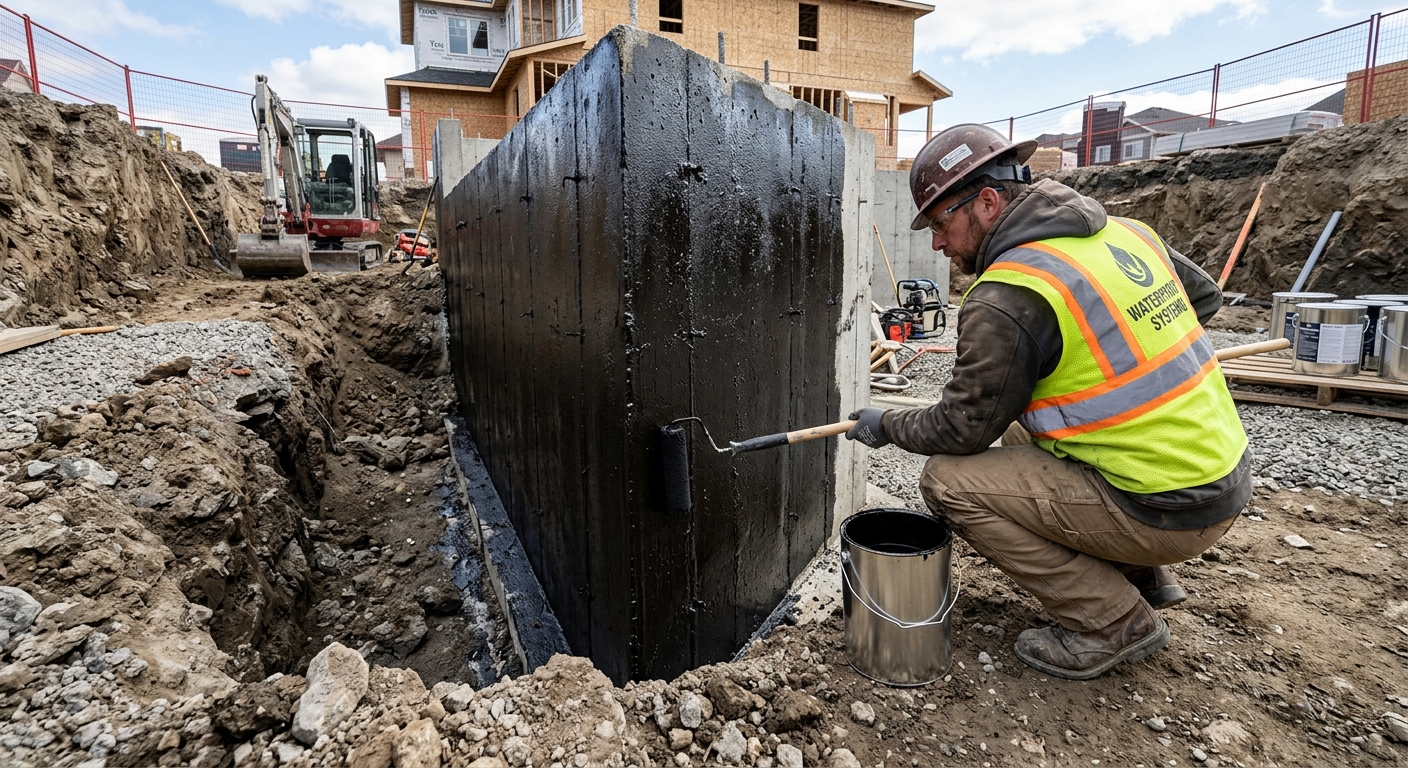
Basement waterproofing options and costs in Willow Park
In Willow Park, Alberta, basement leaks are usually a “water path” problem rather than a single mystery failure, because foundations here sit in a clay-and-clay-till landscape that holds water and expands when saturated. With a population of 5,050 (Statistics Canada, 2021 Census), the local housing mix also includes a meaningful share of older basements that were originally protected with simpler systems—tar-and-paper style approaches and early weeping tile layouts that can fail as joints open up over time.
Calgary-area waterproofing pricing is shaped by southern Alberta freeze–thaw cycles. Those repeated expansions widen hairline cracks and exterior joints, letting spring runoff and meltwater enter more easily. Costs also reflect how common full-perimeter work is in Willow Park: older lots often have tighter access (mature landscaping, patios, and narrower side yards), so excavation and spoil removal can take longer and raise disposal fees for clay. Contractor availability can shift slightly in spring and early summer when trades are busy with multiple perimeter projects across Willow Park, Okotoks, and the Rocky View corridor.
If you’re noticing damp corners, efflorescence, or a musty basement smell, the next step is comparing solutions by whether they stop the water entry point (exterior) or manage water after it enters (interior). The table below summarizes the most common options contractors use in Willow Park and the typical disruption and budget range you should plan for.
| Method |
What It Addresses |
Disruption Level |
Durability |
Price Range |
| Exterior excavation + new membrane + drainage tile |
Primary water entry by rebuilding the outside waterproofing layer and relieving hydrostatic pressure with new perimeter drainage |
High (yard excavation, landscaping/patio removal, backfill) |
High (10–20+ years depending on conditions and regrading) |
$12,500–$22,500 |
| Interior perimeter drain channel + sump pit |
Relieves seepage inside by capturing infiltrated water and pumping it away |
Medium (interior floor cutting around perimeter) |
Medium-to-high (often 10–15 years; depends on sump condition and power reliability) |
$7,000–$13,500 |
| Foundation crack injection (epoxy or polyurethane) |
Stabilizes/closures cracks; epoxy for non-moving cracks, polyurethane for active seepage |
Low-to-medium (surface prep; minor demolition) |
Medium (can last years, but performance depends on whether the crack is moving) |
$900–$2,200 |
| Sump pump installation (primary + battery backup) |
Manages hydrostatic pressure loads and reduces risk during heavy spring storm runoff and power interruptions |
Low-to-medium (pit installation, discharge line, minor electrical work) |
Medium-to-high (system reliability + backup maintenance) |
$1,400–$3,000 |
| Window well drain installation |
Prevents rain/snowmelt pooling at basement window wells and directing it away from openings |
Low-to-medium (excavation at window area) |
Medium (5–10+ years; depends on maintaining clear discharge) |
$900–$2,200 |
| Lot re-grading / downspout extension |
Moves roof runoff away from foundation to reduce water loads and slow freeze–thaw stress |
Low (earthwork and minor exterior changes) |
Low-to-medium (needs periodic maintenance) |
$750–$3,200 |
Prices are estimates only and vary by project scope, site access and material selection.
What affects the price of waterproofing in Willow Park
In Willow Park and the broader Calgary area, you can see waterproofing quotes for the “same” basement leak that differ by 30–50%. The difference isn’t just the contractor’s overhead—it’s usually the scope (full perimeter vs targeted interior), the type of foundation wall, how many crack/seam locations are actually active, and whether the job includes drainage upgrades, sump protection, or only cosmetic sealing.
The three biggest drivers that separate Calgary-area pricing from a typical national average are soil type, water table conditions, and freeze–thaw cycles. Calgary and surrounding communities sit on clay and clay-till soils that expand when saturated, increasing lateral pressure on foundation walls and worsening crack opening over time. When freeze–thaw repeats through spring and winter, the entry points can widen and become more frequent, requiring more thorough membrane/crack solutions rather than a quick patch. In pockets where groundwater loads are higher (especially near river valley low areas and storm-prone spots), you often need a stronger interior system—more frequent sump run times, better discharge routing, and sometimes backup power.
Within Willow Park, two practical examples often show up in real project pricing. First, adding a fully functional perimeter drain system can move a basement from a recurring damp smell to stable dryness, but it raises excavation and disposal costs—especially where landscaping and patios are present. Second, if your crack is horizontal or shows signs of movement, injection type and quantity changes the budget: hairline repairs may stay near the foundation crack repair band (roughly $500–$1,800), while active-leak solutions and additional drainage often push the project toward interior waterproofing totals (commonly $5,000–$15,000). In clay-heavy conditions, that extra drainage work is usually what protects the investment during spring runoff.
| Price Factor |
Why It Matters |
Cost Impact |
| Interior vs. exterior approach — interior is less disruptive but addresses symptoms |
Exterior targets water entry; interior intercepts seepage after it enters |
Interior commonly costs less initially, but recurring loads can mean higher lifetime spend than a well-done exterior |
| Foundation type — poured concrete vs. block vs. stone vs. ICF |
Crack behaviour and how water travels through wall seams differ by foundation material |
Poured concrete often responds well to injection plus drainage; block and stone frequently need complementary interior drainage |
| Soil type — clay expands more than sand, adding pressure |
Clay holds water and increases lateral pressure during saturation |
More pressure typically means more labour for membrane coverage, crack prep, and drainage performance |
| Crack type and length — hairline vs. structural horizontal cracks |
Moving cracks require different materials and sometimes additional evaluation |
Structural or longer cracks can increase injection quantity and the need for engineering review |
| Sump pump backup system — battery or water-powered backup needed |
Power interruptions during spring events can turn a small leak into a major event |
Backup can add a meaningful line item, but it prevents the “pump failed” scenario |
| Access — landscaping, decks, or driveways must be removed for exterior |
Excavation and disposal are time-sensitive and location-dependent |
Hardscape removal and spoil hauling can substantially raise exterior waterproofing costs |
| Weeping tile age — original tile (60+ years) may be completely failed |
Older tile systems can collapse, clog, or disconnect |
If tile is failed, “repair” becomes replacement or interior interception, increasing scope |
| Mould or efflorescence remediation required before sealing |
Moisture-laden materials must be cleaned and treated so coatings/injections bond properly |
Remediation adds steps and time before waterproofing materials can be applied |
Permits & regulations in Alberta
In Alberta, certain waterproofing and drainage-related work typically requires a building permit—especially when you’re affecting foundation elements, structural capacity, or the way water is managed across a lot. As a rule of thumb for Willow Park homeowners: foundation excavation, structural crack repair that may impact load paths, and changes to lot drainage or grading that alter how water runs during storms often fall under permit requirements. If you’re installing or modifying sump systems that connect to storm or sanitary infrastructure, municipal approval is commonly required before connections are made.
For structural crack repair, particularly with horizontal cracks in block walls, major step cracking, or any sign of movement, an assessment by a structural engineer is often needed. This determines whether underpinning or other structural measures are required—not just sealing. Before you sign a contract, ask your contractor whether they provide engineering support for structural repairs and confirm they carry liability insurance plus WSIB/WCB coverage (as applicable for their workforce).
How homeowners can verify before work starts: (1) Check the contractor’s Alberta licence/registration status using the appropriate online registry or provincial listing they’re required to maintain; (2) Request a current certificate of insurance and verify the coverage dates and that it includes the type of work being performed; (3) Confirm WSIB/WCB clearance or coverage documentation; and (4) Ensure the quote clearly identifies which permits (if any) the contractor will pull and whether that responsibility is included in the pricing.
Interior vs exterior waterproofing — what does Willow Park need?
The fundamental difference is that exterior waterproofing (full excavation, new membrane, new drainage tile, and backfill) addresses the source of water entry by stopping seepage before it reaches the foundation. Interior waterproofing (perimeter drain channel, sump pit, and sump pump) manages water after it enters and keeps the basement from becoming saturated. In southern Alberta’s clay soils, this matters because freeze–thaw can keep “re-opening” entry points—so exterior systems often perform best when the original drainage is failing or when you have persistent hydrostatic pressure.
In Willow Park, poured concrete foundation walls often respond well to properly prepared crack injection paired with drainage management, because concrete cracks can be sealed effectively once you’ve confirmed they’re not actively moving. Block foundations, by contrast, frequently benefit from an interior drain and sump as a practical complement—water can migrate through masonry joints even when you seal visible cracks. Also consider Alberta’s spring season: power interruptions are possible during heavy weather events, which is why sump pump installs are commonly paired with a battery backup or an approved alternative backup strategy.
Here’s a real cost framing: if you have localized seepage and a small number of active cracks, crack injection plus a sump plan can stay closer to the foundation crack repair band (often around $500–$1,800 for straightforward repairs, with active-leak repairs typically higher). If you’re seeing widespread wall dampness and efflorescence across multiple wall runs, the exterior option may be justified because it rebuilds drainage at the perimeter—often within the exterior excavation backbone range of roughly $9,000–$25,000. Interior-only work can be successful, but if the entry point is repeatedly overwhelmed by clay pressure and poor perimeter runoff control, the exterior approach is usually the more durable path.
| Method |
Best For |
Addresses Source? |
Disruption |
Lifespan |
Price Band |
| Full exterior excavation + membrane |
Persistent seepage, hydrostatic pressure concerns, failing weeping tile, or multiple wall problem areas |
Yes (stops water entry with perimeter membrane and drainage relief) |
High |
10–20+ years |
$12,500–$22,500 |
| Interior French drain + sump system |
Interior moisture issues, moderate seepage, and basements where exterior access is limited |
No (intercepts water after it enters) |
Medium |
10–15 years (depends on maintenance and backup readiness) |
$7,000–$13,500 |
| Crack injection — epoxy (structural) |
Non-moving cracks in poured concrete where water entry is limited and cracks can be stabilized |
Partially (seals the crack, but relies on crack stability) |
Low-to-medium |
Medium (often 7–15 years if movement is controlled) |
$900–$1,800 |
| Crack injection — polyurethane (active leak) |
Active seepage or damp cracks where the material must expand/flow into wet channels |
Partially-to-fully (if the pathway is sealed and drainage relieves pressure) |
Low-to-medium |
Medium (can last 5–12 years; long-term success improves when paired with drainage) |
$1,100–$2,200 |
| Interior drain channel only (no sump) |
Light dampness where gravity drainage is possible and loads are low |
No (manages water inside, without active pumping) |
Medium-to-low |
5–10 years (risk increases during heavy spring events) |
$5,000–$9,000 |
| Re-grading + downspout extensions |
Roof runoff problems, wet soil at the perimeter, and early-stage dampness |
No (reduces loading; not a membrane replacement) |
Low |
Low-to-medium (needs seasonal checks) |
$750–$3,200 |
How to choose a waterproofing contractor in Willow Park
Choosing the right waterproofing contractor in Willow Park comes down to verification, clarity, and match between the diagnosis and the scope. First, confirm the contractor’s Alberta licensing/registration status using the online listing associated with their trade category. Next, request a certificate of liability insurance and read the coverage dates and project specifics. Then verify WSIB/WCB coverage documentation (or clearance) for their workers. Don’t rely on verbal promises—ask for copies and keep them with your contract paperwork.
When you request quotes, aim for 2–3 itemised estimates. You want labour and materials separated—membrane, drainage board, filter fabric, pump and backup components, concrete cutting, excavation hours, and disposal (clay spoil hauling can be a big line item). Carefully review exclusions: for example, is permit pulling included, are landscaping restoration and backfill included, and does the quote cover discharge routing for the sump line?
Warranty matters. Ask for the workmanship warranty length and whether it’s tied to the specific scope completed, and confirm the product/manufacturer warranty for membranes, pumps, and injection materials. Also ask whether the warranty is transferable if you sell. On payment, a safe practice is to limit upfront payment to about 10–15%, with holdback until key milestones are finished. Finally, get a start date and completion estimate in writing.
- Ask for a written site plan: where the drainage tile goes, where discharge discharges, and where the sump pit sits
- Confirm whether they test/locate weeping tile tie-ins or existing discharge points
- Require a clear explanation of whether they’re injecting epoxy vs polyurethane and why
- Request proof of insurance and WSIB/WCB coverage before scheduling excavation
- Make sure disposal and spoil hauling are explicitly included or excluded
- Verify whether permits are included in the price (and which permits apply to your scope)
- Ask about backup power for sumps in spring runoff periods
- Get the warranty in writing: workmanship term, product terms, and what voids coverage
- Confirm how they address mould or efflorescence before sealing or coating
- Check that they include re-grading and downspout extensions where runoff is clearly contributing
- Require itemised labour/material breakdown, not one lump-sum line
- Confirm they’ll protect steps, floors, and utilities during interior demolition
Red flags in Willow Park: (1) a quote that promises “we’ll stop all leaks” without identifying crack type and whether it’s active; (2) no mention of drainage relief (perimeter drain or sump capacity) even when you have efflorescence or recurring damp corners; (3) missing or expired insurance/WSIB/WCB paperwork; (4) pressure for large upfront payments with no written schedule; and (5) vague warranties that don’t state workmanship coverage or the specific materials installed.
Frequently asked questions — waterproofing in Willow Park
What causes foundation cracks in Willow Park?
In Willow Park and most of the Calgary area, foundation cracks commonly develop from a combination of clay-heavy soil movement and freeze–thaw cycles. When soil saturates, clay expands and increases lateral pressure on foundation walls and footings. During winter and spring temperature swings, that pressure plus repeated expansion and contraction can widen existing joints, creating new cracks or enlarging hairlines. Older homes are also more likely to have aging weeping tile and drainage layers, which can leave the perimeter soils wetter than they should be.
How do I compare waterproofing quotes?
Compare quotes like-for-like by reading the scope, not just the bottom line. Ask each contractor to list exactly what they’ll do: exterior excavation and membrane versus interior perimeter drain and sump, how many linear metres of drainage tile, what crack injection method they’re using (epoxy vs polyurethane), and whether mould/efflorescence remediation is included before sealing. Confirm whether disposal and spoil hauling are part of the price for exterior work, and whether sump discharge routing is included. If one quote sits near interior waterproofing totals (often $5,000–$15,000) but another is closer to a crack repair-only approach, the difference may be legitimate—crack repair typically won’t replace failed drainage.
How long does basement waterproofing take in Willow Park?
Timelines depend on whether you’re doing targeted interior work or a full exterior perimeter. Interior perimeter drain and sump jobs often take several days to about two weeks, depending on concrete cutting, drying time for prep, and pump discharge routing. Full exterior excavation can be longer because excavation, membrane installation, drainage tile placement, backfill, and re-grading require more coordinated access—especially with landscaping removal and clay spoil disposal. In southern Alberta, contractors also plan around weather windows; if heavy spring runoff is ongoing, schedules and inspections can shift.
What is a weeping tile and does my Willow Park home have one?
Weeping tile is a perimeter drainage system installed around foundations (or integrated near the footer) to collect seepage and direct it away, typically to a sump or discharge point. Many older Calgary-area homes and neighbourhoods built in earlier eras have weeping tile, but it may be clogged, disconnected, or partially failed after decades of freeze–thaw and soil movement. You can sometimes identify it by checking for a sump, older service locations, or basement inspection records. A contractor can also use careful visual/utility tracing and inspection access points, but the most reliable approach is a proper assessment that explains what the drainage system is doing today.
Can I waterproof my basement in winter in Willow Park?
You can sometimes start parts of the work in winter, especially interior crack injection and targeted interior drain/sump prep, but exterior excavation is usually limited by freezing conditions. Alberta winter conditions can make excavation and backfilling slower and more expensive, and membrane installation needs appropriate temperature and surface conditions to bond correctly. If you’re experiencing active leaks, prioritize solutions that can operate immediately—like sump improvements or interior drainage interception—while planning exterior perimeter work for a warmer window. A good contractor will schedule around freeze conditions and provide a clear plan for how you’ll manage water during the season.
What is the difference between waterproofing and damp-proofing?
Waterproofing is designed to prevent water pressure and active seepage from entering the basement environment. Damp-proofing is more about reducing moisture transfer and may be suitable for minor condensation or low-moisture conditions, but it’s not the right long-term solution when you have hydrostatic pressure, recurring seepage, efflorescence, or active cracks. In Willow Park’s freeze–thaw and clay soil environment, “damp-proof” approaches can fail when water loads rise in spring runoff. For example, if you’re dealing with active leaks, a sump system plus proper drainage management can align with typical sump and interior totals (often around $7,000–$13,500), while damp-proofing alone can leave the underlying water entry pathway unchanged.