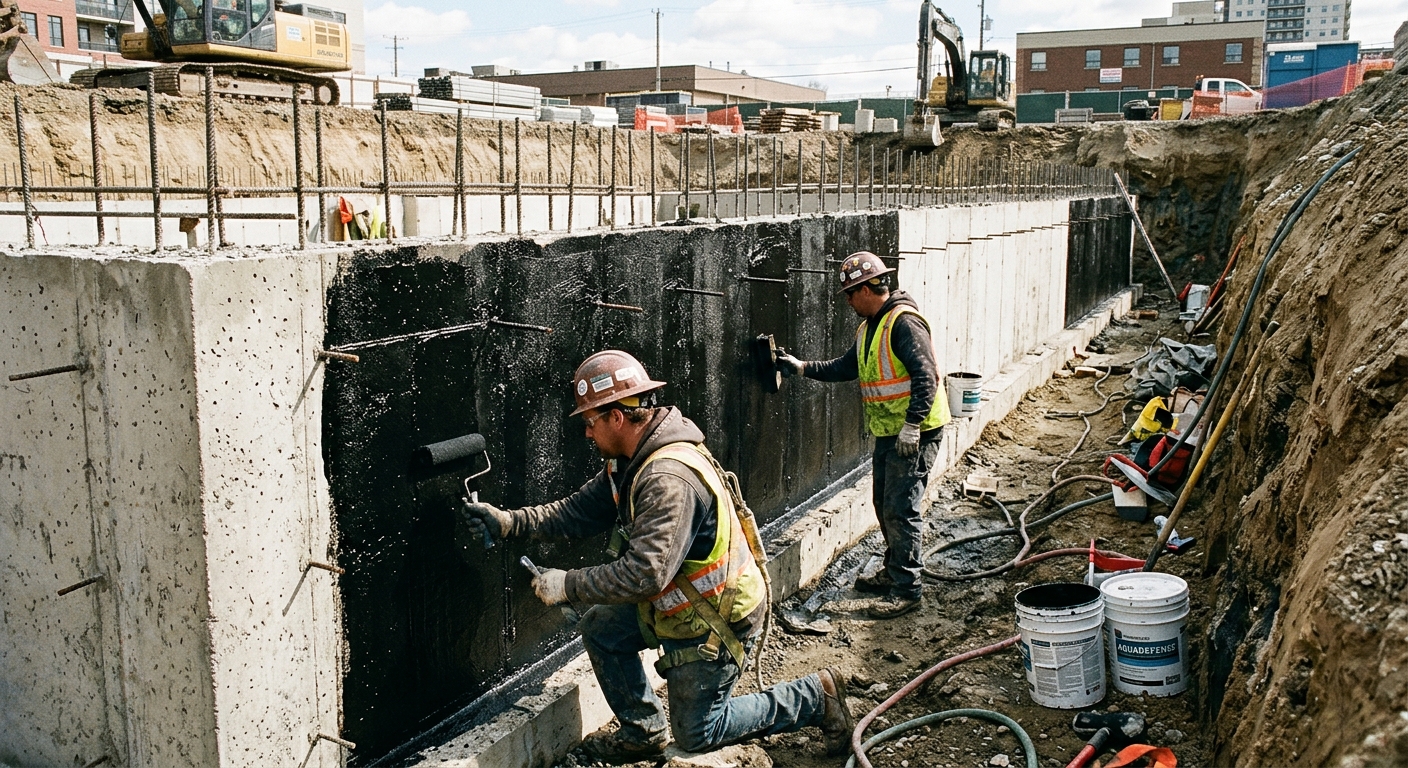
Basement waterproofing options and costs in Hillhurst
In Hillhurst, waterproofing decisions are rarely “one size fits all.” With a 2021 Census population of 5,475 in the community (Statistics Canada, 2021 Census), you’ll also notice an active mix of older inner-city basements alongside newer renovations. That matters because many original systems were installed decades ago—often before modern exterior membrane products, with weeping tile that’s now partially clogged or failed. Calgary-area housing stock in older pockets tends to show more localized wall leakage, efflorescence, and seepage at joints than truly dry “problem-free” basements.
Pricing in Calgary is shaped by three practical realities: clay-and-clay-till soils that hold water and expand when saturated, freeze–thaw cycles that widen existing cracks and joints, and site-access constraints common in established neighbourhoods. Excavation through heavy clay also means more disposal and slower dig-out time. On top of that, older neighbourhood demand—especially around Hillhurst’s busier infill corridors near 10–16 Avenue and the Beltline-adjacent blocks—keeps trades scheduling tight in spring and early summer, which can affect lead times and crew availability.
Homeowners typically choose between exterior and interior solutions depending on the foundation type, crack pattern, landscaping, and whether drainage/water table management is already failing. The table below compares common approaches, what they fix, and the disruption you should expect before you request an itemised quote.
| Method |
What It Addresses |
Disruption Level |
Durability |
Price Range |
| Exterior excavation + new membrane + drainage tile |
Stops water at the source; manages bulk and lateral moisture pressure with a continuous perimeter system |
High (full excavation, lawn/patio/sidewalk disruption) |
Long-term when paired with functioning perimeter drains and proper backfill |
$9,000–$25,000 |
| Interior perimeter drain channel + sump pit |
Collects seepage after it enters; reduces hydrostatic buildup at the slab/wall interface |
Medium (floor cutting around perimeter, limited interior demolition) |
Very good with quality sump + maintenance-friendly design |
$5,000–$15,000 |
| Foundation crack injection (epoxy or polyurethane) |
Seals cracks; epoxy suits non-moving cracks, polyurethane targets active seepage |
Low (minimal interior access, targeted work) |
Best when the water-entry path is fully understood and corrected |
$500–$1,800 |
| Sump pump installation (primary + battery backup) |
Manages collected water during spring runoff and power interruptions |
Medium (sump pit excavation or cut-in; electrical/venting work) |
High when backup power is included and system is tested |
$900–$3,000 |
| Window well drain installation |
Prevents window-well flooding and water migration into basement walls |
Medium (window well excavation/repair) |
Good for seasonal wetting when discharge is routed correctly |
$1,200–$4,500 |
| Lot re-grading / downspout extension |
Redirects roof and surface water away from foundation to reduce seepage loads |
Low to Medium (landscaping adjustment) |
Good if drainage routes remain unobstructed |
$1,000–$6,000 |
Prices are estimates only and vary by project scope, site access and material selection.
What affects the price of waterproofing in Hillhurst
In Calgary and the surrounding area, you can see the same general waterproofing plan come in 30–50% apart between quotes. The spread usually isn’t “random”—it’s driven by how much of the water-control system is actually included, how much excavation is required, and how complex the access and foundation details are. In Hillhurst, where many homes sit on mature lots with established landscaping, costs can jump quickly once crews need to remove patios, relocate fences, or cut through older concrete walkways to reach the perimeter.
The three local conditions that most separate Hillhurst-area pricing from the national average are soil type, water table, and freeze–thaw. Clay-heavy soils common around Calgary can expand during freeze–thaw and exert lateral pressure on foundation walls, worsening cracks over time—especially when weeping tile is blocked or undersized. When groundwater is higher along low-lying pockets and during spring runoff, sump pump run times increase and require better discharge planning, plus more reliable backup. Freeze–thaw then widens existing joints, turning a “dry now” crack into an active moisture path by the next wet season.
Concrete examples I see in Hillhurst: (1) a basement with old tar-and-paper style legacy systems often needs more than crack injection because the water is migrating through footing-level joints; (2) deep landscaping berms and downspout discharge pointed toward the foundation can force heavier interior solutions even when only “small seepage” is visible; and (3) homes with heavier clay backfill around the foundation typically require careful re-compaction and drainage redesign, which can push a project toward the higher end of the $9,000–$25,000 exterior range instead of the $5,000–$15,000 interior range.
Finally, older neighbourhood patterns matter: clogged weeping tile and aging drainage are common failure points here, so crews often budget for remediation and testing before sealing—because doing “half the system” is where repeat call-backs start.
| Price Factor |
Why It Matters |
Cost Impact |
| Interior vs. exterior approach — interior is less disruptive but addresses symptoms |
Interior systems manage water after entry; exterior addresses water at the foundation perimeter |
Interior often costs less upfront, but exterior can prevent repeat work in clay-heavy, pressure-prone sites |
| Foundation type — poured concrete vs. block vs. stone vs. ICF |
Crack patterns and sealing strategies differ; block often needs interior drainage support |
Poured concrete with stable crack lines may allow targeted injection; block may require larger perimeter drainage scope |
| Soil type — clay expands more than sand, adding pressure |
Expanding clay increases lateral pressure and accelerates joint failure |
Heavier clay typically increases excavation time, membrane complexity and backfill/drainage labour |
| Crack type and length — hairline vs. structural horizontal cracks |
Moving or horizontal cracks suggest higher risk of ongoing water entry |
Structural/active leaks often shift from simple sealing to more involved diagnosis and drainage corrections |
| Sump pump backup system — battery or water-powered backup needed |
Spring storms and outages can prevent the pump from running |
Backup increases equipment and electrical/plumbing time, but reduces the chance of basement flooding |
| Access — landscaping, decks, or driveways must be removed for exterior |
Restricted access increases excavation labour and disposal costs |
Exterior work can move toward the top of the range when patios/walkways must be cut and restored |
| Weeping tile age — original tile (60+ years) may be completely failed |
Failed tile won’t drain bulk water, increasing hydrostatic pressure |
If tile is blocked or missing, scope expands to new drainage tile and proper outlet planning |
| Mould or efflorescence remediation required before sealing |
Sealers and membranes don’t bond well over active contamination |
Remediation and drying adds time and materials, but prevents premature failure |
Permits & regulations in Alberta
In Alberta, the key is distinguishing between “cosmetic sealing” and work that changes drainage systems, alters structural components, or affects municipal connections. In many Hillhurst projects, foundation excavation and structural crack repair can trigger permit requirements—particularly when the work involves exposing the foundation for waterproofing, modifying drainage around the site, or addressing cracks that could be structural in nature. Also, changes to lot grading and downspout discharge can require permit review if they materially alter how stormwater leaves the property.
Where municipal approval comes up most often is sump pump tie-in. If your sump discharge is intended to connect to a storm or sanitary sewer system, expect municipal review/approval before the connection is made. For structural crack repair—especially horizontal cracks in block walls or major step cracks—an engineering assessment is commonly required to confirm whether underpinning or additional structural work is needed.
To verify your contractor in Hillhurst, do this step-by-step: (1) confirm the contractor is properly licensed for the scope of work by using the Alberta government online licensing registry tools; (2) request a current certificate of liability insurance naming you as an interested party when appropriate; and (3) request proof of WSIB/WCB coverage (or clearance documentation, depending on the contractor’s setup). For structural repairs, ask whether they include engineering support in the proposal and whether they can coordinate with the engineer if assessment is required. Finally, ask that the permit responsibilities (who pulls, who pays, what’s included) are written clearly in the scope before work starts.
Interior vs exterior waterproofing — what does Hillhurst need?
The fundamental difference is source control versus water management. Exterior waterproofing—full excavation, new membrane, new drainage tile, and careful backfill—addresses the water entry path at the perimeter. It’s the most permanent approach when you’re dealing with clay soils, freeze–thaw joint movement, and failing weeping tile or clogged exterior drainage. It costs more and requires significant landscape disruption, but it reduces the chances of repeat seepage because the wall is protected before water infiltrates.
Interior waterproofing—perimeter drain channel, sump pit, and sump pump—does not stop hydrostatic pressure from reaching the foundation wall; instead, it collects water after it enters and keeps the basement drier. In Hillhurst, interior solutions are often practical when you can’t excavate due to tight lot lines, established patios, or concrete access that would be too costly to remove. Poured concrete foundations often respond well to targeted crack injection when cracks are non-moving and when the water-entry path is corrected with proper drainage. Block foundations, by contrast, frequently benefit from interior drainage as a complement because block joints and capillaries can keep wicking moisture unless the system is designed to manage it.
Because Alberta can see power interruptions during spring flooding and heavy wet periods, sump pump systems are strongest with backup. If you’re choosing between options, here’s a realistic example: when a home has ongoing wall seepage plus evidence of clogged perimeter drainage, the gap between a full exterior program near the $9,000–$25,000 band and an interior-first plan in the $5,000–$15,000 band can be justified. Exterior becomes the better value when it prevents “symptom-only” cycles—especially in clay-heavy soil where pressure returns as soon as the backfill stays saturated through freeze–thaw.
| Method |
Best For |
Addresses Source? |
Disruption |
Lifespan |
Price Band |
| Full exterior excavation + membrane |
Chronic seepage, failing exterior drainage, and clay-heavy backfill causing lateral pressure |
Yes |
High |
Long-term when drains and backfill are done correctly |
$9,000–$25,000 |
| Interior French drain + sump system |
Basements where excavation access is limited or water management is needed during spring runoff |
No (manages entry after it happens) |
Medium |
Very good with backup and routine checks |
$5,000–$15,000 |
| Crack injection — epoxy (structural) |
Non-moving cracks in poured concrete or stable crack patterns |
Partially (seals the crack path, assumes water source is corrected) |
Low |
Good when cracks are stable and properly prepped |
$500–$1,800 |
| Crack injection — polyurethane (active leak) |
Active seepage where water is pushing through the crack |
Partially (targets the active leak path) |
Low |
Good, but performance depends on addressing ongoing pressure and drainage |
$800–$2,500 |
| Interior drain channel only (no sump) |
Light seepage and low water accumulation risk; rarely ideal in pressure-prone conditions |
No |
Medium |
Moderate unless water levels stay consistently low |
$3,500–$8,000 |
| Re-grading + downspout extensions |
Surface-water driven dampness, seasonal wetting near foundation perimeter |
Sometimes (reduces water load around foundation) |
Low to Medium |
Good if drainage routes remain clear |
$1,000–$6,000 |
How to choose a waterproofing contractor in Hillhurst
Start by verifying Alberta licensing and protection. Ask for the contractor’s Alberta licence information for the scope you’re buying, then request a certificate of liability insurance—review it for current dates and confirm it covers the type of work they’ll do on your foundation. Next, verify WSIB/WCB coverage: ask for proof of clearance or coverage documents and check that they match the legal business name on the quote. If they can’t provide documentation promptly, treat that as a risk factor.
For pricing, ask for 2–3 itemised written quotes. You want labour and materials breakdowns (excavation, membrane/drain tile, sump equipment, disposal, regrading/patching), not just a lump sum. Make sure the scope clarifies what’s excluded: permit fees, engineering assessment (if needed), disposal costs for clay spoils, concrete cutting limits, restoration of landscaping, and whether existing weeping tile will be assessed, cleaned, or replaced. Also confirm whether they include a permit pull if one is required, and who is responsible for municipal approvals for sump discharge connections.
Warranty matters in Alberta because freeze–thaw stresses the system. Look for workmanship warranty length, what it covers (materials supply vs labour), and whether the warranty is transferable if you sell the home. Payment schedules should be conservative: never pay more than 10–15% upfront, and use a holdback until completion and cleanup are verified. Get a start date and completion estimate in writing, plus a plan for curing/drying times and inspection milestones.
- Ask what exact products they use (membrane type, drain tile spec, pump model) and request part numbers when possible.
- Require a written scope that identifies all addressed areas: wall sections, footing line, slab edges, and drainage discharge route.
- Confirm whether they will video/inspect existing weeping tile before deciding to “add interior only.”
- Check that crack injection includes surface prep and crack routing (not just surface caulking).
- Make sure sump discharge is routed correctly and described in writing (where it goes, how it’s protected).
- Ask whether a battery backup sump is included or optional—spring outages are common, and wording matters.
- Review permit responsibility: who pulls, what triggers the permit, and who pays.
- Verify disposal is included if excavation is part of the scope (clay removal can change price quickly).
- Get a restoration list: compaction method, backfill type, landscaping/grade finish, and concrete patching.
- Confirm equipment testing: sump float test, high-water alarm test, and pump run verification.
- Clarify warranty start date, exclusions (power loss, blocked discharge), and transfer terms.
- Do not approve a quote that offers the lowest price with the least scope detail.
Red flags in Hillhurst: (1) quoting “epoxy injection only” for an active seep situation; (2) skipping site access/disposal assumptions while excavating near driveways and patios; (3) offering a sump pump without backup discussion; (4) refusing to list materials/equipment specs or provide insurance/WSIB/WCB documentation; and (5) vague wording like “we’ll waterproof as needed” without measurements, locations, and clear exclusions.
Frequently asked questions — waterproofing in Hillhurst
Can I waterproof my basement in winter in Hillhurst?
Yes, basement waterproofing can often be done in winter in Hillhurst and across Alberta, but it depends on the system and site conditions. Interior work like installing a perimeter drain, sump pit, or crack injection is usually more feasible than exterior excavation because digging and membrane installation require stable conditions for proper preparation and curing. In clay-heavy soils, excavation in deep cold can slow production and complicate backfill/compaction quality. That said, if you’re seeing active leaks, waiting until spring can allow more moisture migration and potentially increase remediation needs. If your quote includes crack injection and drainage improvements, ask the contractor how they’ll manage temperature control and drying timelines. If exterior work is required, confirm whether the membrane and backfill phases can be scheduled for suitable temperatures.
What is the difference between waterproofing and damp-proofing?
In practical homeowner terms, damp-proofing is about reducing moisture seepage, while waterproofing is designed to manage hydrostatic pressure and active water entry. In Hillhurst, freeze–thaw and clay-till soils can push water through cracks and joints—so “damp-proof” coatings sometimes slow dampness but don’t reliably stop pressure-driven seepage. Waterproofing usually involves a system: drainage tile or interior perimeter drains to collect water, plus sealing the specific leakage paths (such as crack injection with epoxy or polyurethane). If you only see dampness on drywall corners, damp-proofing may sound attractive, but if you’ve got efflorescence, recurring spring wetness, or a sump that should be running, you likely need a true waterproofing approach. A sump pump installation—often in the $900–$3,000 band—paired with interior drainage can turn a recurring issue into a controlled system.
Will basement waterproofing affect my property value in Hillhurst?
It can, especially when you fix a repeatable moisture problem that buyers notice—musty odours, stained walls, or recurring wet spots. In older Hillhurst basements, waterproofing that comes with documented scope, equipment specs, and warranty can provide confidence that the underlying cause (drainage failure, crack leakage, or pressure build-up) has been addressed. While no contractor can guarantee value increase, practical market value drivers include reduced moisture risk, a drier space for finishing, and fewer disclosure concerns. Buyers tend to ask “what was done and when?” more than they ask “was it the cheapest option?” If your system includes interior perimeter drainage and a sump with backup, it’s a measurable improvement to day-to-day livability. If your situation requires exterior excavation, that higher upfront investment—often within the $9,000–$25,000 range—can be easier to justify when the documentation is thorough and the source control plan is clear.
What drainage issues are most common in Hillhurst homes?
The most common issues in Hillhurst typically involve aging or failing perimeter drainage and how meltwater/surface water reaches the foundation. Clay-heavy soils hold water, so once drainage is clogged or the backfill is saturated, you can get persistent seepage along wall joints and at slab edges. Freeze–thaw can widen those cracks, turning small pathways into active leaks during spring runoff. Many homeowners also run into downspout discharge or grading that directs roof water toward the foundation, adding to the load before the weeping tile can keep up. Efflorescence, damp corners near window wells, and localized wall sweating during wet weeks are frequent indicators. If you already have a weeping tile system that’s very old or not performing, interior perimeter drains and sump management may be the more immediate solution while you decide on exterior options.
How do I choose a waterproofing contractor in Hillhurst?
Choose a contractor the way you’d choose a tradesperson for electrical or structural work: verify credentials, demand a clear written scope, and confirm protection and coverage. First, ask for proof of Alberta licensing for the type of work they’ll perform, plus a current certificate of liability insurance. Then request WSIB/WCB coverage documentation (or clearance where applicable). Next, get 2–3 itemised quotes showing labour and materials, including whether permit pulls are included (where required) and whether disposal and restoration are part of the price. Make sure you understand exclusions: engineering assessment, existing drain investigation, and whether your sump will include backup. Finally, review warranty terms—workmanship duration, product/manufacturer warranty, and whether it transfers if you sell. If a quote looks cheap but leaves out critical items like sump backup or drainage discharge routing, it often catches up later. If you’re pricing an interior perimeter drain and sump, many projects land in the $5,000–$15,000 range depending on access and equipment.
What is a battery backup sump pump and do I need one in Hillhurst?
A battery backup sump system is designed to keep pumping if the power goes out, which matters in Alberta during spring storms and heavy wet periods. Your main sump pump handles routine discharge, while the battery backup kicks in during outages to prevent water from rising in the pit—especially when the basement relies on that collection system. In Hillhurst, the question isn’t whether you’ll ever lose power; it’s whether you can tolerate a few hours of “no pumping” during a wet event. If your basement is finished, has a history of rapid seepage, or your current sump runs frequently in wet weeks, battery backup is typically the difference between a controlled system and a damaging flood. As a budget reference, sump installation with backup often fits the $900–$3,000 band (equipment and electrical/plumbing scope depend on your setup). Ask your contractor to specify the backup type and include it clearly in the written scope.