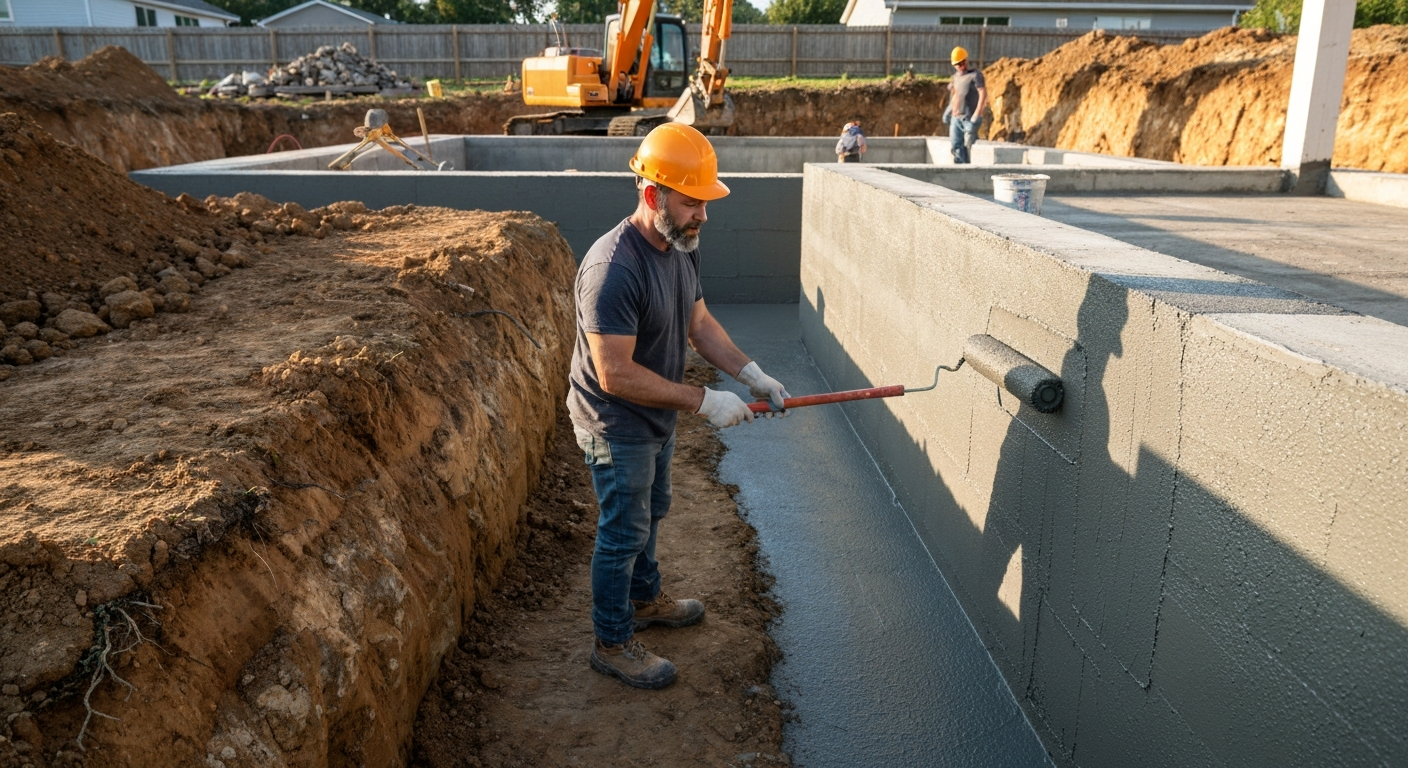
Basement waterproofing options and costs in Red Deer
In Red Deer, basement waterproofing decisions usually start with the same uncomfortable question: is the water coming from the outside, or is it showing up inside after it has already found its way through? With 100,844 residents (Statistics Canada, 2021 Census) and 26,255 homeowner households (Statistics Canada, 2021 Census), the local market is full of older basements—especially because 34.1% of homes were built before 1981 (Statistics Canada, 2021 Census). That matters. Older systems were often installed with tar-and-paper style approaches and weeping tiles that didn’t last as long as modern drainage assemblies.
Red Deer’s costs are shaped by central Alberta realities: variable glacial/till-derived soils with clay content, groundwater conditions that change by water-table season, and freeze-thaw cycles that widen small cracks and joints over time. When heavier clay holds water, it can increase lateral pressure on foundation walls, and it can make exterior excavation more disruptive once backfill is disturbed and re-compacted. In practice, exterior work tends to be most demanding—particularly in established areas near Innisfail Road or around the newer infill belts where driveways, retaining walls, and limited access complicate excavation. As a result, contractor availability and site prep time can swing the final price quickly.
Below is a practical comparison of the main approaches homeowners use in Red Deer, plus realistic price bands to help you translate quotes into apples-to-apples scope.
| Method |
What It Addresses |
Disruption Level |
Durability |
Price Range |
| Exterior excavation + new membrane + drainage tile |
Primary water entry at the foundation: new waterproofing barrier, drainage board, and weeping tile connections |
High (dig to the footing, yard/landscaping impacts) |
Long-term when drainage is properly connected and backfill is engineered |
$10,000 – $22,000 |
| Interior perimeter drain channel + sump pit |
Collected water after it penetrates: perimeter drain, sump basin, and discharge management |
Moderate (interior floor/footing work, limited excavation) |
Very good for most cases when sump discharge is correct and discharge route is protected |
$3,500 – $12,000 |
| Foundation crack injection (epoxy or polyurethane) |
Stabilizes and seals cracks to stop seepage pathways (epoxy for structural/non-moving cracks; polyurethane for active leaks) |
Low (minimal demolition, localized access) |
Good to excellent when crack movement conditions are correctly matched to the product |
$450 – $1,800 |
| Sump pump installation (primary + battery backup) |
Controls water level when drainage alone can’t keep up; backup reduces risk during outages |
Low to moderate (depends on basin size and electrical tie-in) |
High reliability with correct discharge and backup power |
$1,800 – $4,500 |
| Window well drain installation |
Water entry at window wells: controlled drainage away from the window perimeter |
Low to moderate (small excavation, well modifications) |
Good for reducing localized seepage and keeping egress areas dry |
$2,500 – $6,000 |
| Lot re-grading / downspout extension |
Stops surface water from feeding the foundation area |
Low (often curb-stop style yard work) |
Good for cases where roof/grade is the main driver |
$1,200 – $4,000 |
Prices are estimates only and vary by project scope, site access and material selection.
What affects the price of waterproofing in Red Deer
In Red Deer, you can see quotes for the “same” basement waterproofing idea swing by 30–50% because the scope often changes once a contractor confirms what’s actually happening: where the water comes from, how it moves through the soil, and whether the foundation system is actively failing or simply damp. Two homes can both have a musty smell, but one might have a failed weeping tile while the other has surface water dumping toward the wall. In a market where many basements date back decades—remember 34.1% of homes built before 1981 (Statistics Canada, 2021 Census)—pre-inspection becomes the difference between a stable plan and an expensive guess.
The three drivers that separate Red Deer pricing from a national average are soil type, water table, and freeze-thaw stress. Clay-heavy soils (found in parts of central Alberta) expand during freeze-thaw and can exert lateral pressure, worsening cracks over time. When groundwater sits higher seasonally, sump discharge run times increase and you may need a more robust perimeter drainage design (and sometimes backup). Alberta’s freeze-thaw cycle also means small defects that might look “fine” in late summer can open up by spring.
Concrete examples from Red Deer jobs: (1) Homes on heavier clay where excavation is deeper for a proper footer connection can push exterior projects toward the upper end—often closer to the $10,000 – $22,000 band—because excavation and drainage board detailing take longer. (2) If the foundation is poured concrete with crack patterns that are stable, crack injection and interior drainage can stay in the $3,500 – $12,000 zone. (3) If the weeping tile is original and fully failed, the interior-only route may treat symptoms longer than it should, so many homeowners choose a more complete exterior plan.
| Price Factor |
Why It Matters |
Cost Impact |
| Interior vs. exterior approach — interior is less disruptive but addresses symptoms |
Interior systems collect and manage water after entry; exterior systems reduce water pressure at the source |
Exterior commonly costs more because it requires footing-level excavation |
| Foundation type — poured concrete vs. block vs. stone vs. ICF |
Crack behaviour and sealing methods differ by wall system |
Block often needs interior drainage as a practical complement |
| Soil type — clay expands more than sand, adding pressure |
Clay retains water and increases lateral pressure during freeze-thaw |
Heavier clay can increase drainage scope and excavation time |
| Crack type and length — hairline vs. structural horizontal cracks |
Active vs. non-moving cracks require different injection products and protocols |
Structural/long cracks can add engineering and stabilization costs |
| Sump pump backup system — battery or water-powered backup needed |
Prevents high-water events during power interruptions in spring |
Adds equipment and electrical work; improves risk control |
| Access — landscaping, decks, or driveways must be removed for exterior |
Extra demo and reinstatement raise labour and disposal time |
Tight sites commonly increase total cost |
| Weeping tile age — original tile (60+ years) may be completely failed |
Failure often means water is bypassing the perimeter drainage system |
May push work toward more comprehensive drainage replacement |
| Mould or efflorescence remediation required before sealing |
Sealers and membranes may not bond well over contaminated or deteriorating surfaces |
Front-loads cleaning steps to improve long-term performance |
Permits & regulations in Alberta
In Alberta, foundation excavation, structural crack repair, and changes to lot drainage typically require a building permit. If your work includes altering how water is managed around your property—especially where drainage ties into municipal systems—expect permit steps. Sump pump installations that connect to the storm or sanitary sewer require municipal approval and must be designed to avoid cross-flow or backflow risks.
For structural crack repair, the key trigger is whether the crack indicates structural movement (for example, major step cracks in block walls, or horizontal cracking patterns that suggest wall movement). In those cases, a structural engineer’s assessment is often required to determine whether underpinning, wall stabilization, or other structural remedies are needed before sealing.
Here’s how a homeowner in Red Deer can verify the contractor’s Alberta credentials step-by-step:
- Confirm the contractor’s applicable business registration and trade credentials using the provincial online resources available to consumers.
- Ask for a current certificate of liability insurance and verify the policy is active for the job’s period.
- Request WSIB/WCB clearance (or equivalent proof of coverage) and keep a copy with your contract.
- For structural repairs, ask whether they include or coordinate with an engineer and whether that assessment is documented in writing.
- When a permit is required, confirm who pulls it and whether permit fees are included in the written scope.
What typically does NOT require a permit: crack injection for non-structural, stable hairline cracks; localized window well drains; interior dimple membrane installs when not altering structural elements or drainage tie-ins. Still, always confirm in writing—Red Deer job conditions vary.
Interior vs exterior waterproofing — what does Red Deer need?
Exterior waterproofing and interior waterproofing are designed for different realities. Exterior waterproofing involves full excavation to the foundation, then installing a new waterproofing membrane and a properly connected drainage tile system before backfill is restored. Done correctly, it targets the source of water entry by reducing how much water contacts and infiltrates the foundation wall. The trade-off is cost and disruption: excavation is labour-intensive and creates yard restoration work.
Interior waterproofing manages water after it enters. Common scope includes a perimeter drain channel, sump pit, and sump pump (with discharge piping routed to a safe outlet). This approach is usually less invasive and can be the right choice when exterior access is limited or when the main issue is interior seepage that isn’t driven by surface runoff. However, interior work generally does not remove hydrostatic pressure from the wall itself; it controls the water pathway and keeps the basement dry.
In Red Deer’s freeze-thaw environment, the “right” approach often depends on foundation type. Poured concrete walls typically respond well to crack injection when cracks are stable, especially when paired with interior drainage to manage seasonal seepage. Block foundations frequently benefit from interior drainage as a practical complement because joints and interlocks can be more vulnerable to water migration. If your area has heavier clay or your sump runs frequently during spring melt, you may find that an interior system near the $3,500 – $12,000 range is worthwhile—but if exterior drainage is clearly bypassing the foundation, the exterior option in the $10,000 – $22,000 band can be the justified long-term fix.
Example: if a basement has recurring seepage along one wall and inspection shows failed weeping tile, interior drainage might stop the problem for a time. But when the exterior drainage is completely overwhelmed, spending additional dollars on exterior excavation and membrane work can prevent repeated seepage and reduce long-term risk. Either way, for Alberta, plan for backup: during spring flooding events, outages do happen—battery backup or an engineered alternative can prevent a high-water event.
| Method |
Best For |
Addresses Source? |
Disruption |
Lifespan |
Price Band |
| Full exterior excavation + membrane |
Widespread leakage, failed weeping tile, high hydrostatic pressure, poor exterior drainage conditions |
Yes (reduces water contact at the wall) |
High |
Long-term with correct drainage design |
$10,000 – $22,000 |
| Interior French drain + sump system |
Interior seepage, limited exterior access, localized wall dampness driven by seasonal groundwater |
No (controls water after entry) |
Moderate |
Very good with reliable discharge and backup |
$3,500 – $12,000 |
| Crack injection — epoxy (structural) |
Non-moving cracks, stable leak pathways in poured concrete |
Partially (seals pathway) |
Low |
Good to excellent when crack movement is addressed |
$450 – $1,800 |
| Crack injection — polyurethane (active leak) |
Active weeping or damp cracks that indicate ongoing moisture movement |
Partially (seals pathway under wet conditions) |
Low |
Good when matched to active conditions |
$650 – $2,200 |
| Interior drain channel only (no sump) |
Minor seepage where gravity drainage can safely evacuate water |
No (manages, doesn’t eliminate, water pressure) |
Moderate to low |
Limited by discharge reliability |
$2,500 – $7,500 |
| Re-grading + downspout extensions |
Surface water problems (roof runoff dumping near foundation) |
Yes (reduces exterior source) |
Low |
Good for correct and maintained grading |
$1,200 – $4,000 |
How to choose a waterproofing contractor in Red Deer
Choosing the right waterproofing contractor in Red Deer is less about catchy marketing and more about proof. Start by verifying Alberta coverage: ask for their certificate of liability insurance and confirm it matches the job address and timeline. Then request WSIB/WCB clearance (or the equivalent proof of coverage your contractor should provide in Alberta). A legitimate crew should also be willing to explain how they assess drainage direction, soil conditions, and foundation type—because waterproofing is site-specific.
Next, get 2–3 itemised written quotes. You want a labour + materials breakdown, not a single lump sum. The scope should state what’s included: disposal, permit pulling (if required), sawcutting/demolition limits, membrane product type, drainage board, weeping tile routing, discharge location, and any re-grading/landscape reinstatement. If a contractor says “we’ll figure it out later,” you’re likely buying risk.
Warranty matters too. Look for a workmanship warranty length that matches the system’s role (interior drainage vs exterior membrane). Ask whether the manufacturer warranty applies to the product installed and whether it transfers to a future owner. If not transferable, you should understand that up front.
Finally, watch payment schedules and timelines. Never pay more than 10–15% upfront. Agree on holdback terms and require completion sign-off before the final payment. Get a start date and a completion estimate in writing, including what conditions can affect the schedule (excavation weather, curing times, and inspections).
- Ask for a written scope that names products and thicknesses (membrane/dimple board) rather than vague “waterproofing.”
- Confirm how they test discharge route and prevent backflow.
- Require photo documentation before, during, and after excavation or interior work.
- Check that they address both foundation entry and water management (grade/downspouts where needed).
- Verify they include proper disposal of excavated material and clean-up.
- Confirm permit responsibility if drainage changes or structural work triggers approvals.
- Ensure crack injection plans specify epoxy vs polyurethane based on movement/activity.
- Ask about sump pump specs (basin size, float controls, and discharge line diameter).
- Request backup plan details if you’re paying for a battery backup.
- Look for a warranty document in the contract, not just a “we stand behind our work” statement.
- Get an itemised quote with allowances or contingencies clearly defined.
- Check references from similar Red Deer foundation types (poured concrete vs block) within driving distance.
Red Deer red flags to watch for: (1) they won’t show you the planned discharge route for a sump (or they change it after you sign); (2) they pitch an exterior excavation without confirming whether the weeping tile tie-in will be properly connected to safe outlet conditions; (3) they recommend crack injection using the same product for all cracks, without assessing active leakage or movement; (4) they ask for large deposits up front or won’t commit to a holdback; and (5) they can’t produce insurance/coverage documents or won’t explain permit responsibility clearly.
Frequently asked questions — waterproofing in Red Deer
How do I choose a waterproofing contractor in Red Deer?
Start with verification and scope clarity. In Red Deer, a reliable contractor should provide proof of liability insurance and WSIB/WCB coverage, plus a written contract that clearly lists what’s included and what’s excluded. Ask for itemised pricing (labour and materials), not a lump sum, and confirm whether they will pull permits if excavation or drainage changes require it. For affordability, compare bids that cover the same work: exterior excavation typically lands in the $10,000 – $22,000 band, while interior perimeter drain and sump systems are commonly in the $3,500 – $12,000 band. Finally, insist on photos and a defined discharge plan, because the sump discharge route is one of the most common failure points.
What is a battery backup sump pump and do I need one in Red Deer?
A battery backup sump system keeps the pump running during power outages so water doesn’t rise and overflow during spring melt or heavy rain periods. In Red Deer and across Alberta, outages can coincide with wet-weather events, and a basement can fill quickly when groundwater rises and freeze-thaw stress has already created seepage pathways. You don’t always “need” backup for every job, especially if your exterior drainage is robust and the sump is rarely called into service—but if you’re installing a sump because the perimeter drainage alone can’t keep pace, backup becomes a prudent risk-management step. If your quote includes the backup option, compare it to a base sump install; in many projects, sump systems with backup fall within the $1,800 – $4,500 band depending on basin size and electrical tie-in complexity.
How much does basement waterproofing cost in Red Deer?
Costs vary based on whether you’re addressing the source (often via exterior excavation) or managing water after entry (interior drainage and sump). For many Red Deer homeowners, exterior waterproofing typically falls around the $10,000 – $22,000 range because excavation is required down to the footing, along with membrane work and often weeping tile replacement. Interior waterproofing / weeping tile style systems commonly land in the $3,500 – $12,000 band depending on how much interior drainage is needed and whether a sump pump and discharge route are included. Smaller items like crack repair are usually much lower, often $450 – $1,800, but the right approach depends on whether the crack is structural or actively leaking. Always compare quotes by scope—soil conditions and access in Red Deer can push prices toward the higher end.
Interior vs exterior waterproofing — which is better?
“Better” depends on the water entry path. Exterior waterproofing is best when you need to reduce the source of water contact: full excavation to the foundation, new membrane, and drainage tile connections. It’s also the more permanent strategy when weeping tile has failed or exterior grade/groundwater pressure is driving seepage; that’s why it usually sits in the $10,000 – $22,000 range. Interior waterproofing is usually better when exterior excavation is impractical or when you’re mainly collecting water after it enters. Interior drains, sump pits, and related work commonly fall in the $3,500 – $12,000 band and are less disruptive. In Red Deer, poured concrete cracks may respond well to injection paired with interior drainage, while block walls often need interior drainage as a practical complement.
Why is my basement leaking in Red Deer?
Most basement leaks in Red Deer come down to water management and seasonal groundwater movement. Common causes include failed or aged weeping tile, surface runoff from downspouts that no longer directs water away from the foundation, and soil conditions that retain water (especially clay-rich areas) and increase lateral pressure on foundation walls during freeze-thaw. Older homes—many built before 1981—are statistically more likely to have aging perimeter systems that don’t perform the way they should anymore (Statistics Canada, 2021 Census). Also consider window wells and plumbing penetrations, which can become weak points as materials settle. A thorough inspection should identify whether the water is actively seeping through cracks, showing up as condensation, or entering along the perimeter—because the fix changes completely based on the entry path.
How do I know if a foundation crack is serious?
A crack’s seriousness depends on movement, orientation, and symptoms (not just width). In Red Deer, freeze-thaw cycles can widen minor hairline cracks over time, but structural concerns tend to show up with patterns like major horizontal cracks in block walls, step cracking, or evidence of ongoing movement (for example, cracking that changes seasonally). If you see active seepage, staining, or water tracks that correlate with spring melt or heavy rainfall, the crack may be functioning as a pathway even if it looks “thin.” For evaluation, ask an engineer when horizontal or step cracking suggests structural movement. Then match the repair method: stable cracks may be suited to epoxy injection, while active leaks generally require polyurethane injection. If your contractor can’t explain crack behaviour and why they selected a specific injection product, treat that as a warning sign.