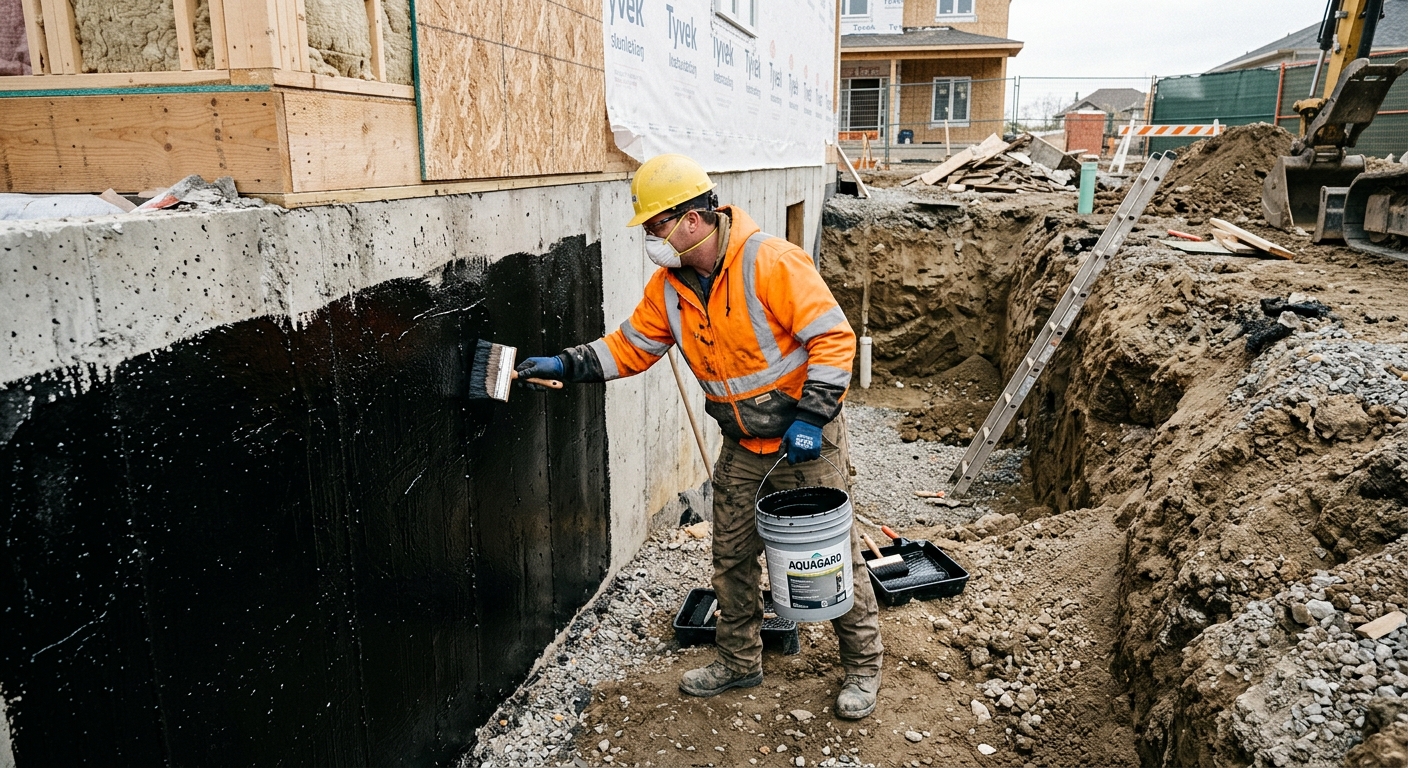
Basement waterproofing options and costs in Jamieson Place
Basement waterproofing in Jamieson Place, Alberta usually comes down to choosing where you’ll control water entry: outside the foundation (source control) or inside (collection and drainage). With a total population of 3,905 in 2021 (Statistics Canada, 2021 Census), Jamieson Place has a tighter pool of local trades than Calgary proper, so lead times and scheduling can affect the final quote when jobs require coordinated excavation and disposal days. That matters because Jamieson Place-area foundations are often older; in Calgary’s established communities, original tar-and-paper era systems and undersized or failing weeping tile are a frequent starting point for leaks.
Cost is also shaped by southern Alberta’s clay-heavy soils and freeze–thaw cycles. Clay expands as it saturates and freezes, increasing lateral pressure on foundation walls and widening existing cracks. That’s why exterior systems (membrane plus functioning perimeter drainage) tend to be priced higher in excavation-heavy scenarios, while interior solutions can be more economical when access is limited or when you’re managing seepage rather than rebuilding the entire outer perimeter.
In Jamieson Place, waterproofing demand is particularly common where older landscaping has matured—think areas around established decks, concrete steps, and tight rear yards that limit equipment access. The good news is you can often stage the work: start with an interior sump for immediate control, then plan exterior restoration when the budget allows.
Below is a practical comparison of common approaches and typical price bands in the Calgary region, followed by an important note about project-specific variables.
| Method |
What It Addresses |
Disruption Level |
Durability |
Price Range |
| Exterior excavation + new membrane + drainage tile |
Primary water entry at the foundation perimeter; restores exterior drainage and continuous waterproofing |
High (excavation and landscaping removal) |
Long (often decades when drainage is maintained) |
$9,500–$24,500 |
| Interior perimeter drain channel + sump pit |
Seepage and hydrostatic pressure relief after water enters; collects water before it damages finishes |
Medium (interior floor/edge work) |
Good (depends on sump reliability and discharge routing) |
$6,000–$14,500 |
| Foundation crack injection (epoxy or polyurethane) |
Crack water paths; epoxy for structural sealing, polyurethane for active or leaking cracks |
Low to Medium (localized surface prep) |
Good (best when paired with drainage management) |
$750–$1,800 |
| Sump pump installation (primary + battery backup) |
Reliable pumping during power interruptions; reduces basement seepage risk |
Low (core drilling and pit work) |
Very good (when backup is included and discharge is correct) |
$1,300–$3,000 |
| Window well drain installation |
Water ingress at egress window areas; manages direct runoff and spring thaw meltwater |
Low to Medium (excavation around window area) |
Good (as long as window wells are kept clear) |
$1,200–$2,900 |
| Lot re-grading / downspout extension |
Surface water control that prevents clay saturation and reduces inflow to the foundation perimeter |
Low to Medium (landscape work) |
Moderate (requires maintenance) |
$4,500–$9,500 |
Prices are estimates only and vary by project scope, site access and material selection.
What affects the price of waterproofing in Jamieson Place
In Jamieson Place and across the Calgary region, quotes for the “same” basement waterproofing job can swing by about 30% to 50%. The biggest driver is whether the contractor is designing for source control (exterior) or for symptom control (interior), and how much time gets spent managing clay soils, tight access, and disposal. Another factor is that some contractors include full drainage restoration, while others stop at sealing visible cracks—those options can look similar on day one but behave very differently after spring melt.
Three regional conditions separate Calgary-area pricing from the national average: soil type, water table behaviour, and freeze–thaw. Clay-heavy soils common in parts of southern Alberta expand during freeze–thaw and push laterally on foundation walls, worsening joints and hairline cracks over time. In pockets where seasonal groundwater rises—especially closer to river-valley low spots—sump run times and discharge routing requirements become more demanding, and that pushes projects toward higher bands. On the supply-and-demand side, Alberta’s larger, experienced waterproofing crews tend to be booked around busy spring and fall seasons, so deep excavations and multi-trade scheduling can add cost.
Concrete examples of how Jamieson Place conditions raise or lower costs: if you have a perimeter with a mature cedar hedge and a small back yard, exterior excavation may trigger extra shoring and careful spoil handling—pushing you toward the upper end of the $9,000–$25,000 exterior band. If your primary issue is active seeping from one corner crack and you can access the wall face, crack injection may stay closer to the $500–$1,800 crack-repair band. If you already have a sump but it lacks battery backup, adding a reliable secondary system often makes a big difference at a relatively predictable cost, typically landing in the $900–$3,000 sump installation range.
Because older housing stock is common in Calgary’s established neighbourhoods around Jamieson Place, failed weeping tile (sometimes 60+ years old) and clogged discharge lines are frequent reasons interior-only approaches underperform—so your site assessment strongly influences the final number.
| Price Factor |
Why It Matters |
Cost Impact |
| Interior vs. exterior approach — interior is less disruptive but addresses symptoms |
Interior manages water after entry; exterior reduces the chance water penetrates in the first place |
Exterior often costs roughly 40%–170% more due to excavation and membrane system |
| Foundation type — poured concrete vs. block vs. stone vs. ICF |
Crack patterns, joint behaviour, and sealing method differ by foundation material |
Block and older stone often require interior drainage complement; pours can respond well to injection |
| Soil type — clay expands more than sand, adding pressure |
Clay saturation increases lateral pressure during freeze–thaw |
Higher likelihood of repeat seepage means more robust drainage and sealing are budgeted |
| Crack type and length — hairline vs. structural horizontal cracks |
Hairline cracks may be addressed with sealing; horizontal/step issues can indicate movement requiring engineered plans |
Structural repair can increase costs due to assessment, possible underpinning, and added labour |
| Sump pump backup system — battery or water-powered backup needed |
Prevents basement flooding during power outages (spring events and heavy load periods) |
Adding a backup can move a job into the mid-to-upper portion of the sump band |
| Access — landscaping, decks, or driveways must be removed for exterior |
Removing and restoring features increases labour, disposal and patching |
Access constraints can add days; costs often rise quickly with tight urban lot lines |
| Weeping tile age — original tile (60+ years) may be completely failed |
Old or clogged tile can prevent drainage from functioning |
Replacing or relining tile and cleaning discharge routes adds both materials and excavation time |
| Mould or efflorescence remediation required before sealing |
Water damage must be properly remediated to avoid sealing over contamination and recurring odours |
Remediation increases prep steps and can add a meaningful labour line item |
Permits & regulations in Alberta
In Alberta, many basement waterproofing and drainage improvements are considered “building” work tied to structural stability and site drainage, which is why permits are often required depending on what you change. Typically, foundation excavation around the perimeter, structural crack repair that involves major wall remediation, and changes to lot drainage (especially where they affect grading, drainage flow paths, or connections) often require a building permit. Where a sump system discharge connects to storm or sanitary infrastructure, municipal approval is commonly needed.
For structural crack repair—especially horizontal cracks in block walls or major step cracks—an assessment by a structural engineer is often required to confirm whether the wall is simply leaking or if there’s ongoing movement that could require underpinning or additional structural intervention. That means you should confirm the contractor has engineering support available for structural scopes, and carries liability insurance and WSIB/WCB coverage where applicable for their trade staff. If they can’t explain who takes responsibility for engineered recommendations, that’s a warning sign.
What usually DOES require a permit: exterior foundation excavation, major structural crack work, modifications to drainage grading that change how water leaves the lot, and any connection/discharge changes involving municipal systems. What typically does NOT require a permit: localized interior sealing of minor cracks, installing an interior drain system that doesn’t alter exterior drainage flow paths, and surface-level downspout extensions that do not change connections.
To verify before signing, a homeowner in Jamieson Place should: (1) check the contractor’s Alberta licence/registration status using the appropriate provincial registry entry, (2) request a current certificate of liability insurance showing limits and project location, and (3) ask for WSIB/WCB clearance or account confirmation letter for the individuals doing the work. Always keep copies in your file with the written scope.
Interior vs exterior waterproofing — what does Jamieson Place need?
The core difference is straightforward. Exterior waterproofing involves full excavation, a continuous exterior membrane system, and new perimeter drainage tile—so you address the source of water entry. It costs more and requires significant landscape disruption, but when it’s designed correctly for clay backfill and freeze–thaw movement, it provides the most “permanent” control strategy. Interior waterproofing, by contrast, focuses on what happens after water gets through: a perimeter drain channel, a sump pit, and a pump system collect seepage and relieve hydrostatic pressure so it doesn’t damage floors, finishes, or framing. Interior systems are usually less invasive, but they don’t stop lateral pressure against the wall itself.
In Jamieson Place, where clay soils can saturate and expand during the freeze–thaw cycle, poured concrete foundations often do better with targeted crack injection combined with reliable drainage. If your home has block foundations or multiple wall joints showing seepage, interior drainage is usually a practical complement because water paths often travel through mortar joints and interfaces. If your spring seasons bring higher runoff and you’ve experienced sump surges, you should also plan for dependable backup. Alberta power outages—while not constant—can coincide with heavy precipitation and pump load spikes, so a battery backup (or an equivalent backup plan your contractor can justify) can be the difference between a “wet basement” scare and repeat damage.
Here’s where the money makes sense. If you’re staring at recurring seepage and failing exterior drainage, an exterior project in the $9,000–$25,000 range can be justified because it repairs the water pathway itself. If you have a limited-access basement leak and need faster, less disruptive control, an interior drain plus sump in the $5,000–$15,000 band may be the smarter first step—especially if you pair it with crack injection to stop active leaks.
| Method |
Best For |
Addresses Source? |
Disruption |
Lifespan |
Price Band |
| Full exterior excavation + membrane |
Recurring leaks where exterior drainage and membrane are compromised; best when access allows full perimeter work |
Yes |
High |
Long (typically decades if drainage discharge stays functional) |
$9,500–$25,000 |
| Interior French drain + sump system |
Basements with seepage and hydrostatic pressure; when excavation is limited or you need quicker control |
No (mitigates after entry) |
Medium |
Good (depends on pump reliability and discharge) |
$6,000–$14,500 |
| Crack injection — epoxy (structural) |
Non-moving or stable cracks in poured concrete where you can achieve good surface preparation |
Partial (seals crack pathways) |
Low to Medium |
Good (best paired with interior drainage management) |
$750–$1,800 |
| Crack injection — polyurethane (active leak) |
Active weeping where water is currently passing through the crack/joint |
Partial (stops active water paths) |
Low to Medium |
Good (results depend on correct product selection and crack condition) |
$900–$1,950 |
| Interior drain channel only (no sump) |
Occasional moisture, low hydrostatic pressure, or as a limited interim measure |
No |
Medium (localized floor/edge work) |
Moderate (without a sump, water must drain by gravity) |
$5,000–$10,000 |
| Re-grading + downspout extensions |
Surface-water issues contributing to foundation perimeter saturation |
No (redirects inflow) |
Low to Medium |
Moderate (requires seasonal maintenance) |
$4,500–$9,500 |
How to choose a waterproofing contractor in Jamieson Place
Choosing the right waterproofing contractor in Jamieson Place starts with verifying Alberta compliance and protection for your property. Ask for their contractor registration/licence details and confirm it matches the legal entity on the quote. For liability insurance, request a current certificate of insurance naming the correct insured parties and confirming coverage relevant to construction work. For WSIB/WCB, ask for proof of coverage or a clearance letter for the workers who will be on-site—this should be provided before work begins so you know you’re not assuming payroll risk.
Next, get 2 to 3 itemised written quotes. Good quotes break labour and materials into line items, such as excavation, membrane system, drainage tile, pipe fittings, sump pit and pump, electrical/battery backup components, and disposal/restoration. Avoid lump-sum-only documents that don’t state what’s included. Also read the exclusions: ask whether the contractor includes permit pulling (when required), soil disposal fees, restoration of landscaping/steps/paths, and how they handle blocked weeping tile tie-ins.
Warranty matters. Look for a workmanship warranty (how many years) and a separate product/manufacturer warranty for membranes and drainage components. Confirm if warranties are transferable if you sell your home. For payment schedule, never pay more than about 10% to 15% upfront; hold back a portion until critical stages are inspected and the job is complete. Finally, get a start date and completion estimate in writing; in Calgary-area conditions, scheduling affects curing times, backfill sequencing, and freeze-safe completion.
- Provide a detailed scope with site photos and a written plan for drainage discharge location.
- Confirm whether weeping tile is being replaced, cleaned, or tied into.
- Ask who pulls permits and whether permit fees are included when required.
- Require a disposal plan for clay spoils (landfill/disposal fees included or not?).
- Get a basement moisture diagnostic: crack mapping, wall condition notes, and seepage pattern description.
- Confirm product names and specs (membrane, drainage board, crack injection system).
- Ask about backflow prevention and discharge routing for sump systems.
- Check warranty in writing: workmanship duration + product warranty coverage.
- Verify pump brand and backup plan (battery and alarm/testing, if included).
- Confirm restoration scope: grading, downspouts, landscaping touch-ups, and any concrete patching.
- Request proof of insurance (liability limits) and WSIB/WCB clearance for the exact crew.
- Use a payment schedule with holdback; avoid large upfront payments.
Red flags in Jamieson Place include: (1) quotes that claim “cracks are the cause” but refuse to assess drainage and weeping tile condition, (2) no written scope for exterior discharge and tie-in details, (3) no mention of freeze-safe sequencing or curing times, (4) warranties that only cover labour with no product support, and (5) contractors asking for most payment upfront without a staged completion plan.
Frequently asked questions — waterproofing in Jamieson Place
How long does waterproofing last?
In Jamieson Place and the Calgary region, longevity depends on whether you control water at the source (exterior) or manage it after entry (interior). Exterior systems that include continuous membrane coverage plus functioning perimeter drainage are typically built for long service life—often decades—because they reduce how much water contacts the wall during Alberta freeze–thaw. Interior systems (perimeter drain channel and sump) can also perform very well, but they rely on ongoing pump reliability, correct discharge routing, and keeping the collection path clear.
If your foundation has older weeping tile that’s likely past its original service life (commonly 60+ years), interior-only repairs can last less predictably unless the drainage pathway is restored. For budgeting, many homeowners plan for options like an exterior project in the $9,000–$25,000 range for longer-term control, while interior solutions in the $5,000–$15,000 band often serve as a strong value strategy when access limits excavation or you need faster protection.
Can I waterproof my basement from the inside only?
Yes, you can often improve basement conditions from the inside only, especially in Jamieson Place where access constraints (mature landscaping, decks, patios, tight yard lines) make full exterior excavation costly. Interior waterproofing typically includes a perimeter drain channel, a sump pit, and a sump pump to collect seepage and relieve hydrostatic pressure after water enters. It’s a practical approach for clay soils and winter freeze–thaw because it helps stop water from accumulating near the floor slab and walls.
However, interior-only work doesn’t eliminate the source of water entry. That matters if you have persistent wall contact with saturated backfill or failing perimeter drainage—conditions common in established Calgary neighbourhoods. Many contractors recommend pairing interior drainage with targeted crack injection, such as epoxy or polyurethane, to reduce active leak pathways. If you’re seeing wide crack activity or recurring inflow during spring melt, you may ultimately get the most reliable results by moving to exterior waterproofing.
What causes foundation cracks in Jamieson Place?
In Jamieson Place, foundation cracks usually relate to movement and water pressure rather than a single defect. Calgary-area clay and clay-till soils absorb water, swell when saturated, and then expand further during freeze–thaw cycles. That repeated seasonal stress can widen joints and hairline cracks over time, and it can also create seepage paths that make the cracks look worse during wet months. You’ll also see cracks worsen when perimeter drainage is clogged or undersized, because hydrostatic pressure increases against foundation walls.
Older neighbourhood housing stock is a frequent factor in the Calgary region: original drainage systems may have failed or become blocked, and older poured concrete or block walls can develop localized leaking through joints. Common examples include step cracks in block, corners where drainage collects, and horizontal movement-related cracking where the wall experiences increased lateral load. Injection can address the crack pathway, but a proper assessment is crucial—especially if you have structural-pattern cracks.
How do I compare waterproofing quotes?
To compare waterproofing quotes in Jamieson Place, don’t look only at the total price—compare what’s included and how each contractor plans to control water. Ask for an itemised scope that lists excavation, membrane or drainage components, crack injection products, disposal, restoration, and whether the contractor will reconnect or repair weeping tile. For example, an exterior excavation project is commonly priced in the $9,000–$25,000 band, while interior perimeter drainage and sump work typically falls in the $5,000–$15,000 band. If one quote is far lower, it may be because it’s omitting exterior drainage, disposal, or key materials.
Also confirm the disruption level and sequence: curing time, backfill material, and how the contractor will keep you freeze-safe during the schedule. Finally, request warranty details for workmanship and products, and check whether they include backup considerations for the sump. A well-written quote should read like a plan, not a guess.
How long does basement waterproofing take in Jamieson Place?
Timelines vary based on scope, access, and weather, but most Jamieson Place basement waterproofing projects take anywhere from a few days to a couple of weeks. Interior systems are usually faster because they don’t require full exterior excavation: installing a perimeter drain channel and sump pit is often completed relatively efficiently, with time needed for prep, rough-in, concrete floor work, and cure time. Exterior excavation typically takes longer because excavation, soil removal, membrane installation, drainage tile setup, inspection, and backfill/compaction must be done carefully to survive freeze–thaw.
Weather also plays a role—contractors want stable conditions for curing and proper backfill. If you’re scheduling a larger exterior project, ask for a written start date, a completion estimate, and how they plan to manage delays during spring thaw. If you’re choosing between exterior and interior, remember that exterior projects are more disruptive but may be more decisive for long-term control, while interior projects can provide quicker protection.
What is a weeping tile and does my Jamieson Place home have one?
A weeping tile is an underground drainage system installed around (or within) the perimeter of a basement foundation. Its job is to collect groundwater and seepage and then channel it to a sump or discharge point, reducing hydrostatic pressure against the foundation walls. In the Jamieson Place area and across Calgary, many older homes do have weeping tile, but the system can be clogged, disconnected, or simply failed over decades—especially if the original tile is 60+ years old.
You can often tell by how the basement perimeter is finished and whether there’s evidence of a prior sump connection or drain tile outlet location. A contractor can also identify it by opening a small section of the basement perimeter or using a camera inspection from accessible cleanouts (where present). Even if you do have weeping tile, it may not be functioning correctly, so waterproofing decisions should reflect the real condition—not just the assumption that tile “must be there.”