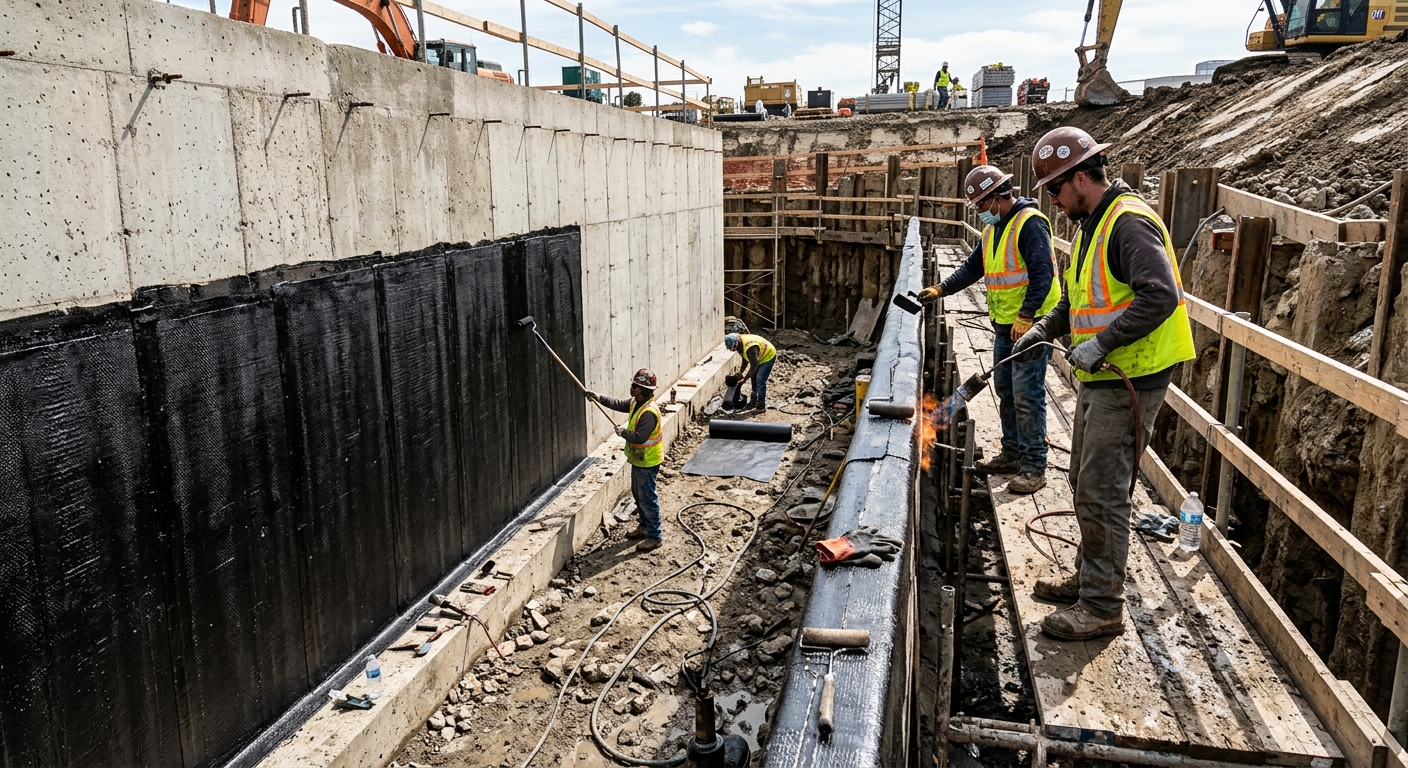
Basement waterproofing options and costs in Peace River
In Peace River, basement waterproofing is usually a “follow the water” problem: water finds the weakest paths at foundation joints, cracks, window wells, or failed perimeter drainage. That matters because many homes here are older—about 52.9% of dwellings were built before 1981, so you’re more likely to see legacy tar-based exterior coatings, undersized or long-failed weeping tile, and aging sumps that were never designed for today’s wet cycles. With Peace River’s climate running a long freeze season and frequent freeze-thaw swings, any small crack tends to widen over time, letting spring melt and perched groundwater get in. At the same time, the Athabasca–Grande Prairie–Peace River region has clay and clay-loam soils with poor drainage in low spots, which can hold water and increase lateral pressure on basement walls—one reason exterior work (excavation, membrane, drainage tile) often costs more than interior-only fixes.
We also see waterproofing demand spike around river-adjacent and low-lying areas where surface grading and stormwater control are marginal; in Peace River, contractors are especially busy in neighbourhoods near older subdivisions and areas with heavier clay and older drainage patterns. Because local soils and water exposure vary a lot from lot to lot, two homeowners can receive quotes that differ by tens of thousands depending on whether the solution is symptom control (interior drainage) or source control (exterior excavation). Use the table below as a realistic starting point for comparing methods before you request itemised quotes.
| Method |
What It Addresses |
Disruption Level |
Durability |
Price Range |
| Exterior excavation + new membrane + drainage tile |
Hydrostatic pressure and water entry at the foundation exterior |
High (landscaping removed, excavation required) |
High (source control when properly installed) |
$12,000–$25,000 |
| Interior perimeter drain channel + sump pit |
Water after it enters; manages seepage and relieves pressure at the floor perimeter |
Medium (floorwork along perimeter) |
Medium to high (depends on wall condition and sump maintenance) |
$8,000–$18,000 |
| Foundation crack injection (epoxy or polyurethane) |
Cracks and joints that allow seepage; epoxy for non-active cracks, polyurethane for active leaks |
Low to medium (minor surface access) |
Medium to high (best when combined with drainage) |
$600–$2,500 |
| Sump pump installation (primary + battery backup) |
Prevents basement flooding during spring runoff and high water events |
Low (typical cutting and rough-in) |
Medium to high (improved reliability with backup) |
$1,500–$3,500 |
| Window well drain installation |
Water ingress around egress wells and window framing |
Low to medium (excavation around wells) |
Medium (depends on grading and well sizing) |
$2,000–$5,500 |
| Lot re-grading / downspout extension |
Surface runoff and roof water diversion away from the foundation |
Low to medium (yard work) |
Low to medium alone; higher when paired with drainage |
$2,500–$9,000 |
Prices are estimates only and vary by project scope, site access and material selection.
What affects the price of waterproofing in Peace River
In the Athabasca–Grande Prairie–Peace River region, it’s common to see quotes for the same “type” of leak vary by 30–50%. The biggest reason isn’t the headline method—it’s how each crew plans around soil, water exposure, foundation type, and site access. Northern Alberta’s clay-heavy profiles can expand when saturated, increasing lateral pressure against basement walls; that changes how much crack repair and interior drainage are required. Meanwhile, Peace River’s freeze-thaw cycles repeatedly stress joints and sealants, so contractors often price in extra crack prep and proper sealing details rather than a one-layer patch.
Soil type, water table, and freeze-thaw are the three drivers that separate local costs from a national average. In clay-heavy ground, water can’t drain away quickly, so hydrostatic conditions last longer and seepage becomes more widespread—pushing some projects from an interior-only plan into a combined approach. Where the water table is high (common near low-lying lots and areas with poor natural drainage), sump pumps run more often and need larger drainage capacity and more robust backup considerations. By contrast, when lots sit higher with better natural slope, interior systems can be sufficient and exterior excavation may not be necessary right away.
Concrete examples from Peace River: (1) a 1970s poured-concrete basement with failed perimeter weeping tile may need interior drainage plus crack injection; that’s why you’ll often see interior waterproofing in the $8,000–$18,000 band, plus additional line-item crack work. (2) an older home on clay that also has surface grading directing water to the foundation might be partially addressed with re-grading and downspout work (sometimes in the $2,500–$9,000 range) but won’t fully solve hydrostatic seepage without drainage relief. (3) if a property has deck steps, driveways, or mature landscaping along the foundation line, exterior excavation can climb toward the $12,000–$25,000 band because removal and reinstatement are real labour and material costs. In Peace River, older housing stock is common—about 52.9% of homes were built before 1981—so failing original drainage details are a frequent trigger for more extensive remediation.
| Price Factor |
Why It Matters |
Cost Impact |
| Interior vs. exterior approach — interior is less disruptive but addresses symptoms |
Exterior targets the water source; interior captures water after entry |
Exterior typically costs more; interior often 40%–70% of exterior on similar lots |
| Foundation type — poured concrete vs. block vs. stone vs. ICF |
Different walls crack differently and respond differently to sealing |
Block and older stone often require more preparation and complementary drainage |
| Soil type — clay expands more than sand, adding pressure |
Clay holds water and worsens lateral pressure during wet seasons |
Higher likelihood of needing sump capacity and deeper drainage |
| Crack type and length — hairline vs. structural horizontal cracks |
Active/structural cracks may need different materials and more labour |
Structural repairs can push costs beyond simple injection bands |
| Sump pump backup system — battery or water-powered backup needed |
Reliability matters during spring flooding and Alberta power interruptions |
Backup can add noticeable cost; typically bundled into sump upgrades |
| Access — landscaping, decks, or driveways must be removed for exterior |
Exterior work requires safe excavation around the entire wall run |
Removal/restoration can be a major portion of the exterior total |
| Weeping tile age — original tile (60+ years) may be completely failed |
Collapsed or disconnected tile can leave water with nowhere to go |
Often increases scope to full replacement or adds interior backup |
| Mould or efflorescence remediation required before sealing |
Sealing over active contamination can trap moisture and reduce adhesion |
Adds prep time, cleaning, and sometimes controlled ventilation |
Permits & regulations in Alberta
In Alberta, foundation excavation and many foundation-related modifications generally require a building permit. Practically, permits are commonly needed when you’re doing structural crack repairs, altering drainage to manage water around the foundation, or excavating along basement walls where the work could affect load paths and site drainage. If the work involves connecting a sump discharge line to storm or sanitary services, municipal approval may be required as well—your contractor should tell you upfront what they will (and won’t) submit.
For structural crack repair—especially horizontal cracks in block walls, major step cracks, or signs that the wall may be moving—an engineer’s assessment is often necessary to confirm whether underpinning or other structural remediation is required before waterproofing. A reputable Peace River contractor will have a clear process for this and will not treat potentially structural movement as a simple “seal it and forget it” job.
How to verify your contractor in Peace River, step by step:
- Check Alberta licensing online through the appropriate provincial registry for the trade they claim (and confirm the exact contractor name matches the quote).
- Ask for a current certificate of insurance and confirm general liability limits are adequate for excavation and foundation work.
- Request WSIB/WCB clearance or coverage confirmation (a “coverage status” document is what you want, not just a verbal statement).
- For structural repair scenarios, ask whether they have access to engineering support and how engineering fees are handled.
- Get permit responsibility in writing: who pulls the permit, who pays permit fees, and what inspections are expected.
Interior vs exterior waterproofing — what does Peace River need?
The fundamental difference is this: exterior waterproofing (full excavation, new membrane, new drainage tile, and proper backfill) addresses the source of water entry by controlling hydrostatic pressure before it reaches the wall. Interior waterproofing (a perimeter drain channel, sump pit, and sump pump) manages water after it enters; it helps protect the basement floor perimeter but doesn’t remove the pressure against the wall itself. In Peace River’s northern Alberta conditions—clay and clay-loam soils that can stay saturated, plus a long freeze season—exterior source control often performs best when the lot is low or drainage is poor. Interior approaches are still valuable, especially where excavation is impractical or when the primary issue is seepage collecting at the slab perimeter.
Which approach fits typical local foundations? Poured concrete walls in this region generally seal better with crack injection because concrete crack behaviour can be more predictable—so crack injection is often paired with interior drainage. Block foundations, on the other hand, more commonly benefit from interior drainage as a practical complement because water paths can be more varied through joints and mortar lines. Because freeze-thaw can expand existing openings, sump pump backup systems matter in Alberta during spring flooding: a battery backup can be the difference between “wet wall” and a damaged basement after a power interruption.
A dollar example: if exterior excavation is quoted around $12,000–$25,000 for an entire perimeter, an interior perimeter drain plus sump might come in around $8,000–$18,000 when access is difficult. That price gap is justified when exterior would remove failed drainage entirely and correct poor slope. If, however, the leak is localized (for example, a short crack run combined with downspout discharge onto the foundation), starting with re-grading and crack injection may be enough—saving money while you evaluate whether source excavation is truly necessary.
| Method |
Best For |
Addresses Source? |
Disruption |
Lifespan |
Price Band |
| Full exterior excavation + membrane |
High water pressure, chronic seepage, poor lot drainage |
Yes (source control) |
High |
Long-term (when drainage discharge is done correctly) |
$12,000–$25,000 |
| Interior French drain + sump system |
Seepage at perimeter, wet corners, failed exterior drainage |
No (collects and manages water) |
Medium |
Medium to long-term with proper pump maintenance |
$8,000–$18,000 |
| Crack injection — epoxy (structural) |
Non-active cracks where water is not actively streaming |
Partial (seals cracks, but doesn’t control all groundwater) |
Low to medium |
Medium to long-term if wall movement is stable |
$600–$2,500 |
| Crack injection — polyurethane (active leak) |
Active seepage cracks that need flexible, water-reactive seal |
Partial (stops specific leak paths) |
Low to medium |
Medium (often best as part of a drainage plan) |
$900–$3,200 |
| Interior drain channel only (no sump) |
Light seepage where water can be collected without pumping |
No |
Low to medium |
Shorter in high water seasons |
$6,000–$12,000 |
| Re-grading + downspout extensions |
Roof runoff directed toward foundation, minor surface water problems |
Helps manage surface source; not groundwater |
Low to medium |
Medium (depends on soil saturation and slope) |
$2,500–$9,000 |
How to choose a waterproofing contractor in Peace River
Start by verifying that your Peace River waterproofing contractor is properly insured and covered for worksite risks. In Alberta, you should ask for (and receive) a current certificate of insurance showing general liability coverage for excavation and foundation work, plus confirmation of WSIB/WCB coverage for their workers. Don’t rely on a photo of a licence—ask for the certificate of clearance/status and confirm it’s current. If the scope includes structural crack repair, ask how engineering support is obtained and whether they follow the recommendations before sealing.
Next, get 2–3 itemised written quotes instead of a single lump sum. A good quote breaks out labour and materials (excavation limits, membrane type, drainage tile specs, sump pump model, discharge routing, and disposal). Read the exclusions carefully: for example, is disposal included, will landscaping restoration be part of the scope, and are permit fees included if required? Clarify whether a permit is being pulled by the contractor or by you, and who schedules inspections.
Warranty should be specific: workmanship warranty length, product/manufacturer warranty details, and whether the warranty is transferable if you sell your home. In payment terms, don’t pay more than 10–15% upfront, and hold back the remainder until the job is complete and any final documentation is provided (especially for sump discharge and backup systems). For winter projects or spring scheduling, confirm the start date and an estimated completion timeline in writing.
- Verify Alberta licensing for the exact contractor name on the quote.
- Ask for WSIB/WCB proof or clearance status—make sure it’s current.
- Confirm general liability insurance coverage amount and policy validity dates.
- Require an itemised breakdown (labour vs materials vs disposal/restoration).
- Ask what’s included in excavation limits and how far the trenching will go.
- Get the sump pump details: pump capacity, check valve, discharge line, and backup type.
- Confirm whether they address surface drainage (downspouts, grading) in the scope.
- Require a written plan for crack prep (surface cleaning, crack widening if needed, staging).
- Confirm how they test discharge routing (especially for tie-ins or long runs).
- Check warranty specifics: workmanship duration, product warranty terms, and transferability.
- Set payment schedule with minimal upfront deposit and holdback until completion.
- Get start date and completion estimate in writing, with weather contingencies noted.
Red flags in Peace River: a contractor who refuses to put permit responsibility in writing, provides only lump-sum pricing without an itemised scope, offers a “guarantee” with no workmanship/product warranty terms, suggests waterproofing without addressing downspouts/lot grading when surface water is clearly contributing, or asks for a large upfront payment before any materials are on site.
Frequently asked questions — waterproofing in Peace River
What is a weeping tile and does my Peace River home have one?
Weeping tile (also called foundation drain tile) is the perimeter drainage pipe installed around the footing area to collect groundwater and seepage and direct it to a sump or discharge point. Many Peace River homes built decades ago used this approach, especially where original exterior drainage was part of the build. That said, about 52.9% of dwellings in Peace River were built before 1981, so older systems may be undersized, disconnected, or fully failed (common where clay soils hold water and freeze-thaw worsens joints). You can’t always “see” it from inside, so ask for evidence: prior inspection reports, sump pit records, or a probe/video check where accessible. If you don’t have a sump or discharge line, you may still have remnants of weeping tile, but it may not be functioning.
Can I waterproof my basement in winter in Peace River?
Yes, many waterproofing steps can be completed in winter in Alberta, but full exterior excavation is limited by frozen ground and accessibility. Interior waterproofing is often more feasible: perimeter drain work, sump pit installation, and crack injection can frequently be done when the interior is accessible and safe. Exterior excavation typically requires thawed conditions to avoid trench collapse and to ensure membrane and backfill are installed correctly. In spring, freeze-thaw cycles can also increase crack activity, which affects whether a polyurethane injection (for active leaks) or epoxy (for non-active cracks) is appropriate. Budget-wise, interior solutions are commonly in the $8,000–$18,000 range depending on sump and scope, while exterior excavation is typically much higher at $12,000–$25,000 when full perimeter access is needed. A contractor should discuss seasonal sequencing so you don’t pay for work that can’t be protected from immediate spring saturation.
What is the difference between waterproofing and damp-proofing?
Damp-proofing generally refers to treatments meant to resist minor moisture or condensation, often using coatings or membranes designed for “damp” conditions rather than hydrostatic pressure. Waterproofing is intended to manage water intrusion under wet-season conditions—especially when groundwater pressure builds behind foundation walls. In Peace River, where clay-rich soils can stay saturated and spring thaw increases seepage risk, you usually need a solution that includes drainage relief (weeping tile replacement or interior perimeter drains and sump systems). That’s why interior perimeter drain + sump work is often priced in the $8,000–$18,000 range, while source control exterior methods (excavation plus membrane and new drainage tile) land in the $12,000–$25,000 band for full perimeter projects. A good contractor will tell you which category matches your observed symptoms—wet corners with high-runoff patterns usually requires more than damp-proofing.
Will basement waterproofing affect my property value in Peace River?
Often, yes—especially when it reduces recurring leaks and protects finished spaces. Buyers in Peace River are sensitive to moisture damage because damp basements can mean ongoing repairs to floors, insulation, and framing. A clear, documented waterproofing project (itemised scope, warranty paperwork, sump system specs, and any discharge routing details) can make the home easier to finance and easier to insure. That said, value impact depends on what you fix and how complete the solution is: exterior source control is typically stronger for chronic hydrostatic seepage, while interior drainage can be a practical and effective retrofit when excavation isn’t feasible. If your quote is aiming for exterior excavation in the $12,000–$25,000 range, that’s usually because the problem is pressure-driven, not just surface dampness. For many homeowners, the best “value” comes from pairing drainage corrections (downspouts, grading) with appropriate interior or exterior work so the issue doesn’t return after the next freeze-thaw season.
What drainage issues are most common in Peace River homes?
In Peace River, the most common drainage issues are perimeter water problems caused by poor natural drainage, aging or failed weeping tile, and surface runoff that gets directed toward the foundation. Clay and clay-loam soils can hold water and increase seepage persistence after rain or spring melt, and freeze-thaw can widen existing cracks and joints. We also see problems at window wells and egress areas where water collects and seeps around framing. For older housing stock (over half built before 1981), it’s not unusual to find undersized or disconnected original drainage that can’t keep up during peak runoff. Depending on your symptoms, the remedy is often either interior perimeter drain + sump (frequently in the $8,000–$18,000 band) or, for true source control where access allows, exterior excavation with new membrane and drainage tile ($12,000–$25,000). A proper site review should include both lot grading and foundation cracks/joints—not just one or the other.
How do I choose a waterproofing contractor in Peace River?
Choose a contractor based on process and proof, not just a price. In Alberta, start by verifying the contractor carries current general liability insurance and WSIB/WCB coverage, then confirm licensing for the trade they claim. Ask for 2–3 itemised written quotes with labour and materials breakdown, including what disposal and landscaping restoration (if any) are covered. Read exclusions: will the contractor pull permits where required, and who pays permit fees? For structural crack repair or anything that suggests movement, ask whether they use engineering support and how they handle recommendations before sealing. Warranty should include workmanship and product terms, and you should ask whether it’s transferable if you sell. For payment, keep upfront deposits to about 10–15% and hold back until completion. If you’re comparing options in the $8,000–$18,000 interior range versus $12,000–$25,000 exterior, make sure the scope explains why you’re paying for the added excavation and drainage control—not just that it “might help.”