Basement waterproofing options and costs in Calder
In Calder, Alberta, homeowners typically face groundwater seepage, spring runoff, and freeze–thaw-driven cracks that keep re-opening—especially in basements built when tar-and-paper style membranes and older weeping tile systems were common. With a population of 3,995 (Statistics Canada, 2021 Census), Calder is small enough that scheduling can become tight when crews are also booked across Calgary’s older neighbourhoods and nearby acreage lots. In the Calgary economic region, many existing homes were built long before modern perimeter drainage became standard, so failing weeping tile and deteriorated seals are a frequent starting point for waterproofing assessments. When water can’t drain safely, clay and clay-till soils hold moisture and expand when saturated, pushing laterally on foundation walls and widening cracks over time.
Cost in Calgary-area waterproofing also reflects access and excavation realities. Decks, patios, landscaping, tight lot lines, and heavy clay spoils can increase excavation time and disposal fees. Freeze–thaw in southern Alberta tends to widen existing joints, which is why some repairs that look “fine” in summer still show seepage after the first deep cold snap. Contractors who work regularly in the Calgary basin—often focused around older, infill-style communities and established coulees—are in demand because they can plan for deep excavation, membrane detailing, and reliable perimeter drainage. For Calder homes, the most common paths are exterior excavation with a full membrane and drainage tile, or interior perimeter drains plus sump systems where exterior access is limited.
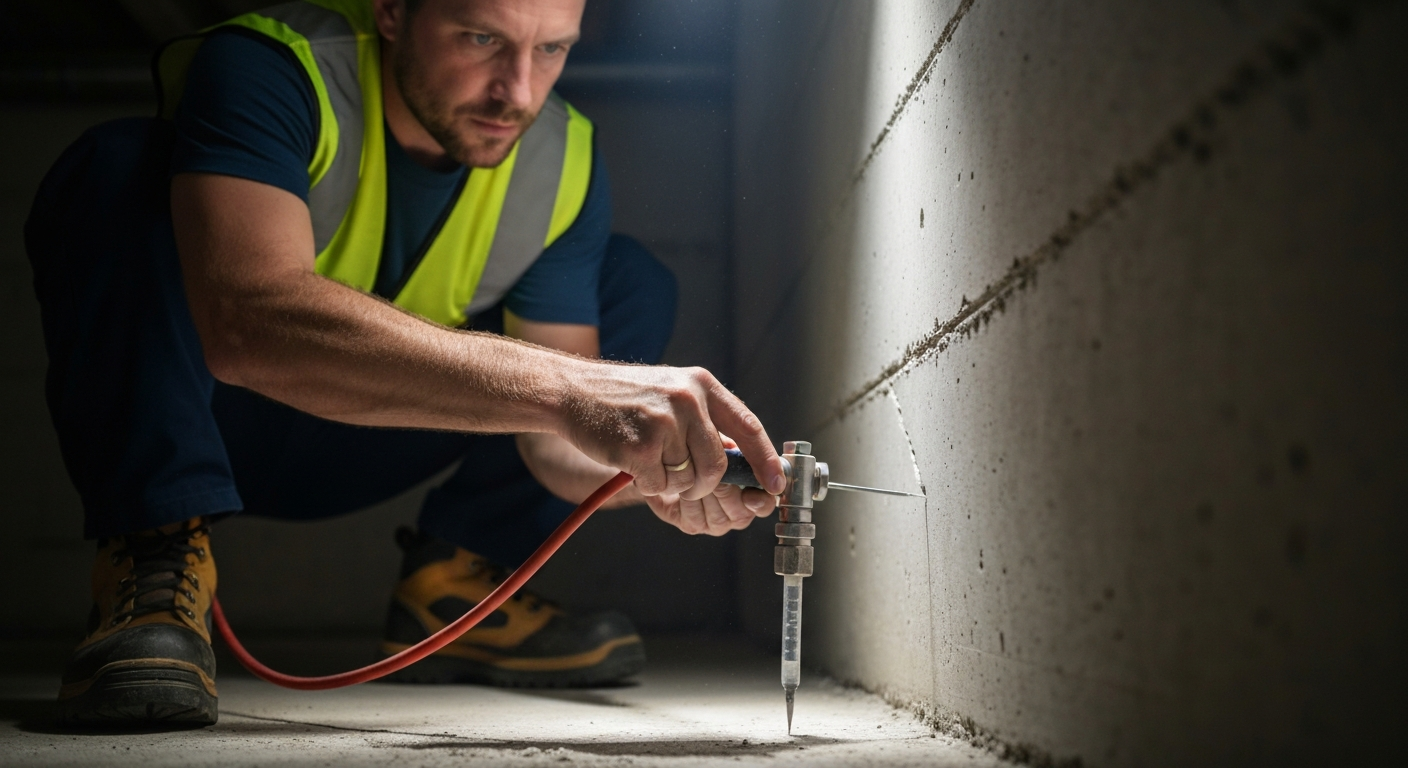
Below is a practical comparison of common approaches you’ll see in Calder quotes, along with typical price bands.
| Method |
What It Addresses |
Disruption Level |
Durability |
Price Range |
| Exterior excavation + new membrane + drainage tile |
Primary water entry by keeping the foundation exterior dry and restoring perimeter drainage |
High (excavation, landscaping/driveway impacts) |
Long-term (often the most complete source control) |
$12,000–$25,000 |
| Interior perimeter drain channel + sump pit |
Water that enters through cracks/slab edges by collecting and pumping it away |
Medium (interior floor/perimeter opening) |
High when paired with proper sealing and a dependable pump |
$7,500–$15,000 |
| Foundation crack injection (epoxy or polyurethane) |
Crack pathways that leak or allow seepage |
Low to Medium (small wall openings/drill ports) |
Medium to Long-term (depends on crack type and continuing movement) |
$500–$1,800 |
| Sump pump installation (primary + battery backup) |
Continuous removal of collected water during wet seasons and power interruptions |
Low to Medium (pit, discharge line, electrical/power tie-in) |
High when backup is included |
$1,400–$3,000 |
| Window well drain installation |
Water entering at below-grade window areas and pooling around openings |
Medium (window well access and minor regrading) |
Medium to High (if grading and weeping/drain paths are corrected) |
$1,000–$3,500 |
| Lot re-grading / downspout extension |
Reduced surface runoff and overflow risk near foundation |
Low (minor excavation/landscaping work) |
Variable (best as a complementary fix) |
$900–$2,500 |
Prices are estimates only and vary by project scope, site access and material selection.
What affects the price of waterproofing in Calder
In Calder, Alberta, you can see the same “type” of waterproofing job priced 30–50% differently from one contractor to another because quotes reflect how each team plans for water pathways, excavation constraints, and how much of the drainage system is actually being renewed. For example, two homes may both show basement seepage, but one may have clogged weeping tile and saturated clay backfill, while the other has a localized window well issue—those situations do not require the same level of work. Market availability also matters: when Calgary is seeing peak excavation season, labour and equipment scheduling can tighten, pushing day rates and mobilization fees up.
The three drivers that most separate Calgary-area costs from the national average are soil type, water table conditions, and freeze–thaw performance. Clay-heavy soils common in the Prairies hold water and expand during freeze–thaw, which increases lateral pressure on foundation walls and can worsen crack leakage over time. In Calgary-area pockets with higher seasonal groundwater—especially near river valleys and low areas—sumps often run longer, and you may need more reliable pumping and discharge routing. Freeze–thaw also widens existing joints, which increases the value of crack injection in the right locations, rather than treating the symptom only. By contrast, heavy coastal rainfall dynamics can saturate backfill quickly where original drainage fails, but in Calder the repeat freezing cycles are the persistent aggravator.
Concrete Calder examples: a poured concrete wall with hairline vertical cracking may be resolved with crack injection plus interior drains, while a block foundation with step cracks and failed tile often pushes the budget toward interior systems plus a sump, or an exterior membrane where excavation is feasible. If your scope trends toward interior drainage plus sump work, typical pricing can land around the $5,000–$15,000 band; if access allows full perimeter excavation and exterior membrane, you’re often closer to the $9,000–$25,000 exterior excavation range. Home age can be the tipping point too—older weeping tile (often 60+ years old) may be fully failed, requiring replacement rather than “cleaning,” which increases labour and disposal costs.
| Price Factor |
Why It Matters |
Cost Impact |
| Interior vs. exterior approach — interior is less disruptive but addresses symptoms |
Exterior restores the barrier and drainage path; interior manages water after it enters |
Exterior often adds excavation and membrane costs; interior can be 30–60% lower but may require ongoing pump reliance |
| Foundation type — poured concrete vs. block vs. stone vs. ICF |
Crack behaviour and seal compatibility differ by foundation material |
Poured concrete often accepts injection better; block foundations frequently need interior drainage to complement leakage paths |
| Soil type — clay expands more than sand, adding pressure |
Clay saturation increases hydrostatic/lateral pressure against foundations and backfill |
More excavation time and stronger drainage design may be needed; can increase exterior scope |
| Crack type and length — hairline vs. structural horizontal cracks |
Structural movement changes whether injection alone can hold |
Structural cracks can trigger engineering review and possible additional corrective work, raising costs substantially |
| Sump pump backup system — battery or water-powered backup needed |
Spring outages and long wet runs can overwhelm a single pump |
Adding backup can add roughly $500–$1,500 to typical sump installs, but reduces risk of basement flooding |
| Access — landscaping, decks, or driveways must be removed for exterior |
Staging and removal affect excavation hours and restoration costs |
Tight access can raise exterior pricing even when the membrane footprint is similar |
| Weeping tile age — original tile (60+ years) may be completely failed |
Old tile can be crushed, clogged, or disconnected |
Replacement rather than limited cleaning pushes interior/exterior drainage costs upward |
| Mould or efflorescence remediation required before sealing |
Sealers and membranes perform better on properly cleaned, dry surfaces |
Remediation adds labour and materials before sealing, increasing the total project |
Permits & regulations in Alberta
In Alberta, many basement waterproofing scopes fall under “regulated building work,” and the safe rule is to treat anything that changes structural integrity or lot drainage as permit-triggering unless your contractor confirms otherwise. Foundation excavation and most significant foundation crack repairs typically require a building permit. If the work includes structural crack repair—especially horizontal cracks in block walls or major cracking patterns that could indicate movement—an assessment by a structural engineer is often required to determine whether underpinning or additional structural remediation is needed. Also be aware that sump pump installations that connect into municipal storm or sanitary infrastructure generally need municipal approval before discharge is routed.
What typically does not require a permit in the average homeowner waterproofing job: minor cosmetic sealing of cracks after proper surface prep (when no structural repair is involved), interior dehumidification/air-quality actions, and basic re-grading/downspout extensions that don’t alter structural elements or engineered drainage. However, if your downspout extension changes discharge locations near property lines or affects drainage patterns tied to approved systems, a permit or at least a compliance check may be required.
For Calder homeowners verifying a contractor’s credentials in Alberta, start with three checks: (1) Alberta business/contractor licensing information where applicable (look for the contractor’s registration details on the applicable online registry), (2) request a current certificate of insurance (general liability, and confirm it covers waterproofing/excavation work), and (3) confirm WSIB/WCB coverage for the contractor and crews. For structural scopes, ask for proof they carry engineering support or have worked with an engineer—then keep copies of any clearance letters or project documentation provided with the quote and contract.
Interior vs exterior waterproofing — what does Calder need?
The core difference is source control versus water management. Exterior waterproofing—full excavation, new membrane, new drainage tile, and backfill—targets the water entry point by restoring a continuous barrier and a functional perimeter drainage system around your foundation. It’s the most complete approach in Calgary-area conditions where clay soils hold water and freeze–thaw widens cracks and joints, but it costs more and requires significant landscape disruption. Interior waterproofing—perimeter drain channel, sump pit, and sump pump—collects water once it enters and pumps it away. It’s less invasive and often the faster route when exterior access is limited, but it doesn’t stop hydrostatic pressure acting on the wall itself.
Calder’s common mix of clay-heavy ground and seasonal wet periods means many poured-concrete basements benefit from crack injection as a practical complement to either interior drainage or an exterior membrane. Poured concrete walls often seal better with proper injection where cracking is non-structural, while block foundations frequently need interior drainage as a practical partner because block mortar joints and void pathways can keep allowing seepage even after partial sealing. Given Alberta’s spring conditions, sump systems should be planned with backup. If a power interruption occurs during a wet spell, a primary pump alone can’t protect the basement.
Where the price difference is justified: if you have accessible exterior space and multiple leak points, moving from interior-only to exterior membrane can be the difference between a repeating “system patch” and a more permanent correction. For example, an interior perimeter drain plus sump system may price in the $7,500–$15,000 range, while a full exterior excavation with membrane and drainage tile often lands around the $12,000–$25,000 band. If your exterior is unobstructed and your weeping tile is failed, that additional exterior spend can be money well spent.
| Method |
Best For |
Addresses Source? |
Disruption |
Lifespan |
Price Band |
| Full exterior excavation + membrane |
Widespread seepage, failed weeping tile, and projects where exterior access is workable |
Yes (source control and drainage restoration) |
High |
Long (typically the most complete system) |
$12,000–$25,000 |
| Interior French drain + sump system |
Limited exterior access, older basements needing reliable water removal |
No (manages water after entry) |
Medium |
High (depends on sump reliability and discharge) |
$7,500–$15,000 |
| Crack injection — epoxy (structural) |
Non-moving cracks in poured concrete where water hasn’t caused extensive voiding |
Partial (stops a specific pathway) |
Low |
Medium to long |
$500–$1,800 |
| Crack injection — polyurethane (active leak) |
Cracks actively weeping where flexible sealant is needed |
Partial (targets active pathways) |
Low to Medium |
Medium (best with correct drainage and drying) |
$1,000–$2,200 |
| Interior drain channel only (no sump) |
Light seepage where gravity discharge and manageable drainage can work |
No |
Low to Medium |
Shorter to medium (risk increases during heavy spring events) |
$5,000–$10,000 |
| Re-grading + downspout extensions |
Surface water issues and minor dampness near the perimeter |
Partial (reduces runoff, doesn’t stop hydrostatic pressure) |
Low |
Variable |
$900–$2,500 |
How to choose a waterproofing contractor in Calder
Choosing the right contractor in Calder comes down to proof, process, and a scope that matches your water pathways. In Alberta, verify three things before signing: (1) licensing/registration where applicable for the work they’re doing, (2) liability insurance, and (3) WSIB/WCB coverage. Ask for a certificate of insurance showing coverage for the specific type of work (excavation, foundation repair, and waterproofing) and confirm the expiry date. For WSIB/WCB, request clearance/coverage confirmation for the employer that will run your jobsite crew. If they refuse or can’t provide documentation, treat that as a serious warning—waterproofing failures are often blamed on “weather,” but good contractors document conditions and install to a repeatable standard.
Next, request 2–3 written, itemised quotes—not lump sums. You want labour and materials broken out by line item, including membrane/product selections, drainage components, pipe sizes, sump/pit details, and crack treatment methods. Read exclusions carefully: disposal fees for heavy clay spoils, permit pull (if needed), engineering support for structural cases, and restoration (topsoil/landscaping) can change the true cost. Confirm warranties too: look for a workmanship warranty length, manufacturer warranty coverage, and whether warranties are transferable if you sell. Payment schedule matters—avoid paying more than 10–15% upfront. Hold back enough to cover complete-and-correct standards and insist on a finish date and timeline in writing.
- Ask for a site-specific drainage plan (where water goes after it leaves your foundation).
- Confirm whether your quotes include permit pulls or note clearly if permits are excluded.
- Require an itemised breakdown: excavation, disposal, membrane, drainage tile, geotextile, sump/pump, and backfill.
- Ask how they handle failed or disconnected weeping tile (cleanout vs replacement).
- Confirm sump pump discharge routing and backflow prevention where applicable.
- Request details on sump backup (battery or other approved backup) for spring wet cycles.
- Check product names and performance specs (membrane type, sealant/injection product, and pipe specs).
- Ensure they include a crack type review (hairline vs active leak vs structural cracks).
- Look for a moisture-drying plan before sealing (especially with efflorescence or mould).
- Verify disposal is included for heavy clay spoils if excavation is part of the scope.
- Confirm restoration scope: topsoil, sod replacement, or clear allowances for landscaping.
- Get warranty terms in writing, including workmanship duration and transferability.
Red flags to watch for: vague scopes that only say “waterproofing” without detailing drains and membrane continuity; contractors who dismiss crack types without inspecting for horizontal/structural indicators; quoting “interior only” without discussing why exterior isn’t needed (or why it’s impossible); refusing to provide proof of liability insurance and WSIB/WCB coverage; and offering only a short workmanship warranty while charging for premium materials.
Frequently asked questions — waterproofing in Calder
How long does basement waterproofing take in Calder?
In Calder, typical timelines depend on whether you’re doing interior drainage or full exterior excavation. Interior perimeter drain channel work often takes a few days to about a week, depending on how much slab and footing edge access is needed and whether there’s mould or heavy efflorescence remediation. Exterior projects can stretch longer because excavation, membrane detailing, backfill in lifts, and restoration steps must be coordinated with weather and material lead times. In southern Alberta spring conditions, drying and sequencing matter: freeze–thaw can also affect when excavation is practical. For many homeowners, planning around a full exterior scope that sits in the $12,000–$25,000 range will mean more site disruption and more scheduling coordination. A solid contractor will provide a start date and completion estimate in writing based on your access constraints and foundation layout.
What is a weeping tile and does my Calder home have one?
A weeping tile is the (once) common perimeter drainage system installed around a foundation, meant to collect groundwater and direct it to a sump or discharge point. In Calder and the wider Calgary region, many older homes have weeping tile, but it may be clogged, disconnected, crushed, or replaced over time with partial repairs. Homes built long enough ago that the system is 60+ years old can have completely failed tile, which is why a lot of “seepage” complaints come back after surface fixes only. If you don’t know, your contractor can often identify it by checking basement perimeter drain routes, existing cleanouts, and how water behaves during wet seasons. A professional assessment will still verify whether the drainage system is functional before relying solely on interior sealing or crack injection.
Can I waterproof my basement in winter in Calder?
You can sometimes do parts of waterproofing in winter in Alberta, but it depends on what’s being installed and whether excavation is required. Interior work such as crack injection and interior drain preparation can often proceed if surfaces can be kept workable and the basement isn’t too wet. However, exterior excavation with membrane installation is usually more challenging in deep cold or during freezing ground conditions—because excavation depth, backfill compaction, and membrane continuity details are temperature-sensitive. The Calgary area also sees freeze–thaw cycles that can complicate timing and drying. If your quote is aiming for a full exterior project (often in the $12,000–$25,000 band), many contractors schedule for thaw windows to ensure proper installation and backfill performance. If you need immediate risk reduction, interior perimeter drainage and sump setup may be the safer winter-first strategy.
What is the difference between waterproofing and damp-proofing?
Waterproofing is designed to prevent liquid water entry or to manage water pressure reliably—often using membranes, proper perimeter drainage, sealed crack pathways, and pump systems where required. Damp-proofing generally means slowing moisture movement or improving the appearance of moisture issues, but it may not be intended to handle hydrostatic pressure during spring runoff or high groundwater events. In Calder’s clay-heavy soils and freeze–thaw environment, dampness can quickly become active seepage when cracks widen or tile fails. That’s why “damp-proof only” approaches can leave homeowners with recurring efflorescence or wet corners. A true waterproofing plan will connect the cause (drainage and source pathways) to the solution (membrane/drainage and, where needed, sump pump performance). When quotes are itemised, look for membrane continuity and drainage components—not just coatings.
Will basement waterproofing affect my property value in Calder?
Typically, yes—when it’s done properly and documented, basement waterproofing can reduce the risk perception that buyers associate with recurring leaks and mould concerns. In practical terms, a dry, usable basement increases marketability, especially in older Calgary-area housing where buyers often look for signs of seepage, efflorescence, and prior water damage. In Calder’s small local context (population 3,995; Statistics Canada, 2021 Census), word-of-mouth and reputational credibility matter, so having a clear scope, workmanship warranty, and product information can help. That said, the value uplift depends on the cause and the method: full exterior source control is often the most reassuring for buyers, while interior-only solutions still add value when they’re paired with effective sump performance and crack/entry sealing. If your project is in a budget band like the $7,500–$15,000 range for interior drainage, buyers often still view it positively if documentation is complete and the work is transferable by warranty.
What drainage issues are most common in Calder homes?
In Calder and the Calgary area, the most common drainage issues tend to be failed or clogged weeping tile, inadequate perimeter drainage, and surface runoff flowing toward the foundation during spring melt. Freeze–thaw can also widen existing cracks and joints, letting meltwater and runoff penetrate more easily. Homeowners often notice recurring damp corners near basement walls, wet along slab edges, or pooling around below-grade windows. In older neighbourhoods around Calgary’s established residential areas and nearby communities, blocked weeping tile and undersized interior drainage are frequent failure points rather than a sudden catastrophic foundation failure. Clay and clay-till soils also contribute by holding water and expanding when saturated, increasing lateral pressure. If you’re budgeting, the “starter” fixes like downspout extension or re-grading can be a useful complementary step, but persistent seepage often requires something closer to an interior perimeter drain/sump system or, when feasible, an exterior membrane and drainage tile.