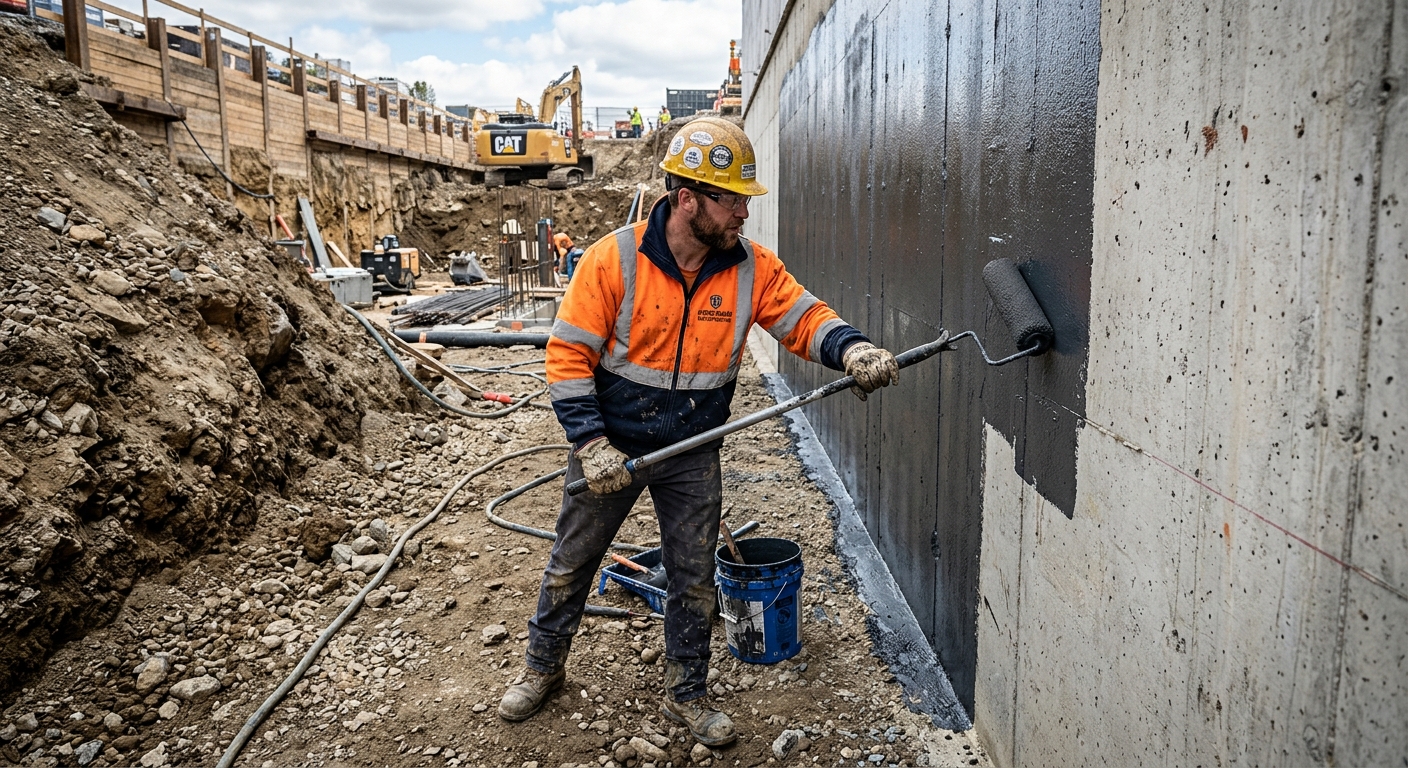
Basement waterproofing options and costs in Lethbridge
Lethbridge homeowners deal with basement dampness differently than many parts of Canada, but the underlying physics are the same: water finds weak points, and soils push back. With 98,406 people in the city (Statistics Canada, 2021 Census), a lot of basements were built long before modern membranes and drainage practices were standard—especially since 44.8% of homes were built before 1981 (Statistics Canada, 2021 Census). That older housing stock is more likely to have failing weeping tile, corroded or undersized sumps, and waterproofing systems that no longer handle today’s freeze-thaw cycling and intense rain pulses.
In the Lethbridge–Medicine Hat region, costs are strongly shaped by local soil conditions (often silt loam to clay loam) and how water behaves as seasons change. Clay-rich backfill can trap moisture against foundation walls, then expand and contract through wetting and drying. Even though the region is generally drier than coastal climates, short, heavy rain events and snowmelt can still overload drainage—particularly where downspouts discharge too close to the foundation or grading sends water toward the house. Freeze-thaw cycles also widen cracks and joints, so small defects can become active leak points over time.
Because of these factors, trades demand is steady in older neighbourhoods such as University Heights, where many homes date back to the mid-century period and exterior drainage and grading often need rework. If you’re comparing solutions for the same symptoms, the next table will help you align what you’re solving (source water vs. indoor seepage), how invasive each option is, and what budget bands usually look like in Lethbridge.
| Method |
What It Addresses |
Disruption Level |
Durability |
Price Range |
| Exterior excavation + new membrane + drainage tile |
Hydrostatic pressure control and water entry at the foundation exterior; replaces failing drainage |
High (excavation, landscaping disruption) |
Long-term (typically 25+ years with correct installation) |
$14,000–$28,000 |
| Interior perimeter drain channel + sump pit |
Collects and removes seepage after it enters; reduces hydrostatic effect indoors |
Medium (interior access to perimeter) |
Good (often 15–25 years; depends on pump and maintenance) |
$9,000–$18,000 |
| Foundation crack injection (epoxy or polyurethane) |
Seals cracks; epoxy is best for inactive/structural cracks, polyurethane for active leaks |
Low to medium (access to crack line) |
Variable (commonly 10–20 years; active leak injection may need repeat monitoring) |
$600–$2,500 |
| Sump pump installation (primary + battery backup) |
Prevents flood risk during high infiltration periods; improves resilience during outages |
Medium (pit installation and piping run) |
Good (pump life often 7–12 years; backup extends usefulness) |
$1,800–$3,500 |
| Window well drain installation |
Stops water pooling near basement windows; reduces seepage and staining |
Low (localized exterior/interior work) |
Good (often 10–20 years depending on drainage continuity) |
$900–$2,200 |
| Lot re-grading / downspout extension |
Directs runoff away from foundation; reduces how much water reaches the wall in rain/snowmelt |
Low to medium (site grading changes) |
Good (often 5–15 years until re-settling) |
$1,200–$3,800 |
Prices are estimates only and vary by project scope, site access and material selection.
What affects the price of waterproofing in Lethbridge
In Lethbridge and across the Lethbridge–Medicine Hat economic region, two homeowners can receive quotes for “the same” basement leak and still see a 30–50% difference once soil conditions, water management scope, and access realities are priced in. National benchmarks can look cheaper because they average out extremes; here, we’re typically dealing with clay-loam pockets that hold water, plus freeze-thaw that can re-open minor construction defects. In practical terms, the local quote premium often shows up when teams must excavate deeper, remove more finishes, replace failing drainage, or add interior drainage and sump capacity to match the actual infiltration pattern.
The three biggest drivers that separate regional costs from the national average are soil type, water table behavior, and freeze-thaw. Clay-heavy soils can swell when wet and shrink when dry, stressing foundations and widening cracks over time. When saturated conditions happen, hydrostatic pressure increases and interior systems run longer—meaning more piping, larger pump capacity, and sometimes a backup system. In older Lethbridge homes (especially those built before 1981), failing original weeping tile and limited exterior waterproofing create a higher frequency of service calls, which raises labour intensity during diagnosis and remediation.
Concrete examples: an exterior-only solution can sit near the lower end (around $14,000–$28,000) when footing depth is accessible and drainage ties cleanly to a functional discharge point. The same exterior scope rises quickly when decks, fencing, or driveways must be removed for excavation, or when backfill must be staged and compacted properly due to clay content. Conversely, interior perimeter drainage often lands around $9,000–$18,000 when we can keep disruption contained, but it increases if we discover multiple leak planes or a sump upgrade is required to control high infiltration during spring thaw.
| Price Factor |
Why It Matters |
Cost Impact |
| Interior vs. exterior approach |
Interior systems manage water after entry; exterior addresses water entry and pressure at the source |
Interior often 20–50% less disruptive; exterior typically costs more but is more direct |
| Foundation type |
Poured concrete, block, stone and ICF behave differently and require different sealing strategies |
Block and stone often need more interior drainage work to manage seepage patterns |
| Soil type |
Clay expands more than sand, increasing lateral stress and crack development |
Clay loam can increase excavation depth and sealant/repairs needed by 10–25% |
| Crack type and length |
Hairline/non-structural cracks are simpler; horizontal/structural cracks may require engineering direction |
Structural cracks can add assessment and labour, raising total costs substantially |
| Sump pump backup system |
Battery or water-powered backup reduces flood risk during spring storms/outages |
Adds cost and parts; typically shifts interior solutions toward the upper end |
| Access |
Landscaping, decks, steps, and driveways affect excavation hours and disposal |
Poor access can raise excavation labour and disposal by 15–35% |
| Weeping tile age |
Original tile (often 60+ years in older homes) may be completely failed or disconnected |
When it’s dead, replacement becomes necessary, increasing exterior scope |
| Mould or efflorescence remediation required before sealing |
Active contamination must be treated so sealers bond and remain durable |
Can add remediation steps and drying time, increasing the project duration and cost |
Permits & regulations in Alberta
In Alberta, certain types of foundation and drainage-related work commonly require permits, while other tasks usually do not. Foundation excavation and changes to below-grade drainage are often permit-triggering because they can affect load paths, drainage routing, and grading near the structure. Structural crack repair—especially for major horizontal cracks in block walls or evidence of movement—may require a structural assessment before repairs are planned, and that kind of work frequently involves the permit process. Also, sump pump installations that connect to municipal sewer systems typically need municipal approval, since they change how water is discharged.
Work that typically does not require a permit in many cases includes cosmetic or surface-level patching, localized window well drainage when it doesn’t alter foundation drainage routing broadly, and straightforward downspout extensions or re-grading that doesn’t change foundation drainage design. That said, the exact requirement depends on scope and how the discharge is handled, so confirm with your contractor and the City of Lethbridge before work starts.
To verify a contractor for Lethbridge homeowners, do it in writing and in this order: (1) Licensing—check the Alberta registry for their applicable business/credentials using the contractor’s legal business name. (2) Liability insurance—request a Certificate of Insurance showing general liability limits that match your project size. (3) WSIB/WCB—ask for proof of coverage or clearance; then confirm the coverage status is current. For structural repairs, confirm they have documented engineering support (assessment reports and signed repair recommendations where required) and that their crew works to the engineered plan.
Interior vs exterior waterproofing — what does Lethbridge need?
The fundamental difference is source control versus water management. Exterior waterproofing—full excavation, membrane installation, and new drainage tile—addresses the source by reducing water entry and relieving hydrostatic pressure against the foundation wall. It costs more and requires more disruption, but it usually offers the most complete long-term protection when exterior systems are truly failing. Interior waterproofing—perimeter drain channel, sump pit, and sump pump—collects seepage after it enters and keeps the basement drier. It’s typically less invasive, but it does not stop hydrostatic pressure acting on the wall, so the goal is control of indoor water and faster drying.
In Lethbridge’s market, approach selection is usually driven by soil and foundation type. With silt loam to clay loam backfills, clay-rich pockets can keep moisture against the wall longer, making exterior drainage continuity critical. Poured concrete walls often respond well to crack injection when cracks are limited and non-moving; in those cases, interior solutions can be enough if the leak planes are controlled. Block foundations, however, commonly need interior drainage as a practical complement because seepage may track through mortar joints and voids even when surface crack repairs look tidy.
Sump backup matters here because spring infiltration can spike quickly and basement flooding risk rises during power disruptions. A primary sump with battery backup (or an approved secondary backup system) is a sensible add when your basement has a history of rapid water rise after storms or snowmelt.
For a specific justification: if one quote proposes interior drainage and a sump upgrade at about $9,000–$18,000, but the other recommends full exterior excavation in the range of $14,000–$28,000, the higher cost can be justified when exterior drainage tile is absent or failing and downspouts/grade repeatedly funnel water toward the foundation. If there’s only minor dampness from one crack line, paying for excavation rarely makes sense.
| Method |
Best For |
Addresses Source? |
Disruption |
Lifespan |
Price Band |
| Full exterior excavation + membrane |
Chronic seepage, failed weeping tile, or clay-loam sites with poor runoff control |
Yes (source control) |
High |
25+ years (typical) |
$14,000–$28,000 |
| Interior French drain + sump system |
When excavation access is limited or you need faster, less invasive control |
No (management after entry) |
Medium |
15–25 years (depends on pump and maintenance) |
$9,000–$18,000 |
| Crack injection — epoxy (structural) |
Inactive/in-place structural cracks in poured concrete where water entry is limited |
Partially (seals the crack pathway) |
Low to medium |
10–20 years (typical) |
$600–$2,500 |
| Crack injection — polyurethane (active leak) |
Cracks actively weeping or leaking where movement/pressure is present |
Partially (seals active pathways) |
Low to medium |
8–15 years (monitoring recommended for recurring activity) |
$700–$3,000 |
| Interior drain channel only (no sump) |
Light seepage where a sump isn’t necessary, or when gravity discharge is feasible |
No (management after entry) |
Medium to low |
10–20 years (depends on discharge reliability) |
$6,000–$12,000 |
| Re-grading + downspout extensions |
Surface water issues: roof runoff near foundation, poor grade, and minor dampness |
No (reduces water load) |
Low to medium |
5–15 years (until re-settling) |
$1,200–$3,800 |
How to choose a waterproofing contractor in Lethbridge
Start by confirming Alberta compliance and coverage, then move to written scope and pricing clarity. For licensing, use the Alberta registry to verify the business name and the credentials that apply to the work they’re advertising. Next, ask for a Certificate of Insurance showing current general liability; your goal is to ensure you’re protected if the contractor damages landscaping, concrete, or during excavation. For WSIB/WCB, request proof of coverage or a clearance letter, then confirm the status is active for the relevant period of your project.
Get 2–3 itemised written quotes—not just a lump sum. You want a breakdown of labour versus materials, and line items for excavation (if exterior), drainage tile and membrane components, disposal of excavated soil, and interior work such as drain channels and sump components. Confirm whether permits are included, who pulls them, and what’s excluded (for example: replacing interior flooring, structural engineering costs, or bringing electrical work up to code). Disposal and backfill compaction are common hidden cost points, especially where clay loam requires more careful staging.
Warranty matters too: ask for the workmanship warranty length (often the most important), the product/manufacturer warranty, and whether the warranty transfers if you sell the home. Payment schedules should be conservative—generally no more than 10–15% upfront, with a holdback until key milestones are complete. Finally, insist on a start date and completion estimate in writing, plus how weather delays are handled in Lethbridge’s freeze-thaw season.
- Verify Alberta licensing/credentials for the contractor’s legal business name
- Request a current Certificate of Insurance (general liability) before signing
- Provide WSIB/WCB proof or a current clearance letter
- Get 2–3 itemised quotes with separate labour/material line items
- Ask whether permit pulling is included and who is responsible for approvals
- Confirm whether excavation/disposal/backfill compaction are included (exterior work)
- Clarify discharge routing for drainage/sump lines (and whether approvals apply)
- Request written scope exclusions (flooring replacement, sump backup additions, engineering)
- Check warranty details: workmanship length, manufacturer coverage, transferability
- Confirm the sump plan (primary + backup) if your basement history shows rapid inflow
- Use a payment schedule with a holdback until punch list is complete
- Schedule a site walk to verify crack locations, footing depth concerns, and discharge points
Red flags to watch in Lethbridge: (1) quoting only “epoxy injection” without checking whether the crack is actively weeping, (2) promising “no disruption” while proposing exterior excavation, (3) avoiding insurance/WSIB/WCB documentation, (4) giving a vague warranty or refusing to put it in writing, and (5) not explaining how drainage tile discharge is handled or whether backups are included.
Frequently asked questions — waterproofing in Lethbridge
Interior vs exterior waterproofing — which is better?
In Lethbridge, “better” depends on whether you need source control or moisture management. Exterior waterproofing (membrane + new drainage tile) is best when the original weeping tile has failed, when clay-loam soils keep water against the wall, or when grading/downspouts repeatedly send runoff toward the foundation. Interior waterproofing (perimeter drain channel, sump pit, and pump) is often a strong choice when access limits excavation or when you need a quicker, less disruptive fix. If your contractor is aiming for long-term source control, you’ll often see budgets align with exterior ranges such as $14,000–$28,000. If the plan is primarily to collect seepage after entry, interior scopes commonly fall around $9,000–$18,000. A good contractor will explain your foundation type, crack activity, and water entry pattern before recommending the approach.
Why is my basement leaking in Lethbridge?
Basement leaks in Lethbridge usually come from a combination of water reaching the foundation and a pathway into the basement. Common causes include failed or disconnected weeping tile, downspouts dumping too close to the house, poor lot grading, or cracks/joints that widened during freeze-thaw cycles. In clay-loam backfills, water can linger against foundation walls, increasing hydrostatic pressure and making even small defects seep. Older homes (including a large share built before 1981) often have aging drainage systems and limited exterior waterproofing, which increases the frequency of seepage through mortar joints, poured-concrete cracks, and at penetrations. If you’re seeing wetness near a window well, that’s often a localized drainage failure. A proper inspection should map where water appears (during storms vs. spring thaw), then connect that to drainage and foundation crack conditions.
How do I know if a foundation crack is serious?
Not every crack means structural failure, but in Alberta it’s the crack behaviour that matters. Hairline vertical cracks can be less concerning than horizontal cracks, step cracking in block walls, or cracks that show signs of active movement (worsening over time, bowing, or clear seepage). In Lethbridge, freeze-thaw can widen existing joints, so a crack that weeps after heavy rain or snowmelt may be active and needs the right sealing system. You can also look for accompanying signs such as recurring efflorescence, damp drywall seams, musty odours, or water trails. If there’s evidence of movement, ask for a structural assessment before repairs are specified. Injection can be appropriate, but only when the crack type and activity level are properly identified—otherwise the repair may not last.
How much does foundation crack repair cost in Lethbridge?
Foundation crack repair pricing in Lethbridge depends on how many crack lines are involved, whether the crack is active or structural, and how much surface preparation/access is needed. For many homeowners, crack injection budgets fall within $600–$2,500 as a typical band for straightforward repairs (for example, a limited run of crack that can be injected from accessible points). Costs rise when repairs are more extensive, when injection requires more labour to reach concealed areas, or when there are multiple leak pathways that need separate sealing. If the crack is horizontal/structural or indicates movement, an engineered assessment and additional structural scope can increase overall cost beyond the simple injection band. A clear quote should identify which product type is being used (epoxy vs. polyurethane) and why it matches your crack activity.
Do I need a sump pump in Lethbridge?
You may need a sump pump if seepage becomes significant, if you’re already seeing water accumulation in the basement, or if your interior drainage design calls for active pumping. In Lethbridge, even with generally drier conditions, spring snowmelt and intense rain events can overload drainage systems, especially where older weeping tile has failed or where backfill holds moisture. A sump pump also helps prevent freeze-related damage from water pooling near walls and floors. Many homeowners choose a primary pump with backup to reduce flood risk during outages—especially because power interruptions can happen during storms. Typical sump pump installation budgets are often around $1,800–$3,500, with backup options affecting where you land within that band. The right answer comes from observation: how fast water appears, where it collects, and whether a gravity-only drainage approach is feasible.
How does Lethbridge's soil affect my foundation?
Lethbridge soils in the region commonly range from silt loam to clay loam, and that mix can stress foundations in cycles. Clay-rich backfill tends to hold water longer; when it gets wet, it can swell, increasing lateral pressure against foundation walls and footings. Then as soils dry, shrinkage can contribute to cracking and joint separation. Combine that with repeated freeze-thaw cycles—winter freezing expands and contracts moisture in small pores and cracks—and you have a recipe for leaks to reappear over time, even if they looked “fixed” once. Clay trapping also makes exterior drainage continuity more important because trapped water near the wall can keep hydrostatic pressure active. If your home is older (a substantial portion built before 1981), those issues often interact with aging drainage systems, so interior dampness becomes more common.