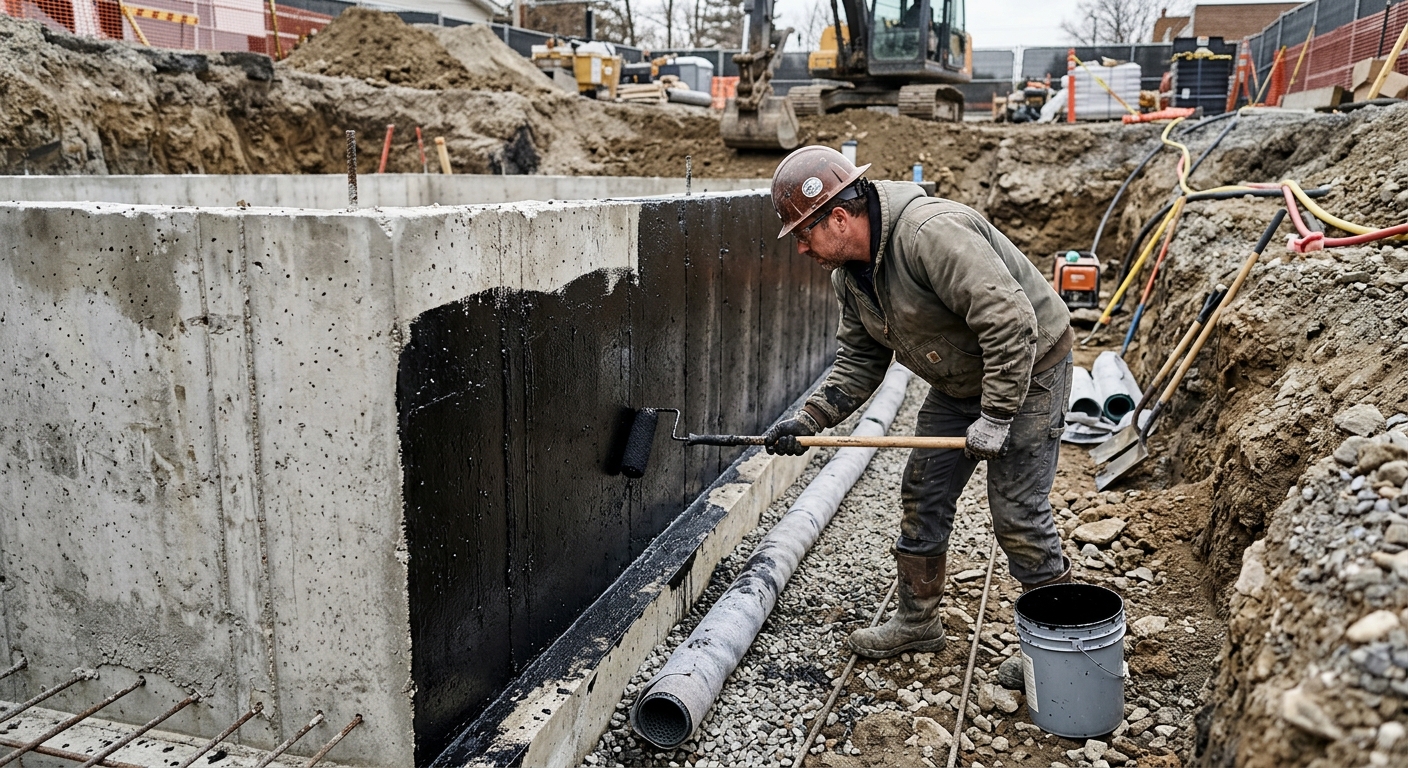
Basement waterproofing options and costs in Queen Mary Park
Queen Mary Park, Alberta is a tight, established community, and waterproofing decisions here usually start with one reality: many basements were built decades ago, when tar-and-paper or early membrane details were less durable. With a population of 7,365 (Statistics Canada, 2021 Census), the local market is steady—so reputable crews can be booked, but availability still depends on excavation access and material lead times. In practice, homes in this area are often in the “problem zone” for water entry: clay-heavy soils hold water, and southern Alberta freeze–thaw cycles can widen existing cracks and joints, letting meltwater and spring runoff work into foundations.
Pricing is also shaped by Calgary-area labour economics and job complexity. Excavation on older lots near Southland Drive and the Queen Mary Park/Calgary edge often means removing landscaping, dealing with patios, and managing heavy clay spoil disposal. Where neighbourhood drainage has been altered over time—undersized downspouts, older weeping tile, or clogged perimeter drains—contractors typically need more than a simple seal, which pushes scopes higher in the $9,000–$25,000 exterior range.
The table below compares the main waterproofing approaches homeowners choose in Queen Mary Park, including where water goes, how much disruption to expect, and realistic durability. Use it as a baseline before you request your itemised quotes, then we’ll narrow the option to your foundation type and water source.
| Method |
What It Addresses |
Disruption Level |
Durability |
Price Range |
| Exterior excavation + new membrane + drainage tile |
Primary water entry at the foundation; redirects groundwater to functioning perimeter drain |
High (excavation, regrading, landscaping restoration) |
Long-term (often the most complete “source” solution) |
$9,000 – $25,000 |
| Interior perimeter drain channel + sump pit |
Water that enters through cracks/joints by capturing it and lowering hydrostatic pressure inside |
Medium (floor protection, cutting at perimeter) |
High with proper pump + discharge/backup |
$5,000 – $15,000 |
| Foundation crack injection (epoxy or polyurethane) |
Sealing cracks to stop seepage; can also stabilise certain crack patterns |
Low to Medium (drilling ports, surface patching) |
Moderate to High depending on crack type and prep |
$500 – $1,800 |
| Sump pump installation (primary + battery backup) |
Managing collected seepage; backup for outages during spring wet cycles |
Medium (pit + discharge line) |
High when paired with correct discharge and backup |
$900 – $3,000 |
| Window well drain installation |
Bulk water entry near egress areas; reduces pooling and wall wetting |
Low to Medium |
Moderate to High (good grading and weeping gravel are key) |
$1,000 – $4,500 |
| Lot re-grading / downspout extension |
Moves roof and surface water away from foundation to reduce load on drains |
Low to Medium |
Moderate (best as a complement) |
$750 – $3,000 |
Prices are estimates only and vary by project scope, site access and material selection.
What affects the price of waterproofing in Queen Mary Park
In Queen Mary Park, you’ll often see waterproofing quotes for the “same” basement range that can land 30–50% apart across Calgary and wider Alberta. The spread usually isn’t because one contractor is trying to be expensive—it’s because each scope is solving a slightly different water pathway and dealing with different site constraints.
The three biggest cost drivers that separate local scopes from a national average are soil type, water table conditions, and freeze–thaw. Clay-heavy ground (common in Alberta and also in parts of Ontario) expands when saturated, increasing lateral pressure that can worsen cracks and lift or shift seals over time. Freeze–thaw then widens joints during thaw events, so water finds new routes. Where seasonal groundwater and spring storm runoff stack up—particularly in low-lying pockets along Bow/Elbow valley influences—teams expect longer sump run times, more robust drainage, and more protected discharge detailing.
Two practical examples from Queen Mary Park: first, a house with a buried downspout that drains near the foundation often needs more than membrane work; the contractor may have to include re-grading and extended downspout routing before any interior sealing holds. Second, if your weeping tile is original and has been failing for years, an interior perimeter drain and sump system (frequently within the $5,000–$15,000 band) becomes a “must,” even if crack injection is also planned. On the flip side, a straightforward leak with short, accessible crack lines may stay closer to the $500–$1,800 crack-repair band because preparation and injection are the only major tasks.
| Price Factor |
Why It Matters |
Cost Impact |
| Interior vs. exterior approach — interior is less disruptive but addresses symptoms |
Exterior targets the source; interior manages water after it enters |
Exterior typically adds major excavation and restoration costs; can shift you into the $9,000–$25,000 range |
| Foundation type — poured concrete vs. block vs. stone vs. ICF |
Different wall materials respond differently to crack sealing and drainage planning |
Block and older stone often need complementary interior drainage; poured concrete may respond better to injection when crack patterns are stable |
| Soil type — clay expands more than sand, adding pressure |
More saturated clay increases hydrostatic and lateral pressure at freeze–thaw |
Higher likelihood of ongoing seepage management, increasing scope and sometimes sump requirements |
| Crack type and length — hairline vs. structural horizontal cracks |
Horizontal or step cracking can indicate more severe movement and may require engineering input |
Structural-pattern cracks can increase labour, prep, and possibly change the repair system |
| Sump pump backup system — battery or water-powered backup needed |
Outages during spring wet periods can turn “managed seepage” into an active flood event |
Backup adds cost; typically pushes sump projects toward the upper part of the $900–$3,000 band |
| Access — landscaping, decks, or driveways must be removed for exterior |
Exterior work can require removal of finishes, patios, and sometimes portions of hardscape |
Directly increases labour and disposal; may add re-landscaping restoration |
| Weeping tile age — original tile (60+ years) may be completely failed |
Old tile may be clogged, collapsed, or disconnected, letting water build pressure |
Often increases drainage scope; may force a full perimeter system upgrade |
| Mould or efflorescence remediation required before sealing |
Sealers won’t perform properly if active contamination or salts remain |
Prep work increases time and materials; sometimes additional controlled drying is needed |
Permits & regulations in Alberta
In Alberta, many basement waterproofing projects trigger at least some permitting or regulatory steps, especially when you’re changing drainage routes or performing structural repairs. Foundation excavation and work that impacts the foundation system often requires a building permit, particularly where contractors are modifying drainage systems around the foundation. Structural crack repair—especially horizontal cracks in block walls or signs consistent with more than routine settling—commonly needs an engineer’s assessment to determine whether underpinning or other structural work is required.
Sump pump installations can also require municipal approval if the discharge connects into a storm or sanitary sewer. When the scope includes modifications to lot drainage patterns (re-grading, changing downspout discharge points, or tying into external drainage infrastructure), it’s prudent to confirm permit requirements with your municipality before work begins.
For Queen Mary Park homeowners, verify the contractor’s Alberta compliance step-by-step:
- Confirm the contractor’s licence/registration status using the Government of Alberta contractor lookup tools (as applicable to the work category).
- Ask for a certificate of liability insurance and ensure it lists the correct legal entity, correct address/project location, and active coverage.
- Ask for WSIB/WCB clearance (coverage verification) and obtain it in writing before the first day onsite.
- If structural repair is mentioned, request evidence they have access to engineering support or a demonstrated engineering partner for required reports.
- Keep all documentation as part of your bid package so you can compare quotes fairly.
What DOES typically require a permit: foundation excavation affecting the foundation perimeter, structural crack repairs beyond routine sealing, and drainage tie-ins that alter how water is handled off-site. What typically does NOT: interior cleaning and non-structural crack sealing when no structural movement is addressed and no drainage tie-ins are changed—still, confirm with your contractor and municipality.
Interior vs exterior waterproofing — what does Queen Mary Park need?
The fundamental difference is simple: exterior waterproofing—full excavation, new exterior membrane, perimeter drainage tile, and backfill—addresses the source of water entry by stopping it at the foundation face and collecting it outside. Interior waterproofing—perimeter drain channel, sump pit, and sump pump—manages water after it enters the basement, lowering hydrostatic pressure from within. In Queen Mary Park’s climate and soil conditions, exterior is the most complete solution where access allows, but it’s not always the first choice because excavation can be intrusive and expensive on established lots.
Because Calgary-area soils are often clay and clay-till, poured concrete walls can respond well to properly prepared crack injection (particularly when cracks are not actively shifting). However, block foundations more often benefit from interior drainage as a practical complement; block can develop moisture paths through joints, pores, and mortar lines. With freeze–thaw, joints can open slightly during spring thaws, so interior systems with a correctly sized sump pump are often more reliable during peak seasons.
Spring wet cycles also matter for Alberta homeowners. If you install a sump pump without a backup system, a power interruption can temporarily turn seepage into standing water. That’s why many Queen Mary Park basements that show active seepage are scoped toward a sump installation plus backup in the $900–$3,000 band, paired with the broader interior drainage plan.
Dollar example: if your main issue is a few short, accessible seepage cracks and the weeping tile is still functioning, crack injection alone may stay near the $500–$1,800 band and avoid full exterior excavation. But if you’re seeing recurring wall wetting and efflorescence along multiple sides after spring melt, that’s when the interior perimeter drain + sump system (commonly $5,000–$15,000) is justified—and when exterior excavation (often $9,000–$25,000) is the better long-term play if access and budget allow.
| Method |
Best For |
Addresses Source? |
Disruption |
Lifespan |
Price Band |
| Full exterior excavation + membrane |
Basements with recurring leaks, failed perimeter drainage, or signs of significant groundwater pressure |
Yes |
High |
Longest |
$9,000 – $25,000 |
| Interior French drain + sump system |
Clay soil basements where exterior access is limited, or when managing hydrostatic pressure after entry |
No (captures after entry) |
Medium |
Long if pump, discharge, and backup are correct |
$5,000 – $15,000 |
| Crack injection — epoxy (structural) |
Non-active or stable cracks where water is not actively flowing through under pressure |
Partially (seals entry at crack) |
Low to Medium |
Moderate to High with correct prep |
$500 – $1,800 |
| Crack injection — polyurethane (active leak) |
Active seepage where flexible injection material can expand and seal moving paths |
Partially (seals entry at crack) |
Low to Medium |
Moderate to High when the leak pattern is understood |
$600 – $2,200 |
| Interior drain channel only (no sump) |
Light seepage where discharge gravity route is feasible and water levels are low |
No |
Medium (still invasive around perimeter) |
Moderate (depends on discharge reliability) |
$3,500 – $9,000 |
| Re-grading + downspout extensions |
Surface water and roof runoff issues, often as a complement to other waterproofing |
No (reduces load, not wall entry) |
Low to Medium |
Moderate (works best when drainage failures are the cause) |
$750 – $3,000 |
How to choose a waterproofing contractor in Queen Mary Park
When you hire a waterproofing contractor in Queen Mary Park, start with compliance and verification—don’t assume. In Alberta, the contractor should be able to provide proof of their applicable licensing/registration for the type of work they’ll perform, plus current liability insurance and WSIB/WCB coverage. How to check: look up their business and registration information using the Government of Alberta contractor lookup tools (for the relevant trade category), then request a current certificate of insurance listing the exact legal name. For WSIB/WCB, ask for clearance documentation and keep it dated; if it expires mid-project, that’s a problem. For structural crack repair scopes, confirm they have engineering support available when needed.
Next, request 2–3 itemised written quotes. The best bids break labour and materials into line items (excavation, disposal, membrane, drainage tile, sump pit and pump, discharge piping, crack injection materials, prep and patching). Make sure the scope includes what you expect: permit pull (if required), disposal fees for clay spoil, and what restoration is included versus excluded. Pay attention to warranty terms: you want a workmanship warranty length in writing, plus the product/manufacturer warranty details. Ask whether warranties are transferable if you sell your home.
Payment schedule matters. A strong rule: never pay more than 10–15% upfront. Use a holdback until the job is complete and the site is inspected. Finally, ask for the start date and completion estimate in writing; waterproofing schedules can slip when excavation access is constrained or when weather disrupts backfill timing.
- Ask what diagnostic steps they take (surface inspection, crack mapping, drainage review) before quoting.
- Confirm whether they include excavation and disposal, or if you’re expected to move spoiled clay yourself.
- Ensure their quote lists exact drainage components (pipe diameter, filter fabric, stone specification).
- Verify sump discharge plan (where it discharges, freeze protection, and backup approach).
- Look for written scope exclusions (e.g., “landscaping restoration not included” or “engineer fees extra”).
- Require the product names and system approach (membrane type, injection material type, channel materials).
- Confirm warranty: workmanship length, what it covers (materials vs labour), and transferability.
- Check for permit responsibility clarity—who pulls permits and who pays permit fees.
- Confirm licence/compliance documents before signing: liability insurance and WSIB/WCB clearance.
- Ask about pump backup specifics (battery type or water-powered backup) if seepage is active.
- Insist on a payment schedule aligned to milestones, with a holdback until final inspection.
- Request a realistic schedule and weather contingency plan for freeze–thaw periods.
Red flags I see with waterproofing contractors in Queen Mary Park include: quoting without a site visit, refusing to provide itemised line items, vague warranty language (“we guarantee it”), offering interior sealing alone when there are signs of multi-side wall wetting and likely hydrostatic pressure, and missing proof of liability insurance or WSIB/WCB coverage. If the discharge plan is unclear—or they dismiss backup power needs during spring—treat that as a major concern.
Frequently asked questions — waterproofing in Queen Mary Park
How do I compare waterproofing quotes?
Start by comparing apples-to-apples: ask each contractor to identify the water source pathway (cracks, joints, bulk water, surface runoff) and then match that to the proposed method. In Queen Mary Park and the Calgary region, quotes can vary by 30–50% because one bid may be only an interior “management” plan while another includes exterior excavation and perimeter drainage. Demand itemised line items for labour and materials (membrane, drainage tile, sump pit, discharge line, crack injection, and prep). Make sure each quote states whether permits are included, and whether clay spoil disposal is in the price. If one bid is much lower—such as staying near the $500–$1,800 crack injection band while the others include a sump plan—ask what they’re excluding.
How long does basement waterproofing take in Queen Mary Park?
Timing depends on how invasive the work is and whether excavation or interior cutting is required. For interior perimeter drains and sump systems, many projects are completed in about 3–7 days onsite, with additional time for curing of sealants and finishing repairs. Crack injection can be quicker—often within 1–3 days onsite—because it’s largely surface prep, drilling, injection, and patching. Exterior excavation typically takes longer because contractors must coordinate excavation, membrane installation, drainage tile, backfill, and landscape restoration; it can run roughly 1–2 weeks onsite, plus restoration time. In Calgary-area conditions, freeze–thaw and short cold snaps can interrupt backfill sequencing, so expect the plan to include weather buffers.
What is a weeping tile and does my Queen Mary Park home have one?
Weeping tile is the perimeter drainage system installed around many foundations to collect groundwater and seepage and route it away from the basement—usually to a sump or a discharge point. In Queen Mary Park and similar Calgary-area neighbourhoods, many homes either have an older weeping tile system that’s partially clogged or disconnected, or they have no functioning system at all due to past failures and regrading over time. Even if you “have weeping tile,” it may not be performing: clay soils and freeze–thaw can crush or collapse older components, and debris can block flow. The fastest way to know is to inspect your basement history, look for access points in the mechanical area, and have the contractor review exterior grading, downspout routing, and any prior drainage records—then confirm by inspection and, when appropriate, camera/flow checks.
Can I waterproof my basement in winter in Queen Mary Park?
Yes, but the approach changes. In Alberta winter conditions, excavation is limited and backfill/membrane installation can be restricted because subgrade and foundation faces may freeze. Interior work is often more feasible: crack injection, interior sealing and preparation, and installing an interior drain channel or sump pit may be scheduled depending on how cold the basement is and whether floors/walls can be safely accessed. However, success still depends on prep—removing efflorescence or managing moisture so products bond correctly. For exterior projects, contractors typically prefer warmer window periods to ensure membrane continuity and proper backfill compaction. If you’re facing active seepage in winter, a practical first step is usually sump management (for example, sump pump installation can fall in the $900–$3,000 band depending on backup), followed by exterior corrections when conditions allow.
What is the difference between waterproofing and damp-proofing?
Damp-proofing generally focuses on reducing moisture penetration and is often applied as a barrier to manage minor dampness—not necessarily hydrostatic pressure. Waterproofing is a broader, performance-oriented system: it accounts for water entry pathways and often includes drainage (perimeter drains), sealing, and in many cases sump pump management to control pressure during spring melt and storms. In Queen Mary Park’s clay-heavy soils and freeze–thaw cycles, damp-proofing alone can fail when cracks widen or when exterior drainage clogs and groundwater builds pressure. That’s why we typically discuss whether water is entering through crack/joint lines versus being driven by hydrostatic load. If your basement shows efflorescence, recurring wetting after storms, or water along multiple wall sections, you’re usually looking for true waterproofing scope, not just a damp-proof coating.
Will basement waterproofing affect my property value in Queen Mary Park?
Often, yes—because waterproofing reduces risk and can improve livability and resale confidence. In a market like Queen Mary Park, buyers look for basement condition: odours, visible mould, efflorescence, chronic seepage, and evidence of a functioning drainage/pump plan. A well-documented waterproofing project with a written warranty, clear scope, and photos typically helps demonstrate you’ve addressed the root cause. The size of the value impact varies by how severe the moisture problem was and whether the work includes a full source-control component. For example, exterior waterproofing (frequently estimated in the $9,000–$25,000 band) can be persuasive when it corrects failed perimeter drainage and water pressure. Interior systems can also add value, particularly when they include a sump plan with backup and a clear discharge strategy.