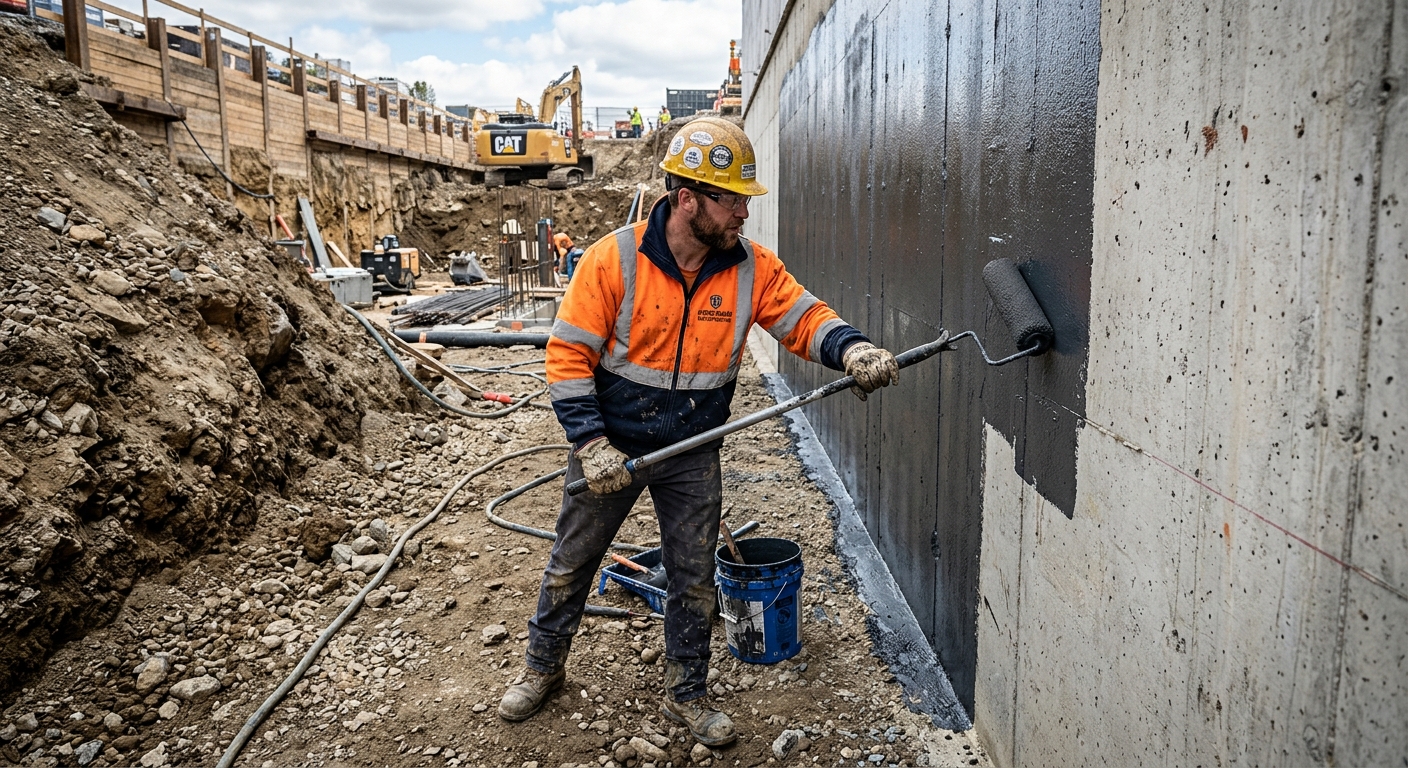
Basement waterproofing options and costs in Prince Charles
In Prince Charles, Alberta, basement waterproofing usually starts with a simple reality: most problems are driven by water moving through clay soils and aging drainage systems, not by “mystery leaks.” With a population of 1,276 (Statistics Canada, 2021 Census), you’ll notice fewer large waterproofing crews in town, so scheduling and site access can influence timelines and labour availability. Also, many homes in small communities are older than the modern standard—original tar-and-paper systems and early weeping-tile layouts tend to fail gradually, especially as freeze–thaw cycles widen joints and cracks.
Calgary-area pricing is shaped by excavation conditions (clay-heavy backfill and tight access) and by the freeze–thaw pattern in southern Alberta. Excavation and disposal often cost more here than in drier regions because contractors have to manage heavy spoils and protect landscaping, patios, and foundation walkways. At the same time, Calgary’s market is competitive enough that you can usually get meaningful apples-to-apples comparisons when quotes are properly itemised (membrane type, drainage tile depth/slope, sump model, and disposal included).
In Prince Charles, exterior work and interior drainage upgrades are especially in demand in the older pockets where homeowners notice recurring efflorescence, damp corners, or musty odours after spring runoff. From there, the best next step is choosing the right method for the source of water—so let’s compare the common options and typical cost ranges.
| Method |
What It Addresses |
Disruption Level |
Durability |
Price Range |
| Exterior excavation + new membrane + drainage tile |
Stops bulk water before it reaches the foundation; adds perimeter drainage |
High (excavation, landscaping restoration) |
Long-term (typically 20+ years when detailed correctly) |
$9,000 – $25,000 |
| Interior perimeter drain channel + sump pit |
Collects water after entry and relieves hydrostatic pressure |
Medium (interior floor/edge work) |
Good (often 15+ years with proper pump/backup) |
$5,000 – $15,000 |
| Foundation crack injection (epoxy or polyurethane) |
Seals cracks; polyurethane targets active seepage |
Low (localized drilling/patching) |
Varies by crack movement; best with compatible crack type assessment |
$500 – $1,800 |
| Sump pump installation (primary + battery backup) |
Moves collected groundwater/sump water away from the basement |
Low–medium |
Depends on pump quality and backup reliability (15+ years for properly installed systems) |
$900 – $3,000 |
| Window well drain installation |
Prevents surface water and melting snow from pooling at egress points |
Medium (excavation around openings) |
Good (commonly 10–20 years with clean-outs) |
$1,200 – $2,800 |
| Lot re-grading / downspout extension |
Moves roof runoff away; reduces water pressure at foundation edges |
Low–medium |
Moderate (depends on how soil settles and on maintenance) |
$800 – $2,200 |
Prices are estimates only and vary by project scope, site access and material selection.
What affects the price of waterproofing in Prince Charles
Even when two homeowners describe the “same leak,” quotes in Calgary and surrounding areas can differ by 30–50% because the scope often changes once we assess the source: is it surface water, foundation-wall leakage, a failing weeping tile, or hydrostatic pressure from groundwater? In practice, contractors price for what the site forces you to do—excavation depth, drainage routing, disposal, and how much concrete/interior work is required to install a working system.
For Prince Charles, three drivers most often separate local costs from the national average: soil type, water table behaviour, and freeze–thaw. Clay-heavy soils hold water and expand when saturated, increasing lateral pressure against foundation walls and making cracks worsen over time. During spring, high runoff and heavy saturation raise the chance of sump run-times increasing, which can push you toward higher-capacity pumps and proper backup. Freeze–thaw then widens existing cracks and joints, so a sealing-only approach may fail unless it matches the crack type and water pressure conditions.
Two practical examples in Prince Charles: (1) If your basement has localized efflorescence along an exterior corner and the weeping tile is unknown or older, you’ll typically pay more for either full exterior drainage or a robust interior drain + sump setup (often within the $5,000–$15,000 interior band, or higher if excavation is needed). (2) If the leak is isolated to a short horizontal crack in a block wall, crack injection can stay closer to the $500–$1,800 range—provided the crack isn’t actively shifting and there’s no broader drainage failure.
These site realities also affect contractor availability. When excavation access is tight (patios, decks, or landscaping steps), crews spend more time staging equipment and protecting surfaces, which can shift a project toward the higher end of the $9,000–$25,000 exterior band.
| Price Factor |
Why It Matters |
Cost Impact |
| Interior vs. exterior approach — interior is less disruptive but addresses symptoms |
Exterior targets water before it enters; interior manages water after entry |
Interior often costs less upfront but may require sump/pump upkeep; exterior usually increases cost but reduces recurrence risk |
| Foundation type — poured concrete vs. block vs. stone vs. ICF |
Different walls crack and leak differently; details for sealing vary |
Block and older walls typically require more drainage and targeted crack work |
| Soil type — clay expands more than sand, adding pressure |
Clay saturation increases lateral pressure and can overwhelm “patch” solutions |
Higher risk drives more comprehensive drainage and pump specifications |
| Crack type and length — hairline vs. structural horizontal cracks |
Structural cracks may indicate movement; sealing-only may not last |
Major/long cracks often move the scope toward injection + engineering review and/or additional drainage |
| Sump pump backup system — battery or water-powered backup needed |
Power interruptions during spring events can stop pumping when you need it most |
Backup adds to material and labour but reduces failure probability during outages |
| Access — landscaping, decks, or driveways must be removed for exterior |
Exterior excavation costs rise when you need demolition and restoration |
Can push projects toward the upper portion of the exterior band |
| Weeping tile age — original tile (60+ years) may be completely failed |
Old tile can be clogged or disconnected, limiting drainage performance |
Often requires replacement or interior catch systems |
| Mould or efflorescence remediation required before sealing |
Sealers won’t bond well over uncontrolled moisture/contamination |
Increases time and materials; usually still modest compared to excavation |
Permits & regulations in Alberta
In Alberta, waterproofing-related work can require permits depending on what you’re changing. In general, foundation excavation and work that affects structural integrity—especially structural crack repairs, underpinning, or changes to drainage that alter how surface water leaves the property—often require a building permit. If the plan includes modifying how water is discharged (for example, connecting a sump discharge to municipal storm or sanitary services), municipal approval is typically required.
For structural crack repair in block walls—particularly horizontal cracks, bowing indications, or major step cracks—many homeowners are advised to start with a structural engineer assessment. That assessment determines whether the project is simply a sealing and drainage remedy or whether structural reinforcement is needed.
To verify your contractor in Prince Charles, start with three checks:
- Alberta licence/registration: confirm the contractor is properly registered for the trade and scope they’re offering (use the relevant provincial registry and the company’s stated business number details).
- Liability insurance certificate: request a current certificate showing adequate coverage and the correct insured name; don’t accept verbal confirmations.
- WSIB/WCB clearance: ask for a clearance letter (or equivalent evidence) and match it to the legal company name.
For structural repairs, also confirm the contractor has engineering support—either through partnering with an engineer or providing clearly documented assessments in the proposal.
Interior vs exterior waterproofing — what does Prince Charles need?
The core difference is source control versus symptom control. Exterior waterproofing—full excavation, new membrane, and new drainage tile—addresses the water entry point by intercepting groundwater and runoff before it contacts your foundation. It costs more and disrupts landscaping, but when it’s detailed correctly for clay soils and freeze–thaw cycles, it’s the most direct way to reduce long-term recurrence.
Interior waterproofing manages water after it has entered. That usually means an interior perimeter drain channel, a sump pit, and a sump pump to relieve hydrostatic pressure. In Prince Charles, this approach is often the practical choice when excavation access is limited (patios, decks, narrow lot lines) or when the homeowner wants a faster, less invasive remedy. However, interior systems don’t stop hydrostatic pressure from acting on the wall; they control the water that accumulates so seepage doesn’t become chronic.
Because poured concrete walls generally respond well to targeted crack injection when cracks aren’t actively moving, interior repairs can be effective as part of a system. Block foundations, more common in older homes, often benefit from interior drainage as a complement even when crack sealing is performed. Given Alberta’s frequent spring “wet weeks” and occasional outages, a battery backup sump pump is worth considering so the system keeps running if power is interrupted.
Price-wise, it’s common to see exterior work in the $9,000–$25,000 band, while interior drain + sump projects often land in the $5,000–$15,000 range. A typical “justification” scenario: if you have recurring corner seepage with unknown weeping tile condition, the exterior option can be worth the extra cost because it may remove the ongoing source. If the issue is mainly a single active crack with good surface drainage, crack injection plus an interior sump can be the more cost-effective path.
| Method |
Best For |
Addresses Source? |
Disruption |
Lifespan |
Price Band |
| Full exterior excavation + membrane |
Persistent seepage, unknown/failed weeping tile, exterior wall leakage with hydrostatic pressure |
Yes |
High |
20+ years (proper detailing and re-grading) |
$9,000 – $25,000 |
| Interior French drain + sump system |
Basement water after entry, limited exterior access, preventing hydrostatic pressure effects |
No (controls water) |
Medium |
15+ years with quality pump and maintenance |
$5,000 – $15,000 |
| Crack injection — epoxy (structural) |
Non-moving structural cracks in poured concrete or stable masonry |
Partially (seals the pathway) |
Low |
5–15 years depending on movement and drainage condition |
$500 – $1,800 |
| Crack injection — polyurethane (active leak) |
Active seepage through cracks where water is present |
Partially (seals while managing active moisture) |
Low |
5–12 years depending on crack behaviour and pressure |
$500 – $1,800 |
| Interior drain channel only (no sump) |
Minor dampness or slow seepage where water quantity is low |
No |
Medium |
Shorter if water volumes rise seasonally |
$3,500 – $8,000 |
| Re-grading + downspout extensions |
Surface runoff issues, minor dampness near exterior walls |
No (redirects surface water) |
Low–medium |
Moderate; effectiveness depends on maintenance |
$800 – $2,200 |
How to choose a waterproofing contractor in Prince Charles
Start by verifying that your waterproofing contractor in Alberta can legally and financially stand behind the work. For Alberta licence/registration, check the contractor’s business details against the relevant provincial registry listings and ensure the company name matches the legal entity on your quote. For liability insurance, request a current certificate of insurance before work begins—this protects you if equipment or workmanship causes damage. For WSIB/WCB coverage, ask for a clearance letter (or equivalent documentation) and verify it’s active for the time period of your project.
Next, get 2–3 itemised written quotes, not just a lump sum. You want a breakdown of labour and materials (membrane type, drainage tile components, sump pump model, discharge routing, and disposal). Scope clarity matters: ask what’s excluded—permit pull included or not, landscaping restoration level, concrete cutting limits, and disposal included or charged separately.
Warranty should be specific. Confirm workmanship warranty length, product/manufacturer warranty coverage, and whether warranties are transferable if you sell your home. Payment schedule matters too: never pay more than 10–15% upfront. Use a holdback for the final steps until the system is complete and tested. Also request a written timeline with a start date and completion estimate, so delays don’t become extra costs.
- Request the exact scope in writing (what walls/floors are addressed and to what depth).
- Ask for photos/video of the inspection points before sealing or backfilling.
- Confirm drainage tile slope and outlet/discharge plan (where water goes matters).
- Verify sump pump model, horsepower, float switch type, and discharge line size.
- Ask whether backup is battery, water-powered, or both, and what triggers it.
- Get details on membrane type and overlaps at transitions/footings.
- Clarify disposal fees for clay spoil and contaminated backfill.
- Confirm whether mould/efflorescence remediation is included before sealing.
- Request warranty terms in plain language (workmanship + manufacturer).
- Use a holdback and don’t release final payment until discharge is functioning.
- Ensure crew arrival dates align with cured material timelines (no rushing).
- Ask who pulls permits if required and whether the permit fee is separate.
Red flags I see too often in the Prince Charles market: (1) contractors who promise “guaranteed dry basements” without inspecting drainage pathways; (2) quotes that don’t specify membrane/drainage components or disposal; (3) no proof of liability insurance or WSIB/WCB; (4) requests for large upfront payments beyond 10–15%; and (5) skipping discharge/backup discussion even when spring flooding and outages are a known Alberta risk.
Frequently asked questions — waterproofing in Prince Charles
Can I waterproof my basement in winter in Prince Charles?
Yes, it’s possible in Alberta, but winter work is usually more about what’s technically feasible for your site. If the ground is frozen and excavation can’t proceed, many contractors focus on interior solutions like sump pump installation, perimeter drain channel work, and crack injection (epoxy or polyurethane) where the surface can be prepared properly. Exterior excavation—new membrane and drainage tile—can be limited when clay backfill and the foundation zone are hard-frozen, and scheduling delays can add cost. In Prince Charles, spring saturation and freeze–thaw are the drivers of recurrence, so even a winter interior install should be paired with a plan for long-term drainage if weeping tile or surface grading is failing. If you’re seeing active seepage now, a sump system is often the most immediate protection; interior drain + sump projects commonly fall in the $5,000–$15,000 range.
What is the difference between waterproofing and damp-proofing?
Damp-proofing is typically about managing minor moisture, usually with lighter-duty coatings and fewer drainage upgrades. Waterproofing is designed to perform under hydrostatic pressure or recurring seasonal water events—meaning it includes drainage pathways (weeping tile and/or interior drains), sealed crack control, and often a sump pump to relieve pressure. In Prince Charles, clay soils and freeze–thaw cycles can turn “damp” into active seepage because cracks and joints widen when saturated and repeatedly frozen. That’s why a damp-proofing-only quote can feel cheaper at first but may fail when water pressure increases. A true waterproofing scope often includes interior perimeter drainage plus a sump, or exterior membrane and drainage tile if access allows. Foundation crack injection may be an essential part, and pricing for crack repair is commonly in the $500–$1,800 band depending on crack length and conditions.
Will basement waterproofing affect my property value in Prince Charles?
Often, yes—because buyers associate an actively leaking or damp basement with higher risk and higher future costs. In a small community like Prince Charles (population 1,276; Statistics Canada, 2021 Census), word travels, and visible issues like efflorescence, recurring musty odours, or past water marks can weigh on negotiations. A well-documented waterproofing project—especially one with a sump system, tested discharge, and clear warranty—can reduce that perceived risk. Exterior waterproofing with new drainage tile typically has the strongest narrative for long-term source control, but interior systems can still be very valuable if they’re correctly designed for hydrostatic pressure and include backup options. If your goal is resale, ensure the contractor provides transfer-friendly warranty paperwork and a clear scope that matches what was actually installed. For budgeting discussions, it helps to know that interior drainage work often sits in the $5,000–$15,000 band, while full exterior systems commonly start higher within the $9,000–$25,000 band.
What drainage issues are most common in Prince Charles homes?
The most common drainage issues in Prince Charles are tied to clay-heavy soils holding water and seasonal freeze–thaw expanding cracks and joints. Homeowners often notice damp corners, efflorescence, and seepage along exterior wall lines—especially after spring runoff—because water finds pathways through aging weeping tile, poorly draining backfill, or unsealed foundation penetrations. Another frequent failure point is undersized or clogged interior drainage and sump systems that can’t keep up when groundwater conditions rise. If the discharge path is blocked or the slope is wrong, pumps can run frequently and still not reduce water levels effectively. Also, roof runoff that dumps near foundations (or downspouts that aren’t extended far enough) can worsen the problem during heavy rain events. Depending on what’s found, you may be looking at interior perimeter drainage and sump work (often $5,000–$15,000) or localized fixes like re-grading/downspout extension (commonly $800–$2,200) where surface runoff is the primary driver.
How do I choose a waterproofing contractor in Prince Charles?
Choose a contractor the way you’d choose a tradesperson for any critical system: verify credentials, insist on an itemised scope, and demand proof they understand Alberta’s foundation and freeze–thaw realities. First, confirm Alberta registration/licence for the work they’re promising, and request a current liability insurance certificate and WSIB/WCB clearance letter before signing. Second, get 2–3 written quotes with labour and materials breakdown—membrane type, drainage tile components, sump pump model, discharge routing, and disposal details should all be specified. Third, ask what’s included for permits (if required), and what’s excluded (e.g., landscaping restoration scope, concrete patching limits, remediation for mould/efflorescence). Finally, verify warranty terms: workmanship duration, manufacturer coverage, and whether warranty is transferable. A realistic quote should also match the problem you’re seeing—if the weeping tile is unknown and leakage is recurring, the correct solution likely won’t be just a quick crack “spray.”
What is a battery backup sump pump and do I need one in Prince Charles?
A battery backup sump pump is an auxiliary pumping system designed to run during power outages. It typically includes a battery, charging setup, and a switch/float that activates when the primary pump can’t operate. In Prince Charles and across Alberta, power outages can happen during spring storms and high-demand periods, exactly when water pressure and basement risk are highest. If your basement history shows repeated seepage during wet weeks, backup becomes a practical safety layer rather than an upgrade “maybe later.” That said, you should only select backup after confirming the rest of the system is correct: proper drain channel design, correct discharge routing, and enough pump capacity. For many projects, backup increases cost, but it can prevent damage that dwarfs the added expense. If you’re building a sump system scope, sump pump installation including primary + backup commonly falls within the $900–$3,000 band depending on the complexity of the electrical and discharge setup.