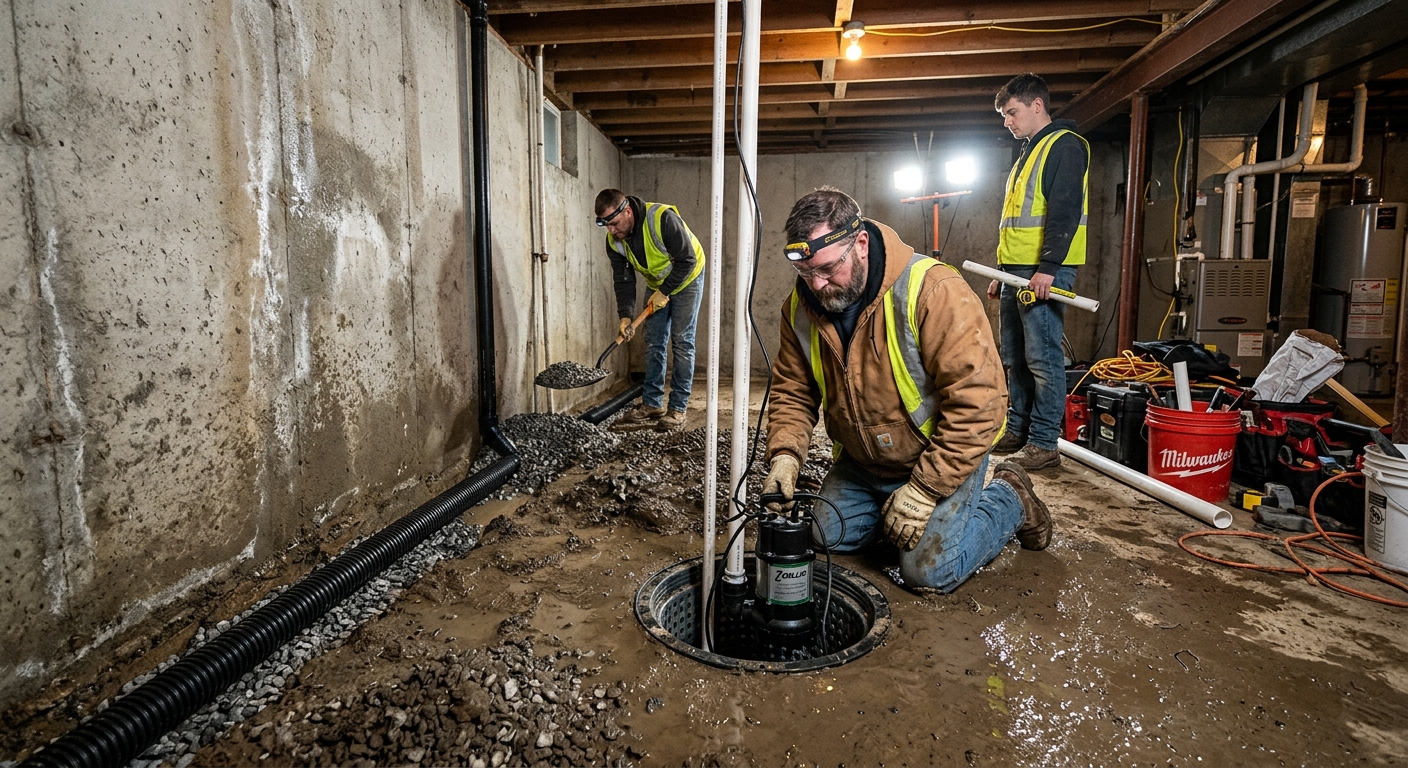
Basement waterproofing options and costs in Highlands
In Highlands, Alberta, basement moisture problems usually start with water getting past below-grade details, then getting pushed inward by clay-heavy soils and freeze–thaw expansion. With a small population of 2,604 residents (Statistics Canada, 2021 Census), Highlands is close-knit enough that homeowners often compare the same contractors over time—so scope accuracy matters. Many older homes in Calgary-area neighbourhoods were built with earlier waterproofing methods, and when original weeping tile fails or clogs, leaks often show up as seepage along joints, damp corners, or efflorescence rather than sudden structural collapse.
Calgary-area pricing is shaped by excavation reality: clay spoils are heavy, disposal fees add up, and full perimeter work can be hard where patios, driveways, tight lot lines, or mature landscaping restrict access. Southern Alberta’s freeze–thaw cycles also widen existing cracks and joints over time, increasing the likelihood that a “maintenance” fix becomes a more involved crack repair plus drainage upgrade. That’s why in Highlands—especially near older pockets of Inglewood-style infill, established cul-de-sacs, and lots with mature backyards—demand is consistently higher for exterior drainage and sump solutions.
Below are the common waterproofing approaches Highlands homeowners compare, along with what each method typically addresses and the disruption you can expect before we break down what drives quote differences.
| Method |
What It Addresses |
Disruption Level |
Durability |
Price Range |
| Exterior excavation + new membrane + drainage tile |
Primary water entry control by stopping hydrostatic pressure; replaces failed weeping tile and restores a functioning perimeter drain |
High (yard/landscape removal, trenching, backfill, regrading) |
Long-term when installed to spec and maintained with clear discharge |
$9,500–$24,500 |
| Interior perimeter drain channel + sump pit |
Captures seepage after it enters; reduces hydrostatic pressure at the floor/wall interface |
Medium (flooring/finishes partial removal, interior coring) |
Long-term with correct pump sizing and discharge management |
$6,000–$14,500 |
| Foundation crack injection (epoxy or polyurethane) |
Seals cracks based on whether the crack is static (epoxy/structural) or actively leaking (polyurethane/active leak) |
Low to medium (surface prep, patching; may require selective interior access) |
Good to long-term when crack type is matched and drainage is corrected |
$750–$2,400 |
| Sump pump installation (primary + battery backup) |
Relieves collected groundwater; battery backup supports operation during outages |
Medium (sump pit excavation, venting/piping, some interior restoration) |
Long-term with annual checks and reliable discharge |
$1,200–$3,500 |
| Window well drain installation |
Stops rain/snowmelt from pooling around egress window wells and migrating indoors |
Low to medium (yard excavation limited to window area) |
Good (depends on keeping weep holes and discharge clear) |
$1,200–$3,200 |
| Lot re-grading / downspout extension |
Reduces water pooling and directs roof runoff away from foundation |
Low to medium (minor demolition, landscaping adjustments) |
Good if completed with proper slope and maintenance |
$900–$2,800 |
Prices are estimates only and vary by project scope, site access and material selection.
What affects the price of waterproofing in Highlands
You can see the same waterproofing “label” in Calgary-area quotes and still get outcomes that vary by 30–50%—because the real cost drivers are site conditions, excavation depth, and whether the plan addresses the source of water entry or just the symptoms. In Highlands and the broader Calgary economic region, soil type, water table behaviour, and freeze–thaw are the three variables that separate local costs from the national average.
First, clay-heavy soils hold and expand when saturated. That expansion increases lateral pressure on foundation walls, worsening cracks over time—so crack injection alone may need complementary drainage to be durable. Second, seasonal groundwater and storm runoff in low-lying pockets and along river-valley influence can increase sump run times and demand more robust interior drainage or a continuous exterior perimeter drain. Third, freeze–thaw cycles common in southern Alberta widen existing joints and allow meltwater to find the path of least resistance, especially around weeping tile failures and window wells.
Two practical examples from Highlands homeowners: (1) If you have a concrete patio or tight side access, exterior excavation costs climb because more mechanical access is required, and disposal fees for clay spoil rise. (2) If your basement has older efflorescence at corners, contractors typically must diagnose and remediate moisture-bearing materials before sealing—adding labour for prep and drying. In terms of budget banding, a basic interior perimeter drain and sump can fall around the $5,000–$15,000 interior range, while full exterior excavation often moves into the $9,000–$25,000 band when full-depth trenching and membrane work are needed.
In short: Highlands homes often require a “system,” not a single patch—because clay + winter cycles steadily push water through the smallest pathways.
| Price Factor |
Why It Matters |
Cost Impact |
| Interior vs. exterior approach — interior is less disruptive but addresses symptoms |
Interior installs manage water after entry; exterior systems reduce hydrostatic pressure at the source |
Interior can be roughly 40%–60% less than full exterior on comparable homes, but only if water entry is limited |
| Foundation type — poured concrete vs. block vs. stone vs. ICF |
Different walls crack differently; sealing and drainage strategy varies |
Poured concrete often cracks more predictably; block walls may require more interior drainage prep |
| Soil type — clay expands more than sand, adding pressure |
Clay saturation increases wall pressure and risk of repeat leaks |
Higher labour and more complete drainage systems typically required (often pushing toward exterior or sump + backup) |
| Crack type and length — hairline vs. structural horizontal cracks |
Injection type changes and structural review may be needed |
Long or structural cracks raise prep time and can add engineering-related steps |
| Sump pump backup system — battery or water-powered backup needed |
Alberta outages during spring storms can stop primary pump operation |
Backup commonly adds a meaningful premium on top of the base sump installation |
| Access — landscaping, decks, or driveways must be removed for exterior |
Excavation and rework depend on how much you need to remove and rebuild |
Restricted access increases equipment time and restoration scope |
| Weeping tile age — original tile (60+ years) may be completely failed |
Clogged tile can eliminate drainage and worsen wall moisture |
Often requires full perimeter replacement rather than “spot” fixes |
| Mould or efflorescence remediation required before sealing |
Moisture-contaminated finishes must be removed and surfaces cleaned for adhesion |
Pre-treatment adds time; without it, coatings and patches can fail early |
Permits & regulations in Alberta
In Alberta, certain below-grade and drainage changes commonly require municipal or building-permit approval, particularly when the work affects structural elements or changes lot water management. As a rule of thumb for Highlands homeowners: foundation excavation, structural crack repair (especially major horizontal or step cracks), and changes to how water drains across the lot typically require a permit. If you’re installing or modifying a sump system and connecting discharge to storm or sanitary infrastructure, municipal approval is usually required. Always confirm the exact requirement with your contractor’s team before work starts.
Structural repairs deserve extra caution. If you have horizontal cracking in block walls, wide step cracking, or signs consistent with movement, a structural engineer’s assessment is often needed to determine whether underpinning or other structural measures are required—not just sealing. Ask your contractor whether they can coordinate engineering support for structural scope and whether they carry appropriate liability insurance and WSIB/WCB coverage.
To verify contractor readiness in Highlands, follow these steps: (1) Use the public licensing/registry listing relevant to your contractor type to confirm active status. (2) Request a certificate of liability insurance and confirm the policy is current and includes work at your address. (3) Ask for WSIB/WCB clearance documentation and verify it’s valid for the time frame of the project. (4) Request the permit plan or confirmation that permit pulls are included in the quoted scope, and who will file. (5) Get everything in writing before excavation begins so you’re protected if scope changes occur.
Interior vs exterior waterproofing — what does Highlands need?
In Highlands, the difference between exterior and interior waterproofing is fundamentally about where you stop the water. Exterior waterproofing—full excavation, new membrane, new perimeter drainage tile, then backfill—targets the source by reducing hydrostatic pressure against foundation walls. It costs more and needs landscape disruption, but it’s the most direct long-term fix when exterior drainage is failing or when clay saturation is pushing water into cracks and joints.
Interior waterproofing—typically a perimeter drain channel, sump pit, and sump pump—manages water after it enters. It’s generally less invasive and can be an excellent solution when access to the yard is limited (tight side yard, existing patios, or fenced landscapes) or when leaks are intermittent. However, interior systems do not eliminate wall pressure; for many homes with poured concrete walls, targeted crack injection can complement interior drainage by sealing the most direct pathways. For block foundations, it’s common for contractors to treat interior drainage as a practical complement because block joints and seepage pathways may not seal reliably without proper drainage control.
Alberta’s spring storm conditions and occasional power interruptions also influence design. If you’re going interior, a battery backup (or an engineered alternative) is worth budgeting for so the sump continues running if power is lost during the wet season.
Example budgeting: if you’re seeing recurring seepage along corners and efflorescence, an interior perimeter drain plus sump often lands around the $6,000–$14,500 range. If inspection shows failed perimeter drainage and active seepage at multiple wall locations, moving to full exterior work can push into the $9,000–$25,000 band—but it may be the better value when interior-only solutions would be fighting constant pressure year after year.
| Method |
Best For |
Addresses Source? |
Disruption |
Lifespan |
Price Band |
| Full exterior excavation + membrane |
Multiple leak points, failed/unknown weeping tile performance, high moisture loads in clay |
Yes |
High (excavation, landscaping restoration, backfill) |
Long-term with correct drainage discharge and maintenance |
$9,500–$24,500 |
| Interior French drain + sump system |
Limited exterior access, localized seepage, hydrostatic pressure managed via collected water |
No (manages after entry) |
Medium (floor/finish removal, interior coring) |
Long-term with proper pump sizing and upkeep |
$6,000–$14,500 |
| Crack injection — epoxy (structural) |
Hairline or non-moving cracks in poured concrete where water path is limited |
Partially (seals a pathway, but doesn’t fix drainage) |
Low to medium (surface prep and patching) |
Good when crack is stable and exterior drainage is functional |
$750–$2,000 |
| Crack injection — polyurethane (active leak) |
Active weeps where water is still moving through cracks |
Partially (targets active pathways, still needs drainage strategy) |
Low to medium (prep and clean-out of crack) |
Good when combined with drainage correction to prevent recurrence |
$900–$2,400 |
| Interior drain channel only (no sump) |
Light seepage where water can be gravity-relayed and volumes are low |
No |
Medium (select interior removal) |
Moderate; success depends on low hydrostatic pressure and drainage details |
$5,000–$9,500 |
| Re-grading + downspout extensions |
Roof runoff and surface water are the primary contributors |
No (surface control helps, but doesn’t stop deep hydrostatic pressure) |
Low to medium (minor landscaping work) |
Good if maintained and slopes remain intact |
$900–$2,800 |
How to choose a waterproofing contractor in Highlands
Choosing the right waterproofing contractor in Highlands starts with proof, not promises. First, verify Alberta licensing for the trade activity involved (and confirm they’re properly authorized for the scope you’re hiring for). Next, request liability insurance documentation and make sure the certificate covers the work at your address. Then confirm WSIB/WCB coverage is in place—ask for the clearance information and check it’s current for the project timeline. If a contractor can’t provide these quickly, treat it as a warning sign.
Second, collect 2–3 itemised written quotes. You want a breakdown that separates labour and materials (membrane/drain tile, pipe, pumps, pumps controls, crack injection materials, disposal/backfill, and restoration). Avoid “lump sum” quotes that don’t explain what happens if additional cracking is discovered once walls are opened. Read the exclusions: is disposal included, is permit pulling included (if required), and does the price include restoring landscaping and concrete where affected?
Warranty should be specific. Ask for the workmanship warranty length, what it covers (workmanship only vs. product defects), and whether it’s transferable if you sell your home. For payment, never pay more than 10–15% upfront; hold back a portion until the job is complete and you’ve received closeout documentation (photos, pump test notes, and warranty paperwork). Finally, require a start date and completion estimate in writing so you understand the wet-season risk window.
- Ask whether they’ll CCTV/inspect drainage paths if tile failure is suspected.
- Confirm the crack injection method is matched to crack type (active leak vs structural).
- Request written confirmation of disposal fees for clay spoils (often a hidden variable).
- Ensure discharge location and routing are explained (where water goes after the sump or drain).
- Verify whether battery backup is optional or included in your sump quote.
- Ask for pump model/spec and horsepower/float control details—not just “a sump pump.”
- Confirm membrane type and installation steps (key details affect long-term performance).
- Check that they include patching and matching finishes for areas removed.
- Confirm if dehumidification/drying is included when mould or efflorescence is present.
- Make sure drawings or a site plan outline trench depth, drainage slope, and discharge.
- Request a maintenance recommendation (keeping downspouts clear, snow management, annual pump checks).
- Get permits handled in writing where they’re required for foundation and drainage changes.
Red flags we see in Highlands include: contractors who promise a “100% waterproofing” result without diagnosing drainage pathways; quotes that don’t specify discharge routing for sump systems; injection-only proposals when exterior moisture sources are clearly active; warranties that cover no labour or are vague about remedies; and payment schedules requesting large upfront deposits beyond 10–15%.
Frequently asked questions — waterproofing in Highlands
How much does foundation crack repair cost in Highlands?
In Highlands, foundation crack repair typically starts with determining crack type—hairline/non-moving cracks can be repaired differently than structural or actively leaking cracks. On our local pricing band, foundation crack repair often falls around $500–$1,800 for straightforward repairs, but it can rise when you need a full injection program across multiple runs or when prep/drying is extensive. For example, if the crack is actively weeping due to freeze–thaw widening in southern Alberta, contractors often use polyurethane injection, which can push the total into the higher end of the injection range. If you’re getting ongoing wall moisture, crack repair alone may not solve the cause, so a quick drainage assessment (especially of weeping tile condition) can prevent repeat work. (Statistics Canada, 2021 Census)
Do I need a sump pump in Highlands?
You may need a sump pump in Highlands if you have recurring seepage, standing water in the basement perimeter, or signs of hydrostatic pressure that interior drains alone can’t manage. In Calgary and nearby communities with clay-heavy soils, water can collect and press against basement floors and walls during wet spring cycles. Many homeowners compare options where interior perimeter drainage and a sump lands around $6,000–$14,500, and standalone sump installation often sits near $900–$3,000 depending on piping, discharge, and backup. Whether you need a sump depends on whether water is actively entering at volume, how deep your basement is, and whether discharge can handle the expected flow. If you’re considering interior-only solutions, ask about battery backup so a power interruption won’t stop pumping during storms.
How does Highlands's soil affect my foundation?
Highlands sits in a Calgary area where clay and clay-till soils are common. Clay holds water and expands when saturated, which increases lateral pressure on foundation walls and footings—especially when winter freeze–thaw cycles widen existing cracks and joints. That’s why moisture issues frequently progress over time: a small joint leak becomes damp corners, then efflorescence, then localized seepage along multiple wall segments. If your home is on a slightly low pocket near a valley influence, seasonal groundwater and storm events can also increase hydrostatic pressure, making continuous exterior drainage or a reliable interior sump system critical. In practical terms, homes with older drainage infrastructure (often weeping tile that has been in service for decades) tend to need more complete drainage fixes than homeowners expect.
Do I need a permit for foundation work in Alberta?
In Alberta, foundation excavation, structural crack repair (especially major horizontal/step cracking), and changes to lot drainage commonly require a building permit. If a sump pump installation includes connection to storm or sanitary infrastructure, municipal approval is typically required. Before work starts in Highlands, confirm whether a permit is needed for your specific scope—don’t rely on verbal assurances. A good contractor will tell you whether the permit pull is included and who is responsible for filing. If structural assessment is required (for example, step cracks in block walls that could indicate movement), contractors often coordinate with a structural engineer before repairs proceed. To verify preparedness, ask the contractor for the Alberta licensing confirmation, liability insurance certificate, and WSIB/WCB clearance documentation, then match those details against the project dates.
How long does waterproofing last?
Longevity depends less on the product name and more on whether the system matches the water source. Exterior waterproofing with membrane and properly functioning perimeter drainage typically performs for many years when discharge is maintained and backfill is installed to spec. Interior systems can last long too, but they rely on continued pump operation and that the perimeter drain collects water effectively. Freeze–thaw cycles in southern Alberta can reopen failed joints and stress poorly sealed cracks, which is why many Highlands repairs include both crack sealing and drainage correction. As a planning reference, homeowners often budget for system-level updates when weeping tile has been in place for decades or when multiple leak points appear. If you’re comparing bids, focus on scope and workmanship warranty terms, not just the shortest “product warranty.”
Can I waterproof my basement from the inside only?
Yes, you can sometimes waterproof from the inside only in Highlands—especially if exterior access is limited or if inspection shows water entry is manageable with an interior drain and sump system. Interior approaches generally capture and redirect water after it enters, which is why they’re often used when excavation would be too disruptive. However, if clay saturation and hydrostatic pressure are substantial, interior-only solutions may end up working harder than expected, particularly during spring storms and prolonged freeze–thaw. Many homes with poured concrete respond well when interior drainage is paired with correctly chosen crack injection (structural epoxy for stable cracks, or polyurethane for active leaks). For block foundations, interior drainage is frequently a practical complement. If you’re choosing interior-only, ask for battery backup, pump testing, and a clear discharge plan.