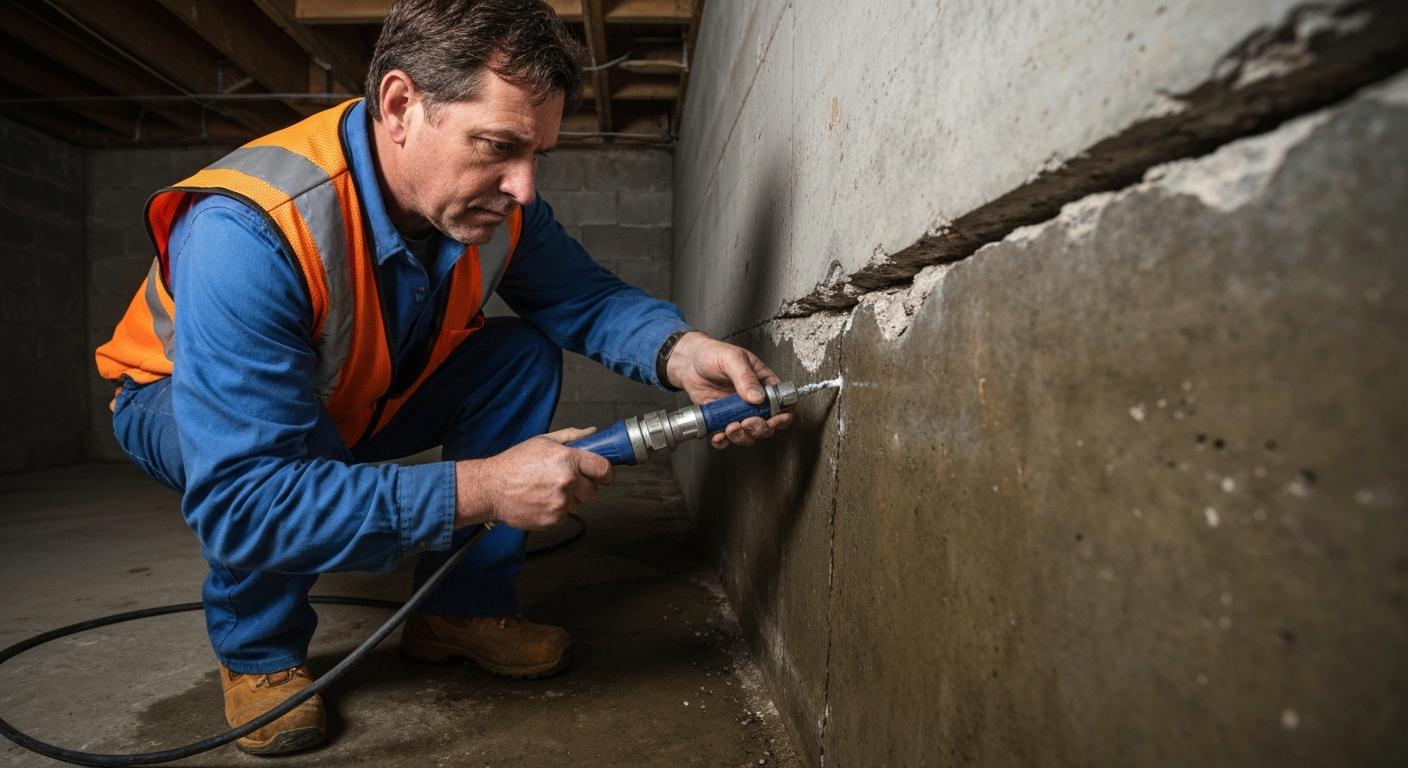
Basement waterproofing options and costs in Erin Woods
Erin Woods, Alberta is a great place to live, but basements here can be surprisingly vulnerable to water movement. With a population of 6,790 (Statistics Canada, 2021 Census), the community has a mix of older homes and newer builds, and that matters: older neighbourhood foundations are more likely to have failed original tar-and-paper waterproofing and corroded weeping tile, leaving water to find its way in through joints and hairline cracks. Calgary-area waterproofing is also shaped by freeze–thaw cycles that widen existing cracks, so a minor seep in late winter can become a recurring leak by spring. Costs reflect that reality—more labour is required to chase active water paths, prep concrete properly, and restore drainage pathways.
Local demand tends to spike in Erin Woods where lots have mature landscaping and limited side access, because exterior work means excavation, removal, and careful reinstatement. In the Calgary region more broadly, contractors are busiest on projects that include full-perimeter excavation or full drainage replacement, especially where original weeping tile is older and undersized. The soil profile common around Calgary—predominantly clay and clay-till—holds water and expands when saturated, increasing lateral pressure on foundation walls and footings. That’s why many homeowners either (1) upgrade the exterior system to address the source, or (2) pair interior drainage with sump capacity when excavation is impractical.
Below are the most common waterproofing approaches and what they typically address, with realistic price ranges for Erin Woods. Use this table as a baseline, then match the method to your foundation type, leak path, and site access before comparing quotes.
| Method |
What It Addresses |
Disruption Level |
Durability |
Price Range |
| Exterior excavation + new membrane + drainage tile |
Bulk water management, hydrostatic pressure relief, and sealed exterior barrier |
High (yard excavation, disposal, reinstatement) |
Long-term (often 15–25 years+ with proper detailing) |
$12,500–$24,000 |
| Interior perimeter drain channel + sump pit |
Water that has already entered; controls seepage and reduces wall saturation |
Medium (interior work at basement perimeter) |
Good (commonly 10–20 years+, depends on drainage performance) |
$7,500–$14,500 |
| Foundation crack injection (epoxy or polyurethane) |
Crack pathway control; epoxy for non-moving cracks, polyurethane for active leaks |
Low to Medium (drilling/patching; minor finishing) |
Variable (best results when crack movement is addressed) |
$1,000–$2,500 |
| Sump pump installation (primary + battery backup) |
Lowering water level and preventing backup during power disruptions |
Low to Medium (pit, discharge line, electrical work) |
Good (depends on discharge routing and check valves) |
$1,600–$3,200 |
| Window well drain installation |
Water pooling at window wells; directs weeping and splash runoff away |
Low (targeted exterior window area work) |
Moderate to Good (typically 8–15 years with maintenance) |
$900–$2,000 |
| Lot re-grading / downspout extension |
Surface water control; reduces direct runoff near foundation walls |
Low to Medium (soil work and landscaping adjustments) |
Moderate (requires downspout maintenance and periodic checks) |
$1,500–$4,500 |
Prices are estimates only and vary by project scope, site access and material selection.
What affects the price of waterproofing in Erin Woods
Homeowners in Erin Woods can see quotes for the “same” waterproofing problem that vary by 30–50% across Calgary and the broader Alberta market, even when the symptom looks identical (damp corners, efflorescence, or a small crack leak). The gap usually comes down to how contractors address the water source, not just the visible stain. For example, an interior perimeter drain may control seepage for a reasonable cost band, while a full exterior system can be substantially higher because excavation, disposal of heavy clay spoils, new drainage tile, and membrane detailing are involved. If the work is scoped correctly, a homeowner might choose the $12,500–$24,000 exterior band; if site access is tight, the $7,500–$14,500 interior band can still be the more practical solution.
Three drivers separate Calgary-area pricing from a national average: soil type, water table conditions, and freeze–thaw. Clay-heavy soils common locally expand when saturated, increasing lateral pressure on foundation walls and worsening cracks over time. In low-lying pockets along river valleys and coulees, seasonal groundwater can raise hydrostatic pressure and increase sump run times, which often means better discharge planning and sometimes larger sump capacity or backup. Freeze–thaw also widens joints, so a crack that was “stable” in fall may re-open in spring—raising the labour required for proper crack prep and correct injection material selection.
Concrete examples in Erin Woods: (1) a basement corner leak near an old weeping tile line can cost more when the contractor finds the tile is completely failed (often requiring interior drainage upgrades rather than just crack injection); (2) a home with exterior access blocked by patios or decks increases excavation and reinstatement time; (3) where downspouts dump too close to the foundation, re-grading and extension can lower ongoing moisture load, potentially preventing a more expensive drainage scope later.
| Price Factor |
Why It Matters |
Cost Impact |
| Interior vs. exterior approach — interior is less disruptive but addresses symptoms |
Exterior targets hydrostatic pressure at the source; interior manages water after entry |
Exterior typically adds major labour and excavation costs (often +$4,000 to +$12,000 vs interior) |
| Foundation type — poured concrete vs. block vs. stone vs. ICF |
Crack patterns and sealing methods differ by material; some walls need more drainage support |
Block/older walls often increase prep and interior drainage scope |
| Soil type — clay expands more than sand, adding pressure |
Clay saturation increases wall pressure and accelerates crack movement |
Can shift scope toward exterior membrane + drainage or add injection + drainage combination |
| Crack type and length — hairline vs. structural horizontal cracks |
Movement cracks need the right injection strategy; horizontal cracks may require engineering |
Structural cracks can raise costs substantially (testing, engineer assessment, and more labour) |
| Sump pump backup system — battery or water-powered backup needed |
Spring melt and outages can coincide; backup reduces flood risk |
Usually adds material/electrical cost (+$700 to +$1,800) |
| Access — landscaping, decks, or driveways must be removed for exterior |
More removal and reinstatement = more labour and disposal time |
Often increases exterior excavation by several thousand dollars |
| Weeping tile age — original tile (60+ years) may be completely failed |
Failed weeping tile can mean the water path is broader than expected |
May require full drainage replacement rather than minor patching |
| Mould or efflorescence remediation required before sealing |
Sealers and membranes don’t bond well to contaminated surfaces |
Can add remediation hours, drying time, and specialized coatings |
Permits & regulations in Alberta
In Alberta, some foundation-related work typically requires a building permit, especially when it involves excavation near a foundation, structural crack repair that could affect load paths, or changes to lot drainage that alter how water leaves your property. In practice, if the contractor is doing foundation excavation with drainage modifications, or addressing cracks in a way that may require underpinning or structural interventions, a permit is commonly required. Sump pump installations that discharge to storm or sanitary systems also need municipal approval—this is one of the most common “paperwork” gaps that can delay a project if you’re not prepared.
For structural crack repairs—particularly horizontal cracks in block walls, major step cracks, or anything that suggests movement—an engineer’s assessment is often required. That report helps confirm whether the wall is simply leaking or also experiencing active movement that needs stabilization. When you evaluate a contractor in Erin Woods, ask whether they have engineering support for structural scopes, and ensure they carry liability insurance and WSIB/WCB coverage.
Step-by-step homeowner checks: (1) request their valid Alberta trade/personnel registration details and confirm the work matches their licence/coverage; (2) ask for a Certificate of Insurance showing liability limits (and confirm it lists you as additionally insured if offered); (3) request proof of WSIB/WCB account coverage or clearance; (4) for structural work, confirm they can provide engineer documentation and permit support before starting; (5) ask which permit tasks they pull and which are your responsibility.
Interior vs exterior waterproofing — what does Erin Woods need?
The fundamental difference is source-control versus water-management. Exterior waterproofing—full excavation, new membrane, new drainage tile, and engineered backfill—aims to stop water before it reaches your foundation wall. It’s the most permanent option because it reduces hydrostatic pressure at the source, but it’s also the most disruptive: excavation, heavy clay disposal, and landscaping reinstatement are baked into the budget. Interior waterproofing, such as a perimeter drain channel, sump pit, and sump pump, addresses water after it enters the basement. It’s less invasive, and in tight Erin Woods lots with patios or limited side access, it’s often the only realistic way to get real performance without tearing up the entire yard.
Given Erin Woods’ clay-and-clay-till soils and Calgary’s freeze–thaw cycles, exterior systems typically perform best when you have active seepage, recurring efflorescence, or failed weeping tile that has been letting water build up behind the wall. Poured concrete walls generally respond well to targeted crack injection when the cracks are not moving, while block foundations often benefit from interior drainage as a practical complement—especially if moisture is getting in through joints and mortar lines.
Backup matters here. Alberta spring flooding and power blips can turn a “slow damp” issue into a sump overflow if the system lacks backup. A primary pump plus battery backup is a smart way to protect belongings during the window when freeze–thaw is most aggressive.
Price justification example: if your leak is localized and the crack is clearly stable, crack injection plus interior drainage might fall in the $1,000–$2,500 and $7,500–$14,500 ranges respectively. If inspection shows the exterior drainage is failed around multiple walls and hydrostatic pressure is driving the leak, paying closer to the $12,500–$24,000 exterior band can be cheaper than repeating interior interventions every spring.
| Method |
Best For |
Addresses Source? |
Disruption |
Lifespan |
Price Band |
| Full exterior excavation + membrane |
Widespread seepage, active efflorescence, or failed exterior drainage |
Yes |
High |
15–25 years+ |
$12,500–$24,000 |
| Interior French drain + sump system |
Intermittent leaks, tight access, or when exterior work is limited |
No (manages entry water) |
Medium |
10–20 years+ |
$7,500–$14,500 |
| Crack injection — epoxy (structural) |
Non-moving cracks in poured concrete or stable crack patterns |
Partial (seals pathway) |
Low to Medium |
Variable; best with stable cracks |
$1,000–$2,300 |
| Crack injection — polyurethane (active leak) |
Active seepage, joints with ongoing moisture, dynamic crack movement |
Partial (seals pathway) |
Low to Medium |
Moderate; depends on managing pressure |
$1,100–$2,500 |
| Interior drain channel only (no sump) |
Very minor seepage where water can’t accumulate |
No |
Medium to Low |
Shorter if hydrostatic pressure increases |
$5,000–$9,500 |
| Re-grading + downspout extensions |
Surface water issues near foundation perimeter |
Not typically (source is runoff) |
Low to Medium |
Moderate (maintenance dependent) |
$1,500–$4,500 |
How to choose a waterproofing contractor in Erin Woods
Start with Alberta compliance, then scope clarity. Ask for the contractor’s proof of Alberta licensing/registration relevant to the work they’re doing, and verify liability insurance with a current Certificate of Insurance (you should be able to review the limits and effective dates). For work coverage, request proof of WSIB/WCB coverage and ensure it’s active for the crews scheduled on your property.
Next, get 2–3 itemised written quotes rather than a single “lump sum.” A good quote breaks out labour and materials: excavation and disposal details, membrane and drainage tile specs, sump pit size and pump model, electrical components, and any patching/restoration. Review exclusions line-by-line: disposal fees, permit pulling, concrete cutting, subfloor removal, or mould remediation should not be “surprises” later. Ask whether the contractor includes permit applications/inspections where required, and how they handle municipal discharge approvals for sump lines.
Warranty matters. Look for a workmanship warranty length in writing, plus the product/manufacturer warranty for membrane, drainage components, and pumps. Confirm whether the warranty is transferable if you sell your home. For payment, never agree to pay more than about 10–15% upfront; use a holdback until the final walkthrough and all documentation are provided. Finally, insist on a start date and completion timeline in writing, including curing/drying assumptions so you’re not stuck waiting on rework.
- Confirm their relevant Alberta licence/registration for the type of waterproofing and structural crack scope.
- Verify liability insurance and ask for a copy of the Certificate of Insurance before signing.
- Confirm WSIB/WCB coverage is active for all scheduled workers (request clearance/proof).
- Insist on itemised labour/materials breakdown (membrane, tile, pipe sizes, pump model, backup system).
- Ask what’s included for excavation, disposal, and re-grading/restoration.
- Clarify whether permit pulling is included where required and who submits the paperwork.
- Ask for details on discharge routing for sump lines (and municipal approval requirements if applicable).
- Demand a written plan for active leaks: crack prep steps and injection material rationale.
- Request moisture testing/drying plan if efflorescence or damp drywall exists.
- Check warranty length for workmanship and confirm product warranties separately.
- Use a payment schedule with a holdback until final completion and documentation delivery.
- Get a written timeline including inspections, drying/curing windows, and landscaping reinstatement.
Red flags in Erin Woods: vague “we’ll seal it up” wording without identifying the water source; no mention of weeping tile condition or drainage pathway performance; skipping photo documentation of crack prep, drill holes, and injection results; warranty terms that cover workmanship only partially or exclude pump/electrical failure; and a quote that offers to start before confirming permits/municipal approvals for discharge or before addressing engineering when cracks suggest movement.
Frequently asked questions — waterproofing in Erin Woods
Why is my basement leaking in Erin Woods?
In Erin Woods and the Calgary area, basement leaks are commonly caused by water pressure and pathways—especially when clay-heavy soils stay saturated through freeze–thaw. As temperatures swing, small cracks and joints widen, letting spring meltwater and runoff penetrate more easily. If your original weeping tile is older or clogged, water can build up behind the foundation and find weak points along the perimeter. Less obvious causes include downspouts discharging too close to the foundation and landscaping that slopes toward the house. In homes with poured concrete, cracks may be the main route; in older block walls, mortar joints and block seams often contribute. A proper site assessment is what tells the difference.
How do I know if a foundation crack is serious?
Not all cracks are equal. In Alberta, the ones that warrant urgency are horizontal cracks, stair-step cracks that continue to grow, and cracks that appear along mortar joints in block walls with signs of movement. Hairline vertical cracks can sometimes be non-structural, but if you also see fresh dampness, efflorescence, or water tracking after spring thaw, that crack is actively conducting moisture and deserves repair even if it’s not moving. A serious crack usually shows progressive change over time—widening, misalignment, or repeated wetting. In those cases, ask for an engineer’s assessment or at least a documented evaluation before injection. This protects you from sealing a pathway that’s still being reopened by pressure.
How much does foundation crack repair cost in Erin Woods?
In Erin Woods, crack repair cost depends on whether the crack is stable (best suited for epoxy) or actively leaking (often requiring polyurethane injection). As a planning reference, many homeowners in this area see epoxy or polyurethane injection work land in the $1,000–$2,500 range, with increases when there are multiple cracks or longer crack lengths that need additional ports and careful surface prep. If the contractor uncovers that the “crack problem” is really part of a broader drainage failure, the scope may expand to include an interior perimeter drain and sump system—commonly $7,500–$14,500. For small, localized leaks, injection may be the right first step, but if hydrostatic pressure is driving water, waterproofing must address that pressure too.
Do I need a sump pump in Erin Woods?
You typically need a sump pump when water is collecting at the foundation perimeter, when there’s recurring seepage that can’t be reliably managed by surface grading alone, or when hydrostatic pressure leads to water accumulation in the basement. Many Erin Woods basements with clay-heavy soils and older drainage setups benefit from interior perimeter drainage tied into a sump pit, especially if spring meltwater causes repeated dampness. If you already have a sump but it cycles frequently, check valves and discharge routing matter—then consider pump sizing or backup capacity. Given the risk of power disruptions during high-demand periods, a primary pump with battery backup is often a smart addition. A full sump package commonly falls around $1,600–$3,200 depending on the backup option and discharge details.
How does Erin Woods's soil affect my foundation?
Erin Woods sits in the Calgary region where clay and clay-till soils tend to hold water. When the soil saturates, it expands and can increase lateral pressure on foundation walls and footings. That pressure can worsen cracks over time and make leaks more frequent during spring when freeze–thaw has widened joints. Clay also tends to dry more slowly than sandy soils, so dampness can linger even after heavy rain. If your property has low-lying drainage pockets or water flows toward the house during storms, the combined effect of saturation and pressure can lead to localized wall leaks, seepage, and ongoing efflorescence. These conditions are exactly why contractors often pair crack repair with drainage control rather than relying on surface sealants alone.
Do I need a permit for foundation work in Alberta?
Often, yes—depending on what’s being done. In Alberta, foundation excavation near the foundation, structural crack repair that could involve stabilization, and changes to lot drainage that affect how water is handled commonly trigger permit requirements. Sump pump installations that connect into storm or sanitary sewer systems also need municipal approval. If your crack repair scope suggests structural movement (especially horizontal or major step cracks in block walls), an engineer’s assessment is typically required and that structural element usually influences permit needs. To verify, ask the contractor whether they pull permits for your specific scope and request their permit plan in writing before work starts. Also confirm they carry liability insurance and WSIB/WCB coverage—so you’re protected during construction.