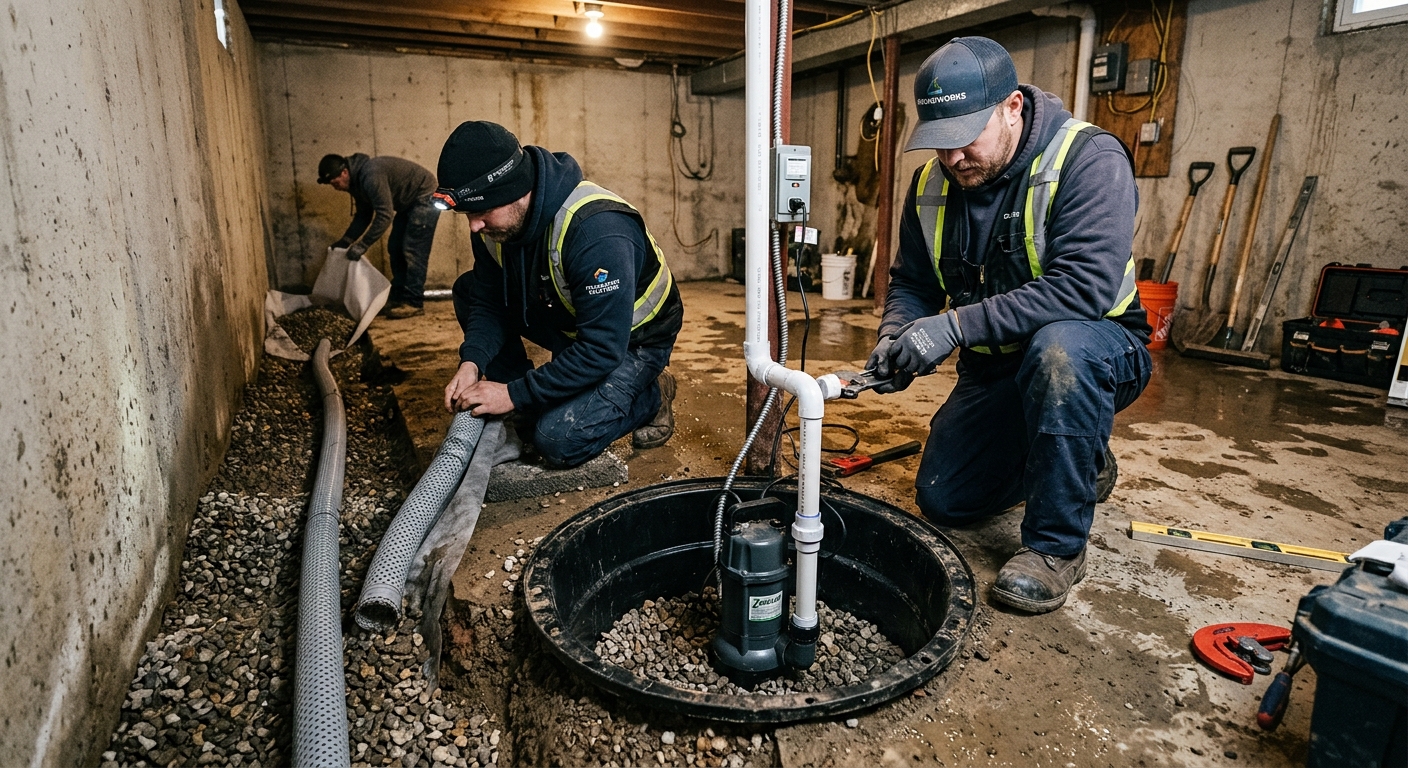
Basement waterproofing options and costs in Marlborough Park
Marlborough Park, Alberta homes often need basement waterproofing that matches our clay-heavy soils and the way freeze–thaw cycles pry at joints. With a population of 8,290 in 2021 (Statistics Canada, 2021 Census), the local housing mix includes a meaningful number of older basements where original tar-and-paper systems and weeping tile are simply wearing out. In practical terms, that means many homeowners first see symptoms like recurring dampness after spring melt, musty odours, efflorescence, or localized seepage at wall cracks—then later discover the source is exterior water pressure that has nowhere good to go.
In Calgary-area markets, pricing is shaped by access constraints and the realities of excavation and disposal. Clay-till spoils tend to be heavier, hold water, and require careful handling, which can add labour time and hauling/disposal costs. At the same time, contractor availability can influence scheduling windows—during peak spring season, crews that can do full-perimeter work often get booked fast, and that can affect mobilization and overall quote pricing. If you’re in the part of Marlborough Park where properties have more mature landscaping, patios, or tight side yards, exterior options usually cost more due to removals and restoration.
Below is a comparison of the most common waterproofing approaches used in Marlborough Park, with typical disruption and budget ranges to help you plan your next step before calling for an itemized quote.
| Method |
What It Addresses |
Disruption Level |
Durability |
Price Range |
| Exterior excavation + new membrane + drainage tile |
Stops bulk water at the foundation exterior; replaces perimeter drainage pathway |
High (yard access, excavation, backfill, re-landscaping) |
Long-term (typically 20+ years when detailed correctly) |
$9,000–$25,000 |
| Interior perimeter drain channel + sump pit |
Collects seepage and relieves hydrostatic pressure after water enters |
Medium (interior floor work; less yard disruption) |
Good (often 15+ years depending on pump and maintenance) |
$5,000–$15,000 |
| Foundation crack injection (epoxy or polyurethane) |
Seals cracks to reduce seepage pathways (type depends on whether it leaks) |
Low (select drilling/patching) |
Medium to long-term (often 10–20 years depending on crack movement) |
$500–$1,800 |
| Sump pump installation (primary + battery backup) |
Manages collected water; backup reduces risk during outages |
Low to medium (basement modifications) |
Good (pump life typically 7–12 years; backup depends on system) |
$900–$3,000 |
| Window well drain installation |
Prevents water pooling around window wells and seepage into lower windows |
Low to medium (small exterior work) |
Good (often 10–15+ years with clear weep/drain lines) |
$1,200–$4,000 |
| Lot re-grading / downspout extension |
Redirects roof runoff away from foundation; reduces recurring surface water load |
Low (light excavation/landscape adjustments) |
Fair to good (10+ years if slopes stay maintained) |
$1,000–$6,000 |
Prices are estimates only and vary by project scope, site access and material selection.
What affects the price of waterproofing in Marlborough Park
In Marlborough Park and across Calgary and the wider province, two homeowners can receive quotes for “the same” waterproofing and still see a 30–50% difference once the site details are priced in. The biggest separation between regional (Calgary-area) costs and the national average is driven by soil type, water table conditions, and freeze–thaw. Clay-heavy soils—common in parts of the Prairies and also seen elsewhere in Canada—expand when saturated and exert more lateral pressure on foundation walls and footings, which can turn a small crack problem into an ongoing seepage issue over time. Meanwhile, higher seasonal groundwater or poor perimeter drainage increases sump run times and makes pipe sizing, pump capacity, and discharge routing more important.
Freeze–thaw cycles in southern Alberta also widen existing cracks and joints, so a plan that doesn’t address water management can fail sooner. In older housing stock, it’s common to find original weeping tile that’s clogged or disconnected, plus undersized interior drainage; that combination often leads to efflorescence and persistent localized leaks. By comparison, coastal rainfall isn’t the same mechanism, but it does illustrate the principle: heavy saturation loads rapidly overwhelm backfill drainage when it’s not designed and maintained properly—so Calgary’s backfill and drainage detailing still matters a lot.
Concrete examples I see in Marlborough Park: (1) if you have a poured-concrete wall with hairline cracking and no active seepage, crack injection work may sit near the $500–$1,800 band and be a targeted add-on; (2) if you’re dealing with long, actively wet wall runs or a failed weeping tile, you’ll often move into the interior drain/sump world around $5,000–$15,000, and sometimes higher if excavation is unavoidable. If you require a full perimeter solution, the exterior excavation and drainage plan can reach $9,000–$25,000 depending on access and disposal.
| Price Factor |
Why It Matters |
Cost Impact |
| Interior vs. exterior approach — interior is less disruptive but addresses symptoms |
Exterior stops the water source; interior manages water after it enters |
Interior can be 30–60% less than full exterior in many Marlborough Park projects |
| Foundation type — poured concrete vs. block vs. stone vs. ICF |
Different walls crack/seep differently and accept repairs differently |
Poured concrete often supports effective sealing; block frequently needs drainage plus sealing |
| Soil type — clay expands more than sand, adding pressure |
Clay saturation increases lateral pressure and hydrostatic stress |
More reinforcement of drainage detailing and sometimes stronger pumping/controls |
| Crack type and length — hairline vs. structural horizontal cracks |
Movement cracks may continue to leak after simple sealing attempts |
Structural/movement cracks can trigger engineering review and additional scope |
| Sump pump backup system — battery or water-powered backup needed |
Power interruptions during spring weather can leave basements vulnerable |
Can add noticeable cost, especially when backup testing and controls are included |
| Access — landscaping, decks, or driveways must be removed for exterior |
Excavation depth and tight lot lines increase labour and restoration |
Exterior projects can swing by thousands based on removal/restoration scope |
| Weeping tile age — original tile (60+ years) may be completely failed |
Older systems are commonly clogged, disconnected, or collapsed |
Often shifts the solution from patching to full drainage replacement |
| Mould or efflorescence remediation required before sealing |
Moisture-impacted materials must be treated so coatings/membranes bond correctly |
Additional remediation labour can add days and increase total project cost |
Permits & regulations in Alberta
In Alberta, foundation excavation, structural crack repair, and changes to lot drainage typically require a building permit. If a waterproofing scope involves altering drainage patterns at the lot line or making changes that affect how water is managed, you should expect a permit pathway. Sump pump installations that connect discharge to storm or sanitary services need municipal approval and must follow local requirements for connection and flow direction.
For structural crack repair—especially horizontal cracks in block walls or cracks that suggest movement—an assessment from a structural engineer is often required to determine whether underpinning or other structural work is needed before sealing. The key for homeowners is to verify that your contractor has the engineering support process in place for structural repairs, and that they carry liability insurance and WSIB/WCB coverage where applicable for the work they perform.
Step-by-step checklist for Marlborough Park homeowners:
- Ask the contractor for the permit number (or draft permit application) they will submit for your scope.
- Confirm if the project includes exterior drainage changes, foundation alterations, or structural crack repair that triggers a permit.
- Request a current Certificate of Insurance (liability) matching the work location/address.
- Ask for WSIB/WCB clearance details for the crews performing the work.
- If structural cracks are suspected, ask how engineering assessment and sign-off will be handled.
- Only proceed after you review what is “included” versus “permit by homeowner” in writing.
Typically requiring a permit: foundation excavation, drainage re-routing at grade, and structural crack repairs. Typically not requiring a permit: small window well drain add-ons, downspout extensions, and interior drain work that does not alter structure or tie into regulated utility connections (confirm scope with your contractor and municipality).
Interior vs exterior waterproofing — what does Marlborough Park need?
Fundamentally, exterior waterproofing and interior waterproofing do different jobs. Exterior waterproofing—full excavation, new membrane, new drainage tile, then backfill—targets the source. When it’s detailed correctly against clay soils and freeze–thaw, it reduces the amount of water reaching the foundation wall in the first place. The trade-off is cost and disruption: it’s the most invasive option and often requires deck/patio removal, careful excavation, and re-landscaping.
Interior waterproofing—perimeter drain channel, sump pit, and sump pump—manages water after it enters. It’s typically less invasive, which matters in Marlborough Park when yards are tight or landscaping is mature. But interior systems don’t “stop” hydrostatic pressure on the wall itself; they control what comes in by capturing seepage and lowering basement water accumulation. In Calgary-area clay-till conditions, I often recommend interior drainage as a practical complement when exterior excavation is limited, or when the foundation type (like block walls) benefits from a combined strategy.
Given spring flooding patterns and occasional power interruptions, sump pump backup systems are a serious consideration in Alberta. A primary pump alone may not be enough if a storm surge or outage coincides with peak melt.
Where the price difference is justified: if you have persistent seepage along a long wall run and failed or clogged weeping tile, full exterior waterproofing around $9,000–$25,000 can be worth it because it addresses the exterior water load. If the issue is isolated and you’re mainly dealing with interior moisture management, interior systems can land in the $5,000–$15,000 band and deliver strong results with lower disruption.
| Method |
Best For |
Addresses Source? |
Disruption |
Lifespan |
Price Band |
| Full exterior excavation + membrane |
Widespread seepage, failed perimeter drainage, high exterior water load |
Yes—targets water entry at the foundation exterior |
High (yard disruption and restoration) |
20+ years when properly detailed |
$9,000–$25,000 |
| Interior French drain + sump system |
Basement seepage with workable interior access; when exterior is constrained |
No—manages water after it enters |
Medium (floor work, sump pit) |
15+ years with pump maintenance and clear discharge |
$5,000–$15,000 |
| Crack injection — epoxy (structural) |
Non-moving hairline cracks or cracks where structural stability is confirmed |
Partially (seals the pathway, not exterior water volume) |
Low (drilling/patching) |
10–20 years depending on crack movement |
$500–$1,800 |
| Crack injection — polyurethane (active leak) |
Cracks with active seepage where flexible sealing is needed |
Partially (seals active pathways, but exterior pressure still needs control) |
Low (targeted work) |
5–15 years depending on ongoing water pressure |
$600–$2,400 |
| Interior drain channel only (no sump) |
Light moisture, intermittent dampness, or very limited seepage |
No—still manages water after entry |
Medium (interior floor work) |
10–15 years if water load remains low |
$3,500–$8,500 |
| Re-grading + downspout extensions |
Surface water runoff problems and minor dampness near grade |
Yes for surface runoff (not bulk groundwater) |
Low (small excavation/landscape work) |
10+ years with seasonal maintenance |
$1,000–$6,000 |
How to choose a waterproofing contractor in Marlborough Park
Choosing the right contractor in Marlborough Park starts with verifying Alberta requirements and confirming you’re dealing with a company that can stand behind both workmanship and performance. Ask for proof of Alberta licensing/registration where applicable, then request a Certificate of Insurance (liability) that lists your job site address or project scope. For worker coverage, confirm WSIB/WCB clearance details for the crews and subcontractors performing the work. Don’t accept “we’re covered” verbally—request the documents.
Next, get 2–3 itemised written quotes. You want labour and materials broken down, not just a lump sum—especially for items like membrane type, drain tile specification, pump model, discharge routing, and disposal/excavation quantities. Read the exclusions carefully: is demolition and restoration included? Is permit work included or “by homeowner”? Will they include disposal fees for heavy clay spoils?
Warranty matters in Alberta because freeze–thaw and clay expansion can stress systems. Ask for the workmanship warranty length and whether it’s backed by the contractor directly. Also request the product/manufacturer warranty for membranes and drainage materials and confirm if it transfers to future homeowners. Keep your payment schedule conservative: never pay more than 10–15% upfront, and hold back a portion until the job is complete, cleaned up, and tested (for example, sump pump function). Finally, insist on a start date and a completion estimate in writing so spring work doesn’t stall mid-project.
- Confirm insurance: Certificate of Liability with your project address.
- Confirm WSIB/WCB clearance for the crews doing waterproofing labour.
- Get 2–3 itemised quotes (labour + materials + disposal + restoration).
- Ask what triggers a permit and whether it’s included in their quote.
- Verify discharge plan for sump pumps (where it goes and whether it’s approved).
- Request sump specs: pump capacity, basin size, check valve, and backup option.
- Ask how they test/verify pump operation at completion.
- Confirm crack injection system: epoxy vs polyurethane and why.
- Request surface prep details (how efflorescence/mould is addressed before sealing).
- Get the membrane/drainage details: product name, thickness/spec, and joints/overlap approach.
- Ensure warranty is written: workmanship term, what’s covered, and any exclusions.
- Keep payment schedule to 10–15% upfront; holdback until final walkthrough.
Red flags I see in the Marlborough Park market: vague scopes with “we’ll waterproof” language only; no written warranty terms; quotes that ignore disposal/restoration; contractors who won’t discuss permits/engineering for structural cracks; and payment schedules that demand large deposits early without milestones.
Frequently asked questions — waterproofing in Marlborough Park
Do I need a sump pump in Marlborough Park?
You may need a sump pump in Marlborough Park if your basement shows recurring seepage, water pooling after spring melt, or if an interior drainage system is installed to collect groundwater. In Calgary-area clay-till soils, saturated ground can add pressure and increase the volume of water that enters during freeze–thaw and heavy runoff events. If you already have an interior perimeter drain, a sump pump is commonly the practical way to keep the collected water moving away.
That said, not every damp basement needs a sump. If moisture is light and tied to surface runoff, re-grading and downspout extensions may address the problem. A typical sump pump installation with primary plus backup can run around $900–$3,000, but the right decision depends on whether the water is intermittent or persistent and how the discharge will be managed under Alberta requirements.
How does Marlborough Park's soil affect my foundation?
Marlborough Park foundations are often affected by clay and clay-till conditions that hold water and expand when saturated. When that expansion happens during freeze–thaw cycles, it can widen joints and cracks, increasing the chance that spring meltwater finds its way through. Over time, that can lead to recurring wall seepage and efflorescence, even when the basement doesn’t flood outright.
In practical terms, clay soils usually increase lateral pressure on foundation walls, so waterproofing details must be robust: correct drainage tile placement, properly graded backfill, and reliable perimeter drainage are key. Where exterior excavation is limited, interior drainage systems help manage the water after it enters. Your quote may land in the interior band (commonly $5,000–$15,000) when the solution is focused on relieving pressure inside rather than stopping water at the exterior source.
Do I need a permit for foundation work in Alberta?
In Alberta, you typically need permits for foundation excavation, changes that affect lot drainage, and structural crack repair—especially when the work involves changes to the foundation that go beyond minor sealing. If your scope includes tying sump discharge to storm or sanitary services, municipal approval is usually required for that connection. If the contractor suspects structural movement (such as major horizontal cracking in block walls), an engineering assessment may be required to determine whether additional structural work is needed before repairs.
To verify this in Marlborough Park, ask your contractor how they handle permits: what they will submit, what you must approve, and whether permit pull is included. Then check their paperwork—permit number or application details, Certificate of Insurance, and WSIB/WCB clearance. If a contractor refuses to clarify the permit responsibility in writing, that’s a sign to pause.
How long does waterproofing last?
Waterproofing lifespan varies by method, site conditions, and whether ongoing maintenance is done. Exterior excavation with new membrane and drainage tile, when installed correctly in clay and clay-till conditions, is often the most durable option and can perform 20+ years. Interior systems generally manage water after it enters; they can last 15+ years, but depend heavily on pump condition, clear discharge, and whether drainage lines remain unobstructed.
Crack injection can last a long time, but the type matters. Epoxy injection tends to work best when cracks are stable, while polyurethane is designed for active leaking pathways. For many homeowners, crack repair pricing falls around $500–$1,800, but durability depends on whether the crack continues to move due to freeze–thaw and soil pressure.
Can I waterproof my basement from the inside only?
Yes, many Marlborough Park basements can be addressed from the inside only—especially when excavation is constrained by tight side yards, patios, or landscaping, or when you’re dealing with interior seepage rather than a major exterior drainage failure. Interior perimeter drains and sump systems collect incoming water and reduce basement moisture and efflorescence. However, interior waterproofing typically does not stop hydrostatic pressure on the wall itself; it manages it after the water crosses into the basement.
For poured concrete walls, sealing cracks (sometimes including injection) can be effective as part of an interior strategy. For block foundations, interior drainage is often a practical complement because wall geometry and seepage pathways can be harder to fully resolve from the interior alone. If you’re choosing interior-only, expect common project budgets to fall around $5,000–$15,000, with the possibility of adding a pump/backup around $900–$3,000.
What causes foundation cracks in Marlborough Park?
Foundation cracks in Marlborough Park are commonly caused by soil movement and freeze–thaw stress. Clay and clay-till soils expand when saturated and then contract when conditions dry, which can shift pressure against foundation walls and footings. During Alberta winters, freeze–thaw cycles widen small defects in concrete and joints, and repeated cycles can turn hairline cracking into longer seepage paths.
Another factor is aged drainage. If weeping tile is clogged, undersized, or disconnected, water can build up behind the wall and increase pressure at the exact points where cracks have formed. Poor downspout discharge and insufficient lot grading can also intensify the problem by keeping surface water near the foundation.
If your cracks are active (dampness along the crack during rain/spring thaw), injection solutions and interior drainage may be required—commonly in ranges like $500–$1,800 for targeted crack work, but often paired with a sump/rail system when seepage is recurring.