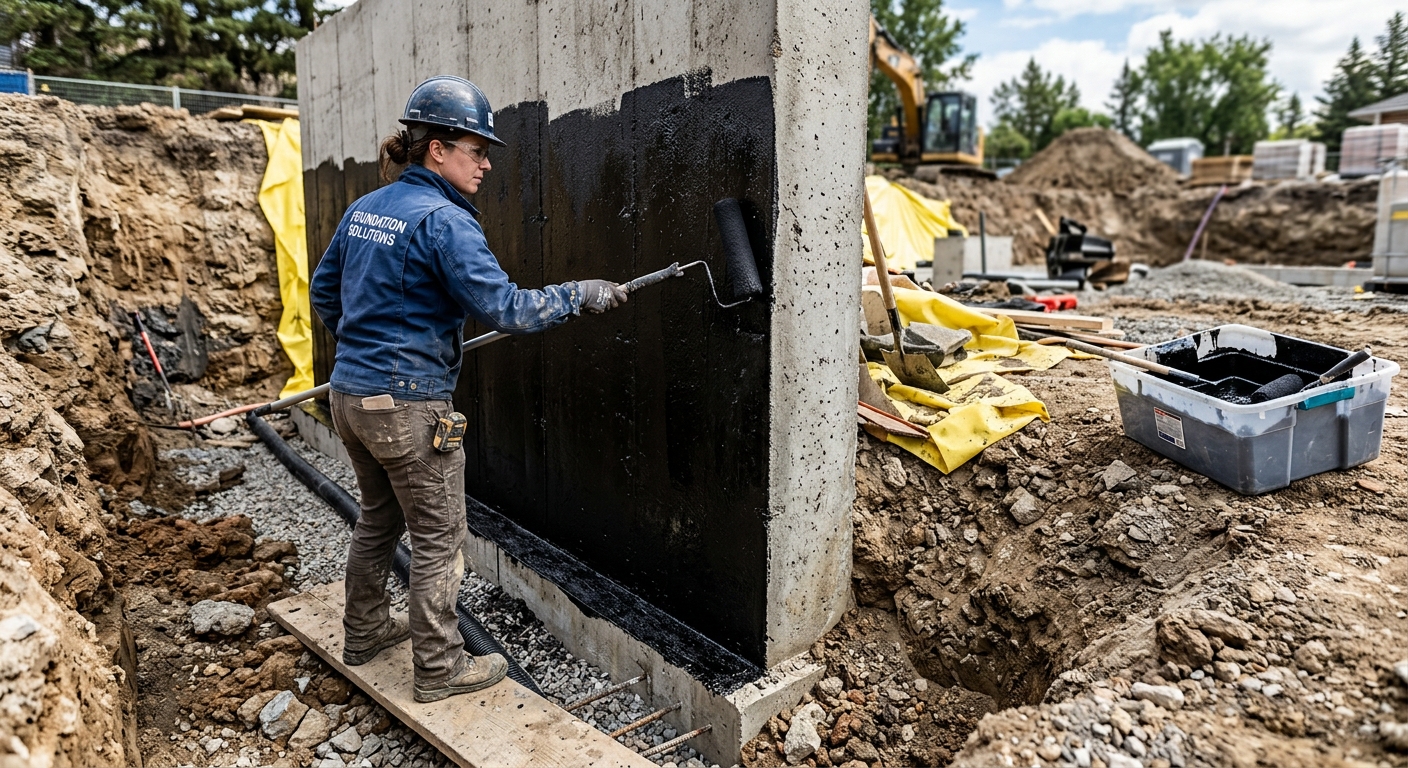
Basement waterproofing options and costs in Rhatigan Ridge
Rhatigan Ridge homeowners usually start with one pressing question: “What will actually stop water?” In Rhatigan Ridge, that decision matters because the local housing stock and clay-heavy soils create a lot of repeat failures—especially in older basements where original tar-and-paper systems and corroded weeping tile often don’t perform anymore. With a population of 3,252 (Statistics Canada, 2021 Census), Rhatigan Ridge is small, and the contractors you’ll find tend to specialize in recurring clay-soil repair scopes rather than one-off specialty work.
Calgary-area waterproofing costs are shaped by freeze–thaw cycles that widen cracks and joints, plus soil that holds water and expands when saturated, increasing lateral pressure on foundation walls. Labour availability can also affect pricing: after spring wet periods, crews that can excavate efficiently and manage drainage quickly are in higher demand. That’s why homes in and around the older, more established pockets of the Calgary region—where drainage systems tend to be aging—often see faster turnaround for interior drainage and crack repair, while full exterior systems may take longer due to excavation and backfill scheduling.
In practice, many basements in this part of Alberta are best addressed by either (1) exterior waterproofing that removes the source, or (2) interior perimeter drainage plus a reliable sump for when water finds a path. To help you compare apples-to-apples, use the table below as a pricing and scope starting point.
| Method |
What It Addresses |
Disruption Level |
Durability |
Price Range |
| Exterior excavation + new membrane + drainage tile |
Major water entry, hydrostatic pressure management, long-term exterior barrier |
High (yard/landscaping disruption, excavation) |
High (source control when properly detailed) |
$12,000–$25,000 |
| Interior perimeter drain channel + sump pit |
Water that enters via joints/cracks; reduces hydrostatic pressure on floors and walls |
Medium (cutting at perimeter, limited interior demolition) |
High (system-focused, if drainage is sized correctly) |
$7,500–$14,500 |
| Foundation crack injection (epoxy or polyurethane) |
Crack sealing to prevent seepage and reduce moisture pathways |
Low (targeted holes/patching) |
Medium to high (depends on crack type and movement) |
$800–$1,800 |
| Sump pump installation (primary + battery backup) |
Relieves collected water and prevents back-up during outages/peak inflow |
Low to medium (pit/gravel pack, electrical work) |
High (when backup is installed and maintained) |
$1,200–$3,000 |
| Window well drain installation |
Water infiltration near basement windows during snowmelt/rain events |
Medium (excavation around wells) |
Medium to high (depends on grading and discharge) |
$1,200–$2,800 |
| Lot re-grading / downspout extension |
Redirects roof runoff away from foundation; reduces saturation around walls |
Low to medium (groundwork changes) |
Medium (best paired with membranes/drainage) |
$2,500–$6,500 |
Prices are estimates only and vary by project scope, site access and material selection.
What affects the price of waterproofing in Rhatigan Ridge
In Rhatigan Ridge and the wider Calgary region, quotes for the “same” basement waterproofing job can swing by 30–50% because the scope is rarely identical—especially once you factor in excavation depth, drainage design, and how much of the foundation needs preparation. Two neighbouring homes can look similar, yet one has a shallow footing with a clogged weeping tile while the other has better exterior grading and only needs localized crack injection. That’s also why some contractors quote based on a measured inspection and drainage assessment, while others start with a quick visual and end up revising after they open the perimeter.
Three drivers consistently separate Calgary-area costs from a national average: soil type, water table and freeze–thaw. Clay-heavy soils common across southern Alberta hold water and expand when saturated, which increases lateral pressure and accelerates joint and crack movement. In pockets with higher seasonal groundwater and storm runoff, the sump must run longer and perimeter drainage needs better capacity and discharge detailing. While coastal BC rainfall is a different weather pattern, the cost lesson is similar: if original drainage fails, backfill saturates and drying becomes slower—meaning more work to correct the source.
Here’s what it looks like in real budgets. If you’re already targeting a perimeter drain and sump (often falling in the $5,000–$15,000 interior band), costs rise toward the upper end when a deeper excavation or extensive perimeter cutting is required. Conversely, simple crack injection (commonly $500–$1,800 for repair scope) stays closer to the low end when cracks are stable and there’s no widespread seepage. For exterior excavation projects, the same clay conditions can push you from the mid to high end of the $9,000–$25,000 band when yards, patios, or tight side access force careful shoring and disposal-heavy clean-up.
| Price Factor |
Why It Matters |
Cost Impact |
| Interior vs. exterior approach — interior is less disruptive but addresses symptoms |
Interior systems manage water after it enters; exterior deals with the water path before it reaches the wall |
Typically +$5,000 to +$10,000 for full exterior vs interior-only |
| Foundation type — poured concrete vs. block vs. stone vs. ICF |
Crack sealing and membrane detailing differ; block often needs interior drainage support |
+10% to +25% depending on prep and detailing complexity |
| Soil type — clay expands more than sand, adding pressure |
Increased hydrostatic/lateral pressure increases seal failure risk if water management is inadequate |
Can push sump/drain sizing up by +$1,000 to +$4,000 |
| Crack type and length — hairline vs. structural horizontal cracks |
Active/moving cracks may require flexible injection and deeper assessment |
+20% to +60% when injection scope expands or engineering is needed |
| Sump pump backup system — battery or water-powered backup needed |
Backup prevents freeze-up and damage during power disruptions during spring peaks |
+ $300 to +$1,500 depending on backup type and electrical scope |
| Access — landscaping, decks, or driveways must be removed for exterior |
Extra demolition, regrading, and patching increases labour and material use |
+ $2,000 to +$8,000 for heavy access constraints |
| Weeping tile age — original tile (60+ years) may be completely failed |
Original drainage may be collapsed/blocked, forcing replacement or bypass correction |
Often shifts a “repair” into a full perimeter system (+$3,000 to +$10,000) |
| Mould or efflorescence remediation required before sealing |
Sealers bond poorly on contaminated or actively wet surfaces |
+ $500 to +$3,000 depending on extent and drying time |
Permits & regulations in Alberta
In Alberta, some waterproofing-related work can require permits, and homeowners should verify this early so you don’t end up redoing a completed system. Foundation excavation, structural crack repair that may affect stability, and changes to lot drainage commonly require a permit. If you’re installing a sump pump and connecting it to municipal services (storm or sanitary), you’ll need municipal approval before discharge. Even when a sump is “just plumbing,” connection points and discharge routes are where approvals typically apply.
For structural crack repair—think major horizontal cracks in block walls, significant step cracking, or cracks that indicate possible movement—an assessment by a structural engineer is often required to determine whether underpinning or other structural remedies are necessary. A good waterproofing contractor will tell you upfront if their work is strictly waterproofing and when they collaborate with engineering support.
To verify a contractor in Rhatigan Ridge, start with three checks in this order:
1) Alberta licence and business standing: look up the contractor through the appropriate online provincial registry or business listing resources. 2) Certificate of Insurance (COI): ask for liability coverage and confirm the policy limits and that your address is covered as the certificate holder where applicable. 3) WSIB/WCB coverage: request proof of clearance/coverage documents (or confirmation of registration status). Keep copies for your records.
If the scope involves permit work, ask who pulls the permit, what inspections are expected, and whether those costs are included in the written quotation.
Interior vs exterior waterproofing — what does Rhatigan Ridge need?
The simplest way to choose is to match the method to the water problem. In Rhatigan Ridge, exterior waterproofing is source control: you excavate around the foundation, install or replace membrane systems and drainage tile, then backfill and restore the yard. It can be the right answer when clay-heavy soils and freeze–thaw cycles are pushing water in through the exterior barrier path, or when original weeping tile is compromised. Interior waterproofing—perimeter drain channel, sump pit, and sump pump—treats what happens after water gets in. It reduces hydrostatic pressure at the floor line and helps manage seasonal inflow, but it doesn’t stop water from contacting the wall in the first place.
For typical Calgary-area basements, poured concrete walls often respond well to crack injection when cracks are stable and the water path is narrow; block foundations frequently benefit from interior drainage as a practical complement, because block joints and mortar can remain more vulnerable over time. In both cases, a sump pump backup system matters. During spring wet periods and localized outages, battery backup (or other designed backup solutions) helps prevent water accumulation and reduces the risk of freeze-related damage after power interruptions.
Here’s a realistic cost example. If you have localized seepage and a handful of cracks, crack injection plus a sump system might fall around the lower bands—often closer to $1,800 plus interior drainage/pump scopes—while full exterior excavation can jump into the $12,000–$25,000 band due to demolition, membrane work and clay backfill disposal. The higher cost is justified when water pressure is ongoing, drainage is failing, or you need continuous exterior coverage—not just a managed interior outcome.
| Method |
Best For |
Addresses Source? |
Disruption |
Lifespan |
Price Band |
| Full exterior excavation + membrane |
Persistent seepage, hydrostatic pressure, failed exterior drainage, extensive cracking |
Yes (source control) |
High |
Long-term when detailed correctly |
$12,000–$25,000 |
| Interior French drain + sump system |
Water already entering; reduce pressure and keep basement dry during snowmelt |
No (manages after entry) |
Medium |
High if sump is sized and maintained |
$7,500–$14,500 |
| Crack injection — epoxy (structural) |
Stable cracks in poured concrete where there’s no active leak |
Partial (blocks moisture pathway) |
Low |
Medium to high when crack movement is addressed |
$800–$1,800 |
| Crack injection — polyurethane (active leak) |
Cracks that weep or show ongoing seepage, especially at joints |
Partial (blocks active seepage pathway) |
Low |
Medium to high (depends on crack movement) |
$900–$2,200 |
| Interior drain channel only (no sump) |
Minor seepage episodes; when groundwater inflow is limited and evaporation helps |
No |
Medium |
Lower in high seasonal inflow areas |
$5,000–$9,000 |
| Re-grading + downspout extensions |
Roof runoff-driven wet spots; localized dampness near corners |
No (reduces load, not a waterproofing barrier) |
Low to medium |
Medium (best as part of a broader plan) |
$2,500–$6,500 |
How to choose a waterproofing contractor in Rhatigan Ridge
Choosing the right waterproofing contractor in Rhatigan Ridge is less about the lowest number on a sheet and more about proving they can do the job safely and correctly. Start by verifying Alberta licensing/business registration where applicable, and then ask for a COI for liability insurance—confirm the policy is current and that it lists coverage for the type of work being performed. Next, request WSIB/WCB clearance or proof of coverage documentation. If a contractor can’t provide it quickly, pause the process.
Get 2–3 itemised written quotes rather than a lump sum. You want a breakdown of labour and materials: membrane products (if exterior), drainage tile size, sump pit components, piping, electrical parts, concrete patching, and disposal/excavation costs. Confirm what’s excluded—common exclusions include soil hauling/disposal, permit fees, landscaping restoration, and pre-treatment for mould/efflorescence. If a permit is expected, verify whether the contractor pulls it or you do. For example, exterior waterproofing projects in the $9,000–$25,000 band can rise when disposal and excavation logistics are heavy, particularly with clay spoil.
Warranty matters. Ask for a workmanship warranty length and whether it covers repairs for the system components. Also ask if any manufacturer warranty applies and whether it’s transferable if you sell the home. For payment, never pay more than 10–15% upfront; keep a holdback until the system is complete and inspected/tested where applicable. Finally, insist on a written timeline with a start date and estimated completion date.
- Require a site inspection and written scope tied to your basement photos and moisture mapping.
- Ask how they’ll size drainage (slope, discharge route, and pipe sizing) for spring snowmelt inflow.
- Confirm sump pump model, horsepower, float control type, and discharge line routing.
- Check whether battery backup is included if they recommend it.
- Ask what product system they use for exterior membrane compatibility (and detailing at corners/edges).
- Verify permit responsibility: who pulls it and what inspections are included.
- Confirm disposal/haul-away is included (clay spoils in Calgary-area projects can be costly).
- Request an engineering process explanation if structural cracks are suspected.
- Ensure their warranty covers workmanship and the waterproofing system as installed.
- Get the payment schedule in writing, with the holdback amount specified.
- Ask about drying time and whether they’ll test moisture after sealing.
- Confirm cleanup/restoration scope for landscaping, patios, and driveways.
Red flags I see in Rhatigan Ridge include: quotes that ignore weeping tile condition and just “install a sump” without assessing discharge capacity; vague scope language like “seal foundation” without specifying injection type or coverage length; no mention of permit/discharge requirements when connecting a sump to municipal services; and warranties that only cover materials, not workmanship. Also be cautious of contractors who won’t provide COI proof, WSIB/WCB clearance, or clear product/manufacturer documentation.
Frequently asked questions — waterproofing in Rhatigan Ridge
What is a weeping tile and does my Rhatigan Ridge home have one?
A weeping tile (often called footing tile) is the drain system installed near the foundation to collect groundwater and seepage and send it to a sump pit or daylight discharge. In many older Calgary-area homes, the original tile was installed when basements were finished later or not at all, so you may have a system even if it’s now partially blocked or disconnected. In Rhatigan Ridge and the wider Calgary region, the most common issue is not “no weeping tile,” but failed weeping tile that can’t keep up with clay saturation and freeze–thaw cracks. The surest way to know is to ask the contractor to inspect access points (cleanouts/sump location) and to probe/inspect where feasible during your quote.
Can I waterproof my basement in winter in Rhatigan Ridge?
Often, yes—partial interior work can be completed in winter in Alberta, especially interior perimeter drainage, crack injection, and sump upgrades. However, exterior excavation is more complicated when soil is frozen, because excavation, membrane installation, and backfill compaction must be done properly to avoid voids and future settlement. If your basement is actively leaking during freeze–thaw, timing interior measures can reduce moisture exposure even in cold weather. Many homeowners still plan in winter for interior scopes and then schedule exterior work when excavation is easier. For planning, it’s helpful to get a written scope and confirm what can be done at each season. If your budget is tight, interior waterproofing often fits the $5,000–$15,000 range, while full exterior systems commonly sit higher (for example, $12,000–$25,000) due to excavation and backfill logistics.
What is the difference between waterproofing and damp-proofing?
In practical homeowner terms, damp-proofing reduces minor moisture and prevents light seepage, but it’s not designed to withstand hydrostatic pressure. Waterproofing is the approach that addresses water entry pathways and manages water that reaches the foundation—through exterior membranes and drainage tile, or through interior drainage and a sump designed for inflow conditions. In Rhatigan Ridge, clay-heavy soils can create seasonal saturation and pressure that changes what “works.” A damp-proofed basement may stay tolerable until the next spring melt when cracks widen and water finds joints. That’s why I prefer waterproofing solutions that include continuous system details: sealed cracks plus proper drainage, or exterior membrane plus perimeter drains and correctly sloped discharge. If you’re comparing quotes, ask what standard the contractor is building to and whether your plan includes drainage capacity—not just coatings.
Will basement waterproofing affect my property value in Rhatigan Ridge?
Usually, yes—especially when you can document a real system and the reason it was installed. In Alberta, buyers look for evidence that moisture problems were solved, not hidden. A professional waterproofing scope with a written warranty, product documentation, and clear before/after moisture notes often strengthens buyer confidence. Interior drainage and sump upgrades can be particularly persuasive if they address the actual seepage pathways and reduce recurring water during spring runoff. For example, a homeowner who invests in interior perimeter drainage and sump work commonly seen in the $7,500–$14,500 range may see better resale appeal compared to someone who only adds patchy coatings. That said, if there are ongoing signs of high hydrostatic pressure and no source control, value benefits can be limited—an exterior approach may be more compelling when clay saturation and failed weeping tile are driving persistent entry.
What drainage issues are most common in Rhatigan Ridge homes?
The most common problems in the Calgary region—where soils hold water and expand during saturation—are clogged or failed weeping tile, foundation cracks widened by freeze–thaw, and inadequate downspout discharge. Many older homes also have interior drainage that’s undersized for current storm patterns or where the sump system isn’t operating reliably. You’ll typically see symptoms like damp corners, recurring water at window wells, efflorescence on block/concrete, and musty odours after heavy spring melt. If your basement shows localized seepage, it often points to crack/joint pathways; if it’s widespread and floors stay wet, it can indicate higher groundwater pressure requiring a properly designed perimeter drain and sump. The fix depends on where water is coming from, so the best quotes include diagnostics and an explanation of how their system matches the inflow source.
How do I choose a waterproofing contractor in Rhatigan Ridge?
Start with proof, then scope. In Alberta, ask the contractor for (1) liability insurance certificate, (2) WSIB/WCB clearance or coverage proof, and (3) confirmation of permit responsibility when excavation or drainage changes are involved. Next, get 2–3 itemised quotes that break down materials and labour—especially membrane products (if exterior), drainage tile/sizing, sump components, and disposal costs. Avoid lump-sum bids that don’t specify the system details, because clay spoils and tight access can change the real cost. Confirm warranty terms (workmanship and product/manufacturer warranty) and ask if any warranty is transferable. Payment should be staged; don’t pay more than 10–15% upfront. If you’re comparing options, remember the scope differences: exterior systems often land in the $12,000–$25,000 range, while interior drainage plus sump commonly fits $7,500–$14,500. The best contractor will explain why their recommendation fits your exact water entry condition.