Basement waterproofing options and costs in Spruce Grove
Spruce Grove homeowners usually start waterproofing decisions with one question: “Do I need to stop water before it reaches the foundation, or can I manage it after it enters?” In Spruce Grove—where 37,645 people call the area home (Statistics Canada, 2021 Census)—that choice matters because the Edmonton region’s clay-rich soils can hold water and exert pressure on foundation walls, especially through freeze–thaw cycles. Those cycles widen hairline cracks and keep leaks active over time, even when a basement “only gets damp.”
It’s also common here to see older housing stock: 20.1% of homes were built before 1981 (Statistics Canada, 2021 Census). That age bracket is where you more often find original tar-and-paper style systems, aging weeping tile, and drainage that has partially failed or become clogged—so the source of water entry may still be working underground even if interior patching looks good for a season.
Pricing in Spruce Grove is influenced by site conditions and how crews can access the foundation. In neighbourhoods like Summerwood, contractors see steady demand because many homes sit on established lots with mature landscaping and driveways that complicate exterior excavation. Labour availability also swings with spring and early summer “foundation season,” when excavation work and backfill scheduling compete with other trades. That’s why two homeowners can receive bids that differ by tens of thousands even when the basement symptoms look similar.
The table below compares the most common options used around Spruce Grove, plus typical cost ranges to help you benchmark your contractor’s proposal before you sign.
| Method |
What It Addresses |
Disruption Level |
Durability |
Price Range |
| Exterior excavation + new membrane + drainage tile |
Hydrostatic pressure and water entry at the foundation wall (site-source control) |
High (yard excavation, regrading, restoration) |
High (typically long-term if drainage discharge is reliable) |
$12,000–$25,000 |
| Interior perimeter drain channel + sump pit |
Water that reaches the interior perimeter; lowers hydrostatic pressure inside |
Medium (floor/finish disruption along perimeter) |
Medium-to-high (depends on discharge and maintenance) |
$8,000–$18,000 |
| Foundation crack injection (epoxy or polyurethane) |
Crack sealing—epoxy for stable non-moving cracks, polyurethane for active leaks |
Low (targeted drilling/patching) |
Medium (best with correct crack assessment and complementary drainage) |
$600–$2,500 |
| Sump pump installation (primary + battery backup) |
Reliable interior drainage during runoff events and power interruptions |
Medium-to-high (mechanical and basin work) |
High when paired with proper weeping tile/interior drain |
$1,800–$3,800 |
| Window well drain installation |
Water pooling and seepage around below-grade window wells |
Low-to-medium (local excavation and piping) |
Medium-to-high (if grading and discharge are correct) |
$1,200–$3,000 |
| Lot re-grading / downspout extension |
Surface water control to reduce how much water reaches the wall |
Low-to-medium (minor landscaping disruption) |
Low-to-medium (can help a lot, but may not solve deep hydrostatic sources) |
$600–$2,500 |
Prices are estimates only and vary by project scope, site access and material selection.
What affects the price of waterproofing in Spruce Grove
In Spruce Grove and the wider Edmonton region, quotes for the same basement symptoms can vary by 30–50% because waterproofing is partly “diagnosis work.” Two contractors may see similar wall dampness, but one finds a clogged weeping tile and saturated backfill while the other only addresses interior staining. The difference shows up fast once crews price excavation depth, drainage discharge distance, pump sizing, and the amount of interior demo needed to install a proper perimeter drain.
Three drivers separate Edmonton-area costs from the national average: soil type, water table behaviour, and freeze–thaw cycles. Clay-heavy and silty soils—common across parts of the Prairies—expand when saturated and can push laterally against foundation walls, worsening crack openings over time. In our region, higher seepage volumes mean sump pumps may need longer run times and higher-capacity basins, which is why interior systems can move upward toward the $8,000–$18,000 band. Freeze–thaw also increases the risk of sealant and joint failure if the original water source isn’t controlled.
Market reality plays in too. Homes built in the 1960s–1990s across Spruce Grove often have aging or partially clogged weeping tile, so contractors frequently include more “functional drainage” work than homeowners expect. In practical terms: a basement with efflorescence along the wall may require crack repairs and membrane work; one with only occasional dampness might be solved with re-grading and downspouts alone (often closer to the lower end of the exterior range). Conversely, if exterior excavation is needed due to hydrostatic pressure at the wall line, budgets can move into the $12,000–$25,000 exterior excavation band.
Cost can also swing based on where discharge can legally and safely go and how far crews must run pipe to daylight or an approved tie-in—plus how constrained the lot is around the foundation due to decks, driveways, and landscaping.
| Price Factor |
Why It Matters |
Cost Impact |
| Interior vs. exterior approach — interior is less disruptive but addresses symptoms |
Interior manages water inside; exterior treats the water source and hydrostatic pressure |
Interior often 35–60% of exterior on similar homes, but not always |
| Foundation type — poured concrete vs. block vs. stone vs. ICF |
Crack behaviour and best sealing method differ by foundation material |
Block and older poured concrete often need more drainage + targeted crack work |
| Soil type — clay expands more than sand, adding pressure |
Saturated clay creates higher lateral pressure and more persistent seepage |
Higher seepage can push interior systems toward upper mid-range |
| Crack type and length — hairline vs. structural horizontal cracks |
Structural cracks may require engineering review and more than injection |
Horizontal/structural cracks can add $1,000–$5,000+ depending on remediation |
| Sump pump backup system — battery or water-powered backup needed |
Power continuity matters during spring runoff events and outages |
Common add-on increases pump package cost by roughly 10–25% |
| Access — landscaping, decks, or driveways must be removed for exterior |
Exterior work requires excavation and careful restoration |
Extra demo/restoration can noticeably increase exterior excavation pricing |
| Weeping tile age — original tile (60+ years) may be completely failed |
Failed weeping tile changes the water path and increases interior water volume |
May require replacement, adding cost and time |
| Mould or efflorescence remediation required before sealing |
Active moisture and salts can prevent durable adhesion of coatings and sealants |
Moisture cleanup and remediation can add several days and material costs |
Permits & regulations in Alberta
In Alberta, some basement waterproofing-related work requires a building permit, especially when you’re changing structural elements or altering drainage at the lot level. In most Edmonton-area scopes, foundation excavation and any structural crack repair that could affect the stability of the foundation typically fall into permit territory. If you’re planning to modify the lot drainage—like regrading to direct surface water away from the house—permits or approvals may be required depending on how the change is performed and where discharge ultimately goes.
It’s also important to separate “plumbing connection work” from general waterproofing. If a sump pump discharge is connected into a municipal storm or sanitary sewer, municipal approval is typically required before the connection is made. Contractors should tell you what tie-in they’re proposing and who they coordinate with.
For structural crack scenarios (commonly horizontal cracks in block walls, major step cracking, or cracks associated with movement), a structural engineer’s assessment is often needed to confirm whether the crack is non-structural or if underpinning/other structural remediation is required. Before signing, confirm the contractor can provide documentation for structural engineering support when needed—along with proof of liability insurance and WSIB/WCB coverage.
How to verify before work starts (Spruce Grove homeowner checklist): (1) Check the contractor’s Alberta licence/registration information through the appropriate online registry. (2) Request a current certificate of insurance and ensure it lists your property address (or at least the insured party and coverage details). (3) Ask for a WSIB/WCB clearance letter or proof of coverage, and verify the dates are current. (4) If structural work is proposed, ask for the engineer engagement letter or assessment report outline.
Interior vs exterior waterproofing — what does Spruce Grove need?
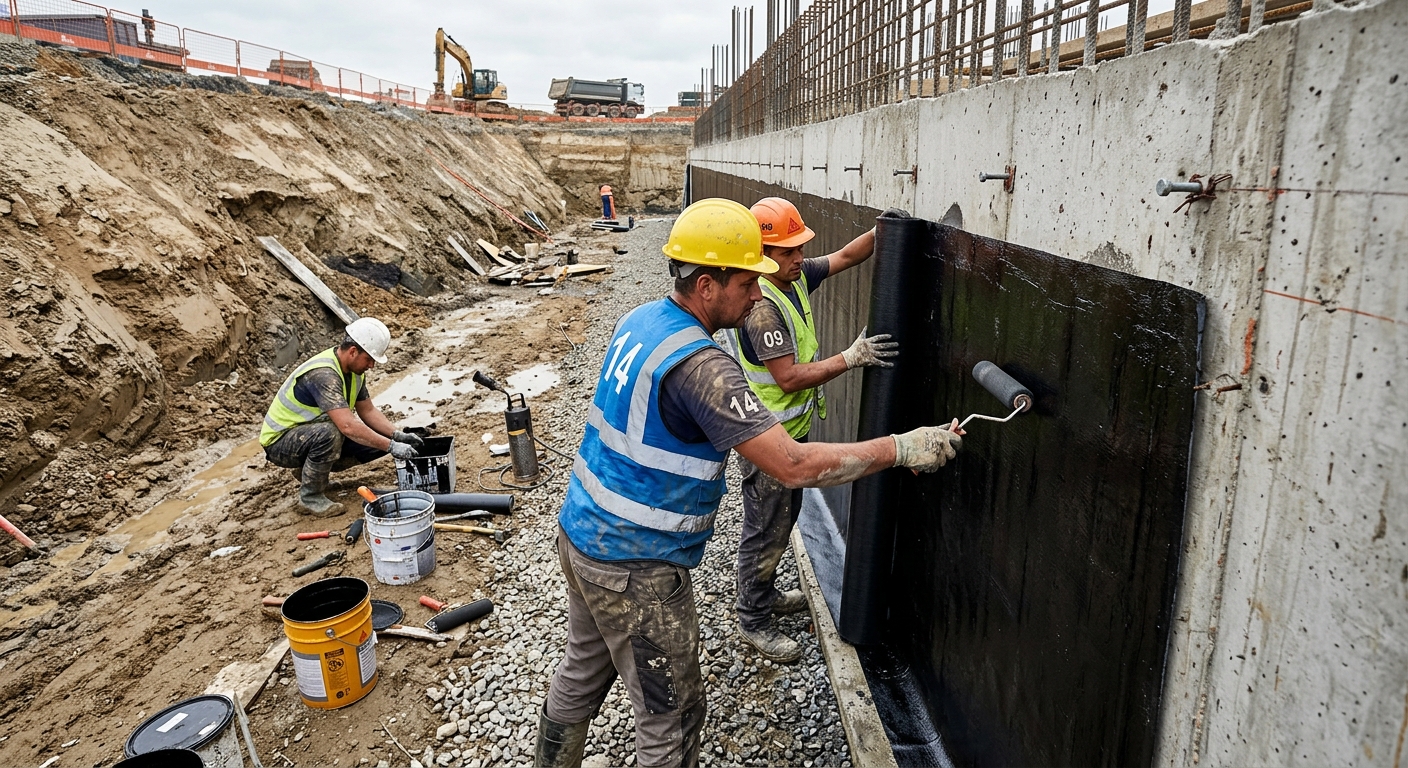
Exterior waterproofing and interior waterproofing are fundamentally different strategies. Exterior excavation involves exposing the foundation, applying a membrane system, installing or reworking drainage tile, then backfilling and restoring the yard. It permanently addresses water entry by reducing hydrostatic pressure against the wall—at a higher cost and with more yard disruption.
Interior waterproofing usually means installing a perimeter drain channel and sump pit (often with a sump pump and discharge line). It’s less invasive because you’re working from inside the basement, but it does not stop water from loading the wall from the outside. Instead, it captures water after it enters and safely drains it, which is why it’s often chosen when access is tight or when homeowners want to reduce disruption. In Spruce Grove, this approach still works well when paired with correct crack evaluation and a reliable discharge plan.
Which approach fits typical local conditions? On many homes with poured concrete walls, contractors can often improve performance through crack injection and coordinated drainage, especially when seepage is concentrated along joints. With older block foundations or mixed masonry, interior perimeter drainage is frequently a practical complement because block systems can “let go” around mortar lines and localized voids over time. For both foundation types, the Edmonton region’s freeze–thaw cycles demand that water be managed consistently; a sump system with a backup option becomes more important as spring runoff and power interruptions overlap.
Here’s a realistic price justification example: if an exterior excavation scope would push you into the $12,000–$25,000 range due to extensive landscaping removal, but your issue is limited to dampness and floor-edge seepage that’s responding to interior drainage, a $8,000–$18,000 interior system (plus smart crack repair) can be the better value. However, if inspections show persistent hydrostatic pressure at the wall line from failing exterior drainage, trying to “contain it inside” may cost more long-term through ongoing repairs and repeated finish damage.
| Method |
Best For |
Addresses Source? |
Disruption |
Lifespan |
Price Band |
| Full exterior excavation + membrane |
High seepage, persistent wall leakage, failed/unknown exterior drainage |
Yes (source control) |
High |
Long-term with proper drainage discharge |
$12,000–$25,000 |
| Interior French drain + sump system |
Interior water, damp floors, recurring seepage during spring runoff |
No (manages water after entry) |
Medium |
Medium-to-long-term with reliable pump discharge |
$8,000–$18,000 |
| Crack injection — epoxy (structural) |
Stable, non-moving cracks where water is present but movement is limited |
Partly (seals pathways in cracks) |
Low |
Medium (best with proper drainage) |
$600–$2,500 |
| Crack injection — polyurethane (active leak) |
Active weeping cracks and joints with ongoing moisture flow |
Partly (seals active pathways) |
Low |
Medium-to-high when leak source is also addressed |
$900–$3,200 |
| Interior drain channel only (no sump) |
Light seepage, minimal hydrostatic pressure, when gravity drainage is feasible |
No (still manages water after entry) |
Medium |
Lower than full sump system during heavy runoff |
$6,000–$12,000 |
| Re-grading + downspout extensions |
Surface water issues: gutter discharge, ponding near foundation, minor dampness |
Sometimes (reduces how much reaches wall) |
Low-to-medium |
Variable (depends on deep drainage condition) |
$600–$2,500 |
How to choose a waterproofing contractor in Spruce Grove
Choosing a waterproofing contractor in Spruce Grove is less about finding the lowest bid and more about confirming the scope is technically correct for your foundation, soils, and water flow. Start with Alberta compliance. Ask for their Alberta registration/licensing information, then request proof of liability insurance (current certificate) and WSIB/WCB clearance or proof of coverage. When you receive documents, look for dates, coverage type, and that the insurer can confirm the coverage if there’s an incident on your property.
Next, get 2–3 itemised written quotes. You want labour + materials breakdowns, not just a lump sum—especially for membrane systems, drain components, pump packages, and any demolition/restoration. Scrutinize what’s excluded: is landscaping restoration included after excavation? Is disposal of soil/debris included? Is the permit pull included if required for the proposed drainage or structural repair scope? A professional quote will say what’s included, what’s not, and what assumptions they’re making.
Warranty matters in this climate. Ask for: (1) workmanship warranty length and terms, (2) product/manufacturer warranties, and (3) whether the warranty is transferable if you sell your home. For payment schedule, avoid paying more than 10–15% upfront; hold back the remainder until the work is complete and you’ve confirmed performance details (sump discharge test, pump operation, and any tie-in approvals). Finally, request the start date and completion estimate in writing—waterproofing timelines can slip when excavation access is constrained or when spring conditions change.
- Ask for a written site assessment summary: cracking location, seepage pattern, and drainage findings.
- Confirm whether they’ll camera-inspect or assess existing weeping tile (if accessible) before pricing.
- Ensure the quote lists pipe sizes, pump model/horsepower, check valves, and backup option details.
- Verify whether disposal/haul-away is included for excavated soil and interior debris.
- Confirm how exterior discharge will be routed to avoid freezing issues and backflow.
- Check that membrane and drain system products match the foundation type and soil conditions.
- Require a clause describing how they’ll handle unanticipated conditions (failed footing, voids).
- Ask whether crack injection includes crack prep (routing/cleaning) and not just surface patching.
- Request photos of installed components (sump pit, discharge line, membrane continuity) during work.
- Get warranty details in writing, including warranty transfer and exclusions.
- Use a progressive payment schedule with a holdback until final inspection and cleanup.
- Confirm their insurance and WSIB/WCB clearance before any excavation starts.
Red flags I see with weaker waterproofing contractors in Spruce Grove: (1) promises to “guarantee a dry basement” without identifying the water source; (2) quotes that exclude permit/engineering needs but don’t mention them; (3) no itemised breakdown of pump capacity or discharge routing; (4) asking for large upfront payments (well above 10–15%); and (5) offering crack injection as a standalone cure when the wall shows signs of ongoing hydrostatic pressure.
Frequently asked questions — waterproofing in Spruce Grove
How do I compare waterproofing quotes?
To compare quotes in Spruce Grove, ask each contractor for the same level of detail: labour and materials, where the work starts/ends, and what they consider “diagnosed vs assumed.” Look for items like interior perimeter drain channel type, sump basin dimensions, pump model, discharge route, and whether a battery backup is included. Also compare site scope: will they excavate and replace drainage tile, or only seal cracks from the inside? Quotes can swing widely—an exterior excavation package often falls in the $12,000–$25,000 band—so you’ll want to verify whether one bid is solving the source and the other is managing symptoms. Finally, confirm warranty terms and whether permit/municipal approvals are included where required.
How long does basement waterproofing take in Spruce Grove?
Timing depends on whether you’re doing interior or exterior work and how constrained access is. In Spruce Grove, an interior perimeter drain with sump is commonly completed in about 3–7 working days, but finish restoration can add more time based on drying schedules and the materials you choose. Exterior excavation typically takes longer because of excavation, membrane and drainage installation, backfill, compaction, and landscaping restoration—often pushing the overall project into the 1–3 week window depending on the scope and weather. Alberta freeze–thaw can also affect exterior scheduling if subgrade becomes saturated or if concrete/restoration work can’t be completed within suitable conditions. Always get a written start date and completion estimate, plus contingencies for delays.
What is a weeping tile and does my Spruce Grove home have one?
Weeping tile is an older term for foundation drainage tile installed around the perimeter below the basement floor level (or in some assemblies near the foundation footing). Its job is to collect groundwater that migrates toward the foundation and direct it to a sump or discharge point. Many Spruce Grove homes—especially those built before 1980—are more likely to have had weeping tile installed, but it may be partially clogged, broken, or disconnected over time. In the Edmonton region, soils can hold water and expand through freeze–thaw cycles, which increases the chance that older drainage systems fail. Even if you “have” weeping tile, it might not be functioning, so a proper assessment matters before relying on interior-only solutions that can still leave wall loads high.
Can I waterproof my basement in winter in Spruce Grove?
Yes, you can waterproof in winter in Spruce Grove, but what you can do depends on the method. Interior solutions like perimeter drains, crack injection, and sump pump installation are often feasible in colder months because the work occurs inside conditioned space. Exterior excavation is more limited: cold subgrade and frozen ground can slow excavation and complicate membrane installation and backfill compaction. Freeze–thaw also means water can behave differently day-to-day in winter, so contractors should assess leakage patterns carefully rather than assuming the same flow as in spring. That said, if your basement is actively leaking now, interior waterproofing can still be a smart move. If your quote is targeting exterior improvements near the $12,000–$25,000 band, ask for winter-ready scheduling and how they’ll manage drainage discharge and thaw-related curing.
What is the difference between waterproofing and damp-proofing?
In homeowner terms, waterproofing is designed to handle water pressure and active seepage—especially during snowmelt and spring runoff. Damp-proofing typically refers to managing minor moisture, surface condensation, or low-level dampness without fully addressing hydrostatic pressure. In Spruce Grove’s climate and soil conditions, where clay-rich soils can hold water and freeze–thaw can widen cracks, “damp-proofing only” can leave you with recurring leaks at the same joints or floor edges. That’s why interior perimeter drainage with a properly sized sump pump (often in the $8,000–$18,000 range) may be required when the water source is pushing in. A good contractor will explain whether your symptoms indicate active hydrostatic pressure or just minor moisture and will match the solution accordingly.
Will basement waterproofing affect my property value in Spruce Grove?
Usually, properly executed basement waterproofing improves marketability—especially in resale housing—because buyers don’t want recurring dampness, odours, efflorescence, or recurring floor-edge seepage. In Spruce Grove, where many homes have older foundations and drainage that can fail over time, a documented waterproofing project with warranty and clear evidence of drainage improvements often strengthens buyer confidence. It also reduces ongoing maintenance and the risk of damage to finished basements. That said, the best value comes from matching the solution to the true water path: exterior source control generally has the strongest long-term story, while interior-only systems can still be valuable when engineered correctly for your specific soils and water table behaviour. As a budgeting reference, many homeowners choose interior measures in the $8,000–$18,000 band when access is limited, then upgrade if exterior failures are confirmed.