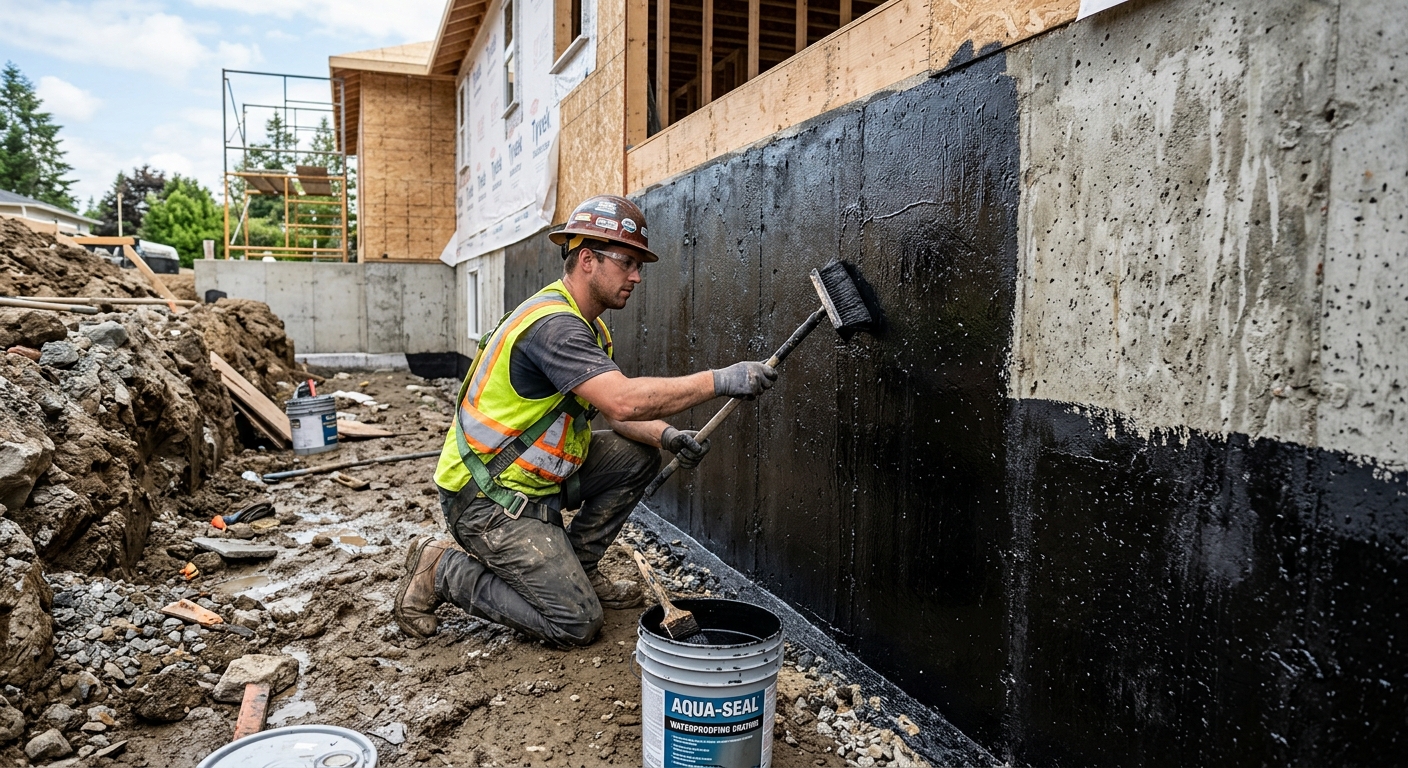
Basement waterproofing options and costs in Somerset
Somerset, Alberta homeowners typically deal with waterproofing sooner than people expect, especially when original “tar-and-paper” membranes and aging weeping tile haven’t kept up with today’s drainage demands. Somerset’s population was 8,320 in 2021 (Statistics Canada, 2021 Census), and that size means many basements are in older housing pockets where leak histories repeat—often through the spring melt and early freeze–thaw seasons. In Calgary’s broader market, foundations from earlier build eras are far more likely to have corroded or completely failed weeping tile, plus clogged weeping stone that no longer routes water away from basement walls.
Costs in the Calgary region can also swing because southern Alberta’s freeze–thaw cycles widen existing cracks and joints, and the clay-and-clay-till soils common around Calgary hold water and expand when saturated. That expands lateral pressure against foundations, increasing seepage through hairline openings and speeding up failure of partially working drainage systems. On top of that, tight access—concrete patios, mature landscaping, and narrow lot lines—can push excavation and disposal costs higher. In and around Somerset’s older residential pockets (where lot grading and downspouts often drift over time), exterior waterproofing and interior drainage are both in steady demand.
The table below compares the most common systems contractors propose so you can match the method to the cause of water entry and your budget before you request an itemised quote.
| Method |
What It Addresses |
Disruption Level |
Durability |
Price Range |
| Exterior excavation + new membrane + drainage tile |
Primary water entry from around footing/wall; replaces failed exterior drainage and stops hydrostatic pressure at the source |
High (landscape/sidewalk/patio access, excavation, backfill) |
Long-term, typically 15–25+ years with correct installation |
$9,500–$24,000 |
| Interior perimeter drain channel + sump pit |
Water that enters through cracks/joints; manages it below the slab/wall line with active pumping |
Medium (interior flooring/ceiling access; less excavation) |
Dependable if discharge routing and pump maintenance are done |
$6,000–$13,500 |
| Foundation crack injection (epoxy or polyurethane) |
Stops leakage paths through cracks; chooses epoxy for structural/stable cracks, polyurethane for active seepage |
Low (small drilling pattern; interior patching) |
Typically 5–15 years depending on crack movement and water pressure |
$750–$1,800 |
| Sump pump installation (primary + battery backup) |
Prevents basement flooding during heavy spring runoff and power interruptions |
Medium (sump pit excavation; electrical hook-up) |
Long-lasting with correct basin sizing and backup |
$1,450–$3,000 |
| Window well drain installation |
Surface water intrusion around egress window wells |
Low to Medium (small area excavation, regrading) |
Typically 8–15+ years with cleanouts and proper discharge |
$900–$1,800 |
| Lot re-grading / downspout extension |
Reduces surface runoff pooling next to foundation; improves gutter discharge |
Low (minor landscaping reshaping) |
5–10+ years depending on maintenance |
$1,000–$3,500 |
Prices are estimates only and vary by project scope, site access and material selection.
What affects the price of waterproofing in Somerset
In Somerset, two homeowners can receive quotes that are 30–50% apart for the “same” leaking basement because the true cause of water entry isn’t always identical—and because Calgary-area labour and logistics change with site conditions. Even when the fix sounds similar (for example, “interior perimeter drainage”), the scope can broaden quickly: deeper interior cuts, a larger sump basin, more discharge piping, tie-ins to existing drains, or added remediation for efflorescence and mould can all raise costs.
Three drivers typically separate Somerset-area pricing from national averages: soil type, water table and freeze–thaw. Clay-heavy soils common in the Prairies expand when saturated, increasing lateral pressure against foundation walls and worsening cracks over time. That can turn a simple crack injection into a hybrid plan (injection plus interior drainage). Second, in the Calgary region, pockets near river valleys and low-lying coulees can experience higher seasonal groundwater and storm intensity, which means longer pump run times and larger sump designs. Third, southern Alberta’s freeze–thaw cycles widen existing joints, forcing more prep and re-sealing work so the system performs through winter.
Local examples that commonly move the needle: a poured-concrete wall with stable, hairline cracking may fit within the crack repair band of roughly $500–$1,800, while a block foundation with active seepage at multiple corners often requires interior drainage and pushes the budget into the $5,000–$15,000 range. Likewise, if original weeping tile is likely failed (often 60+ years old in older neighbourhoods), contractors must assume more water volume and may recommend a full exterior approach at the higher end of the $9,000–$25,000 exterior band.
If your downspouts discharge too close to the footing and grading has settled, modest rework may help; however, it rarely replaces a drainage system when hydrostatic pressure is the underlying issue.
| Price Factor |
Why It Matters |
Cost Impact |
| Interior vs. exterior approach — interior is less disruptive but addresses symptoms |
Interior systems manage water after it enters; exterior reduces or eliminates water at the source |
Interior often sits around the $5,000–$15,000 band; exterior commonly runs $9,000–$25,000 |
| Foundation type — poured concrete vs. block vs. stone vs. ICF |
Wall construction influences crack patterns, sealing success, and drainage detailing |
Poured concrete may accept injection better; block often needs drainage reinforcement, increasing scope |
| Soil type — clay expands more than sand, adding pressure |
Clay saturation increases lateral load and water flow through joints/cracks |
Higher water volumes can require bigger sumps and more discharge piping |
| Crack type and length — hairline vs. structural horizontal cracks |
Structural movement changes whether injection alone can work |
Structural cracks usually trigger more labour and may require engineering/extra repairs |
| Sump pump backup system — battery or water-powered backup needed |
Spring storms and outage risk make redundancy critical for basements |
Adds electrical and basin components; often shifts the job toward the upper end of $900–$3,000 |
| Access — landscaping, decks, or driveways must be removed for exterior |
Excavation depth and access determine labour, restoration, and disposal needs |
Removal/restoration can be a major portion of exterior costs |
| Weeping tile age — original tile (60+ years) may be completely failed |
Failed tile means higher hydrostatic pressure and more interior water |
May move you from “partial” to “full” solutions, especially exterior drainage replacement |
| Mould or efflorescence remediation required before sealing |
Moisture and salts must be addressed to avoid trapping contaminants behind coatings |
Can add labour and time; sometimes requires targeted cleaning and drying days |
Permits & regulations in Alberta
In Alberta, foundation excavation, structural crack repair, and changes to lot drainage often require a building permit, particularly when work could affect the structural performance of the foundation or when drainage routing changes how water is handled on-site. For Somerset homeowners, the practical approach is to treat “anything that involves structural repairs to foundations” as permit-sensitive until confirmed—especially horizontal cracks in block walls, significant step cracking, underpinning-related work, or any repair that could be interpreted as restoring structural capacity.
Sump pump installations can also trigger municipal approval when discharge is connected to storm or sanitary services. Contractors should be able to tell you what they are permitted to do and whether they will pull permits as part of the scope. Structural crack repair that involves assessing major movement typically benefits from a structural engineer’s evaluation to confirm if underpinning or additional structural interventions are needed.
To verify a contractor is properly set up, Somerset homeowners should do three checks in writing: (1) confirm the contractor’s Alberta licence/registration details on the relevant provincial registry, (2) request a certificate of insurance showing liability coverage and confirm the job site is covered for the described scope, and (3) check WSIB/WCB clearance documentation (or equivalent clearance letter) before any excavation begins.
Step-by-step: ask for the contractor’s permit plan, ask who pulls it and what documentation is needed, then verify licence and insurance clearance certificates match the company name and job address.
Interior vs exterior waterproofing — what does Somerset need?
In Somerset, the core difference is source control versus water management. Exterior waterproofing—full excavation, new membrane, new drainage tile, and properly engineered backfill—targets the water entry point around the footing and wall. When clay-heavy soils hold water and freeze–thaw cycles stress joints, reducing hydrostatic pressure at the source is often the most permanent option, but it’s also more expensive and disruptive because the yard must be opened and then restored.
Interior waterproofing—typically a perimeter drain channel, a sump pit, and a sump pump—doesn’t stop water from entering the wall. Instead, it intercepts seepage and routes it away from the basement floor, which is why it’s usually faster and less invasive. This is often the right approach when exterior excavation access is constrained by patios, driveways, or tight lot lines, or when investigations indicate localized seepage rather than a complete exterior drainage failure. In Somerset’s market, poured-concrete walls can respond well to crack injection when cracks are stable, while block foundations commonly benefit from interior drainage as a practical complement because water paths can be multi-directional through block joints.
Because Alberta spring conditions can mean power interruptions during heavy runoff, a backup system matters. A primary sump pump with battery backup can reduce the “worst day” damage risk when the pump can’t run.
Price-wise, a homeowner may compare an exterior project around $9,000–$25,000 with an interior drainage solution often in the $5,000–$15,000 band. The difference is justified when exterior drainage is confirmed failed (especially when weeping tile is likely older and clogged) or when you’re dealing with consistent water pressure at multiple wall segments.
| Method |
Best For |
Addresses Source? |
Disruption |
Lifespan |
Price Band |
| Full exterior excavation + membrane |
Clay-rich soil conditions, repeated seepage, confirmed exterior drainage failure, higher hydrostatic pressure |
Yes |
High |
15–25+ years with proper detailing |
$9,000–$25,000 |
| Interior French drain + sump system |
Basements with wet corners, perimeter seepage, limited yard access, or as part of a hybrid plan |
No (manages after entry) |
Medium |
Dependable with pump maintenance and cleanouts |
$5,000–$15,000 |
| Crack injection — epoxy (structural) |
Stable cracks with minimal movement, often in poured concrete where the crack is not actively weeping |
Helps seal entry path; assumes crack is stable |
Partial |
Low |
5–15 years (varies with movement and water pressure) |
$500–$1,800 |
| Crack injection — polyurethane (active leak) |
Active seepage through cracks, joints, and areas with intermittent wetting during melt cycles |
Helps stop active leakage paths |
Partial |
Low |
Often 5–12+ years depending on ongoing pressure |
$750–$1,800 |
| Interior drain channel only (no sump) |
Light seepage, limited water volume, situations where a sump is not feasible |
No (relies on passive relief) |
Medium |
Moderate; can fail under heavy spring loading |
$4,000–$9,500 |
| Re-grading + downspout extensions |
Surface runoff issues, minor dampness after storms, landscaping settlement around perimeter |
Some source relief at surface grade |
Low |
5–10+ years with upkeep |
$1,000–$3,500 |
How to choose a waterproofing contractor in Somerset
Start with proof, not promises. In Alberta, verify the contractor’s ability to do foundation-related work by checking their Alberta licence/registration details (where applicable), then request a certificate of liability insurance that names the correct legal company and covers the work described. Next, ask for WSIB/WCB clearance documentation; a legitimate contractor will provide it before starting excavation. If they can’t produce current paperwork, that’s a serious warning in any Somerset basement waterproofing project.
Then get 2–3 itemised written quotes—not lump sums—so you can compare labour, materials, disposal, pumps, and specific scope details. The scope should state what is included (permit pull if required, excavation depth, drainage tile type, filter fabric, discharge location, sump basin size, and whether mould/efflorescence remediation is part of the prep). Confirm what’s excluded, such as repair of existing interior finishes beyond basic patching, restoration of fences/landscaping, or additional excavation if hidden conditions are worse than assumed.
Warranty matters: ask for the workmanship warranty length and whether product/manufacturer warranties apply to the exact materials installed. Also confirm whether warranties are transferable to future homeowners.
For payment schedule, never pay more than about 10–15% upfront. Hold back a portion until completion and confirm the timeline is in writing (start date and estimated completion). Lastly, make sure the discharge plan is clear—especially in spring when higher flows can overwhelm undersized systems.
- Request an itemised quote with line-by-line labour and materials (membrane, tile, sump basin, pumps, discharge piping).
- Ask whether permits are included and who pulls them for Alberta foundation/drainage work.
- Confirm disposal is included for clay spoil and excess excavation materials.
- Verify WSIB/WCB clearance letter is current and matches the contract company.
- Check liability insurance certificate and ensure it covers waterproofing and excavation-related work.
- Ensure they specify drainage discharge location and method (not “to wherever”).
- Ask about pump specs and basin size, plus anti-backflow measures.
- If you need backup, confirm battery type and integration details (not just “backup available”).
- Require a written waterproofing scope map showing wall segments, crack locations, and drain routing.
- Confirm prep requirements: efflorescence/mould cleaning, crack cleaning, drying time.
- Review warranty terms: workmanship duration, product coverage, exclusions, and transferability.
- Keep payment staged: small deposit (10–15%), then progress payments tied to inspections and completion.
Red flags to watch in Somerset: a quote that skips investigation and jumps straight to “sealant everywhere,” no mention of discharge routing or pump backup, vague warranties (“parts covered, labour unclear”), refusal to provide WSIB/WCB clearance or insurance paperwork, and proposals that treat active seepage cracks with epoxy only (instead of selecting polyurethane where appropriate).
Frequently asked questions — waterproofing in Somerset
Why is my basement leaking in Somerset?
In Somerset, leaks usually come from water finding a pathway through foundation cracks, joints, or poorly functioning drainage. Clay-heavy soils can hold and expand when saturated, increasing lateral pressure against basement walls—so leaks often show up more during spring melt and freeze–thaw transitions. Another common cause is aging or clogged weeping tile; in older neighbourhoods around Calgary’s growth areas, original drainage may be 60+ years old and no longer moving water away effectively. If you notice dampness along corners or at wall-to-floor joints after heavy rain, interior drainage or perimeter interception is often part of the fix. If you have hydrostatic pressure symptoms across multiple segments, exterior waterproofing tends to be more appropriate. (Statistics Canada, 2021 Census)
How do I know if a foundation crack is serious?
Not all cracks mean structural failure, but you should treat certain patterns as higher risk—especially in Alberta’s freeze–thaw climate where movement can worsen openings over time. Generally, hairline vertical cracks that stay stable are often less urgent than horizontal cracks in block walls or cracks with noticeable step patterns. Signs of seriousness include widening over seasons, new cracks appearing after spring runoff, stair-step movement along mortar lines, water seepage through the crack, or bowing/spreading around openings. If you see active water during wet months, that crack is also a waterproofing pathway. A reputable Somerset contractor should assess movement, confirm whether it’s injection-worthy, and advise whether a structural engineer review is needed for major cracks.
How much does foundation crack repair cost in Somerset?
For Somerset homeowners, foundation crack repair commonly falls in the $500–$1,800 band depending on crack length, access, and whether the crack is actively leaking. Hairline, stable cracks in poured concrete are often addressed with epoxy injection, typically toward the lower to mid range. Active seepage through masonry or joints usually requires polyurethane injection, and that can move the scope upward if multiple ports and multiple crack segments are needed. If the crack is long, located where there’s heavy pressure, or combined with interior drainage needs, you may pay more for the overall waterproofing plan (for example, interior perimeter drainage projects often sit closer to the $5,000–$15,000 band). The best way to price accurately is an on-site inspection with a crack mapping and an itemised quote.
Do I need a sump pump in Somerset?
A sump pump is usually needed when you have measurable water entry that can’t be controlled with grading alone, especially when interior drains and a sump basin are required to manage ongoing seepage. In southern Alberta, spring runoff and freeze–thaw can increase water volume and create times when passive drainage won’t keep up. If your basement shows recurring dampness, wet corners, or water on the floor after storms, a sump system is often the practical solution. For reliability, many Somerset homeowners choose a primary sump pump with battery backup to reduce flooding risk during power outages. Pricing commonly aligns with a sump pump installation range of about $900–$3,000, with the upper end when backup is included. Your contractor should match pump sizing to expected water volume and discharge routing.
How does Somerset's soil affect my foundation?
Somerset sits in a region where clay and clay-till soils are common, and that matters. Clay holds water longer and expands when saturated, which increases lateral pressure on foundation walls and can push water through cracks and mortar joints. When temperatures shift, freeze–thaw cycles widen existing gaps, so what started as a tiny seepage path can become a persistent leak over time. This is one reason quotes can differ: if the soil is retaining water and exerting pressure, contractors may need a perimeter drainage system and/or exterior waterproofing rather than only cosmetic sealing. Local conditions also affect excavation difficulty—heavy clay can increase labour and disposal demands—so expect scope and pricing to reflect site conditions, especially for exterior work in tight urban lots.
Do I need a permit for foundation work in Alberta?
In Alberta, permit requirements depend on what you’re changing. Foundation excavation, structural crack repair, and many changes to lot drainage typically require a building permit. Sump pump installations that connect discharge to storm or sanitary services often need municipal approval as well. For structural repairs—particularly major cracks in block walls, horizontal cracking, or anything that could be interpreted as restoring structural capacity—an engineer’s assessment is often required to confirm the appropriate repair approach. The safest way for Somerset homeowners is to ask your contractor to spell out whether permits will be pulled and by whom, then verify it’s reflected in the itemised scope before work starts. Always confirm contractor compliance with insurance and WSIB/WCB clearance before signing.