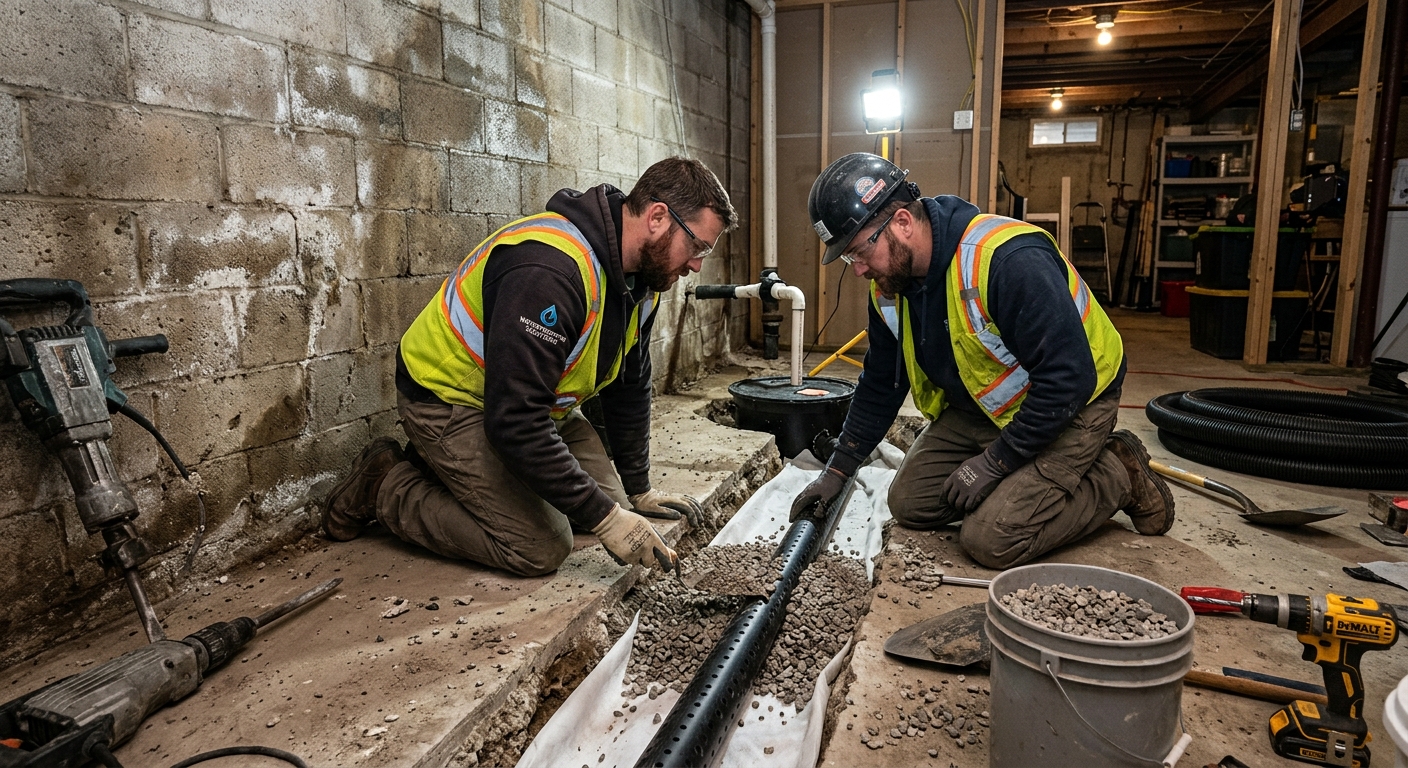
Basement waterproofing options and costs in Millrise
Millrise homeowners typically have one of three “first signs” that drive the call: damp walls, musty odours with persistent seepage, or a higher basement waterline after spring melt. With Millrise sitting within Calgary’s clay-heavy soils and freeze–thaw cycles, water doesn’t just seep through—ice/water cycling widens joints and cracks, then meltwater follows the path of least resistance. That matters because many older Calgary-area houses (including parts of Millrise) predate modern, continuous membrane details, so original waterproofing may have been designed for a different drain strategy.
In the 2021 Census, Millrise had a population of 6,655 (Statistics Canada, 2021 Census). While that doesn’t directly set waterproofing design, it does correlate with a neighbourhood mix where access constraints are common—tight lots, mature landscaping, patios, and finished landscaping that complicate exterior excavation. In Calgary, contractor availability and schedule can also shift pricing during peak spring repair windows, because deep excavations and full-perimeter systems depend on weather for excavation, membrane curing, and backfill compaction.
As a rule of thumb, you can expect exterior waterproofing (excavation + membrane + drainage tile) to run higher than interior drainage solutions, but exterior work is often the most definitive when hydrostatic pressure is the underlying cause—especially where weeping tile is aging or blocked. Interior approaches can be very cost-effective when the goal is to manage water after entry and protect finishes.
Below is a practical comparison of common methods and price bands that match Calgary-area conditions and your site constraints in Millrise.
| Method |
What It Addresses |
Disruption Level |
Durability |
Price Range |
| Exterior excavation + new membrane + drainage tile |
Bulk water entry at the foundation and hydrostatic pressure; adds perimeter drainage |
High (excavation, landscaping removal, backfill) |
High (membrane + properly functioning drains) |
$15,000–$25,000 |
| Interior perimeter drain channel + sump pit |
Water after it enters; reduces lateral wall seepage effects |
Medium (interior floor area removal/patching) |
Medium to High (depends on crack sealing and discharge reliability) |
$7,500–$12,500 |
| Foundation crack injection (epoxy or polyurethane) |
Crack sealing to stop seepage pathways; type depends on active vs non-active leaks |
Low to Medium (limited demo around crack locations) |
Medium to High (best when combined with drainage strategy) |
$800–$1,800 |
| Sump pump installation (primary + battery backup) |
Automatic removal of collected water to keep the system functional |
Low to Medium (pit excavation and discharge piping) |
High with backup (reduces flood risk during outages) |
$1,300–$3,000 |
| Window well drain installation |
Localised water entry at egress/window wells |
Low (small exterior/inside work depending on design) |
Medium (reliant on clear grading and free-draining stone) |
$1,200–$2,500 |
| Lot re-grading / downspout extension |
Reduces surface runoff and directs water away from foundation |
Low (minor landscaping disruption) |
Low to Medium (works best when combined with drainage) |
$900–$2,200 |
Prices are estimates only and vary by project scope, site access and material selection.
What affects the price of waterproofing in Millrise
In Millrise, two homeowners can receive quotes that differ by 30–50% for what sounds like the “same” basement waterproofing—because the underlying water path and how the contractor proposes to control it isn’t identical. In Calgary and the broader Alberta market, pricing tends to move with three major drivers: clay-heavy soil conditions, variable water table behaviour in low pockets, and freeze–thaw expansion that keeps opening weak points season after season.
Soil type matters because clay expands when it saturates and pushes laterally against foundation walls and footings, making failed seals more likely over time. Freeze–thaw then widens hairline cracks and loosens joints, so a “simple crack patch” can become a repeat call if the drainage plan isn’t corrected. In low-lying parts of the Bow/Elbow river valleys and coulees (which can influence groundwater behaviour on some Calgary-area lots), higher seasonal groundwater and storm events can increase hydrostatic pressure—driving sump run times, deeper excavations, and the need for perimeter drainage.
Market realities amplify this. Neighbourhoods with older housing stock often have aging or clogged weeping tile, so contractors need to test and potentially replace drainage lines rather than assume they’re still functioning. That is why an interior-first approach might start around $7,500–$12,500 when water is mostly entering at floor/wall interfaces, but full exterior waterproofing frequently lands closer to $15,000–$25,000 when the root cause is bulk water driven at the foundation face.
Concrete examples for Millrise: a home with a sunken back patio and tight access frequently forces more excavation time and adds disposal fees for heavy clay spoils; a basement with visible efflorescence on block walls typically requires cleaning and crack-appropriate injection before sealing; and a property with downspouts that dump near walkways can often be improved with re-grading and extensions—sometimes reducing how aggressively the system must be designed.
| Price Factor |
Why It Matters |
Cost Impact |
| Interior vs. exterior approach — interior is less disruptive but addresses symptoms |
Exterior targets the water entry point; interior controls water after entry |
Interior often reduces cost by roughly 30%–60% versus full exterior |
| Foundation type — poured concrete vs. block vs. stone vs. ICF |
Different wall materials react differently to cracking and sealing systems |
Poured concrete crack injection may be more straightforward; block often needs complementary interior drainage |
| Soil type — clay expands more than sand, adding pressure |
Saturated clay increases lateral wall pressure and recurring seepage |
Higher likelihood of perimeter drainage replacement and more robust sump design |
| Crack type and length — hairline vs. structural horizontal cracks |
Active leaks and horizontal movement require different sealing and evaluation |
Structural/horizontal cracks can trigger engineering review and additional work |
| Sump pump backup system — battery or water-powered backup needed |
Spring runoff and outages can overwhelm a single pump |
Adding backup commonly increases the pump scope by several hundred to 1,500+ |
| Access — landscaping, decks, or driveways must be removed for exterior |
Work time increases when patios, fences, or tight lot lines block excavation |
Can add thousands depending on removal and reinstatement requirements |
| Weeping tile age — original tile (60+ years) may be completely failed |
Old tile can be clogged, broken, or disconnected |
Replacement or full reconstruction can shift costs toward the exterior band |
| Mould or efflorescence remediation required before sealing |
Sealers often fail if salts and contaminants remain |
Additional labour and drying time can add meaningful cost before sealing begins |
Permits & regulations in Alberta
In Alberta, foundation excavation, structural crack repair, and changes to lot drainage typically require a building permit. If the work involves altering drainage connections or you’re routing a sump discharge toward municipal systems, municipal approval is usually required. For structural crack repair—particularly horizontal cracks in block walls or major step-crack movement—an engineer’s assessment is commonly needed to confirm whether the issue is purely leakage or includes structural compromise.
Step-by-step, a Millrise homeowner can verify contractor compliance without guesswork. First, ask for the contractor’s Alberta licence number and check it through the applicable provincial online registry for trades-related status. Second, request a current certificate of insurance (COI) showing general liability and, where applicable, coverage for masonry/waterproofing-related operations. Third, verify WSIB/WCB clearance: request the clearance letter (or confirmation details) and ensure the effective date is current for the project start window. Fourth, if the scope includes structural repair or engineered solutions, ask whether they provide engineering support in-house or coordinate a licensed structural engineer—then get a copy of the engineer’s letter/report for your file.
What typically does not require a permit includes simple downspout extensions, cosmetic grading adjustments within existing surfaces, and small window well drain upgrades—provided you’re not re-routing to municipal infrastructure or changing foundation drainage to the point that it becomes regulated work. When in doubt, request the contractor’s permit responsibility table in the written quote.
Interior vs exterior waterproofing — what does Millrise need?
The fundamental difference is source control versus water management. Exterior waterproofing—full excavation, new membrane, new drainage tile, and backfill—targets where water enters by creating a continuous barrier and a functioning perimeter drainage system. It’s the most permanent option when clay soils hold water against foundation walls or when exterior drainage (weeping tile) has failed. However, it costs more and requires landscape disruption because excavation depth, access, and disposal are significant.
Interior waterproofing—perimeter drain channels, a sump pit, and a sump pump—does not stop hydrostatic pressure on the wall itself. Instead, it collects water after it enters and keeps the basement dry by lowering water levels. In Millrise, this often works well as a practical complement, especially for block foundations where crack injection alone may not be enough due to how water migrates through mortar joints. Poured concrete walls often respond better to crack injection strategies because sealing specific pathways can be effective, but freeze–thaw still means you must pair sealing with reliable drainage.
Given Alberta’s spring weather swings and occasional power disruptions during heavy runoff, consider sump pump backup systems. A primary pump without backup can still flood if the discharge can’t run during an outage. If you’re choosing between options, ask your contractor to explain the water path and how the plan deals with the clay-and-freeze–thaw cycle.
Example: for a basement where leaks are mostly around the floor perimeter and wall-footing joints, an interior perimeter drain + sump package might sit around $7,500–$12,500. If the contractor confirms that the exterior weeping tile is clogged and that bulk water pressure is driving seepage, the exterior membrane route often falls closer to $15,000–$25,000, which can be justified when you want the source addressed and don’t want recurring interior-only maintenance every spring.
| Method |
Best For |
Addresses Source? |
Disruption |
Lifespan |
Price Band |
| Full exterior excavation + membrane |
Bulk water pressure, failed exterior drainage, recurring wet basements |
Yes |
High |
Long (typically many years with proper backfill and drains) |
$15,000–$25,000 |
| Interior French drain + sump system |
Interior seepage with manageable excavation from inside; access-limited lots |
No (manages after entry) |
Medium |
Medium to Long (depends on pump reliability and sealed entry points) |
$7,500–$12,500 |
| Crack injection — epoxy (structural) |
Non-moving, stable cracks in poured concrete where leaks are not actively “weeping” |
Partly (seals pathways) |
Low to Medium |
Medium to Long when combined with drainage |
$800–$1,600 |
| Crack injection — polyurethane (active leak) |
Active seepage, cracks with moisture movement, flexing joints |
Partly (seals pathways) |
Low to Medium |
Medium (perform best when water pressure is managed) |
$900–$1,800 |
| Interior drain channel only (no sump) |
Minor dampness where water volumes are low and discharge is not needed |
No |
Low to Medium |
Short to Medium (risk increases in heavy spring events) |
$5,000–$8,500 |
| Re-grading + downspout extensions |
Surface water management when leaks correlate with rainfall/roof runoff |
No (reduces load) |
Low |
Medium (best when drainage paths stay clear) |
$900–$2,200 |
How to choose a waterproofing contractor in Millrise
Start by verifying the contractor’s Alberta compliance. Ask for their Alberta trade licence (or relevant registration details), a current certificate of insurance (COI), and proof of WSIB/WCB coverage. You can confirm licences and status through the applicable online registry, while the COI should list your address (or your project) or at least show active coverage limits. For WSIB/WCB, request a clearance letter and check the effective dates—an expired clearance is a hard stop.
Next, get 2–3 itemised written quotes instead of one lump-sum number. The best proposals break labour and materials separately (membrane/drainage board, pipe and fittings, sump/pump, disposal and reinstatement, and any crack repair products). Pay attention to exclusions: are demo, disposal of clay spoils, permit handling, and restoration included? In Calgary-area work, disposal and backfill compaction can materially change costs, especially on clay-heavy lots with limited access.
Warranty matters. Look for a workmanship warranty length (often several years for installation), plus a product/manufacturer warranty on membranes and specific sealants. Ask if the warranty is transferable to future owners. For payment scheduling, never pay more than 10–15% upfront; hold back a portion until the job is complete and reviewed. Finally, insist on a written timeline with start date and completion estimate—waterproofing scheduling depends heavily on excavation windows, curing times, and spring runoff risk.
- Request the contractor’s licence/registration number and verify it through the Alberta online registry.
- Confirm the COI is current and includes general liability for the scope.
- Verify WSIB/WCB clearance letter dates before signing.
- Use itemised quotes: labour, materials, disposal, and reinstatement separated.
- Ask whether a permit is required for your exact scope and who pulls it.
- Confirm discharge route for sump water (and approval requirements if applicable).
- Get details on how they test or assess weeping tile function (not just “assume”).
- Ask which crack injection product they recommend and why (epoxy vs polyurethane).
- Include pump specifications and confirm backup plan if power fails.
- Confirm excavation depth assumptions and how they manage clay spoils disposal.
- Review warranty: workmanship duration, product coverage, and transferability.
- Set a payment schedule with a clear holdback until final inspection and cleanup.
Red flags in Millrise: a contractor who won’t provide a detailed, itemised scope; promises “one-size-fits-all” without diagnosing exterior drainage or crack movement; avoids discussing sump backup for spring storms; requests large upfront deposits beyond 10–15%; or provides a warranty that’s only on materials and not on installation workmanship.
Frequently asked questions — waterproofing in Millrise
Do I need a permit for foundation work in Alberta?
Often, yes in Alberta—foundation excavation, structural crack repair, and changes to lot drainage can require a building permit. If the work involves re-routing or connecting sump discharge in a way that affects municipal systems, municipal approval may also be required. In Millrise, many homeowners start by addressing interior leaks, then realize exterior drainage or structural crack assessment is needed; that is where permits commonly come into play.
To verify, ask the contractor to state in writing which tasks are permit-driven (and whether they handle the permit pull). For structural cracks—especially horizontal cracks—plan for an engineering assessment to confirm if underpinning or additional structural work is needed. Always confirm liability coverage and a valid WSIB/WCB clearance before work begins.
How long does waterproofing last?
It depends on the method and how well it matches the water source. Exterior waterproofing with a continuous membrane and functioning perimeter drainage is typically the most long-lasting approach because it addresses entry at the foundation face. In Millrise’s freeze–thaw conditions and clay-heavy soils, systems tend to perform best when drainage is clear and backfill is compacted properly.
Interior-only solutions can last a long time if the sump/pump system is reliable and discharge is functioning, but they’re managing water after entry. That means you’ll be more sensitive to sump performance during spring runoff. As a practical reference, an interior perimeter drain + sump package in the $7,500–$12,500 range can work well for many years when properly designed, while full exterior systems—often $15,000–$25,000—aim to reduce recurring spring leakage.
Can I waterproof my basement from the inside only?
Yes, many Millrise basements can be improved from the inside only, but it’s not always the best long-term match. Interior waterproofing (perimeter drain channel and sump pit) helps lower water levels and protect finishes, but it doesn’t remove the external hydrostatic pressure pushing on walls. That becomes important in Alberta’s clay conditions and during spring melt, when freeze–thaw has already widened cracks and joints.
Inside-only often works when leaks are localised and access is limited (for example, mature landscaping or patios), or when the exterior drainage can’t be replaced immediately. If your walls show persistent efflorescence or you suspect failed weeping tile, ask for an explanation of the likely water path. Contractors who recommend only interior work without assessing the exterior drainage strategy may be setting expectations that can lead to repeat issues.
What causes foundation cracks in Millrise?
In Millrise and the Calgary area, cracks are commonly driven by soil movement, freeze–thaw, and water saturation. Clay-heavy soils hold water and expand when saturated, which can increase lateral pressure on foundation walls and footings. Then southern Alberta’s freeze–thaw cycles widen existing joints—so small gaps can become larger leak pathways over time.
Cracks can also be linked to drainage problems: clogged or failing weeping tile, poor downspout discharge, or re-grading that directs surface water toward the foundation. In older neighbourhoods, aging drainage lines and localized wall leaks are more frequent, leading to seepage and efflorescence rather than sudden structural failure. That’s why the “crack type” matters: hairline cracks often respond to crack injection and drainage correction, while major horizontal movement needs engineering review.
How do I compare waterproofing quotes?
Compare quotes like you’re comparing warranties of performance, not just prices. Ask each contractor for an itemised breakdown: labour vs materials, what’s included for disposal and restoration, and whether permits are included. In Calgary-area waterproofing, disposal of heavy clay spoils and reinstatement can change total cost quickly.
Next, compare scope details: Are they addressing exterior drainage or only managing water inside? Are they recommending crack injection with epoxy (structural/stable) or polyurethane (active leak)? Do they include sump pump backup for spring runoff and potential power interruptions? Finally, check timelines, warranty length, and whether workmanship is covered separately from product warranties. A lower bid without backup, with vague crack scopes, or excluding key remediation steps is often where Millrise homeowners get surprised later.
How long does basement waterproofing take in Millrise?
Typical timelines range from a few days to several weeks, depending on whether you’re doing interior work or full exterior excavation. Interior perimeter drains and sump pit installations often take less time because excavation is usually from inside and restoration is limited to specific areas. Crack injection can be comparatively fast once surfaces are prepared and moisture conditions are confirmed.
Exterior work takes longer because excavation, membrane installation, drainage tile installation, and backfill compaction require weather-friendly conditions and careful curing times. In Millrise, scheduling often needs to avoid peak freeze risk and heavy spring runoff. As a rough planning benchmark, smaller scopes might finish in under two weeks, while full perimeter systems commonly take longer due to excavation logistics, disposal, and landscaping reinstatement. Ask your contractor for a start date and completion estimate in writing.