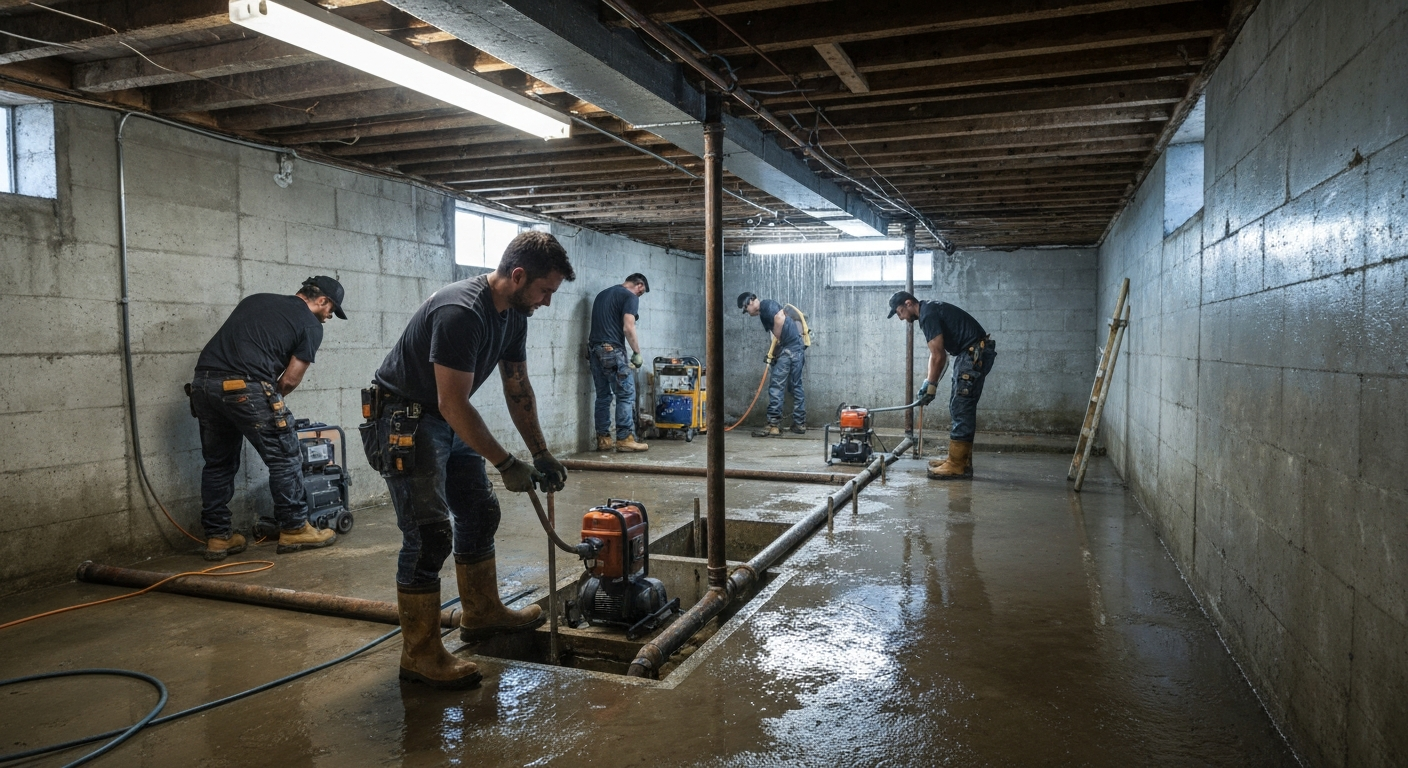
Basement waterproofing options and costs in Chestermere
Water issues are common in Chestermere, especially in older, clay-heavy neighbourhoods where foundations can see both seasonal saturation and freeze–thaw stress. In Chestermere’s local housing stock, only 3.3% of homes were built before 1981, but the ones that are older are disproportionately likely to have failing original waterproofing details and aged weeping tile. Homeowner households make up 91.1% of all households, which matters because many homeowners want to fix active seepage without turning their yard into a construction site for months.
In the Calgary region, waterproofing pricing is shaped by three practical realities: excavations are often deep enough to hit dense, water-holding clay; crews must manage freeze–thaw conditions that widen cracks and joints; and urban lot lines in growth pockets can limit access, storage, and disposal routes. In Chestermere, exterior work is especially in demand around the more established areas near the Lake Chestermere corridor, where patios, mature landscaping, and older drainage layouts frequently complicate excavation and backfill.
Below is a comparison of the most common approaches we see in Chestermere basements, along with what each method typically addresses, how disruptive it is, and the current cost bands for that level of work. Use the table to map your symptoms to the right scope before you request itemised quotes.
| Method |
What It Addresses |
Disruption Level |
Durability |
Price Range |
| Exterior excavation + new membrane + drainage tile |
Stops water at the source by renewing the exterior waterproofing system and perimeter drainage |
High (yard disruption, excavation, re-grading) |
Long-term when detailed correctly and connected to proper discharge |
$9,000–$25,000 |
| Interior perimeter drain channel + sump pit |
Collects seepage inside and manages it with sump pumping |
Medium (interior floor work, limited exterior impact) |
Very reliable for many clay-soil basements when the sump is sized properly |
$5,000–$15,000 |
| Foundation crack injection (epoxy or polyurethane) |
Seals cracks; epoxy is best for non-active cracks, polyurethane for active leaks |
Low (drilling, patching, indoor mess control) |
Good for the right crack type; longevity depends on proper surface prep and product choice |
$500–$1,800 |
| Sump pump installation (primary + battery backup) |
Reduces hydrostatic pressure effects by pumping collected water; backup helps during outages |
Low to medium (sump pit/lines, basic electrical work) |
High when combined with a functional perimeter drain |
$900–$3,000 |
| Window well drain installation |
Handles localized entry points around egress wells and grading issues |
Low (targeted excavation/pipe routing) |
Moderate to high when discharge and grading are corrected |
$1,200–$4,000 |
| Lot re-grading / downspout extension |
Directs surface water away from the foundation to reduce seepage load |
Low to medium (landscaping adjustments) |
Moderate; helps prevent recurrence but doesn’t replace failed membranes or tile |
$1,000–$4,500 |
Prices are estimates only and vary by project scope, site access and material selection.
What affects the price of waterproofing in Chestermere
In Chestermere and the broader Calgary area, it’s not unusual to see waterproofing quotes for what looks like the same basement job vary by 30–50%. The gap usually comes down to how much of the water pathway the contractor addresses, the site conditions they uncover after starting, and whether the proposed plan includes the “invisible” requirements (proper discharge route, disposal planning for clay spoils, and reliable sump backup). Two contractors can both promise to “stop leaks,” but one may be sealing symptoms while the other is rebuilding the drainage pathway and detailing connections.
Soil type, water table, and freeze–thaw are the three drivers that separate local costs from a national average. Calgary-area clay soils expand when saturated and exert more lateral pressure on foundation walls, worsening cracks over time. When freeze–thaw cycles repeat through winter and early spring, existing joints can open and close, letting meltwater infiltrate more easily. In low-lying or valley-affected pockets near local waterways, groundwater and storm events can raise hydrostatic pressure, which increases sump run times and the importance of correct pipe sizing, discharge, and backup power.
BC rainfall is an example of how quickly saturated backfill can raise workload when original drainage fails, but here in Chestermere it’s the combination of clay retention and spring melt that typically drives longer pump cycles. In practice, we often see cost increases when older drainage is clogged or undersized, and reductions when the problem is clearly surface-water related (like downspout discharge landing too close to the foundation). As a budget reality check: interior systems in the $5,000–$15,000 band are commonly chosen when access is tight, while exterior waterproofing typically moves into the $9,000–$25,000 band when full excavation, membrane replacement, and drainage tile renewal are required.
| Price Factor |
Why It Matters |
Cost Impact |
| Interior vs. exterior approach — interior is less disruptive but addresses symptoms |
Interior work can control seepage, but exterior waterproofing prevents water from entering the wall system |
Interior often $5,000–$15,000; exterior typically $9,000–$25,000 |
| Foundation type — poured concrete vs. block vs. stone vs. ICF |
Crack behaviour and how water migrates varies by wall material and age |
Concrete often responds well to injection; block commonly needs perimeter drainage as a complement |
| Soil type — clay expands more than sand, adding pressure |
Clay holds water and increases lateral pressure during saturation |
May increase sump capacity requirements and extend interior drainage scope |
| Crack type and length — hairline vs. structural horizontal cracks |
Active leaks need flexible sealing; major horizontal cracks may indicate more complex movement |
Minor crack injections can sit around $500–$1,800, but complex repairs increase labour and materials |
| Sump pump backup system — battery or water-powered backup needed |
Spring flooding and wet seasons can overlap with power outages; backups reduce risk of overfilling |
Adds cost to reach the $900–$3,000 installed range for sump installs |
| Access — landscaping, decks, or driveways must be removed for exterior |
More removal and restoration increases labour and disposal planning |
Can move a project up several thousand dollars depending on site constraints |
| Weeping tile age — original tile (60+ years) may be completely failed |
Failed tile increases hydrostatic pressure; interior-only fixes may need stronger pumping |
May shift scope from targeted repairs to full perimeter systems |
| Mould or efflorescence remediation required before sealing |
Moisture must be stabilized before coatings and injections to prevent early failure |
Often increases prep time and materials; may add several days depending on extent |
Permits & regulations in Alberta
In Alberta, homeowners often assume “waterproofing” is always a simple repair, but certain portions of the work typically require permits—especially when the scope touches lot drainage, structural elements, or municipal service connections. In general, foundation excavation, structural crack repair, and changes to how water is directed away from the foundation (including meaningful lot drainage adjustments) commonly trigger permit requirements. Sump pump installations that connect discharge to storm or sanitary sewer systems also require municipal approval before any connection is made.
For structural crack repair—particularly horizontal cracks in block walls or major step cracks—an engineer’s assessment is often required to confirm whether underpinning or other structural work is needed. Before you approve a quote, ask the contractor whether they provide engineering support for structural scopes, and ensure they carry liability insurance plus WSIB/WCB coverage for the work performed.
Step-by-step, here’s how a Chestermere homeowner can verify the contractor in Alberta:
- Ask for the contractor’s Alberta licensing information (as applicable to their trade) and confirm it matches the legal business name on the quote.
- Request a current certificate of insurance (liability) and review coverage limits and effective dates.
- Ask for WSIB/WCB clearance or proof of registration/coverage for workers who will be on your site.
- Confirm in writing who pulls permits (if required) and whether the quoted price includes the permit fees.
- For sump discharge, confirm the approved discharge route and request documentation that municipal approval is obtained.
- For structural crack scopes, request the engineer assessment letter or a clear plan for when it will be obtained.
Interior vs exterior waterproofing — what does Chestermere need?
The fundamental difference is that exterior waterproofing deals with water at the source, while interior waterproofing manages water after it enters. Exterior waterproofing involves full excavation, a renewed membrane system, new drainage tile, proper filter fabric, and then backfill and re-grading. It’s the more permanent solution when the exterior wall and perimeter drainage are failing—but it costs more and requires significant landscaping disruption.
Interior waterproofing typically includes a perimeter drain channel, a sump pit, and a sump pump to collect seepage and relieve hydrostatic pressure impacts inside the basement. This approach is less invasive, so it’s often chosen when access is constrained or when homeowners want to minimize yard disturbance. However, it doesn’t stop water pressure acting on the exterior wall system.
In Chestermere, where clay-heavy soils hold water and freeze–thaw can widen joints, the “right” choice depends on what’s failing. Poured concrete walls usually take well to correctly selected crack injection (and sealing must match crack behaviour). Block foundations often need interior drainage as a practical complement because water can migrate through masonry voids and jointing. If you’re seeing ongoing seepage along a perimeter seam, interior drainage and pumping usually provide reliable control—especially when paired with a battery backup sump pump for spring outages.
To illustrate the cost justification: if a basement has intermittent seepage but your exterior grade is already directing water away, interior perimeter drainage and sump work often makes sense in the $5,000–$15,000 range. But if the exterior membrane and perimeter drainage are clearly compromised or you’re getting widespread wall seepage after heavy spring melt, spending toward the $9,000–$25,000 exterior band is often the better long-term risk reduction.
| Method |
Best For |
Addresses Source? |
Disruption |
Lifespan |
Price Band |
| Full exterior excavation + membrane |
Widespread seepage, failed exterior system, or high hydrostatic pressure conditions |
Yes |
High |
Long-term when drainage discharge and backfill detailing are done correctly |
$9,000–$25,000 |
| Interior French drain + sump system |
Perimeter seepage, clay-saturated backfill, and basements needing reliable pumping control |
No (controls after entry) |
Medium |
High with proper sump sizing and discharge reliability |
$5,000–$15,000 |
| Crack injection — epoxy (structural) |
Non-active cracks in poured concrete where water flow is not ongoing |
Partial (seals the crack path) |
Low |
Good to very good when the crack is stable and dry-prepped |
$500–$1,800 |
| Crack injection — polyurethane (active leak) |
Active leaks or moisture-driven seepage along cracks and joints |
Partial (seals the active path) |
Low |
Good when leak conditions are correctly identified and product matches movement |
$800–$2,400 |
| Interior drain channel only (no sump) |
Very limited seepage where collection can discharge safely without pump reliance |
No |
Low to medium |
Moderate; depends heavily on local moisture rates and discharge method |
$3,000–$8,500 |
| Re-grading + downspout extensions |
Surface-water issues: roof runoff near foundation, poor grading, localized pooling |
No (reduces load) |
Low to medium |
Moderate; best as prevention or alongside other repairs |
$1,000–$4,500 |
How to choose a waterproofing contractor in Chestermere
Choosing the right contractor in Chestermere starts with confirming they’re insured and compliant in Alberta, then matching their proposed scope to your actual water pathway. First, verify licensing information where applicable for their trade and role in the project. Next, ask for a certificate of liability insurance: check that the certificate is current, shows coverage limits, and lists your property address correctly if they include it. Then request WSIB/WCB clearance or proof of coverage—don’t accept verbal assurances. These checks matter because basement waterproofing often involves excavation, cutting, and electrical work around sump systems.
Second, get 2–3 itemised written quotes rather than a single lump sum. Look for labour and materials breakdowns: membrane products, drainage tile and filter fabric, sump pump model (and whether it includes backup), patching materials, and disposal/excavation scope. Confirm what’s excluded (for example, engineering fees for structural crack evaluation, mould remediation, permit fees, or concrete floor restoration). Ask whether the contractor pulls permits and whether disposal fees for heavy clay spoils are included.
Third, scrutinize warranty terms. You should see a workmanship warranty length, a product/manufacturer warranty (with product names), and whether warranties are transferable to new owners—useful if you sell your home in Chestermere. For payment, never pay more than 10–15% upfront, and use a holdback until the job is complete and cleanup is verified. Finally, insist on a start date and completion estimate in writing, so spring conditions don’t turn into a schedule dispute.
- Ask for the exact water source hypothesis (surface water vs seepage vs active crack flow) before pricing.
- Request a written scope with measurements: linear feet of drainage, crack length, and sump pit location.
- Confirm discharge route for drainage tile (and any required municipal approvals) before work begins.
- Check that sump pump sizing is discussed (not just “any pump will do”).
- Confirm battery backup type (battery vs water-powered) and included components.
- Verify permit responsibility: who pulls permits and whether fees are included.
- Ensure disposal is itemised if excavation clay spoils must be hauled away.
- Ask how they handle efflorescence or mouldy substrate before sealing/injecting.
- Look for engineering involvement if cracks are horizontal or step-cracking suggests movement.
- Confirm cleanup and restoration: baseboards, concrete patch colour/finish approach, and yard restoration.
- Require proof of liability insurance and WSIB/WCB coverage before signing.
- Read the warranty closely for exclusions related to power loss, blockages, or improper grading.
In Chestermere, be cautious of contractors who (1) cannot explain whether your crack is active or stable before recommending epoxy vs polyurethane, (2) propose exterior work without a clear plan for discharge and disposal of clay spoils, (3) quote interior drainage but omit sump backup discussion when spring flooding risk is present, (4) provide a non-itemised “lump sum” with no mention of permits or municipal approval for discharge, or (5) offer only a short workmanship warranty without product names and warranty terms.
Frequently asked questions — waterproofing in Chestermere
Can I waterproof my basement in winter in Chestermere?
Yes, but it depends on the method and what’s frozen. In Chestermere winters, freeze–thaw and low temperatures can limit exterior excavation and membrane installation, and they can also make it harder to open and properly prep concrete or block surfaces for injection. That said, interior work is often still possible: crack injection and interior perimeter drainage prep can sometimes proceed if the basement can be kept dry and surfaces can be cleaned and stabilized. We typically prioritize diagnosis first (where the water enters) and then schedule the right scope. If you’re looking for cost guidance, many interior approaches fall within the $5,000–$15,000 band, while targeted crack repairs often start nearer $500–$1,800. Always plan for curing time and discuss winter feasibility with your contractor.
What is the difference between waterproofing and damp-proofing?
In homeowner terms, damp-proofing is usually a lower level of protection meant to slow moisture, while waterproofing is intended to resist water entry and manage hydrostatic pressure effects more directly. In the Calgary/Chestermere climate, it’s important because spring melt and clay saturation can drive water through cracks, joints, and weak points around penetrations. Exterior waterproofing (membrane + drainage tile) is designed to stop water at the source and reduce the pressure the wall must withstand. Interior systems (perimeter drain channel + sump) are often “water control” systems that manage water after it enters. Crack injection is a third category: it seals a specific pathway. When quotes are compared, make sure the contractor is clear on whether the proposed work is truly waterproofing (source control or engineered water management) and how it performs during freeze–thaw cycles typical in Alberta.
Will basement waterproofing affect my property value in Chestermere?
Often, yes—especially if waterproofing is done with a documented scope and clear records. In Chestermere, where many homes are owner-occupied (Statistics Canada, 2021 Census) and where homeowners tend to prioritize long-term comfort and resale, a professional waterproofing plan can reduce perceived risk tied to seepage, efflorescence, and recurring musty odours. That said, value impact depends on what was fixed: a surface-water-only re-grading plan may help prevent future incidents, but it won’t replace failed perimeter drainage. Exterior waterproofing is generally viewed as the most comprehensive because it addresses the source. Interior drainage and sump solutions can also be valuable when they’re properly designed for clay saturation and includes reliable discharge and backup. Keep invoices, photos of the drainage layout, and warranty documents to strengthen resale confidence.
What drainage issues are most common in Chestermere homes?
The most common issues we see in Chestermere are perimeter seepage from hydrostatic pressure (often worsened by clay soils holding water), clogged or failed weeping tile, and crack/joint leakage that becomes more obvious during spring melt. Freeze–thaw can widen existing pathways, so water penetrates where older systems have aged. Another frequent category is surface water: downspouts that discharge too close to foundations, grading that slopes toward the house, and window wells that collect runoff. Even when the foundation is mostly intact, these load increases can overwhelm interior drainage capacity. Homes built with older drainage layouts are also more likely to require a more complete plan. If you’re comparing bids, ask whether the contractor is diagnosing active seepage conditions and not just sealing visible staining.
How do I choose a waterproofing contractor in Chestermere?
Start with verification: confirm the contractor’s Alberta licensing information where applicable, request a current certificate of liability insurance, and ask for WSIB/WCB clearance or proof of coverage. Then compare itemised quotes—labour and materials should be listed (membrane, drainage tile, sump components, patching and restoration, and disposal). Scope clarity matters: find out if permits are included, who pulls them, and whether municipal approvals are required for sump discharge. For waterproofing, diagnosis is everything—ask whether they’ve assessed whether your crack is active or stable before recommending epoxy vs polyurethane injection. Finally, confirm warranty terms (workmanship duration, product warranty with product names, and transferability). For budgeting, many projects land in bands like $9,000–$25,000 for exterior systems or $5,000–$15,000 for interior drainage, depending on your foundation and access.
What is a battery backup sump pump and do I need one in Chestermere?
A battery backup sump pump is an additional power system that runs your sump when the main power is lost. In Alberta, spring wet seasons can coincide with weather events that increase outage risk, and hydrostatic pressure doesn’t wait for the grid to come back. With clay soils and seasonal saturation typical of the Calgary region, backup helps prevent overfilling and secondary water damage during the hours when the main pump can’t run. Whether you “need” one depends on your discharge design, how active the seepage is, and how your contractor sizes the sump system. For Chestermere basements with perimeter seepage or frequent sump cycling, we commonly recommend it. Pricing often lands in the $900–$3,000 installed range depending on the backup type and install complexity. Ask for the backup integration plan during your site visit.