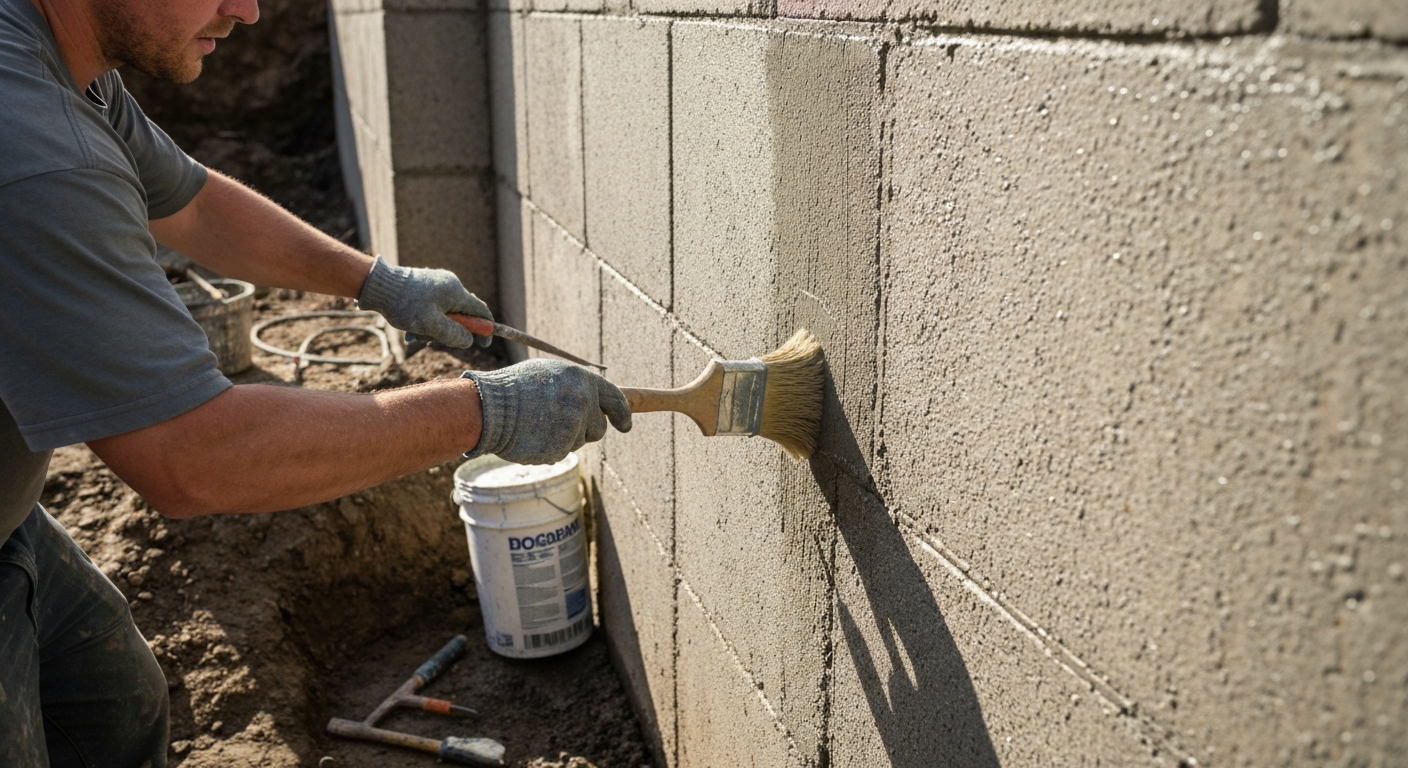
Basement waterproofing options and costs in Picture Butte
Picture Butte, Alberta is a small community of about 1,930 people (Statistics Canada, 2021 Census), and the basement waterproofing patterns we see are strongly tied to local housing age and the way soils hold moisture. With 63.8% of homes built before 1981 (Statistics Canada, 2021 Census), many foundations are more likely to have legacy waterproofing and aging drainage systems—so you’ll often find water pathways like failing weeping tile, corroded sump components (or no sump at all), and cracks that have widened through repeated Alberta freeze-thaw.
In the Lethbridge–Medicine Hat economic region, costs are driven by soil type (silt loam to clay loam), seasonal and non-growing-season saturation, and hydrostatic pressure on below-grade walls. Even though the region is generally drier than many parts of Canada, intense rain events and snowmelt can still overload drainage—particularly where grading has settled or downspouts discharge too close to the foundation. That’s why exterior work (excavation and full membrane/drainage) is typically the most “complete” solution, but it’s also the most access-heavy and disruptive. Interior work is often chosen when excavation is constrained by landscaping, sidewalks, or driveways.
In Picture Butte, we see especially frequent demand along the older residential pockets near the town’s core, where many properties have compact yards and established landscaping. From there, the comparison below will help you map the right method to the symptom you’re seeing—then you can size the scope before comparing quotes.
| Method |
What It Addresses |
Disruption Level |
Durability |
Price Range |
| Exterior excavation + new membrane + drainage tile |
Source-of-water entry from hydrostatic pressure; replaces failed weeping tile and improves drainage |
High (excavation, regrading, landscaping restoration) |
High (long service life when installed to spec) |
$14,000–$28,000 |
| Interior perimeter drain channel + sump pit |
Water after it enters; lowers hydrostatic pressure at the interior face of the foundation |
Medium (cutting/finishing basement floor or work in the perimeter) |
Medium to High (depends on tile condition and discharge reliability) |
$9,000–$18,000 |
| Foundation crack injection (epoxy or polyurethane) |
Crack pathway sealing; polyurethane is for active seepage, epoxy for non-moving structural cracks |
Low to Medium (minor chipping and patching) |
Medium to High (durability depends on crack type and movement) |
$600–$2,500 |
| Sump pump installation (primary + battery backup) |
Manages collected water during wet seasons and power outages; reduces basement seep risk |
Medium (pit + electrical work) |
Medium to High (backup reduces failure risk) |
$1,800–$3,500 |
| Window well drain installation |
Water pooling at egress windows; prevents saturated backfill contacting window openings |
Low to Medium (localized excavation around the window) |
Medium (effective when tie-ins are correct) |
$1,200–$2,700 |
| Lot re-grading / downspout extension |
Controls surface runoff so it doesn’t overload soil adjacent to foundation |
Low (minimal interior disruption) |
Low to Medium (best as a supporting measure) |
$900–$2,200 |
Prices are estimates only and vary by project scope, site access and material selection.
What affects the price of waterproofing in Picture Butte
Even when two homeowners describe the “same” basement leak, waterproofing quotes in the Lethbridge–Medicine Hat region can differ by 30–50%—and it’s usually not because one contractor is padding the numbers. It’s because the real cost drivers are the ground conditions and the method needed to control water entry and movement through the foundation. Some jobs are mainly drainage and sealing; others require full exterior excavation, interior drainage, and upgrades to sump discharge. The difference between a limited repair and a source-control approach can be the difference between a relatively targeted scope and an entire perimeter retrofit.
Three local drivers typically separate regional costs from the national average: soil type, water-table behaviour, and freeze-thaw. Clay-heavy backfill and silty soils expand when wet and shrink when dry, which increases lateral stress on walls and can worsen cracks over time. When seasonal and non-growing-season saturation brings hydrostatic pressure up against the foundation, sump pumps run longer and interior drainage becomes more urgent. Freeze-thaw then widens existing defects—so a hairline crack that might not leak in summer can seep in spring after snowmelt. You’ll see this especially in older housing stock (63.8% built before 1981), where the original weeping tile and sealing details are often at or beyond their service life.
In Picture Butte, for example, a basement that’s only damp with no active seepage may justify a localized crack injection plan, often closer to the $600–$2,500 crack-repair band. But if we find a clay-rich backfill problem with failed weeping tile and evidence of sustained seepage during wet periods, the scope can move toward the $14,000–$28,000 exterior waterproofing range—because stopping water at the source usually means excavation, membrane replacement, and new drainage tile. Conversely, if access is constrained by established landscaping, an interior system tied to a properly designed sump can land in the $9,000–$18,000 interior waterproofing band while still improving performance.
| Price Factor |
Why It Matters |
Cost Impact |
| Interior vs. exterior approach — interior is less disruptive but addresses symptoms |
Exterior controls water at the foundation face; interior manages water after entry |
Exterior typically costs more (excavation + membrane + drainage tile) |
| Foundation type — poured concrete vs. block vs. stone vs. ICF |
Crack behaviour and sealing strategy differ by construction |
Block walls often require interior drainage as a practical complement |
| Soil type — clay expands more than sand, adding pressure |
Clay-rich soils can trap water and stress walls during wet cycles |
Can increase scope for drainage and crack sealing |
| Crack type and length — hairline vs. structural horizontal cracks |
Moving or horizontal cracks may need engineered assessment |
Structural repairs add labour, testing, and possibly engineering costs |
| Sump pump backup system — battery or water-powered backup needed |
Backups protect against power interruptions during wet seasons |
Often adds a measurable cost but reduces failure risk |
| Access — landscaping, decks, or driveways must be removed for exterior |
Excavation depth and reach depend on what’s in the way |
Removal/restoration can significantly increase labour and disposal |
| Weeping tile age — original tile (60+ years) may be completely failed |
Old tile may be clogged, collapsed, or disconnected |
May force full replacement (more excavation and pipe work) |
| Mould or efflorescence remediation required before sealing |
Moisture and salts must be addressed before membranes/coatings perform |
Adds remediation steps and sometimes additional drying time |
Permits & regulations in Alberta
In Alberta, some parts of a basement waterproofing job can require permits, especially when you’re changing drainage or dealing with structural components. Foundation excavation and work that affects the foundation structure typically requires a building permit, and changes to lot drainage (like re-grading or modifying how water discharges at the lot line) are often treated as permit-related municipal drainage changes. If your sump pump discharge ties into municipal storm or sanitary systems, expect municipal approval requirements as well.
Structural crack repair is where permits and engineering become most important. For horizontal cracks in block walls, major step cracks, or any sign that a wall may be moving, an assessment by a structural engineer is commonly required to determine whether you simply seal/inject or whether underpinning/structural intervention is needed. A reputable waterproofing contractor should be able to coordinate engineering support (or confirm they can’t proceed without it), and they should carry liability insurance and WSIB/WCB coverage where applicable for their workforce.
How to verify in Picture Butte: (1) Ask for the contractor’s Alberta licence details and check the relevant provincial online registry; (2) request a certificate of insurance and confirm the policy is current and includes liability coverage; (3) ask for WSIB/WCB clearance (or proof of registration/coverage), then verify the documentation with the provider where possible; and (4) if structural cracks are involved, ask who is responsible for the engineer’s scope and whether the repair plan matches the engineer’s recommendations.
Interior vs exterior waterproofing — what does Picture Butte need?
The fundamental difference is that exterior waterproofing aims to stop water before it reaches your foundation wall. That typically means full excavation, new exterior membrane, new drainage tile, and controlled backfill drainage, then restoring the yard. In Picture Butte’s clay-loam to silt-loam soils, exterior work is often the most reliable way to relieve hydrostatic pressure at the source. The trade-off is disruption and cost: exterior projects are usually the most expensive and can require removing established landscaping or dealing with limited access.
Interior waterproofing focuses on managing water after it enters the basement—most commonly with a perimeter drain channel, a sump pit, and a pump system. This is less invasive and can be a strong option when you can’t excavate effectively. However, it does not stop hydrostatic pressure from acting on the wall; it reduces the consequences by collecting water and lowering interior moisture conditions. In the Lethbridge–Medicine Hat region, where freeze-thaw can widen cracks over time, crack injection may be part of either approach, but it’s not always sufficient alone if drainage and backfill conditions are still pushing water to the wall.
Given local building stock, poured concrete walls generally take well to properly designed crack injection and sealing, while block foundations often benefit from interior drainage as a practical complement to prevent water accumulation near joints and block courses. For a cost example: if exterior waterproofing is in the $14,000–$28,000 band but your leak is limited to one corner with active seepage through a short crack, a targeted injection plan closer to the $600–$2,500 crack-repair band may be justified—provided the rest of the drainage system and grading aren’t actively overwhelming the foundation. If the basement shows recurring wet seasons and we’re seeing sustained moisture patterns, that interior-only strategy can fall short and may be why the full $14,000–$28,000 exterior option is recommended.
| Method |
Best For |
Addresses Source? |
Disruption |
Lifespan |
Price Band |
| Full exterior excavation + membrane |
Recurring seepage, clay-rich backfill, failed weeping tile, “wet all spring” basements |
Yes |
High |
Long-term when installed correctly |
$14,000–$28,000 |
| Interior French drain + sump system |
Limited exterior access, block foundations, interior moisture control needed |
No (manages after entry) |
Medium |
Medium to long with proper pump/discharge |
$9,000–$18,000 |
| Crack injection — epoxy (structural) |
Non-moving structural cracks with no active seepage |
Partial (seals crack pathway) |
Low to Medium |
Medium to High depending on crack stability |
$800–$2,200 |
| Crack injection — polyurethane (active leak) |
Active seepage through cracks and joints where water is currently present |
Partial (seals pathway to stop flow) |
Low to Medium |
Medium to High if movement is controlled |
$900–$2,500 |
| Interior drain channel only (no sump) |
Light dampness with intermittent moisture and a reliable gravity discharge plan |
No |
Medium (finishing/patching may be needed) |
Medium (depends on seasonality) |
$6,500–$12,000 |
| Re-grading + downspout extensions |
Surface runoff issues, minor basement dampness, new roof drainage discharging too close |
No (redirects water) |
Low |
Short to Medium unless drainage is corrected at the source |
$900–$2,200 |
How to choose a waterproofing contractor in Picture Butte
Choosing the right waterproofing contractor in Picture Butte starts with proof. First, verify Alberta licensing for the trade(s) being performed and request their current liability insurance certificate—confirm the coverage is active and the policy includes the work you’re hiring for. Next, check WSIB/WCB coverage: ask for a clearance letter or proof of registration/coverage, and don’t rely on verbal confirmation. If the scope includes electrical work for a sump pump, ensure the contractor coordinates properly and uses qualified personnel.
Second, get 2–3 itemised written quotes. You want a breakdown that separates labour from materials (membrane/drainage board, drain tile, sump pit/pump, crack injection components, disposal and backfill materials) rather than one lump figure. Scope details matter: what is excluded (for example, removal of large shrubs, disposal of heavy excavation, basement floor removal, restoring finished basements), and is permit pulling included where required? Confirm whether drainage discharge is compliant and where the pump discharges.
Third, check warranty. You should receive a workmanship warranty length and product/manufacturer warranty details, and ask whether coverage is transferable if you sell your home. Fourth, payment schedule should be conservative: never more than about 10–15% upfront, and hold back a portion until the job is complete and verified. Finally, insist on a written start date and completion estimate.
- Ask for a site visit and a written scope that references your foundation type and crack locations
- Request proof of liability insurance and current WSIB/WCB clearance/documentation
- Confirm whether exterior excavation requires disposal of excavated material and what disposal costs are included
- Ensure drainage design includes correct slope, pipe size, and connection details
- Ask how clay-rich backfill will be handled and whether proper drainage fill is used
- Verify whether sump discharge and any backflow prevention are included
- Confirm whether a battery backup (or equivalent) is optional, included, or excluded
- Get details on crack injection: product type (epoxy vs polyurethane) and how they classify “active” seepage
- Ask about surface preparation and whether mould/efflorescence remediation is required before sealing
- Require a written warranty (workmanship and product) with start dates and exclusions
- Review your quote for explicit exclusions: permits, engineering, landscaping restoration, and finishing
- Do not sign until you understand the schedule and whether interior finishes are to be reinstalled or replaced
Common red flags we see with waterproofing contractors in Picture Butte include: vague scopes (“waterproofing” without method details), no proof of WSIB/WCB or liability coverage, quotes that don’t address drainage strategy (just “sealant”), warranties that exclude normal freeze-thaw performance, and overly aggressive deposits that exceed 10–15% upfront.
Frequently asked questions — waterproofing in Picture Butte
Can I waterproof my basement in winter in Picture Butte?
Yes, it’s sometimes possible to do parts of waterproofing in Alberta winter, including crack injection and interior drainage work, but full exterior excavation is often restricted by conditions. In Picture Butte, freezing temperatures can limit how we prepare surfaces, apply certain membranes/coatings, and backfill to spec. Interior work may still be scheduled if we can access the perimeter and safely remove/prepare materials. However, drying time and curing requirements can extend timelines when temperatures are low.
In practice, many homeowners do a winter “stabilize” phase (like targeted crack sealing or installing an interior drain channel) and then plan exterior source control for spring. If you’re considering a plan that falls in the $9,000–$18,000 interior waterproofing band, ask the contractor how they will handle cold-weather installation and whether temporary dehumidification is included.
What is the difference between waterproofing and damp-proofing?
In everyday language, people use “waterproofing” loosely, but there’s a meaningful difference. Damp-proofing is intended to reduce moisture penetration and help with minor dampness, often using surface coatings or basic drainage without fully addressing hydrostatic pressure. True waterproofing strategies are designed to manage water entry and, when needed, control hydrostatic pressure—commonly with exterior membrane systems and proper drainage tile, or interior perimeter drainage paired with a sump pump.
In Picture Butte, because soils can become saturated and freeze-thaw can widen defects, dampness can turn into active seepage over time if the root cause isn’t handled. That’s why homeowners with older homes (63.8% built before 1981) often need more than damp-proofing—especially when weeping tile has failed. For active seepage, crack injection with a polyurethane approach or a full interior drainage plan in the $9,000–$18,000 range is often the practical step.
Will basement waterproofing affect my property value in Picture Butte?
Generally, yes—properly documented waterproofing can improve perceived value and reduce buyer uncertainty, particularly in a market where many homes are older. In Picture Butte, with 63.8% of dwellings built before 1981 (Statistics Canada, 2021 Census), many prospective buyers worry about basement dampness, recurring spring moisture, and the cost of future repairs. A waterproofing system with written warranties and photos of the installation (drainage layout, pump type, crack sealing details) is easier to trust than informal patchwork.
That said, value comes from performance and transparency. If a seller installs only a cosmetic fix and doesn’t address drainage, buyers may still see risk. If the work is source-control exterior waterproofing (often in the $14,000–$28,000 band), the benefit is strongest when the report shows why the system was needed—such as failed weeping tile, clay-rich backfill, or recurring hydrostatic pressure after snowmelt.
What drainage issues are most common in Picture Butte homes?
The most common drainage issues we see in Picture Butte homes usually fall into a few repeat patterns. First is poor foundation-adjacent drainage: downspouts discharge too close to the foundation, grading has settled, or yard contours direct runoff toward the wall. Second is failing or undersized weeping tile—especially in older homes where original drainage can be 60+ years old and may be clogged, collapsed, or disconnected. Third is interior water management: some basements have no sump, or the sump system isn’t sized for spring wet periods, so water backs up or evaporates instead of being collected.
Local freeze-thaw also worsens crack and joint pathways; hairline defects widen, making “minor” seepage become noticeable. If you’re dealing with ongoing wet seasons, an interior drain + sump system in the $9,000–$18,000 band (or exterior source control in the $14,000–$28,000 band when access allows) is often required to break the cycle.
How do I choose a waterproofing contractor in Picture Butte?
Start with verification. Ask the contractor for current liability insurance and WSIB/WCB clearance/documentation, and confirm the relevant Alberta registration/licensing for the work being done. Next, require 2–3 itemised quotes—not lump sums—so you can see what’s included: excavation/disposal, membrane and drainage components, interior drain material, sump pump model, discharge details, and whether permit pulling is included when required.
In Alberta (including Picture Butte), structural crack work and drainage changes may require permits and sometimes engineering assessment. A good contractor will explain what needs a permit, who handles the permit/engineer coordination, and how they select epoxy versus polyurethane based on whether leakage is active. Also check warranty terms and payment schedule: keep upfront deposits around 10–15% max, and hold back until the system is complete. For price context, reliable contractors can justify scopes anywhere from the $600–$2,500 crack-repair band to major drainage work in the $9,000–$18,000 range.
What is a battery backup sump pump and do I need one in Picture Butte?
A battery backup sump pump is a secondary power system that keeps the sump running if the main power fails. In Picture Butte and much of southern Alberta, outages can happen during storms and spring shoulder seasons; the risk isn’t constant all year, but it can be high when melting snow and intense rain events raise water flow. A battery backup reduces the chance that the sump pit fills during an outage—especially important if you already have active seepage or frequent pump cycles.
You don’t automatically need one in every case, but it’s worth strongly considering when there’s a sump already installed, when the basement is finished, or when the drainage design expects continuous seasonal pumping. Many projects will also include a primary pump plus backup as part of the sump installation package, commonly around the $1,800–$3,500 band depending on battery/controls selection. Ask your contractor to explain how often the pump runs during wet seasons and whether backups are included or optional.