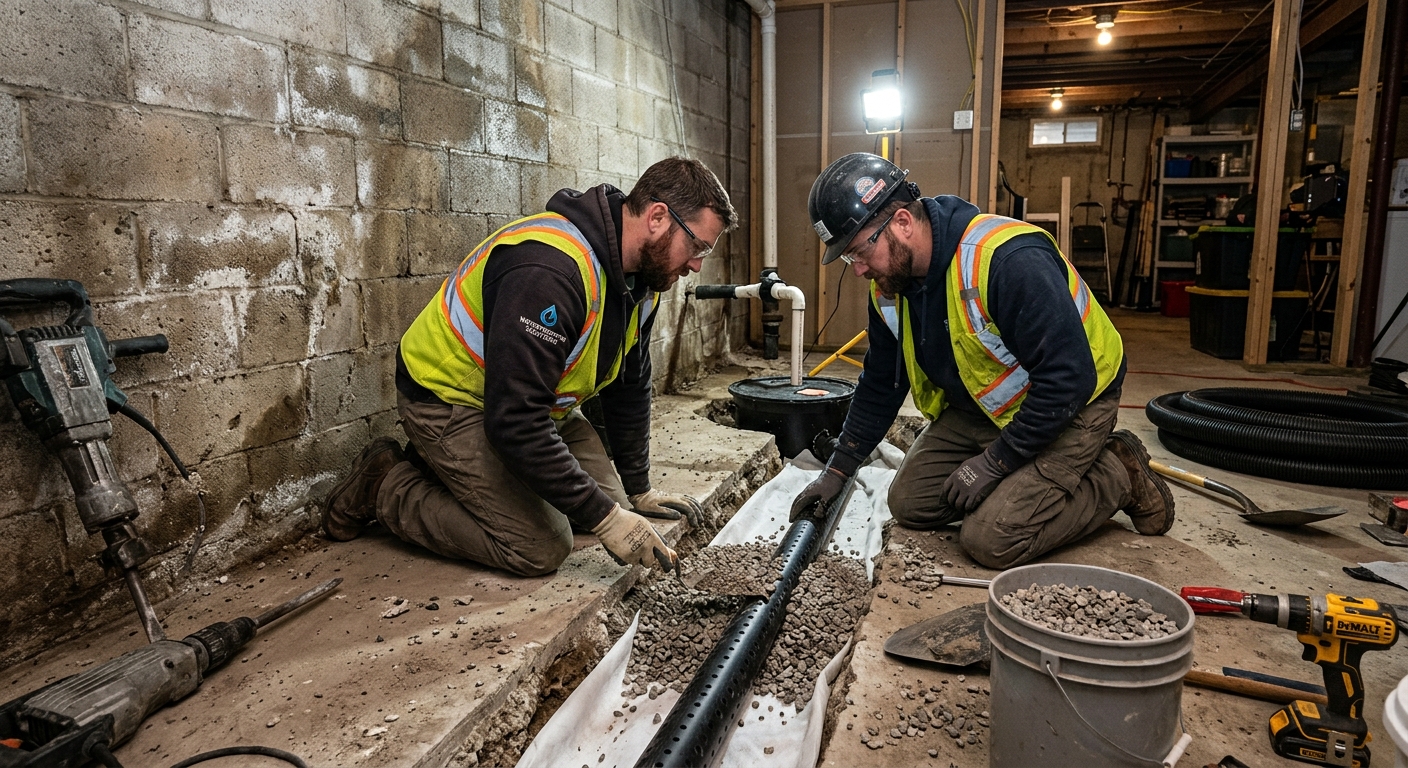
Basement waterproofing options and costs in Discovery Ridge
Discovery Ridge, Alberta has a basement market shaped by clay-heavy soils and frequent freeze–thaw swings that slowly “work” water through cracks and joints. With a 2021 population of 4,330 (Statistics Canada, 2021 Census), the neighbourhoods here are smaller and close-knit—so homeowners often notice the same contractors being booked for repeat repair work, especially around older pockets of the Calgary area where drainage systems are aging. In general, many basements in the region were originally built with tar-and-paper style waterproofing and later weeping tile additions; when those components are 40–60+ years old, failure is common and leakage shows up in spring melt and heavy rain.
In Calgary and surrounding communities, pricing is also influenced by the type of foundation and the amount of excavation needed. Predominantly clay and clay-till can hold water and swell when saturated, increasing lateral pressure on foundation walls and footings. That means a cosmetic fix often doesn’t hold, and a full exterior system is frequently priced toward the upper part of the band. On top of that, if your home sits on tight lots, with patios, mature landscaping, or limited equipment access, excavation and disposal costs rise. For Discovery Ridge, trade demand is particularly high in areas with older basements and known drainage issues—often where weeping tile is clogged, undersized, or disconnected.
Below are the main waterproofing paths contractors use, with typical cost ranges for a Discovery Ridge homeowner—then you can line up what matches your symptoms, your foundation type, and how much disruption you can tolerate.
| Method |
What It Addresses |
Disruption Level |
Durability |
Price Range |
| Exterior excavation + new membrane + drainage tile |
Water at the foundation source; reduces hydrostatic pressure by re-establishing exterior drainage and barrier |
High (full excavation, landscaping disruption) |
High (years-to-decades when membrane and drainage are correctly installed) |
$15,000–$25,000 |
| Interior perimeter drain channel + sump pit |
Collects water after it enters; reduces wet walls and floor seepage |
Medium (interior floor cuts, localized jackhammering) |
Medium-to-High (depends on crack control and drain capacity) |
$8,000–$14,000 |
| Foundation crack injection (epoxy or polyurethane) |
Seals cracks/joints; epoxy for non-moving cracks, polyurethane for active leak paths |
Low-to-Medium (minor concrete drilling; limited interior disruption) |
Medium (excellent for the right crack type and preparation) |
$1,000–$4,000 |
| Sump pump installation (primary + battery backup) |
Controls interior groundwater and peak inflow during spring runoff and heavy storms |
Low-to-Medium (core drilling for discharge and basin) |
Medium-to-High (improved reliability with backup power) |
$1,500–$3,500 |
| Window well drain installation |
Stops localized water entry around egress windows and stair wells |
Low-to-Medium (excavation around windows) |
Medium (good when weep/flow paths are maintained) |
$800–$2,200 |
| Lot re-grading / downspout extension |
Moves surface water away from foundation; reduces runoff saturating backfill |
Low (light landscaping disruption) |
Low-to-Medium (often part of a larger system) |
$900–$3,000 |
Prices are estimates only and vary by project scope, site access and material selection.
What affects the price of waterproofing in Discovery Ridge
In Discovery Ridge and the wider Calgary economic region, quotes for what looks like the “same” basement waterproofing job can swing by 30–50% because the underlying water path is rarely identical from one home to the next. Two homeowners can both say “water in the basement,” but one may have a single window-well seepage point while the other has failing weeping tile and a perimeter membrane gap that lets freeze–thaw pressure widen cracks every spring. Labour and equipment availability also matter; when deep excavations are required, scheduling and crew size tighten, which can move pricing toward the top of the regional band.
The three biggest drivers that separate local costs from the national average are soil type, water table conditions and freeze–thaw. Clay-heavy soils common across much of the Prairies expand when saturated, exerting lateral pressure on foundation walls and worsening hairline-to-expanding cracks over time. In lower pockets near river valleys and coulees (a factor that varies within Calgary), seasonal high groundwater can raise sump run times and increase how much drainage capacity is needed. And Alberta’s freeze–thaw cycle—cracking and opening joints, then re-freezing—means a “seal only” approach often requires complementary drainage or an interior collection system.
Concrete examples: if your home has older weeping tile (often original installations can be 60+ years), the contractor may need full excavation or replacement rather than patching, which pushes you toward exterior ranges like $15,000–$25,000. If you’re dealing with localized window-well seepage, reworking the drain and downspout routing can be closer to $900–$3,000. If the job includes interior drainage plus a pump with backup, interior pricing frequently lands in the $8,000–$14,000 neighbourhood—because it’s not just materials; it’s labour, floor cutting, and proper basin sizing.
With Discovery Ridge homes commonly having older basements and varying landscaping access, the best way to manage cost is to match the system to the actual water entry source rather than treating symptoms alone.
| Price Factor |
Why It Matters |
Cost Impact |
| Interior vs. exterior approach — interior is less disruptive but addresses symptoms |
Exterior reduces the water source; interior controls water after entry |
Exterior often +$6,000 to +$12,000 versus interior in similar cases |
| Foundation type — poured concrete vs. block vs. stone vs. ICF |
Crack behaviour and sealing method differ by wall system |
Poured concrete may cost less for crack injection; block often needs drainage + sealing add-ons |
| Soil type — clay expands more than sand, adding pressure |
Clay saturation increases hydrostatic and lateral wall pressure |
More structural prep and drainage capacity; potential +10% to +25% |
| Crack type and length — hairline vs. structural horizontal cracks |
Active or structural cracks require different products and sometimes engineer review |
Major cracks can add $500 to $2,000+ per area for assessment and specialized materials |
| Sump pump backup system — battery or water-powered backup needed |
Reduces failure risk during spring outages and high inflow events |
Backup adds a meaningful premium, often several hundred to $1,500+ |
| Access — landscaping, decks, or driveways must be removed for exterior |
Excavation time and disposal volume increase with tight access |
Can add $2,000 to $8,000+ depending on removal scope |
| Weeping tile age — original tile (60+ years) may be completely failed |
Failed tile can’t move water; replacement may be required |
Moving from “patch” to “replace” often pushes projects toward higher bands |
| Mould or efflorescence remediation required before sealing |
Moisture damage must be stabilized to avoid continued staining and adhesion failure |
Usually adds several hundred to $2,000+ depending on extent |
Permits & regulations in Alberta
In Alberta, waterproofing work that alters foundation elements, changes lot drainage, or involves structural repairs typically triggers permit and inspection requirements. As a homeowner in Discovery Ridge, you should expect that foundation excavation, structural crack repair (especially where horizontal cracks suggest possible movement), and changes to how surface water or foundation drainage is managed commonly require a building permit. If you’re planning any work that ties a sump discharge line into municipal storm or sanitary systems, municipal approval is usually required before the connection is made.
For structural crack repair, a structural engineer’s assessment is often required when cracks are wide, show step movement, or look like potential structural displacement. That assessment can determine whether underpinning, additional reinforcement, or a different repair approach is needed before any sealing is attempted. A reputable contractor will be clear about when engineering support is needed and will document it in the scope.
Before you sign, verify the contractor’s Alberta credentials and protections step-by-step:
- Check the contractor’s trade/permit-related licence status using Alberta’s online public registry resources.
- Request a certificate of insurance that clearly shows liability coverage amounts and active dates.
- Confirm Workers’ Compensation coverage (WSIB/WCB) by asking for clearance evidence or coverage verification.
- For structural work, ask whether they coordinate engineer review and who is responsible for that documentation.
- Get these items included in your written proposal package or provided before scheduling excavation.
Interior vs exterior waterproofing — what does Discovery Ridge need?
The core difference is simple: exterior waterproofing stops water at the source, while interior waterproofing manages water after it enters. Exterior systems involve full excavation around the foundation, installation of a continuous exterior membrane, new drainage tile, and then careful backfill and re-grading. In Alberta’s clay and freeze–thaw environment, that source control is valuable because saturated soil expands and increases lateral pressure—something an interior perimeter drain can’t fully prevent on its own.
Interior solutions (perimeter drain channel, sump pit and sump pump) are less disruptive and can be a practical fit when excavation access is limited or when leaks are intermittent. However, interior drainage doesn’t stop hydrostatic pressure on the wall; it just captures and removes water. For Discovery Ridge, that trade-off matters most for basements with poured concrete walls that are prone to cracking under freeze–thaw—crack injection can work well there when cracks are non-moving or properly prepared. For block foundations, interior drainage often becomes a necessary complement because block joints and mortar lines may allow more continuous seepage pathways.
Power reliability is also part of the decision. During spring runoff, outages can occur, and sump pumps are only effective if they can keep running. That’s why many Calgary-area systems include battery backup for the primary pump—an additional cost, but often cheaper than clean-up and drywall restoration after a failure.
As a dollar example: if you have localized dampness and a single seepage area, interior drainage plus a sump pump with backup may land around $8,000–$14,000, while a full exterior excavation and drainage tile replacement typically starts around $15,000–$25,000. Exterior becomes justified when you have widespread perimeter seepage, failed weeping tile, or evidence that hydrostatic pressure is actively pushing water through multiple wall points.
| Method |
Best For |
Addresses Source? |
Disruption |
Lifespan |
Price Band |
| Full exterior excavation + membrane |
Widespread seepage, failed original systems, high seasonal moisture pressure |
Yes |
High |
Long (with proper drainage and backfill) |
$15,000–$25,000 |
| Interior French drain + sump system |
Interior wet walls, intermittent seepage where exterior access is limited |
No (controls water after entry) |
Medium |
Medium-to-Long (maintenance-dependent) |
$8,000–$14,000 |
| Crack injection — epoxy (structural) |
Non-moving cracks in poured concrete where water path is limited |
Partial (stops seepage through that crack) |
Low-to-Medium |
Medium-to-Long for stable cracks |
$1,000–$2,800 |
| Crack injection — polyurethane (active leak) |
Active seepage through joints and moving micro-paths |
Partial (stops the leak path) |
Low-to-Medium |
Medium (often paired with drainage) |
$1,200–$4,000 |
| Interior drain channel only (no sump) |
Minor dampness or where water volumes are very low |
No |
Medium |
Short-to-Medium (depends on gravity drainage) |
$5,500–$9,500 |
| Re-grading + downspout extensions |
Surface runoff issues and minor water near foundation perimeter |
Yes for surface water contribution |
Low |
Short-to-Medium (must stay maintained) |
$900–$3,000 |
How to choose a waterproofing contractor in Discovery Ridge
Choosing the right contractor matters in Discovery Ridge because the job quality determines whether your system performs through Alberta’s freeze–thaw cycles and spring melt. Start by verifying Alberta licensing requirements relevant to the scope and confirming insurance coverage. Ask for a current certificate of liability insurance (so you’re not exposed if there’s property damage), and request proof of WSIB/WCB coverage—this helps ensure workers are properly covered on-site. If the contractor proposes structural crack work or any engineered solution, ask who provides the engineering support and whether it’s included in the schedule and scope.
Next, get 2–3 itemised written quotes instead of a lump sum. The quote should break down labour and materials, specify which products are being used (membrane type, drain components, injection product), and show what’s included for disposal and prep. Pay special attention to exclusions: are they assuming clean, accessible excavation pathways? Is permit pulling included if required? Are they removing and replacing landscaping, or will they only work around it? Confirm whether the plan includes re-grading and downspout/drain discharge direction, not just sealing.
Warranty and payment terms protect you. Ask for the workmanship warranty length and whether the manufacturer warranty is separate. If you sell your home, is the warranty transferable? For payment, never give more than 10–15% upfront; hold back a portion until completion and final documentation. Also insist on a start date and a completion estimate in writing, including weather-related contingency windows.
- Provide Alberta licence/trade info applicable to their scope.
- Include certificate of insurance with liability limits and expiry dates.
- Show WSIB/WCB clearance or coverage verification.
- List products and brands (membrane, drains, geotextile, injection resins).
- Specify scope items in writing: excavation limits, disposal, re-grading, and restoration.
- Confirm permit responsibilities and whether the contractor pulls the permit if required.
- Clarify discharge method for sump pumps and whether municipal approval applies.
- State workmanship warranty length and what triggers service calls.
- Confirm if manufacturer warranty is transferable and how it’s documented.
- Get an itemised labour/materials breakdown (not a single line total).
- Schedule a site visit for water-path verification (not only based on photos).
- Agree on payment milestones (small deposit, holdback, completion documentation).
Red flags to watch in Discovery Ridge: contractors who refuse to document insurance/coverage, proposals that rely on “seal it and paint it” without identifying the water entry path, lack of product specifications (only “waterproof coating” language), vague warranties or no warranty at all, and plans that skip sump backup considerations when spring runoff and power outages are a known risk.
Frequently asked questions — waterproofing in Discovery Ridge
How do I compare waterproofing quotes?
When comparing quotes in Discovery Ridge, ask each contractor for an itemised scope: excavation limits (if exterior), drain and membrane details, crack injection product type, and whether mould/efflorescence remediation is included before any sealing. Look for clarity on discharge—especially if a sump pump ties into storm or sanitary systems, which can require municipal approval. A true comparison also includes disruption and restoration: disposal of clay backfill spoils, re-grading, and landscaping or patio rebuilds. If one quote is far lower, it often means something was excluded (for example, no weeping tile replacement, no permit included, or no battery backup). Use comparable targets like interior systems often landing around $8,000–$14,000, versus full exterior work commonly in the $15,000–$25,000 range.
How long does basement waterproofing take in Discovery Ridge?
Timelines in Alberta depend on access, foundation type, and how involved the water source is. Exterior waterproofing usually takes longer because full excavation, drainage installation, membrane application, inspection steps, and backfill/re-grading are required—typically several days to a few weeks depending on conditions and restoration scope. Interior solutions are often faster, especially if you’re installing a perimeter drain channel and sump pit, but floor cutting, proper slope, and pump discharge routing still take time. Weather can slow exterior excavation during heavy freeze–thaw periods; contractors often schedule around stable ground conditions. In Discovery Ridge, a common reason jobs run longer is discovery during opening-up: clogged weeping tile, unexpected soft spots in clay soils, or additional crack lengths that weren’t visible before. Ask for a written start date, completion estimate, and stated weather contingencies.
What is a weeping tile and does my Discovery Ridge home have one?
A weeping tile is the exterior drain system installed around a foundation to collect seepage and direct it to a sump or daylight outlet. In many Calgary-area homes, it was added in phases: older basements may have original perimeter tile that’s now clogged, cracked, or disconnected after decades of freeze–thaw and clay swelling. Because Discovery Ridge homes vary by build era, you might have an active system, a failed one, or no functional perimeter drainage at all. The most practical way to confirm is inspection: look for evidence of a discharge location, sump presence, cleanout points, and prior repair records. You can also ask contractors to camera-inspect where access is possible or to confirm during exterior excavation. If the original tile is failed, exterior replacement or a full interior drainage approach may be recommended.
Can I waterproof my basement in winter in Discovery Ridge?
Sometimes, yes—but it depends on what kind of waterproofing and what your site conditions are. Interior waterproofing can often be done in winter because work focuses on floor cuts, drain channel installation, crack injection, and sump equipment. Exterior excavation is more difficult when ground is frozen or snow-packed; it may be delayed until thaw conditions allow safe trenching, membrane application, and correct backfill compaction. In Discovery Ridge, clay soils can be especially challenging in winter because saturated pockets can freeze unpredictably, and excavation can become slower and messier. If you need an immediate solution, ask about staged work: interior crack injection or sump prep first, then exterior membrane and drainage when weather permits. Your contractor should provide a written plan for temperature limits and how they protect exposed surfaces during installation.
What is the difference between waterproofing and damp-proofing?
Waterproofing is designed to prevent or control active water entry and manage hydrostatic pressure effects—typically through exterior membranes, proper drainage tile, or interior drainage and sump systems. Damp-proofing is usually a lower level of protection aimed at reducing minor moisture penetration, often without a full drainage strategy or continuous barrier designed for sustained water loads. In Discovery Ridge, because clay-heavy soils can expand when saturated and freeze–thaw can widen cracks, damp-proofing alone can fail when water volumes increase during spring runoff. That’s why many “wet basement” problems require interior drains and often a sump, or a full exterior system if the water source is widespread. A good contractor will identify whether you have seepage versus hydrostatic pressure and match the approach—don’t accept a coating-only plan when the water path suggests a drainage failure.
Will basement waterproofing affect my property value in Discovery Ridge?
Yes, in most cases it improves marketability—especially when you can document the cause of leakage and the corrective system installed. A dry basement supports inspections and reduces the risk of ongoing mould issues or recurring staining (efflorescence). In Discovery Ridge and the Calgary area, buyers often look for evidence that drainage is addressed properly, not just patched. If the project includes an interior sump system with backup, regrading/downspouts, and crack repairs, you can often show documentation of the waterproofing scope, warranties, and pump/backup specs. For a more comprehensive source-control solution, exterior waterproofing (membrane + drainage tile) usually provides the strongest reassurance and can be a selling advantage. Even typical ranges matter when explaining value: interior projects often fall around $8,000–$14,000, while exterior work commonly lands in the $15,000–$25,000 band—buyers generally understand that larger source-control work reflects a more complete fix.