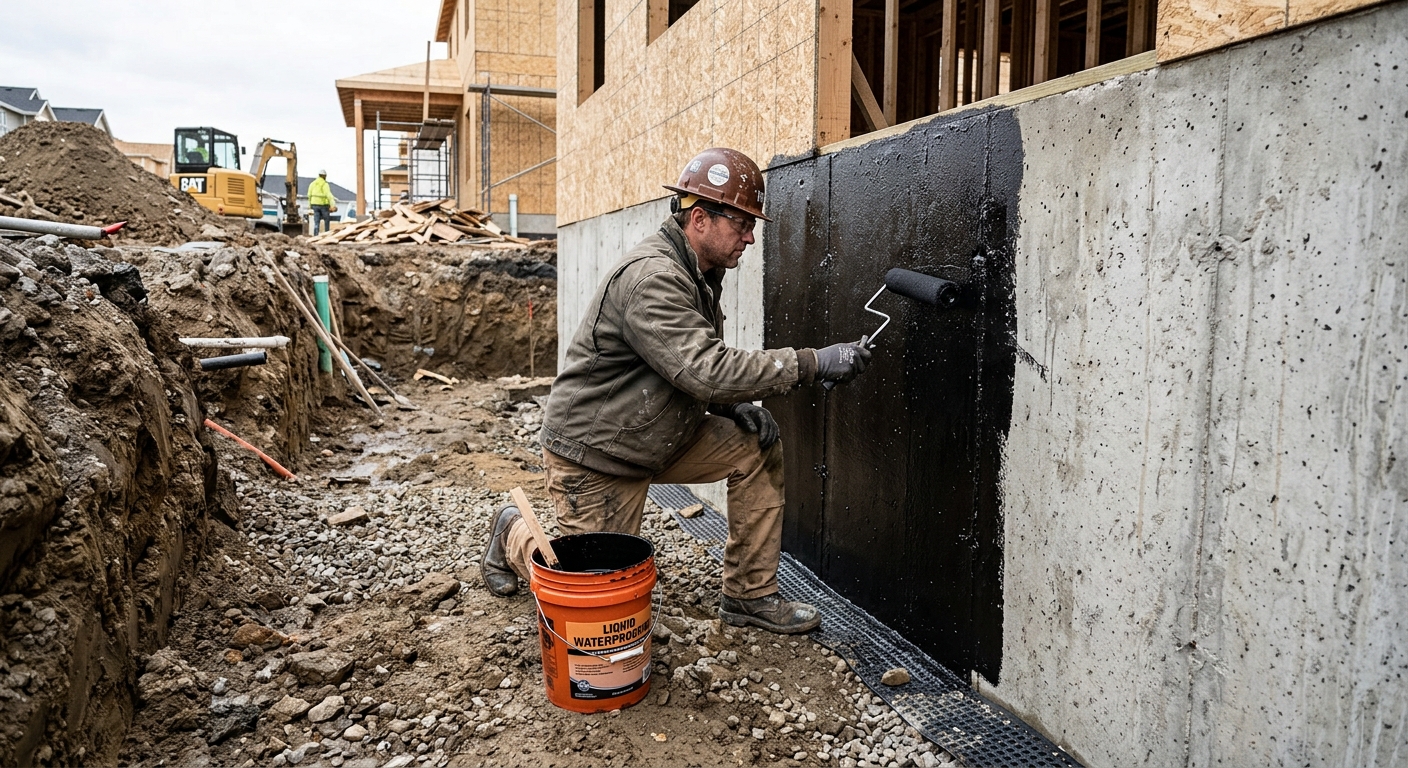
Basement waterproofing options and costs in Ranchlands
Ranchlands, Alberta homeowners typically choose waterproofing solutions based on how water is getting in—through the perimeter, through specific wall cracks, or as bulk seepage after spring melt. With a total population of 7,490 (Statistics Canada, 2021 Census), the community’s housing mix leans toward long-term owner-occupied properties, and older foundations are far more likely to have failing original drainage or historic tar-and-paper systems. In Calgary’s broader market, freeze–thaw cycles stretch and widen joints, which means even “small” leaks can become persistent by the next winter season. That’s why it’s common to see localized wall staining, efflorescence, or damp corners escalate into active seepage over time.
Costs here are also influenced by clay-and-clay-till soils around the Calgary region, which hold water and expand when saturated. When excavation is required, deep digging and heavy clay disposal can add labour and trucking expenses, pushing exterior systems toward the upper part of the local pricing band. Conversely, interior perimeter drains and sump pits can be a more budget-friendly first step, especially when access is tight behind patios, decks, or landscaping. Contractor availability can vary seasonally: spring and early summer tend to bring more demand for drainage corrections, which is another reason to expect scheduling differences between exterior excavation and interior-only scopes.
Demand is especially noticeable in established pockets close to local arterial routes and where older landscaping and mature trees make excavation access more complicated—so matching the right method to your foundation and drainage reality matters. Below is a side-by-side comparison to help you translate your quote into apples-to-apples scope before you decide.
| Method |
What It Addresses |
Disruption Level |
Durability |
Price Range |
| Exterior excavation + new membrane + drainage tile |
Primary water entry at the foundation perimeter (hydrostatic relief from outside) |
High (excavate around perimeter, remove landscaping/patio where needed) |
High (best at controlling the source when properly installed and backfilled) |
$9,000 – $25,000 |
| Interior perimeter drain channel + sump pit |
Water after it enters the basement; reduces hydrostatic pressure inside |
Medium (cut floor/track walls to install drain) |
Medium-to-High (depends on sump reliability and crack management) |
$5,000 – $15,000 |
| Foundation crack injection (epoxy or polyurethane) |
Cracks as pathways—epoxy for structural/mostly dry cracks; polyurethane for active leaks |
Low-to-Medium (surface prep and ports; limited demo) |
Medium (can be long-lasting when matched to the crack type and cause) |
$500 – $1,800 |
| Sump pump installation (primary + battery backup) |
Automatic water removal to prevent pooling and overflow |
Low-to-Medium (pit + discharge routing) |
Medium-to-High (improved with backup power during spring events) |
$900 – $3,000 |
| Window well drain installation |
Localized seepage at window wells and around egress areas |
Medium (excavation and grading around wells) |
Medium (often very effective when discharge and clearances are correct) |
$1,200 – $4,200 |
| Lot re-grading / downspout extension |
Surface water misdirection away from the foundation |
Low (minor excavation, adjustments to drainage runs) |
Low-to-Medium (best as a prevention/add-on, not a sole fix if hydrostatic pressure persists) |
$800 – $3,000 |
Prices are estimates only and vary by project scope, site access and material selection.
What affects the price of waterproofing in Ranchlands
Even when two homeowners describe the “same leak,” waterproofing quotes in Ranchlands (and across Calgary) can swing by 30–50% because the real drivers are hidden: soil saturation potential, actual water entry points, foundation geometry, and how much excavation access you have. One contractor may price an interior perimeter drain to manage water after entry, while another may recommend a full exterior membrane plus a properly functioning perimeter drain to reduce the source. Those aren’t the same scope, even if the symptom looks similar.
The three biggest cost separators from the national average are soil type, water table conditions, and freeze–thaw intensity. In Calgary-area clay-heavy soils, saturated backfill expands and exerts lateral pressure on foundation walls, often making cracks worse each season. When high seasonal groundwater or storm events create localized hydrostatic pressure—particularly toward low-lying pockets near river valleys or coulees—sump systems run more often and require robust discharge and backup capacity. Freeze–thaw also widens existing joints and cracks, which increases the likelihood that one “minor” repair becomes a larger sealing and drainage scope by the next spring.
Concrete examples: if your foundation is poured concrete with hairline vertical cracking, crack injection may be a focused repair that can keep you closer to the $500–$1,800 crack repair band, assuming drainage is corrected. If you have block walls with step cracks and persistent basement dampness after spring melt, interior drainage frequently ends up closer to the $5,000–$15,000 interior band, because walls often need practical water management rather than injection alone. And if access requires deep excavation through heavy clay or you must remove a driveway edge to reach the perimeter, exterior waterproofing commonly moves toward the $9,000–$25,000 exterior band.
| Price Factor |
Why It Matters |
Cost Impact |
| Interior vs. exterior approach — interior is less disruptive but addresses symptoms |
Interior systems manage water inside; exterior reduces water entry at the source |
Interior can be ~lower half of ranges; exterior often pushes toward the higher exterior band |
| Foundation type — poured concrete vs. block vs. stone vs. ICF |
Different wall materials behave differently and respond differently to sealing and drainage |
Poured concrete may suit targeted crack work; block often needs complementary interior drainage |
| Soil type — clay expands more than sand, adding pressure |
Clay saturation increases lateral pressure and can overwhelm “simple” fixes |
More robust drainage/backfill detailing can raise scope and material quantities |
| Crack type and length — hairline vs. structural horizontal cracks |
Structural cracks may require engineering and more than injection |
Structural work can add engineer fees and labour; timelines can extend |
| Sump pump backup system — battery or water-powered backup needed |
Backup prevents basement flooding during spring outages or power interruptions |
Typically adds cost, but it’s often a worthwhile portion of the $900–$3,000 pump band |
| Access — landscaping, decks, or driveways must be removed for exterior |
Exterior waterproofing requires workable excavation space and disposal logistics |
Removal/rebuild of hardscape can push projects toward upper exterior pricing |
| Weeping tile age — original tile (60+ years) may be completely failed |
Failed tile means exterior water won’t be relieved properly |
If the system must be replaced, excavation and drainage materials increase |
| Mould or efflorescence remediation required before sealing |
Sealers don’t perform reliably over active moisture salts or poor surface conditions |
Additional prep increases labour and can expand the interior scope |
Permits & regulations in Alberta
In Alberta, many foundation-related waterproofing tasks are tied to building code requirements and can require a permit—especially work that changes the structure or drainage patterns beyond simple surface fixes. In practice, foundation excavation, structural crack repair, and changes to lot drainage typically require a building permit. If your scope includes sump pump work that connects to municipal storm or sanitary systems, you’ll usually need municipal approval before any tie-in is made.
For structural crack repairs—such as major step cracks in block walls or horizontal cracks that suggest possible movement—many projects benefit from an assessment by a structural engineer to determine whether underpinning or other structural work is needed. A reputable contractor should clearly separate “waterproofing-only” from “potential structural involvement” in their scope and should be able to supply engineering support where required.
To verify a contractor properly in Ranchlands, follow a simple step-by-step checklist: (1) check their Alberta contractor registration/licence details using the appropriate provincial online registry; (2) request a current certificate of insurance showing liability coverage—confirm the coverage is active for the project dates; (3) ask for WSIB/WCB clearance (or the relevant coverage documentation for the company and their workers). Then, (4) keep those documents on file and confirm the permit responsibility in the written quote: ask who pulls permits and whether that cost is included. This reduces the risk of “scope creep” and ensures your waterproofing and any associated trades are compliant from day one.
Interior vs exterior waterproofing — what does Ranchlands need?
In Ranchlands, the fundamental difference is where the water problem is solved. Exterior waterproofing—full excavation around the foundation, new membrane, and new perimeter drainage tile—targets the source by relieving water before it reaches your basement walls. Interior waterproofing—typically a perimeter drain channel, sump pit, and sump pump—manages water after it enters, reducing standing water and helping keep floors drier. Exterior is usually more expensive and disruptive because landscaping, patios, or drive edges may need removal and then restoration. Interior is less invasive, but it does not stop hydrostatic pressure from loading the wall itself.
Given Calgary-area clay-heavy soils and freeze–thaw cycles, exterior systems are often the strongest long-term fix when you have consistent seepage around multiple wall sections or you suspect the exterior drainage system has failed. That said, interior drainage can be the right value choice when access limits excavation or when your foundation type responds well to crack management plus water collection. In Ranchlands, poured concrete walls often hold up better with correctly selected crack injection, while block foundations frequently require interior perimeter drainage as a practical complement because water pathways and mortar joints can behave differently.
For Edmonton/BC-style wet climates you’ll see different rainfall patterns, but in Alberta the seasonal “rush” is spring melt plus freeze–thaw. That’s why sump pump backup systems are worth considering: during heavy spring events, power interruptions can happen, and backup helps prevent the basement from filling while you’re away or asleep. If your contractor is only offering a single pump with no backup in a clay soil basement with recurring spring seepage, you should ask why.
Where price difference is justified: if an exterior scope comes in around the $9,000–$25,000 band because you have multi-wall seepage and tight access that still allows full perimeter drainage, it’s often justified by reducing repeated spring failures. But if the issue is localized window well water or a single perimeter section with manageable entry points, an interior or targeted crack approach can stay nearer the $5,000–$15,000 interior range (or even the $500–$1,800 crack repair band) without unnecessary excavation.
| Method |
Best For |
Addresses Source? |
Disruption |
Lifespan |
Price Band |
| Full exterior excavation + membrane |
Widespread seepage, failing exterior drainage, or high seasonal hydrostatic pressure pockets |
Yes (controls water before it reaches walls) |
High (excavation, landscaping restoration, disposal) |
High (when membrane and drainage are continuous) |
$9,000 – $25,000 |
| Interior French drain + sump system |
Basements where exterior excavation is limited or where water entry is manageable but persistent |
No (captures after entry) |
Medium (floor cutting and sump pit) |
Medium-to-High (depends on sump performance and maintenance) |
$5,000 – $15,000 |
| Crack injection — epoxy (structural) |
Mostly dry cracks that are structural but not actively pouring water |
Partially (seals crack pathway; doesn’t relieve external pressure by itself) |
Low-to-Medium (surface prep and ports) |
Medium-to-High (if the cause is corrected) |
$500 – $1,800 |
| Crack injection — polyurethane (active leak) |
Active weeping or minor flowing leaks where a flexible seal is needed |
Partially (stops the pathway; drainage still matters) |
Low-to-Medium (surface prep and injection) |
Medium (often effective short-to-mid term; needs correct crack cause) |
$800 – $2,200 |
| Interior drain channel only (no sump) |
Low seepage volume or localized dampness where gravity drainage is sufficient |
No (doesn’t remove water under hydrostatic pressure during heavy events) |
Medium (floor and channel cuts) |
Low-to-Medium (can struggle during spring surges) |
$2,500 – $6,500 |
| Re-grading + downspout extensions |
Surface water management where gutters discharge near foundation or grade slopes toward the house |
No (prevention add-on; relies on stopping surface water) |
Low (small excavations and rerouting) |
Low-to-Medium (works best when water entry is mostly surface-driven) |
$800 – $3,000 |
How to choose a waterproofing contractor in Ranchlands
Start by verifying Alberta coverage and legitimacy. For licensing, confirm the contractor’s registration/licence details through the appropriate provincial online registry. For liability insurance, request a current certificate of insurance and ensure it lists the correct legal company name (not just a brand name). For worker protection, ask for WSIB/WCB clearance or the relevant coverage documentation and verify it’s active. Don’t accept photos or expired certificates—get documents that match the project dates.
Next, get 2–3 itemised written quotes. You want a labour + materials breakdown, including how they’ll handle excavation (if exterior), what they’ll do with disposal of clay spoils, and what prep is included before sealing. Scope clarity matters: ask what’s excluded (for example, landscaping restoration, window well upgrades, or engineering fees for structural crack conditions), whether permits are included, and whether concrete removal/replacement is part of the price.
Warranty should be specific: confirm the workmanship warranty length, the product/manufacturer warranty terms, and whether the warranty transfers to a new owner if you sell. For payment schedules, never pay more than 10–15% upfront; hold back a portion until the job is complete and key components are inspected. Finally, timeline: request a start date and a completion estimate in writing, plus a plan for weather delays during Alberta freeze–thaw periods.
- Ask for the exact waterproofing system specification (membrane type, drain material, fittings).
- Confirm whether disposal of heavy clay spoils is included for exterior work.
- Make sure quotes state permit responsibility and what’s required for your scope.
- Require an inspection report describing likely water entry routes (not just “it leaks”).
- Check that crack repair includes the crack type and injection product selection (epoxy vs polyurethane).
- Confirm sump pump discharge routing (and whether backflow prevention is included).
- Ask about sump pump backup (battery or water-powered) if you’ve had any power interruptions.
- Request photos of prep steps and proof of continuity for membranes/drainage runs.
- Verify warranty is in writing and includes workmanship and product coverage.
- Ensure they provide a realistic schedule for curing times and backfill sequencing.
- Review the quote for exclusions: landscaping reinstatement, egress alterations, and mould remediation limits.
- Confirm lien/financing requirements and that all subcontractors are properly covered.
Red flags in Ranchlands: (1) contractors who promise “one-size-fits-all” waterproofing without investigating exterior drainage or crack behavior; (2) quotes that don’t list disposal, restoration, or permit responsibility for excavation work; (3) offering injection without first classifying whether the crack is actively leaking; (4) no mention of backup power on sump systems for spring surge basements; and (5) a warranty that’s only verbal or excludes workmanship.
Frequently asked questions — waterproofing in Ranchlands
How much does basement waterproofing cost in Ranchlands?
In Ranchlands, pricing typically follows the same Calgary-area bands because soil type, freeze–thaw, and access constraints drive labour the most. Interior perimeter drain + sump projects commonly land in the $5,000–$15,000 range, while exterior excavation + membrane + drainage tile usually sits around $9,000–$25,000 depending on how much landscaping must be removed and how deep excavation needs to go in clay-heavy backfill. If you’re dealing with a limited number of crack pathways, foundation crack injection can be much lower (often $500–$1,800), but it’s only a reliable fix when the crack type and moisture cause match the selected product. Always budget for site access—tight lots and concrete patios can raise costs even when the “leak area” looks small. (Statistics Canada, 2021 Census)
Interior vs exterior waterproofing — which is better?
There isn’t one blanket “better” option in Alberta; it depends on where the water is entering and how intense spring hydrostatic pressure is. Exterior waterproofing is best for addressing the source—excavation, membrane, and perimeter drainage tile—so it controls water before it reaches your foundation. It costs more, and in Calgary-area clay soils that may mean higher excavation and disposal work. Interior waterproofing is better when excavation is limited or when you need a practical system to collect water after it enters, typically with a perimeter drain and sump pit. For poured concrete basements, crack injection paired with drainage corrections can work well; for block foundations, interior drainage is often necessary because mortar joints and pathways can keep letting water through. If you’re quoted only interior solutions but have widespread dampness around multiple walls, ask why exterior isn’t recommended and whether backup power is included.
Why is my basement leaking in Ranchlands?
Most basement leaks in Ranchlands come from water movement through the perimeter and cracks, made worse by Calgary-area freeze–thaw cycles. Clay-and-clay-till soils hold water when saturated, which increases lateral pressure on foundation walls and can widen existing joints. If older weeping tile has failed or is clogged, exterior water can’t drain properly, and the basement may show seepage, efflorescence (white salts), or damp corners after spring melt. If your home is in a pocket where groundwater is seasonally higher—such as areas influenced by low-lying terrain near river valleys or coulees—you may see more active hydrostatic pressure. Another common trigger is downspouts discharging near the foundation or grading sloping toward the basement, turning surface water into a continuous source of moisture. If the leak worsens after storms and improves only late in summer, that pattern often points to drainage and pressure relief rather than a simple “small crack” issue.
How do I know if a foundation crack is serious?
In Alberta, not every crack is an emergency, but some patterns suggest structural concern. Hairline vertical cracks can sometimes be stabilized with proper drainage and, if needed, crack injection—especially in poured concrete foundations—depending on whether there’s active moisture. Cracks that are wider, show step patterns in block walls, or change noticeably over seasons (for example, they grow after freeze–thaw and spring runoff) are more concerning because they may indicate movement or ongoing pressure. Horizontal cracks in block walls or displacement-related cracking typically warrants a structural assessment to determine whether underpinning or other structural work is necessary. Efflorescence around the crack and wetness during spring also indicate the crack is acting as a water pathway. The safest approach is to ask your contractor to document crack length, orientation, and whether the crack is actively leaking (epoxy vs polyurethane decisions depend on this).
How much does foundation crack repair cost in Ranchlands?
Foundation crack repair in Ranchlands is often the most budget-friendly line item when the scope is limited. Typical crack injection pricing commonly falls in the $500–$1,800 band for straightforward repairs, but active leak conditions and longer crack runs can move higher. Epoxy injection is usually matched to mostly dry, structural-type cracks, while polyurethane is selected when there’s active weeping because it can respond to moisture. If the contractor determines the crack is part of a larger hydrostatic problem, the real cost may shift to interior perimeter drainage (commonly $5,000–$15,000) or even exterior waterproofing (often $9,000–$25,000) to stop the pressure that’s recreating the leak. If you’ve had recurring spring wetness, insist on a scope that addresses why the crack keeps taking on water, not just patching the visible line.
Do I need a sump pump in Ranchlands?
You might, especially if your basement shows water during spring melt, if you have a history of seepage after heavy rain, or if clay soils and poor drainage are creating hydrostatic pressure. Interior perimeter drain systems are often paired with a sump pit and sump pump because it continuously removes collected water and reduces the chance of flooding. Given Alberta’s spring power-outage risk during extreme weather, homeowners should ask about backup—battery or water-powered backup—if you’re already investing in a sump system. Sump pump installation commonly falls in the $900–$3,000 range depending on pump type, discharge setup, and whether backup is included. If your leak is only occasional and very localized, you may be able to reduce risk with window well drains or re-grading, but if you have recurring damp floors or standing water, a sump system is usually the more reliable long-term option.