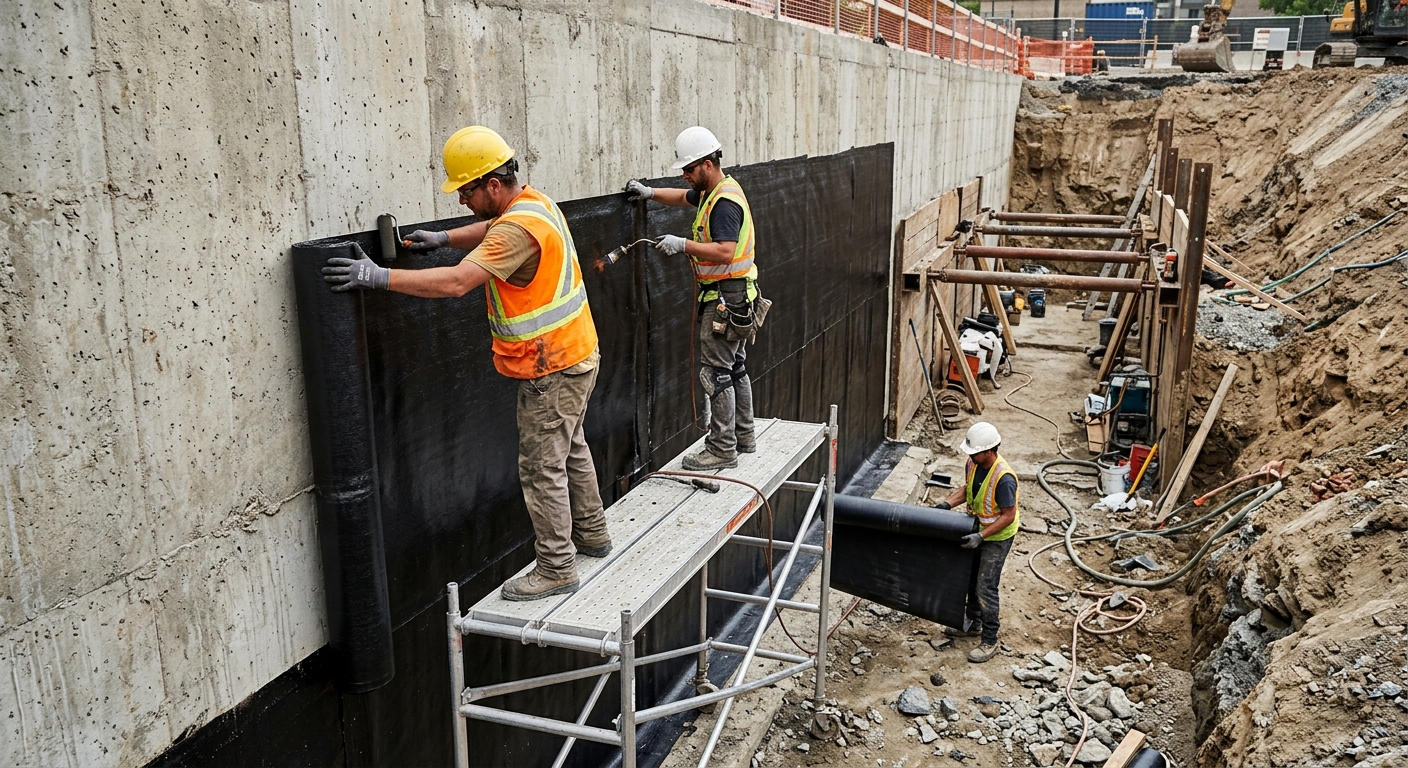
Basement waterproofing options and costs in Vegreville
In Vegreville, homeowners often start calling contractors once they notice recurring damp spots, a musty smell, or wet patches after spring melt. With 66.1% of local homes built before 1981, many basements are living with older waterproofing details—like original tar-and-paper membranes and undersized or failed weeping tile—long after their expected service life. That older housing stock matters here: when the system that drains water can’t keep up, water pressure and seepage tend to become seasonal and more expensive to manage year after year.
In the Camrose–Drumheller economic region, pricing is shaped by clay-to-clay-loam subsoils, variable shallow groundwater near coulees and depressions, and frequent freeze–thaw cycles on the Prairies. Those conditions can widen small cracks and cold joints, so “minor” seepage can turn into active leaks by the next winter. Labour availability can also affect costs—during peak spring restoration season, excavation and disposal scheduling tightens, especially for exterior work that requires regrading and drainage upgrades.
Local demand is especially common around older residential areas near the downtown core, where landscaping is established and access can be tight. For many of these homes, the most cost-effective route starts with drainage upgrades, targeted crack repair, and—when needed—a reliable sump setup.
Below is a practical overview of the most common basement waterproofing approaches you’ll see in Vegreville and what they typically cost, so you can compare quotes before you book a site visit.
| Method |
What It Addresses |
Disruption Level |
Durability |
Price Range |
| Exterior excavation + new membrane + drainage tile |
Hydrostatic pressure at the foundation wall; bulk water entry |
High (excavate, remove landscaping/steps, backfill) |
High (source control when properly detailed) |
$9,500–$21,500 |
| Interior perimeter drain channel + sump pit |
Water after it enters; lowers water level near perimeter |
Medium (interior demolition, limited rework) |
Medium to High (depends on wall condition and sealing) |
$6,800–$15,800 |
| Foundation crack injection (epoxy or polyurethane) |
Crack pathways; stops seepage through targeted failures |
Low to Medium (access to cracks needed) |
Medium to High (best results when correctly matched to crack type) |
$650–$2,400 |
| Sump pump installation (primary + battery backup) |
Ongoing removal during storms/spring melt; power resilience |
Medium (pit, lines, discharge routing) |
High when discharge and check valves are properly installed |
$1,600–$3,400 |
| Window well drain installation |
Bulk water entry at egress windows; pooled rain/snowmelt |
Low to Medium (window well work, minor landscaping) |
Medium (good detailing needed to prevent freeze plugging) |
$1,200–$2,600 |
| Lot re-grading / downspout extension |
Directs surface water away from foundation |
Low to Medium (earthworks, exterior extensions) |
Low to Medium (best as a supporting measure) |
$900–$2,800 |
Prices are estimates only and vary by project scope, site access and material selection.
What affects the price of waterproofing in Vegreville
In Vegreville and the wider Camrose–Drumheller area, it’s common to see quotes for the “same” basement problem vary by 30% to 50%. The reason is usually not the contractor’s overhead—it’s the reality that waterproofing scope expands once they confirm soil conditions, water movement pathways, and foundation details during the site assessment. Two homes can both “leak after spring,” yet one needs a sump with backup while the other needs source control excavation and membrane restoration.
The three biggest pricing drivers that separate regional costs from the national average are soil type, water table conditions, and freeze–thaw. Clay-heavy soils common in parts of Alberta hold water longer and can exert lateral pressure when saturated; that worsens crack growth between winters. If the effective water table stays high near the foundation, sump run times increase and discharge routing becomes more complex. Freeze–thaw then widens even small defects—turning a manageable fix into a multi-step repair plan. In older housing stock (like many Vegreville basements built well before 1981), original weeping tile can be undersized or completely failed, forcing interior solutions to work harder.
Here are a few real-world examples of how local conditions change cost in Vegreville. If a poured-concrete wall has a few targeted hairline cracks, crack injection may stay in the $650–$2,400 band; if the same wall has multiple horizontal structural cracks, the scope may shift toward excavation and drainage upgrades, quickly moving toward the $9,500–$21,500 exterior range. Conversely, if dampness is mostly surface runoff from gutters, regrading and downspout changes can reduce water load for a few thousand dollars, often in the $900–$2,800 range—without excavating the full perimeter.
| Price Factor |
Why It Matters |
Cost Impact |
| Interior vs. exterior approach — interior is less disruptive but addresses symptoms |
Interior manages water after entry; exterior controls the source by keeping water away from walls |
Exterior typically costs more (excavation/disposal and membrane detailing) |
| Foundation type — poured concrete vs. block vs. stone vs. ICF |
Crack behaviour and sealing methods differ by wall material and joints |
Poured concrete often responds well to targeted injection; block often needs perimeter drainage complements |
| Soil type — clay expands more than sand, adding pressure |
Clay retains moisture and can increase hydrostatic and lateral loads |
More excavation/drainage detail and stronger water management needed |
| Crack type and length — hairline vs. structural horizontal cracks |
Structural cracks may indicate movement and can require engineer-led scope |
Structural crack work can push jobs from “injection” into broader systems and higher labour/time |
| Sump pump backup system — battery or water-powered backup needed |
Alberta winter/spring conditions can trigger nuisance power interruptions; backup prevents discharge stoppage |
Typically adds cost, but can prevent major damage during long pump downtime |
| Access — landscaping, decks, or driveways must be removed for exterior |
Exterior work requires removal and restoration of hardscape and plants |
Higher costs for demolition/restoration and longer schedule |
| Weeping tile age — original tile (60+ years) may be completely failed |
Old tile can clog, collapse, or be routed incorrectly |
May require full replacement and improved drainage design |
| Mould or efflorescence remediation required before sealing |
Moisture-related salts and microbial growth must be treated to avoid future breakdown under coatings |
Additional remediation steps and time before waterproofing products are applied |
Permits & regulations in Alberta
In Alberta, foundation excavation, structural crack repair, and changes to lot drainage typically require a building permit. If a contractor is reworking drainage that ties into municipal infrastructure—such as connecting a sump discharge line to storm or sanitary sewer—they should have municipal approval in place before the work starts. For structural crack repair (especially horizontal cracks in block walls or cracks that suggest movement), an assessment by a structural engineer is often required to determine whether underpinning, additional structural work, or a specific repair system is necessary.
For your peace of mind in Vegreville, ask the contractor to confirm what they are permitted to do and whether permits will be pulled as part of the project. Here’s a simple verification routine: (1) check the contractor’s Alberta licence/registration details using the appropriate provincial registry listings; (2) request a current certificate of insurance naming you as an additional insured where appropriate and verify liability coverage limits; and (3) confirm WSIB/WCB status and provide a clearance letter if requested. For structural repairs, verify they have engineering support or can produce documentation showing how the crack repair aligns with an engineer’s direction.
Work that often does not require a permit typically includes interior-only waterproofing that doesn’t alter drainage to municipal lines (for example, installing an interior perimeter drain, sump pit work, or targeted crack injection)—but the exact requirement can depend on the municipality and the scope, so always confirm in writing before the first demolition day.
Interior vs exterior waterproofing — what does Vegreville need?
The fundamental difference is source control versus water management. Exterior waterproofing (full excavation, new membrane, new drainage tile, and backfill) permanently addresses where water enters by keeping moisture away from the foundation wall. The trade-off is that it costs more and requires significant landscaping disruption. Interior waterproofing (perimeter drain channel, sump pit, sump pump, and sometimes wall crack sealing) manages water after it enters. It’s usually less invasive and faster to complete, but it does not stop hydrostatic pressure from acting on the wall itself.
In Vegreville’s clay-rich subsoils and Prairie freeze–thaw cycle, exterior systems tend to be the best “long game” when you have widespread seepage, multiple failed foundation drainage components, or repeated spring melt flooding. However, interior solutions can be the right answer when access is limited (established yards, decks, or hardscaping) or when crack injection and drainage control are sufficient to prevent recurring water from reaching interior finishes.
Foundation type matters. Poured concrete walls often respond well to crack injection for defined leak pathways, while block foundations frequently benefit from an interior drain channel because the practical reality is that joints and voids can transmit water under pressure even when surface coatings look intact. For Alberta power reliability during spring storms, a sump system with a backup option is often worth considering—especially if your basement is finished and water damage would be expensive. For example, if a full exterior approach lands around the higher $9,500–$21,500 range, but a targeted interior perimeter drain plus sump stays in the $6,800–$15,800 range, homeowners sometimes choose interior work when the source is clearly limited to a few pathways or when exterior access would be prohibitively disruptive.
Your best decision comes from matching the repair system to the water pathway and foundation condition—not just the symptom.
| Method |
Best For |
Addresses Source? |
Disruption |
Lifespan |
Price Band |
| Full exterior excavation + membrane |
Frequent seepage, high water load, repeated spring melt problems, accessible perimeter |
Yes |
High |
Long (often decades with proper detailing) |
$9,500–$21,500 |
| Interior French drain + sump system |
Water management where exterior access is limited; dampness after entry |
No (manages after entry) |
Medium |
Medium to Long (system dependent) |
$6,800–$15,800 |
| Crack injection — epoxy (structural) |
Cracks needing sealing where movement is not active and the structure is stable |
Partially (seals the pathway, not the surrounding hydrostatic source) |
Low to Medium |
Medium to Long when crack type is correct |
$650–$1,900 |
| Crack injection — polyurethane (active leak) |
Active seepage where water is weeping through cracks/joints |
Partially (stops the leak pathway) |
Low to Medium |
Medium to Long (best when matched to active flow) |
$800–$2,400 |
| Interior drain channel only (no sump) |
Minor seepage, controlled moisture events, where sump is not required |
No |
Medium |
Shorter than full sump systems in higher-load seasons |
$4,500–$10,000 |
| Re-grading + downspout extensions |
Primarily surface water issues; gutters/pooling leading to wet spots |
No |
Low to Medium |
Shorter (relies on ongoing drainage maintenance) |
$900–$2,800 |
How to choose a waterproofing contractor in Vegreville
Choosing a waterproofing contractor in Vegreville is less about flashy marketing and more about proof. Start by verifying Alberta compliance: ask for their current contractor licence/registration details, then confirm liability insurance by requesting a certificate of insurance (and that it’s valid for the work period). Next, check WSIB/WCB coverage—reputable contractors can provide a clearance letter or documentation showing their account is active and in good standing. Don’t accept “we’re covered” without paperwork.
Get 2 to 3 itemised written quotes that break down labour and materials. You want to see what’s included (excavation length, drainage tile specifics, membrane type, sump components, discharge routing) and what’s excluded (disposal fees, permit pulling, concrete removal limits, restoration of stairs/landscaping, and mould remediation scope if needed). Look for a clear warranty: a workmanship warranty length (often several years) and product/manufacturer warranty terms, plus whether the warranty transfers to future owners.
Payment schedule matters. Avoid paying more than 10% to 15% upfront. Use a holdback until the job is fully complete and protected from seasonal damage. Finally, get the timeline in writing—start date and completion estimate—so you’re not left with open excavation or partially restored basements heading into weather swings.
- Ask for a site visit and a written leak-path explanation, not just a recommended package.
- Confirm whether permits are required and who pulls them (included or extra).
- Require an itemised scope: excavation footage, membrane system, and drainage components.
- Verify disposal and restoration are included or clearly excluded.
- Request a copy of liability insurance and confirm the coverage is current.
- Verify WSIB/WCB clearance letter or equivalent documentation.
- Check for engineering involvement for structural cracks (especially horizontal cracks).
- Confirm sump discharge location and freeze-proof routing details.
- Ask about backup system options (battery or water-powered) and what’s included.
- Ensure warranty terms are in writing and specify what defects are covered.
- Clarify payment milestones and holdback amount (avoid large upfront payments).
- Look for a schedule that avoids long open excavation without protection.
Red flags I see too often around Vegreville are: vague “lump sum” scopes with no mention of drainage tile or membrane system details; refusal to provide insurance/WSIB/WCB documentation; promises to “stop water forever” without explaining the water pathway; missing permit discussion when excavation or lot drainage changes are proposed; and warranties that only cover parts, not workmanship.
Frequently asked questions — waterproofing in Vegreville
Can I waterproof my basement in winter in Vegreville?
Yes, but winter waterproofing in Vegreville usually shifts the approach. Exterior excavation can be limited by frozen ground and working conditions, while interior work is often still feasible if the space is accessible and moisture readings are stable. Contractors may focus on interior perimeter drainage, sump pit installation, crack injection, and remediation of damp areas first. That said, if your project requires regrading, new weeping tile, or full excavation for membrane replacement, most crews prefer to schedule during warmer periods to reduce delays and improve backfill performance. If you’re comparing quotes, ask whether the plan includes temporary protection for open areas and how they manage freeze plugging and curing times for sealants during colder days.
What is the difference between waterproofing and damp-proofing?
Damp-proofing is meant to resist minor moisture and control dampness, typically using lighter-duty materials and treatments. Waterproofing is a more robust system designed to resist water entry under conditions like hydrostatic pressure or seepage pathways. In Camrose–Drumheller, with clay-heavy soils and frequent freeze–thaw cycles, we often see damp-proofing fail when water pressure increases and cracks expand. That’s why true waterproofing scope commonly includes drainage management (weeping tile or interior drains), sealing of crack pathways with systems appropriate to the crack type, and correct detailing at joints and cold joints. If you’re budgeting, remember that “symptom-only” work might look cheaper upfront, but it can lead to higher costs later if the source of water entry isn’t addressed.
Will basement waterproofing affect my property value in Vegreville?
In many Vegreville neighbourhoods, yes—especially when documentation is available. Buyers typically worry about recurring seepage, odours, and the cost of moisture remediation. A properly completed waterproofing project with a written scope, photos, and warranty can reduce perceived risk and support resale discussions. That said, value impact depends on what was done. Exterior source-control systems tend to be more persuasive for water entry issues because they address hydrostatic pressure directly, whereas interior sump/perimeter systems can still protect finishes effectively but may not “stop water pressure” at the wall. If you’re seeing repeated spring wetting, a system in the interior range like $6,800–$15,800 may still be a strong investment if it prevents damage and mould recurrence.
What drainage issues are most common in Vegreville homes?
Common issues include seepage through foundation cracks and joints, wet corners where perimeter drainage is undersized or failed, and problems driven by saturated clay subsoils that hold water longer after storms. We also see recurring basement moisture linked to surface water—downspouts that discharge too close to the foundation, low spots that allow pooling, and grading that directs runoff toward the house. In older homes, original weeping tile may have collapsed or become clogged over decades, which matches why so many basements in older neighbourhoods are vulnerable. When freeze–thaw cycles widen cracks, minor seepage after heavy rain can become more significant by the next winter. A site evaluation should map where water appears first (walls vs. floor vs. window wells) to match the correct fix.
How do I choose a waterproofing contractor in Vegreville?
Start with credentials: verify Alberta licensing/registration where applicable, request current liability insurance documentation, and confirm WSIB/WCB coverage (often via a clearance letter). Then compare itemised quotes—not lump sums. Your scope should specify what’s included: excavation footage, membrane and drainage tile components, sump pit and discharge details, and whether disposal and restoration are included. Make sure the contractor explains what doesn’t require waterproofing (like surface water) versus what does. Ask about warranty coverage for workmanship and product terms, and whether warranties are transferable. Finally, keep payment schedules conservative—typically only 10% to 15% upfront—and hold back until completion. This protects you if work quality or sequencing doesn’t match expectations.
What is a battery backup sump pump and do I need one in Vegreville?
A battery backup sump pump is an additional pump system that runs on battery power if the main pump loses electricity. In Vegreville and across Alberta, power interruptions can happen during storms and seasonal events, and spring melt can create high water flow that doesn’t stop quickly. Battery backup adds cost, but it can prevent basement flooding and protect finished spaces when the main circuit is down. Whether you “need” one depends on your basement risk: frequent sump cycling, finished basements, long discharge routes, and how quickly you can respond during an outage. If you’re already budgeting for sump work, many homeowners consider a package that includes primary plus backup systems, which typically falls around $1,600–$3,400 depending on details.