Basement waterproofing options and costs in Pleasantview
Pleasantview, Alberta sits in the Calgary market where basements are often protected by older systems that were never designed for today’s freeze–thaw intensity and long wet springs. With a population of 3,745 people (Statistics Canada, 2021 Census), Pleasantview is a small enough community that homeowners often reuse trusted trades—but the typical foundation issues you’ll see come down to clay-heavy subsoils and the way water pressure behaves during thaw. Many older homes in the Calgary area were built decades ago, when tar-and-paper and early weeping-tile layouts were common; once those drain lines clog or fail, seepage tends to reappear every spring.
In southern Alberta, the winter cycle of freezing, thawing, and repeat movement widens existing cracks and joints. That’s why exterior waterproofing projects can swing widely in cost: excavation depth, disposal for clay spoils, tight access, and the need for a properly functioning perimeter drain system. Where we’re dealing with low-lying pockets near river valleys and stormwater flow paths, hydrostatic pressure can also drive recurring wall seepage and higher sump run times, especially if the perimeter drainage is undersized.
For neighbourhoods with more aging basements and mature landscaping, basement waterproofing demand is especially consistent around the established residential pockets where driveways, patios, and buried service routes make exterior access more complicated. The next step is comparing the most common repair and waterproofing methods side-by-side, including what each one addresses and what you should budget for.
| Method |
What It Addresses |
Disruption Level |
Durability |
Price Range |
| Exterior excavation + new membrane + drainage tile |
Stops water at the source; re-builds perimeter drainage and relieves hydrostatic pressure |
High (excavation, landscape and footing exposure) |
High (properly detailed systems can last many years) |
$9,500–$24,500 |
| Interior perimeter drain channel + sump pit |
Manages water after entry; captures seepage and reduces hydrostatic effects inside |
Medium (interior digging, slab/finish protection depending on layout) |
Medium-to-high (depends on discharge and maintenance) |
$6,000–$14,000 |
| Foundation crack injection (epoxy or polyurethane) |
Bridges or seals cracks to stop specific crack pathways |
Low-to-medium (access to crack line; minor surface prep) |
Medium-to-high (polyurethane is best for active leaks) |
$700–$1,900 |
| Sump pump installation (primary + battery backup) |
Controls groundwater/seepage load during storms and spring thaw |
Medium (pit excavation, discharge routing, electrical work) |
High when paired with reliable backup power |
$1,350–$3,150 |
| Window well drain installation |
Diverts rain/snowmelt away from window wells and reduces localized wet basements |
Low-to-medium (open well area; drain routing) |
Medium (works best when weeping/drainage is integrated) |
$2,000–$5,500 |
| Lot re-grading / downspout extension |
Keeps surface water away from foundation; reduces water load on perimeter drainage |
Low-to-medium (minor landscape work) |
Low-to-medium (performance depends on ongoing grading maintenance) |
$1,800–$6,000 |
Prices are estimates only and vary by project scope, site access and material selection.
What affects the price of waterproofing in Pleasantview
In Pleasantview, you can see the same basement waterproofing job quoted 30–50% apart because the “scope language” changes between contractors—what they include (disposal, ties to downspouts, sump discharge routing, membrane type) matters as much as the method itself. In the Calgary and surrounding regional market, the climate and soil conditions make it especially easy for small omissions to become big cost differences later.
The three main drivers that separate local costs from the national average are soil type, water table behaviour, and freeze–thaw. First, clay-heavy soils (common across southern Alberta) expand when saturated. That seasonal movement increases lateral pressure on foundation walls and can worsen crack leakage over time, which may push a quote from simple crack sealing into a combined crack repair plus drain correction. Second, local water conditions vary across Calgary-area lots, and where seasonal groundwater or storm events create higher pressure, you typically need longer sump run times and more robust drainage—often more labour for discharge routing and check valves. Third, freeze–thaw cycles in the Calgary region widen existing joints and degrade marginal drainage details; repairs that rely on short-term patchwork can fail sooner.
Concrete examples from Pleasantview basements: excavating around a concrete patio and relocating buried landscaping can push you toward the upper end of exterior waterproofing pricing (often in the $9,000–$25,000 band). If the same house also needs interior drainage, a contractor may price it around the $5,000–$15,000 interior weeping-tile/sump range depending on whether they include sump backup and proper discharge. If your foundation has multiple active leak points, crack injection alone may not be sufficient, and the “add-ons” (prep, crack routing, remediation for efflorescence) show up in the final number.
| Price Factor |
Why It Matters |
Cost Impact |
| Interior vs. exterior approach — interior is less disruptive but addresses symptoms |
Exterior stops water at the source; interior manages water after entry |
Typically shifts cost by several thousand dollars depending on excavation and membrane work |
| Foundation type — poured concrete vs. block vs. stone vs. ICF |
Crack behaviour and sealing strategy differ by material |
Block foundations often need more interior drainage; poured concrete may respond better to crack injection |
| Soil type — clay expands more than sand, adding pressure |
Increased lateral pressure can drive active leaks |
May increase labour for drainage correction and raise material requirements |
| Crack type and length — hairline vs. structural horizontal cracks |
Active, longer cracks require different products and sometimes structural assessment |
Structural or horizontal cracks can add engineering and longer prep time |
| Sump pump backup system — battery or water-powered backup needed |
Power outages during spring wet periods can increase risk |
Adds cost, but significantly reduces “failure during outage” risk |
| Access — landscaping, decks, or driveways must be removed for exterior |
More dismantling and reinstatement equals more labour |
Frequently changes quotes by thousands, especially on tight urban lots |
| Weeping tile age — original tile (60+ years) may be completely failed |
Existing drainage may be plugged or disconnected |
Often converts “minor fix” into “full perimeter” work |
| Mould or efflorescence remediation required before sealing |
Moisture must be stabilized before coatings and membranes perform |
Can add time for cleaning, drying, and controlled remediation |
Permits & regulations in Alberta
In Alberta, foundation excavation, structural crack repair, and changes to lot drainage typically require a building permit. If a contractor is installing a sump pump that ties into the storm or sanitary sewer, municipal approval is usually required, because the discharge location and method must comply with local drainage rules. For structural crack repair—particularly horizontal cracks in block walls, major step cracks, or any crack pattern that suggests differential movement—an assessment by a structural engineer is often needed to determine whether underpinning or other structural work is required.
When you hire a waterproofing contractor in Pleasantview, ask them to confirm whether their plan requires permits and who will pull them. “Waterproofing” that includes drainage re-routing, breaking and re-pouring parts of a floor, or major foundation work is commonly treated more like construction work than routine maintenance.
Step-by-step homeowner checks: (1) ask for the contractor’s Alberta licence/registration details and verify the correct status through the relevant online registry; (2) request a certificate of liability insurance naming you as an additional insured where possible; (3) confirm WSIB/WCB coverage with a clearance letter or current account documentation; (4) for structural repairs, ask whether they include engineering support and submit the engineer’s scope report if required. This protects you from delays and ensures the work is done to accepted standards rather than “best effort” guessing.
Interior vs exterior waterproofing — what does Pleasantview need?
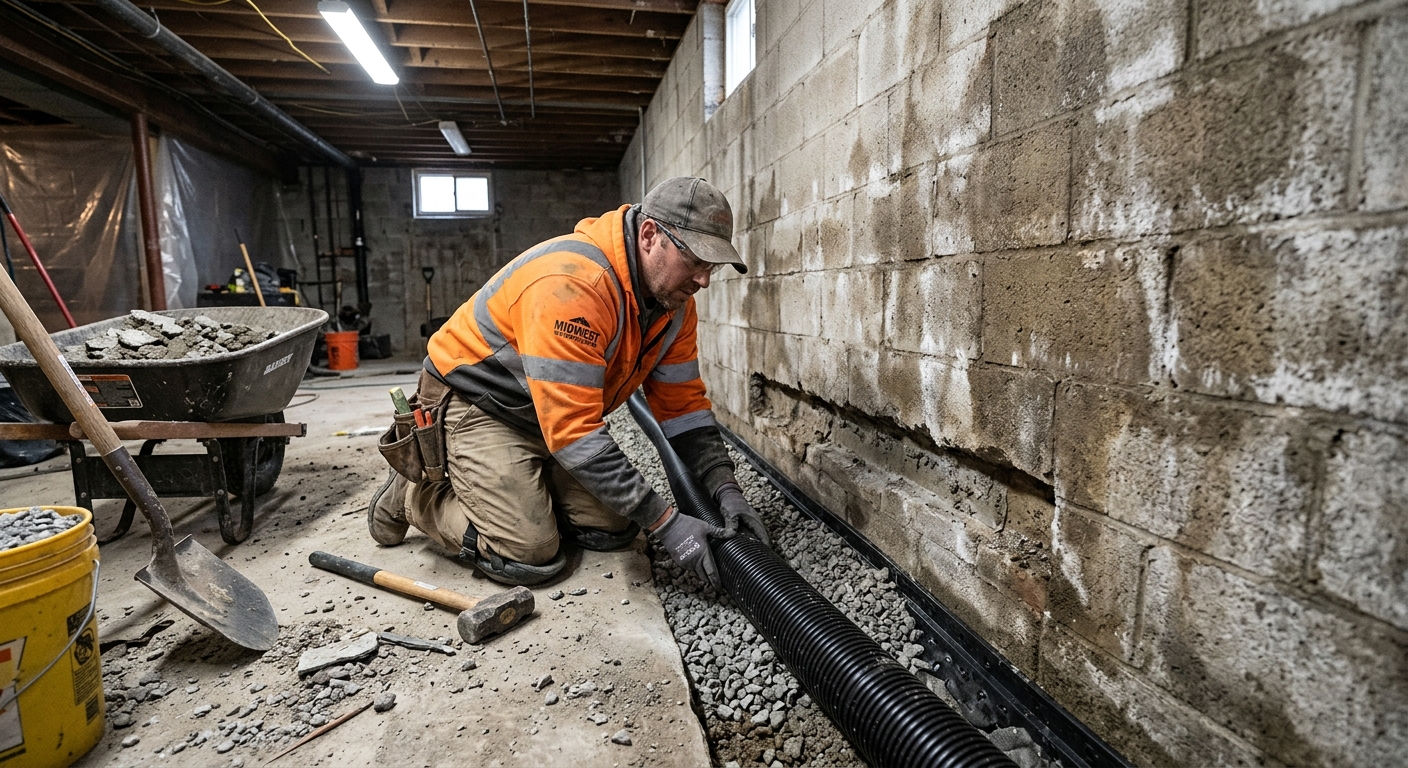
The fundamental difference is that exterior waterproofing addresses the source of water entry: full excavation, new membrane, new perimeter drainage tile, and re-backfill. Interior waterproofing manages water after it enters: a perimeter drain channel, a sump pit, and sump pump operation. Exterior is typically the more permanent fix because it reduces hydrostatic pressure at the wall; interior is less invasive and can be the right choice when access is limited by patios, driveways, or landscaping.
In Pleasantview’s Calgary-area conditions—clay-heavy soils that swell when saturated and freeze–thaw cycles that widen cracks—interior solutions work best as part of a broader strategy, not as a “seal and forget” replacement. Poured-concrete walls in many Calgary homes often respond well to targeted crack injection and an interior drainage system, because controlling specific crack pathways reduces seepage while the drain handles incidental water. Block foundations frequently need interior drainage as a practical complement because mortar joints and capillary pathways can carry moisture even when crack repair is performed.
Battery backup for the sump is a sensible upgrade here, especially during spring thaw when power interruptions can coincide with peak meltwater. As a dollar example: exterior waterproofing often lands in the $9,000–$25,000 band, but it can be the justified choice if multiple wall runs are wet or if the weeping tile is failed. If the issue is limited to a few active leaks, interior crack injection plus interior drainage may start closer to the $5,000–$15,000 range and can prevent a more disruptive excavation—provided the discharge plan and pump reliability are properly designed.
| Method |
Best For |
Addresses Source? |
Disruption |
Lifespan |
Price Band |
| Full exterior excavation + membrane |
Widespread seepage, failed weeping tile, repeated spring wetness, or lots with active hydrostatic pressure |
Yes |
High |
Long (when detailed correctly) |
$9,000–$25,000 |
| Interior French drain + sump system |
Limited exterior access, basement already finished, or as a complement to crack work |
No (manages after entry) |
Medium |
Medium-to-long (depends on pump/discharge) |
$6,000–$14,000 |
| Crack injection — epoxy (structural) |
Non-moving, primarily dry or stabilized cracks in poured concrete where sealing is appropriate |
Yes (for that crack pathway) |
Low-to-medium |
Long for stable cracks |
$700–$1,500 |
| Crack injection — polyurethane (active leak) |
Cracks with active seepage, damp patches that return each thaw cycle |
Yes (for that leak pathway) |
Low-to-medium |
Long when crack is truly active and correctly prepped |
$900–$1,900 |
| Interior drain channel only (no sump) |
Minor seepage that doesn’t require pumping or where gravity discharge is reliable |
No |
Low-to-medium |
Shorter if water volumes increase |
$5,000–$9,500 |
| Re-grading + downspout extensions |
Surface-water runoff issues: wet walls near grade, staining after heavy rain, poor gutter discharge |
Indirect (reduces load on foundation) |
Low-to-medium |
Medium if maintenance is kept up |
$1,800–$6,000 |
How to choose a waterproofing contractor in Pleasantview
Start by verifying Alberta coverage and business credentials. Ask for their Alberta licence/registration details and verify the status through the appropriate online registry. Next, request a certificate of liability insurance and confirm it’s current and specific enough for basement construction work (not just general business). For WSIB/WCB, ask for documentation or a clearance letter showing active coverage—this is important for your protection if a worker is injured on site.
Then get 2–3 itemised written quotes, not lump sums. Your quote should list labour and materials separately: excavation, membrane, drainage tile, pipe, sock, backfill strategy, pump and backup components, discharge piping, and disposal. Check exclusions line-by-line: is disposal included? Is the permit (if required) included? Will patio/deck removal and reinstatement be priced separately or included as allowances? Good waterproofing scopes also specify what product system is being used and how cracks will be prepared before injection.
Warranty matters in Alberta’s freeze–thaw climate. Look for a workmanship warranty length, a product/manufacturer warranty, and whether the warranty transfers if you sell the home. For payment schedule, never pay more than 10–15% upfront; hold back a portion until the work is complete and final materials are installed. Finally, request a written start date and an estimated completion timeline that accounts for cure times and drying/inspection steps.
- Verify contractor licence/registration status using the Alberta online registry.
- Confirm liability insurance is current; request a certificate and confirm limits.
- Request WSIB/WCB clearance or documentation showing active coverage.
- Get 2–3 itemised quotes with labour and materials listed separately.
- Ask what’s included for excavation depth, disposal, and backfill.
- Confirm membrane and drainage products are named (not just “waterproofing system”).
- Ask how discharge is handled (sump outlet routing, check valves, backflow prevention).
- Confirm whether a permit is required and who pulls it.
- Require a crack assessment approach (active leak vs stabilized crack) before choosing epoxy vs polyurethane.
- Check warranty terms: workmanship coverage, product warranty, and transferability.
- Agree on payment schedule: max 10–15% upfront; holdback until final walkthrough.
- Get start/completion dates in writing, including cure/drying allowances.
In Pleasantview, common red flags include: quotes that avoid naming the actual membrane/drainage products; “sealed basement” promises without addressing weeping tile discharge and pump failure risk; no documentation for WSIB/WCB or liability coverage; scope that doesn’t include disposal and reinstatement allowances where exterior excavation is involved; and warranties that cover workmanship but exclude transfer on sale or exclude key waterproofing components.
Frequently asked questions — waterproofing in Pleasantview
How do I know if a foundation crack is serious?
In Pleasantview and across the Calgary region, not every crack is an emergency, but the pattern matters. Hairline vertical cracks can be cosmetic—especially in stable poured concrete—while wide, expanding, or actively damp cracks that return during spring thaw are more concerning. Horizontal cracks in block walls, stair-step cracking, or cracks that show measurable movement over a season usually deserve engineer review before sealing. A practical homeowner check is to clean the crack, mark it, and photograph weekly during wet weather and early freeze–thaw. If you see efflorescence (white mineral staining) or water weeping after heavy rains, treat it as active leakage. Crack injection may help, but only if the installer determines whether the crack is stable (epoxy) or active (polyurethane).
How much does foundation crack repair cost in Pleasantview?
Foundation crack repair in Pleasantview typically depends on crack length, access, and whether the leak is active. For many basements, injection work lands around the $500–$1,800 range for straightforward crack repairs; larger or more complex leak pathways can run higher once surface prep and multiple injection ports are included. If the crack is actively leaking and requires polyurethane, expect the cost to trend toward the upper end because active leaks demand more careful prep and product selection. For a quick budgeting reference, many homeowners end up around the $700–$1,900 band when they have more than one affected section or when repairs need additional labour to reach the crack line. Always confirm in the quote whether the price includes crack prep, cleaning, and a follow-up plan if seepage returns.
Do I need a sump pump in Pleasantview?
You may need a sump pump in Pleasantview if you experience water after it enters the basement, especially during spring melt, heavy storms, or when the home’s drainage is older and can’t handle clay saturation. A sump becomes more important when you’re seeing ongoing seepage, pooling near the wall, or a higher risk of hydrostatic pressure in low spots. If the interior drainage plan relies on gravity only, it may work for minor dampness, but a full sump system is usually preferred when water volumes increase seasonally. In the Calgary-area pricing bands, sump pump installation typically ranges from about $900–$3,000, and adding battery backup pushes the cost upward. The best indicator is how often water appears and whether it correlates with thaw periods; a reputable contractor should assess discharge routing and backup needs, not just install equipment.
How does Pleasantview's soil affect my foundation?
Pleasantview foundations are affected by the Calgary region’s clay and clay-till soils, which hold water and expand when saturated. That expansion can increase lateral pressure on foundation walls and footings, widening existing cracks and pushing more seepage during freeze–thaw cycles. When the soil alternates between saturated and frozen, pressure changes can also make minor leaks reappear each spring even after small repairs. Practically, this means waterproofing solutions that manage water load—proper perimeter drainage, working weeping tile, and correct backfill—often perform better than approaches that only seal a surface crack. Where weeping tile is old or clogged, interior drainage and a sump may be required as a dependable line of defence. For homeowners, monitoring dampness timing (rain vs thaw) helps confirm whether the soil-driven pressure is your main driver.
Do I need a permit for foundation work in Alberta?
In Alberta, many forms of basement and foundation-related work typically require permits, especially when the work changes lot drainage, includes foundation excavation, or involves structural crack repair. If a sump pump system is connected to storm or sanitary sewer discharge, municipal approval is commonly required because discharge location and method must meet drainage rules. For major horizontal or step cracks, homeowners should expect that a structural engineer assessment may be part of the process before decisions like underpinning are made. The best way to confirm for your specific Pleasantview project is to ask your contractor whether permits apply, what exact permits are needed, and who will pull them. Reputable contractors will also provide proof of their coverage (liability insurance and WSIB/WCB documentation) and coordinate engineering where required.
How long does waterproofing last?
How long waterproofing lasts depends on whether you addressed the source of water entry or just managed water after it enters. Exterior waterproofing systems—when the membrane is installed with correct detailing and paired with functional perimeter drainage—are generally the longest-lasting option because they reduce hydrostatic pressure at the wall. Interior systems like perimeter drains and sumps can perform for many years, but their lifespan depends on pump reliability, discharge routing, and whether you remove the causes of high water load. Crack injection can last a long time when the crack is stabilized, but active cracks often require polyurethane and careful prep to hold through freeze–thaw. In practical terms, homeowners who invest in complete perimeter correction often see better long-term performance than those who re-seal one small area. If your quote includes only $1,000-level fixes without addressing drainage, it’s wise to ask what happens when the next spring thaw increases soil saturation.