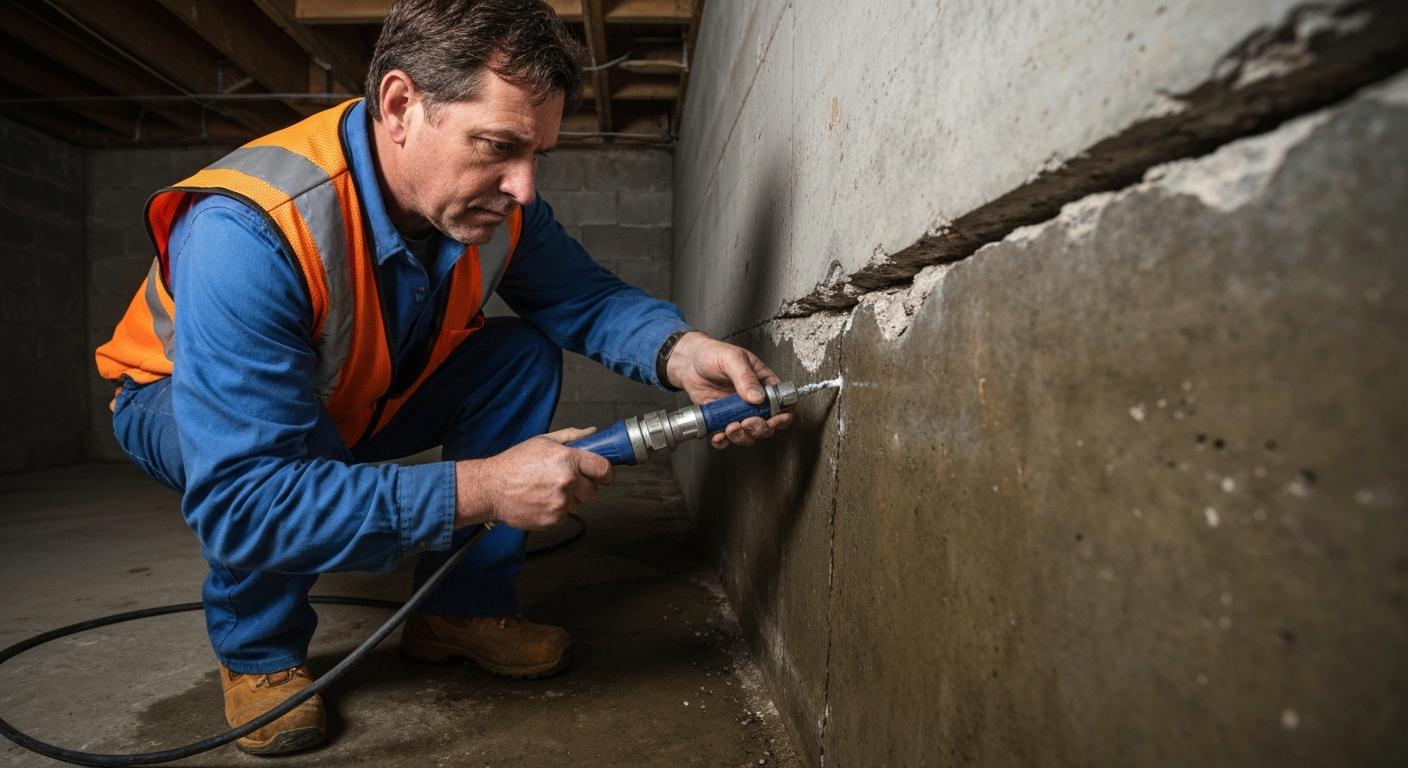
Basement waterproofing options and costs in Valleyview
Valleyview homeowners usually face one of two realities: water enters basements because of lot drainage and foundation exposure, or it collects inside because the foundation perimeter system has failed. With Valleyview’s housing stock split between newer builds and older homes—46.2% built before 1981—many basements are retrofits, not first-time waterproofing. Older homes are far more likely to have original tar-and-paper waterproofing that has aged out, plus weeping tile that’s corroded, undersized, or simply clogged. That’s why “simple” seepage issues often turn into a drainage-and-crack system upgrade.
In the Athabasca–Grande Prairie–Peace River economic region, costs are also shaped by northern freeze-thaw and clay-heavy soils around the broader Grande Prairie–Peace River corridor. Saturated clay expands and can push laterally on basement walls, worsening cracks each spring. At the same time, high seasonal groundwater and poor lot drainage increase the run time of sump pumps and raise the importance of correct exterior grading. This is especially noticeable in low-lying pockets and near older subdivisions where surface swales and downspouts don’t discharge far enough away from the foundation—areas where waterproofing crews in Valleyview tend to be booked ahead of spring.
The sections below lay out common methods and typical price ranges so you can compare apples to apples before site conditions change the final scope. Use this table as a starting point, then line up each quote with the underlying cause of water entry.
| Method |
What It Addresses |
Disruption Level |
Durability |
Price Range |
| Exterior excavation + new membrane + drainage tile |
Hydrostatic pressure at the foundation exterior, failed dampproofing, and blocked weeping tile |
High (excavation, landscaping rework) |
Long-term with correct backfill and drainage |
$12,000 – $25,000 |
| Interior perimeter drain channel + sump pit |
Water after it enters; reduces seepage and hydrostatic build-up at the basement floor/wall joint |
Medium (floor cutting near perimeter) |
Very reliable as a “backup system” to exterior issues |
$8,000 – $18,000 |
| Foundation crack injection (epoxy or polyurethane) |
Crack sealing to stop leaks; improves water tightness along joints and damage pathways |
Low (drilling and patching) |
Good when the crack is stable and water pressure is managed |
$600 – $2,500 |
| Sump pump installation (primary + battery backup) |
Controls groundwater accumulation and reduces interior flooding risk during spring wet periods and power events |
Low to medium (pit, plumbing, discharge line) |
High with redundant backup and proper discharge routing |
$1,500 – $3,500 |
| Window well drain installation |
Manages water and snowmelt around egress/window wells |
Low to medium (excavation around wells) |
Good when the well and grading are corrected |
$1,200 – $3,000 |
| Lot re-grading / downspout extension |
Moves roof and surface water away from foundation to reduce water load |
Low (minor landscaping disruption) |
Moderate (depends on drainage performance and ongoing maintenance) |
$900 – $4,000 |
Prices are estimates only and vary by project scope, site access and material selection.
What affects the price of waterproofing in Valleyview
It’s common in Valleyview to see waterproofing quotes for the “same” basement problem vary by 30–50% once site conditions are confirmed. Two contractors can describe the issue as “seepage,” but one may be sizing a drainage solution for clay and high groundwater while the other may be proposing only interior patchwork. Across northern Alberta, labour availability and material choices also shift pricing—especially in busy spring windows when crews are scheduling exterior excavations for the wet season shoulder.
Three drivers typically separate Athabasca–Grande Prairie–Peace River pricing from the national average: soil type, water table, and freeze-thaw. Clay-heavy soil profiles are widespread in the region and tend to expand when saturated, increasing lateral pressure on basement walls and encouraging ongoing cracking. When the water table is high, sump pumps must run more often and discharge lines need careful planning, which can increase labour and controls. Then freeze-thaw cycles widen existing cracks and joints; that means a repair that might hold in a milder climate can leak again after multiple winters. In homes built before 1981 (46.2% in Valleyview), failing or undersized weeping tile and aging sump systems are more frequent, and more of the work shifts to interior drainage retrofits and targeted crack injection rather than “full rebuild” solutions.
Here are local examples of how cost changes in Valleyview: (1) if excavation reveals clay backfill and poor compaction, exterior jobs often require more backfill and regrading—raising the exterior band toward $12,000–$25,000; (2) if seepage is mainly at wall-floor joints, an interior perimeter drain plus sump can keep you closer to the $8,000–$18,000 range; (3) if you have widespread efflorescence or active mould, prep and remediation time can add several days before sealing, especially in basements that were closed up all winter. Homeowner households make up 68.9% of households, so many projects are planned as long-term fixes rather than temporary patching (Statistics Canada, 2021 Census).
| Price Factor |
Why It Matters |
Cost Impact |
| Interior vs. exterior approach — interior is less disruptive but addresses symptoms |
Exterior reduces water load at the source; interior manages water after entry |
Exterior typically costs more; interior often 30–50% lower |
| Foundation type — poured concrete vs. block vs. stone vs. ICF |
Different crack patterns and wall permeability change what will actually stop leaks |
Block/stone frequently needs more interior drainage; ICF can still need crack management |
| Soil type — clay expands more than sand, adding pressure |
Clay saturation increases hydrostatic stress on walls |
More robust drainage and possibly interior backup increases scope and cost |
| Crack type and length — hairline vs. structural horizontal cracks |
Structural cracks may require engineering and additional measures beyond injection |
Structural cases can move from small repair to engineered system pricing |
| Sump pump backup system — battery or water-powered backup needed |
Spring flooding and power outages can defeat a single pump |
Backup can add to the $1,500–$3,500 band but reduces flood risk |
| Access — landscaping, decks, or driveways must be removed for exterior |
Exterior work requires space for excavation and equipment movement |
Hardscapes and retained landscaping can add thousands |
| Weeping tile age — original tile (60+ years) may be completely failed |
Failed tile increases seepage and may force replacement rather than “tie-in” repairs |
Replacement pushes work closer to exterior excavation pricing |
| Mould or efflorescence remediation required before sealing |
Sealers and membranes perform poorly over untreated contaminants |
Pre-remediation time and materials increase total project days |
Permits & regulations in Alberta
In Alberta, foundation excavation, structural crack repair, and changes to lot drainage typically require a building permit. If the work involves making changes that affect the building’s structural integrity—especially with significant horizontal cracks in block walls or signs that a wall is shifting—permits and professional input are more common. Sump pump installations that connect to municipal storm or sanitary sewer systems generally need municipal approval, because discharge routing must meet local requirements and avoid creating nuisance conditions for neighbours or the sewer system.
For structural crack repair, a structural engineer’s assessment is often required to determine whether underpinning, wall stabilization, or other structural work is necessary before waterproofing proceeds. Many successful projects involve a “two-step” plan: confirm whether the crack is actively leaking and stable, then select either crack injection or a broader drainage strategy. Before you sign a contract, verify the contractor can support the engineering path when needed, and that they carry liability insurance plus WSIB/WCB coverage (or applicable clearances).
To verify a contractor in Valleyview, start with the Alberta licence/registration information on the appropriate online registry, then ask for a current certificate of insurance and a WSIB/WCB clearance letter. Read the COI for scope compatibility (contracting/waterproofing work) and request the coverage dates. Finally, confirm the permit responsibility—some contractors will pull permits and include costs; others require homeowners to arrange permits and the contractor handles only installation. Get that arrangement in writing.
Interior vs exterior waterproofing — what does Valleyview need?
The core difference is source control versus water management. Exterior waterproofing—full excavation, new membrane, new drainage tile, and properly engineered backfill—addresses water at the outside perimeter before it builds pressure against your foundation. It’s the most permanent route, but it’s also more disruptive because it requires digging around the house, working around grading, and rebuilding landscaping.
Interior waterproofing—perimeter drain channel, sump pit, sump pump—captures water after it enters and reduces how much reaches floors and wall finishes. It usually costs less and causes less yard disruption, but it doesn’t stop hydrostatic pressure from acting on the wall itself. In Valleyview’s clay-prone conditions and freeze-thaw cycles, that matters: interior systems can be excellent as a practical backup, especially when the exterior cannot be excavated easily (deck/driveway proximity) or when the main problem is joint seepage and floor-wall wetness.
Which approach fits best depends on foundation type and leak pattern. Poured concrete walls often seal well with properly selected crack injection (especially when cracks are stable), and interior drainage can handle residual seepage. Block foundations frequently have more pathways and inconsistent permeability, so interior drainage (and sometimes targeted crack injection) often becomes the realistic complement. Spring power risk is another Alberta-specific consideration: a sump pump without backup is vulnerable during outages, so battery backup is commonly recommended where spring runoff and high groundwater coincide.
For example, if you have isolated wall-floor seepage and one or two active cracks, interior options may land in the $8,000–$18,000 range, while a full exterior excavation project is often $12,000–$25,000—justified when exterior drainage is failing, weeping tile replacement is needed, or hydrostatic pressure is significant. If the foundation is otherwise intact and the leak path is localized, paying for excavation may not be necessary.
| Method |
Best For |
Addresses Source? |
Disruption |
Lifespan |
Price Band |
| Full exterior excavation + membrane |
Chronic seepage, failing exterior waterproofing, replacement-needed weeping tile, high groundwater exposure |
Yes (source control) |
High |
Long-term when backfill, slope, and drainage are done correctly |
$12,000 – $25,000 |
| Interior French drain + sump system |
Wet wall-floor joints, hydrostatic pressure managed inside, exterior access is limited |
Partially (manages water after entry) |
Medium |
High with proper pump sizing and discharge routing |
$8,000 – $18,000 |
| Crack injection — epoxy (structural) |
Stable cracks where you want a hard, structural seal (often in poured concrete contexts) |
No (doesn’t replace drainage) |
Low |
Good when crack is stable and water pathways are controlled |
$600 – $2,500 |
| Crack injection — polyurethane (active leak) |
Active seepage where the crack is still moving water at the time of treatment |
No (stops leak path; still needs drainage strategy) |
Low |
Often strong for active leaks when applied correctly and cured under proper conditions |
$900 – $3,000 |
| Interior drain channel only (no sump) |
Light seepage where water volume is low and discharge can be managed |
No (manages water after entry) |
Medium to low |
Moderate; may not handle high groundwater seasons |
$6,000 – $12,000 |
| Re-grading + downspout extensions |
Surface water and roof runoff directing toward foundation |
Yes (reduces load) |
Low |
Moderate; relies on maintenance and correct slope |
$900 – $4,000 |
How to choose a waterproofing contractor in Valleyview
Choosing a contractor in Valleyview is mostly about proof: proof they can do the scope, proof they’re insured, and proof they understand how northern Alberta conditions affect performance. Start by verifying Alberta licensing/registration where applicable, then obtain a current certificate of liability insurance and confirm it covers the specific waterproofing scope (excavation, interior drainage, crack injection, and any associated concrete cutting). Ask for WSIB/WCB coverage documentation or a clearance letter; a legitimate contractor should provide it without pushing back.
Next, request 2–3 itemised written quotes rather than a single lump sum. You want labour and materials broken down by what’s being done: excavation depth, membrane type, drainage tile specifications, discharge piping route, sump pump model and backup (if included), disposal, and restoration. Check exclusions—common ones are “permit not included,” “landscaping not included,” “engineering not included,” or “disposal extra.” Also confirm whether the quote includes a permit pull and inspections, where applicable. Timelines matter in northern spring planning: get a start date and completion estimate in writing, plus weather-driven hold points.
Warranty is another differentiator. Ask for the workmanship warranty length and whether it’s transferable to a future owner. Make sure you understand the product/manufacturer warranty as separate from the labour warranty. On payment, never allow more than 10–15% upfront; use a milestone holdback until final water testing and restoration are complete. Finally, insist the scope matches the cause—crack injection without any drainage plan can fail in clay-heavy, freeze-thaw conditions.
- Confirm Alberta registration/licence details match the work they’re proposing.
- Request and review liability insurance COI (scope + effective dates).
- Provide WSIB/WCB clearance letter or coverage proof for workers.
- Ask for 2–3 itemised quotes with labour/materials separated.
- Make sure disposal and debris removal are listed (not “allowance only”).
- Clarify whether permit pull is included and who is responsible for inspection scheduling.
- Ensure sump pump specs are written (model, discharge line size, check valves).
- If backup is recommended, confirm battery type and integration details.
- Require the discharge outlet plan to be described (location, routing, protection from freezing).
- Check warranty documents: workmanship, material/product, and transferability.
- Use a payment schedule with a 10–15% maximum deposit and a holdback until completion.
- Get start/completion dates and weather contingencies in writing.
Red flags to watch for in Valleyview: (1) a contractor who won’t map the water entry pathway and blames everything on “foundation settling” without inspection; (2) quotes that include crack injection but exclude drainage corrections when seepage points are at wall-floor joints; (3) no written warranty terms or unclear manufacturer coverage; (4) skipping backup discussion for sump systems in spring wet periods; and (5) asking for large upfront payments (well above 10–15%) or refusing to provide itemised scope and exclusions.
Frequently asked questions — waterproofing in Valleyview
How long does waterproofing last?
In Valleyview, basement waterproofing can last many years, but “how long” depends on whether the solution controls water at the source (exterior drainage and membrane) or only manages water after it enters (interior drain/sump). Exterior systems are usually built for long-term performance when excavation, membrane, drainage tile, and backfill are installed correctly for clay-rich, wet-prone soils in the Athabasca–Grande Prairie–Peace River region. Interior systems can also perform well, especially with a sump pump and proper discharge, but they’re still reacting to ongoing groundwater. If you only inject a crack without addressing grading/downspouts or failing weeping tile, freeze-thaw can reopen pathways over time. As a budgeting anchor, homeowners often pair interior perimeter work (often in the $8,000–$18,000 band) with crack repairs, then monitor seasonal performance each spring.
Can I waterproof my basement from the inside only?
Yes, you can waterproof from the inside only in many Valleyview basements, particularly when water entry is mainly at wall-floor joints or when exterior access is difficult due to decks, driveways, or landscaping. Interior perimeter drains and a sump system manage water after it enters and can be very effective during Alberta’s wet spring seasons. However, inside-only work doesn’t remove hydrostatic pressure from the outside foundation wall; with clay-heavy soils and freeze-thaw cycles, that pressure can continue to stress cracks and joints. That’s why many contractors recommend pairing interior drainage with targeted crack injection when appropriate, or improving surface drainage (downspouts and grading) to reduce the water load. If your home is older (46.2% built before 1981 in Valleyview), the chance of failed weeping tile is higher—so interior-only can work, but it’s important to confirm what’s going on outside.
What causes foundation cracks in Valleyview?
Foundation cracks in Valleyview are often tied to soil movement and moisture changes rather than one single event. In the Athabasca–Grande Prairie–Peace River region, clay and clay-loam soils can hold water, expand when saturated, and increase lateral pressure on basement walls—especially when grading and surface drainage are marginal. Alberta’s long freeze season adds another layer: repeated freeze-thaw cycles widen existing cracks and joints, allowing water ingress each spring. Older homes (46.2% built before 1981) can have aging waterproofing and original drainage systems that no longer control the moisture around foundations. Cracks can also be caused or worsened by settlement of a localized area, freeze heave near exterior edges, or fluctuating groundwater levels. If you see horizontal or step-type cracks, get an inspection and don’t rely on injection alone.
How do I compare waterproofing quotes?
To compare waterproofing quotes in Valleyview, insist on itemised scopes and written exclusions. A fair comparison looks at the cause being addressed (source control vs interior management), not just the stated fix. Compare whether each quote includes excavation and new membrane and drainage tile (typically in the $12,000–$25,000 range), or whether it’s an interior perimeter drain plus sump (often $8,000–$18,000). Then compare details: drainage tile type, discharge routing, whether sump backup is included, how disposal and restoration are handled, and whether a permit pull is included when needed. Watch for vague wording like “repairs as required” without specifying materials and limits. Finally, check warranties: workmanship length and product warranty coverage. Two contractors can quote similar totals, but one may be installing a true drainage solution while the other is only addressing symptoms.
How long does basement waterproofing take in Valleyview?
Typical timelines in Valleyview depend on whether you’re doing exterior excavation or interior drainage, plus how accessible your yard is. Interior perimeter drain work and sump installation often takes less time than an exterior job, because excavation isn’t required around the whole foundation. Exterior waterproofing involves excavation, membrane installation, drainage tile work, backfill, curing time, and restoration of landscaping and hard surfaces—so it can take longer and may be staged based on weather and soil conditions. Crack injection projects are usually quicker, but only if the crack mapping and surface prep are straightforward and there’s no need for extensive remediation before sealing. For planning, ask contractors for a start date, a realistic completion estimate, and weather contingencies in writing—spring wet conditions and northern freeze-thaw can affect excavation scheduling and drying/curing requirements.
What is a weeping tile and does my Valleyview home have one?
A weeping tile is an under-drain system installed around (or near) the foundation perimeter to collect groundwater and direct it to a sump or discharge line. In older Valleyview homes—especially those built before 1981—many did have some version of exterior drainage tile, but it’s frequently failed from age, corrosion, or clogging. Whether your home has it depends on the era of construction and what was originally installed: some houses have intact tile, some have broken or collapsed tile, and others may have been built without a proper exterior perimeter drain. If you don’t know, a contractor can often determine this during inspection through foundation perimeter probing, camera inspection where access exists, and assessment of downspout and grading performance. Even when the tile is present, freeze-thaw and clay saturation can make it ineffective—so don’t assume “tile exists” means “it’s working.”