Basement waterproofing options and costs in Meyonohk
In Meyonohk, Alberta, homeowners usually start waterproofing conversations because of damp corners, recurring musty odours, or visible efflorescence along foundation joints—not because a wall is “about to fail.” That matters for how you choose a solution. With a population of 2,923 (Statistics Canada, 2021 Census), Meyonohk is small enough that local contractors often know the typical patterns: many houses sit on clay-influenced soils that hold moisture and amplify freeze–thaw movement, and a lot of older stock shows signs of aging drainage systems. In Calgary-area neighbourhoods, original tar-and-paper style systems and older, undersized weeping tile frequently fail over time, so repairs often begin as “interior fixes” and then expand once the source of water entry is confirmed.
Calgary-area pricing also reflects real site constraints. Southern Alberta freeze–thaw cycles can widen hairline cracks and joints, requiring membrane continuity and drainage performance that survive repeated seasonal movement. Excavation costs can rise sharply when lots are tight, landscaping and patios must be removed, and disposal of heavy clay spoils is required. Interior work tends to be faster, but it’s commonly used as a complement—not a full substitute—when hydrostatic pressure is significant.
For example, in older areas along Calgary’s northwest and the broader Calgary–Rocky View style housing belt, we often see chronic weeping-tile clogging and localized wall seepage become “hot spots” for demand. The right approach is usually easier to decide once you compare methods side-by-side, as shown below.
| Method |
What It Addresses |
Disruption Level |
Durability |
Price Range |
| Exterior excavation + new membrane + drainage tile |
Primary water entry and hydrostatic pressure at the foundation exterior |
High (full excavation, landscaping removal) |
Long-term (when installed with continuous membrane + proper drain tie-in) |
$9,000–$25,000 |
| Interior perimeter drain channel + sump pit |
Water after it enters; reduces seepage and keeps the basement floor/drywall drier |
Medium (floor cuts, pump placement) |
Good (depends on crack management and discharge routing) |
$5,000–$15,000 |
| Foundation crack injection (epoxy or polyurethane) |
Crack leakage pathways (epoxy for structural crack sealing; polyurethane for active seepage) |
Low to Medium (localized concrete/chase access) |
Good (results depend on crack type and surface prep) |
$500–$1,800 |
| Sump pump installation (primary + battery backup) |
Basement water removal during heavy runoff and power interruptions |
Low to Medium (pumps, piping, minor cutting) |
Good to Very Good with reliable backup |
$900–$3,000 |
| Window well drain installation |
Localized water around below-grade window wells and rebar/weep leaks |
Medium (excavate around well area) |
Good (when tied to effective discharge) |
$1,200–$4,800 |
| Lot re-grading / downspout extension |
Reducing roof runoff near the foundation and improving slope away from walls |
Low to Medium (surface work and minor landscape access) |
Moderate (best when paired with drainage improvements) |
$600–$3,500 |
Prices are estimates only and vary by project scope, site access and material selection.
What affects the price of waterproofing in Meyonohk
In Meyonohk and across the Calgary region, two contractors can quote the “same” basement problem and still land 30–50% apart. The gap usually comes down to how each crew diagnoses water flow (source vs. symptoms), how much excavation is required, and whether drainage will actually function through spring runoff and Alberta freeze–thaw cycles.
Three drivers separate local costs from a national average: soil type, water table conditions, and freeze–thaw exposure. Clay-heavy soils common across the Prairies hold water and expand when saturated, increasing lateral pressure and worsening cracks over time. That means a job that only seals surface staining can cost less up front but fail sooner if pressure continues. In lower pockets and along river-valley/low-lying areas, high seasonal groundwater and storm events can increase hydrostatic pressure, which raises sump run times and drainage requirements. Freeze–thaw then enlarges existing pathways, so materials and workmanship continuity (membrane laps, sealants, drain connections) matter.
Concrete examples from Meyonohk scope decisions: if your home has an exterior foundation and there’s a patio or tight side yard, exterior waterproofing excavation can move toward the $9,000–$25,000 band due to access and disposal of clay spoils. If you can keep the work interior—adding a perimeter drain channel and a sump—most projects cluster in the $5,000–$15,000 range, with lower excavation risk. Conversely, a basement that has only hairline efflorescence without active seepage may be candidates for crack injection in the $500–$1,800 band, but if the crack is actively weeping during thaw, polyurethane and additional drainage tend to be necessary.
Older housing stock also plays a role: original weeping tile that’s 60+ years old may be clogged or disconnected, turning a “small leak” into recurring dampness until the drainage pathway is restored.
| Price Factor |
Why It Matters |
Cost Impact |
| Interior vs. exterior approach — interior is less disruptive but addresses symptoms |
Exterior targets water at the source; interior manages water after entry |
Interior often saves cost short-term; exterior increases price but reduces recurrence risk |
| Foundation type — poured concrete vs. block vs. stone vs. ICF |
Crack behaviour and attachment for membrane/drainage differ |
Block and stone frequently require interior drainage complements; complex wall systems can raise labour |
| Soil type — clay expands more than sand, adding pressure |
More pressure can stress seals and crack repairs |
Clay-heavy sites commonly push projects toward mid-to-upper bands |
| Crack type and length — hairline vs. structural horizontal cracks |
Structural movement may require engineering-directed repairs |
Horizontal/structural cracks can exceed simple injection scope |
| Sump pump backup system — battery or water-powered backup needed |
Power interruptions during spring events can cause re-flooding |
Backup increases cost; it’s often worth it in Alberta storm seasons |
| Access — landscaping, decks, or driveways must be removed for exterior |
Excavation depth and access dictate labour and restoration |
Limited access can materially increase exterior excavation cost |
| Weeping tile age — original tile (60+ years) may be completely failed |
Failed tile can redirect water to wall seams and corners |
Restoration of drainage pathways increases scope and price |
| Mould or efflorescence remediation required before sealing |
Sealers and membranes bond poorly on contaminated surfaces |
Proper remediation adds time and materials |
Permits & regulations in Alberta
In Alberta, some basement and foundation-related work does require permits, and it’s worth confirming before you sign anything—especially in Meyonohk where contractors commonly encounter older foundations, roof drainage issues, and exterior drainage tie-ins. As a general rule, foundation excavation, structural crack repair, and changes to lot drainage typically require a building permit. If you’re modifying exterior drainage patterns, routing discharge, or altering how water leaves the property, assume a permit conversation is part of the process.
Sump pump installations can also trigger approval requirements when the discharge connects to storm or sanitary sewer infrastructure. A contractor should be able to tell you what they will permit (and what you should permit separately). For structural crack repair—particularly horizontal cracks in block walls or major step cracks—an assessment by a structural engineer is often needed to determine whether underpinning or other structural work is required before waterproofing proceeds. Make sure your contractor’s plan includes that engineering pathway if any movement is suspected.
Step-by-step, here’s how you can verify a contractor in Meyonohk:
- Check the contractor’s Alberta licence/registration status using the appropriate public registry for the trade.
- Request a certificate of liability insurance showing active coverage and sufficient limits for the job.
- Ask for WSIB/WCB clearance evidence (or the applicable documentation for your contractor’s obligations).
- For structural crack work, ask who provides the engineering support and whether it will be included in the written scope.
- Confirm permit responsibility in writing: who pulls it, what drawings are needed, and when inspections occur.
Don’t proceed if the scope says “no permits required” without clarifying which work is being done and how discharge will be routed.
Interior vs exterior waterproofing — what does Meyonohk need?
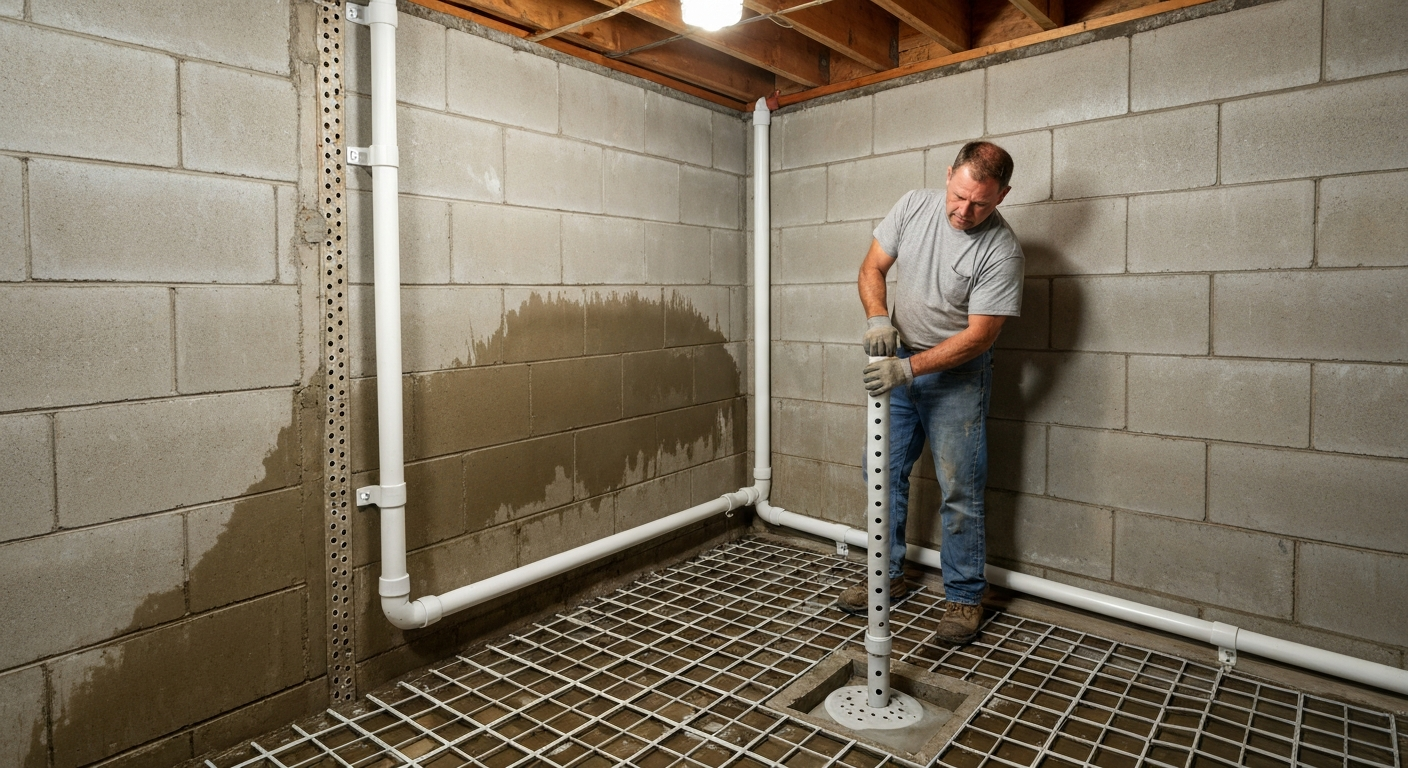
The fundamental difference is source control versus symptom control. Exterior waterproofing—full excavation, new membrane, drainage tile, and properly engineered backfill—addresses the water entry path and reduces hydrostatic pressure against the foundation wall. It generally costs more and creates more disruption because landscaping and access areas must be removed and restored. Interior waterproofing—perimeter drain channel, sump pit, and sump pump—moves water away once it enters the basement and keeps floors drier. It’s less invasive, but it doesn’t eliminate the pressure forcing water through cracks or joints.
In Meyonohk’s Calgary region, the typical mix of clay-influenced soils and freeze–thaw means cracked concrete and joint movement can keep bringing water to the same locations season after season. Poured concrete walls often respond very well to targeted crack injection when cracks are stable; however, many homes also need interior drainage because even sealed cracks can sweat under pressure. Block foundations, on the other hand, commonly benefit from interior perimeter drainage as a practical complement, because block voids and mortar joints can channel moisture even when visible staining looks minor.
Given Alberta’s spring freeze–thaw and occasional power interruptions, sump pump backup systems matter. A primary pump alone can be enough for light seepage, but if you’re dealing with recurring sump cycles during heavy runoff, a battery backup (or other approved backup method) helps prevent basement water from returning when the grid is down.
Price justification example: If you’re comparing a full exterior system ($9,000–$25,000) to an interior perimeter drain and sump ($5,000–$15,000), choose exterior when you can’t stop water at the source (ongoing wall seepage, severe efflorescence spread, failed original drainage) or when hydrostatic pressure is likely. Interior can be the smarter spend when leaks are localized, access is difficult, and you can reliably capture and discharge water—especially if a crack injection plan is paired with drainage for poured concrete.
| Method |
Best For |
Addresses Source? |
Disruption |
Lifespan |
Price Band |
| Full exterior excavation + membrane |
Recurring seepage, strong signs of hydrostatic pressure, failed drainage behind walls |
Yes |
High |
Long-term (when membrane is continuous and drainage is correctly tied in) |
$9,000–$25,000 |
| Interior French drain + sump system |
Basement dampness, localized seepage, homes where exterior access is limited |
No (manages water after entry) |
Medium |
Good (depends on pump performance and discharge) |
$5,000–$15,000 |
| Crack injection — epoxy (structural) |
Structural/sealed cracks where water is not actively flowing |
Partly (seals pathways; not a full drainage fix) |
Low to Medium |
Good when crack movement has been stabilized |
$500–$1,800 |
| Crack injection — polyurethane (active leak) |
Active seepage through cracks and joints |
Partly (stops the leak pathway) |
Low to Medium |
Good (works best with correct surface prep and crack characterization) |
$700–$2,200 |
| Interior drain channel only (no sump) |
Minor seepage that can be managed without active pumping |
No |
Medium |
Moderate (risk increases if water volume/power events are higher) |
$3,000–$8,500 |
| Re-grading + downspout extensions |
Roof runoff directed toward foundation and early-stage dampness |
Yes (for the runoff source) |
Low to Medium |
Moderate (best as part of a broader plan) |
$600–$3,500 |
How to choose a waterproofing contractor in Meyonohk
Choosing a waterproofing contractor in Meyonohk isn’t just about finding the lowest number—it’s about confirming they’re building the right drainage pathway for your soil, foundation type, and local freeze–thaw behaviour. In Alberta, start by verifying licensing/registration for the relevant trade and require proof of liability insurance. Then request WSIB/WCB documentation (or clearance evidence as applicable) before any work begins. You can check licensing status via Alberta’s public registry and verify insurance by reviewing the certificate of insurance; it should clearly list the insured entity and project coverage. Clearance letters and active account status matter—don’t accept “we’ll get it later.”
Next, get 2–3 written, itemised quotes—not lump sums. A proper quote should separate labour and materials, show what’s included (membrane type, drain tile spec, pump model, discharge plan), and list exclusions (what happens if you open the wall and find deeper damage). Ask whether permits are included and whether disposal fees for clay excavation spoils are included in the price. For warranty, confirm the workmanship warranty length, whether the product/manufacturer warranty applies to the exact products installed, and whether it’s transferable if you sell the home.
Payment schedule matters: never pay more than 10–15% upfront. Hold back a portion until the job is complete and you’ve received as-builts, warranty paperwork, and inspection/permit sign-offs where required. Timeline clarity is equally important—ask for a start date and a completion estimate in writing, so you know how spring work windows are handled.
- Ask for their site assessment method: how they confirm crack type, active seepage, and drainage tie-in.
- Require an itemised scope with quantities (not just “drainage system” language).
- Confirm disposal is included (heavy clay spoils can add cost).
- Ask what happens if weeping tile is found failed—replacement vs. patching.
- Verify pump spec: discharge size, check valve method, and backup option.
- Check that the discharge route is code-compliant and stated in writing.
- Confirm membrane continuity details (laps, terminations, and protection board).
- Get warranty details in writing: workmanship + product warranty terms.
- Request proof of insurance and WSIB/WCB clearance before work starts.
- Ensure permit responsibility is stated (who pulls it and who pays fees).
- Plan for restoration scope: grading, topsoil, and landscaping return (where applicable).
- Clarify cleanup expectations: dust control, sump slurry removal, and final walk-through.
Red flags in Meyonohk include: vague scopes (“waterproofing as needed”), quoting only interior work when exterior source leaks are evident, refusing to provide insurance/WSIB/WCB documentation, omitting disposal or permit responsibility from the written estimate, and offering no clear warranty terms for labour or products.
Frequently asked questions — waterproofing in Meyonohk
What causes foundation cracks in Meyonohk?
In Meyonohk and the wider Calgary region, the most common drivers are soil movement, freeze–thaw cycling, and older drainage performance. Clay-influenced soils can hold water and expand when saturated, increasing lateral pressure on foundation walls and footings. When winter freeze–thaw widens existing joints, cracks can grow from hairline staining to active seepage—especially along wall corners and around penetrations. In older homes, clogged or disconnected weeping tile (or undersized interior drainage) also increases the chance that water finds the same pathways year after year. If you’re seeing horizontal cracks in block walls or step cracks with changing dampness, treat it as a “diagnose first” situation and ask whether engineering assessment is recommended before sealing.
How do I compare waterproofing quotes?
To compare waterproofing quotes in Meyonohk, focus on what each company is actually building—not just the total number. Ask for an itemised breakdown (labour vs. materials), a clear method (exterior membrane and drainage tile versus interior perimeter drain and sump), and a defined discharge route for the water. Confirm whether disposal fees for excavated clay are included and whether permits are included for foundation excavation or drainage changes. Look at the warranty terms for workmanship and products separately. If one quote is in the interior range (often $5,000–$15,000) but another is suggesting exterior excavation, the difference should be explained with site conditions like access, hydrostatic risk, and the condition of existing weeping tile.
How long does basement waterproofing take in Meyonohk?
The timeline depends on whether you’re doing exterior work, interior drainage, or crack injection. Interior perimeter drain and sump systems are often the fastest route because they avoid deep excavation around the foundation, but they still require floor cutting, pipe installation, and curing time for relevant sealing products. Exterior excavation can take longer because crews need to manage excavation, membrane installation, drain tile placement, and backfill in controlled layers—plus landscaping restoration afterward. Weather and freeze conditions in southern Alberta also affect scheduling, especially when freeze–thaw is active. A good contractor in Meyonohk will provide a written start date and completion estimate, and they should explain how they’ll protect open excavations from rain/snow and plan around spring runoff.
What is a weeping tile and does my Meyonohk home have one?
A weeping tile is a perimeter drainage system installed around the foundation (often near the footing) to collect groundwater and direct it to a sump or outlet. In older Calgary-area homes—common in the broader region around Meyonohk—this system may be original and sometimes partially failed or disconnected, which can lead to damp corners and efflorescence. Whether your specific home has one depends on construction age and what was installed during original builds or later renovations. The practical way to confirm is during inspection: look for cleanouts, evidence of an exterior drain tie-in, sump pits where present, or records from prior work. A contractor may also expose small sections during diagnostic work to verify condition before recommending exterior excavation or interior drainage.
Can I waterproof my basement in winter in Meyonohk?
Often you can start certain waterproofing work in winter in Meyonohk, but the feasibility depends on the method and what the site can support. Interior drainage work and crack injection are sometimes possible because they may not require extensive exterior excavation in frozen conditions. However, exterior excavation and membrane installation are frequently limited when soils are frozen, and crews must manage safety and staging carefully. Freeze–thaw can also affect curing and bonding of products. A contractor should assess current conditions and explain what can be done safely now versus what’s best scheduled for spring thaw. If you’re dealing with active leaks, timely interior measures like sump upgrades or targeted injection may still reduce damage, but full exterior systems often wait for workable soil conditions.
What is the difference between waterproofing and damp-proofing?
In homeowner terms, waterproofing aims to manage liquid water pressure and water entry routes, typically using continuous membranes, drainage systems, and properly designed discharge—especially important in clay-heavy, freeze–thaw Alberta conditions. Damp-proofing is generally intended for minor moisture control (like preventing condensation or small seepage) rather than stopping water under hydrostatic pressure. In Meyonohk basements with recurring seepage, efflorescence, or sump cycles, true waterproofing usually includes drainage management (interior perimeter drains and sump systems, or exterior membrane + drainage tile). If you’re choosing between options, the cost difference can be meaningful: interior systems often fall in the $5,000–$15,000 range, while full exterior excavation commonly trends into the $9,000–$25,000 band because it addresses the source.