Basement waterproofing options and costs in Rocky Ridge
Rocky Ridge, Alberta is a great place to own a home—until spring meltwater and freeze–thaw cycles start pushing on foundations. In a neighbourhood like Rocky Ridge (population 8,195 in 2021, Statistics Canada, 2021 Census), a lot of basements are living with older drainage systems and hairline cracking that gradually become active leaks. In practical terms, many homes built earlier in Calgary’s growth often had tar-and-paper approaches or undersized weeping tile; when those systems age, they fail in the same predictable spots: at weeping tile connections, wall joints, and around penetrations.
In Calgary’s clay-and-clay-till soils, saturated backfill holds water and expands during freeze–thaw, increasing lateral pressure and widening cracks. That’s why waterproofing quotes here can be priced around either a full exterior solution (most permanent) or an interior approach (often faster and less disruptive), depending on how much excavation access you can realistically provide. Contractor availability also matters: crews are busiest in the shoulder seasons when excavation is feasible, and complex lots in areas like the rocky ridgeline-adjacent streets are frequently booked early because access constraints raise labour and disposal time.
Below is a straightforward comparison of common methods used around Rocky Ridge. Use it to align your quote with what you actually need before crews start mobilizing and pricing change-orders.
| Method |
What It Addresses |
Disruption Level |
Durability |
Price Range |
| Exterior excavation + new membrane + drainage tile |
Hydrostatic pressure at the source, failed weeping tile, exterior wall seepage |
High (yard disruption, excavation) |
High (source-control) |
$9,000–$25,000 |
| Interior perimeter drain channel + sump pit |
Water that has already entered; perimeter seepage into the basement |
Medium (interior demo, slab/wall work) |
Medium to high (depends on sealing details) |
$5,000–$15,000 |
| Foundation crack injection (epoxy or polyurethane) |
Crack leakage pathways; structural stabilization vs active leak sealing |
Low (targeted access) |
Medium to high (proper crack prep is critical) |
$500–$1,800 |
| Sump pump installation (primary + battery backup) |
Ongoing seepage management and higher-risk wet seasons |
Low to medium |
Medium (system reliability matters) |
$900–$3,000 |
| Window well drain installation |
Localized water intrusion near window wells and bulkhead areas |
Low to medium |
Medium (often combined with perimeter work) |
$1,200–$4,000 |
| Lot re-grading / downspout extension |
Stormwater control away from the foundation |
Low to medium |
Low to medium (best as a first-line fix) |
$800–$2,800 |
Prices are estimates only and vary by project scope, site access and material selection.
What affects the price of waterproofing in Rocky Ridge
Homeowners in Rocky Ridge often see waterproofing quotes swing by 30–50% even when the “headline” issue sounds similar—like a wet corner or damp walls. That difference comes down to how much of the system you’re actually replacing (source-control exterior work versus interior drainage), how far contractors have to excavate, and whether the job includes the upstream fixes that stop water from building up around the foundation.
Three local drivers separate regional pricing from the national average. First is soil type: Calgary-area clay and clay-till expand when saturated, exerting lateral pressure and worsening cracks over time. Second is water table conditions in low pockets: during spring runoff, interior pumps may run longer, and reliable sump systems (often with backup) become more critical. Third is freeze–thaw: repeated expansion and contraction during Alberta winters can widen existing joints and allow meltwater to keep tracking inside.
Even within the same city, cost can move up or down based on the specifics. For example, if your basement leak is tied to failed original weeping tile (common in older housing stock), you may be pushed toward interior drainage plus a sump, often aligning with $5,000–$15,000 for the interior scope. If you have good access for full excavation, source-control exterior waterproofing can land around $9,000–$25,000, but it’s often justified when the foundation walls are actively being loaded by saturated backfill. Conversely, if the issue is mostly stormwater management—like downspouts discharging too close—re-grading and extensions can be a lower-cost first step.
Contractors also price for logistics in Calgary: tight urban lot lines, concrete patios, landscaping, and disposal fees for heavy clay spoils can add labour hours that aren’t obvious in a quick site visit. This is why an itemized scope matters.
| Price Factor |
Why It Matters |
Cost Impact |
| Interior vs. exterior approach — interior is less disruptive but addresses symptoms |
Interior manages water after it enters; exterior reduces hydrostatic pressure at the source |
Interior typically cheaper short-term; exterior usually higher but more comprehensive |
| Foundation type — poured concrete vs. block vs. stone vs. ICF |
Different wall materials respond differently to crack sealing and drainage strategies |
Block walls often need interior drainage as a practical complement |
| Soil type — clay expands more than sand, adding pressure |
Saturated clay increases lateral pressure and crack movement during freeze–thaw |
More robust sealing/drainage often required; increases membrane/drainage scope |
| Crack type and length — hairline vs. structural horizontal cracks |
Structural cracks can indicate movement and require assessment before sealing |
Structural complexity can shift the job from “injection-only” to more extensive repair |
| Sump pump backup system — battery or water-powered backup needed |
Backup protects you during power outages in wet, freeze-prone seasons |
Adds cost but reduces risk of basement flooding during storms |
| Access — landscaping, decks, or driveways must be removed for exterior |
Excavation and restoration time varies dramatically by lot constraints |
Tight access can raise labour and disposal costs |
| Weeping tile age — original tile (60+ years) may be completely failed |
Old tile can clog or collapse, redirecting water into foundations |
Often requires partial or full replacement of drainage system |
| Mould or efflorescence remediation required before sealing |
Active moisture must be addressed and surfaces prepared for adhesion |
Extra demo/cleaning adds labour and materials before waterproofing |
Permits & regulations in Alberta
In Alberta, some basement drainage and waterproofing work typically falls under permit requirements because it can affect structural elements or alter lot drainage. In most cases, foundation excavation, structural crack repair (especially when it may involve structural stability or requires engineered guidance), and changes to lot drainage that could impact runoff direction or drainage patterns should be confirmed through your local process with your municipality. If your plan includes connecting a sump pump discharge line to an existing storm or sanitary system, municipal approval is usually required before work proceeds.
For structural crack repairs—particularly horizontal cracks in block walls, step cracks, or anything suggesting movement—an engineer’s assessment is often needed to confirm whether underpinning, wall stabilization, or other structural work is required before sealing. A reputable contractor should have engineering support available for structural scope, along with proof of liability insurance and WSIB/WCB coverage.
How to verify a contractor in Rocky Ridge, step-by-step:
- Check the contractor’s licence/registration information online (where applicable) before signing.
- Request a certificate of liability insurance showing the contractor name and current coverage dates.
- Ask for WSIB/WCB clearance or proof of coverage; confirm it includes the workers on your project.
- For structural work: ask whether they will provide engineer documentation or work under an engineer’s direction.
- Make sure permits are addressed in the written scope (who pulls permits, what’s included, and timelines).
As a rule of thumb: sealing small, vertical cracks with injection and installing interior perimeter drains often do not require the same level of municipal review as exterior re-grading tied to drainage runoff or any structural stabilization—still, always confirm details in writing for your specific foundation and discharge plan.
Interior vs exterior waterproofing — what does Rocky Ridge need?
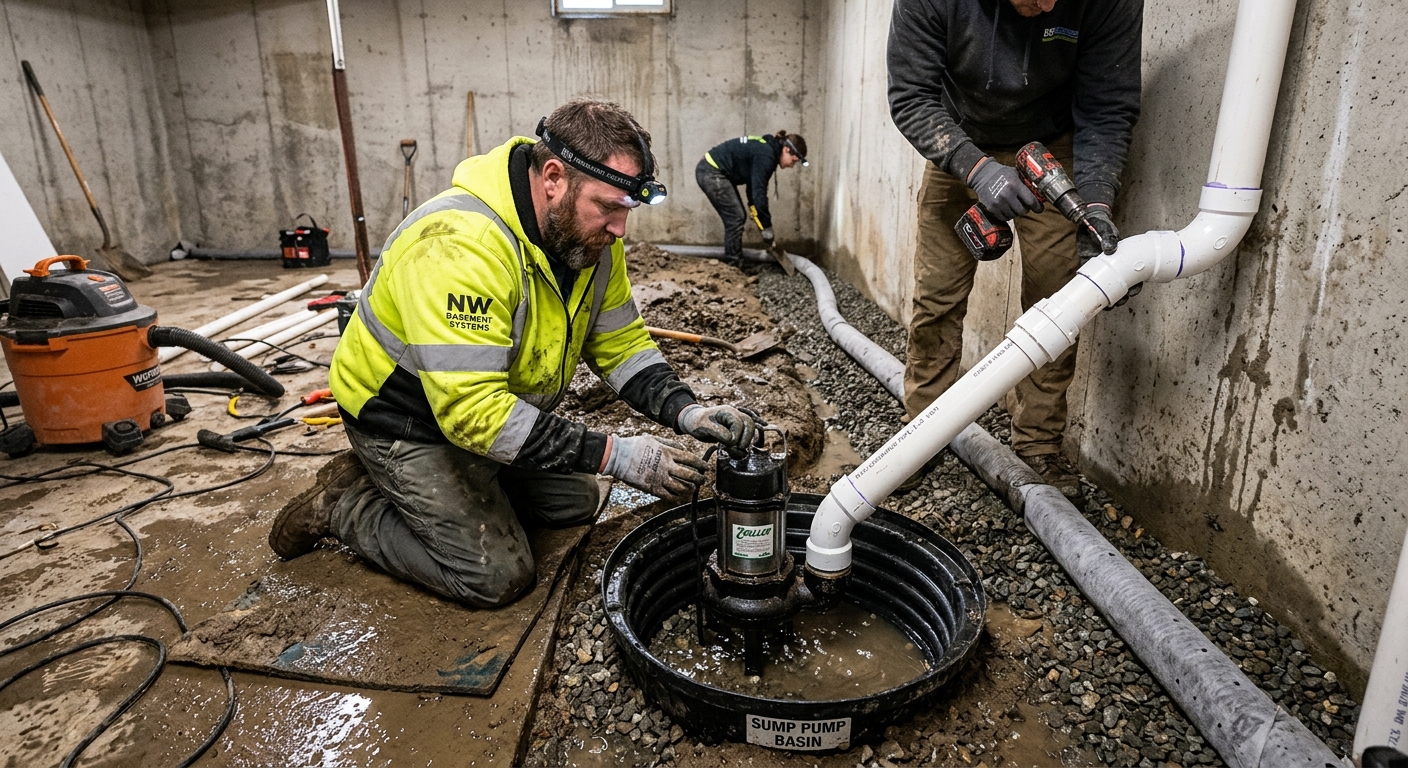
The fundamental difference is simple: exterior waterproofing addresses water at the source by excavating around the foundation, installing a continuous membrane, adding (or replacing) drainage tile, and then backfilling with the correct drainage materials. It’s the more permanent option, but it comes with higher labour and disruption because excavation in Calgary-area clay spoils takes time and disposal planning. Interior waterproofing (perimeter drain channel, sump pit, sump pump) manages water after it enters; it can be less invasive and often faster to complete, but it doesn’t stop hydrostatic pressure from loading the foundation wall.
In Rocky Ridge, the clay-and-clay-till soils and freeze–thaw cycles make interior-only solutions less “set-and-forget” when exterior drainage has failed. Poured concrete walls often respond well to crack injection as a complement—when the crack is properly prepared and stabilized—while block foundations commonly benefit from interior drainage as a practical complement because block seams and joints can allow seepage pathways even after sealing attempts.
Also consider power reliability. Alberta winters and spring storms can coincide with outages; a sump pump with battery backup helps keep water from building up during the hours your primary pump can’t run. It’s a small add-on relative to the cost of restoring a flooded basement, and it matters most in homes with a history of spring seepage.
Here’s a realistic dollar example: if an interior drain + sump approach is priced around $5,000–$15,000 but your leak is coming from saturated backfill against a poured-concrete wall with failed weeping tile, it may be worth moving toward exterior waterproofing around $9,000–$25,000. That higher spend is justified when exterior source-control can reduce recurring sump run times and prevent crack movement from being repeatedly re-triggered by hydrostatic pressure.
| Method |
Best For |
Addresses Source? |
Disruption |
Lifespan |
Price Band |
| Full exterior excavation + membrane |
Active seepage from exterior walls, failed weeping tile, persistent spring leaks |
Yes |
High |
Long (continuous system) |
$9,000–$25,000 |
| Interior French drain + sump system |
Basements that are already finishing wet seasons; limited exterior access |
No (manages water after entry) |
Medium |
Medium to long (depends on sealing details) |
$7,000–$15,000 |
| Crack injection — epoxy (structural) |
Non-moving cracks where structural stabilization is needed |
Partial (seals pathway, not water source) |
Low |
Medium to long |
$500–$1,800 |
| Crack injection — polyurethane (active leak) |
Active water seepage through cracks |
Partial (seals pathway, not water source) |
Low |
Medium (works best with proper drainage) |
$900–$2,500 |
| Interior drain channel only (no sump) |
Small seepage volumes where water can be reliably controlled without pumping |
No |
Medium |
Limited (risk increases in high-wet seasons) |
$5,000–$9,000 |
| Re-grading + downspout extensions |
Stormwater-related dampness, minor surface water around the footing |
Yes for surface runoff management |
Low to medium |
Short to medium (prevention, not a full waterproofing system) |
$800–$2,800 |
How to choose a waterproofing contractor in Rocky Ridge
Choosing the right waterproofing contractor in Rocky Ridge starts with verification. In Alberta, ask for their licence/registration information (where applicable), current liability insurance, and proof of WSIB/WCB coverage. You can verify by reviewing the certificate of insurance (make sure it’s current and names the correct legal entity), then requesting WSIB/WCB clearance or coverage details for the period of your job. If a company can’t provide these documents quickly, that’s a practical red flag.
Next, get 2–3 itemised written quotes. You want a labour + materials breakdown that clearly states what’s included: membrane type, drainage tile spec, pump model, discharge method, and restoration. Avoid “lump sum only” pricing that doesn’t show whether disposal, permit pulls, or landscape restoration are included.
Warranty matters too. Confirm the workmanship warranty length and whether it covers parts and labour for failures related to installation. Also ask about manufacturer product warranties and whether they transfer to you if you sell the home. Finally, discuss payment scheduling—never pay more than 10–15% upfront. Use a holdback until completion and final documentation (as-builts, disposal receipts if provided, and warranty paperwork).
Timeline should be in writing: a start date, weather contingency approach for excavation in Calgary-area clay, and an estimated completion date. In this market, delays can be costly, but good contractors plan for excavation windows and backfill curing time.
- Confirm licence/registration information (as applicable) before any work starts.
- Request a current liability insurance certificate (check dates and legal name).
- Ask for WSIB/WCB clearance or proof of coverage for the project period.
- Require 2–3 itemised quotes (labour + materials + disposal + restoration).
- Make sure the scope states who pulls permits and whether permits are included.
- Confirm discharge routing for sump pumps (and whether approval is required).
- Check whether warranty covers both labour and parts, and for how many years.
- Ask if product/manufacturer warranties are transferable to new owners.
- Look for a payment schedule: 10–15% max upfront, holdback at completion.
- Require an excavation/access plan for patios, decks, and landscaping removal.
- Ensure the quote lists exact drainage components (tile type, filter fabric, membrane system).
- Get the start date, completion target, and weather pause procedures in writing.
Red flags to watch for in Rocky Ridge: (1) “We’ll just inject and be done” when there’s evidence of exterior source water and failed tile; (2) quotes that don’t mention disposal/restoration after excavation; (3) no written warranty terms or vague “lifetime” claims without specifics; (4) unwillingness to provide insurance/WSIB/WCB documentation; and (5) pump designs that omit backup despite known spring seepage history.
Frequently asked questions — waterproofing in Rocky Ridge
Can I waterproof my basement in winter in Rocky Ridge?
Yes, but the approach in Alberta is different in winter. In Rocky Ridge, you can often do interior work such as perimeter drain channel installation, crack injection, and sump pit upgrades when interior access is available and surfaces can be prepared properly. Exterior excavation is more limited during freeze conditions because clay backfill becomes harder to handle and membrane installation quality depends on weather and substrate conditions. A reliable contractor will tell you what can be completed immediately (for example, an interior perimeter drain and sump plan) and what should wait for excavation season. If your quote is based on interior pricing, you might see numbers similar to $5,000–$15,000 for interior drainage scope, while exterior source-control work is typically priced higher and planned for more stable conditions. Always ask for a written winter/weather plan before committing.
What is the difference between waterproofing and damp-proofing?
In everyday language, people use the terms interchangeably, but for basements in Rocky Ridge you should treat them differently. Damp-proofing typically means a coating or barrier designed to slow moisture transfer, often for minor seepage or preventative situations. True waterproofing is a system: it controls water entry and manages hydrostatic pressure—usually through exterior membranes and functional perimeter drainage, or through a combination of interior drains and a sump pump where appropriate. In clay-heavy Calgary-area soils, freeze–thaw and saturated backfill can create pressure, so “just a coating” may not be enough when water is actively tracking through joints and cracks. That’s why interior systems often sit in ranges like $5,000–$15,000, while source-control exterior work aligns with $9,000–$25,000. The right solution depends on whether the water is surface runoff, wall seepage, or a crack pathway under pressure.
Will basement waterproofing affect my property value in Rocky Ridge?
It can, especially when it’s documented and transferable. In Rocky Ridge, buyers pay attention to foundation performance because recurring dampness can lead to odours, mould concerns, and future remediation costs. If you complete a proper waterproofing scope—particularly one that addresses the source, like exterior membrane plus new drainage tile—or you install a reliable sump system with proper backup, you can provide a clear paper trail: warranties, product specs, and a description of what was repaired. While waterproofing doesn’t guarantee a specific resale price, it usually improves buyer confidence and can reduce appraisal friction related to moisture. If your project is limited to minor crack injection, that still helps, and you may see crack repair pricing in the approximate $500–$1,800 band, but full system work generally provides the strongest documentation. Keep receipts, warranty certificates, and any permit records as part of your home binder.
What drainage issues are most common in Rocky Ridge homes?
The most common issues in Rocky Ridge align with Calgary-area soil and seasonal conditions. Clay and clay-till hold water and expand when saturated, which increases lateral pressure on foundations and worsens existing cracks over freeze–thaw. Homeowners frequently notice damp corners, efflorescence, and seepage near joints and penetrations—especially where older weeping tile may be clogged or failed. Another common problem is roof runoff discharge: downspouts that discharge too close to the foundation can contribute to localized saturation and increase pressure in spring. In low-lying pockets, hydrostatic pressure can be higher, making sump reliability more important. Practically, that means a lot of cases start with either interior drainage and sump work (often in the $5,000–$15,000 range for typical interior scopes) or, when feasible, exterior excavation and membrane/drainage tile replacement (often aligning with $9,000–$25,000). A proper site inspection should confirm where the water is coming from before selecting the method.
How do I choose a waterproofing contractor in Rocky Ridge?
Start with proof that the contractor is accountable. In Alberta, verify they can provide current liability insurance and WSIB/WCB coverage documentation (and any required registrations). Ask for an itemised quote—labour and materials—so you can compare apples-to-apples between bids. Confirm whether permits are included in the scope, especially if drainage changes or discharge connections could require municipal approval. Next, evaluate the proposed system: a good contractor should explain whether your issue is surface runoff, wall seepage, or crack leakage under pressure, and why they recommend interior versus exterior work. Review warranty terms in writing: workmanship warranty length, product warranty details, and whether warranties are transferable. Payment should also be controlled—typically no more than 10–15% upfront, with a holdback until completion. If a company won’t provide insurance/coverage or avoids discussing discharge routing and warranty specifics, consider it a serious concern.
What is a battery backup sump pump and do I need one in Rocky Ridge?
A battery backup sump pump is an additional pumping system that activates when the primary pump loses power. In Rocky Ridge and across Alberta, spring storms and wet-season conditions can coincide with power interruptions, and the basement doesn’t care whether the grid is up—it will still collect water if seepage continues. Backup systems typically include battery capacity designed for short-duration outages long enough to keep water levels from rising. Whether you “need” one depends on your leak history, how quickly your basement fills, and how sensitive your foundation system is to runoff events. Homes with recurring wet corners, known high water seasons, or higher-risk hydrostatic conditions benefit most. Pricing depends on how the system is installed, but sump pump installation with primary plus battery backup often falls in the $900–$3,000 range. In many Rocky Ridge projects, that added reliability is a small cost compared to cleaning up after flooding and re-running remediation.