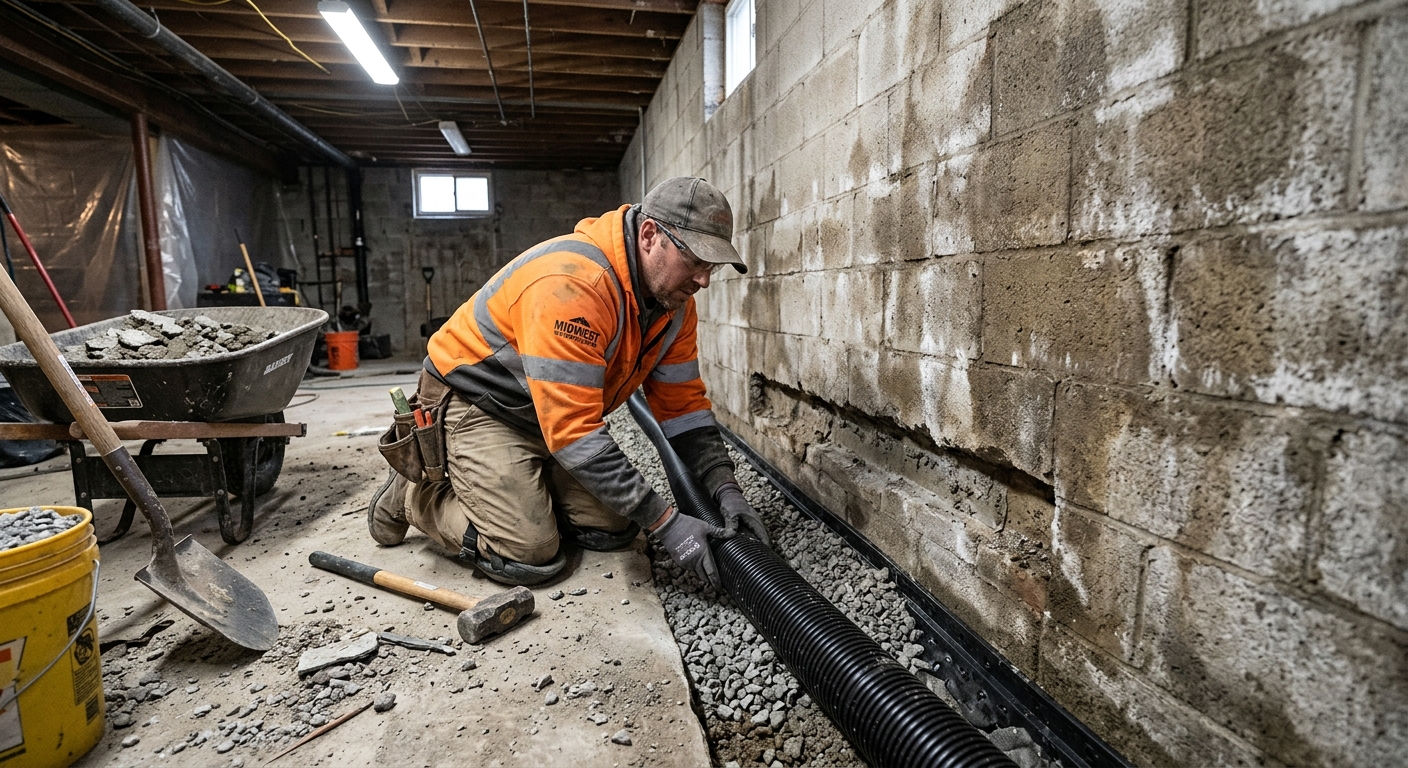
Basement waterproofing options and costs in St. Andrews Heights
In St. Andrews Heights, basement waterproofing is a practical necessity more than a “nice-to-have,” because most properties sit on clay-influenced soils that hold water and can expand when saturated. With a small local population of 1,345 (Statistics Canada, 2021 Census), a lot of work stays concentrated among a handful of established crews, so scheduling can tighten when spring thaw hits. You’ll also see many older homes across the Calgary area; in these communities, failed original drainage and aging weeping tile are common contributors to seepage, efflorescence, and recurring wall dampness.
Calgary-area waterproofing costs are shaped by southern Alberta’s freeze–thaw cycles, which widen hairline cracks and joints and increase the likelihood that spring runoff finds pathways into basements. That means two properties with similar visible damage can still end up with different solutions—especially if one has clogged interior drainage and the other has a functioning (but undersized) system. In practice, exterior excavation jobs cost more because excavation depth, disposal of heavy clay spoils, and access constraints (tight lots, concrete patios, and mature landscaping) add labour and equipment time.
Crews are especially in demand in pockets near Shawnessy-adjacent corridors and older infill streets where foundation retrofits are recurring. If you’re deciding between source-control (exterior) and symptom-management (interior), the comparison table below helps you line up scope, disruption, and typical budget ranges before you request itemised quotes.
| Method |
What It Addresses |
Disruption Level |
Durability |
Price Range |
| Exterior excavation + new membrane + drainage tile |
Primary water entry through foundation walls/footings; hydrostatic pressure control with full perimeter drainage |
High (excavation, landscaping restoration, backfill) |
High (source control when detailing is done correctly) |
$9,000–$25,000 |
| Interior perimeter drain channel + sump pit |
Water after it enters; reduces hydrostatic load on slab/walls from within |
Medium (interior cutting, sump install, finish restoration) |
Medium to high (depends on wall condition and discharge detailing) |
$5,500–$15,000 |
| Foundation crack injection (epoxy or polyurethane) |
Crack pathways; stops seepage at specific leaks |
Low to medium (surface prep and patching) |
Medium (epoxy is best for non-moving cracks; polyurethane for active leaks) |
$500–$1,800 |
| Sump pump installation (primary + battery backup) |
Continuous removal during heavy rain/spring melt; prevents basement flooding |
Medium (pit, discharge line, electrical work) |
Medium to high (backup improves reliability during outages) |
$900–$3,000 |
| Window well drain installation |
Surface water intrusion around egress windows and seepage along window wells |
Low to medium (excavate around wells, rework grading) |
Medium (best when paired with downspout/grade improvements) |
$1,200–$4,000 |
| Lot re-grading / downspout extension |
Reduces roof runoff against foundation and improves shedding to storm infrastructure |
Low (minor landscaping modifications) |
Low to medium (helps prevent entry; not a substitute for failed drainage) |
$900–$5,000 |
Prices are estimates only and vary by project scope, site access and material selection.
What affects the price of waterproofing in St. Andrews Heights
Even when two homeowners describe the “same” basement problem, quotes in Calgary and across Alberta can swing by 30–50% because waterproofing is highly site-specific—especially in St. Andrews Heights. Clay-heavy soils and freeze–thaw cycles create movement in the ground and foundations, so the labour and materials needed to reach durable results change once an estimator sees the foundation type, crack pattern, and drainage condition. When water entry is driven by hydrostatic pressure, contractors may need a full perimeter drainage plan rather than a quick interior fix.
The three biggest drivers that separate Calgary-area costs from the national average are soil type, water table behaviour, and freeze–thaw. In Calgary’s clay and clay-till conditions, saturated soils expand and exert lateral pressure on foundation walls, worsening cracks over time and sometimes pushing water to new pathways each spring. Where groundwater and heavy storm events create higher seasonal pressure, sump systems can run more frequently and require robust discharge lines and reliable power arrangements. In other regions, backfill might drain faster; here, if original drainage fails, backfill stays saturated longer, increasing both risk and the need for continuous membrane and properly detailed drains.
Concrete examples in St. Andrews Heights: (1) If excavation access is tight due to patios, fences, or mature trees, exterior work tends toward the upper end of the $9,000–$25,000 exterior range because equipment time rises. (2) If the basement already has interior drainage and only needs a new sump pump with backup, budgets can stay closer to the $900–$3,000 pump band plus limited electrical changes. (3) If interior walls show active efflorescence and you discover a failing weeping tile run from the 1970s or 1980s, interior solutions alone may not hold—pushing clients toward a more comprehensive plan.
| Price Factor |
Why It Matters |
Cost Impact |
| Interior vs. exterior approach — interior is less disruptive but addresses symptoms |
Interior manages water after entry; exterior prevents entry by controlling the source |
Interior often reduces labour by 30–60%, but may require future upgrades if drainage is failing |
| Foundation type — poured concrete vs. block vs. stone vs. ICF |
Different wall systems respond differently to crack injection and membranes |
Block and stone frequently require more detailing; poured concrete may be easier to seal with injection |
| Soil type — clay expands more than sand, adding pressure |
Clay saturation increases lateral loads during freeze–thaw |
Higher likelihood of active leaks and more labour for full perimeter drainage |
| Crack type and length — hairline vs. structural horizontal cracks |
Movement cracks need different materials and possibly structural assessment |
Structural cracks can push costs well above small injection-only estimates |
| Sump pump backup system — battery or water-powered backup needed |
Outages during spring storms can turn seepage into flooding |
Backup typically adds meaningful cost, but lowers flood risk during power interruptions |
| Access — landscaping, decks, or driveways must be removed for exterior |
Excavation footprint and restoration time drives labour and disposal |
Access constraints can add thousands even when the membrane system is standard |
| Weeping tile age — original tile (60+ years) may be completely failed |
Failed tile can cause chronic saturation and recurring seepage points |
May require new drainage runs and full exterior detailing rather than targeted patching |
| Mould or efflorescence remediation required before sealing |
Sealers don’t bond well over contaminated or salt-laden surfaces |
Remediation adds labour and drying time; it can also increase material costs for primers |
Permits & regulations in Alberta
In Alberta, foundation excavation, structural crack repair, and changes to lot drainage typically require a building permit. For many basements, the “simple” part—installing a sump pit and pump—still involves checks because it may include cutting floors, running electrical, and connecting discharge lines. If a sump system’s discharge connects to storm or sanitary infrastructure, municipal approval is often required, and the contractor should confirm the correct connection approach before work starts.
Where you should be especially cautious: structural crack repair, particularly horizontal cracks in block walls or major step cracks, frequently requires an assessment. A structural engineer’s review is often necessary to confirm whether the wall is stable or whether underpinning or additional structural work is needed. For waterproofing contractors, that means you want engineering support available (or partnered) for structural scope—not just “we’ll inject it and see.” Also confirm the contractor carries liability insurance and has WSIB/WCB coverage where applicable for their workforce.
Homeowner verification steps in St. Andrews Heights (Alberta) are straightforward. First, ask for the company’s Alberta business/contractor details and licence information, then search the provincial/online registry listing for active status. Next, request a current certificate of liability insurance—verify dates and project/address coverage. Finally, ask for WSIB/WCB clearance documentation (or equivalent proof of coverage) and keep a copy for your records. If the scope includes structural review, request the engineer’s name/role and the written assessment plan before any drilling or excavation begins.
Interior vs exterior waterproofing — what does St. Andrews Heights need?
The fundamental difference is that exterior waterproofing tries to stop water at the source, while interior waterproofing manages water once it enters. Exterior excavation involves exposing foundation walls, applying a proper waterproofing membrane system, installing new perimeter drainage tile, and then re-bringing everything back to grade. This is the most reliable approach in Calgary’s clay and clay-till soils because it reduces the hydrostatic pressure driving seepage—especially through joints, through-wall cracks, and at footing contact points. The trade-off is higher cost and disruption: excavation access, disposal of heavy clay spoils, and landscaping restoration often push exterior projects toward the upper end of the local band.
Interior solutions—such as a perimeter drain channel and sump pit—are less invasive and can be highly effective when exterior access is limited or when you’re responding to localized seepage. However, they do not eliminate pressure against foundation walls themselves; they simply capture and remove water that gets in. In St. Andrews Heights, poured concrete walls often respond well to crack injection when the crack is not actively moving. Block foundations, on the other hand, commonly benefit from interior drainage as a practical complement because water can track through mortar joints and micro-pathways even after targeted sealing.
Because Alberta can see spring power outages during storms, it’s wise to discuss sump pump backup (battery or other approved backup approach) if you’re going interior. For a concrete example: if you have chronic dampness plus active efflorescence, spending on a full exterior membrane and drainage tile may be more justified than interior-only work—where a cheaper interior channel may leave you chasing leaks as freeze–thaw widens new pathways. If your issue is limited to one crack or window well seepage, interior repairs and drainage improvements can be the better value.
| Method |
Best For |
Addresses Source? |
Disruption |
Lifespan |
Price Band |
| Full exterior excavation + membrane |
Chronic seepage, hydrostatic pressure signs, failing weeping tile, widespread wall wetness |
Yes |
High |
High (when drainage is continuous and backfill is properly detailed) |
$9,000–$25,000 |
| Interior French drain + sump system |
Limited exterior access, recurring interior wetting, groundwater-driven dampness |
No (water management after entry) |
Medium |
Medium to high (depends on discharge reliability and wall condition) |
$5,000–$15,000 |
| Crack injection — epoxy (structural) |
Non-moving cracks in poured concrete where you want a sealed, structural repair |
Partially (seals a pathway, assumes crack stability) |
Low to medium |
Medium |
$500–$1,800 |
| Crack injection — polyurethane (active leak) |
Active seepage, weeping joints, cracks that show moisture movement |
Partially (targets active pathways) |
Low to medium |
Medium (best when paired with improved drainage and/or crack assessment) |
$800–$2,400 |
| Interior drain channel only (no sump) |
Intermittent dampness, minor seepage where water volume is low |
No |
Medium |
Low to medium (risk increases during heavy spring melt) |
$2,500–$8,000 |
| Re-grading + downspout extensions |
Roof runoff management, surface water tracking near foundation, minor musty odours |
No |
Low |
Low to medium |
$900–$5,000 |
How to choose a waterproofing contractor in St. Andrews Heights
Start by verifying the contractor’s Alberta credentials and coverage. Request their Alberta business details and licence information, then confirm it through the appropriate online registry listing so you’re not relying on a brochure. Next, ask for a certificate of liability insurance—check the coverage limits, the policy effective dates, and that it includes work at your address. For jobsite safety and worker protection, confirm WSIB/WCB clearance documentation (where applicable) before work begins; don’t accept “we’ll get it later.” This is especially important for exterior excavation because multiple trades and heavy equipment are often involved.
Then get 2–3 itemised written quotes. The quote should break down labour and materials separately (excavation and disposal, membrane system, drainage tile, pipe bedding, sump pit and electrical components, concrete patching, and restoration). Make sure the scope is specific about what is excluded: foundation waterproofing typically won’t include structural engineering unless identified, and it may exclude replacing finished flooring unless you request it. Ask whether permit pulling is included, and whether disposal fees and landscaping restoration are part of the budget or billed separately.
For warranty, look for both workmanship and product/manufacturer coverage. Confirm workmanship warranty length, what it covers (labour for defects, rework process, response time), and whether it’s transferable to future homeowners if you sell. For payment schedule, keep upfront deposits to no more than 10–15%. Hold back a portion until the job is completed, inspected, and properly cleaned. Finally, insist on a written start date and completion estimate so weather delays and equipment scheduling are documented up front.
- Ask for project references in Calgary-area clay-soil basements (not just downtown office jobs).
- Require a site-specific inspection checklist (crack mapping, water pathways, grading check).
- Confirm what waterproofing product system is proposed (membrane type, primers, compatibility with substrate).
- Get a written plan for discharge (where sump water goes and how it prevents freeze-up).
- Confirm disposal and backfill spec (proper drainage and compaction, not “any dirt will do”).
- Verify permit responsibility: who pulls it and what inspections are expected.
- Ask for photos of prep stage (surface cleaning, crack route, priming) before sealing.
- Clarify restoration scope: concrete, sod, topsoil, and regrading are listed line-by-line.
- Ensure warranty details include response times and exclusions for owner-caused damage.
- Confirm sump backup option pricing and whether it’s included or optional.
- Check communication: who is onsite supervisor and who you call during issues.
- Avoid vague wording like “we’ll waterproof the wall”—demand a defined scope.
Concrete red flags in St. Andrews Heights: (1) contractors who propose epoxy injection for “active leaks” without confirming crack movement; (2) no written drainage/discharge plan for sump water (especially in freezing months); (3) skipping engineering support when horizontal or step cracks suggest structural considerations; (4) quoting only a membrane “patch” without discussing weeping tile condition, grading, or downspout management; and (5) asking for large deposits (beyond 10–15%) before excavation and inspection stages are complete.
Frequently asked questions — waterproofing in St. Andrews Heights
What is a weeping tile and does my St. Andrews Heights home have one?
Weeping tile is the perimeter drainage pipe system installed around or beside the foundation footing to collect groundwater and seepage, then direct it to an outlet (sometimes a sump or gravity discharge). In many older homes in the Calgary region, it was installed during original builds or renovations, but it can fail over time due to clogging, breaks, or settling—especially where clay soils hold water. In St. Andrews Heights (Statistics Canada, 2021 Census: population 1,345), not every street has uniform construction dates, so some homes have older tile that may no longer function as intended. If you don’t know, check for a basement sump, old cleanout access points, or evidence of a prior perimeter drain layout. A contractor can also inspect by locating weeping tile runs during an interior drain upgrade or using non-destructive investigations.
Can I waterproof my basement in winter in St. Andrews Heights?
Yes, but it depends on what work you’re doing. In Alberta winters, foundations are often cold and surfaces may be damp or frozen, which can affect bonding and drying for membranes, coatings, and crack injection materials. Interior work like crack injection (epoxy or polyurethane) and sump pump installations are frequently possible, because they don’t require full exterior excavation in most cases. Exterior excavation is harder in freeze conditions and may be delayed when frost depth, weather, and safe excavation practices become constraints. If your issue is active seepage, interior solutions that include a sump may still protect the basement during spring melt cycles. For budgeting, interior waterproofing is commonly within $5,000–$15,000, while sump pump installations are often around $900–$3,000—making wintertime prevention a realistic option while you plan exterior source control for thaw season.
What is the difference between waterproofing and damp-proofing?
Damp-proofing is intended to reduce minor moisture penetration and manage condensation or light seepage, typically using thinner coatings or limited drainage measures. Waterproofing, by contrast, is designed to resist actual water pressure and repeated wetting—either by stopping water entry (source control with membranes and exterior drainage) or by managing water after entry (interior drains and sump systems). In Calgary-area homes built on clay and clay-till soils, freeze–thaw can turn “damp” into recurring seepage because pressure and crack pathways change each spring. That’s why a true waterproofing scope often includes drainage tile detailing, proper discharge, and correct crack sealing for the crack type. If you’re seeing efflorescence, recurring wet corners, or puddling, you’re usually beyond damp-proofing territory. A reputable contractor will explain whether your case needs exterior membranes or interior perimeter drainage rather than selling a generic coating.
Will basement waterproofing affect my property value in St. Andrews Heights?
Typically, it helps stabilize property value because it reduces the risk of water damage, improves usability of finished space, and addresses concerns buyers care about—musty odours, recurring leaks, efflorescence, and past flooding. In St. Andrews Heights and the broader Calgary market, waterproofing is also a form of risk management: homeowners often want proof that drainage is reliable through spring thaw and freeze–thaw cycles. That said, the value impact depends on the quality of the solution and documentation. Exterior waterproofing (often in the $9,000–$25,000 range) generally provides more confidence because it reduces the source of water entry, but interior systems can still be valuable when they’re properly designed and paired with crack repair. Ask for photos, product specifications, and warranty transferability. When workmanship warranties and a clear drainage/discharge plan are documented, it strengthens buyer confidence even if the approach was interior.
What drainage issues are most common in St. Andrews Heights homes?
Common issues in St. Andrews Heights are tied to clay-driven water retention and freeze–thaw expansion. Homeowners frequently see: (1) clogged or failed weeping tile leading to saturated soil near the foundation; (2) downspouts that discharge too close to foundation walls, allowing roof runoff to track into cracks and joints; (3) undersized interior drainage or weeping tile outlets that don’t move water during heavy spring melt; and (4) recurring window well seepage where grading funnels water toward egress openings. If you have efflorescence or damp patches that worsen in spring, it often points to hydrostatic pressure or water pathway changes rather than a one-time spill. Solutions commonly combine re-grading and downspout extensions with interior perimeter drainage and sump upgrades. For budgeting, interior perimeter drainage and sump systems usually fall in the $5,000–$15,000 band, while a sump pump addition is often $900–$3,000.
How do I choose a waterproofing contractor in St. Andrews Heights?
Choose a contractor who treats waterproofing as a site-specific engineering-and-drainage problem, not a one-size coating. In St. Andrews Heights and across Alberta, verify three things before you sign: Alberta licence/business status (via the appropriate online registry), current liability insurance (request a certificate), and WSIB/WCB coverage documentation. Then insist on 2–3 itemised quotes that separate labour and materials (excavation/disposal, membrane, drainage tile, sump pit/electrical, concrete restoration). Review what’s excluded: permit pull, disposal fees, and landscape restoration should be stated clearly. For warranty, confirm both workmanship and product coverage, including whether it transfers. For payment, keep deposits to 10–15% and hold back until completion. If a contractor proposes the wrong treatment for the crack type—like epoxy for suspected active leaks—walk away. A good crew will explain why your scope is in the expected $9,000–$25,000 exterior range or the $5,000–$15,000 interior range based on what they find at your foundation.