Basement waterproofing options and costs in Pump Hill
Pump Hill, Alberta is a small community, but it sits right within the Calgary-area waterproofing reality: clay-and-clay-till soils that hold water, plus freeze–thaw cycles that widen joints and cracks over time. With a 2021 population of 1,455 residents (Statistics Canada, 2021 Census), there’s a steady need for foundation and drainage upgrades when original systems age out—especially in older pockets and mature streets where weeping tile and surface drainage were installed long ago. In many Calgary-area homes, the most common “starting point” for repairs isn’t a collapse, but seepage, efflorescence, and localized wall leaks caused by failing perimeter drainage or pressured groundwater that finds weak spots after winter melt.
Costs also reflect practical constraints. Excavation in tighter lots, navigating landscaping, and dealing with clay spoils (often needing more haul/disposal) can add days and labour even when the technical scope is similar. In southern Alberta, freeze–thaw repeatedly tests any patch job—so contractors in Calgary tend to recommend either a source-control exterior system or, when exterior access is limited, an interior collection and pumping plan paired with crack remediation. In Pump Hill specifically, this trade is especially active near established residential lanes where driveways, fences, patios, and mature landscaping make full perimeter access harder—so homeowners often choose a combination approach: drainage management plus targeted crack repair.
Below is a practical side-by-side comparison of the most common waterproofing methods and what they typically address, so you can match options to your symptoms and budget before you request a detailed quote.
| Method |
What It Addresses |
Disruption Level |
Durability |
Price Range |
| Exterior excavation + new membrane + drainage tile |
Source of water entry around the foundation + perimeter drainage and membrane barrier |
High (full excavation, landscape/driveway impacts) |
High (long-term source control when installed correctly) |
$9,000–$25,000 |
| Interior perimeter drain channel + sump pit |
Water after it enters by collecting seepage and relieving hydrostatic pressure |
Medium (interior floor/wall work; minimal landscape disruption) |
Medium-to-High (depends on crack sealing and sump maintenance) |
$5,000–$15,000 |
| Foundation crack injection (epoxy or polyurethane) |
Cracks as a path for seepage; structural stabilization with epoxy or active leak control with polyurethane |
Low-to-Medium (drilling/patching only, unless combined with drainage) |
Medium (best results when paired with drainage) |
$500–$1,800 |
| Sump pump installation (primary + battery backup) |
Continuous pumping during wet seasons and power interruption protection |
Medium (excavation inside; sump pit work) |
High (when backup is included and discharge is correct) |
$900–$3,000 |
| Window well drain installation |
Surface water infiltration at egress points and pooling near window wells |
Low-to-Medium (limited exterior disturbance) |
Medium (improves localized leak control) |
$1,200–$4,200 |
| Lot re-grading / downspout extension |
Redirecting roof and surface runoff away from foundation perimeter |
Low (minor landscaping disruption) |
Low-to-Medium (works best when drainage already functions) |
$600–$3,500 |
Prices are estimates only and vary by project scope, site access and material selection.
What affects the price of waterproofing in Pump Hill
Even when two homeowners in the Calgary region describe the “same” basement problem, quotes can swing by 30–50%. The differences usually come down to site conditions, how water is entering, and how complete the drainage solution needs to be. In Alberta—especially around Calgary—what separates local pricing from the national average is the combination of clay-heavy soils, variable (sometimes high) seasonal water conditions, and repeated freeze–thaw that tests every repair during spring melt.
First, soil type matters. Clay expands when saturated, which increases lateral pressure on foundation walls and can worsen crack movement year after year. That’s why a basic crack patch can fail quickly if the drainage that keeps clay drier isn’t addressed. Second, water table and runoff patterns influence sump pump run times and drainage capacity—some Pump Hill lots sit closer to low-lying runoff pathways where storm events feed foundation perimeter pressure, making exterior drainage and reliable sump pumping more critical. Third, freeze–thaw in southern Alberta opens and stresses joints; a system designed for “average” dry weather can underperform after prolonged freeze periods.
Concrete examples from the Calgary market: (1) homes with heavy clay backfill and low grading often require additional excavation and disposal, pushing exterior waterproofing toward the higher end of the $9,000–$25,000 band; (2) if only a localized window well is failing, costs may stay closer to the lower end of interior or drainage-focused work (often within the $5,000–$15,000 interior range only when a sump system is truly needed). (3) houses with older weeping tile systems—often decades old—may have collapsed sections, making “interior-only” measures less effective unless crack pathways are also treated.
| Price Factor |
Why It Matters |
Cost Impact |
| Interior vs. exterior approach — interior is less disruptive but addresses symptoms |
Exterior targets water before it enters; interior collects it after entry |
Interior can be ~30–60% less upfront, but may require ongoing pumping if water pressure is high |
| Foundation type — poured concrete vs. block vs. stone vs. ICF |
Crack behaviour and sealing methods differ by foundation system |
Block and older stone often need more drainage/repairs than well-constructed ICF |
| Soil type — clay expands more than sand, adding pressure |
Clay saturation increases lateral pressure and seepage |
Higher risk of repeat leaks can increase scope for membrane, drainage, or sump sizing |
| Crack type and length — hairline vs. structural horizontal cracks |
Active movement requires different materials and sometimes structural assessment |
Structural or long cracks typically increase labour, material quantity, and engineer involvement |
| Sump pump backup system — battery or water-powered backup needed |
Prevents flooding during spring outages or power interruptions |
Backup can add meaningful cost but reduces risk during Alberta’s wet/snowmelt periods |
| Access — landscaping, decks, or driveways must be removed for exterior |
More removal/rebuild increases labour and material handling |
Access constraints can push costs toward the top of the local exterior band |
| Weeping tile age — original tile (60+ years) may be completely failed |
Old tile often collapses or clogs, redirecting water into the basement |
Failed tile can require replacement or major interior collection upgrades |
| Mould or efflorescence remediation required before sealing |
Moisture remediation is necessary for durable sealing and indoor air quality |
Additional prep and disposal time can raise interior waterproofing scope |
Permits & regulations in Alberta
In Alberta, certain waterproofing-related work commonly requires a permit, particularly when it involves foundation excavation, structural crack repair, or changes to lot drainage. As a baseline, structural crack repair and any work that could affect the integrity of the foundation often needs a permit and may require additional engineering documentation. Sump pump installations that involve connecting discharge lines to municipal storm or sanitary systems typically require municipal approval before tying in. The key point for Pump Hill homeowners: don’t assume that “it’s just drainage” or “it’s just a crack injection” automatically means no paperwork—contractors should be able to tell you whether permits apply to your specific scope.
When structural cracks are present—especially major horizontal cracks in block walls or step cracking that suggests movement—an engineer’s assessment is often used to confirm whether underpinning or other structural measures are needed before any sealing. Ask your contractor whether they provide engineering support for structural work, and confirm they carry liability insurance plus WSIB/WCB coverage (as applicable to their workforce and trade activities). Step-by-step, you can verify a contractor in Pump Hill by: (1) checking Alberta contractor licensing/registration details from the applicable provincial listing; (2) requesting a current certificate of liability insurance and verifying coverage amounts and project relevance; (3) requesting WSIB/WCB clearance documentation or proof of coverage; and (4) asking for written scope notes showing who pulls permits and who handles utility/discharge approvals.
Practical takeaway: permit pull is typically required for foundation excavation and structural crack repair, and often required for drainage changes tied to municipal services. Work like localized re-grading, downspout extensions, and basic exterior surface water diversion may not require the same level of permit scrutiny, but it still depends on how the discharge is managed.
Interior vs exterior waterproofing — what does Pump Hill need?
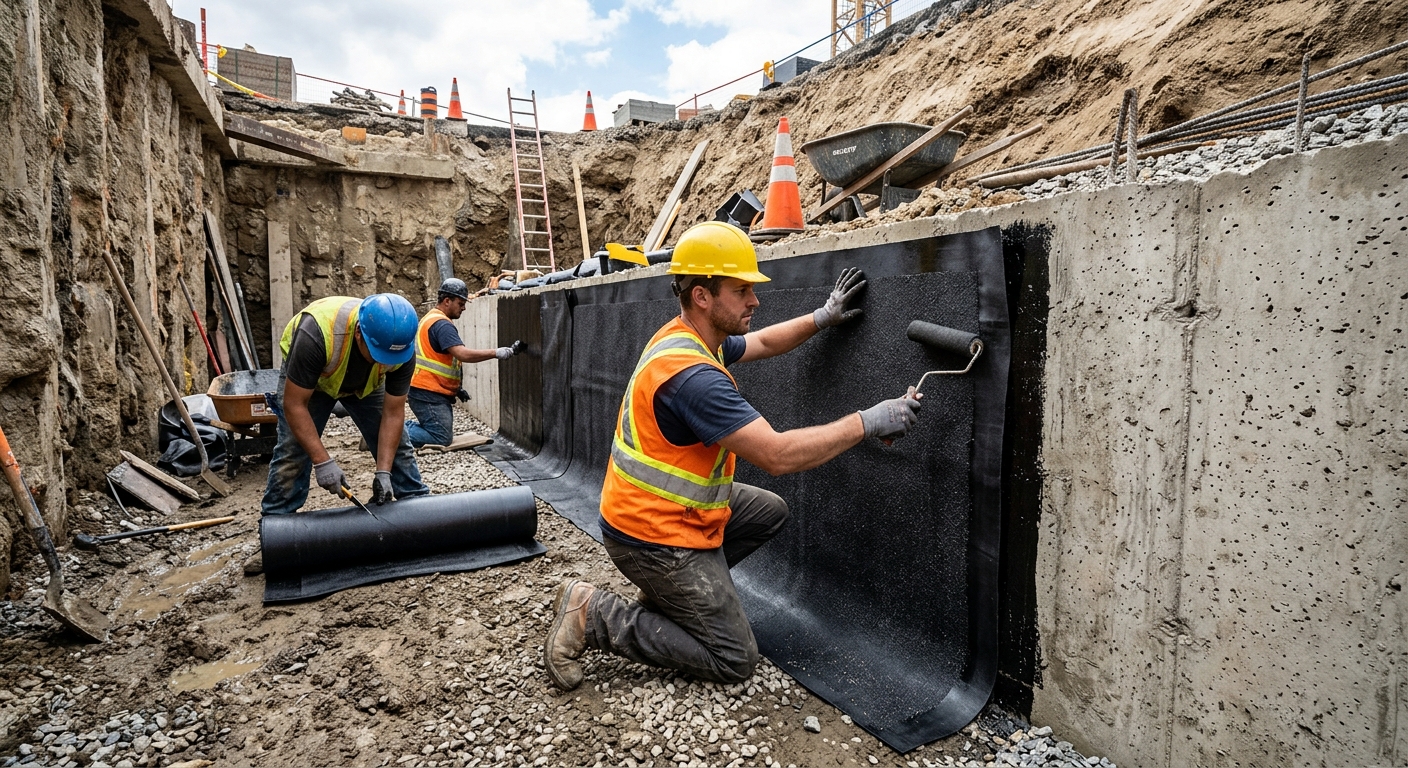
The fundamental difference is that exterior waterproofing addresses the source of water entry by fully excavating around the foundation, installing a continuous membrane, and restoring proper perimeter drainage—then backfilling correctly. Interior waterproofing manages water after it enters by creating a perimeter drain channel (or trench) and directing collected water to a sump pit and sump pump. In Pump Hill, where clay-heavy soils can hold moisture and freeze–thaw can shift cracks, exterior systems generally provide the most permanent fix when access allows. Interior systems can still work extremely well, but they’re best viewed as a pressure-relief and collection strategy—meaning they should be paired with crack injection and proper sealing when wall leakage pathways are present.
Foundation type guides the choice. Poured concrete walls often respond well to crack injection paired with interior drainage when cracks are the primary entry route. Block foundations commonly benefit from interior drainage as a practical complement because mortar joints and block seams can transmit moisture even when “surface” repairs are attempted. Calgary-area power reliability during spring melt isn’t the deciding factor—but outages do happen, and Alberta homeowners with sump systems often choose battery backup to reduce the risk of a basement flooding event while power is down.
To justify the price difference: if you’re facing persistent seepage plus signs of failed perimeter drainage, exterior work closer to $9,000–$25,000 can be worth it versus a purely interior plan closer to $5,000–$15,000 when exterior access is available. On the other hand, if you have limited space due to patios, tight lot lines, or permanent landscaping, a well-designed interior system plus targeted crack injection may prevent recurring water problems at a lower upfront cost—provided the sump is sized correctly and backup is included.
| Method |
Best For |
Addresses Source? |
Disruption |
Lifespan |
Price Band |
| Full exterior excavation + membrane |
Frequent seepage, high clay moisture pressure, failed old drainage, or multiple leak locations |
Yes |
High |
Long-term when membrane continuity and drainage are correct |
$12,000–$25,000 |
| Interior French drain + sump system |
Limited exterior access, localized interior wetting, or hydrostatic relief needs |
No (collection after entry) |
Medium |
Medium-to-High with proper pump sizing and discharge routing |
$6,500–$15,000 |
| Crack injection — epoxy (structural) |
Non-moving or stabilized cracks where structural sealing is the priority |
Partial (stops seepage through treated crack path) |
Low-to-Medium |
Medium (best when drainage is also managed) |
$700–$1,800 |
| Crack injection — polyurethane (active leak) |
Cracks with ongoing seepage or minor movement where flexible sealing helps |
Partial (targets active leak pathways) |
Low-to-Medium |
Medium (repeat risk if water pressure keeps finding new paths) |
$600–$1,650 |
| Interior drain channel only (no sump) |
Very mild dampness with low hydrostatic pressure and good site drainage |
No |
Medium |
Short-to-Medium depending on seasonal water levels |
$5,000–$9,500 |
| Re-grading + downspout extensions |
Surface runoff is clearly dumping toward the foundation |
Sometimes (reduces incoming water load) |
Low |
Low-to-Medium (effective when drainage systems are already functional) |
$600–$3,500 |
How to choose a waterproofing contractor in Pump Hill
Start with verification, then scope clarity. In Alberta, reputable waterproofing contractors should be able to show you licensing/registration details where applicable, current liability insurance, and WSIB/WCB coverage for their workers. For each item, don’t rely on “we have it” answers—ask for documentation: (1) find the contractor’s listing through Alberta’s online registry/verification tools; (2) request a certificate of insurance that names the correct legal entity and shows current coverage; (3) ask for WSIB/WCB clearance or proof of coverage; and (4) confirm the person signing the quote is the same entity operating the job.
Next, get 2–3 written, itemised quotes (not just a lump sum). A proper quote breaks down labour and materials—for example, membrane type, drainage tile components, sump pit/pump model, discharge routing, and crack injection material quantities. Read the exclusions carefully: what does the contractor exclude for disposal, landscaping reinstatement, permit pull responsibilities, and concrete/asphalt patching?
Warranty matters in real life, not marketing. Ask for the workmanship warranty length (and what it covers), the product/manufacturer warranty (and whether it transfers if you sell), and what maintenance is required to keep coverage valid. For payment, keep risk low: never pay more than 10–15% upfront; use a holdback until the job is fully complete and inspected. Finally, require a timeline in writing—start date, milestones, and an estimated completion date—especially if spring melt could affect drying and curing schedules.
- Ask whether they diagnose water entry points (cracks vs perimeter tile vs surface runoff) before pricing.
- Request moisture-related prep steps (mould/efflorescence remediation, drying conditions) in the scope.
- Confirm they include proper discharge routing for sump systems (and backup if recommended).
- Check that crack injection includes a plan for structural vs active-leak cracks (epoxy vs polyurethane).
- Ensure disposal, haul, and backfill material requirements are stated—not “allowance only” without details.
- Verify permit responsibility: who pulls it, what’s included, and how inspections are handled.
- Get exact pump specs (capacity/horsepower), discharge line diameter, check valves, and backup type.
- Confirm membrane continuity details: overlaps, terminations, and how they handle corners and transitions.
- Ask what happens if existing weeping tile is collapsed or non-functional on excavation.
- Request a protection plan for existing landscaping and hardscapes during excavation and reinstatement.
- Ask for warranty terms in writing, including transferability and maintenance requirements.
- Avoid contractors who won’t provide insurance/coverage documentation or itemised pricing.
In Pump Hill, common red flags include: (1) quotes that don’t specify whether the issue is source control or interior collection; (2) no mention of sump backup when spring melt wetting is expected; (3) vague warranties that don’t separate workmanship vs product coverage; (4) refusing to list disposal/access assumptions; and (5) avoiding proof of liability insurance and WSIB/WCB coverage when you ask.
Frequently asked questions — waterproofing in Pump Hill
How do I know if a foundation crack is serious?
In Pump Hill and the wider Calgary area, crack seriousness usually comes down to movement and water involvement. Hairline, dry cracks in poured concrete can be less urgent, but cracks that show dampness, mineral staining (efflorescence), or widening after freeze–thaw should be treated as active pathways. Step cracks in block walls, major horizontal cracks, and cracks that change over seasons are strong indicators that water pressure and foundation movement may be interacting. If you notice water pooling near the foundation, recurring seepage spots, or staining that appears after spring melt, assume the crack is doing more than just “looking bad.” For structural concern (especially horizontal movement), Alberta scopes often require engineer assessment, so ask your contractor to identify crack type before recommending injection.
How much does foundation crack repair cost in Pump Hill?
Foundation crack repair costs in Pump Hill typically fall into the local crack repair band of $500–$1,800, but the exact figure depends on how many injection ports are needed and whether the crack is structural or actively leaking. If the contractor determines the crack is stable and non-moving, epoxy injection is commonly used; if there’s active seepage, polyurethane injection is often chosen to seal under moisture. Additional labour can be required for surface preparation, drilling patterns, and cleanup. If your crack is part of a bigger waterproofing failure (failed perimeter drainage, high seasonal pressure), you may also need a sump system or interior perimeter drainage, which shifts costs toward the interior range of $5,000–$15,000. A good quote will itemise crack length/quantity, material type, and expected prep steps.
Do I need a sump pump in Pump Hill?
You might, but it depends on how water is entering and how much pressure builds during wet periods. In the Pump Hill area, clay-heavy soils can saturate and increase seepage after snowmelt and spring storms, so if you see recurring basement dampness, water on the floor, or wall seepage concentrated near the perimeter, a sump pump is often the practical solution to relieve pressure. If you choose interior drainage without a sump, it can work only when hydrostatic pressure is low and discharge is managed well. Many homeowners also select battery backup with the primary sump pump because Alberta power interruptions can happen during severe weather, and spring melt can test your system. If your contractor is recommending a sump, the quote should explain pump sizing, discharge routing, and whether backup is included.
How does Pump Hill's soil affect my foundation?
Pump Hill is in the Calgary region where clay-and-clay-till soils are common, and that affects waterproofing in two ways: (1) when clay saturates, it expands and can exert lateral pressure on foundation walls; and (2) saturated clay holds water longer, increasing the time walls stay under moisture stress. This makes freeze–thaw cycles more punishing, because cracks and joints can widen over time as temperatures swing. Practically, that means “one-time sealing” alone often isn’t enough if the surrounding soil stays wet. In many older Calgary-area homes, original weeping tile can be clogged or failed, so water finds the easiest paths—cracks, block seams, and corner joints. If your basement shows seasonal changes (wetter in spring, drier in late summer), soil saturation is usually part of the cause.
Do I need a permit for foundation work in Alberta?
Often, yes—at least for certain types of foundation-related waterproofing work. In Alberta, foundation excavation and structural crack repair commonly require a permit, and sump pump installations that discharge to municipal storm or sanitary systems typically require municipal approval before tying in. If you’re dealing with major horizontal cracks or signs of movement, an engineer’s assessment is frequently used to determine whether underpinning or additional structural work is needed. For Pump Hill homeowners, the easiest verification step is to ask the contractor in writing which permits are required for your exact scope and who will pull them. Also confirm the contractor’s documentation approach for engineering support when structural repairs are in the plan.
How long does waterproofing last?
When correctly designed for Calgary-area conditions, waterproofing can last many years, but “how long” depends on whether you control the water source or only manage the symptoms. Exterior excavation with a continuous membrane and properly functioning drainage typically provides the most durable approach, especially in clay soils where water pressure can return seasonally. Interior systems—perimeter drains and sump pumping—can also last a long time, but their performance depends on the sump, discharge routing, and backup reliability during wet and power-outage conditions. Crack injection alone is often medium longevity unless the drainage pressure is addressed, because freeze–thaw can continue to stress the opening. In short, a well-matched system for your foundation type and water entry point should perform reliably through multiple freeze–thaw cycles; ask your contractor what warranty covers (workmanship vs products) and whether it transfers.