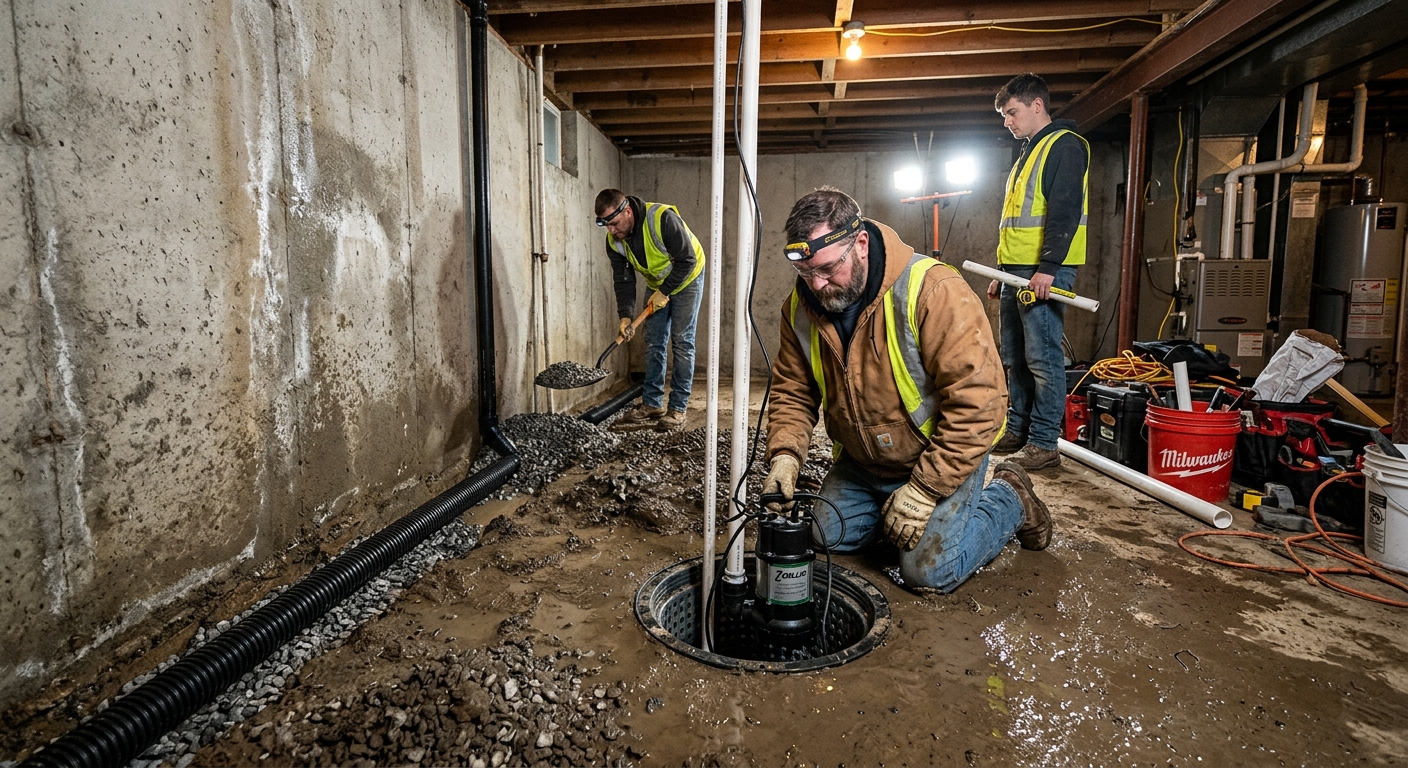
Basement waterproofing options and costs in Vulcan
Vulcan, Alberta is a small community where waterproofing problems often show up gradually—damp corners, musty odours, and seepage after intense rain or snowmelt—until freeze-thaw finishes widening the cracks. With 1,769 residents (Statistics Canada, 2021 Census) and 670 homeowner households, many basements are in homes that are older than most modern waterproofing systems. In fact, 49.7% of dwellings in the area were built before 1981 (Statistics Canada, 2021 Census), which matters because original weeping tile, membranes, and drainage details in that era are commonly aging or already failing.
In the Lethbridge–Medicine Hat economic region, soil ranges from silt loam to clay loam, and the clay content can swell when wet and shrink when dry. That movement can stress foundations and increase the chance that small defects become active leak paths. Even though the region is generally drier than many parts of Canada, intense rain events and snowmelt can still overload drainage, especially when grading traps water against the wall. Contractors see additional pressure from longer operating seasons for concrete work and the need to match repairs to freeze-thaw movement.
Local demand is especially strong around residential pockets with older stock and mature landscaping—many calls come from the downtown area and near Main Street where excavation space can be limited. Below is a practical comparison of the main approaches, so you can line up scope before comparing quotes.
| Method |
What It Addresses |
Disruption Level |
Durability |
Price Range |
| Exterior excavation + new membrane + drainage tile |
Primary source of water entry; rebuilds drainage system |
High (excavation + landscaping disruption) |
High (best long-term barrier + drainage) |
$14,000 – $28,000 |
| Interior perimeter drain channel + sump pit |
Manages water after it enters; reduces hydrostatic pressure effects |
Medium (interior access + limited jackhammering) |
Medium-to-High (depends on drainage capacity and sealing) |
$9,000 – $18,000 |
| Foundation crack injection (epoxy or polyurethane) |
Stops water through cracks; restores integrity where feasible |
Low-to-Medium (surface prep; patching required) |
Medium-to-High (best for correctly identified crack type) |
$600 – $2,500 |
| Sump pump installation (primary + battery backup) |
Controls collected water; protects during power interruptions |
Low-to-Medium (pit + discharge routing) |
Medium-to-High (backup improves reliability) |
$1,800 – $3,500 |
| Window well drain installation |
Prevents window well overflow and side seepage |
Low-to-Medium (localized excavation/grading) |
Medium (often paired with exterior grading) |
$1,200 – $3,000 |
| Lot re-grading / downspout extension |
Reduces runoff and surface water intrusion |
Low-to-Medium (yard works; minor access disruption) |
Low-to-Medium (relies on continued maintenance) |
$900 – $2,200 |
Prices are estimates only and vary by project scope, site access and material selection.
What affects the price of waterproofing in Vulcan
In the Lethbridge–Medicine Hat region, it’s common to see quotes for the “same” basement issue vary by 30–50%. The difference usually isn’t just contractor pricing—it’s the hidden scope: how much excavation is realistically possible, whether weeping tile is already plugged or missing, how deep the footings are, and whether a sump upgrade is needed to keep up with periods of saturated soil. Across Alberta, daylight hours for excavation, hauling distances for disposal, and the availability of crew time can also affect the total.
Three drivers most clearly separate regional costs from the national average: soil type, water table behaviour, and freeze-thaw. In clay-loam soils, wetting and drying cycles can expand and contract backfill, increasing lateral pressure against foundation walls—this can turn hairline defects into active leak paths that require crack work or interior drainage. During non-growing-season periods, seasonal water levels can sit high enough to raise hydrostatic pressure, which often means longer sump pump run times and increased reliance on properly sized drainage. Meanwhile, repeated freeze-thaw cycles in the Vulcan climate widen existing joints and cracks, so repairs must be durable enough to tolerate movement.
Concrete examples: if your home has a known seepage band along the perimeter and the weeping tile is original, exterior membrane + drainage may be priced closer to $14,000 – $28,000 because excavation depth and drainage rebuild are required. If the issue is primarily through a few non-structural cracks, an injection approach can be more controlled, often starting in the $600 – $2,500 range, but only if the crack type matches the repair method. In houses built before 1981 (49.7% of dwellings), older foundation drainage details can increase the chance of failure and raise costs when excavation or sump upgrades are unavoidable.
| Price Factor |
Why It Matters |
Cost Impact |
| Interior vs. exterior approach — interior is less disruptive but addresses symptoms |
Exterior treats the source; interior manages water after entry |
Interior typically cheaper, but may require sump capacity and sealing add-ons |
| Foundation type — poured concrete vs. block vs. stone vs. ICF |
Different walls react differently to movement and sealing methods |
Block often needs interior drainage complements; poured concrete may respond better to crack injection |
| Soil type — clay expands more than sand, adding pressure |
Clay-rich soils swell when wet and shrink when dry |
Higher chance of active seepage; may increase drainage and reinforcement requirements |
| Crack type and length — hairline vs. structural horizontal cracks |
Not all cracks are equal; structural cracks can trigger engineering work |
Structural/horizontal cracks can expand scope beyond standard injection |
| Sump pump backup system — battery or water-powered backup needed |
Reduces risk of basement flooding during power interruptions |
Can add cost but often protects the investment during spring and outage events |
| Access — landscaping, decks, or driveways must be removed for exterior |
Excavation may require removal and reinstatement |
Decks, fences, and hardscaping can materially increase labour and reinstatement |
| Weeping tile age — original tile (60+ years) may be completely failed |
Failed tile stops drainage and increases hydrostatic pressure |
May force exterior or interior drainage upgrades rather than partial repairs |
| Mould or efflorescence remediation required before sealing |
Active moisture affects adhesion and long-term performance |
Extra prep steps can increase time and materials before waterproofing |
Permits & regulations in Alberta
In Alberta, foundation excavation, structural crack repair, and changes to lot drainage typically require a building permit. Sump pump installations that discharge into the storm or sanitary system usually require municipal approval, especially if the routing changes tie into existing services. For structural crack repairs—particularly horizontal cracks in block walls, major step cracking, or signs the wall may be moving—an assessment by a structural engineer is often necessary to confirm whether underpinning or other structural remediation is needed.
Before work starts in Vulcan, verify that your contractor is properly insured and prepared for the administrative side of the job. Here’s a practical way to confirm coverage and licensing: (1) check the contractor’s Alberta registration status and trades/authorizations through the appropriate online registry; (2) request a current certificate of insurance showing general liability coverage, and confirm the address/project name matches your scope; (3) ask for WSIB/WCB clearance or documentation that they are enrolled and in good standing; and (4) for structural repair claims, ask whether they coordinate an engineer and whether engineering sign-off is included when required.
What typically does not require a permit: localized interior drying measures, cosmetic crack sealing where no structural elements are involved, and minor exterior downspout extensions or re-grading that does not change drainage patterns in a regulated way. However, if you’re excavating near the foundation, altering drainage paths, or addressing potential structural movement, assume you’ll need a permit and plan for that in your schedule.
Interior vs exterior waterproofing — what does Vulcan need?
For Vulcan basements, the difference is simple: exterior waterproofing (full excavation, membrane, and drainage tile) permanently addresses the source of water entry by controlling runoff and hydrostatic pressure where the water actually comes from. It generally costs more and is more disruptive because excavation exposes the full perimeter section being treated. Interior waterproofing (perimeter drain channel, sump pit, and sump pump) manages water after it enters, reducing basement dampness and hydrostatic pressure effects inside—but it doesn’t stop water from being present against the wall.
How that plays out locally depends on soil and foundation type. In clay-loam backfill, the pressure on foundation walls can increase during wet periods and worsen with freeze-thaw. Poured concrete walls often respond well to targeted crack injection when the cracks are non-structural, because injection materials can bond to the concrete and restore a reliable barrier. Block foundations often benefit from interior drainage as a practical complement, particularly when old weeping tile systems are undersized, clogged, or absent. In many older Lethbridge–Medicine Hat-area homes, interior systems are the fastest way to get control of water, especially when excavation space is limited.
A concrete example: if your leak is concentrated at two active perimeter cracks and the rest of the wall is dry, crack injection may sit in the $600 – $2,500 band, and that can be justified if inspection confirms the cracks are the primary pathway. If water is showing across a wider band after rain and you suspect failed weeping tile, upgrading to an exterior approach often moves into the $14,000 – $28,000 range because excavation and full drainage rebuild address the root cause rather than only the symptom.
Finally, consider sump pump backup. In Alberta, brief power interruptions happen—especially during spring storms when drainage loads are high. A battery backup (or water-powered backup where suitable) can prevent a short outage from turning a manageable seep into standing water.
| Method |
Best For |
Addresses Source? |
Disruption |
Lifespan |
Price Band |
| Full exterior excavation + membrane |
Active seepage across multiple wall sections; failed exterior drainage |
Yes (source control) |
High (excavation + backfill + yard reinstatement) |
15–25+ years when drainage is rebuilt correctly |
$14,000 – $28,000 |
| Interior French drain + sump system |
Water management after entry; older homes where excavation is limited |
No (controls water inside) |
Medium (interior drain channel + pit) |
10–20 years depending on pump capacity and power reliability |
$9,000 – $18,000 |
| Crack injection — epoxy (structural) |
Non-leaking or dormant cracks; structural crack sealing when appropriate |
Partial (seals crack pathway) |
Low-to-Medium (surface prep and patching) |
10–20 years with correct crack identification and prep |
$900 – $2,300 |
| Crack injection — polyurethane (active leak) |
Active seepage; cracks with ongoing moisture movement |
Partial (stops active pathway) |
Low-to-Medium (surface prep) |
5–15 years; depends on movement and crack type |
$900 – $2,500 |
| Interior drain channel only (no sump) |
Light dampness; small amount of water without pressure build-up |
No (manages limited water) |
Medium (interior channel work) |
5–10 years for intermittent moisture conditions |
$4,500 – $9,000 |
| Re-grading + downspout extensions |
Surface water problems; gutters draining toward foundation |
No (prevents runoff, not wall hydrostatic pressure) |
Low-to-Medium (yard work) |
2–7 years depending on maintenance and settlement |
$900 – $2,200 |
How to choose a waterproofing contractor in Vulcan
Choosing a contractor in Vulcan comes down to proof: proof they’re licensed/authorized where required, insured for the risks, and experienced enough to match a method to the root cause. In Alberta, start by confirming liability insurance: request a current certificate of insurance and make sure your address is referenced or the coverage is valid for the work described. Next, verify WSIB/WCB coverage—ask for clearance documentation or proof of good standing. Then check licensing/registration status through the appropriate Alberta online registry for the relevant trades/activities involved.
Get 2–3 itemised written quotes. You want line items for labour and materials (membrane/drain tile/fittings, pump and backup system, disposal, interior demo and reinstatement). A proper quote should state what’s included and what’s excluded: permit pull responsibility, engineering requirements for structural cracks, disposal of excavated material, and reinstatement of landscaping. If the scope references testing or inspection (like identifying active leak pathways), it should say who does it and when.
Warranty matters. Ask for the workmanship warranty length and whether it covers the full scope (drainage system, membrane tie-in, pump setup). Also ask about manufacturer product warranties and whether warranties transfer to you if you sell the home.
For payment, avoid large up-front deposits—aim for no more than 10–15% upfront, then hold back a portion until the job is complete and defects are corrected. Get the start date and completion estimate in writing so schedule slippage doesn’t become an argument.
- Use itemised quotes with line-by-line labour, materials, and equipment.
- Confirm whether disposal of excavated soil is included for exterior work.
- Ask how they protect landscaping and what reinstatement is covered.
- Ensure the scope specifies drainage tile type, slope, and connection method.
- Require a description of pump discharge routing (and check valve use).
- Confirm whether a sump backup system is included or an add-on.
- Ask how they identify active vs. dormant cracks before injection.
- Request the exact waterproofing membrane/product system and coverage method.
- Get the workmanship warranty in writing (not just “we stand behind it”).
- Check certificate of insurance is current before any work begins.
- Verify WSIB/WCB clearance/documentation for the crews.
- Make sure they state permit and engineering responsibilities clearly.
Red flags I see in Vulcan: (1) quotes that omit disposal, discharge routing, or reinstatement details; (2) “one-size-fits-all” recommendations without inspecting crack type or drainage condition; (3) no proof of WSIB/WCB or current insurance; (4) warranty only covering materials (not workmanship); and (5) pressure to pay most of the total up front before materials are ordered and scoped.
Frequently asked questions — waterproofing in Vulcan
Do I need a permit for foundation work in Alberta?
Often, yes. In Alberta, foundation excavation, structural crack repair, and changes to lot drainage commonly require a building permit. Sump pump installations that connect into storm or sanitary systems can require municipal approval depending on discharge routing. If your work includes anything that could affect structural integrity—like major horizontal cracks, significant step cracking, or suspected wall movement—expect the process to involve additional review. For a Vulcan homeowner, the simplest approach is to ask the contractor up front: “Is a permit required for my exact scope, and who pulls it?” A reputable contractor will explain what typically needs a permit and will confirm their responsibility for drawings/engineer support when needed.
How long does waterproofing last?
Longevity depends on the method and whether the source of water is controlled. Exterior waterproofing (membrane plus drainage tile) typically provides the most durable protection, often lasting 15 to 25+ years when drainage is rebuilt correctly. Interior drainage systems usually perform well for 10 to 20 years, but the real-world lifespan depends on pump reliability, discharge routing, and whether active seepage continues against the wall. Crack injection can last 5 to 20 years depending on crack movement and correct material selection (epoxy for appropriate structural conditions; polyurethane for active leaks). In Vulcan’s freeze-thaw environment, even small defects can worsen, so choosing the right repair for the crack type matters as much as the product.
Can I waterproof my basement from the inside only?
Yes, in many cases you can improve basement dryness using interior waterproofing—perimeter drain channels, a sump pit, and a properly sized sump pump. In the Vulcan area, interior-only solutions are frequently used when excavation would be too disruptive or when surface access is limited by landscaping and hardscaping. However, interior work manages water after it enters; it doesn’t stop water from pressing against the foundation wall. That’s why interior systems are best when combined with sealing (crack injection) for the active pathways and when drainage capacity is enough to handle wet periods. If you’re dealing with a broad wet band and suspect failed exterior weeping tile, an interior-only plan may cost less upfront but may not be the long-term fix you expect.
What causes foundation cracks in Vulcan?
In Vulcan and the broader Lethbridge–Medicine Hat region, cracks are often driven by soil and moisture cycling. Clay-loam backfill can swell when saturated and shrink when it dries, pushing and pulling against foundation walls and footings. Freeze-thaw cycles then amplify existing joints and hairline defects by expanding water trapped inside cracks. In older homes—especially those built before 1981—aging drainage (or missing/failed weeping tile) can allow water to sit near the foundation longer, increasing hydrostatic pressure. Typical results include vertical cracks that become damp during wet seasons, and step or horizontal cracking when movement is more significant. A good inspection should classify crack type and determine whether injection is appropriate or if structural assessment is needed.
How do I compare waterproofing quotes?
Compare quotes like a scope, not a single number. Ask each contractor for an itemised breakdown: labour and materials, disposal of excavated soil (for exterior work), and whether reinstatement is included. Confirm exactly what drainage is being installed—tile type, slope, filter fabric, connections, and where discharge goes. For sump systems, verify whether a battery or other backup is included, and whether the pump capacity matches your likely water load. For crack repair, require the contractor to explain whether they expect epoxy or polyurethane and why (based on whether the crack is active). Finally, check warranty terms and payment schedules. If one quote starts near $9,000 – $18,000 for interior drainage and another is $14,000 – $28,000 for exterior excavation, the difference should be defensible in the written scope.
How long does basement waterproofing take in Vulcan?
Timelines vary with foundation conditions, weather, and access, but most waterproofing work in Vulcan fits in a practical window. Interior drainage and sump installations are often the fastest option because they avoid full exterior excavation; typical scheduling is shorter once materials and pump discharge routing are confirmed. Exterior waterproofing takes longer due to excavation, membrane installation, drainage tile rebuild, backfill, and yard reinstatement. Freeze-thaw and seasonal moisture can also affect when exterior work can be safely excavated and when backfill can be properly compacted. Your contractor should give a start date and completion estimate in writing before work begins. If they can’t provide a timeline tied to specific scope items, treat that as a warning and ask for a revised schedule.