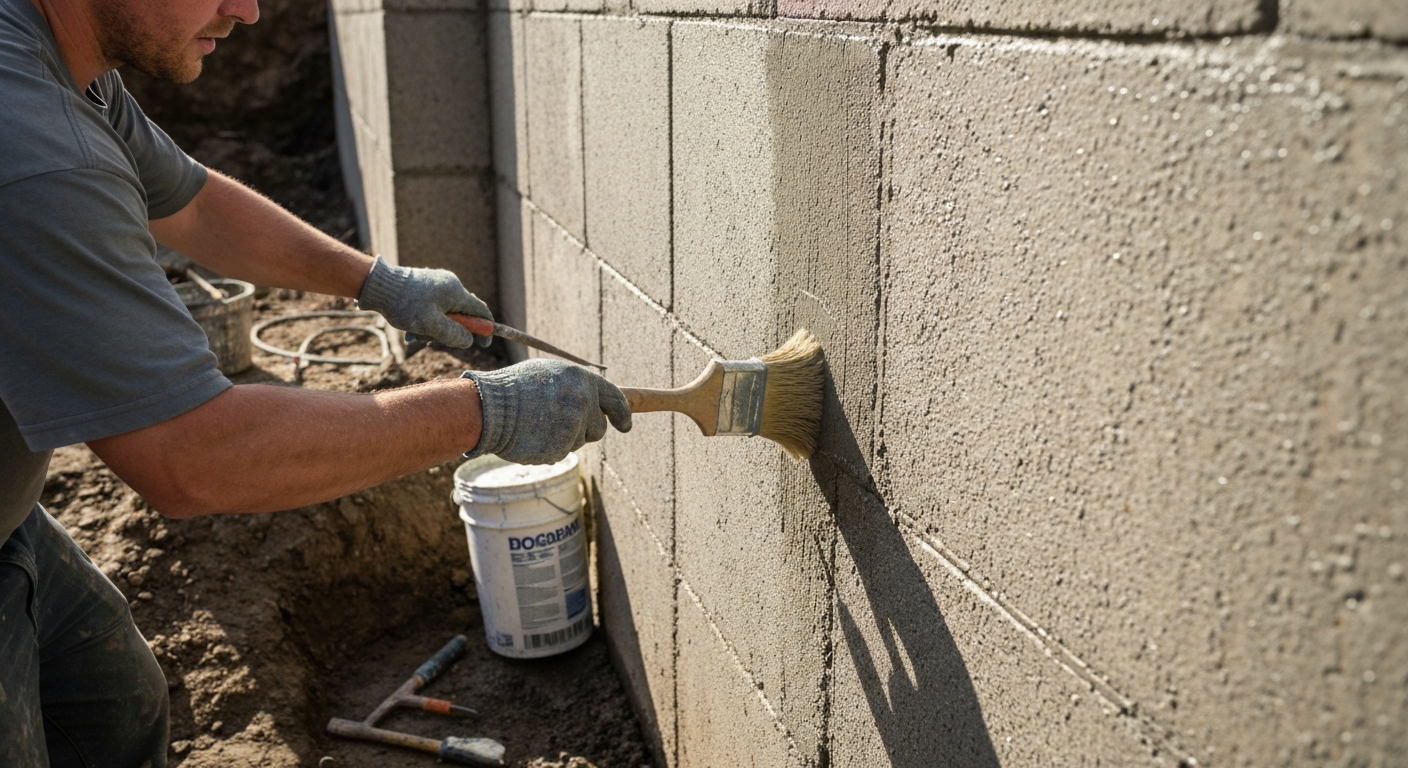
Basement waterproofing options and costs in Walker
In Walker, Alberta, basement waterproofing is usually driven by how water moves through clay-heavy soils and how freeze–thaw cycles widen joints over time. Even in a community with a small local population—2,036 residents reported in the 2021 Census (Statistics Canada, 2021 Census)—many homes tie into the wider Calgary-area housing stock, where older foundations are common and original drainage can be undersized or failed. Homes built in the pre-modern era (roughly “older neighbourhood” housing across Calgary’s orbit) often have weeping tile that’s corroded or completely blocked, so water finds the path of least resistance: seams, wall joints, and floor edges. Those are the situations where homeowners notice musty odours, damp corners, efflorescence, and recurring sump activations.
Calgary-area pricing can look higher than some other Canadian markets because excavation often means dealing with heavy clay spoils, tighter access along lot lines, and disposal requirements once you’re digging around a foundation. Costs also rise when we need a full perimeter drainage system or deeper exterior excavation to replace membrane continuity. Where contractors have to remove patios, decks, or landscaped beds (a frequent reality in established pockets of the Calgary region), the project shifts from “targeted repair” to full waterproofing scope. That’s why you’ll see quoted ranges that can move dramatically even when the visible symptoms seem similar.
Below are the most common waterproofing approaches we price for Walker basements, with typical ranges to help you compare contractor proposals before you book a site visit.
| Method |
What It Addresses |
Disruption Level |
Durability |
Price Range |
| Exterior excavation + new membrane + drainage tile |
Source water entry by replacing exterior waterproofing continuity and directing groundwater to perimeter drainage |
High (excavation around foundation, landscape/driveway impacts) |
Long-term (often 20+ years when installed with correct backfill and drainage) |
$9,000–$25,000 |
| Interior perimeter drain channel + sump pit |
Captures seepage after water enters and relieves hydrostatic pressure with interior drainage |
Medium (floor cutting, localized interior disruption) |
High (commonly 15–20+ years depending on pump selection and tile condition) |
$5,500–$15,000 |
| Foundation crack injection (epoxy or polyurethane) |
Seals cracks to prevent water migration; polyurethane is used for active seepage |
Low to Medium (injection holes and surface patching) |
Medium to High (typically 10–20 years based on crack movement and wall type) |
$500–$1,800 |
| Sump pump installation (primary + battery backup) |
Automates water removal and reduces risk during power loss or pump cycling |
Low (interior excavation for sump pit; minor electrical work) |
Medium to High (backup reduces failure risk; longevity tied to maintenance) |
$1,200–$3,000 |
| Window well drain installation |
Prevents surface water and weeping from pooling around window wells |
Low to Medium (localized exterior work around wells) |
Medium (often 8–15 years depending on drainage outlet and grading) |
$900–$2,200 |
| Lot re-grading / downspout extension |
Redirects roof runoff away from foundation and improves surface drainage |
Low (minor landscaping and grading) |
Short to Medium (typically 3–10 years unless paired with proper drainage) |
$800–$2,000 |
Prices are estimates only and vary by project scope, site access and material selection.
What affects the price of waterproofing in Walker
In Walker and the broader Calgary economic region, two waterproofing quotes for what looks like the same “wet basement” can differ by 30–50% because the actual water problem is rarely the same beneath the surface. One contractor may propose a symptom-based interior approach, while another may price a full source-control exterior system that changes the way water moves through clay backfill and around the foundation. Labour availability and excavation constraints also matter: tight lot lines, older landscaping, and difficulty staging equipment can add time and disposal costs even when the membrane and drain materials are similar.
The three biggest local drivers that separate Calgary-area pricing from the national average are soil type, water table behaviour, and freeze–thaw performance. Calgary-area foundations sit on predominantly clay and clay-till soils, which hold water and expand when saturated. That expansion can increase lateral pressure, worsening wall cracks and joint seepage. In pockets of the river valleys and low-lying coulees within the region, seasonal groundwater and storm events raise hydrostatic pressure, which often pushes scope toward continuous exterior membranes and properly functioning perimeter drains. Freeze–thaw cycles common to southern Alberta then widen existing cracks over time, so “quick fix” patching alone can fail.
Concrete examples of what changes cost in Walker: a basement with only surface dampness near the floor edge might be a lower-scope interior perimeter drain, while recurring corner seepage plus failed weeping tile can require a full interior drain channel and sump system, often moving toward the interior band (for example, $5,000–$15,000). If we discover the exterior membrane is discontinuous and the only reliable solution is excavation and a new drainage assembly, you’re typically closer to the exterior waterproofing band (about $9,000–$25,000). In clay-heavy situations, even a few extra truckloads of spoil disposal and deeper excavation can quickly add up, particularly when landscaping has to be removed and later restored.
| Price Factor |
Why It Matters |
Cost Impact |
| Interior vs. exterior approach — interior is less disruptive but addresses symptoms |
Interior systems manage water after entry; exterior reduces source water pressure |
Exterior often costs significantly more due to excavation and reinstatement |
| Foundation type — poured concrete vs. block vs. stone vs. ICF |
Wall material affects crack behaviour, sealing strategy, and drainage need |
Poured concrete often responds well to crack injection; block commonly needs interior drainage support |
| Soil type — clay expands more than sand, adding pressure |
Clay saturation increases lateral pressure and prolongs wet conditions |
More excavation depth, more drainage work, and more robust backfill/specification |
| Crack type and length — hairline vs. structural horizontal cracks |
Active or structural movement requires different sealing and potential engineering review |
Structural/horizontal cracks can push scope beyond simple injection (and may require engineer involvement) |
| Sump pump backup system — battery or water-powered backup needed |
Power loss risk in spring flooding increases the need for redundancy |
Backup adds cost but reduces failure probability during outages |
| Access — landscaping, decks, or driveways must be removed for exterior |
Staging and removal time drives labour and restoration |
Restricted access increases hours and may require partial rebuilds |
| Weeping tile age — original tile (60+ years) may be completely failed |
Failed tile shifts the system from “maintenance” to “replacement mindset” |
Replacement or full drainage correction pushes project toward the higher band |
| Mould or efflorescence remediation required before sealing |
Proper prep is required for adhesives/membranes and for indoor air quality |
Remediation adds labour and materials, especially if porous materials are affected |
Permits & regulations in Alberta
In Alberta, certain foundation-related work typically triggers permitting requirements, especially when drainage changes affect how the site sheds water or when structural elements are modified. For Walker homeowners, the practical rule is: if the work changes structural capacity or alters lot drainage in a meaningful way, plan on a permit process. Foundation excavation and structural crack repair (particularly when dealing with horizontal cracks in block walls or any indication that the wall may be moving) commonly require a building permit. If you’re connecting sump discharge lines to municipal systems (storm or sanitary), you’ll need municipal approval and the correct discharge method documented.
For structural crack repair, a structural engineer’s assessment is often required to confirm whether the cracks are “cosmetic/maintenance” or tied to movement that warrants underpinning or other structural remediation. Before you sign a contract, ask whether the contractor provides engineering support or works with your chosen engineer, and confirm their liability insurance and WSIB/WCB coverage are in place.
Step-by-step, here’s how to verify compliance in Walker:
- Request the exact permit responsibility in writing (contractor vs homeowner) and whether the permit is pulled before work starts.
- Check the contractor’s Alberta licensing/registration details through the appropriate online registry and confirm the company name matches the invoice.
- Ask for a current certificate of liability insurance showing the effective dates and coverage.
- Request WSIB/WCB clearance (or proof of registration status) and ensure it aligns with the work scope.
- For structural work: confirm who arranges the engineer assessment and provide the engineer report timeline.
- For sump discharge: confirm where the water will go (daylight/ground dispersal vs sewer connection) and what approvals are needed.
Interior vs exterior waterproofing — what does Walker need?
In Walker, the fundamental difference is that exterior waterproofing aims to stop water before it reaches your foundation by excavating around the perimeter, restoring a continuous membrane, and replacing/repairing drainage tile so groundwater is directed away. Interior waterproofing, by contrast, manages water after it enters the basement through an interior perimeter drain channel and sump pit. That means interior solutions can be less disruptive—especially when excavation would be difficult—but they don’t eliminate hydrostatic pressure against the wall itself. In clay-heavy soils that hold saturation, that pressure can continue to drive seepage at cracks and joints even if the basement is kept relatively dry.
Which approach is right depends on the foundation type and the failure pattern. In Walker, poured concrete walls often respond well to crack injection when the cracks are stable and leak paths are defined; injection can reduce water migration. However, many older Calgary-area foundations with historic weeping tile issues also benefit from an interior drain system to provide a second line of defence, particularly if the original exterior drainage is clogged. Block foundations often have more pathways at mortar joints and corners, and it’s common to see interior drainage become a practical complement rather than a stand-alone fix.
Also consider Alberta’s spring conditions: power interruptions and heavy rain can overwhelm pumps quickly. A sump system paired with a backup (commonly battery backup) can be the difference between a wet event and a managed event. For cost justification, it’s typical to see exterior waterproofing start around the higher band (roughly $9,000–$25,000) when excavation access is workable and source-control is needed. If your issue is localized and the exterior system is likely intact, an interior perimeter drain and sump approach (often $5,000–$15,000) can be a sensible, lower-disruption choice—provided the system is engineered to handle spring surges and the crack work isn’t ignored.
| Method |
Best For |
Addresses Source? |
Disruption |
Lifespan |
Price Band |
| Full exterior excavation + membrane |
Recurring seepage, known failed perimeter drainage, or high hydrostatic pressure conditions |
Yes (stops water entry when drainage is corrected) |
High |
20+ years (if properly installed and backfilled) |
$9,000–$25,000 |
| Interior French drain + sump system |
Basements that are damp due to seepage, especially when exterior excavation isn’t practical |
No (manages water after entry) |
Medium |
15–20+ years with correct pump selection and maintenance |
$5,500–$15,000 |
| Crack injection — epoxy (structural) |
Stable, non-moving cracks in poured concrete or where crack movement is minimal |
Partial (reduces water migration through the crack) |
Low to Medium |
10–20 years depending on crack stability |
$700–$1,600 |
| Crack injection — polyurethane (active leak) |
Active seepage where water is currently present at the crack line |
Partial (can stop/slow active flow through the crack) |
Low to Medium |
10–20 years when movement is controlled and prep is correct |
$600–$1,800 |
| Interior drain channel only (no sump) |
Very minor seepage with manageable water volume and where a sump isn’t necessary |
No |
Medium |
8–15 years (depends heavily on water loading) |
$3,000–$8,500 |
| Re-grading + downspout extensions |
Surface water issues and overflow runoff that pools near the foundation |
Indirect (reduces surface loading that can migrate inward) |
Low |
3–10 years unless corrected drainage pathways are addressed |
$800–$2,000 |
How to choose a waterproofing contractor in Walker
Choosing the right contractor in Walker, Alberta is less about the lowest price and more about whether the scope truly matches your water pathway. Start with compliance: request proof of Alberta licensing/registration for the trade area, a current certificate of liability insurance, and WSIB/WCB coverage (or a clearance letter, where applicable). When you receive documents, confirm the company name matches the quote and that coverage dates are current for the project start window. Don’t accept “we’re insured” without seeing the paperwork.
Next, require 2–3 itemised written quotes with clear labour and material breakdowns, not just a single lump sum. The best quotes show what’s included in preparation (mould/efflorescence remediation), disposal, and how the drainage outlet will discharge. Ask whether they’re pulling permits where required, and whether disposal fees are included for clay spoils—these small line items can swing final totals. Warranty should be specific: confirm workmanship warranty length, product/manufacturer warranty details, and whether the warranty is transferable if you sell the home.
For payment scheduling, protect yourself: never pay more than 10–15% upfront, and hold back the final portion until the job is complete and cleaned. Get the start date and completion estimate in writing, plus a contingency plan for weather delays—important in southern Alberta where excavation conditions change quickly in shoulder seasons.
- Ask for site photos of problem areas (cracks, weeping points, existing tile condition) included in the proposal.
- Confirm the proposed drainage outlet path and how sump discharge is directed.
- Check if permits are included where foundation excavation or structural crack work is involved.
- Verify disposal inclusion for heavy clay backfill and excavation spoil.
- Require a written scope that states what is excluded (e.g., landscaping restoration limits, patio rebuild scope).
- Look for a clear pump specification if a sump is included (capacity, discharge line size, alarms/backup).
- Confirm crack injection type (epoxy for stable cracks vs polyurethane for active leaks) and prep steps.
- Request details on backfill: drainage rock, membrane protection board, and compaction method.
- Ensure warranty terms are in writing and identify what voids coverage.
- Use a payment schedule with milestones tied to inspection and completion.
- Confirm project lead time for materials and whether batching/delivery affects the schedule.
- Ask for references from similar Calgary-area clay soil conditions and foundation types.
In Walker, red flags include: contractors recommending sump work while ignoring crack injection or failed weeping tile evidence, vague warranties that don’t separate workmanship vs materials, quotes that don’t mention disposal/restore scope, insisting on large upfront payments, and refusing to provide insurance/WSIB/WCB documentation before mobilization.
Frequently asked questions — waterproofing in Walker
How does Walker's soil affect my foundation?
Walker homes sit in a Calgary-area clay-and-clay-till context where soil holds water and expands during freeze–thaw saturation cycles. That matters because expanding saturated soil increases lateral pressure on foundation walls and can push water through existing cracks, joints, and weak seams. In practice, we often see more recurring dampness when the weeping tile has aged or become clogged, because groundwater finds new pathways at the floor edge and corners. If your basement shows efflorescence (white mineral deposits) or seasonal seepage, clay-driven pressure and spring storm loading are usually part of the story. For homeowners, it also means “surface-only” fixes like minor grading may not be enough; you typically need a drainage or sealing plan that accounts for how clay behaves when saturated (Statistics Canada, 2021 Census) population context notwithstanding.
Do I need a permit for foundation work in Alberta?
Often, yes—especially for foundation excavation and structural crack repair, because the work can affect building elements and drainage functions. In Alberta, permits are commonly required when foundation excavation is involved, when you’re making meaningful changes to lot drainage, or when repair scope includes structural crack work that suggests potential movement (such as horizontal cracks in block walls). If your sump discharge connects to municipal storm or sanitary systems, municipal approval is typically needed. The best approach in Walker is to ask your contractor up front what permits they will pull (or what you’ll need to arrange) and to receive that in the written scope. Before signing, confirm the contractor’s liability insurance, WSIB/WCB coverage, and whether they coordinate engineer assessment when the crack type suggests structural concerns.
How long does waterproofing last?
Longevity depends on whether you address the water source and whether the system remains functional through freeze–thaw. Exterior waterproofing (membrane + perimeter drainage tile) is usually the most durable path when installed with correct backfill and drainage, commonly lasting 20+ years in Calgary-area conditions when done properly. Interior perimeter drains and sump systems also perform well, but they manage water after entry; they can still last 15–20+ years if the pump, discharge, and backup strategy are reliable. Crack injection typically has a shorter “window” than full drainage solutions, often around 10–20 years depending on crack stability and whether active seepage is correctly treated. If you’re comparing quotes, use the scope to decide: a basement that needs source control is rarely solved long-term by only adding a sump. As a reference point, interior drainage and sump systems often fall in the $5,000–$15,000 range, while full exterior work is frequently in $9,000–$25,000.
Can I waterproof my basement from the inside only?
Sometimes, yes—especially when exterior excavation is impractical (tight access, hard-to-remove landscaping, or when the water intrusion is clearly manageable). Interior systems like a perimeter drain channel and sump pit can control seepage and reduce hydrostatic pressure enough to keep your basement dry. That said, interior-only waterproofing doesn’t stop hydrostatic pressure at the wall; it “collects and removes” water after it enters. In Walker’s clay and freeze–thaw environment, that can still work well, but it should be paired with the right crack strategy and a properly sized sump system, including backup planning. For example, polyurethane or epoxy injection may help reduce migration through specific cracks, while a sump with battery backup can help during spring power outages. If you have widespread dampness, multiple active leaks, or evidence the exterior membrane/drainage tile is failed, interior-only work can be a temporary improvement rather than a long-term fix.
What causes foundation cracks in Walker?
In Walker, foundation cracking is commonly tied to soil moisture changes and freeze–thaw movement. Clay-heavy soil saturation expands and then contracts as conditions change, which can stress walls and widen joints over time. Differential movement, settling, and sometimes original construction tolerances can contribute, especially in older homes where drainage systems have aged. In the Calgary region, existing cracks that were once “sealed by design” can become active again when weeping tile fails or when spring runoff increases groundwater pressure. Horizontal cracks in block walls are a particular concern because they may suggest more than cosmetic shrinkage and can warrant engineer assessment. Hairline vertical or stepped cracks can have different causes, but in any case, a proper inspection determines whether the crack is stable (often suited to epoxy injection) or actively leaking (often suited to polyurethane injection).
How do I compare waterproofing quotes?
Compare quotes like-for-like. Ask each contractor to provide an itemised scope that states the exact method (exterior vs interior), what will be removed, what will be replaced, and what is included for drainage discharge and disposal. Don’t just compare the final total. Look for whether mould/efflorescence remediation is included before sealing, whether the contractor specifies backup for a sump pump, and whether crack injection type matches the situation (epoxy for stable cracks, polyurethane for active seepage). Confirm permits and approvals are addressed where required in Alberta, especially for excavation and any sewer connections for sump discharge. A responsible contractor will also explain warranty terms for workmanship and materials. If one quote is significantly lower than $9,000–$25,000 exterior ranges or below the typical interior range of $5,000–$15,000, ask what’s missing rather than assuming it’s a bargain.