Basement waterproofing options and costs in Connaught Heights
In Connaught Heights, British Columbia, choosing the right basement waterproofing option starts with understanding where water is entering and how hard it’s pushing. Many basements in the Lower Mainland–Southwest were built long before modern membranes and drain systems became standard; in a neighbourhood of 2,027 residents (Statistics Canada, 2021 Census), the trades often see recurring calls on older foundations where original tar-and-paper waterproofing has aged and perimeter drainage has failed. That matters because once the weeping tile or discharge path stops working, hydrostatic pressure can keep water in contact with walls and slabs for longer periods—turning “damp” into active seepage.
Lower Mainland–Southwest pricing is shaped by persistent saturation and drainage challenges. Coastal BC tends to maintain high groundwater pressure through intense, prolonged rainfall, and wet mild winters with freeze-thaw cycles widen existing cracks and joints. In Connaught Heights—especially around the older pocket near the commercial strip and busier local streets—exterior work demand is high when interior-only repairs haven’t solved recurring moisture. Labour and access constraints also push costs up: tight urban lots, landscaping, and the need for mechanical breaking during excavation can increase both time and disposal costs.
Use the table below as a realistic starting point for typical ranges, then match the method to your foundation condition before comparing contractors.
| Method |
What It Addresses |
Disruption Level |
Durability |
Price Range |
| Exterior excavation + new membrane + drainage tile |
Source of water entry; replaces failed perimeter drainage and exterior waterproofing system |
High (landscaping removal, excavation) |
Long-term (typically decades with proper backfill/drainage) |
$15,000–$30,000 |
| Interior perimeter drain channel + sump pit |
Collects seepage water after it enters; reduces wall and slab moisture |
Medium (limited indoor demolition) |
Long-term when discharge and pump capacity are correct |
$8,000–$18,000 |
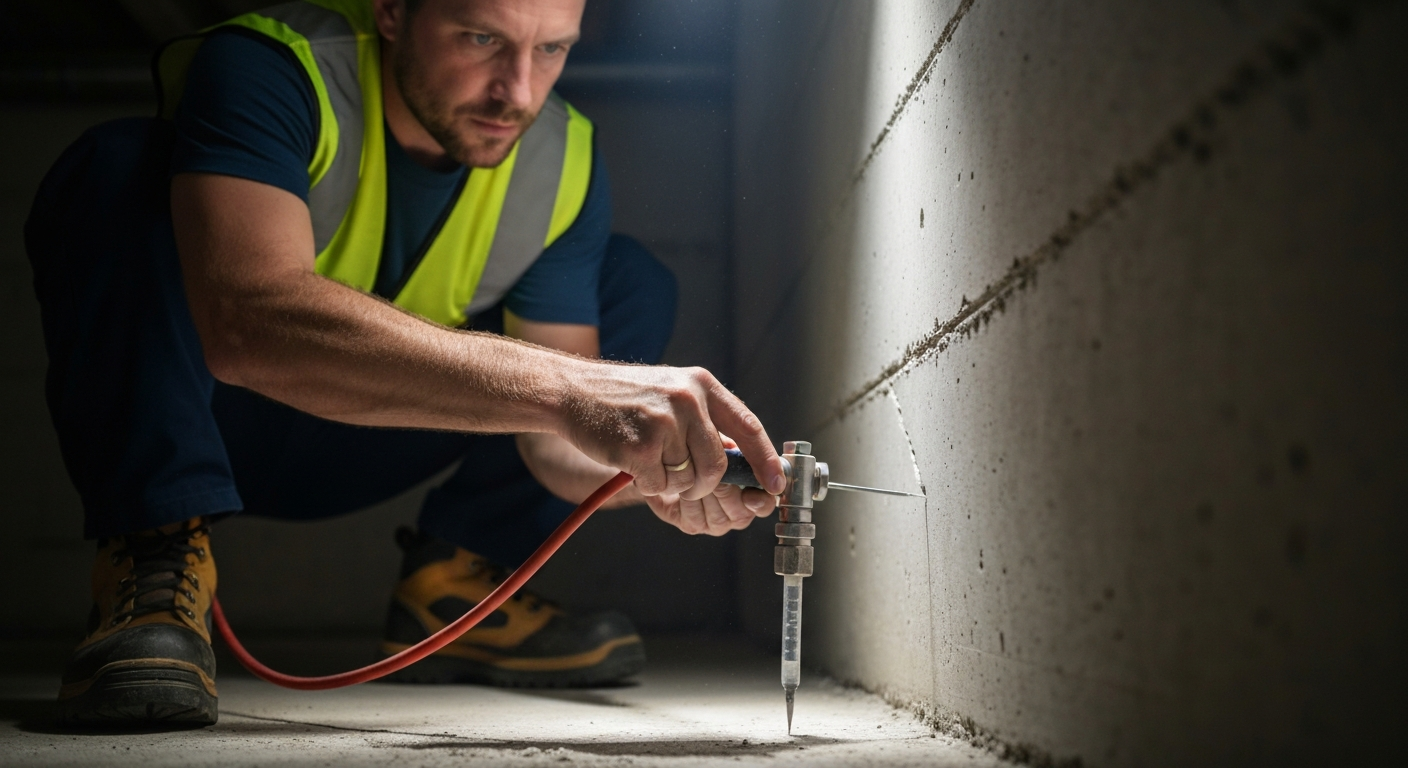
| Foundation crack injection (epoxy or polyurethane) |
Stops cracking pathways; choice depends on active leak vs stable crack |
Low to Medium (some drilling and cleanup) |
Good to very good (depends on crack movement and pressure) |
$500–$2,000 |
| Sump pump installation (primary + battery backup) |
Prevents recurring water accumulation; handles outages and high-flow events |
Low to Medium (cut-in pit, electrical work) |
High when matched to pump duty cycle and discharge route |
$1,000–$5,000 |
| Window well drain installation |
Stops rainwater entry at egress areas; reduces pooling and seepage |
Low to Medium (exterior work at window) |
Moderate to high (depends on grade and drainage daylighting) |
$2,500–$6,500 |
| Lot re-grading / downspout extension |
Improves surface drainage; reduces water reaching foundation |
Low to Medium (yard adjustments) |
Good when maintained and combined with drainage fixes |
$2,000–$6,000 |
Prices are estimates only and vary by project scope, site access and material selection.
What affects the price of waterproofing in Connaught Heights
In Connaught Heights and across the Lower Mainland–Southwest region, waterproofing quotes for the “same” basement can vary by 30–50% because soil and water conditions change how much excavation, drainage correction, and pump capacity are required. Contractors also price differently based on access constraints—tight urban lots, deck/driveway removal, and disposal handling can add labour days even when the materials are similar.
Three drivers separate Lower Mainland–Southwest costs from the national average: soil conditions, water table levels, and freeze-thaw exposure. Unlike clay-heavy soils in parts of Ontario and the Prairies that swell dramatically, Lower Mainland soils often cause trouble through persistent saturation. When the groundwater table stays elevated, sump pumps run longer and drainage paths must be sized and protected properly. Freeze-thaw in wet mild winters widens cracks and joints, increasing seepage and accelerating deterioration of membranes and older weeping tile systems.
Local examples I see in Connaught Heights: (1) homes with aging perimeter drains may require both exterior tie-in and interior collection—pushing projects toward the higher end of exterior waterproofing (often close to $15,000–$30,000) instead of a modest interior retrofit; (2) a poured-concrete wall with stable, hairline cracking can sometimes be addressed with crack injection in a band consistent with $500–$2,000, while a step-cracked block wall usually needs interior drainage to manage ongoing hydrostatic pressure; (3) during heavy spring rain, blocked or undersized weeping tile discharge routes can force sump upgrades, bringing sump work toward $1,000–$5,000.
These realities, plus older housing stock with failed original drainage, explain why moisture “severity” and foundation type can move a project up or down by thousands of dollars even before we start excavation.
| Price Factor |
Why It Matters |
Cost Impact |
| Interior vs. exterior approach — interior is less disruptive but addresses symptoms |
Exterior targets the source; interior manages water after entry |
Exterior typically adds excavation and backfill costs; can raise totals by ~50%+ versus interior |
| Foundation type — poured concrete vs. block vs. stone vs. ICF |
Different crack patterns and water pathways require different repair methods |
Block and stone often need drainage solutions; poured concrete may allow targeted injection if cracks are stable |
| Soil type — clay expands more than sand, adding pressure |
Expansive behaviour and lateral pressure worsen crack leakage over time |
More pressure generally means more comprehensive sealing/drainage; can shift scope toward higher-cost systems |
| Crack type and length — hairline vs. structural horizontal cracks |
Horizontal/structural cracking may indicate movement; sealing alone often fails |
Structural conditions can add engineering and expanded repairs, increasing labour/materials |
| Sump pump backup system — battery or water-powered backup needed |
Prevents failure during outages; important in wet-season events |
Backup adds cost, commonly pushing sump projects toward the upper end of the $1,000–$5,000 band |
| Access — landscaping, decks, or driveways must be removed for exterior |
Exterior excavation on tight lots increases demo, rework, and excavation labour |
Access constraints can add significant time and disposal; often increases by thousands |
| Weeping tile age — original tile (60+ years) may be completely failed |
Failed drains can mean water backs up and increases hydrostatic pressure |
If replacement is needed, exterior excavation and drainage materials raise project costs |
| Mould or efflorescence remediation required before sealing |
Sealers won’t perform well over contaminated or actively wet surfaces |
Remediation adds inspection and prep time; can add days before waterproofing proceeds |
Permits & regulations in British Columbia
In British Columbia, foundation excavation, structural crack repair, and changes to lot drainage typically require a building permit. If the work includes altering how water is managed on your property—such as redirecting discharge routes, modifying drainage connections, or making changes that affect how runoff leaves the lot—permits and municipal approval may be required. Sump pump installations that connect to the storm or sanitary sewer generally require municipal approval and must be done according to local servicing rules.
For structural crack repair—particularly horizontal cracks in block walls, major step cracks, or any cracking that suggests movement—a structural engineer’s assessment is often needed to determine whether underpinning, helical piles, or other structural measures are required. For waterproofing companies, it’s important they can provide engineering support when the scope goes beyond cosmetic sealing.
How a homeowner in Connaught Heights should verify a contractor’s BC coverage:
- Check the contractor’s licence/registration status using BC’s online registry tools (and confirm the correct legal business name matches the quote and invoice).
- Request a current certificate of liability insurance and confirm the coverage limits are appropriate for foundation/excavation work.
- Ask for proof of WSIB/WCB coverage (or the applicable worker’s compensation clearance letter) before work begins.
- If structural repairs are proposed, ask for details of how engineering will be handled and who signs off—engineer of record vs. contractor claims.
- Get these documents in writing (PDF copies) and ensure they line up with the proposed scope.
Interior vs exterior waterproofing — what does Connaught Heights need?
Interior and exterior waterproofing are different strategies for different problems. Exterior waterproofing—full excavation, new membrane, new drainage tile, and proper backfill—targets the water source before it reaches the foundation. It costs more and is more disruptive, but it’s the most complete way to reduce hydrostatic pressure at the wall line. Interior waterproofing—perimeter drain channel, sump pit, and sump pump—collects water that has already entered and controls it in a controlled system.
In Connaught Heights, the Lower Mainland–Southwest climate means soils stay saturated for longer stretches. That keeps hydrostatic pressure high during prolonged rainfall, so systems that only “treat symptoms” can miss the underlying cause if the exterior drainage is failing. That said, interior retrofits can be the best choice when excavation is constrained or when the foundation wall is still generally sound. For poured concrete, crack injection is often a practical complement when cracks are stable; injection can help stop seepage pathways, while the interior drain handles any residual water. For block foundations, which commonly show more seepage through mortar joints and block seams, interior drainage is often a necessary practical layer even when sealing is attempted.
Power outages during wet-season events are another reason to consider sump backup options in British Columbia. If you’re already budgeting $8,000–$18,000 for interior drainage, adding backup can be a worthwhile insurance step—especially if your basement is used as finished living space.
Here’s where price differences make sense: if you’re repeatedly seeing water after heavy rain and the weeping tile is likely failed, paying closer to the exterior band (around $15,000–$30,000) may be justified because it reduces recurring pressure. If the issue is localized to a specific crack or window area, an interior-focused plan can be more cost-effective than full excavation.
| Method |
Best For |
Addresses Source? |
Disruption |
Lifespan |
Price Band |
| Full exterior excavation + membrane |
Widespread seepage where exterior drainage/water entry is the root cause |
Yes |
High |
Decades with correct drainage discharge and backfill |
$15,000–$30,000 |
| Interior French drain + sump system |
Basements that get wet during prolonged rain, especially when exterior access is limited |
No (manages water after entry) |
Medium |
Long-term if sump capacity and discharge are properly designed |
$8,000–$18,000 |
| Crack injection — epoxy (structural) |
Stable cracks where water entry is present but movement is minimal |
Yes (within the crack pathway) |
Low |
Good to very good for stable cracks; limited if movement continues |
$500–$2,000 |
| Crack injection — polyurethane (active leak) |
Active seepage through cracks where water is still moving under pressure |
Yes (within the crack pathway) |
Low to Medium |
Good when hydrostatic pressure is controlled by drainage/pump plan |
$500–$2,000 |
| Interior drain channel only (no sump) |
Light moisture where gravity drainage to an engineered point is reliable |
No |
Low to Medium |
Variable; depends on site drainage and rainfall intensity |
$4,000–$10,000 |
| Re-grading + downspout extensions |
Surface water issues where grading is directing runoff toward the foundation |
Yes (reduces water contact) |
Low to Medium |
Good when maintained and not undermined by failed subsurface drainage |
$2,000–$6,000 |
How to choose a waterproofing contractor in Connaught Heights
Choosing a contractor in Connaught Heights should be more than “who’s cheapest.” Start by verifying British Columbia licensing/registration status and ensuring they carry liability insurance plus WSIB/WCB coverage. You should ask for a current certificate of insurance (liability) and proof of worker’s compensation clearance—don’t rely on verbal confirmation. Match the legal business name on those documents to the quote and invoice.
Next, request 2–3 itemised written quotes that break down labour and materials, not a single lump sum. Look for clear inclusions such as: permit pull (if required), excavation and disposal, drainage tile components, filter fabric/geotextile, sump pit and pump model, discharge routing, and how prep work (mould/efflorescence) is handled. A quote that doesn’t specify materials and what’s excluded is usually where homeowners get surprised.
Warranty should be explicit. Ask for: the length of the workmanship warranty, the product/manufacturer warranty terms, and whether the warranty is transferable if you sell the home. For payment, never pay more than 10–15% upfront; hold back a portion until key milestones are completed and waterproofing performance checks are done. Finally, insist on a written start date and completion estimate—wet-season work can be scheduled differently, but your contractor should still provide a clear timeline.
- Confirm BC registration/licence status matches the quote.
- Collect proof of liability insurance before signing.
- Verify WSIB/WCB clearance letter (or applicable coverage proof).
- Ask for an itemised scope: excavation, drainage, membrane, pumps, discharge.
- Confirm whether permits are required and who pulls them.
- Clarify disposal and hauling inclusions for excavated materials.
- Require details on discharge route and whether it’s compliant.
- Inspect how the contractor plans to prep failing areas (mould/efflorescence).
- Check that crack injection method matches crack condition (epoxy vs polyurethane).
- Ask for pump model and whether backup is included (battery or water-powered).
- Request warranty in writing: workmanship length + product coverage.
- Use a payment schedule with small deposits and holdback until completion.
Red flags I see in Connaught Heights include: contractors refusing to provide insurance/coverage documentation, quoting “one membrane solves everything” without diagnosing drainage and crack pathways, vague scopes that omit disposal/permit responsibility, warranties that only cover materials (not labour), and insisting on large upfront payments without milestone-based progress.
Frequently asked questions — waterproofing in Connaught Heights
What causes foundation cracks in Connaught Heights?
In Connaught Heights and across British Columbia’s Lower Mainland–Southwest, foundation cracks are often driven by how soils behave under prolonged wet seasons and freeze-thaw. Even when the foundation type is solid, saturated backfill and elevated groundwater can increase hydrostatic pressure, forcing water through hairline paths and widening joints over time. Freeze-thaw cycles can also expand existing cracks, especially around perimeter corners and mortar lines, which is common in block foundations. In older homes, failing original drainage (weeping tile issues) can keep the basement exterior constantly damp, accelerating deterioration and making cracks reappear after repairs. (Statistics Canada, 2021 Census) shows Connaught Heights is a small, established community, and many basements reflect wear patterns seen in older Lower Mainland housing stock.
How do I compare waterproofing quotes?
Start by comparing quotes side-by-side using the scope, not the bottom line. Look for itemised labour and materials for drainage (interior perimeter drain or exterior drainage tile), waterproofing products (membrane type), and pump specs if a sump is included. Verify what’s included: permit pull responsibility, excavation/disposal, discharge routing, and what they’ll do for mould/efflorescence before sealing. Ask whether the crack repair plan is appropriate for the crack type—epoxy for stable cracks versus polyurethane for active leakage. It’s also helpful to normalize the price to the likely band: for example, full exterior excavation often aligns with the $15,000–$30,000 range, while interior waterproofing/weeping tile work commonly lands in the $8,000–$18,000 range. If two quotes differ dramatically, ask what one includes that the other excludes.
How long does basement waterproofing take in Connaught Heights?
Typical timelines in Connaught Heights depend on whether you’re doing interior drainage, crack injection, or full exterior excavation. Interior perimeter drain and sump installs often take less overall time because the work is contained, but demolition, cleaning, and prep can still require several days plus curing time for sealants. Crack injection projects can be quicker in focused areas, but proper prep and drying conditions still matter. Full exterior waterproofing is usually longer due to excavation, mechanical breaking where required, drainage installation, membrane application, and backfill and reinstatement. Winter scheduling can also affect cure times—British Columbia’s wet seasons can slow work if surfaces can’t dry enough for bonding. Your contractor should provide a written start date and completion estimate tied to your access constraints and weather windows.
What is a weeping tile and does my Connaught Heights home have one?
A weeping tile is the perimeter drainage system installed around (or near) the foundation—meant to collect groundwater and seepage and direct it away (often to a sump or approved discharge). Many older Lower Mainland homes have original weeping tile, but it may be undersized, disconnected, clogged, or corroded, especially after decades of saturation and freeze-thaw. Newer homes may have better drainage details, but if you’re seeing persistent moisture after heavy rain, it can still indicate drainage failure or improper discharge. A contractor can usually identify it during inspection, or by opening sections during interior work. If you’re comparing options, note that interior perimeter drain approaches ($8,000–$18,000) often come into play when exterior weeping tile is failing or exterior access is limited.
Can I waterproof my basement in winter in Connaught Heights?
You can sometimes proceed in winter, but it depends on what’s being done and whether surfaces can be prepped properly. In British Columbia, winter still brings wet conditions and freeze-thaw, and that can slow drying and affect the performance of sealants or injection materials if the wall is actively moving water or cannot be brought to workable temperature. Interior work is often more feasible than exterior excavation because it avoids deep digging in frozen ground. Crack injection may still be possible when conditions allow proper cleaning and the crack pathway can be addressed, but active leaks and cold surface temperatures can complicate bonding. Exterior waterproofing usually becomes more variable in winter due to excavation difficulty and schedule risk. Ask contractors how they manage temperature, drying, and curing, and request a clear plan in writing.
What is the difference between waterproofing and damp-proofing?
Waterproofing is designed to resist hydrostatic pressure and active seepage—think systems that manage water entry and drainage control, including membranes, drainage tile, sump pumps, and engineered discharge. Damp-proofing is a more limited approach that helps resist surface moisture and humidity, but it generally isn’t intended to handle sustained water pressure against the foundation wall or slab during prolonged rainfall. In Connaught Heights’s Lower Mainland–Southwest climate, where groundwater pressure can stay high through intense rain and mild freeze-thaw cycles, a damp-proofing product alone often won’t solve repeated leak events. That’s why homeowners needing active moisture control typically consider interior drainage and sump systems (often $8,000–$18,000) or exterior waterproofing systems (often $15,000–$30,000) when the source is the failing perimeter drainage.