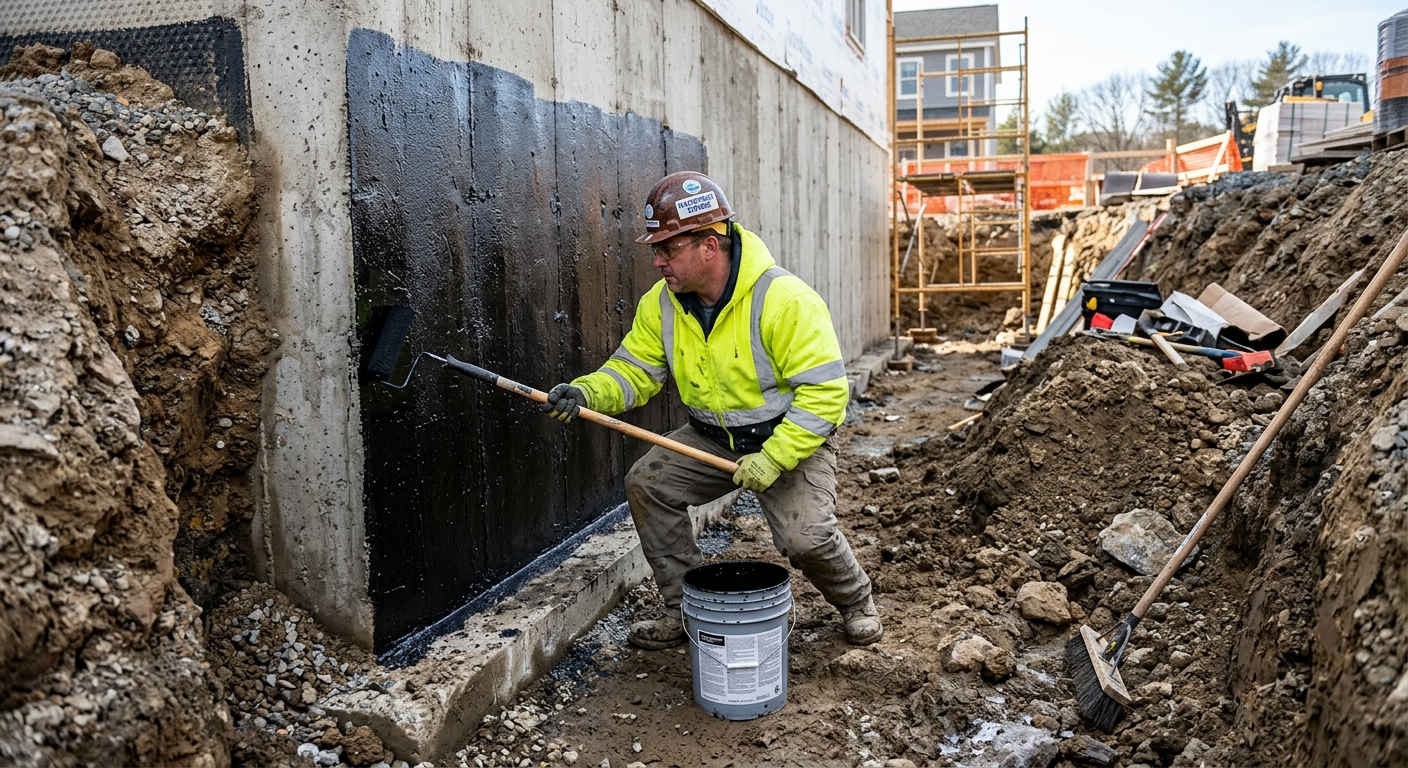
Basement waterproofing options and costs in Horseshoe Bay
In Horseshoe Bay, basement waterproofing decisions start with the question: where is the water entering—around the foundation perimeter, through cracks, or via surface runoff that overwhelms local drainage? With a population of 1,935 people (Statistics Canada, 2021 Census), Horseshoe Bay has a smaller pool of trades than larger Lower Mainland centres, but the demand for exterior work is steady because many homes sit close to the shoreline and back onto slopes where drainage details matter. Older housing is especially prone to moisture issues: original tar-and-paper style membranes and decades-old weeping tile systems can fail quietly, long before homeowners notice pooling or musty odours.
In the Lower Mainland–Southwest, soil conditions and high, persistent groundwater are the primary cost drivers. Even when you have a newer home, coastal BC rainfall can saturate backfill quickly and maintain hydrostatic pressure against basement walls and slabs, which increases seepage and leak risk. Add frequent freeze-thaw cycles and you often see cracked joints and widened cracks that let water travel deeper into the foundation system. Labour rates and access constraints in tight lots also push pricing higher—especially when contractors must break and remove portions of driveways, decks, or landscaping in areas like Marine Drive and the flatter zones near the waterfront where excavation space is limited.
The table below compares typical approaches and the cost bands you should expect before choosing which option best fits your foundation type and moisture symptoms.
| Method |
What It Addresses |
Disruption Level |
Durability |
Price Range |
| Exterior excavation + new membrane + drainage tile |
Bulk water and hydrostatic pressure at the source (perimeter) |
High (excavation, landscaping removal, backfill) |
Long-term (often the most complete solution) |
$15,000–$30,000 |
| Interior perimeter drain channel + sump pit |
Water that gets past the wall by collecting it indoors |
Medium (floor/edge cutting near perimeter) |
Very good when paired with a reliable sump system |
$8,000–$18,000 |
| Foundation crack injection (epoxy or polyurethane) |
Cracks that are allowing seepage (active leaks vs sealed cracks) |
Low to Medium (surface prep, drilling, patching) |
Good to excellent when crack type is correctly matched to product |
$500–$2,000 |
| Sump pump installation (primary + battery backup) |
Relieves groundwater by managing collected water |
Low to Medium (pit excavation, discharge routing) |
High reliability with backup power strategy |
$1,000–$5,000 |
| Window well drain installation |
Water entry at egress wells and bulk seepage near openings |
Low to Medium (well excavation and modifications) |
Good (best when discharge is routed correctly) |
$1,500–$4,500 |
| Lot re-grading / downspout extension |
Surface water that pushes toward the foundation |
Low to Medium (soil/landscape adjustments) |
Good when maintained and paired with drainage |
$1,800–$6,000 |
Prices are estimates only and vary by project scope, site access and material selection.
What affects the price of waterproofing in Horseshoe Bay
In Horseshoe Bay and across the Lower Mainland–Southwest, you can see the same basement waterproofing project quoted 30–50% apart, even when the problem “looks similar” on day one. The gap usually comes from site conditions (especially the water side of the equation), how complete the scope is, and whether the plan addresses hydrostatic pressure at the perimeter or simply manages water after it enters. Nationally, some regions deal with clay-related swelling pressure, but in coastal BC the dominant issue is persistent saturation: high groundwater tables and prolonged rainfall keep pressure against foundation assemblies for weeks, not days.
Three drivers separate regional costs from the broader Canadian average: soil type, water table, and freeze-thaw. In much of the Lower Mainland–Southwest, the cost rises because high water table levels increase sump capacity requirements and drainage routing complexity. Heavy coastal rainfall saturates backfill quickly when original perimeter drainage fails, which can turn a small seep into recurring basement dampness. Freeze-thaw still matters: it widens existing cracks and joint defects, meaning contractors may need to include crack repair plus drainage improvements rather than membrane alone.
Concrete examples in Horseshoe Bay include: (1) a home with an older, corroded perimeter drainage system often needs interior drainage plus a properly sized sump—pushing projects toward the $8,000–$18,000 band for interior work; (2) a poured-concrete wall with a structural horizontal crack may require crack repair as part of a broader plan, and if leaks are pressure-driven, the scope can escalate toward the $15,000–$30,000 exterior range; (3) tight waterfront lots can make exterior excavation costlier because access constraints may require mechanical breaking, staged removal, and careful restoration.
| Price Factor |
Why It Matters |
Cost Impact |
| Interior vs. exterior approach — interior is less disruptive but addresses symptoms |
Exterior reduces the source of water entry; interior manages collected water |
Interior often saves money upfront; exterior typically costs more but can be more definitive |
| Foundation type — poured concrete vs. block vs. stone vs. ICF |
Different walls crack/seep differently and accept repairs differently |
Block and older stone commonly increase prep and drainage scope |
| Soil type — clay expands more than sand, adding pressure |
Expansive soils can worsen pressure and crack movement over time |
More movement can require additional crack treatment and reinforcement |
| Crack type and length — hairline vs. structural horizontal cracks |
Active structural cracks may indicate movement and require engineered assessment |
Structural issues typically raise labour and testing/engineering costs |
| Sump pump backup system — battery or water-powered backup needed |
BC power outages during storm events can leave basements exposed |
Backup increases equipment and install cost but reduces failure risk |
| Access — landscaping, decks, or driveways must be removed for exterior |
Excavation near finishing features increases labour and restoration |
Complicates excavation and can widen the cost range significantly |
| Weeping tile age — original tile (60+ years) may be completely failed |
Failed tile can cause constant saturation and recurring seepage |
Often triggers full perimeter replacement or interior add-ons |
| Mould or efflorescence remediation required before sealing |
Active salts and organic growth must be treated to ensure adhesion and performance |
Adds moisture remediation steps and materials before waterproofing |
Permits & regulations in British Columbia
In British Columbia, foundation excavation, structural crack repair, and changes to lot drainage typically require a building permit. If a sump pump discharge connects into municipal storm or sanitary systems (or involves work that affects those connections), municipal approval is often required. For structural crack repair—especially horizontal cracks in block walls or major step cracks that suggest movement—an engineer’s assessment is commonly required to confirm whether underpinning, reinforcement, or other structural work is needed.
Before signing a contract in Horseshoe Bay, ask whether your project requires a permit and who will pull it. In practice, often permitted work includes: excavation for perimeter drain/membrane systems, modifications to drainage patterns affecting run-off, and any scope touching structural integrity. Work that typically does NOT require a permit is limited to minor interior drying and non-structural sealing, and small sump replacements where no connection or plumbing modification is involved—however, you should confirm the exact scope in writing.
Step-by-step homeowner checks in BC:
- Verify the contractor’s registration/licence number on the provincial trade-related registry page (and confirm it matches the legal company name on the quote).
- Request a certificate of liability insurance; confirm coverage amount is current and relevant to waterproofing/excavation work.
- Ask for proof of WSIB/WCB coverage (or the applicable coverage documentation) and check that dates are active.
- If structural repairs are proposed, ask whether engineering support is included (and whether they will coordinate the engineer if required).
- When permits are required, request the permit plan details or confirmation that the contractor will submit the permit application.
- Keep a copy of everything—quote, scope, permit responsibilities, and insurance documents—before any deposits are paid.
Interior vs exterior waterproofing — what does Horseshoe Bay need?
In Horseshoe Bay, the fundamental difference is this: exterior waterproofing (full excavation, new membrane, new drainage tile, and backfill) addresses water entry at the source. It’s the most permanent way to reduce hydrostatic pressure against foundation walls, but it is also the most disruptive and expensive. Interior waterproofing (perimeter drain channel, sump pit, sump pump) manages water after it enters. It’s less invasive, but it does not eliminate the wall’s exposure to ongoing groundwater pressure.
Lower Mainland–Southwest conditions make the source-vs-symptom distinction especially important. Coastal BC rainfall and high groundwater tables keep pressure on the foundation for long stretches, so if your exterior drainage/weep system is failing, interior solutions can still work well—just expect higher ongoing demand on your sump pump system and the need for battery backup for resilience during storm-related power interruptions. When foundation walls are poured concrete, crack injection often performs well as a complementary treatment because the substrate can accept sealants and patches cleanly. For block foundations, seepage commonly travels through mortar joints and irregular voids; interior drainage is often the practical complement because it captures water that finds its way through those pathways.
Here’s where cost differences make sense. If you’re seeing repeated floor-level seepage after heavy rain and you already have confirmed failed exterior drainage, the exterior range of $15,000–$30,000 can be justified because it can reduce or eliminate recurring sump cycling and indoor moisture. If your moisture pattern is more local—like one corner of the basement floor with a clear water path—interior perimeter drainage at $8,000–$18,000 can be the more sensible first step, provided the sump is correctly sized and the discharge is properly routed.
| Method |
Best For |
Addresses Source? |
Disruption |
Lifespan |
Price Band |
| Full exterior excavation + membrane |
Recurring seepage, high water table pressure, failed perimeter drainage |
Yes |
High |
Long-term |
$15,000–$30,000 |
| Interior French drain + sump system |
Basements with persistent dampness where exterior access is limited |
No (manages after entry) |
Medium |
Very good with quality sump and discharge |
$8,000–$18,000 |
| Crack injection — epoxy (structural) |
Non-moving cracks or cracks that need sealing after preparation |
Partial (seals the pathway) |
Low to Medium |
Good when crack movement is not ongoing |
$700–$2,000 |
| Crack injection — polyurethane (active leak) |
Active seepage and water-driven leaks |
Partial (seals active pathways) |
Low to Medium |
Good to excellent when matched to active conditions |
$500–$2,500 |
| Interior drain channel only (no sump) |
Very light seepage where water can be safely managed without pumping |
No |
Medium |
Limited if groundwater is high |
$4,500–$10,000 |
| Re-grading + downspout extensions |
Surface runoff causing foundation wetting after storms |
Helps reduce entry (surface) |
Low to Medium |
Good when maintained and paired with drainage |
$1,800–$6,000 |
How to choose a waterproofing contractor in Horseshoe Bay
Choosing the right waterproofing contractor in Horseshoe Bay starts with documentation and a scope you can read without guessing. In British Columbia, confirm they have the appropriate licence/registration for the work they’re proposing, and ask for a current certificate of liability insurance (the date should be active and consistent with the legal business name). Next, request proof of WSIB/WCB coverage—this protects you as the homeowner if a worker is injured during excavation or interior demolition. If the quote includes structural crack repair, ask how engineering support is handled and whether they will provide an engineer’s assessment when required.
Then get 2–3 itemised written quotes that break out labour and materials (membrane/drain material, sump pump model, pipe/discharge fittings, disposal, restoration). A realistic quote clearly states what’s included and what’s excluded. For example: Is the permit pull included or added as a separate cost? Is debris disposal included? Are pump discharge lines included and routed to an approved outlet? Clarify warranty terms: the workmanship warranty length, the product/manufacturer warranty, and whether the warranty is transferable to future owners.
On payment scheduling, never pay more than about 10–15% upfront. Use progress payments tied to milestones and hold back a portion until completion and site cleanup are verified. Finally, request a written start date, estimated duration, and access/starting conditions (when landscaping removal and protection will occur).
- Ask for a site assessment walkthrough and a moisture/water-entry hypothesis, not just a standard proposal.
- Confirm which foundation types and crack conditions their approach is designed for (poured concrete vs block).
- Get quotes that list exact products: membrane type, drain board, sump pump model, and check valves.
- Require a disposal/restoration plan (soil, waste removal, and how landscaping will be reinstated).
- Ask if they include insulation and finish floor recovery where needed.
- Confirm sump pump backup strategy (battery or water-powered backup) when you have frequent outages.
- Check whether they include measuring and testing discharge routing and pump sizing assumptions.
- Verify licence/registration details on the contractor’s invoice and quote matches the certified entity.
- Review insurance and WSIB/WCB clearance documents before any deposit.
- Clarify warranty: workmanship duration, what voids it, and whether future transfer is allowed.
- Make sure the quote states permit responsibility and who will coordinate with municipal requirements.
- Avoid “cash discount” pressure—use written contracts and milestone-based payments.
Concrete red flags in Horseshoe Bay include: refusing to provide itemised labour/material breakdown; promising a “one-size-fits-all” membrane solution without addressing drainage tile and discharge; giving only a verbal warranty length; minimizing structural crack evaluation when cracks are horizontal or growing; and requesting a large upfront payment with no milestone schedule.
Frequently asked questions — waterproofing in Horseshoe Bay
What is a weeping tile and does my Horseshoe Bay home have one?
A weeping tile (often called perimeter drainage tile) is a buried drain line around the foundation that collects groundwater and directs it—typically to a sump pit or an approved discharge point. Many Horseshoe Bay homes built decades ago had some form of perimeter drain, but original systems can fail from corrosion, collapse, or clogging, especially after 60+ years of service. You may be able to confirm it indirectly: look for a sump pit or an interior perimeter drain line, check any maintenance records from earlier owners, or ask the contractor to inspect accessible cleanouts. A true verification usually involves inspection during excavation or an interior probing approach with a clear drainage path assessment. If you’re seeing recurring dampness after heavy rains, the absence of functioning weeping tile often means interior drainage and pump capacity (commonly in the $8,000–$18,000 band) become necessary even when walls are otherwise sound.
Can I waterproof my basement in winter in Horseshoe Bay?
Yes, you can often waterproof a basement in winter in Horseshoe Bay, especially for interior work like perimeter drain channels, sump pit installation, and crack injection. The main limitation is exterior excavation: frozen or waterlogged ground can increase excavation time, complicate backfill placement, and sometimes delay membrane/drain tile installation until conditions are safer. Interior work usually proceeds with less weather dependence, which is why many homeowners schedule interior drainage to stabilize moisture during the rainy season. That said, if your plan includes full exterior waterproofing in the $15,000–$30,000 range, contractors may prefer milder periods to ensure proper drainage board placement, membrane adhesion, and backfill compaction. A good contractor will also confirm whether the basement walls can be prepped properly (dryness, efflorescence removal) before any sealing phase.
What is the difference between waterproofing and damp-proofing?
Waterproofing is designed to prevent or manage water under conditions of hydrostatic pressure—meaning water can actively push against basement walls and slabs during sustained rain or high groundwater. Damp-proofing typically targets minor moisture control and isn’t intended for repeated seepage under pressure. In Horseshoe Bay and the Lower Mainland–Southwest, persistent saturation and higher groundwater tables make many basements behave more like they’re facing true water pressure, not just damp air. That’s why a successful plan often includes drainage (weeping tile or interior French drain), a sump strategy, and sealing only where it’s appropriate to the crack type. If you’re only treating dampness without addressing drainage and discharge, the problem can return after heavy coastal storms. Contractors may describe products using different terms, so ask them specifically what the system does during peak wet conditions, and whether it’s built to handle ongoing inflow.
Will basement waterproofing affect my property value in Horseshoe Bay?
Often, yes—especially when the work is properly scoped and documented. In Horseshoe Bay, buyers pay close attention to evidence of recurring leaks, musty odours, efflorescence, or sump pump cycling after storms. A reputable waterproofing project with a workmanship warranty, manufacturer warranty details, and photos can reduce perceived risk and support resale confidence. That said, value impact depends on how complete the solution is. Exterior waterproofing that addresses failed perimeter drainage (commonly $15,000–$30,000) is typically viewed as a more source-focused fix. Interior drainage (commonly $8,000–$18,000) can also be highly valuable when exterior excavation isn’t feasible, but it should include a reliable sump pump and appropriate backup so the home remains dry during power interruptions. The best approach for value is transparency: ask for a clear scope, proof of correct discharge, and confirmation that permits/requirements were followed when applicable.
What drainage issues are most common in Horseshoe Bay homes?
The most common issues in Horseshoe Bay usually relate to perimeter drainage performance and how the lot handles surface water. In the Lower Mainland–Southwest, frequent prolonged rainfall can keep backfill saturated, which maintains hydrostatic pressure and makes seepage more likely when perimeter systems are undersized, clogged, or failed. Many older homes have ageing weeping tile (sometimes effectively “dead” after decades), corroded components, or drainage pathways that don’t discharge correctly. You’ll also commonly see problems at window wells, where concentrated runoff and groundwater can enter near openings—requiring well drainage modifications in the $1,500–$4,500 range depending on access and routing. Finally, downspouts or grading that directs roof water toward foundation edges can worsen wet corners. A good contractor will trace water paths and connect them to the most likely entry points before recommending exterior or interior remediation.
How do I choose a waterproofing contractor in Horseshoe Bay?
Start with proof and process. In British Columbia, verify the contractor’s licensing/registration for the work they’re proposing, request a current certificate of liability insurance, and confirm WSIB/WCB coverage before any deposit. Then, compare itemised written quotes: labour plus materials, specific pump models, how discharge is routed, and whether disposal and restoration are included. Avoid “lump-sum only” proposals that don’t explain exclusions like permit pull responsibility, engineering needs for structural cracks, or pre-treatment for mould/efflorescence. Ask about warranty length for workmanship and product coverage—and whether warranties are transferable. For price context, if a contractor says exterior excavation is needed but quotes near the lower end of $15,000–$30,000, ask what restoration and drainage components are included. In Horseshoe Bay, tight access can change the excavation plan quickly, so clarity and a realistic timeline in writing matter as much as the final number.