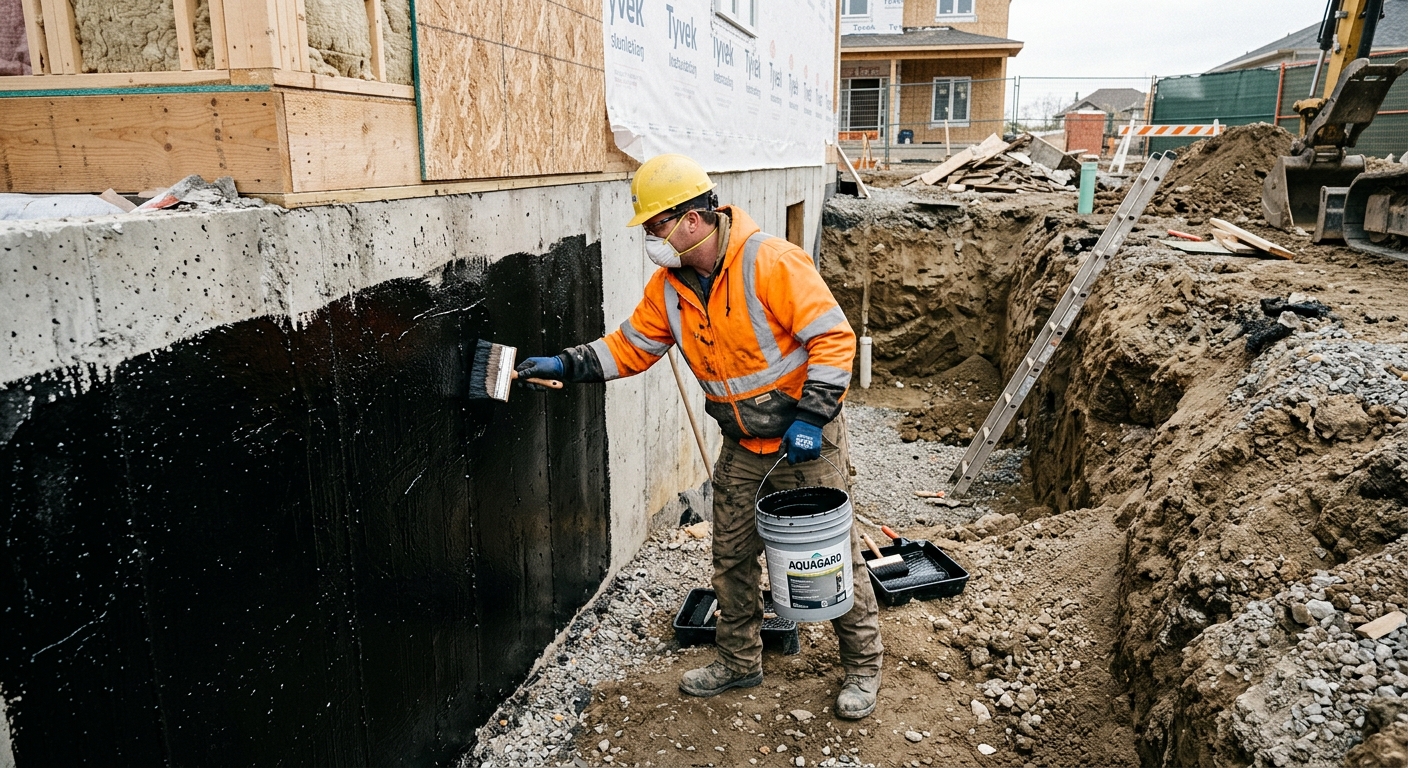
Basement waterproofing options and costs in Mount Pleasant
Mount Pleasant homeowners typically face one question first: “Which waterproofing approach is actually going to stop the water?” Options fall into two broad categories—exterior systems that address the source by keeping groundwater out, and interior systems that manage water after it enters. In Mount Pleasant (population 33,000, Statistics Canada, 2021 Census), many basements were built before today’s modern membranes and drainage standards, so older homes are more likely to have aging weeping tile and sealing details that no longer perform during Lower Mainland–Southwest wet seasons. In the Lower Mainland–Southwest, high groundwater and persistent rainfall maintain hydrostatic pressure against foundation walls and slabs, and that drives higher seepage and leak risk even in newer builds.
Pricing is shaped by ongoing saturation, frequent freeze-thaw that widens existing cracks, and the fact that access on tight urban lots often means contractors must mechanically break through rocky sections during excavation. Demand is especially strong around older neighbourhood pockets near retail corridors and established residential blocks where perimeter drains and backfill drainage have been stressed for decades and replacement requires careful excavation and re-grading.
To help you compare like-for-like scopes, the table below outlines common methods, what they address, disruption, and realistic price ranges for Mount Pleasant projects. Use it as a baseline while you request itemised quotes.
| Method |
What It Addresses |
Disruption Level |
Durability |
Price Range |
| Exterior excavation + new membrane + drainage tile |
Groundwater entry through perimeter walls and slab edges; restores drainage path to weeping tile/sump |
High (excavation, backfill, landscaping restoration) |
Long-term (often 20+ years with correct installation) |
$15,000–$30,000 |
| Interior perimeter drain channel + sump pit |
Water after it enters; intercepts seepage from floor/wall intersection |
Medium (interior chipping, drain channel cut) |
Good (typically 15+ years with proper pump and piping) |
$8,000–$18,000 |
| Foundation crack injection (epoxy or polyurethane) |
Crack leakage paths; epoxy for stable structural cracks, polyurethane for active weeping |
Low to Medium (surface prep; minor interior work) |
Variable by crack type (often 10–20 years) |
$500–$2,000 |
| Sump pump installation (primary + battery backup) |
Protects against flooding during high-water events; reduces shutoff risk during power outages |
Low to Medium (pit excavation and discharge line work) |
High if maintained (pump life commonly 8–12 years) |
$1,000–$5,000 |
| Window well drain installation |
Rainwater ingress at egress/window wells; directs water away from window openings |
Low to Medium (localized exterior/interior adjustments) |
Good (often 10–15 years depending on drain condition) |
$1,200–$4,500 |
| Lot re-grading / downspout extension |
Surface water management; reduces runoff saturating backfill |
Low (yard work and downspout reroute) |
Moderate (needs periodic maintenance/settlement checks) |
$2,000–$8,000 |
Prices are estimates only and vary by project scope, site access and material selection.
What affects the price of waterproofing in Mount Pleasant
In Mount Pleasant and across the Lower Mainland–Southwest, the same “basement leak” can produce quotes that differ by 30–50%—even when homeowners think they requested the same solution. The gap comes from how contractors interpret the source of water (groundwater pressure versus surface water versus interior condensation), the condition of existing drainage, and what they include in the scope. It also comes from the job realities: labour rates, disposal and mechanical breaking when excavation hits rock, and how much restoration is required on tight lots.
Three drivers separate regional Lower Mainland–Southwest pricing from the national average: soil conditions, water table behaviour, and freeze-thaw. Coastal BC’s frequent, prolonged rainfall saturates backfill quickly when drainage fails, which increases hydrostatic pressure and sump run times. Freeze-thaw cycles then widen existing cracks and joints, so repairs that would “hold” in drier climates may need a more complete approach here. Soil type matters too: while clay-heavy soils elsewhere can expand more dramatically, Lower Mainland saturation still keeps foundations under load, especially where existing perimeter drains are undersized or failed.
Two practical examples you’ll see locally: first, a poured concrete wall with hairline vertical cracks often responds well to targeted crack repair and an interior drainage plan—reducing cost near the $8,000–$18,000 interior range. Second, a block foundation with evidence of long-standing weeping tile failure and ongoing seepage typically pushes homeowners toward comprehensive exterior work in the $15,000–$30,000 band, particularly when excavation can’t be avoided. In Mount Pleasant, homes in older established areas with original drainage details frequently need both interior retrofits and exterior drainage improvements to bring the system back into balance.
| Price Factor |
Why It Matters |
Cost Impact |
| Interior vs. exterior approach — interior is less disruptive but addresses symptoms |
Interior systems manage water after entry; exterior restores the drainage path at the source |
Interior can be 30–60% less than full excavation depending on access |
| Foundation type — poured concrete vs. block vs. stone vs. ICF |
Crack behaviour and sealing method differ; porous block often needs more drainage support |
Block/stone frequently increases labour and interior drainage scope |
| Soil type — clay expands more than sand, adding pressure |
Expansive soils can worsen crack openings over time; saturation keeps pressure persistent |
More advanced sealing and drainage detailing may be required |
| Crack type and length — hairline vs. structural horizontal cracks |
Structural or horizontal movement may require engineer input and extra work |
Can move a project from a repair band to a full retrofit band |
| Sump pump backup system — battery or water-powered backup needed |
Reduces risk during outages during spring runoff and high-water events |
Adds cost but prevents major damage and cleanup |
| Access — landscaping, decks, or driveways must be removed for exterior |
Disposal, restoration and mechanical breaking add time |
Often the biggest single driver of variability between quotes |
| Weeping tile age — original tile (60+ years) may be completely failed |
Failed perimeter drainage increases hydrostatic pressure against walls |
May require replacement of drainage path or combined interior/exterior fixes |
| Mould or efflorescence remediation required before sealing |
Sealers often fail over contaminated or unsound surfaces; moisture must be managed first |
Additional prep and remediation can add several thousand dollars |
Permits & regulations in British Columbia
In British Columbia, foundation-related work often triggers permitting requirements, especially when you’re changing drainage patterns, repairing structural issues, or altering how water moves around the lot. Typically, foundation excavation, structural crack repair, and changes to lot drainage commonly require a building permit. Sump pump installations that discharge to storm or sanitary sewer systems usually need municipal approval and may require coordination with the local permitting authority.
If your foundation has structural concerns—such as horizontal cracks in block walls, significant step cracking, or signs of movement—an assessment by a structural engineer is often required to determine whether underpinning or additional structural work is needed. Before you sign a contract, confirm the contractor has engineering support available for structural repairs, along with appropriate liability insurance and WSIB/WCB coverage. Even where the “waterproofing” scope looks non-structural, the presence of movement changes how the job is designed and approved.
How to verify things step-by-step as a Mount Pleasant homeowner: (1) ask for the contractor’s business licence/registration details and check the relevant online registry for their standing; (2) request a current certificate of insurance (liability) showing your job address or at least the coverage dates; (3) ask for WSIB/WCB clearance letters or account verification; (4) for structural scope, request proof of engineering sign-off or who they partner with; (5) ensure the permit plan is explicit in the written quote—whether the contractor pulls permits and which trades are included.
Interior vs exterior waterproofing — what does Mount Pleasant need?
For most Mount Pleasant basements, the decision between interior and exterior waterproofing comes down to one question: are you stopping the water at the source, or managing it after it enters? Exterior waterproofing—full excavation, new membrane, new drainage tile, and backfill—addresses the source of water entry by intercepting groundwater before it reaches foundation surfaces. It’s the most comprehensive solution, but it’s also the most disruptive and expensive because excavation and restoration are unavoidable.
Interior waterproofing—perimeter drain channel, sump pit, and sump pump—doesn’t stop hydrostatic pressure from pushing on the wall; instead, it captures seepage and keeps the interior dry. In the Lower Mainland–Southwest, where high water tables and prolonged rainfall are common, interiors can be very effective when exterior access is limited or when the foundation condition suggests that targeted interventions will stabilize the system. Poured concrete walls often seal well with properly executed crack injection combined with an interior drainage plan, while block foundations frequently benefit from interior drainage as a practical complement, especially if original perimeter drainage has failed.
Backup power matters here. During wet spring periods, power interruptions can coincide with high runoff. A sump pump with a battery backup helps prevent the “no power, water rises” scenario that leads to expensive cleanup and replacement of finishes.
As a concrete example, if your main issue is a localized seep at the wall/floor seam, you may be able to stay near the $8,000–$18,000 interior range. But if you have widespread seepage tied to failed exterior drainage, the additional work to reach the $15,000–$30,000 exterior band is justified—because without changing the source conditions, an interior system can end up running constantly.
| Method |
Best For |
Addresses Source? |
Disruption |
Lifespan |
Price Band |
| Full exterior excavation + membrane |
Widespread seepage, persistent hydrostatic pressure, failed perimeter drainage |
Yes |
High |
20+ years (site-dependent) |
$15,000–$30,000 |
| Interior French drain + sump system |
Limited access for exterior work; recurring interior seepage at floor/wall intersections |
No (manages water after entry) |
Medium |
15+ years with maintenance |
$8,000–$18,000 |
| Crack injection — epoxy (structural) |
Stable, non-moving cracks where water path is controlled |
Partially (addresses crack pathway) |
Low to Medium |
10–20 years (depends on crack behaviour) |
$500–$2,000 |
| Crack injection — polyurethane (active leak) |
Active weeping or fluctuating moisture at cracks |
Partially (addresses active leak path) |
Low to Medium |
10–20 years (often improved with drainage + purge) |
$800–$2,500 |
| Interior drain channel only (no sump) |
Very light seepage with reliable gravity drainage conditions |
No |
Low to Medium |
Variable (depends on site and discharge) |
$4,000–$10,000 |
| Re-grading + downspout extensions |
Surface water contributing to saturation; new drainage improvements needed |
No (redirects water off site) |
Low |
5–10 years (often needs monitoring) |
$2,000–$8,000 |
How to choose a waterproofing contractor in Mount Pleasant
Choosing the right waterproofing contractor in Mount Pleasant starts with verifying the basics and then forcing the quote to match the real site conditions. In British Columbia, confirm licensing/registration status through the appropriate online registry and ask for a current certificate of liability insurance showing the coverage dates and limits. Next, verify WSIB/WCB coverage (or clearance where applicable) so you’re not left holding the bag if a worker is injured on your property. For structural crack work, ensure they can show engineering support—either a partnered engineer or an assessment process—because structural movement changes the repair design.
When you get quotes, request 2–3 itemised written proposals instead of lump sums. You want labour and materials broken out (excavation/disposal, membrane and drainage materials, piping, pumps/backup systems, restoration). Read the scope carefully for exclusions: is permit pulling included? Is old tile removal and disposal included? Are crack repairs included as separate line items or treated as “allowances”? Warranty details matter too—ask for workmanship warranty length, the product/manufacturer warranty (and what conditions void it), and whether the warranty transfers to future owners.
Payment should stay controlled: never pay more than 10–15% upfront, and hold back payment until the work is complete and you’ve confirmed performance elements like pump operation and discharge. Finally, ask for the start date and completion timeline in writing. With Lower Mainland–Southwest access constraints and rainy-season scheduling, timelines should be specific, not vague.
- Request proof of liability insurance (certificate with coverage dates) and ensure it matches the job period.
- Verify WSIB/WCB clearance or account status before any excavation starts.
- Confirm who pulls permits and whether permit fees are included in the quote.
- Ask for an itemised scope: excavation, membrane, drainage tile, sump, piping, backfill, and disposal.
- Get a clear list of what is excluded (e.g., rotten framing repair, landscaping replacement, decorative paving).
- Require a site plan explanation: where drains discharge, how discharge avoids re-saturating the lot.
- Ask how existing weeping tile is assessed (camera inspection, test pits, or records).
- Confirm crack injection plan: epoxy vs polyurethane selection and how they verify active vs stable cracks.
- Ensure sump pump specs are listed (primary pump, switch type, discharge size, and backup type).
- Ask for warranty terms in writing: workmanship duration, product warranty, and transferability.
- Confirm the payment schedule: maximum 10–15% upfront; holdback until commissioning and cleanup.
- Require a written start and completion estimate, including cure times for sealants/injections.
Red flags I commonly see in Mount Pleasant include: contractors who don’t ask about drainage history or won’t explain the water source, quotes that lump everything into one price without line items, promises of “guaranteed dry basements” without a backup sump plan, refusing to provide insurance/WSIB/WCB documentation, and missing warranty specifics (especially product vs workmanship coverage).
Frequently asked questions — waterproofing in Mount Pleasant
How do I compare waterproofing quotes?
Start by comparing scope, not just totals. In Mount Pleasant (British Columbia), the same symptom—wet wall or damp floor—can be caused by failed perimeter drainage, surface runoff, or crack pathways under freeze-thaw pressure. Ask each contractor to list what they will do: excavation and membrane plus drainage tile (exterior), or interior perimeter drain channel and sump (interior). Make sure line items are itemised for labour and materials, and confirm whether disposal, permit pulling, and landscaping restoration are included. Also compare system details: whether a sump has primary pump plus backup, what pump size/discharge piping is used, and whether they plan for crack injection (epoxy vs polyurethane). If one quote lands in the $15,000–$30,000 exterior range and another is at $8,000–$18,000, you should be able to point to exactly what differs in the source-addressing plan.
How long does basement waterproofing take in Mount Pleasant?
Timelines vary based on whether you’re doing interior or exterior work, foundation access, and how much excavation/restoration is required. Interior perimeter drains and sump systems often take less time than full exterior excavation because they avoid most landscaping removal and deep backfill work. For exterior waterproofing, the schedule can stretch due to excavation, membrane and drainage installation, backfill compaction, and cure/check periods for products. In the Lower Mainland–Southwest, scheduling also considers rainy-season conditions—teams may sequence prep and membrane work to reduce the time foundations are exposed. Ask your contractor for a written start date, practical completion estimate, and whether your job includes protected weather staging. A contractor who can’t provide a timeline with clear milestones (demo, install, commissioning, restoration) is usually not ready for the real constraints Mount Pleasant homeowners deal with.
What is a weeping tile and does my Mount Pleasant home have one?
A weeping tile (perimeter drain) is the drainage system installed around or near the foundation to collect groundwater and direct it to daylight, a sump, or a discharge point. In many older Mount Pleasant homes, the original weeping tile may be present but failed or undersized due to decades of sediment build-up, cracking, or disconnected runs. You can often infer whether you have it by looking for older sump pits, a history of pump operation, or where the downspouts discharge and how the interior floor behaves during heavy rain. The most reliable method is a site assessment: the contractor can sometimes locate the system with test pits or, in many cases, uses inspection methods before recommending replacement. If your contractor suggests exterior excavation, they should explain whether they’re replacing the weeping tile, tying into it, or redesigning the drainage path because Lower Mainland–Southwest water tables keep hydrostatic pressure high when drainage fails.
Can I waterproof my basement in winter in Mount Pleasant?
Winter waterproofing in Mount Pleasant is possible, but it depends on temperature, ground conditions, and what part of the system you’re installing. Interior work is often more feasible than exterior excavation during colder wet months because excavation exposes backfill and membrane installation can be constrained if surfaces freeze. Still, freeze-thaw cycles are exactly why cracks and joints can worsen and why proactive sealing and drainage design matter. If your foundation wall is already active with seepage, crack injection and interior drain/sump work are commonly done in winter planning windows—because the goal is to manage water intrusion regardless of season. For exterior projects, ask how the contractor will protect open excavations, manage drainage during installation, and handle curing times. A good contractor will also coordinate permits and scheduling so your sump/backup commissioning is done as soon as the system is connected.
What is the difference between waterproofing and damp-proofing?
In homeowner terms, waterproofing is designed to resist or control water entry under wet-season conditions—especially where hydrostatic pressure, seepage through cracks, and saturated soils are present. Damp-proofing is typically intended to reduce moisture penetration under lighter or intermittent moisture conditions, and it may not be sufficient when water pressure is persistent. In Mount Pleasant and the Lower Mainland–Southwest, where prolonged rainfall can maintain hydrostatic pressure, “damp-proofing only” solutions sometimes fail to control the root cause—particularly when original weeping tile systems have deteriorated or discharge points can’t handle runoff. That’s why exterior membrane plus drainage tile or an interior perimeter drain with a properly sized sump (often with backup) is frequently recommended when there’s recurring seepage. A contractor should be able to explain which category your problem falls into after inspecting crack activity, seep points, and drainage performance.
Will basement waterproofing affect my property value in Mount Pleasant?
Often, yes—especially if you can document the cause of moisture and the corrective scope. In Mount Pleasant’s Lower Mainland–Southwest market, buyers typically view active leaks, efflorescence, and chronic dampness as red flags that can lead to remediation costs after purchase. A properly executed waterproofing plan (exterior source control or interior drainage with sump and backup) can reduce ongoing damage risk to finishes, framing, and flooring, which helps protect resale confidence. If you choose a solution with a clear warranty and commissioning documentation, that record tends to be more persuasive than a vague “we improved moisture.” Even when exterior work isn’t necessary, interior solutions in the $8,000–$18,000 band can still be value-positive when they stop recurring seepage and confirm a dependable discharge plan. For widespread source problems, exterior projects in the $15,000–$30,000 range can further strengthen buyer confidence because they address the likely groundwater entry pathway.