Basement waterproofing options and costs in Port Hardy
In Port Hardy, basement waterproofing decisions are usually driven by where the water is moving from—at the foundation perimeter or through cracks in the wall—because the Coastal climate can keep groundwater and backfill areas saturated long after heavy rain. This matters for local homeowners in a housing market where many homes were built before 1981 (71.3%), which increases the chance of failed original waterproofing systems such as aging weeping tile, corroded drains, or older sealants that have lost their flexibility over decades. With 67.4% of households owning their homes (Statistics Canada, 2021 Census), most owners are planning longer-term repairs rather than short “dry-out” fixes.
On Vancouver Island and the Coast, exterior systems often cost more than interior-only approaches because excavation, membrane installation, and rebuilding perimeter drainage are labor-intensive and weather-sensitive. Working near the shoreline and on sloped lots can also mean tighter access, deeper foundations, and more backfill handling. Contractors are especially busy around the downtown Port Hardy area and along waterfront-adjacent streets where older homes sit close to natural drainage patterns and side-yard runoff concentrates during storms. When a foundation already has an existing crack, hydrostatic pressure can turn it into a leak path, so costs rise if crack repair is included with drainage work.
Below are the most common options and realistic price bands for a typical Port Hardy home. Use this table to compare like-for-like scopes before you book assessments.
| Method |
What It Addresses |
Disruption Level |
Durability |
Price Range |
| Exterior excavation + new membrane + drainage tile |
Stops water entry at the perimeter, restores drainage, reduces hydrostatic pressure |
High (excavate around foundation, landscaping impacts) |
Long-term when done with proper backfill & grading |
$7,000–$18,000 |
| Interior perimeter drain channel + sump pit |
Manages water that gets into the basement by collecting and pumping it out |
Medium (limited interior demo, floor/corner access) |
Good; depends on sump performance and drainage effectiveness |
$3,000–$10,000 |
| Foundation crack injection (epoxy or polyurethane) |
Seals cracks; polyurethane can address active leaks |
Low (controlled drilling, mostly localized work) |
High for properly matched crack type and preparation |
$250–$800 |
| Sump pump installation (primary + battery backup) |
Reduces basement flooding risk during storms or power interruptions |
Low to medium (pit, discharge line, electrical tie-in) |
High when paired with backup and correct discharge routing |
$800–$2,500 |
| Window well drain installation |
Prevents rain/surface water from pooling and entering around window wells |
Low to medium (excavation at window wells) |
Good for localized water entry points |
$800–$2,000 |
| Lot re-grading / downspout extension |
Moves roof runoff away from foundation, improves surface drainage direction |
Low (light excavation; may require landscaping touch-up) |
Moderate; best as part of a larger waterproofing plan |
$500–$3,000 |
Prices are estimates only and vary by project scope, site access and material selection.
What affects the price of waterproofing in Port Hardy
In Port Hardy, waterproofing quotes for the “same” basement leak can still differ by about 30%–50% because crews price for water movement, access, and how complete the drainage solution must be. Across Vancouver Island and the Coast and the rest of British Columbia, contractors also face different labour rates, disposal costs, and how often they must manage wet conditions during excavation. A national-average article price might not reflect what happens when backfill stays saturated after coastal rain, or when a foundation sits on clay-heavy pockets that hold water and press outward against the wall.
Three practical drivers separate Port Hardy-area pricing from a broader Canadian average: soil type, water table, and freeze-thaw. Clay-heavy soil can expand and contract during freeze-thaw, which can widen small cracks and increase the chance of recurring seepage. In a higher water-table coastal setting, the basement can stay damp longer after storms, so interior work may need a larger sump system or more extensive perimeter drainage. Heavy rainfall saturates the backfill quickly when original drainage fails, making exterior excavation and membrane work more time-consuming. In older housing stock like Port Hardy’s (71.3% built before 1981), failing weeping tile and seeping poured-concrete or block walls are common triggers.
Concrete examples: if you’re dealing with a poured concrete wall with a hairline crack plus damp corners, crack injection plus an interior perimeter drain might stay within the $3,000–$10,000 band. If you find a failed perimeter drain on two sides and need full excavation, membrane, and new drainage tile, it often lands within the $7,000–$18,000 band. If only downspouts are dumping toward the foundation on one side, re-grading and extensions can sometimes be a lower-cost first step, but it usually won’t replace drainage if hydrostatic pressure is already building.
| Price Factor |
Why It Matters |
Cost Impact |
| Interior vs. exterior approach — interior is less disruptive but addresses symptoms |
Exterior targets the source (water at the wall); interior manages water after entry |
Interior typically costs less but may require sump operation; exterior adds excavation and membrane costs |
| Foundation type — poured concrete vs. block vs. stone vs. ICF |
Crack behaviour and sealing methods differ by wall system |
Poured concrete crack work can be efficient; block often needs more drainage/detailing |
| Soil type — clay expands more than sand, adding pressure |
Clay holds moisture and can increase lateral pressure during freeze-thaw cycles |
More complex sealing and drainage often required; increases labour and materials |
| Crack type and length — hairline vs. structural horizontal cracks |
Active leaks and horizontal movement can require different products or engineering review |
Structural conditions raise scope and may add engineering/repair costs |
| Sump pump backup system — battery or water-powered backup needed |
Reduces flooding risk during outages during storm events |
Backup increases equipment cost; protects your finish and reduces repeat call-backs |
| Access — landscaping, decks, or driveways must be removed for exterior |
Excavation footprint and restoration effort drive labour time |
More removal/rebuild can add significant cost to exterior projects |
| Weeping tile age — original tile (60+ years) may be completely failed |
Old drains can collapse or clog, causing persistent seepage |
If tile must be replaced, exterior scopes often expand to the full perimeter |
| Mould or efflorescence remediation required before sealing |
Sealers and membranes won’t perform well over active salts/mould |
Includes cleaning, assessment, and potential drying time before waterproofing |
Permits & regulations in British Columbia
In British Columbia, foundation excavation and work that changes how water is managed around the foundation may require a building permit, especially when it involves structural crack repair or alterations to lot drainage systems. Structural crack repairs—particularly horizontal cracks in block walls or major step cracks that suggest movement—often require an engineering assessment first to determine whether underpinning or other structural work is needed. If you’re installing a sump pump and routing the discharge into municipal storm or sanitary systems, municipal approval is typically required. Always ask your contractor what permits they pull and what they leave to the homeowner, and don’t assume “no permit needed” because the job is “just waterproofing.”
Here’s a practical step-by-step way a Port Hardy homeowner can verify a contractor’s credentials in BC before work starts: (1) Request their business information and confirm licensing details through the provincial online registry applicable to the trade they perform; (2) Ask for a current certificate of insurance showing liability coverage and ensure the coverage dates are active; (3) Confirm WSIB/WCB coverage (as applicable) so you’re not exposed if a worker is injured; (4) For structural crack work, ask whether they have engineering support available and who signs off on the repair plan; (5) Look for a written scope that states what permits are included and what documentation will be provided.
Interior vs exterior waterproofing — what does Port Hardy need?
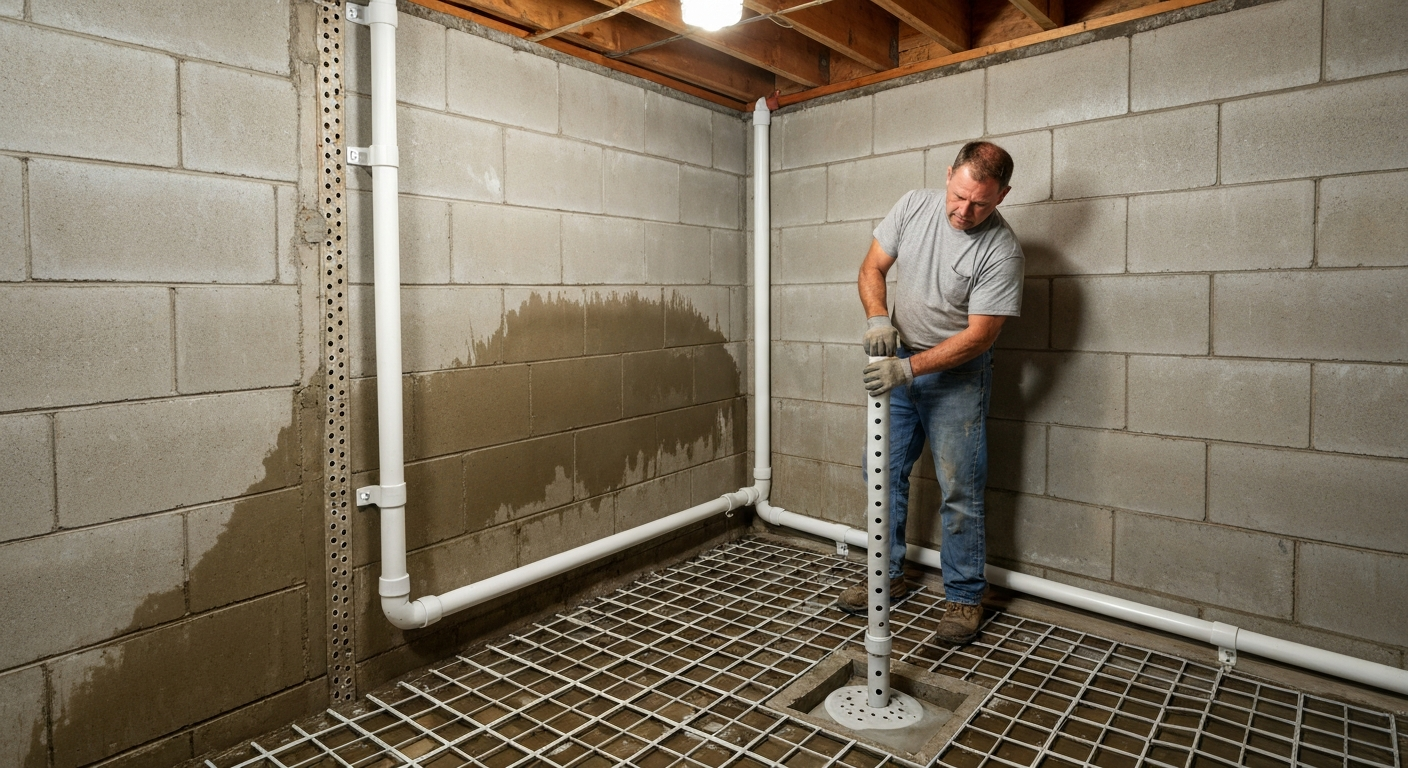
The fundamental difference is that exterior waterproofing (full excavation, new membrane, new drainage tile, and backfill) addresses the source of water entry by cutting off hydrostatic pressure before it reaches your basement wall. It’s more disruptive and costly, but when it’s feasible, it’s the most direct long-term solution. Interior waterproofing (perimeter drain channel, sump pit, and sump pump) is less invasive and often faster to schedule; however, it doesn’t stop water from pressurizing the wall—it collects water after it enters and keeps it from pooling.
In Port Hardy’s coastal climate, exterior drainage tends to be the best answer when you have obvious surface runoff issues, failed perimeter drains/weeping tile, or widespread dampness along several foundation sides. That said, accessibility can limit full excavation. For homeowners with poured concrete walls, crack injection typically performs well when the crack is properly assessed and the product matches the crack type; interior drainage then acts as a safety net. For block foundations, interior drainage is often the practical complement because block interfaces and joints can allow more migration when water pressure persists.
Sump pump backup matters here. British Columbia’s storm patterns can bring extended power interruptions during heavy weather, and a primary pump alone may not be enough if rainfall remains high. Upgrading to a battery or water-powered backup is often a cost-effective way to reduce the chance of repeated cleanup.
Example: if one corner leaks after storms and inspection shows localized entry, a combined interior perimeter drain plus sump might land in the $3,000–$10,000 range. If the same home actually has failed perimeter drainage on two sides and exterior grading is pushing water back toward the foundation, the justified move may be exterior excavation within the $7,000–$18,000 band—because you’re fixing the water pathway, not just managing the fallout.
| Method |
Best For |
Addresses Source? |
Disruption |
Lifespan |
Price Band |
| Full exterior excavation + membrane |
Widespread seepage, failed perimeter drainage, recurring dampness along multiple sides |
Yes (targets the perimeter water entry) |
High |
Long-term with correct backfill & grading |
$7,000–$18,000 |
| Interior French drain + sump system |
Homes needing less disruption; confirmed water entry already occurring |
No (manages water after entry) |
Medium |
Long if sump + discharge are correctly designed |
$3,000–$10,000 |
| Crack injection — epoxy (structural) |
Cracks that are stable where the issue is sealing through static openings |
Yes (seals the crack pathway) |
Low |
High for stable, properly prepared cracks |
$250–$800 |
| Crack injection — polyurethane (active leak) |
Cracks with active seepage or where the crack continues to “move” with water pressure |
Yes (seals active pathways) |
Low |
High when product matches leak behaviour |
$250–$1,200 |
| Interior drain channel only (no sump) |
Light seepage, short-term dampness risk, where gravity drainage is reliable |
No |
Medium to low |
Moderate; depends on conditions and no-power events |
$2,000–$6,500 |
| Re-grading + downspout extensions |
Surface runoff problems, minor dampness near the exterior wall lines |
Partially (reduces water reaching the wall) |
Low |
Moderate; best as an add-on or early step |
$500–$3,000 |
How to choose a waterproofing contractor in Port Hardy
Start by verifying that your contractor is legitimate for the work they’re proposing in British Columbia. Ask for their licensing details (for the trade that performs the foundation/drainage/waterproofing scope), a current certificate of liability insurance, and confirmation of WSIB/WCB coverage (as applicable). You should be able to see the certificate dates and coverage limits—if they won’t provide them, that’s a red flag. For jobs involving structural crack repairs, also confirm they have engineering support available and explain who provides the design review and written recommendations.
Next, get 2–3 itemised written quotes instead of lump sums. A proper quote should break out labour and materials (membrane products, drain tile/pipe, pump and backup, disposal, restoration, and any crack injection product). Read the exclusions carefully: ask whether permit pull is included, whether excavation spoil disposal is included, how they’ll protect your landscaping/driveway, and what happens if they uncover additional failed perimeter drainage beyond what was visible during the initial inspection.
Warranty matters. Require a workmanship warranty (how long, what it covers, and how claims are handled), plus the manufacturer/product warranty details. Ask whether the warranty is transferable if you sell your home. On payment schedule, don’t pay more than about 10%–15% upfront; hold back a portion until key milestones are complete.
Finally, insist on a written start date and completion estimate. Waterproofing schedules slip when backfill needs proper curing/drying, so timeline clarity protects you from “start and stop” work during wet coastal conditions.
- Request their liability insurance certificate with coverage dates
- Confirm WSIB/WCB clearance for workers
- Ask who pulls permits and whether they’re included in the quote
- Get 2–3 itemised quotes with labour and material line items
- Ensure discharge routing for sump pumps is clearly described
- Confirm whether sump backup (battery or water-powered) is offered and priced separately
- Ask what happens if mould or heavy efflorescence is found before sealing
- Require a written warranty for workmanship and the product/manufacturer
- Check warranty claim process and whether it’s transferable
- Agree to a payment schedule with limited upfront deposit (10–15%)
- Insist on an estimated start date and completion timeframe in writing
- Verify they’ll match crack repair product to crack behaviour (stable vs active leak)
In Port Hardy, common red flags include: vague scopes that don’t address where water is coming from, offering “sealant only” over active perimeter seepage, avoiding discussion of permits/discharge routing, no clear warranty terms, and quotes that treat excavation and disposal as “allowances” without amounts.
Frequently asked questions — waterproofing in Port Hardy
Can I waterproof my basement from the inside only?
Yes, you can often waterproof from the inside only in Port Hardy, especially when the goal is to control water that already enters the basement after rain. Interior perimeter drainage (a drain channel) plus a sump system can handle seepage and reduce flooding risk. It’s typically less disruptive than exterior work, and for many homeowners it fits the $3,000–$10,000 range depending on length of drainage, pump selection, and discharge routing. That said, interior solutions don’t stop hydrostatic pressure at the wall itself, so if your perimeter drain/weeping tile has fully failed or surface runoff is pushing water toward the foundation, an interior-only approach may lead to recurring dampness. Expect a better long-term result when interior work is paired with fixing grading/downspouts and properly matching crack repairs.
What causes foundation cracks in Port Hardy?
In British Columbia coastal conditions, foundation cracks commonly come from a combination of moisture movement, soil pressure, and freeze-thaw cycles. Clay-heavy soils hold water and can exert lateral pressure on foundation walls as they expand and contract; even small temperature shifts can widen hairline cracks over time. Heavy coastal rainfall can saturate backfill quickly when drainage fails, increasing hydrostatic pressure against the wall. Older homes built before 1981 are also more likely to have original drainage systems that no longer perform, which increases the likelihood of repeated wetting. Finally, settlement differences (even subtle) can create step cracks in block walls. If you see horizontal cracks in block or widening movement, it’s wise to get an engineering assessment—don’t just inject and hope the movement stops.
How do I compare waterproofing quotes?
To compare quotes in Port Hardy, insist on itemised, written scopes with the same performance targets. Compare whether each quote addresses the source (perimeter drainage/exterior membrane) or manages symptoms (interior drain/sump). Look at the details: pipe sizes and run length, where discharge goes, whether sediment/mould remediation is included, and whether crack repair uses the correct product type (epoxy for stable cracks vs polyurethane for active leaks). Also check if the exterior quote includes excavation, membrane installation, replacement drainage tile, disposal, and landscape restoration—or if parts are listed as allowances. A contractor may quote interior work that lands in the $3,000–$10,000 band, but if the exterior perimeter drainage failure is extensive, it can underperform. Conversely, exterior work in the $7,000–$18,000 range can be justified when multiple sides are affected and drainage is truly restored.
How long does basement waterproofing take in Port Hardy?
Timing depends on whether you’re doing exterior excavation or interior drainage, plus weather conditions. On Vancouver Island and the Coast, excavation can slow during continuous rain because crews need manageable conditions for membrane work and backfill. For interior-only perimeter drainage and a sump, many typical projects can often be completed in about several days to one or two weeks, assuming materials are on hand and there’s clear access. Exterior work—excavation, membrane, drainage tile replacement, and backfill—more commonly takes longer because it involves multiple stages and restoration. If the basement has significant mould/efflorescence, drying time can also extend the schedule before sealing. Ask your contractor for a written start date and estimated completion date that accounts for coastal rainfall risk.
What is a weeping tile and does my Port Hardy home have one?
A weeping tile is a perimeter drain system installed around the foundation to collect and redirect water away from basement walls. It’s often connected to downpipes and can discharge to a sump or outfall depending on the original design. Many older Port Hardy homes do have some form of weeping tile, but in houses built before 1981 (71.3% locally), it may be corroded, clogged, cracked, or completely failed. That’s why homeowners often notice damp corners after heavy rainfall. You can’t confirm condition just by looking at the basement floor—your contractor should inspect evidence like exterior drain cleanouts (if present), basement seepage patterns, and, if needed, camera inspection during excavation or drain verification. Even if you have weeping tile, re-grading or replacement may still be required if the system no longer drains effectively.
Can I waterproof my basement in winter in Port Hardy?
Sometimes you can, but winter waterproofing requires extra planning in British Columbia. In coastal areas like Port Hardy, freeze-thaw still matters when moisture is trapped and then freezes; it can widen cracks and worsen leak paths. Exterior excavation in winter is more challenging when ground conditions are saturated or frozen in patches, and membrane installation timing can be affected because contractors need appropriate conditions for proper adhesion and backfill work. Interior waterproofing is often more feasible in colder months because demolition and installation can proceed with less exterior exposure. If you’re dealing with an active leak, crack injection and interior sump upgrades may reduce risk faster, and sump pump work in the $800–$2,500 band (especially with backup) can be a practical winter mitigation step. Your contractor should explain how they’ll manage drainage discharge safely and how they’ll sequence work for weather.