Basement waterproofing options and costs in Oakridge
Oakridge homeowners typically see waterproofing issues when water finds its way through older foundation details, floor-wall joints, or a perimeter drainage system that can no longer keep up. With a population of 13,030 in the 2021 Census (Statistics Canada, 2021 Census), demand in the Lower Mainland–Southwest is steady—especially in older pockets where basement moisture problems show up as recurring musty odours, efflorescence, or sump activity. In this part of British Columbia, pricing is shaped less by dramatic seasonal expansion like in clay-heavy Ontario and more by persistent wet conditions, higher hydrostatic pressure, and prolonged saturation after rain events.
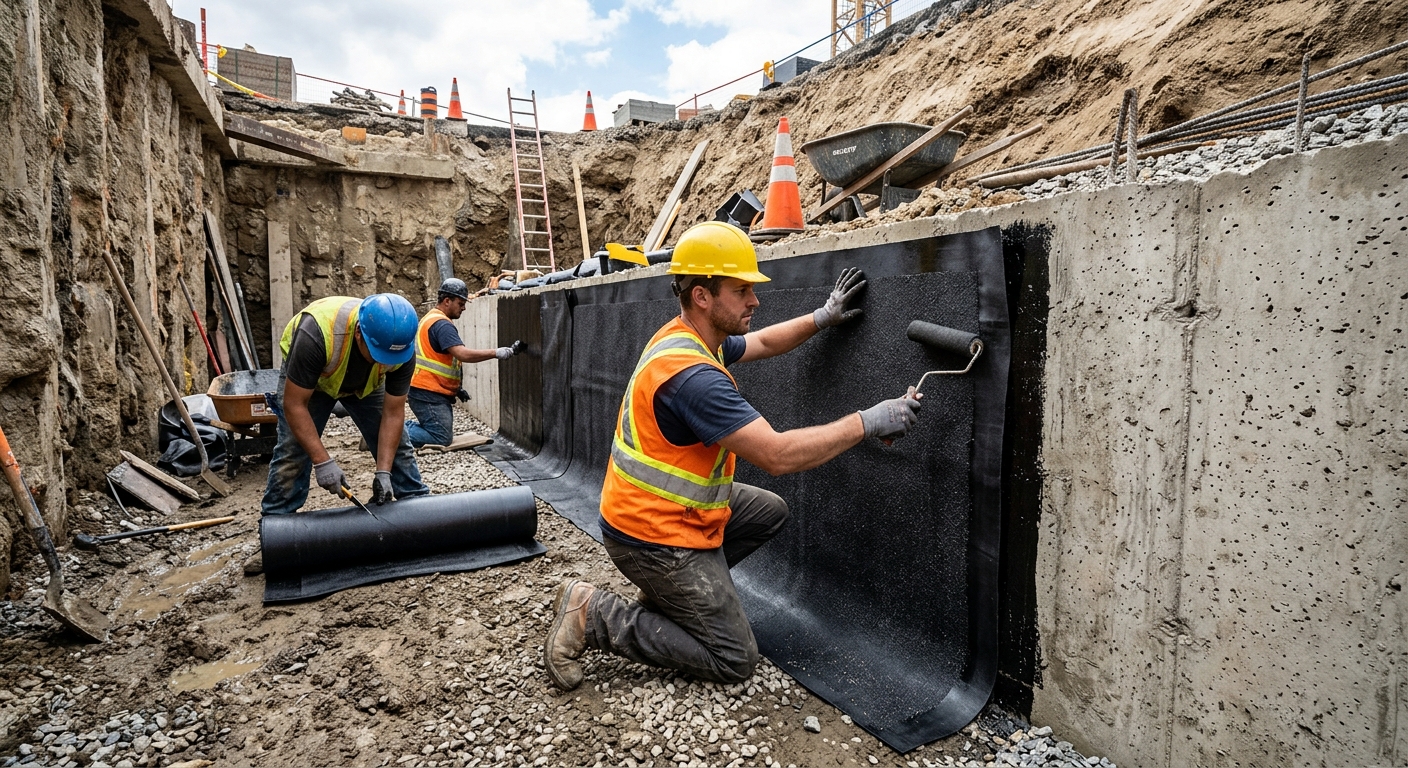
In Oakridge, full exterior work (excavation, membrane, new drainage tile, and proper backfill) usually lands at the higher end because labour and access constraints are real: tight lots, mature landscaping, and occasional rocky sections that require mechanical breaking. Meanwhile, interior systems can be more budget-friendly and less disruptive, but they’re best when the exterior source of water is already controlled—or when you’re pairing interior drainage with crack repairs to manage infiltration and reduce hydrostatic pressure effects. Wet, mild winters plus freeze-thaw cycles also widen existing joints over time, which can turn small seepage into interior moisture within a few seasons.
Many calls for both interior retrofits and perimeter drain replacement come from the near-basement neighbourhoods and older-residential streets close to the city’s transit corridors, where smaller footprints limit excavation access. The table below compares common approaches so you can understand where each dollar typically goes and what each option targets.
| Method |
What It Addresses |
Disruption Level |
Durability |
Price Range |
| Exterior excavation + new membrane + drainage tile |
Primary water entry control by rebuilding the exterior waterproofing and perimeter drainage, relieving hydrostatic pressure |
High (excavation, landscaping impacts, backfill) |
High (typically the most complete, long-term solution) |
$15,000–$30,000 |
| Interior perimeter drain channel + sump pit |
Collects seepage after water enters; reduces interior water and supports drying |
Medium (floor cutting in limited areas) |
Medium to high (depends on exterior condition and crack sealing) |
$8,000–$18,000 |
| Foundation crack injection (epoxy or polyurethane) |
Seals cracks to stop seepage (polyurethane) or restore rigidity (epoxy for stable, non-moving cracks) |
Low to medium |
Medium (best when crack type is correctly matched) |
$500–$2,000 |
| Sump pump installation (primary + battery backup) |
Moves collected groundwater away; backup reduces risk during outages |
Low to medium |
Medium to high (backup improves resilience) |
$1,000–$5,000 |
| Window well drain installation |
Prevents pooling and lateral water pressure near basement window openings |
Low (targeted excavation/restoration around wells) |
Medium |
$1,500–$4,500 |
| Lot re-grading / downspout extension |
Improves surface drainage and reduces water loading toward the foundation |
Low to medium |
Medium (depends on grading quality) |
$1,000–$6,500 |
Prices are estimates only and vary by project scope, site access and material selection.
What affects the price of waterproofing in Oakridge
In the Lower Mainland–Southwest, quotes for the same basement waterproofing problem can vary by 30–50% because the “same problem” often has different root causes. One contractor may focus on symptoms (interior drainage and a sump), while another may address the source (failed exterior waterproofing, saturated backfill, and an aging perimeter drain). In Oakridge, labour rates, excavation access on tight urban lots, and the local need to manage persistent groundwater push costs upward versus many homeowners’ expectations.
Three drivers typically separate Lower Mainland–Southwest pricing from the national average: soil/water conditions, and freeze-thaw. First, soil composition affects how water behaves against walls. Clay-heavy soils common in parts of Ontario and the Prairies can expand during freeze-thaw and worsen lateral pressure—while in the Lower Mainland the more common issue is that backfill stays saturated and hydrostatic pressure remains elevated. Second, water table and drainage performance matter: when hydrostatic pressure is constant after heavy rain, sump run times increase, which can justify a more robust interior perimeter drain and backup system. Third, wet, mild winters with frequent freeze-thaw cycles widen existing cracks and joints, allowing water to penetrate and accelerate deterioration in poured concrete or block foundation walls.
Concrete examples in Oakridge: (1) a home with failing original weeping tile often needs exterior work or a “capture-and-drain” interior perimeter system—costs can move toward the $15,000–$30,000 band if excavation is required to truly relieve pressure. (2) Basement seepage limited to a few crack locations can sometimes be handled with crack injection plus targeted sump upgrades, keeping many jobs in the $500–$2,000 plus $1,000–$5,000 range. (3) If debris removal and mechanical breaking are needed due to rocky sections during excavation, exterior pricing tends to escalate quickly.
| Price Factor |
Why It Matters |
Cost Impact |
| Interior vs. exterior approach — interior is less disruptive but addresses symptoms |
Exterior targets the source; interior primarily manages water after entry |
Interior can cost 30–60% less than full exterior, but only if exterior source is limited |
| Foundation type — poured concrete vs. block vs. stone vs. ICF |
Different wall systems respond differently to crack sealing and drainage design |
Block often needs more interior capture; poured concrete may seal better with correct injection strategy |
| Soil type — clay expands more than sand, adding pressure |
Water pressure and seasonal movement influence crack growth and seepage pathways |
More movement typically increases labour for sealing and adds long-term monitoring/maintenance costs |
| Crack type and length — hairline vs. structural horizontal cracks |
Injection works best when the crack is correctly identified (stable vs. active leak) |
Structural/active cracks can require engineer assessment, more prep, and higher scope |
| Sump pump backup system — battery or water-powered backup needed |
Power interruptions can turn an interior system into a risk during heavy spring rain |
Backup increases equipment and install labour; often adds roughly the lower-to-mid part of the sump band |
| Access — landscaping, decks, or driveways must be removed for exterior |
Excavation in tight lots can require careful demolition and restoration |
Can swing exterior projects significantly within the excavation cost band |
| Weeping tile age — original tile (60+ years) may be completely failed |
Old tile can be clogged, collapsed, or undersized, leading to persistent hydrostatic pressure |
Replacement or exterior rebuild pushes costs toward the full-exterior range |
| Mould or efflorescence remediation required before sealing |
Moisture must be addressed before coatings/sealants will perform reliably |
Adds time for cleaning, drying, and sometimes additional surface prep materials |
Permits & regulations in British Columbia
In British Columbia, foundation excavation, structural crack repair, and changes to lot drainage typically require a building permit. Sump pump installations that connect to the storm or sanitary sewer generally require municipal approval, and the contractor should confirm discharge location and routing before installation. For structural crack repair—especially horizontal cracks in block walls or major step cracks—an evaluation by a structural engineer is often required to determine whether underpinning or other structural work is needed.
For homeowners in Oakridge, the practical approach is to verify the contractor can support the permit process before anyone opens the foundation. Step-by-step:
- Ask the contractor which permit(s) they will pull and what scope triggers the permit (excavation, drainage tie-ins, structural repairs).
- Check the contractor’s licence/registration status through the appropriate public online registry in BC (the contractor’s website may link it; request the exact registration number if you can’t find it).
- Request a current certificate of insurance showing general liability coverage for waterproofing work.
- Ask for proof of WSIB/WCB coverage (clear evidence that workers are properly covered).
- If structural repairs are in scope, confirm they have engineering support and ask how they’ll document the engineer’s recommendations.
- Make sure the quote states whether disposal, permit fees, and any required inspections are included or excluded.
Clear communication on permits and coverage reduces delays and protects you if water control or structural scope expands during excavation.
Interior vs exterior waterproofing — what does Oakridge need?
Exterior waterproofing is the “source control” option. It involves full excavation, installing a new membrane and proper drainage tile, then backfilling correctly so water is directed away from the foundation. It typically costs more and disrupts landscaping, but it addresses hydrostatic pressure at the wall’s exterior—an important difference in Oakridge where coastal BC weather and sustained saturation keep pressure against basement systems. Interior waterproofing—perimeter drain channel, sump pit, and a sump pump—collects water after it enters. That makes it less invasive and often faster to implement, but it doesn’t stop water from contacting the wall; it manages the risk by keeping the interior dry and reducing standing water.
In Oakridge, foundation material matters. Poured concrete walls often respond well to correct crack injection strategies, especially when leaks are localized and cracks are stable. Block foundations, in contrast, commonly benefit from interior drainage because water can track through joints and mortar voids even when cracks appear narrow. For either system, a properly designed sump pump setup matters in British Columbia’s climate: during spring flooding or heavy rain, power interruptions can happen, so a battery backup can prevent the “no pump during outage” scenario.
When does the price difference make sense? If your weeping tile is failing and the exterior waterproofing system is compromised, paying for exterior work can be justified—exterior excavation typically sits in the $15,000–$30,000 band. If instead you have a few seepage points, a stable crack profile, and good surface drainage already, a smaller interior scope plus targeted sump support may stay closer to the $8,000–$18,000 interior band, or even lower when paired with crack injection in the $500–$2,000 range.
| Method |
Best For |
Addresses Source? |
Disruption |
Lifespan |
Price Band |
| Full exterior excavation + membrane |
Homes with failed exterior waterproofing, persistent hydrostatic pressure, and drainage tile collapse |
Yes |
High |
High (designed as the long-term rebuild) |
$15,000–$30,000 |
| Interior French drain + sump system |
Ongoing seepage where exterior access is limited or interim control is needed while planning exterior repairs |
No (captures water after entry) |
Medium |
Medium to high with proper sump and maintenance |
$8,000–$18,000 |
| Crack injection — epoxy (structural) |
Stable cracks where the crack is not actively leaking water |
Partial (seals a pathway) |
Low to medium |
Medium |
$500–$2,000 |
| Crack injection — polyurethane (active leak) |
Cracks with active seepage in poured concrete or block |
Partial (stops active pathway) |
Low to medium |
Medium to high when correctly matched to the crack |
$800–$2,500 |
| Interior drain channel only (no sump) |
Very limited seepage and where dewatering can be handled without a sump |
No |
Low to medium |
Lower (depends on drainage and rainfall) |
$4,000–$10,000 |
| Re-grading + downspout extensions |
Surface water is the main driver and foundation is not under constant saturation |
Partial (reduces water loading) |
Low to medium |
Medium (best when combined with drainage repair if needed) |
$1,000–$6,500 |
How to choose a waterproofing contractor in Oakridge
Start by verifying British Columbia coverage and documentation, because waterproofing failures are often scope or installation problems, not just materials. First, ask for proof of licensing/registration and ensure the contractor can legally perform the work in BC. Next, request a current certificate of insurance (general liability) and confirm WSIB/WCB coverage for workers. Don’t accept “we’re covered” answers—request documents and dates.
Then get 2–3 itemised written quotes. You want a labour + materials breakdown that shows what’s being installed (membrane type, drainage tile specification, pipe size, sump model, backup system, and crack injection product used) and what is excluded. A lump-sum number makes it hard to compare. Review whether they include permit pull (where required), excavation disposal, transport and restoration (soil/topsoil, sod, paving patching), and whether they’ll address mould or efflorescence before sealing.
Warranty also matters. Look for a workmanship warranty with a clear length and written coverage terms, plus the manufacturer warranty for products. Ask if the warranty is transferable to future owners. For payment, keep deposits reasonable: never pay more than 10–15% upfront, and use a holdback until the work is complete and inspected.
Finally, timelines should be in writing. Get the projected start date, inspection milestones (if permits are required), and an estimated completion window so rain events don’t leave you in limbo.
- Ask what conditions qualify a job for exterior versus interior—and how they decide (site inspection and moisture mapping).
- Confirm whether they will camera-test/inspect the existing weeping tile if accessible.
- Ensure crack injection plan matches crack type: epoxy for stable, polyurethane for active leaks.
- Check if sump discharge is routed correctly and approved where tie-ins are involved.
- Verify battery backup is included only when recommended and sized to the expected pump cycle.
- Require written scope for restoration (including landscaping reinstatement).
- Ask how they protect finishes during excavation and curing (membrane overlap, drainage inspection).
- Confirm disposal is included (spoils/rock hauling) and whether any permits are handled.
- Get the warranty terms and confirm who administers manufacturer product warranties.
- Review the payment schedule and retainage/holdback terms in writing.
- Confirm start/completion dates and what happens if rain delays exterior backfill.
- Require a final walkthrough checklist and documentation photos of key steps (pre-backfill and discharge).
Red flags in Oakridge: (1) quotes that offer a sump “solution” without assessing whether the exterior source/weep tile is failing, (2) crack injection proposed without identifying active seepage vs stable cracks, (3) missing permit responsibility or no mention of BC approvals for drainage tie-ins, (4) warranties that only cover “materials” not workmanship, and (5) contractors who ask for large upfront deposits (well above 10–15%) or won’t provide itemised scope and proof of coverage.
Frequently asked questions — waterproofing in Oakridge
How long does waterproofing last?
In Oakridge and the broader Lower Mainland–Southwest, “lasting” depends on whether the work controls the source of water or only manages water after entry. Exterior waterproofing (membrane + new drainage tile) is built as the long-term strategy and is typically expected to perform for many years, assuming correct backfill, drainage tie-in, and membrane detailing. Interior systems can also last, but they often rely on a functioning sump, clear discharge routing, and properly matched crack repairs—especially during wet winters and freeze-thaw cycles that widen joints. If you’re seeing persistent seepage, it’s smart to budget for more complete scope if existing weeping tile is failed; otherwise, you may be repeating repairs. As a reference point, interior drainage is commonly estimated in the $8,000–$18,000 band, while exterior excavation and membrane typically runs $15,000–$30,000.
Can I waterproof my basement from the inside only?
Yes, in some Oakridge homes you can manage the basement from the inside only, but it works best when the exterior water source is limited or you’re capturing seepage as a practical retrofit. Interior perimeter drains and a sump pit can reduce standing water, and crack injection can stop specific leak pathways—often a good fit for localized issues. However, interior work does not remove hydrostatic pressure against basement walls; it collects and pumps water after it penetrates. In Lower Mainland–Southwest conditions, persistent rainfall and saturated backfill can keep pressure high, so interior-only solutions may need more robust sump design (and sometimes backup) to remain reliable. If your weeping tile is severely undersized or failed, interior work alone may not fully prevent recurrence. In those cases, homeowners often choose a fuller exterior approach that generally sits around $15,000–$30,000.
What causes foundation cracks in Oakridge?
Foundation cracks in Oakridge are usually a combination of water movement, normal building settlement, and freeze-thaw-driven stress on joints. In British Columbia’s wet, mild winters, water gets into cracks and joints, then expands and contracts during temperature swings, which can widen hairline cracks over time. If your perimeter drainage is failing (common in older homes where original weeping tile can be 60+ years old), hydrostatic pressure increases and pushes moisture through masonry joints or concrete fissures. Freeze-thaw isn’t the only factor—poor surface drainage and downspouts that discharge too close to foundations can keep soils saturated. Also, repairs sometimes differ by foundation type: poured concrete cracks may be stable and suitable for epoxy injection, while active seepage often needs polyurethane. For budgeting, crack repair/injection is commonly estimated in the $500–$2,000 range, but the total waterproofing cost can rise quickly if drainage systems must be corrected.
How do I compare waterproofing quotes?
Compare Oakridge quotes by scope, not by total price. Ask each contractor for an itemised breakdown of labour and materials, including what method they’ll use (exterior membrane + drainage tile versus interior perimeter drain + sump), and what’s included for excavation disposal and restoration. Look for clarity on exclusions: is permit pulling included where required, are mould/efflorescence conditions addressed before sealing, and is debris removal included? Make sure they specify products and details—sump pump model and whether battery backup is included, drainage pipe sizes, and membrane type. For crack work, verify they’ll identify whether cracks are stable or active seepage so they choose epoxy versus polyurethane correctly. It’s also reasonable to compare disruption and timeline. If one quote is far cheaper than others, confirm they’re not cutting out required drainage capture or leaving key steps out. For context, interior retrofits often fall in the $8,000–$18,000 band, while exterior waterproofing commonly starts higher in the $15,000–$30,000 range.
How long does basement waterproofing take in Oakridge?
Typical timelines in Oakridge depend on whether you’re doing exterior excavation or interior drainage, and how weather affects cure and backfill steps. Interior waterproofing (perimeter drain channel, sump pit, pump installation, and localized crack injection) is often completed faster because it avoids full perimeter excavation and landscaping removal. Exterior work can take longer because contractors must excavate around the foundation, install membranes and drainage tile, complete proper backfill, and restore the site—plus scheduling can be impacted by wet, rainy periods in the Lower Mainland–Southwest. If permits are required for excavation or drainage tie-ins, add time for inspections and approval. A good contractor will provide a written start date, completion estimate, and a plan for rain delays so water isn’t left exposed. Costs and scope still matter: exterior projects typically carry a higher band (around $15,000–$30,000) due to the extra steps and access constraints.
What is a weeping tile and does my Oakridge home have one?
A weeping tile (often referred to as perimeter drain tile) is a buried drain system around the foundation designed to collect groundwater and direct it to a sump or discharge point. Many older homes in Oakridge and across British Columbia had original tile systems that may now be clogged, collapsed, or undersized—especially after decades of persistent saturation and wet winters. Whether your home has one isn’t something you can confirm without inspection, but clues include past sump activity, a visible discharge line, or signs of former interior sump installations. If there’s evidence of moisture along the perimeter, a failed weeping tile is a common culprit, and contractors may propose replacement or an interior capture system depending on accessibility. As a homeowner, ask the contractor how they’ll verify it (site inspection, camera inspection if accessible, and drainage pattern review) before recommending a full exterior approach in the $15,000–$30,000 band.