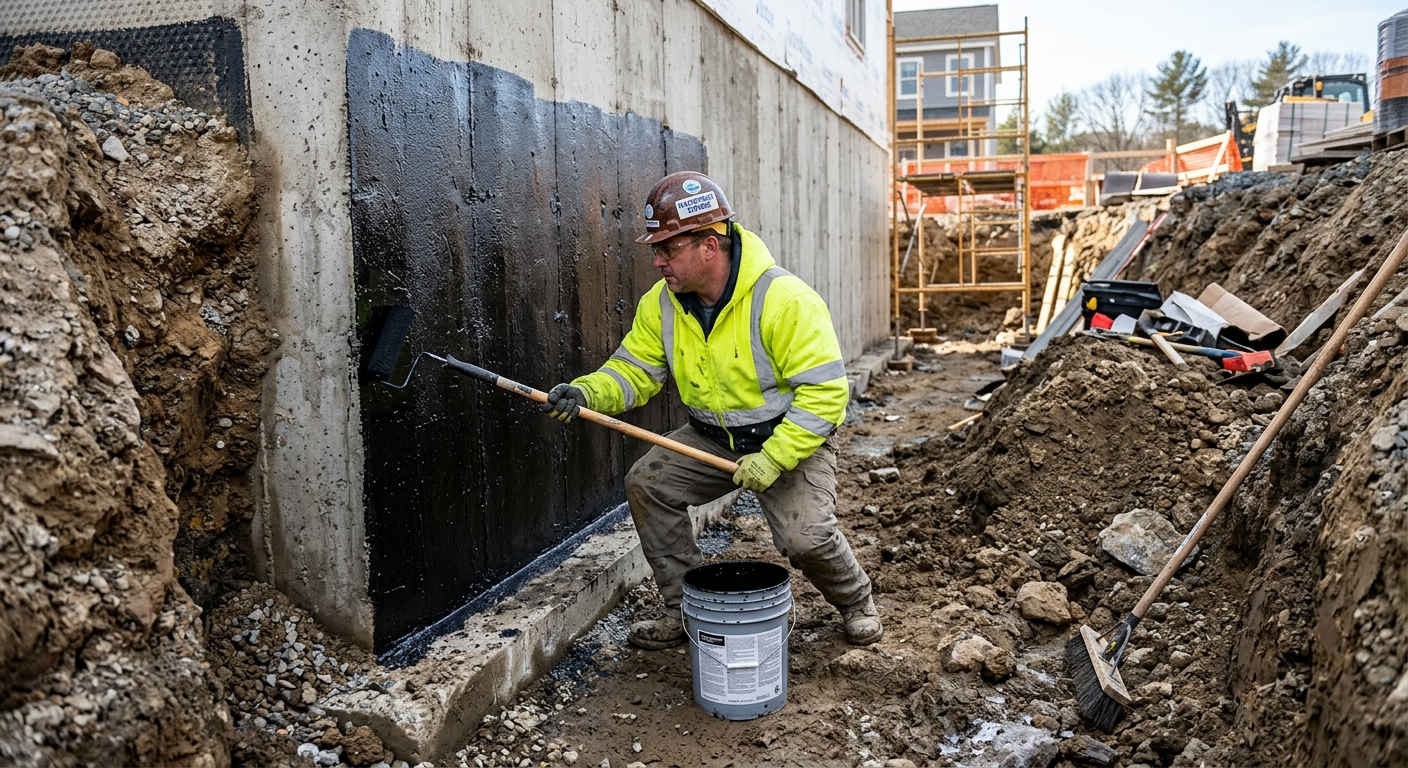
Basement waterproofing options and costs in Fraser Heights
In Fraser Heights, British Columbia, homeowners typically compare basement waterproofing options based on where the water is entering, how the foundation was originally built, and how often the drains have failed. With Fraser Heights housing that includes older stock (and a lot of original waterproofing components installed decades ago), it’s common to see corroded or failed weeping tile and moisture patterns that get worse during wet winters. Since Fraser Heights is part of the broader Lower Mainland–Southwest labour market, pricing reflects both higher local groundwater-driven demand and the costs of excavation on tighter lots.
In this region, persistent saturation and high groundwater tables maintain hydrostatic pressure against basement walls and slabs, which pushes seepage risk even in newer homes when drainage is undersized or damaged. Rainfall is intense and prolonged, and wet, mild winters combined with frequent freeze-thaw cycles widen existing cracks and joints, accelerating deterioration. For many owners, especially around Fraser Heights Village / 16th Avenue area, contractors are in demand because access constraints (driveways, landscaping, retaining walls) can add time and mechanical breaking when excavating rocky sections.
Below is a practical cost comparison you can use to sanity-check quotes, then we’ll break down what drives price up or down in Section 2.
| Method |
What It Addresses |
Disruption Level |
Durability |
Price Range |
| Exterior excavation + new membrane + drainage tile |
Primary water entry at foundation perimeter; replaces failed drainage system |
High (excavation, backfill, landscaping restoration) |
Long-term (often decades when properly detailed) |
$15,000–$30,000 |
| Interior perimeter drain channel + sump pit |
Intercepts water after it enters; reduces hydrostatic pressure on interior surfaces |
Medium (interior demo, saw-cutting, grout/patch work) |
Long-term (depends on sump capacity and discharge routing) |
$8,000–$18,000 |
| Foundation crack injection (epoxy or polyurethane) |
Stops cracking pathways; stabilizes and/or seals leaks depending on crack type |
Low to Medium (localized prep and drilling/patching) |
Good for the right crack (epoxy for non-moving, polyurethane for active leaks) |
$500–$2,000 |
| Sump pump installation (primary + battery backup) |
Manages recurring seepage and prevents basement flooding during high water events |
Medium (pit excavation or coring, electrical and discharge work) |
High reliability when paired with proper backup |
$1,000–$5,000 |
| Window well drain installation |
Relieves localized water entry at egress points |
Low to Medium (exterior grade adjustments near windows) |
Good (if discharge and routing stay unobstructed) |
$1,200–$3,500 |
| Lot re-grading / downspout extension |
Redirects roof and surface water away from foundation |
Low (light demo and restoration) |
Good for surface water control (doesn’t fix high groundwater by itself) |
$3,000–$8,500 |
Prices are estimates only and vary by project scope, site access and material selection.
What affects the price of waterproofing in Fraser Heights
In the Lower Mainland–Southwest, it’s normal to see quotes for the “same” waterproofing problem vary by 30–50%. The reason isn’t just contractor differences—it’s the site conditions that set the true scope: soil saturation, drainage layout, foundation type, access limits, and how much deterioration is already hidden behind finishes. Labour rates in the Lower Mainland are higher than many parts of Canada, and excavation can be slower due to landscaping, tight side yards, and occasionally rocky sections that require mechanical breaking.
Three drivers separate regional costs from a national average. First, soil and water table: where groundwater stays high, drainage systems run longer and require properly sized weeping tile, sump capacity, and dependable discharge routing. Second, freeze-thaw: wet mild winters and repeated freeze-thaw cycles widen cracks and joints, which can turn a “stop it now” repair into a longer-term system upgrade. Third, foundation-water pathways in older housing stock: more homes with aging or failing perimeter drain systems develop seepage and interior moisture, especially when original tile is undersized or collapsed.
Two concrete Fraser Heights examples: if your basement is showing dampness after prolonged rain in a home with an older perimeter drain, replacing the exterior system can land in the $15,000–$30,000 band because excavation and membrane detailing are labour-intensive. If you’re dealing mainly with interior seepage and want to intercept water after it enters, an interior perimeter drain and sump plan often falls in the $8,000–$18,000 band—especially when you can avoid full excavation. And when hairline cracks are stable, crack injection may be a comparatively small line item (often $500–$2,000) versus rebuilding a drainage strategy.
| Price Factor |
Why It Matters |
Cost Impact |
| Interior vs. exterior approach — interior is less disruptive but addresses symptoms |
Exterior details prevent the source water entry; interior solutions manage water after entry |
Exterior usually higher (often +$7,000 to +$15,000 compared to interior-only) |
| Foundation type — poured concrete vs. block vs. stone vs. ICF |
Crack behaviour and sealing performance differ; block can require interior drainage more often |
Poured concrete often supports targeted crack injection; block may add sump/channel work |
| Soil type — clay expands more than sand, adding pressure |
Even without extreme expansion like the Prairies/Ontario, saturation plus wetting can increase lateral pressure on walls |
Clay-prone sections tend to increase leak frequency, raising scope |
| Crack type and length — hairline vs. structural horizontal cracks |
Structural/horizontal movement may indicate a need for engineering before sealing |
Structural severity can move work from “injection” to underpinning assessments |
| Sump pump backup system — battery or water-powered backup needed |
High water events combined with spring outages require pumping continuity |
Backup can add meaningful cost (often +$1,500 to +$3,000) |
| Access — landscaping, decks, or driveways must be removed for exterior |
Excavation time increases when there are retaining walls, stone beds, or hardscape removals |
Access issues can shift exterior jobs upward by thousands |
| Weeping tile age — original tile (60+ years) may be completely failed |
Failing tile can’t relieve hydrostatic pressure, so replacement becomes necessary |
Replacement scope increases (often the difference between “patch” vs “full perimeter”) |
| Mould or efflorescence remediation required before sealing |
Moisture must be addressed and surfaces cleaned for successful adhesion/sealant performance |
Remediation can add days and material costs |
Permits & regulations in British Columbia
In British Columbia, foundation excavation, structural crack repair (when it affects load-bearing or shows significant movement), and changes to lot drainage typically require a building permit. If your sump pump work includes routing discharge to municipal services (storm or sanitary), municipal approval is usually required before the connection is made. For structural crack repair—particularly horizontal cracks in block walls or any crack pattern suggesting movement—a structural engineer’s assessment is often required to confirm whether underpinning or additional structural work is necessary before sealing.
For Fraser Heights homeowners, the practical step is to verify the contractor can legally support the work they’re proposing. Start by confirming the company can provide evidence of applicable coverage and professional support: liability insurance certificates, and WSIB/WCB clearance or coverage documentation as required. If the scope includes structural repairs or engineering review, ask whether engineering sign-off and stamped documents are included when necessary.
To verify licensing and coverage step-by-step:
- Check the contractor’s registration/licence information using the appropriate online provincial registry for the trades they claim to do.
- Request a current certificate of insurance (liability) and confirm dates and coverage limits; it should match the named insured company.
- Request WSIB/WCB clearance evidence (or coverage documentation) and confirm it’s current for the project start date.
- Ask for proof of engineering support if structural crack patterns are part of the plan.
- Confirm whether permits will be pulled by the contractor or by you, and who is responsible for inspections.
Interior vs exterior waterproofing — what does Fraser Heights need?
Exterior waterproofing and interior waterproofing are solving different parts of the same problem. In Fraser Heights, exterior waterproofing usually means full excavation along the perimeter, new membrane, a properly installed drainage system (weeping tile and backwater-safe discharge), and re-compaction/backfill. It addresses the source of water entry by relieving hydrostatic pressure before it reaches the foundation wall and slab. The trade-off is higher cost and greater landscape disruption—especially on tight Lower Mainland lots where decks, driveways, and hardscape restoration can be significant.
Interior waterproofing (perimeter drain channel, sump pit, and sump pump) manages water after it enters by intercepting seepage and lowering interior water levels. It’s less invasive, but it does not stop hydrostatic pressure from acting on the wall itself. In Lower Mainland–Southwest conditions—wet mild winters, frequent freeze-thaw, and persistently wet backfill—interior solutions often work extremely well when paired with a reliable sump capacity and, ideally, a backup system for spring high-water periods and occasional power interruptions.
Which approach is right? In Fraser Heights, poured concrete foundations often respond well to targeted crack injection when cracks are stable, while block foundations frequently benefit from interior drainage as a practical complement because leak pathways can be more variable. For example, if you have interior moisture plus a failing perimeter drain, an interior system may come in around the $8,000–$18,000 range—while full exterior replacement commonly lands in the $15,000–$30,000 band. The price difference is usually justified when you’re trying to fix the source by renewing the perimeter drainage and waterproofing details rather than continually managing seepage inside.
| Method |
Best For |
Addresses Source? |
Disruption |
Lifespan |
Price Band |
| Full exterior excavation + membrane |
Primary seepage from perimeter with high groundwater influence and failing exterior drainage |
Yes |
High (excavation, backfill, landscaping restoration) |
Long-term when professionally detailed |
$15,000–$30,000 |
| Interior French drain + sump system |
Interior seepage, basement dampness, or when exterior access is limited |
No (manages water after entry) |
Medium (interior demo and drainage lines) |
Long-term with adequate sump sizing |
$8,000–$18,000 |
| Crack injection — epoxy (structural) |
Non-moving cracks where water entry is limited or controlled by drainage |
Helps seal pathways (if crack is stable) |
Low to Medium (drilling and patching) |
Good for stable cracks |
$500–$2,000 |
| Crack injection — polyurethane (active leak) |
Active seepage through cracks, joints, or areas with ongoing moisture pressure |
Helps seal pathways (for moving/active leaks) |
Low to Medium |
Good when matched to the leak condition |
$800–$2,500 |
| Interior drain channel only (no sump) |
Minor dampness events where gravity drainage is feasible and reliable |
No (manages water after entry) |
Medium to Low |
Variable (depends on discharge reliability) |
$5,000–$12,000 |
| Re-grading + downspout extensions |
Surface water problems (roof runoff and pooling near foundation) |
No (can reduce surface contribution) |
Low |
Moderate (needs ongoing maintenance) |
$3,000–$8,500 |
How to choose a waterproofing contractor in Fraser Heights
Start by verifying British Columbia licensing and the right insurance coverage. For waterproofing and foundation-related work in Fraser Heights, ask for: (1) proof of applicable licence/registration for the trade(s) being performed, (2) a current liability insurance certificate with project coverage, and (3) WSIB/WCB clearance or coverage documentation. You should be able to view these before signing—don’t rely on verbal confirmation.
Next, get 2–3 itemised written quotes with a labour-and-materials breakdown (not only a lump sum). Make sure the scope states exactly what’s included: permit pulling or who requests the permit, disposal of excavated material, grading restoration, and whether sump discharge routing is addressed. Watch for hidden exclusions like “patch only” drywall work, no landscaping restoration, or no testing/verification after sealing.
Warranty matters more in BC’s wet, mild winters. Ask for the workmanship warranty term and whether the product manufacturer warranty applies directly to the installation. Also confirm whether warranties are transferable if you sell your home.
Payment schedule should protect you: never pay more than 10–15% upfront; use holdback until completion and acceptance. Finally, insist on a written start date, weather contingency plan, and a completion estimate that matches typical Lower Mainland scheduling.
- Provide licence/registration evidence for each trade involved.
- Show current liability insurance certificate (dates and named insured match).
- Provide WSIB/WCB clearance/coverage documentation in writing.
- Use itemised quotes: excavation, drainage tile, membrane, sump pit, pump, electrical, restoration.
- Confirm whether permits are included and who is responsible for inspections.
- State whether discharge is routed to an approved location and how backflow is prevented.
- Confirm excavation method and restoration scope (topsoil, turf/landscape reinstatement).
- Ask how they diagnose the leak pathway (assessment, moisture mapping, test plan).
- Match crack injection type to crack behaviour (epoxy vs polyurethane) and explain why.
- Provide warranty length for workmanship and product, plus transferability.
- Payment schedule: limit deposit, holdback until punch list is complete.
- Confirm disposal and site protection (dust control, clean-up frequency, flood protection).
Concrete red flags in Fraser Heights: (1) they avoid discussing your site’s drainage route and only talk about “painting over dampness”; (2) they can’t explain whether your sump discharge needs municipal approval; (3) they quote interior-only without checking whether exterior drainage is already failed; (4) they offer injection without distinguishing stable vs active cracks; and (5) they want a large deposit up front or won’t provide an itemised scope and written timeline.
Frequently asked questions — waterproofing in Fraser Heights
Do I need a sump pump in Fraser Heights?
Many Fraser Heights basements benefit from a sump pump when groundwater and persistent saturation drive seepage, especially during prolonged rain. If water is actively entering your foundation or your basement floor drains can’t keep up, a sump system helps lower water levels and reduces the risk of flooding. In this region, high water table conditions can keep pumps running longer, so capacity and discharge routing matter as much as the pump itself. For recurring interior dampness, homeowners often budget for sump work in the $1,000–$5,000 range if adding a pump, and up to $8,000–$18,000 when combined with an interior perimeter drain/channel. If you’re considering backup for spring storms, ask about battery or water-powered options.
How does Fraser Heights's soil affect my foundation?
In Fraser Heights and the wider Lower Mainland–Southwest, soil issues are often less about extreme seasonal swelling and more about persistent saturation and drainage challenges. When backfill stays wet, hydrostatic pressure can build against basement walls and slabs, and any cracks or joints become pathways. Even in homes where the foundation was built relatively recently, a failing perimeter drain or undersized weeping tile can allow water to accumulate. In practice, you’ll see damp corners, efflorescence, and periodic seepage after heavy rain or freeze-thaw periods. Because the population in this area is substantial (Statistics Canada, 2021 Census), demand for drainage upgrades is high and access/excavation labour can be a cost factor. The solution depends on whether water is surface-driven, groundwater-driven, or both.
Do I need a permit for foundation work in British Columbia?
Often, yes. In British Columbia, foundation excavation, structural crack repair (particularly when there’s evidence of movement or structural concern), and changes to lot drainage typically require a building permit. If your sump pump discharge connects to municipal services like storm or sanitary, municipal approval is commonly needed before the connection is made. For homeowners in Fraser Heights, the best approach is to ask contractors whether they pull permits or whether you must, and what inspections are required. Also, if the crack pattern suggests structural movement, a structural engineer’s assessment is usually required so the scope matches the real risk. Before signing, confirm the contractor provides liability insurance and WSIB/WCB coverage documentation and includes engineering support where appropriate.
How long does waterproofing last?
Properly installed waterproofing in Fraser Heights can last many years, but “how long” depends on what problem was actually corrected. Exterior waterproofing that renews membrane detailing and drainage tile can provide long-term performance because it addresses water entry at the source. Interior systems typically last longer when they’re designed for the local high-water conditions—right sump capacity, correct discharge routing, and periodic maintenance (like keeping inlets clear). Crack injection durability also depends on whether the crack is stable: epoxy tends to suit non-moving cracks, while polyurethane is used for active leaks. If your original weeping tile is 60+ years old and failed completely, repeat seepage is common until the drainage pathway is restored. As a budgeting reference, interior drainage often falls in the $8,000–$18,000 band, while full exterior can be $15,000–$30,000—the longer-term outcome usually tracks the scope.
Can I waterproof my basement from the inside only?
Yes, and in Fraser Heights it can be a practical choice when exterior access is limited or when you need a faster, less disruptive solution. Interior waterproofing (perimeter drain channel plus sump pit/pump) intercepts water after it enters and reduces interior hydrostatic pressure. That can be very effective against dampness and seepage during wet seasons. However, it does not fully stop hydrostatic pressure from acting on the wall itself, so ongoing exterior water pathways may still be present—especially if the original perimeter drain has failed. If you’re seeing active seepage plus signs your exterior drainage is compromised, many homeowners ultimately choose exterior excavation to address the source. A typical interior-only plan is often in the $8,000–$18,000 range, while exterior renewal is commonly higher at $15,000–$30,000, reflecting excavation and membrane/drain replacement.
What causes foundation cracks in Fraser Heights?
Foundation cracks in Fraser Heights are usually driven by a mix of water pressure, freeze-thaw effects, and site-specific settlement or movement. In the Lower Mainland–Southwest, persistent saturation can keep backfill wet, and freeze-thaw cycles can widen existing cracks and joints—turning small defects into active leak pathways. If your perimeter drainage has failed, hydrostatic pressure can increase along the foundation walls, which contributes to cracking and deterioration of mortar or joints (particularly in block walls). Cracks can also appear or worsen when downspouts or surface grading push water toward the foundation. If you have horizontal or step cracking that suggests movement, that’s a different category than hairline, non-moving cracks and often requires structural assessment. In those cases, crack injection alone may not be the full fix—so ask contractors how they determine crack type before choosing epoxy vs polyurethane.