Basement waterproofing options and costs in Lower Lonsdale
In Lower Lonsdale, basement waterproofing decisions start with one reality: the area’s wet coastal climate and persistent groundwater make water management a year-round concern. With a population of 19,718 (Statistics Canada, 2021 Census), the neighbourhood is dense, and access can be tight—so projects that require full excavation or removing landscaping often cost more than homeowners expect. In addition, Lower Lonsdale’s housing mix includes many older basements where original waterproofing and perimeter drainage can be nearing the end of their service life, increasing the need for replacement weeping tile and interior retrofits.
In the Lower Mainland–Southwest, high groundwater tables and prolonged rainfall maintain hydrostatic pressure against basement walls and slab edges. That’s why repairs tied only to “surface sealing” frequently underperform. Even when you’re dealing with a newer home, freeze-thaw cycles in British Columbia can widen existing cracks and joints, letting water pathways develop behind finishes. Meanwhile, neighbourhood demand is especially common around the Lower Lonsdale waterfront and older mid-block homes near main streets, where homeowners often report musty odours, damp corners, and periodic seepage after heavy rain.
Contractor availability and labour rates also play a role. Excavation along tight urban lots may require mechanical breaking when rock interferes, and disposal/haul-off can add time. As a result, the cost range can vary significantly depending on whether you’re addressing the source with exterior drainage or managing water after entry with an interior system. Use the comparison below as a starting point before you request itemised quotes.
| Method |
What It Addresses |
Disruption Level |
Durability |
Price Range |
| Exterior excavation + new membrane + drainage tile |
Source control of groundwater; stops hydrostatic pressure at the foundation perimeter |
High (landscaping/decks/drive approach disruption) |
High (system-level warranty when installed and drained correctly) |
$15,000 – $30,000 |
| Interior perimeter drain channel + sump pit |
Collects seepage after it enters; reduces wall/floor moisture and water staining |
Medium (floor cutting in affected areas) |
Medium to high (depends on crack condition and sump sizing) |
$8,000 – $18,000 |
| Foundation crack injection (epoxy or polyurethane) |
Repairs cracking pathways (structural sealing vs active leak control) |
Low to medium (access to crack line required) |
Medium to high (best when paired with proper drainage) |
$500 – $2,000 |
| Sump pump installation (primary + battery backup) |
Pumps collected water away; battery backup protects during outages |
Low to medium (pit, wiring, discharge routing) |
High (when sump basin is sized for your inflow) |
$1,000 – $5,000 |
| Window well drain installation |
Manages water and runoff around egress windows |
Low to medium (window well access) |
Medium (depends on grading and downspout control) |
$1,500 – $4,500 |
| Lot re-grading / downspout extension |
Reduces roof runoff and directs surface water away from foundation |
Low (minor landscaping) |
Variable (helps most when drainage isn’t already overwhelmed) |
$800 – $3,000 |
Prices are estimates only and vary by project scope, site access and material selection.
What affects the price of waterproofing in Lower Lonsdale
In Lower Lonsdale and across the Lower Mainland–Southwest, two quotes for the “same” basement can differ by 30–50% because the job scope often changes once contractors confirm the source of water and the foundation’s condition. A homeowner might think they need “crack filling,” but a proper inspection can show active seepage, failing weeping tile, or a sump that can’t keep up during heavy rain. That’s why costs in this region often sit at the higher end of national ranges: soil saturation, drainage complexity, and access constraints are more common in dense coastal neighbourhoods.
The three biggest drivers that separate regional costs from the national average are soil type, water table, and freeze-thaw. Unlike clay-heavy, highly expansive soils in parts of Ontario and the Prairies, Lower Mainland soils often create problems through persistent saturation. Still, the effect on cost is similar because constant wetting keeps hydrostatic pressure high. High groundwater tables increase sump run times and the required discharge management. Freeze-thaw cycles widen existing cracks and joints, turning small pathways into larger leak channels. In regions with older housing stock, failing weeping tile and seeping poured-concrete or block walls show up more frequently—meaning more labour to locate entry points and more materials to build a complete drainage solution.
Concrete examples: (1) If exterior excavation is required around a basement with limited side-yard access near the waterfront, mechanical breaking and longer haul-off can push you toward the $15,000 – $30,000 exterior band. (2) If the main issue is interior seepage controlled by an interior perimeter drain and sump, many homes land in the $8,000 – $18,000 range—especially when exterior drainage is still functioning. (3) Where active leaks demand polyurethane injection plus interior drainage, you can spend thousands more than crack injection alone because the system must stop water entry and move water away.
| Price Factor |
Why It Matters |
Cost Impact |
| Interior vs. exterior approach — interior is less disruptive but addresses symptoms |
Exterior targets the water source; interior manages water after it enters the basement |
Typically swings by about $7,000 – $15,000 |
| Foundation type — poured concrete vs. block vs. stone vs. ICF |
Different walls crack/seep differently; repair strategy and prep vary |
Can change labour by $1,000 – $6,000 |
| Soil type — clay expands more than sand, adding pressure |
Movement and pressure can enlarge cracks over time |
Commonly $1,500 – $7,500 when system sizing or repair scope expands |
| Crack type and length — hairline vs. structural horizontal cracks |
Horizontal and structural cracks may indicate movement and require engineered solutions |
May add $500 – $2,000+ for injections plus extra investigation |
| Sump pump backup system — battery or water-powered backup needed |
Reduces risk during power outages during wet/surge periods |
Typically $500 – $2,500 |
| Access — landscaping, decks, or driveways must be removed for exterior |
Extra demolition, protection, and reinstatement drives cost |
Often $2,000 – $10,000 depending on restoration needs |
| Weeping tile age — original tile (60+ years) may be completely failed |
Broken or collapsed tile means water isn’t being drained |
Can push projects toward $15,000 – $30,000 exterior scope |
| Mould or efflorescence remediation required before sealing |
Bio/paint contamination and salts must be treated before waterproofing products bond |
Usually $400 – $2,000 to remediate before work |
Permits & regulations in British Columbia
In British Columbia, foundation excavation, structural crack repair, and changes to lot drainage commonly require a building permit. Sump pump installations that involve connecting to municipal sewer systems (storm or sanitary) also typically require municipal approval before any tie-in is made. Because homeowners in Lower Lonsdale often have tight lots, it’s especially important to confirm how discharge will be routed early—roof drains and sump discharge cannot simply be redirected without following local requirements.
For structural crack repair—particularly horizontal cracks in block walls, major step cracks, or any crack pattern that suggests movement—an engineer’s assessment is often needed to determine whether underpinning or additional structural work is required. Before signing, ask the contractor if they include engineering support where required, and whether they carry appropriate liability insurance and WSIB/WCB coverage for their workers. A contractor should be comfortable coordinating with an engineer rather than treating all cracks as identical.
Step-by-step: (1) Verify the contractor is properly registered for the type of work they’re promising in BC using the public online business or licensing registry available through the province’s relevant portals. (2) Request a current certificate of liability insurance showing adequate limits and confirm the stated scope aligns with waterproofing and drainage. (3) Ask for WSIB/WCB clearance documentation and keep copies for your records. (4) Confirm who pulls the permit, what’s included, and whether engineering letters or reports are required for your crack type and foundation material.
Interior vs exterior waterproofing — what does Lower Lonsdale need?
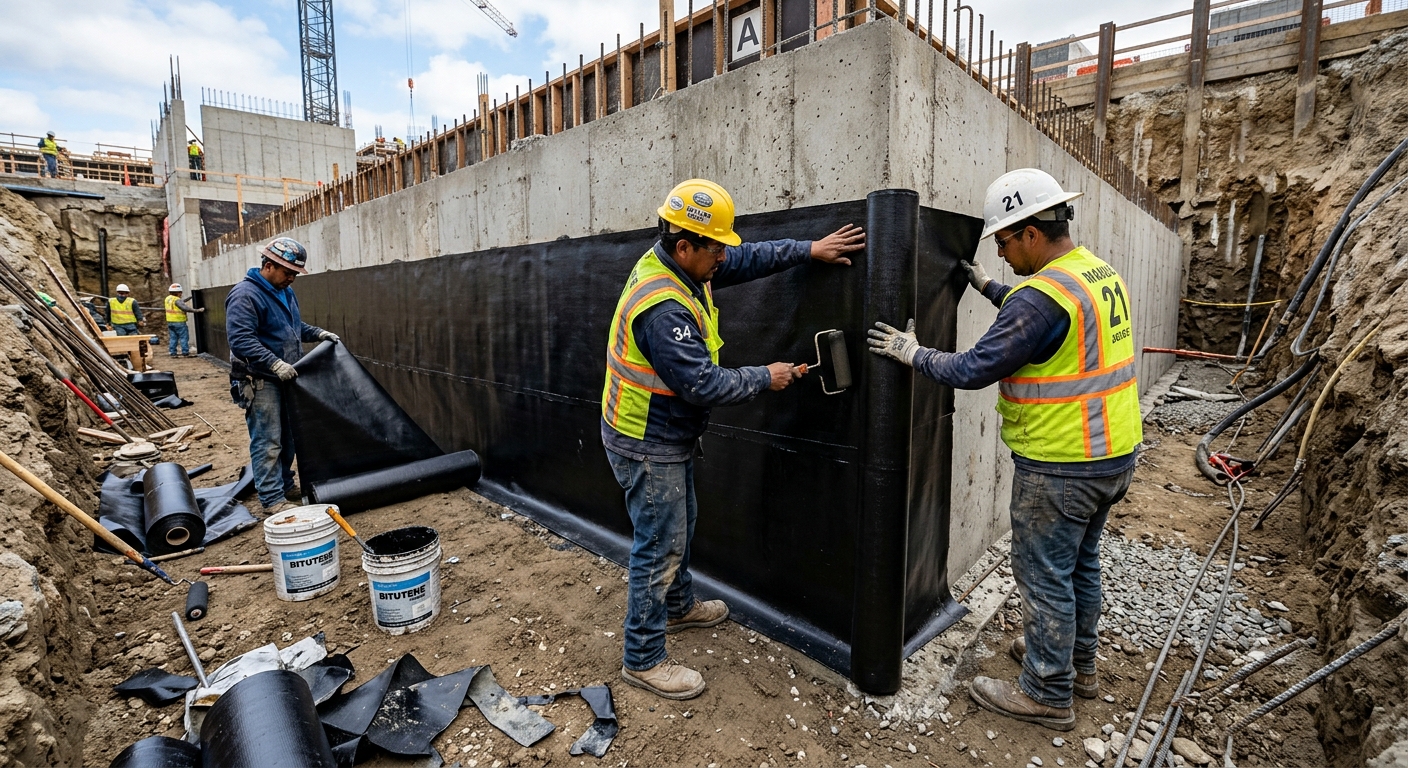
The key difference is source control versus water management. Exterior waterproofing—full excavation, new membrane, new drainage tile, and properly engineered backfill—addresses the source by reducing hydrostatic pressure against basement walls and the slab edge. It costs more and disrupts landscaping, but it’s the most direct way to handle the persistent saturation and high groundwater pressure typical of Lower Mainland–Southwest conditions. Interior waterproofing—perimeter drain channel, sump pit, and a sump pump—doesn’t stop water from reaching the wall; it collects water after it enters and keeps floors and lower walls drier.
In Lower Lonsdale, many homes see recurring issues after heavy, prolonged rainfall. If your basement is experiencing seepage along the perimeter after storms, interior systems can be effective—especially where exterior access is limited or where exterior drainage appears functional but cracks and joints still allow seepage. Poured concrete walls generally take crack injection well because the wall is more continuous; structural crack injection (often epoxy for non-moving structural cracks) can restore watertightness when paired with a drain strategy. Block foundations often benefit from interior drainage because block seams and joints can permit more pathway leakage; interior French drains and a sump commonly work as a practical complement.
Sump pump backup is also worth planning for. While British Columbia doesn’t face the same widespread grid outages as some regions, power disruptions during weather events can happen, and battery backup helps prevent a “no pump” period if inflow is high during spring wet cycles.
Dollar example: if exterior excavation is possible and you’re dealing with widespread seepage, moving from an interior package around $8,000 – $18,000 to the exterior band of $15,000 – $30,000 can be justified when original perimeter drainage has failed and the cost of repeated interior intervention would likely approach or exceed the difference over time.
| Method |
Best For |
Addresses Source? |
Disruption |
Lifespan |
Price Band |
| Full exterior excavation + membrane |
Consistent perimeter seepage where groundwater is the primary source and access allows excavation |
Yes |
High |
Long-term (system-level, when drainage ties in correctly) |
$15,000 – $30,000 |
| Interior French drain + sump system |
Interior dampness, water along walls, and sites where exterior work is constrained |
No (manages after entry) |
Medium |
Medium to high (sump sizing and maintenance are key) |
$8,000 – $18,000 |
| Crack injection — epoxy (structural) |
Non-moving structural cracks in poured concrete or stable block where water entry is limited but visible |
Partial (seals crack pathway) |
Low to medium |
Medium to high if cracks are stable and paired with drainage |
$500 – $1,500 |
| Crack injection — polyurethane (active leak) |
Cracks with active seepage where water is still moving through the crack |
Partial (treats active pathway) |
Low to medium |
Medium to high when inflow is also controlled |
$800 – $2,000 |
| Interior drain channel only (no sump) |
Light seepage where inflow is minimal and gravity discharge is viable |
No |
Medium (floor cutting) |
Shorter to medium (can underperform if groundwater pressure rises) |
$4,000 – $10,000 |
| Re-grading + downspout extensions |
Surface water issues: roof runoff directed toward foundation or poor grading |
Partial (reduces surface source) |
Low |
Variable (best for maintenance and prevention) |
$800 – $3,000 |
How to choose a waterproofing contractor in Lower Lonsdale
Choosing the right contractor in Lower Lonsdale starts with verification, not promises. In British Columbia, confirm the contractor’s coverage and registration before any demolition: request (1) proof of liability insurance with your address listed or clearly associated with the job, and (2) WSIB/WCB clearance or documentation showing workers are covered. A solid waterproofing crew will provide certificates quickly and will not pressure you to skip verification. If the scope includes structural repair or you suspect movement, ask whether they can coordinate engineering review when required.
Next, get 2–3 itemised, written quotes—not just one lump sum. The best proposals break down labour and materials separately (membrane, drainage tile, geotextile, sump basin/pump, liners, crack injection materials, disposal and haul-off). Make sure the quote clearly states what’s included: permit pull (if applicable), protection and reinstatement, disposal of excavated material, and any required surface restoration like landscaping or concrete patching.
Warranty should be specific: workmanship warranty length, product/manufacturer warranty terms, and whether the warranty is transferable if you sell. For payment, avoid large up-front deposits; keep deposits around 10–15% and hold back the remainder until the full job is complete and cleaned up. Finally, insist on a written timeline with a start date and a completion estimate, plus how weather can affect exterior excavation and waterproofing membrane install.
- Provide BC documentation for workers (WSIB/WCB clearance) and a current liability certificate of insurance.
- Use an inspection process: moisture mapping, crack assessment, and drainage evaluation—not “one-size-fits-all”.
- Quote itemised labour + materials, including drainage tile, membrane system, sump basin, discharge piping, and backfill approach.
- Clarify exclusions (e.g., mould remediation, structural engineer reports, landscaping reinstatement, permit fees).
- Confirm disposal/haul-off is included for exterior excavation.
- Ask who pulls the permit and whether municipal approvals are required for sump discharge routing.
- Specify sump pump model and discharge line routing; request battery backup if outages are a concern.
- Ask how they deal with active leaks: polyurethane injection vs epoxy selection and sequencing with drainage.
- Confirm how they protect membrane and what QC steps they follow (surface prep, overlap details, drainage layer checks).
- Get warranty length in writing for workmanship and the product system; ask if it transfers to future owners.
- Payment schedule: no more than 10–15% upfront; hold back a portion until punch list is complete.
- Timeline in writing including what happens if rain delays exterior waterproofing steps.
Red flags to watch for in Lower Lonsdale: (1) a quote that only mentions crack sealing with no drainage plan, (2) refusing to show insurance/WSIB/WCB documentation, (3) no written scope or exclusions list (especially around disposal, reinstatement, and permits), (4) “universal” warranties that don’t specify workmanship/product terms or transferability, and (5) promising exterior discharge tie-ins without discussing municipal approval and routing. If any of these appear, pause and request clarifications before proceeding.
Frequently asked questions — waterproofing in Lower Lonsdale
How long does basement waterproofing take in Lower Lonsdale?
Timing depends on whether you’re doing exterior or interior work, and how weather affects excavation in Lower Lonsdale. Interior perimeter drainage (French drain/channel plus sump pit and pump) is often completed faster—commonly within several days of access and preparation—because you’re not removing a full perimeter around the home. Exterior waterproofing typically takes longer because excavation, mechanical breaking where needed, membrane installation, and then backfill and curing steps all require sequencing and protection from rain. In the Lower Mainland–Southwest, heavy rainfall windows can pause exterior membrane work to avoid trapping moisture behind the system. As a practical planning benchmark, many projects land in the range of a week to a few weeks, with longer schedules for tight lots and reinstatement. Your contractor should provide a written timeline and a weather contingency plan.
What is a weeping tile and does my Lower Lonsdale home have one?
Weeping tile is an older term for perimeter drainage pipe installed around the foundation at or near footing level, designed to collect groundwater and direct it to an outlet (often a sump or discharge). Many older homes in British Columbia—especially those built before modern waterproofing practices—were originally fitted with some form of perimeter drain, but tile can fail over decades due to cracking, collapse, clogging, or reduced capacity. In Lower Lonsdale, it’s common to find partial or failing original drainage in basements with recurring damp corners after prolonged rain. You may not be sure if you have it without an inspection: contractors can look for indicators like discharge piping, sump discharge history, or original outlet locations. If you hear gurgling, see periodic water along slab edges, or notice recurring moisture near the perimeter, that often points to drainage capacity problems. A full exterior replacement can be in the $15,000 – $30,000 band if access permits.
Can I waterproof my basement in winter in Lower Lonsdale?
Yes, but exterior work is more limited in winter. In Lower Lonsdale, winter conditions are usually milder than inland BC, yet freeze-thaw and cold temperatures can still affect curing and membrane performance, and they can complicate excavation if the ground surface is frozen or saturated. Interior waterproofing is often more feasible: installing an interior perimeter drain, sump pit, and crack injection can usually proceed with less reliance on outdoor temperatures. However, active seepage still needs proper sequencing—water control first, then sealing, so injection products and coatings perform as intended. If you’re planning exterior excavation, your contractor may schedule around rain-free windows and ensure surfaces are compatible for membrane installation. For many homeowners, interior upgrades during winter paired with exterior planning for a warmer period can keep the home dry while you line up the full $15,000 – $30,000 excavation scope later.
What is the difference between waterproofing and damp-proofing?
“Damp-proofing” generally refers to reducing minor moisture penetration and controlling humidity, while “waterproofing” aims to manage water entry under hydrostatic pressure—especially during prolonged rainfall and high groundwater conditions. In Lower Lonsdale and the Lower Mainland–Southwest, basements can experience true seepage because groundwater and saturation maintain pressure against foundation walls and slab edges. That’s why sealing cracks alone (damp-proofing-style fixes) may not hold up if the water source isn’t addressed. A practical way to think about it: exterior waterproofing systems (membrane + drainage tile) are source-focused; interior drainage systems (perimeter drain + sump) manage water after it enters. If you have water staining after storms, mouldy corners, or periodic leaks, you likely need drainage-based waterproofing rather than surface-only damp-proofing. Contractors should explain which category your situation fits and why, including whether a sump is required. Interior waterproofing packages often fall within the $8,000 – $18,000 band when a full interior perimeter approach is used.
Will basement waterproofing affect my property value in Lower Lonsdale?
Often, yes—primarily because waterproofing reduces risk and protects the usable space. In Lower Lonsdale, where dampness can recur after heavy rain, buyers typically view documented leak control (and a clear drainage system) as a meaningful improvement to confidence and comfort. Waterproofing can also help prevent secondary issues that affect value, such as mould remediation costs, damaged flooring, and wall deterioration from persistent moisture. That said, the impact depends on the approach and documentation: a well-designed exterior system with proper drainage usually provides stronger reassurance than patchwork sealing. Interior systems can still be very effective, especially when the source can’t be excavated, but you should expect a clear explanation of what was addressed and what wasn’t. Keep all invoices, warranty paperwork, and photos of the completed drainage connections. If you’re considering a full perimeter exterior system, remember the investment commonly starts in the $15,000 – $30,000 range, so you’ll want the scope to be defensible and well documented.
What drainage issues are most common in Lower Lonsdale homes?
The most common problems in Lower Lonsdale are drainage failures that allow prolonged saturation to maintain hydrostatic pressure. Typical issues include failing or undersized perimeter drain (weeping tile), blocked or collapsed sections, and inadequate downspout management that directs surface water toward the foundation. Older homes often show seepage along slab edges or damp corners because original drainage capacity can’t keep up during sustained coastal rainfall. Freeze-thaw cycles can also worsen existing cracks at joints, turning small pathways into active leak lines. Another frequent issue is interior moisture where the basement floor perimeter meets the foundation wall—water has a pathway, but the collection system (if it exists) may be missing, undersized, or overwhelmed. If you see efflorescence, recurring wetness after storms, or musty odours along the perimeter, it’s a sign the drainage strategy likely needs to be corrected. In many cases, homeowners end up choosing an interior perimeter drain with sump in the $8,000 – $18,000 band or planning for exterior replacement when feasible.