Basement waterproofing options and costs in Little Mountain
In Little Mountain, British Columbia, homeowners usually start waterproofing conversations after they notice damp corners, musty odours, or recurring seepage along foundation joints. With a small local population of 1,170 (Statistics Canada, 2021 Census), crews can be booked quickly during wet stretches, but scheduling still depends on excavation availability and how busy contractors are across the Lower Mainland–Southwest.
Cost and strategy are strongly influenced by home age: in neighbourhoods where older foundations are common, the original waterproofing and drainage details are more likely to be worn or failed. In many Lower Mainland–Southwest basements—especially in older housing pockets near Vancouver-style lots—perimeter weeping tile systems can be undersized, clogged, or simply at the end of their service life. Add in coastal BC’s prolonged rainfall and persistent groundwater pressure, and you get constant hydrostatic force against basement walls and slabs, not just “one-off” wet seasons. Freeze-thaw cycles then widen existing cracks and joints, letting more water in and increasing interior cleanup costs if moisture has already migrated into finishes.
In Little Mountain, this trade is especially active around older residential clusters near the village core and along streets with established landscaping, because access constraints (shrubs, patios, driveways) can require more labour during excavation. The result is that two homes with similar visible cracking can still land at very different budgets.
Use the table below as a starting point to compare common approaches and typical price ranges before you request itemised quotes.
| Method |
What It Addresses |
Disruption Level |
Durability |
Price Range |
| Exterior excavation + new membrane + drainage tile |
Stops the source of water entry by replacing the perimeter drainage layer and waterproofing system; reduces hydrostatic pressure at the wall |
High (mechanical excavation, re-grading, disposal, landscaping disruption) |
High when installed to spec with proper backfill and sealing of penetrations |
$15,000–$30,000 |
| Interior perimeter drain channel + sump pit |
Collects water after it enters; manages seepage through floor/wall interfaces and lowers basement hydrostatic pressure |
Medium (interior floor cutting/drain channel work; finishes restored) |
High as a system when paired with correctly sized sump and discharge routing |
$8,000–$18,000 |
| Foundation crack injection (epoxy or polyurethane) |
Seals cracks to prevent water migration; polyurethane is suited for active seepage while epoxy is typically used for non-moving cracks |
Low to medium (drilling ports; localized patching) |
Medium to high depending on crack type, movement, and compatibility with drainage plan |
$500–$2,000 |
| Sump pump installation (primary + battery backup) |
Reduces standing water risk during heavy rain and peak groundwater periods; backup helps during power interruptions |
Low to medium (pit excavation in basement + plumbing/electrical) |
High when backup is included and discharge is correctly routed and protected |
$1,000–$5,000 |
| Window well drain installation |
Prevents rainwater pooling around egress windows; reduces localized seepage and staining |
Low to medium (excavation around window well area) |
Medium (depends on grading and discharge connection) |
$1,500–$4,000 |
| Lot re-grading / downspout extension |
Improves surface water shedding to reduce water reaching foundation; addresses rain splash and oversaturation |
Low to medium (minor excavation and landscaping adjustments) |
Medium (works best as part of a broader plan) |
$3,000–$8,000 |
Prices are estimates only and vary by project scope, site access and material selection.
What affects the price of waterproofing in Little Mountain
Two homeowners in Little Mountain can receive quotes that look wildly different for the same “damp basement” problem—often by 30–50%—because the Lower Mainland–Southwest market prices are sensitive to site conditions. Labour rates and crew availability tend to be higher here, and access constraints are common on established lots. At the same time, the scope can change quickly once contractors confirm soil saturation levels, drainage failures, and how much interior demolition is needed.
Three key drivers separate regional costs from the national average: soil type, water table, and freeze-thaw. In coastal BC, high groundwater tables keep hydrostatic pressure active for long stretches, so a sump system may need more capacity and a discharge plan that won’t clog. Heavy coastal rainfall saturates backfill quickly when original drainage fails, which can make interior symptoms worse even if the visible crack seems “small.” Freeze-thaw cycles then widen cracks and joints over time, increasing both the number of entry points and the labour needed for crack mapping and sealing.
By comparison, clay-heavy soils common in parts of Ontario and the Prairies can expand significantly during freeze-thaw and exert lateral pressure, worsening cracks over time; in Little Mountain, the “persistent saturation” problem often drives costs more than extreme seasonal swelling. In older housing pockets, failing weeping tile (often decades old) can turn basement seepage into a continuous issue that requires both drainage replacement and interior retrofits.
Concrete examples: if your foundation walls are block and water is tracking behind efflorescence, interior perimeter drains may be required even after localized crack work (helping explain why an interior plan can fall into the $8,000–$18,000 band). If exterior excavation reveals saturated, rocky sections requiring mechanical breaking, budgets usually rise toward the $15,000–$30,000 exterior range. Conversely, homes with good downspout management and low seepage that’s limited to one corner can sometimes be stabilized with crack repair plus improved surface grading, avoiding full excavation.
| Price Factor |
Why It Matters |
Cost Impact |
| Interior vs. exterior approach — interior is less disruptive but addresses symptoms |
Exterior systems reduce water entry; interior systems manage water after entry, which may require sump and ongoing performance checks |
Interior can be cheaper up front (often $8,000–$18,000), while full exterior can reach $15,000–$30,000 |
| Foundation type — poured concrete vs. block vs. stone vs. ICF |
Different wall materials respond differently to crack sealing and drainage; block and stone often need complementary drainage |
Block/stone projects commonly cost more due to additional interior capture and longer monitoring scope |
| Soil type — clay expands more than sand, adding pressure |
Soils that expand can increase crack activity; saturated soils also maintain pressure against walls |
Unstable or heavily saturated backfill increases excavation and prep time |
| Crack type and length — hairline vs. structural horizontal cracks |
Active movement cracks require a different injection material and sometimes structural assessment |
Wider/longer or moving cracks increase labour and materials (crack repair may move from low-end to higher-end bands) |
| Sump pump backup system — battery or water-powered backup needed |
Backup reduces the risk of flooding during power interruptions during wet/spring periods |
Often adds cost to the sump portion, especially if electrical work is required |
| Access — landscaping, decks, or driveways must be removed for exterior |
Access affects excavation method (hand vs. mechanical) and disposal needs |
Restricted sites can push exterior projects into the upper portion of the $15,000–$30,000 range |
| Weeping tile age — original tile (60+ years) may be completely failed |
Older drainage systems can be clogged, collapsed, or disconnected |
Replacement drives both excavation and restoration costs |
| Mould or efflorescence remediation required before sealing |
Moisture-related growth can require pre-treatment to ensure adhesives and sealers bond properly |
May add time for cleaning, containment, and drying |
Permits & regulations in British Columbia
In British Columbia, some basement and foundation waterproofing activities commonly require a building permit, especially when the work changes structural elements or the way drainage on the lot functions. Foundation excavation, structural crack repair, and changes to lot drainage typically fall into work that should be permitted. If a sump pump discharge connects to a storm system (or sanitary system where applicable), municipal approval is often required because discharge routing affects local servicing and can create compliance issues if done incorrectly.
For structural crack repair—particularly horizontal cracks in block walls, major step cracks, or any cracking that suggests movement—an evaluation by a structural engineer is frequently needed to confirm whether underpinning or other structural work is required. Before you sign a contract, ask the contractor whether they can coordinate engineering support for structural repairs and whether their insurance covers liability for both excavation and any structural-related scope.
To verify a contractor in Little Mountain step-by-step: first, check their business/licensing information through the appropriate provincial online registry and ensure the company is in good standing for the type of work being proposed. Second, request a certificate of insurance (liability) and confirm the coverage limits and effective dates are current—don’t accept outdated documents. Third, verify workers are covered for WCB/WSIB/WCB-equivalent coverage; ask for the clearance letter or proof of account status. Finally, when a permit is expected, confirm who pulls it and whether your quote includes permit fees and required inspections.
Interior vs exterior waterproofing — what does Little Mountain need?
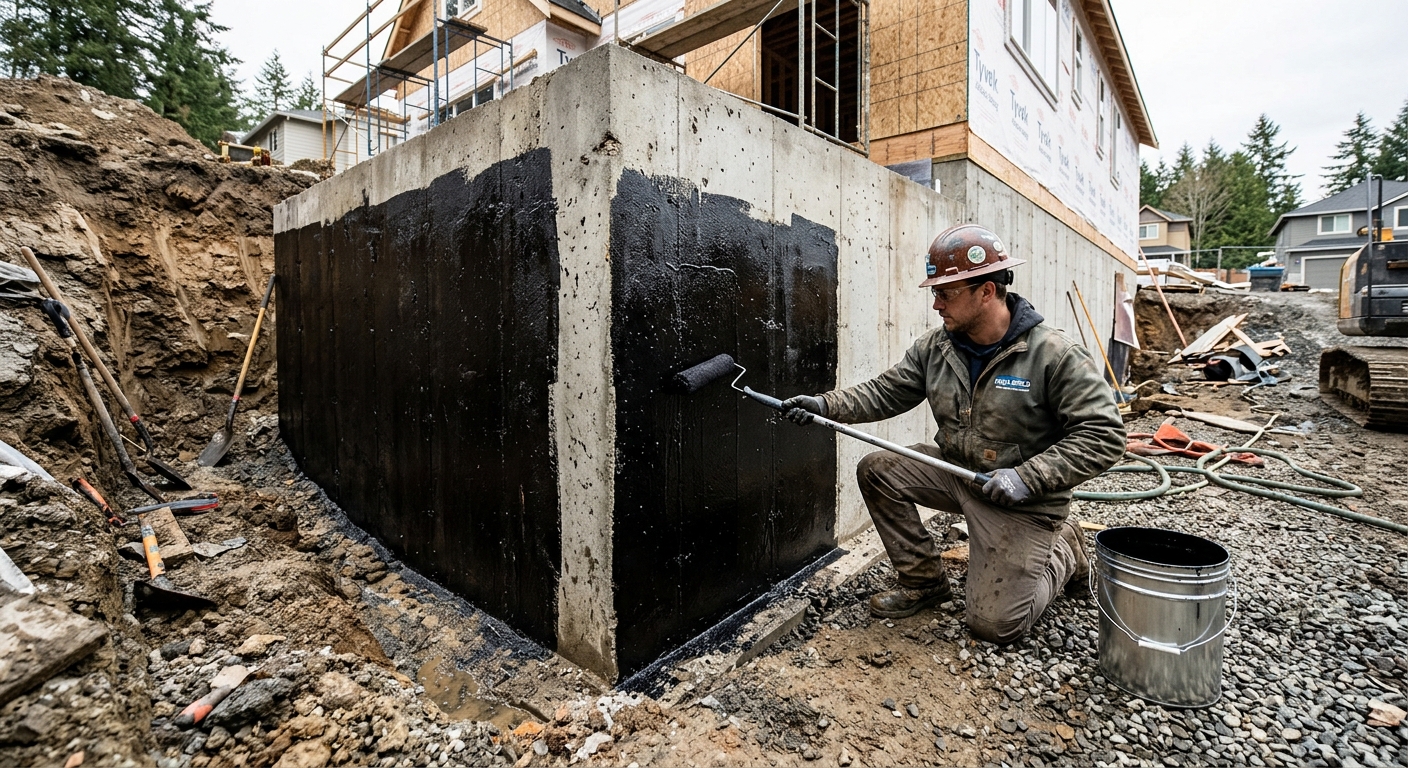
The key difference is that exterior waterproofing aims to permanently stop water at the source, while interior waterproofing manages water once it has already entered the basement. Exterior work typically involves full excavation, new membrane, replacement perimeter drainage tile, and careful backfill and re-grading. This is the most effective path in Little Mountain when persistent groundwater and intense rainfall keep hydrostatic pressure high against foundation walls and slabs. The trade-off is cost and disruption: excavation, disposal, and landscaping restoration can be significant—particularly on established lots near the village core.
Interior waterproofing is less invasive, usually installing a perimeter drain channel and creating a sump pit and pump system to collect seepage. It’s often the best practical complement when exterior access is limited or when you need to stabilize dampness quickly. In Lower Mainland–Southwest conditions, it’s common to pair interior drainage with targeted crack injection, but it won’t eliminate hydrostatic pressure on the wall itself.
Foundation type matters. Poured concrete walls often respond well to crack injection (especially when the cracks aren’t actively moving), whereas block foundations frequently benefit from interior drainage because water can migrate through multiple mortar joints and interfaces. Given British Columbia’s wet winters and occasional spring flooding periods, a sump pump backup system is a smart risk-control measure—so a short power outage doesn’t turn managed water into a flooded basement.
Example: if an exterior plan is quoted at $15,000–$30,000 but your problem is localized and driven by a failing interior drainage path, a $8,000–$18,000 interior drain + sump approach can be justified. However, if inspection confirms a saturated backfill condition and failing perimeter drainage outside the foundation, deferring exterior work can lead to repeated interior moisture even after repairs.
| Method |
Best For |
Addresses Source? |
Disruption |
Lifespan |
Price Band |
| Full exterior excavation + membrane |
Persistent seepage from exterior perimeter, high groundwater pressure, failed weeping tile, and widespread dampness |
Yes (primary water entry source) |
High |
Long-term when drainage routing and backfill are done correctly |
$15,000–$30,000 |
| Interior French drain + sump system |
Interior seepage, limited exterior access, older homes needing a practical retrofit |
No (manages water after it enters) |
Medium |
High as a system with correct pump sizing and maintenance |
$8,000–$18,000 |
| Crack injection — epoxy (structural) |
Non-moving cracks in poured concrete where water migration is limited and crack stability is confirmed |
Partial (seals crack pathway) |
Low |
Medium to high when cracks are stable and drainage controls remain effective |
$500–$2,000 |
| Crack injection — polyurethane (active leak) |
Active seepage or damp cracks where flexibility is needed during water pressure events |
Partial (seals active entry point) |
Low |
Medium (depends on whether exterior drainage is also corrected) |
$600–$2,500 |
| Interior drain channel only (no sump) |
Light seepage where gravity discharge or minimal standing water is expected |
No (captures and redirects) |
Medium |
Medium (higher risk if groundwater pressure is high) |
$6,000–$12,000 |
| Re-grading + downspout extensions |
Surface-water issues: splash, roof runoff near foundation, or minor dampness at grade |
Yes for surface sources; indirect for groundwater |
Low to medium |
Medium (best paired with drainage corrections) |
$3,000–$8,000 |
How to choose a waterproofing contractor in Little Mountain
Choosing the right waterproofing contractor in Little Mountain comes down to proof: who they are, what they’re insured for, and how clearly they scope the work. In British Columbia, verify licensing and business standing first using the appropriate online registry. Next, request a certificate of liability insurance—review the limits and confirm the policy is current for the duration of your project. For coverage, ask for proof of WSBC/WCB clearance (or equivalent coverage documents) so you know workers are covered on site. If a contractor can’t provide these documents quickly, that’s usually a sign of weak process.
Then get 2–3 itemised written quotes, not just a lump sum. A strong quote breaks down labour and materials by scope (excavation/disposal, membrane/drainage components, pump, pipe routing, crack injection material, and backfill). Read exclusions carefully: ask whether permit pulling is included (where required), whether waste disposal is covered, and what happens if additional water entry points are found after excavation. Warranty matters too—look for a workmanship warranty length, product manufacturer warranty details, and whether the warranty is transferable if you sell the home.
For payment, never pay more than 10–15% upfront. Hold back a portion until the job is completed, materials are installed, and final cleanup is done. Finally, insist on a written timeline with a start date and completion estimate, especially because excavation and drying conditions can shift with Lower Mainland–Southwest rainfall.
- Ask for a written moisture/crack assessment and a marked-up floor plan or wall photo set.
- Confirm whether the plan is exterior-first, interior-first, or hybrid (and why).
- Require itemised labour + materials (not only “waterproofing” as a line item).
- Check whether removal and restoration of floors/drywall are included in the scope.
- Confirm pump model, pit size, discharge routing, and whether a backup is included.
- Verify disposal and backfill compaction requirements are included.
- Ask how they will handle efflorescence/mould before sealing or injections.
- Request warranty terms in writing (workmanship + product) and confirm transferability.
- Look for a permit plan: who pulls the permit and who schedules inspections.
- Match the quoted method to your foundation type (poured vs block) and crack type.
- Confirm they’ll protect landscaping and manage runoff during excavation.
- Use a clear payment schedule with a holdback until completion and final photos.
Red flags I commonly see in Little Mountain include: vague scopes with no pump or discharge details; quotes that ignore site access and disposal costs; “one-size-fits-all” recommendations without crack mapping or drainage evaluation; refusal to provide insurance/clearance documentation; and warranties that cover only part of the system (for example, workmanship but not product compatibility).
Frequently asked questions — waterproofing in Little Mountain
Can I waterproof my basement from the inside only?
Yes, many Little Mountain basements can be improved with an interior approach, especially when exterior access is limited or when the main issue is ongoing seepage into the interior. Interior methods—like a perimeter drain channel and sump pit—manage water after it enters and can significantly reduce dampness during heavy Lower Mainland–Southwest rainfall. If your cracks are stable and non-moving, crack injection can also reduce a specific leak pathway. Interior work often fits within the $8,000–$18,000 band for a full perimeter drainage + sump-style retrofit, depending on how much floor work is required. That said, interior-only solutions usually don’t stop hydrostatic pressure at the wall, so they’re best when paired with a plan to correct at least the major drainage triggers (grading/downspouts) or when exterior replacement isn’t practical.
What causes foundation cracks in Little Mountain?
In Little Mountain, foundation cracks are often driven by the combined effect of moisture and seasonal temperature changes. Coastal BC’s wet, mild winters with freeze-thaw cycles can widen existing cracks and joints over time, particularly if water gets into the wall/floor interface. Where drainage is failing outside the foundation, groundwater and prolonged saturation can increase pressure against foundation materials, contributing to seepage routes that appear as cracks or stained lines. Older weeping tile systems may be partially clogged or disconnected, turning periodic wetting into constant damp conditions. Also, different foundation types behave differently: block and mortar joints can show step cracks more readily when water migration continues at the interfaces. If horizontal cracks are present, it’s especially important to confirm whether structural movement is involved before relying on basic crack injection.
How do I compare waterproofing quotes?
Start by comparing apples to apples: insist on itemised written quotes so you can see labour and material breakdowns (excavation/disposal, membrane and drainage components, pump model, discharge routing, and crack injection material type). For the Lower Mainland–Southwest, scope changes can shift prices by 30–50%, so look for what each contractor assumes—such as whether they include permits, waste removal, backfill compaction, and landscape restoration. Also check whether the quote addresses the likely source of water entry: exterior excavation and new perimeter drainage typically aligns with the $15,000–$30,000 band, while interior perimeter drainage and sump work often sits around the $8,000–$18,000 band. Finally, compare warranties (workmanship and product) and the payment schedule.
How long does basement waterproofing take in Little Mountain?
The total timeline depends on whether you’re doing exterior excavation or an interior retrofit, and on rainfall conditions during the Lower Mainland–Southwest wet season. As a rule, interior perimeter drain + sump installations often take several working days to a couple of weeks when demolition, plumbing, and drying-restoration are included. Exterior jobs can take longer because mechanical excavation, membrane/drainage installation, backfill, and curing/drying require careful scheduling; site access constraints can add time as well. Weather matters because sustained rain can delay backfill and membrane continuity, particularly when contractors need dry conditions for sealing and proper compaction. Ask for a written schedule that includes start date, milestone dates, and contingency plans if rainfall interrupts critical steps.
What is a weeping tile and does my Little Mountain home have one?
Weeping tile (also called perimeter drain tile) is the drainage system around the foundation designed to collect and redirect groundwater away from basement walls. In many older Little Mountain homes, it was originally installed decades ago and may now be clogged, undersized, collapsed, or disconnected—especially if you’re seeing recurring seepage near the perimeter. You might have it if your basement has older sumps, discharge piping, or if contractors find legacy drain tile during inspection/excavation. The only reliable way to confirm is an inspection: many contractors can trace the discharge line location, look for access points, and use demolition or careful probing at key points. If replacement is needed, it’s commonly part of exterior excavation projects, but interior drainage can also be added if exterior access is restricted.
Can I waterproof my basement in winter in Little Mountain?
Often you can, but it’s conditional. In British Columbia’s coastal climate, winter waterproofing is still workable during milder cold spells, yet prolonged rain, frozen ground pockets, and freeze-thaw cycles can affect excavation conditions and membrane performance. Contractors may recommend winter work for interior drainage steps like sump installation or certain crack injection tasks, because those can be completed without full exterior trenching. However, full exterior excavation and membrane installation can be delayed if the soil is too wet or frozen to allow proper backfill and compaction. Even when work proceeds, expect stricter scheduling around drying and curing. If you’re considering exterior work, ask the contractor what methods they’ll use to maintain product performance during winter conditions and whether the job is staged to protect open excavations during storms.