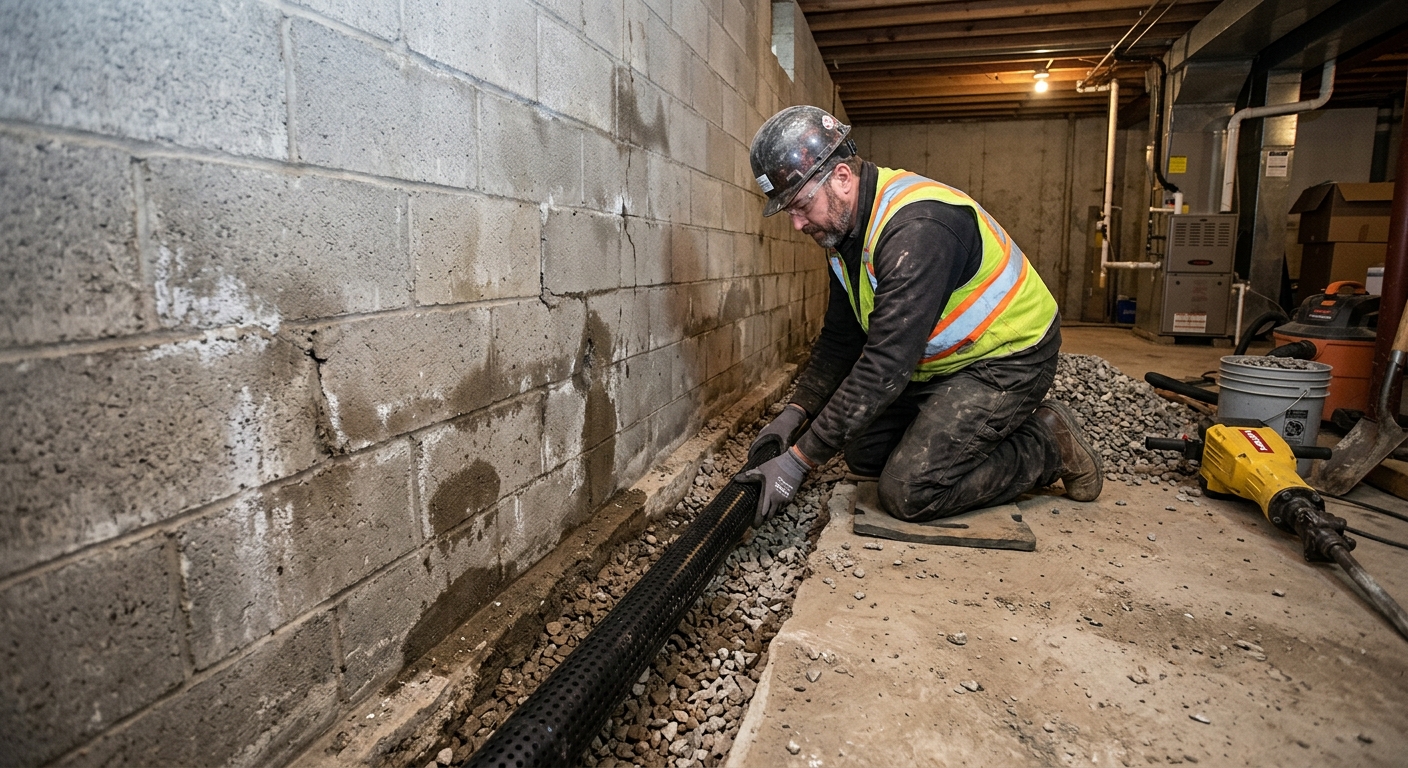
Basement waterproofing options and costs in Mountain Meadows
In Mountain Meadows, basement waterproofing usually comes down to choosing where to control water first: at the source (exterior waterproofing) or after it enters (interior drainage). With a small community population of 1,401 (Statistics Canada, 2021 Census), the most consistent demand is often driven by older home patterns—many properties in the Lower Mainland–Southwest experience moisture issues as original drainage systems age and fail. In practice, that means homes with early weeping tile setups are more likely to show persistent seepage once hydrostatic pressure builds during heavy, prolonged rain.
Lower Mainland–Southwest pricing is shaped by high groundwater and drainage saturation. Even “newer” basements can leak if backfill is poorly drained or if perimeter drainage isn’t keeping up with constant wet seasons. Add wet, mild winters and frequent freeze-thaw cycles and you often see cracks and joint gaps widen enough to let water find a path. Labour and logistics also matter here: excavation on tight lots and disposal from mechanical breaking can push exterior work toward the upper end of the regional range.
In Mountain Meadows, demand tends to be highest along the older residential pockets near community edges where lots are harder to access and where side-yard drainage improvements are common. When homeowners call, we typically start by matching their symptoms (efflorescence, musty odours, damp slab edges, sump cycling) to a method—then compare total disruption and payback. Use the table below to understand the most common options and realistic budget expectations.
| Method |
What It Addresses |
Disruption Level |
Durability |
Price Range |
| Exterior excavation + new membrane + drainage tile |
Hydrostatic pressure at the foundation exterior; replaces failed weeping tile and waterproofing |
High (excavation, landscaping/driveway impacts) |
Long-term (typically 20+ years with correct installation and backfill drainage) |
$15,000–$30,000 |
| Interior perimeter drain channel + sump pit |
Water that enters through cracks/joints; collects seepage and relieves interior moisture |
Moderate (partial interior floor removal) |
High (sump system performance is critical; clean-out and maintenance matter) |
$8,000–$18,000 |
| Foundation crack injection (epoxy or polyurethane) |
Stops water paths through cracks (polyurethane for active leaks; epoxy for non-moving cracks) |
Low to Moderate (selective drilling) |
Good for appropriate crack type and movement conditions |
$500–$2,000 |
| Sump pump installation (primary + battery backup) |
Manages collected groundwater during wet seasons and power outages |
Low to Moderate (pit, discharge line, electrical work) |
Good to Long-term (backup reduces risk during extended outages) |
$1,000–$5,000 |
| Window well drain installation |
Surface water and splash-in from window wells; reduces dampness around egress areas |
Low to Moderate |
Moderate to High (depends on grading and maintaining clear weep paths) |
$2,000–$6,000 |
| Lot re-grading / downspout extension |
Redirects roof runoff and reduces oversaturation near foundation |
Low (outdoor work only) |
Moderate (works best when combined with drainage repairs) |
$3,000–$8,000 |
Prices are estimates only and vary by project scope, site access and material selection.
What affects the price of waterproofing in Mountain Meadows
In the Lower Mainland–Southwest, you can see the same waterproofing “type” quoted 30–50% apart, even within a short driving radius. The variation comes from the site’s actual water management reality: soil conditions, water table behaviour, foundation wall type, and how much excavation is required to get to a functioning drainage system. Contractor availability also plays a role—during wetter stretches, schedules tighten and disposal or mechanical breaking can become a bigger line item.
Three drivers separate regional costs from a broader national average: soil/wetness, water table, and freeze-thaw. In Mountain Meadows, persistent saturation keeps hydrostatic pressure against walls for longer periods. Unlike clay-heavy expansive soils common in parts of Ontario and the Prairies, the Lower Mainland’s cost increase is often tied to how quickly backfill saturates when drainage fails—yet freeze-thaw still widens cracks and joint gaps, so repairs can degrade faster when water repeatedly enters. Regions with older housing stock also see higher frequency of failing weeping tile and damp poured-concrete or block foundation walls.
Concrete examples: if a home has an original perimeter drain that’s clogged or collapsed, exterior excavation typically jumps toward the upper band—think closer to $15,000–$30,000 when we must remove multiple sections of walkway/landscaping for proper drainage replacement. If access is constrained and the homeowner has active interior seepage, an interior perimeter drain with sump often lands in the $8,000–$18,000 range—especially when we’re preventing seasonal moisture while planning future exterior work. A basement with frequent sump cycling (daily during heavy weeks) may also require pump upgrades, which can add several thousand dollars when backup is included.
In short: the more your site resembles “standing wet soil at the foundation,” the more work needed to relieve hydrostatic pressure—either from outside or by capturing it inside.
| Price Factor |
Why It Matters |
Cost Impact |
| Interior vs. exterior approach — interior is less disruptive but addresses symptoms |
Exterior targets the source; interior manages water after entry |
Interior often $8,000–$18,000; exterior often $15,000–$30,000 |
| Foundation type — poured concrete vs. block vs. stone vs. ICF |
Different wall systems behave differently with cracking and sealing |
Block/stone often needs more drainage; poured walls may allow better crack-specific sealing |
| Soil type — clay expands more than sand, adding pressure |
Expansive/retentive soils can increase lateral pressure and maintain wet conditions |
Can increase repair scope by widening crack work and drainage requirements |
| Crack type and length — hairline vs. structural horizontal cracks |
Moving/structural cracks may need different solutions or engineering |
Hairline crack injection may stay around smaller crack budgets; structural cracks increase assessment and labour |
| Sump pump backup system — battery or water-powered backup needed |
Power interruptions during wet/spring periods can turn a small leak into damage |
Typically adds $1,000–$5,000 depending on pump and backup selection |
| Access — landscaping, decks, or driveways must be removed for exterior |
Excavation constraints drive labour, disposal, and restoration work |
Access limitations can push exterior projects toward the higher end |
| Weeping tile age — original tile (60+ years) may be completely failed |
Old systems often clog, break, or lose slope |
Replacement scope grows; risk of adjacent damage increases exterior time |
| Mould or efflorescence remediation required before sealing |
Sealing over active moisture or contamination reduces long-term performance |
Adds prep labour and materials; can change the sequence of work |
Permits & regulations in British Columbia
In British Columbia, foundation excavation, structural crack repair, and changes to lot drainage typically require a building permit. Sump pump installations that connect to the storm or sanitary sewer need municipal approval, and some discharges may trigger review of how the water is managed at property lines and low areas. For structural crack repair—especially horizontal cracks in block walls, major step cracks, or signs of wall movement—a structural engineer’s assessment is often required to confirm whether underpinning, wall stabilization, or additional structural work is needed before waterproofing treatments.
To protect yourself, verify the contractor’s documentation before signing. In Mountain Meadows, start by confirming the company name and contact match the documents provided. Then check three key items step-by-step:
1) Contractor licence/registration: use the provincial online registry to confirm the contractor (or trade where applicable) is authorized for the scope of work. 2) Liability insurance: request a current Certificate of Insurance showing coverage amounts and that it includes the kind of work being performed (excavation, concrete repairs, and drainage connections as applicable). 3) WSIB/WCB coverage: ask for a clearance letter (or equivalent proof) confirming the firm has coverage for employees.
For structural repairs, ask whether they include engineering support in the price and whether they can provide an engineer’s letter/report when needed. Finally, ensure your contract clearly states what permits (if any) are pulled and who is responsible for compliance.
Interior vs exterior waterproofing — what does Mountain Meadows need?
The fundamental difference is control point. Exterior waterproofing means full excavation, new exterior membrane, new drainage tile, and backfill designed to keep water from building up against the foundation. It’s the most permanent fix when the perimeter drainage has failed, but it’s more disruptive because landscaping, patios, and sometimes driveways must be opened. Interior waterproofing focuses on water that already enters: a perimeter drain channel, sump pit, and sump pump system collect seepage and keep the basement dry. It typically costs less and involves less outdoor disruption, but it does not stop hydrostatic pressure on the wall itself.
In Mountain Meadows and the Lower Mainland–Southwest, persistent wet seasons and high groundwater behaviour make exterior systems a strong choice when original weeping tile is failing or when seepage shows up along multiple wall sections and slab edges. However, interior drainage is often the practical first step when access is tight or when homeowners want faster mitigation to protect finishes and stored items. For foundation specifics, poured-concrete walls can often accept effective crack injection when the crack is non-moving, while block foundations frequently benefit from interior drainage as a complement because mortar joints and multiple smaller paths can keep water finding routes during prolonged rain.
Because British Columbia basements can experience nuisance flooding during heavy wet periods, a backup sump pump can be worth it. A battery backup reduces the chance of water accumulating during power interruptions, which is crucial when the sump must run continuously during storm weeks.
Dollar logic example: if exterior excavation is $15,000–$30,000 but your leaks are localized to one corner with active seepage through a known crack, you may start with crack injection plus an interior drain and sump within the $8,000–$18,000 band. If water persists on several walls, the cost justification for going exterior becomes clearer because it treats the source rather than repeatedly managing symptoms.
| Method |
Best For |
Addresses Source? |
Disruption |
Lifespan |
Price Band |
| Full exterior excavation + membrane |
Multiple-wall seepage, failed weeping tile, persistent hydrostatic pressure |
Yes (outside the foundation) |
High |
20+ years when installed correctly |
$15,000–$30,000 |
| Interior French drain + sump system |
Basements with interior dampness or sump-cycling during wet seasons |
No (manages water after entry) |
Moderate |
Long-term (depends on sump reliability) |
$8,000–$18,000 |
| Crack injection — epoxy (structural) |
Non-moving cracks in poured concrete where sealing is appropriate |
Partial (stops water path through targeted crack) |
Low to Moderate |
Good (limited to crack condition and movement) |
$500–$2,000 |
| Crack injection — polyurethane (active leak) |
Active seepage cracks where water is still moving through openings |
Partial (stops water path through targeted crack) |
Low to Moderate |
Good (best when paired with drainage) |
$500–$2,000 |
| Interior drain channel only (no sump) |
Very mild seepage or floor edge dampness that can be gravity-managed |
No (manages water after entry) |
Moderate |
Moderate (depends on discharge ability and seasonality) |
$3,000–$10,000 |
| Re-grading + downspout extensions |
Roof runoff-driven dampness near foundation perimeter |
Source control for surface water (not groundwater) |
Low |
Moderate (improves performance when drainage is otherwise sound) |
$3,000–$8,000 |
How to choose a waterproofing contractor in Mountain Meadows
Choosing a waterproofing contractor in Mountain Meadows is mostly about verifying capability and clarity before work begins. First, confirm British Columbia licensing/registration where applicable for the trade scope you’re hiring, then request proof of liability insurance and WSIB/WCB coverage. Your best path is to ask for documents up front: a certificate of insurance (showing current dates and coverage limits) and a clearance letter showing WSIB/WCB status. If the contractor can’t provide these quickly, treat it as a risk signal for your project.
Next, get 2–3 itemised written quotes—don’t accept a lump sum without a scope breakdown. Look for a clear list of labour and materials (membrane type, drainage tile, filter fabric, backfill material, disposal, and any sump/pump model), along with stated exclusions. Ask whether the quote includes permit pull (when required), excavation/disposal, restoration, and how they will manage dust and water during wet-season work. Confirm the workmanship warranty length and whether the product/manufacturer warranty is valid for your installation type. Also ask if warranties are transferable to future owners.
Payment schedule matters: never pay more than 10–15% upfront, and use a holdback until the job is complete and functioning (for example, sump activation tests and inspection photos). Finally, require a written start date and completion estimate, plus a plan for weather delays—important in Lower Mainland–Southwest winter and spring conditions.
- Ask for references on projects with similar foundation type (poured concrete vs block) and similar leak patterns.
- Confirm they perform site investigation: water entry mapping, crack assessment, and drainage review.
- Require an itemised quote (labour + materials) and a written scope of exclusions.
- Check permit responsibility in writing (who pulls permits, who pays, and what triggers approval).
- Request Certificate of Insurance and WSIB/WCB clearance letter before signing.
- Verify they include disposal/haul-away for excavation debris and specify where it goes.
- Ask how they handle contaminated areas (mould/efflorescence) before sealing.
- Confirm drainage slope and connection details for weeping tile and sump discharge.
- Insist on sump testing and a documented pump/backup commissioning checklist.
- Review warranty terms: workmanship duration, product coverage, and transferability.
- Keep photos before/during/after excavation, pipe placement, and membrane continuity checks.
- Use a payment schedule with a holdback until performance is verified.
Red flags in Mountain Meadows: (1) vague scopes that don’t specify drainage tile, membrane system, or backfill; (2) no proof of liability insurance/WSIB/WCB or they “send it later”; (3) a quote that promises “guaranteed dry basement” without addressing hydrostatic pressure; (4) refusing to explain crack type vs injection method (epoxy vs polyurethane) and avoiding engineering questions; (5) asking for large upfront payments beyond 10–15%.
Frequently asked questions — waterproofing in Mountain Meadows
How do I choose a waterproofing contractor in Mountain Meadows?
Start by verifying British Columbia coverage and authority for the scope you’re hiring: request a current Certificate of Insurance for liability and a WSIB/WCB clearance letter, then check the contractor’s registration/licensing status through the provincial online registry. Next, compare 2–3 itemised quotes with clearly stated inclusions (excavation and disposal if exterior, interior drain components, and whether sump discharge is addressed properly). In Mountain Meadows and the Lower Mainland–Southwest, make sure they specifically discuss how they’ll deal with high groundwater behaviour and freeze-thaw crack widening, not just cosmetic crack filling. Finally, ask about warranties and performance testing—especially sump activation—before paying beyond 10–15% upfront. If the project is trending toward exterior work, many budgets fall into $15,000–$30,000, so the scope detail must match that level of effort.
What is a battery backup sump pump and do I need one in Mountain Meadows?
A battery backup sump pump is an additional power option that runs the sump during power interruptions, typically using a battery system sized for the pump and expected runtime. In British Columbia, spring storms and wet-season conditions can coincide with outages, and when the sump can’t run, water levels can rise quickly against interior walls and slab edges. Whether you “need” it depends on how often the sump runs during wet periods and how critical your basement use is (storage, finished rooms, or recurring seepage). If you’re seeing continuous cycling, a backup can prevent damage. Many homeowners treat it as an insurance layer: sump pump installation with backup commonly budgets around $1,000–$5,000 depending on battery system and integration requirements. In Mountain Meadows, I recommend at least discussing backup if you already have active seepage or frequent sump operation.
How much does basement waterproofing cost in Mountain Meadows?
Basement waterproofing costs in Mountain Meadows generally track the approach you choose and how much water control is required. Interior drainage systems (perimeter drain channel and sump pit) commonly land around $8,000–$18,000 when access is manageable and the work focuses on relieving interior seepage. Exterior waterproofing with excavation, membrane, and drainage tile is more disruptive and often budgets around $15,000–$30,000, especially when excavation must be done through landscaping and mechanical breaking is required on tougher sections. Smaller crack repairs can be less, such as crack injection budgets around $500–$2,000 when the crack is appropriate for injection and not moving structurally. The biggest cost swings come from soil saturation and drainage failure: if water management must be changed significantly, scope expands quickly. Always use an itemised quote so you can compare like-for-like.
Interior vs exterior waterproofing — which is better?
“Better” depends on whether you need to fix the source of water entry or manage water after it enters. Exterior waterproofing (full excavation, membrane, and new drainage tile) is best when the perimeter drainage system has failed or when multiple walls and slab edges show seepage from sustained hydrostatic pressure—this is the most permanent source control, but it’s higher disruption and cost, often in the $15,000–$30,000 range. Interior waterproofing (perimeter drain channel and sump) is often the right first step when access is tight, finishes must be protected, or you need faster mitigation; budgets often fall in $8,000–$18,000. In Mountain Meadows, many homeowners start with interior drainage to stop ongoing moisture, then consider exterior in stages if needed. If a structural engineer flags movement, the “best” plan may require structural assessment before sealing or drainage choices.
Why is my basement leaking in Mountain Meadows?
Leaks in Mountain Meadows usually happen because water has a reliable path into the basement and then pressure builds during wet periods. Common causes include failed or undersized perimeter drainage (weeping tile that’s clogged or collapsed), poor site grading where roof runoff flows toward the foundation, and cracks/joints that widen during wet-freeze cycles, letting water migrate inward. If you have poured concrete, cracks can become channels when freeze-thaw and continued saturation occur; with block foundations, mortar joints and multiple small seep paths often make interior drainage a practical complement. Check for patterns: dampness at one corner often points to drainage or a specific crack; dampness across multiple walls suggests broader hydrostatic pressure and drainage failure. In Lower Mainland–Southwest conditions, persistent saturation can overwhelm partially working systems, so the right fix usually includes drainage improvements—not only surface sealing.
How do I know if a foundation crack is serious?
A foundation crack’s seriousness depends on crack type, location, and whether there’s evidence of movement. Hairline vertical cracks can be less concerning than horizontal cracks, which may indicate wall movement or structural stress—especially on block walls. Step cracks at block joints or widening cracks after freeze-thaw seasons are more urgent. Look for related signs: ongoing water seepage through the crack, bulging or distortion of walls, stair-step patterns that change over time, or heavy efflorescence along the crack line. If you suspect structural movement, it’s prudent to get a structural engineer’s assessment before injection—BC typically requires engineering input for structural crack situations. For many non-moving cracks, epoxy or polyurethane injection can be appropriate, often budgeting around $500–$2,000 for smaller targeted repairs, but the correct product depends on whether the crack is active or non-moving.